Scam Reveal | Know Before You Get Scammed
A sponsored ad promises fast YouTube earnings. A WhatsApp chat reassures you that it’s safe. Then comes a payment request, often followed by another fee. Here’s how to spot the warning signs before sending money or sharing access to your channel.
1. The ad sells a result creators already want
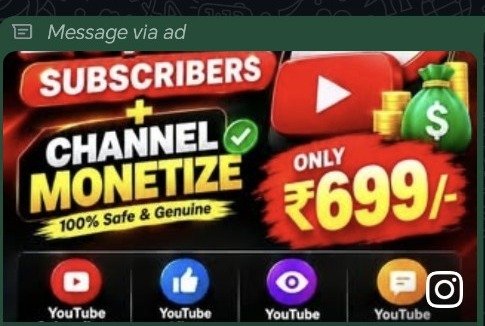
Low prices, money graphics and “100% Safe & Genuine” claims pack the promise and the reassurance into one glance. An ad may take you to WhatsApp, where the seller asks for your public channel handle and promises thousands of subscribers or watch hours within hours. If you ask about a potential channel ban, a quick reassurance can make the risk feel settled. Check the claim against YouTube’s own rules before paying.
2. The first payment makes the next one easier to ask for
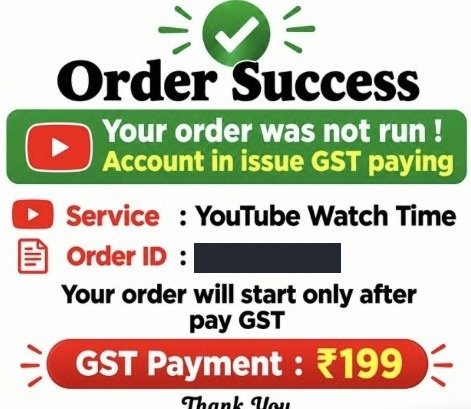
In one example, the quoted ₹499 was followed by a ₹199 demand after payment. The graphic called it GST and the chat called it a website charge. The deadline shifted from five minutes to two hours. Watch for a refund rule that makes you pay again before you can get your original payment back.
3. Spot the variations on the same pitch
Other offers may promise a first payout within days, ask for a small deposit with the balance due later, or describe a verification fee as refundable. A timed payment QR can add pressure. Ask for the full price, deliverables and refund terms in writing. If the answer conflicts with the pitch, stop before paying.
The ₹150 offer that turned into a ₹976 verification demand
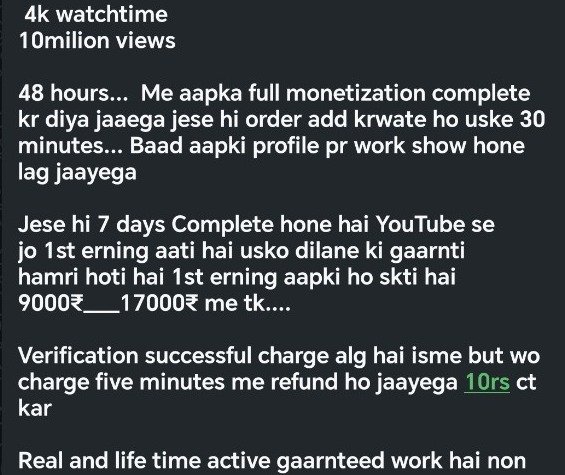
In another anonymized example, a Meta ad led to a WhatsApp offer for full YouTube monetization at ₹150. The seller promised 1,000 subscribers, 4,000 watch hours and 10 million views, described the work as organic and said the price was only ₹150. A payment receipt confirms the ₹150 transfer.
After the payment, the seller sent a screenshot of the public subscriber count as proof that 1,000 subscribers had been added. A single screenshot gives no baseline and cannot establish who added subscribers, whether the engagement was genuine, or whether YouTube approved monetization.
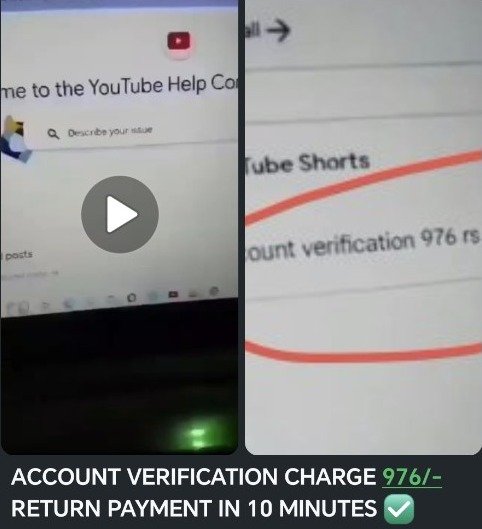
The seller then requested ₹976 as an account verification charge, promised to return it within ten minutes, and sent a payment QR with a deadline. A video thumbnail resembling YouTube Help and a still labeled “Announcement” were presented as proof. The materials came from the seller. The screenshots show the ₹976 request and no receipt for it.
Check independently. Open YouTube Studio yourself and look under Earn. Treat a seller’s screenshot as a claim. A promised refund does nothing to reduce the risk of sending another payment.
4. Why the pitch can work
- Hope. A creator who has spent months building a channel is offered a shortcut to a goal that feels close.
- Reassurance. Familiar logos, a business-account label and promises that subscribers will stay can make a seller look established. A successful UPI receipt confirms a transfer. It gives no assurance about service delivery or YouTube approval.
- Urgency. A countdown cuts into the time available to check the terms.
- Fear of losing what you paid. Once ₹499 is gone, another ₹199 can feel like the cheapest way to save the order. Treat a surprise fee as a reason to pause.
5. Check monetization inside YouTube Studio
Open YouTube Studio → Earn to check your channel’s actual status. YouTube reviews applications after a channel reaches the relevant threshold. Shorts Feed watch time does not count toward the 4,000-hour long-form route. Artificial engagement can be excluded and can lead to strikes or removal, including when a hired promoter creates it.
YouTube Partner Program eligibility · YouTube fake engagement policy
6. What to do if you already paid
- Stop paying when a seller adds an unexpected activation, GST, verification or refund fee. Keep passwords, OTPs and account access private.
- Save the original ad, chat, payment receipt, UTR, QR and refund messages. Keep the originals private for your bank or investigators.
- Contact your bank and payment app promptly. If you authorized the payment after a misleading pitch, describe it that way.
- In India, call 1930 or report suspected financial cyber fraud through the National Cybercrime Reporting Portal. Report the ad to the platform where you saw it as well.
PhonePe safety and fraud reporting · National Cybercrime Reporting Portal
About the screenshots
The cropped screenshots illustrate common sales tactics. The prices and deadlines are examples and can vary across offers.