
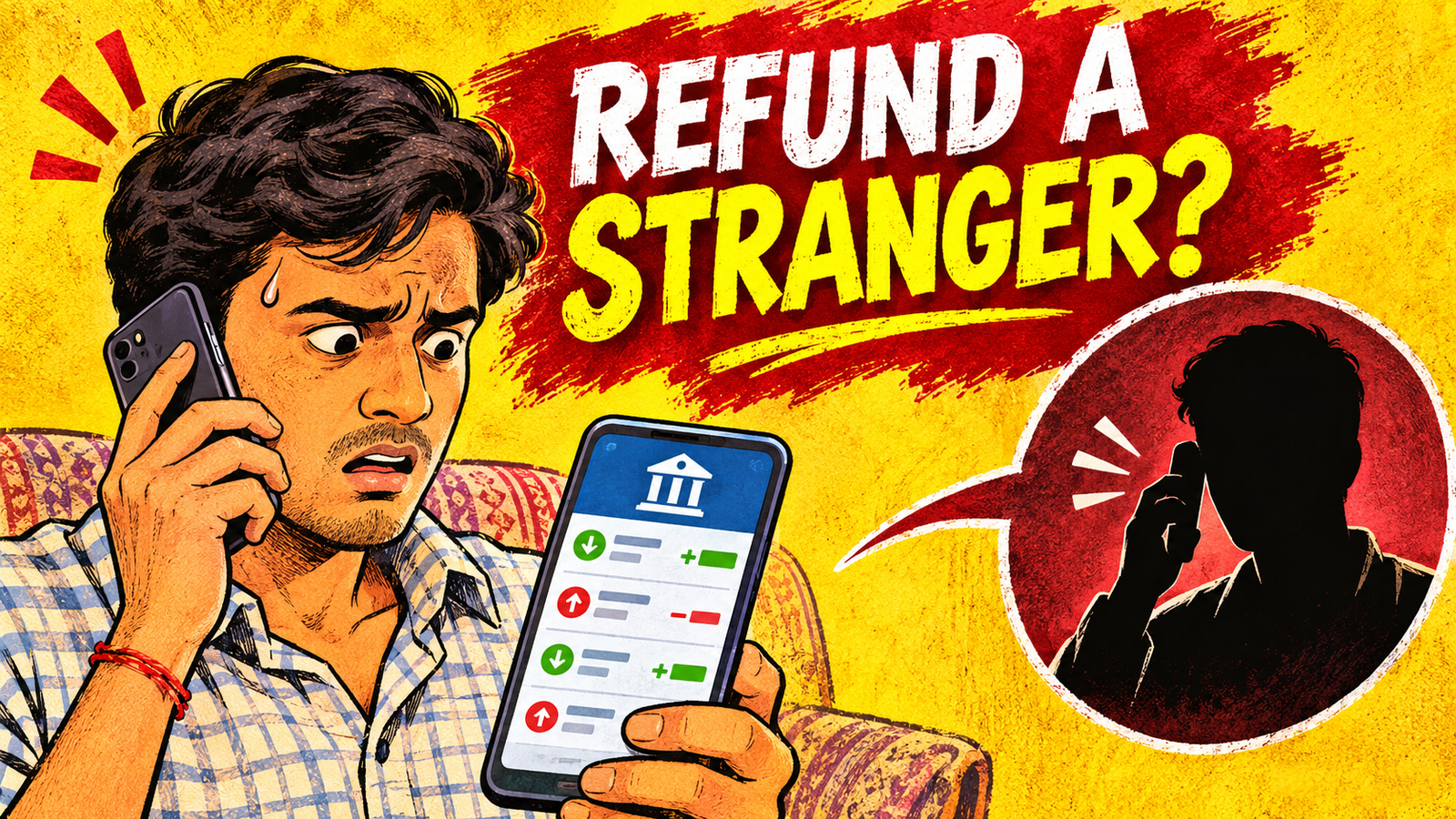
A stranger calls and says they sent you money by mistake. They know your name, quote an amount and send a screenshot that looks like a payment receipt. Then they ask you to return the money to a different number before the day ends. Start with your own account records. Even a genuine credit does not establish that the caller owns the sending account or can tell you where to send money.
What to do first: End the call if you feel pressured. Open your bank or payment app directly and check whether the credit actually posted. If it did, leave the funds untouched and ask your bank or payment provider how it handles a possible mistaken credit. If you find no credit, tell the caller to raise the matter with their own provider. Keep your PIN, one-time codes and account credentials private.
Check your own account before looking at the screenshot
Find your balance and recent transactions through the app or website you ordinarily use. A receipt the caller forwards is a claim about a transfer. Compare the amount, date, reference and status with what you can see independently. A bank alert can help you locate an entry, but verify the entry in your own account. If you have multiple linked accounts, check which one was supposed to receive the money. If the credit is missing or you cannot identify it, ask your provider to check.
Sometimes two unrelated events coincide. You may have received a transfer of the same amount from someone you know or from a customer. The visible amount alone cannot establish that it was the caller’s transfer. Ask the provider which record is associated with a reference if you have one. Give the support team your observations and say which details came from the caller.
If the credit is real, ask for a bank-led process
Contact the bank or payment provider using its official app, website or a verified number. Say that you received a credit you do not recognise and that a person is asking you to return it. Ask how the bank can coordinate with the sending side and what reference or acknowledgement it can give you. Keep the amount available while the bank clarifies the next step. Ask for instructions in writing if you are being asked to approve a return.
Someone might ask you to transfer the same sum to a different account, a relative’s number or another UPI address. A new transfer creates its own transaction. Ask your provider how to handle a verified return so there is a record connecting it to the original credit. If the caller says they already complained to their bank, ask them to continue there. The two providers can determine what record or cooperation they need without the caller obtaining your account credentials.
Recognise a request that would send money out
Read every confirmation screen before taking an action. A collect request, QR code or link may lead to a payment approval screen. Your UPI PIN is used to authorise a payment or other action specified by the app. When the screen shows a debit, checking the amount and recipient matters regardless of what a caller says the button will do. Review NPCI’s official UPI information and use your provider’s support if you are unsure what the screen means.
Watch for pressure to stay on the phone while you act, install screen-sharing software, repeat a code or return an extra amount as a processing fee. If the caller says a bank officer is on a second line, disconnect and reach the bank yourself. Do not open a new help chat through a link the caller provides. Going through your usual app gives you a route you can independently verify.
Save these details
- Note the date and time of the contact, the amount claimed, and any transaction reference the caller supplied.
- Keep the call log, message or payment request and your own record of any actual credit or debit.
- Note if the caller gave different names, payment addresses or instructions in later messages.
- Keep each bank or app case number and the exact instructions you received through official channels.
- Mask account numbers and unrelated entries when sharing copies outside the formal complaint process.
Copy this message to your provider
Someone contacted me on [date] claiming they sent [amount] by mistake and asking me to return it to [destination they gave, if relevant]. My own account shows [credit and reference / no matching credit]. Please confirm how to report this and whether your team can verify the payment and arrange any appropriate return through the official process. Please give me a case number and tell me what information you need.
If money already left your account
Call your bank or payment provider promptly through its official channel. Be specific about what happened. If you approved a transfer while being misled, say what you were told and which transaction was approved. If you see a transaction you did not authorise, identify it separately. Save the beneficiary, amount and reference and follow your bank’s instructions on securing the account. In India, the National Cyber Crime Reporting Portal publishes the official reporting route for suspected online fraud. Keep the acknowledgements together if you make more than one report about the same incident.
Common questions
What if the caller threatens to report me? Ask them to report the transfer to their provider. Keep your record and follow the guidance your own bank gives. Preserve the messages if you need to explain the pressure later.
What if I know the sender? Verify the request through a contact method you already trust. If a known person asks you to return the money to an unfamiliar destination, ask them to confirm why and check your provider’s return procedure.
Can I spend the money if nobody follows up? Leave a credit you cannot explain untouched while the provider investigates. Ask for written closure and keep its decision with your records.
What if someone sends a second tiny transfer to prove their identity? Save both references. A second payment can show another credit, but ask the bank to verify who is entitled to instruct a return and how the original payment should be handled.


