
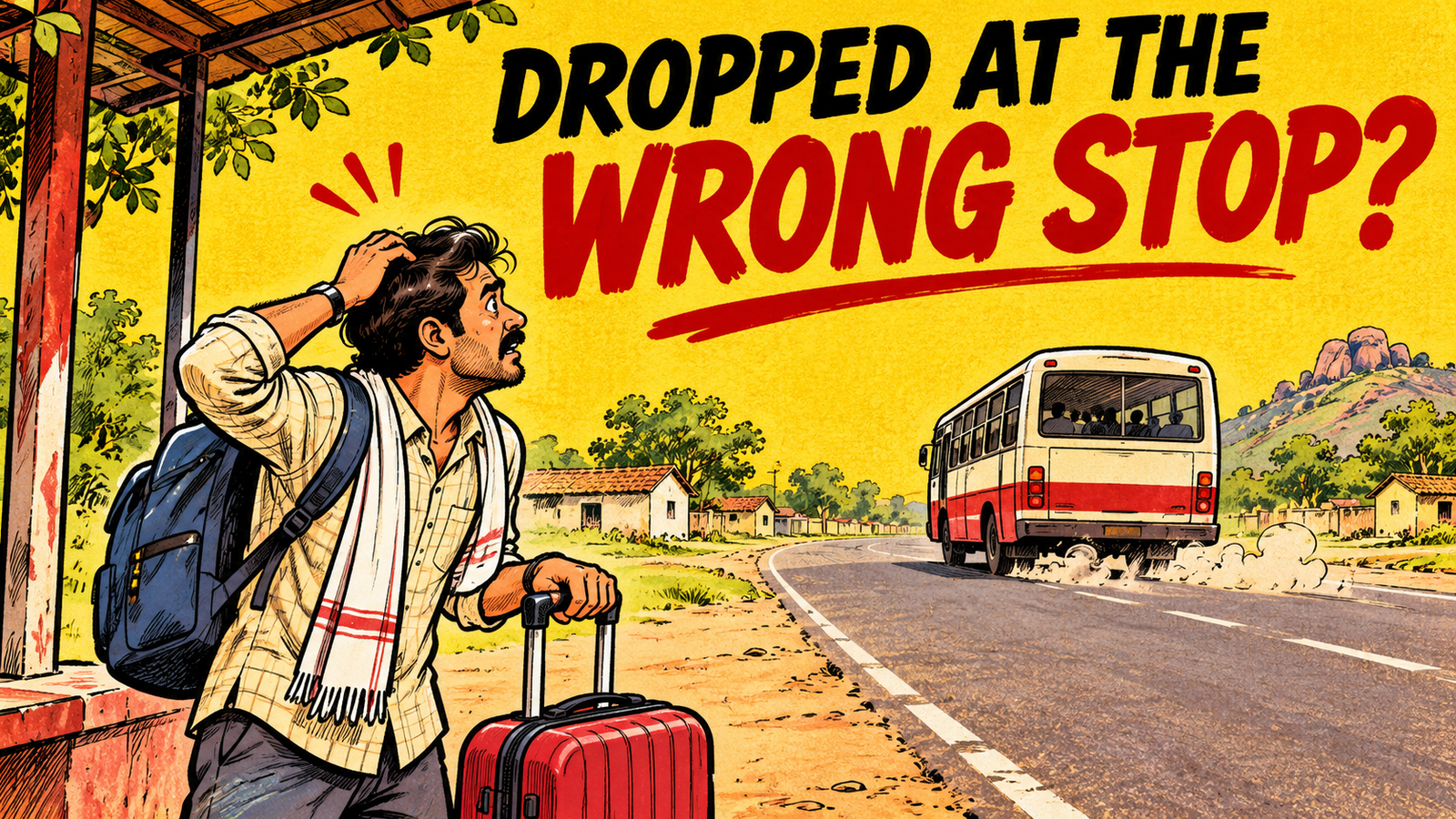
Your ticket lists a bus stand in the city centre. Instead, the coach stops on a highway service road, and the crew tells everyone to get out. It is late, you have luggage and you do not know where the nearest public transport is. First deal with the location and your immediate safety. Once you can get onward travel, preserve the facts about the stop the ticket promised and the stop the operator actually used.
What to do first: From a safe place, save your location and ticket. Ask the crew or operator why the drop point changed and whether they will provide onward travel to the booked point. If the stop leaves you in an unsafe location, prioritise getting to a staffed or well-lit place using a verified transport option. Save the replacement fare receipt if you intend to ask for reimbursement.
Check what the booking promised
Open the original confirmation and identify the exact drop point, arrival date, service number and any instruction shown for the final stop. Some cities have several terminals with similar names and a booking may list a landmark rather than a formal station. Compare the ticket description with where the bus actually left you. Use the location saved while you were there, if available, and record the nearest sign, junction or staffed point.
If the operator says there was a diversion, ask what caused it and whether a replacement stop or shuttle was announced. A road closure, safety issue or entry restriction can change where a bus can lawfully or safely stop. Ask when the operator learned of the change, how it informed passengers and what assistance it offered. The details matter more than assuming that every changed drop point has the same reason or remedy.
Ask about onward transport without leaving safety to chance
If the crew is still reachable and the bus is at a safe stop, ask for a clear explanation of the onward route and the name of the organiser. Ask where you should wait, the approximate time and whether any extra fare applies. If the operator proposes another vehicle, confirm its details through the booking provider or operator, and check that it goes to the ticketed point or another location you can safely reach your destination from.
If you need to make your own arrangements, keep the payment record and a note of why you could not wait. For example, you might have been dropped late with no advertised shuttle and taken an authorised taxi to the booked bus stand. Record where it picked you up and where you got off. Where circumstances allow, contact the provider first and keep any instructions it gives. The actual expense and the reason for it are easier to assess from a clear receipt and timeline.
Keep the evidence specific to this journey
- Save the complete ticket and boarding record, including operator name, trip date, booking reference and booked drop point.
- Record the time you were dropped and the location. A map pin or label on a nearby public sign can help if it was safe to capture.
- Keep any message, app notification or chat announcing a change. Note when it reached you and what alternative it offered.
- Save the receipt for reasonable onward travel and identify whether the expense took you to the original drop point or another destination.
- Write down who you contacted, when, and the reference or response. Keep names and identifiers out of public posts unless they are necessary.
A live map record can help explain the actual stop, but you should also name the nearest landmark in words. Some pins drift, especially beside a flyover or service road. A ticket screenshot plus a dated receipt from the onward ride is often a clearer package than a long exchange of unlabeled images. Add a brief note if you could not capture evidence because you needed to leave an unsafe spot.
Copy this complaint to the operator or booking platform
I booked trip [reference] on [date] from [origin] to the drop point listed as [location]. I was dropped at [actual location] at approximately [time]. [Mention any notice or explanation and onward travel provided.] I have attached the ticket and [location record or receipt]. Please explain why the drop point changed, confirm what assistance was available, and review my request for [refund, reimbursement of documented onward fare or another specific outcome]. Please respond in writing and share a case reference.
Choose the escalation route based on who sold the trip
Contact the company that operated the bus and, if different, the platform that sold or confirmed the booking. Ask the platform whether it can obtain the operator’s incident record. If it refers you to the operator, keep that response and ask how to link the two cases. For a public bus service, check the official transport agency’s grievance channel. For a consumer dispute in India that remains unresolved, review the National Consumer Helpline for current complaint options. The ticket terms, circumstances, evidence and applicable rules can affect the remedy. Keep the requested outcome specific.
When following up, state whether you are asking for transport assistance, review of an additional expense or a refund decision. If the provider offered a partial credit, ask what it covers and whether acceptance settles the case. Save the offer and compare it with the amount and evidence in your original request. If you paid for a trip and already received part of the service, ask the provider to explain how it calculated its proposed resolution.
Common questions
What if I accepted the alternative stop at the time? Record what choices were offered and why you took it. You can still ask why the change happened and whether any documented costs will be reviewed.
What if the crew says the ticket is wrong? Ask the operator and booking provider to compare the ticket confirmation with the trip schedule they used. Keep the original confirmation so it can be checked.
What if the bus stops in a place where I cannot safely wait? Move to a safer public place if you can do so safely, tell a trusted contact where you are and contact local emergency services if there is an immediate threat. Report the booking issue once you are safe.


