
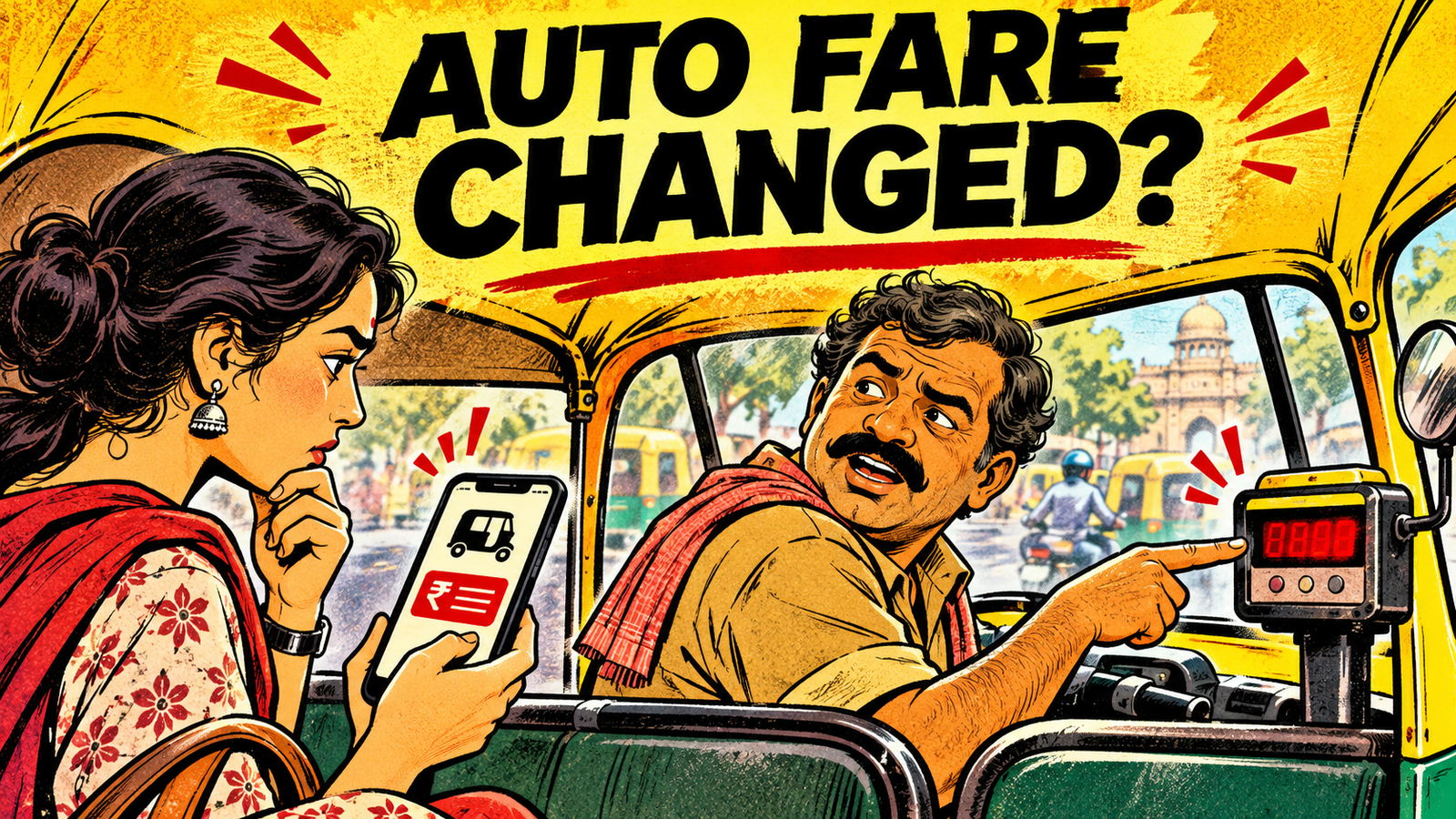
You agreed on a fare before getting into an auto-rickshaw. At the drop point, the driver asks for more and says traffic, waiting or a detour changed the price. You want to resolve the fare without standing in the road arguing. Start with your safety and a simple breakdown of what was agreed, what the meter or app showed and what the driver is asking you to pay now.
What to do first: If the ride is still moving, keep the conversation brief and wait until the vehicle stops somewhere safe. Ask for the reason and amount of each extra charge. For an app trip, open the final trip receipt and use in-app support. For a street-hail or prepaid ride, keep the meter or fare information you can safely capture and identify the official transport complaint channel for that place.
Find out what kind of fare you agreed to
A meter fare, a fixed quote and an app estimate describe different arrangements. An estimate may change if you add a stop, change the destination or encounter a fee disclosed in the booking terms. A prepaid stand may give a fixed receipt, with separate terms for a particular destination. For a street-hail ride, the role of an agreed quote and local meter rules can vary. Check the tariff and rules published by the authority for the city or state where the trip happened.
Write down the quote or amount you saw before starting, and what made it fixed or approximate. If the driver mentioned a toll, waiting charge or parking fee before departure, note that separately. When a fare changes, ask how the difference was calculated. The question “Which part is the original fare and which part is extra?” can be easier to answer than arguing about the total.
Check the receipt or meter before making assumptions
If you booked in an app, compare the original estimate and final receipt. Look for line items for distance, waiting, route adjustment, toll, platform fee, cash paid or discounts. If the driver asks for cash on top of what the app shows, ask whether that amount appears in the receipt or needs to be reported separately. Ask support to confirm whether the driver’s request is part of the trip balance.
For a metered ride, record what the display showed when you stopped, if it is safe. If someone quotes a different rate based on a local tariff, ask which tariff or fare card applies and use the official schedule to check later. A posted or published tariff may identify time bands, minimum fares or other conditions. Avoid applying one city’s rate to a trip taken somewhere else. If you took a prepaid auto, keep the slip and ask the booth or managing agency how the fare was set.
Put safety ahead of resolving the amount on the spot
Speak calmly and avoid blocking traffic while you discuss the fare. If there is intimidation, move to a staffed or public place when you can do so safely. Use the app’s safety or support channel if it is available. If you face an immediate threat, contact local emergency services. Your ability to get away safely matters more than obtaining a close-up photo or finishing the dispute at the roadside.
If you choose to pay to end the encounter safely, save whatever receipt or transaction reference you can obtain and write down what happened afterwards. Be clear about what you agreed to and what you paid, including whether part was collected outside the app. When you report it, state what you want reviewed and why. Refunds depend on what the provider or authority can establish and the rules that cover the ride.
Keep enough information to identify the trip
- Save the trip ID or prepaid receipt, date, pickup and drop points, and approximate time.
- Record the vehicle registration number, if it is available through the app or you can read it safely.
- Keep the original quoted fare, final app or meter figure and the amount demanded or paid.
- Note any change of route, added stop, waiting period or explanation given for the difference.
- Keep any payment reference, complaint acknowledgement and platform reply.
If you paid in cash and did not receive a receipt, note the time, amount and circumstances. Say which parts of your account can be checked against the ticket, ride history or an earlier written quote. Avoid posting a person’s image or details to a public group to try to obtain a refund. Use official channels for identifying information needed to investigate.
Copy this fare complaint
On [date and time], I took an auto from [pickup] to [drop]. The fare was [meter, prepaid or app amount / agreed quote]. At the end of the trip, I was asked to pay [amount], for the stated reason [reason]. I paid [amount] by [method], reference [if available]. Please check the trip record or applicable tariff, explain the difference, and review my request for [specific outcome]. The trip or vehicle reference is [reference].
Send it to the channel that can act
Use the platform’s trip support for app fares. For a prepaid ride, ask the booth or station manager for its complaint route. For a street-hail dispute, check the local transport department or traffic authority’s published channel for fare complaints. If you are pursuing an unresolved consumer grievance in India, see the National Consumer Helpline for current filing options. Provide a short timeline and keep the case number for any follow-up.
Common questions
What if the amount changed because I added a stop? Ask the provider to show how that stop affected the fare under its terms. Compare the updated trip route and final receipt with what you actually requested.
What if I forgot the vehicle number? Check the trip receipt, app history or prepaid slip. If you have none, give the pickup and drop locations, date, time and operator where known. Ask the authority what it can verify with the details available.
What should I agree before the next ride? Confirm the destination and whether the fare is metered, fixed or an estimate. Ask what charges may be extra and get a written or in-app record where possible.


