
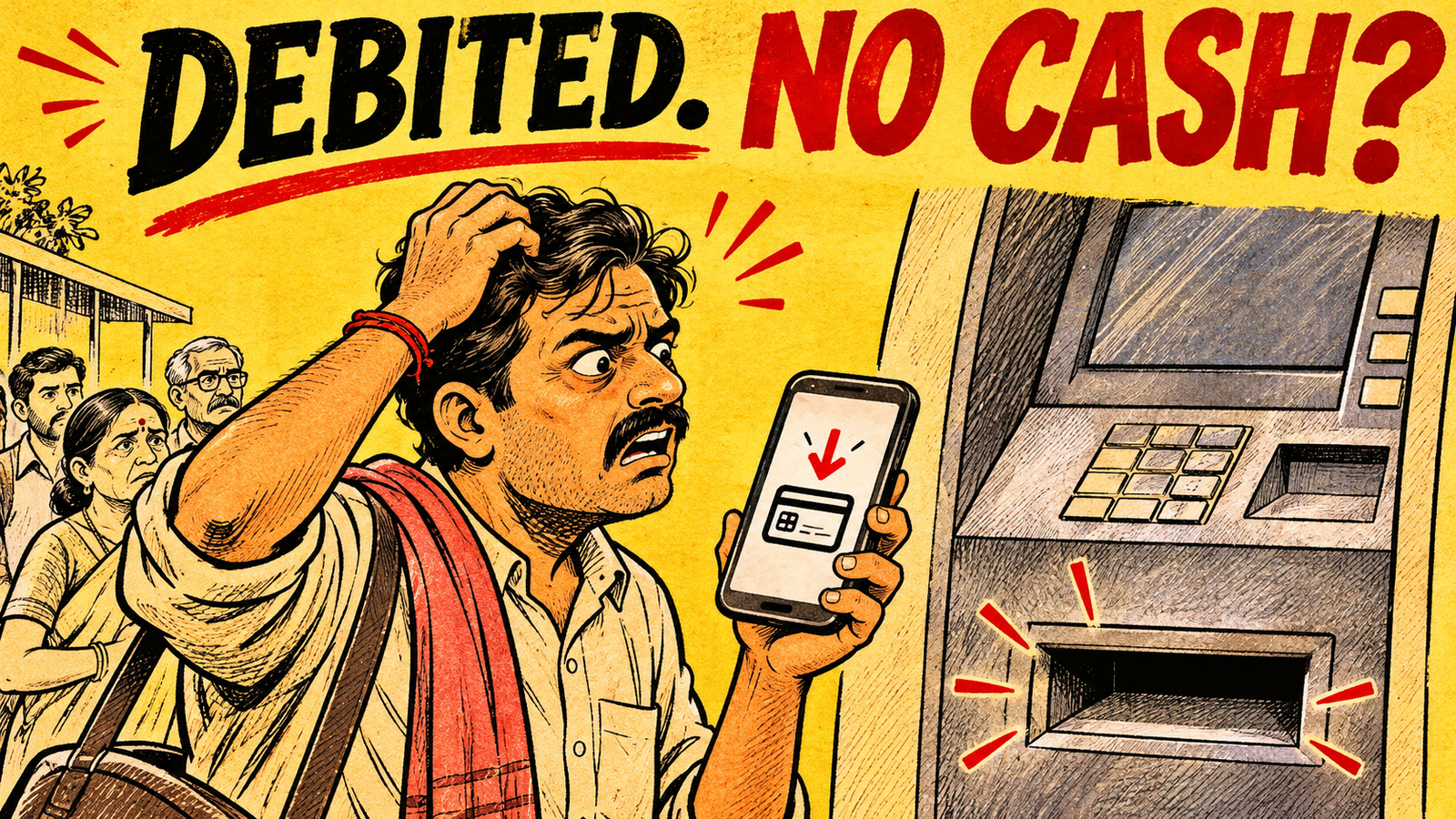
The ATM ends your withdrawal with an error. No cash comes out, but your phone shows that the account was debited. Before attempting the same withdrawal again, save the details of the first one. The bank needs to identify the exact transaction and determine whether cash was dispensed. The sooner you record the machine’s location and time, the easier it is to explain what happened.
Do this first: If you are still at the ATM, note the operator, location and terminal ID where visible. Keep any slip and save the debit message or app record. Report the failed withdrawal to the bank that issued your card through its official channel, even if another bank or operator owns the ATM. Ask for a complaint reference and check your account for the reversal.
Check what actually occurred at the machine
Write down whether you received no notes, received fewer notes than requested, saw notes retracted before you could take them, or saw an error without being sure what the machine did. These are different descriptions for the bank. If no cash came out, say so directly. If only part came out, identify the amount you received and the amount debited. If there was more than one attempt, list each time and amount separately so the bank can trace the right entry.
Check whether your bank’s app shows a debit and a matching credit or whether the alert records only the original withdrawal. A debit message can arrive before an account view updates. Look at the relevant statement period and compare dates and amounts. Where two withdrawals had the same amount, use the references to distinguish them. Avoid assuming a credit reverses the disputed withdrawal unless it can be matched to that transaction.
Save the information your bank needs
- Write down the date, approximate time, currency and amount requested. Use the time shown on the slip or the bank alert if it is available.
- Record the ATM operator’s name, address or landmark and terminal ID. Save a photo of the terminal label if you can take one without exposing someone else’s details.
- Keep the original slip, alert and statement entry. Note the reference shown and the last four digits of the card if your bank asks for them.
- Describe whether the ATM displayed an error, returned the card, or issued a receipt. Include whether you actually received any cash.
- Keep the complaint number, date filed, messages from the bank and any later reversal or compensation entries.
Use the card issuer’s app, official contact number or branch. Be cautious about a phone number printed on a loose sticker attached to a machine. If you also report equipment failure to the ATM operator, keep that reference, but make sure your issuing bank has the transaction complaint. Your bank can explain what evidence it requires. Keep passwords, PINs and one-time codes private throughout.
What deadline applies to a failed ATM withdrawal in India?
The RBI’s ATM FAQ says that for a failed ATM or white-label ATM withdrawal where the account was debited without cash being dispensed, the bank must re-credit the account within a maximum of T+5 calendar days. T is the transaction date. The RBI turnaround-time framework specifies ₹100 per day for delay beyond T+5 in this situation. The framework provides for compensation to be credited automatically when applicable.
For example, if a qualifying failed transaction took place on the 10th of the month, the fifth calendar day after it is the 15th. Keep that date beside the bank’s reference and check when the reversal actually posted. Ask the bank how it classified the transaction if it says the rule does not apply. Cases involving a partial dispense, an overseas transaction or a debit you never authorised should be described according to what occurred. Ask the issuer which process covers those facts.
Copy this complaint message
My account was debited [amount] for an ATM withdrawal on [date and time] at [address, operator and terminal ID], reference [number]. The ATM did not dispense cash. I have the [receipt, alert or statement entry]. Please register the failed withdrawal, provide a complaint reference, and confirm the reversal status and any applicable compensation if the RBI timeline is exceeded.
Follow up if the money does not return
Use the original reference and ask what the bank has verified, whether it received a response from the ATM operator and what date any credit was processed. If the bank says the machine dispensed the cash, ask for its findings in writing and how to challenge that outcome, giving a short factual account of what you saw. If a reversal arrives late, ask the bank to reconcile the reversal date and the compensation entry separately.
If the service complaint remains unresolved, use the bank’s published escalation route. For an eligible complaint against a regulated institution, check the RBI Ombudsman FAQ for the conditions and deadlines after approaching the institution first. Keep the bank’s written answer and complaint acknowledgement so you can show when you first raised the issue and what remains unresolved.
For a follow-up, a short timeline usually works better than sending every screenshot again. Put the withdrawal time, complaint date, expected reversal date and any later credit on separate lines. If the bank gives a new promised date, retain the earlier reply and add the new one. If you need to explain a mismatch, identify both transaction references and explain which entry you believe is still outstanding. This makes it possible to review the history without restarting the complaint each time.
Common questions
What if I did not keep the slip? Start with the bank alert or statement, location, operator and approximate time. Ask the issuer which reference it sees and whether it needs anything else.
What if the withdrawal happened at another bank’s ATM? Report it to the card issuer with the other operator’s details. The issuer can tell you if it needs the operator’s complaint reference.
Should I keep the case open after the reversal? Confirm the correct amount arrived. If it was late, check whether compensation applies and whether it was credited. Keep the evidence until the outstanding points are resolved.


