Exclusive Content:

Why Do People Stay in Jobs They Hate for Years?

Every morning, millions of people wake up with the...

Power Talks Loud. The Cost Stays Silent.

The Truth No One Wants to Say Out Loud People...

Why Do We Overthink Things That Don’t Really Matter?

You replay a conversation in your head. You wonder if...
Home Blog Page 15

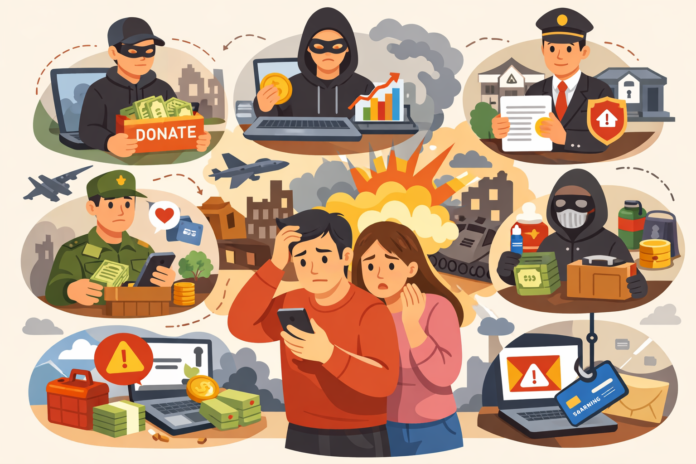
War Time Scams: How Fear Becomes a Marketplace

0

When Conflict Starts, Scams Accelerate

War doesn’t just shake borders.
It shakes psychology.

When uncertainty rises, people search for safety, information, and control. That emotional urgency creates the perfect hunting ground for scammers.

History shows a pattern:
Every major conflict triggers waves of financial fraud, fake charities, investment traps, identity theft, and digital manipulation.

This isn’t random.

It’s strategic.

Let’s break down how war-time scams actually work—and why smart, rational people still fall for them.


The Psychology Behind War-Time Scams

Scammers don’t sell products.
They sell emotions.

During war or geopolitical tension, three emotions dominate:

  1. Fear – “What if I lose everything?”
  2. Urgency – “Act now before it’s too late.”
  3. Patriotism or Sympathy – “Help victims immediately.”

When these emotions spike, critical thinking drops.

The scammer’s goal is simple:
Create emotional overload → reduce logical resistance → extract money or data.


The Most Common War-Time Scam Patterns

1. Fake Emergency Investment Opportunities

You’ll see messages like:

  • “Gold prices will skyrocket—invest now.”
  • “Oil insider tip—war profits guaranteed.”
  • “Crypto safe haven before sanctions hit.”

They use real news headlines to create fake urgency.

Hidden Reality: Most of these schemes are pump-and-dump traps, fake brokers, or unregulated platforms designed to disappear.


2. Fake Charity & Humanitarian Appeals

War creates genuine suffering.

Scammers exploit that compassion.

They build:

  • Fake donation websites
  • Social media fundraisers
  • Impersonated NGOs
  • Cloned charity payment pages

They use emotional photos and dramatic language to bypass rational checks.

The more tragic the story sounds, the less people verify.


3. Government Impersonation & Sanctions Panic

During conflict, people fear:

  • Frozen bank accounts
  • Visa cancellations
  • Asset restrictions

Scammers send emails or messages pretending to be:

  • Government authorities
  • Immigration offices
  • Tax departments
  • Banks

The message usually says: “Your account will be restricted unless you confirm immediately.”

Fear + Authority = compliance.


4. Military or Deployment Romance Scams

War narratives make this tactic more believable.

Scammers pretend to be:

  • Soldiers stationed abroad
  • Engineers trapped in conflict zones
  • Doctors working in crisis areas

They build emotional connection first.

Then they request:

  • Emergency travel funds
  • Medical support
  • Money transfer assistance

It’s not random. It’s engineered trust extraction.


5. Supply Shortage Panic Scams

When war disrupts supply chains, scammers claim:

  • “Limited stock fuel investment”
  • “Emergency food packages”
  • “Currency protection accounts”
  • “Guaranteed offshore banking access”

They use the scarcity principle.

Scarcity lowers skepticism.


The Hidden Root Cause Most People Miss

The real vulnerability is not lack of intelligence.

It’s emotional destabilization.

War creates:

  • News overload
  • Financial anxiety
  • Identity threat
  • Community stress

When people feel unstable, they seek certainty.

Scammers offer “certainty.”

Even fake certainty feels better than chaos.


The War-Time Scam Defense Framework (W.A.R.N.)

Use this simple 4-step filter before acting on anything crisis-related.

W – Wait

If it demands urgency, pause.

Scammers rely on speed.
Real institutions allow time.


A – Authority Verification

Never trust logos or official-looking messages.

Verify directly:

  • Visit official websites manually.
  • Call verified phone numbers.
  • Cross-check through multiple sources.

Never click links sent in panic messages.


R – Reality Check

Ask:

  • Why would I receive this offer?
  • Why is this opportunity only available now?
  • Why is payment method unusual?

If it bypasses standard banking or demands crypto transfers—stop.


N – Neutral Third Party

Before sending money or data, consult someone neutral.

Emotion clouds judgment.

A calm outsider often sees what you miss.


Mistakes & Traps to Avoid

  • Don’t share personal documents via messaging apps.
  • Don’t trust screenshots as proof.
  • Don’t believe “insider” information from strangers.
  • Don’t donate through unverified links.
  • Don’t assume a professional website equals legitimacy.

Professional design is cheap.
Trust is not.


Opposite-Truth Ego Check

Most people think:

“I would never fall for a scam.”

But ask yourself:

What would have to be true for me to fall for one?

Answer: If the fear was big enough.
If the message looked official enough.
If it aligned with my current anxiety.

Scams don’t target stupidity.
They target emotional timing.


The Real War Isn’t Only on Borders

It’s psychological.

Information warfare, financial manipulation, panic marketing—all spike during instability.

The safest strategy is not paranoia.

It’s disciplined calm.

When the world speeds up,
you slow down.

When messages demand urgency,
you demand verification.

When fear rises,
you increase logic.


Final Thought

War reveals character.

For some, it reveals courage.

For others, it reveals opportunism.

Your protection is awareness.

Not fear.
Not aggression.
Not withdrawal.

Awareness.

Stay alert. Stay rational. Stay steady.


How to Become a Cybersecurity Expert

0

A Complete Strategic Guide From Zero to Elite Level


The Truth Most People Don’t Hear

Cybersecurity is not about “hacking tools.”

It’s about:

  • Understanding systems deeply
  • Thinking like an attacker
  • Defending like a strategist
  • Staying calm under pressure

If you want real expertise — not surface-level knowledge — you need structure.

This guide gives you that structure.


Step 1: Build the Foundations (0–6 Months)

Before security, you must understand how things work.

1️⃣ Learn Networking (Mandatory)

You cannot secure what you don’t understand.

Master:

  • TCP/IP
  • DNS
  • HTTP/HTTPS
  • Ports & protocols
  • Firewalls
  • VPN basics
  • OSI model

📘 Recommended:

  • CompTIA Network+
  • Cisco CCNA (even if you don’t take exam)

2️⃣ Learn Operating Systems

Focus on:

  • Linux (Kali, Ubuntu, command line)
  • Windows internals
  • File systems
  • Permissions
  • Processes
  • Logs

You should be comfortable using terminal daily.


3️⃣ Learn Programming Basics

Minimum:

  • Python (automation, scripting)
  • Bash scripting
  • Basic understanding of C
  • Understand how web apps work (HTML, JS basics)

Cybersecurity experts automate everything.


Step 2: Choose Your Cyber Path (Month 6–12)

Cybersecurity is wide. You must specialize.

Here are main domains:


🔐 1. Penetration Tester (Ethical Hacker)

You simulate attacks.

Skills:

  • Web app testing
  • OWASP Top 10
  • Burp Suite
  • Metasploit
  • Enumeration
  • Exploitation

Certifications:

  • eJPT
  • CEH
  • OSCP (gold standard)

Best for: People who love offensive thinking.


🛡 2. Blue Team (Defender)

You detect and respond to attacks.

Skills:

  • SIEM (Splunk, ELK)
  • Incident response
  • Log analysis
  • Threat hunting
  • Malware basics

Certifications:

  • Security+
  • CySA+
  • GCIA
  • Blue Team Level 1

Best for: Analytical, defensive mindset.


🧠 3. Security Engineer / Architect

You design secure systems.

Skills:

  • Cloud security (AWS, Azure)
  • IAM
  • Network architecture
  • DevSecOps

Certifications:

  • CISSP
  • AWS Security Specialty

Best for: Strategic thinkers.


☁ 4. Cloud Security

Fastest-growing area.

Master:

  • AWS IAM
  • Azure Security
  • Cloud misconfigurations
  • Kubernetes security

Step 3: Build Real Skills (Year 1–2)

Theory is not enough.

You must practice.

Platforms to Train:

  • TryHackMe
  • Hack The Box
  • PortSwigger Academy
  • OverTheWire
  • PicoCTF

Set up:

  • Virtual lab (VirtualBox or VMware)
  • Kali Linux
  • Windows VM
  • Intentionally vulnerable apps

Build your own attack-defense lab.


Step 4: Certifications Strategy

Don’t collect random certificates.

Use this path:

Beginner:

  • Security+
  • eJPT

Intermediate:

  • CEH (optional)
  • CySA+
  • CCNA

Advanced:

  • OSCP
  • CISSP (after 5 years experience)

Certifications open doors. Skills keep you inside.


Step 5: Build Your Cyber Portfolio

Most people ignore this.

You need:

  • GitHub with scripts
  • Write vulnerability reports
  • Document lab exercises
  • Start LinkedIn presence
  • Publish small blog posts

Employers hire demonstrated skill.

Not just paper certificates.


Step 6: Master the Mindset

Cybersecurity experts think differently.

They constantly ask:

  • Where can this break?
  • What happens if this fails?
  • What would an attacker try?
  • What is the weakest link?

This is adversarial thinking.


Hidden Truth Most People Miss

Cybersecurity is:

  • 30% technical
  • 70% critical thinking

Many fail not because of intelligence, but because they lack patience.

It takes 2–4 years to become strong.

There is no 3-month shortcut.


The 5-Level Cyber Growth Framework

Level 1 – System Awareness

Understand networks, OS, and protocols.

Level 2 – Tool Competence

Know how to use security tools effectively.

Level 3 – Attack Simulation

Perform controlled penetration tests.

Level 4 – Defensive Intelligence

Detect, respond, and investigate incidents.

Level 5 – Strategic Security

Design systems resistant to advanced threats.

Most people stop at Level 2.

Experts reach Level 5.


Salary & Opportunity Reality

Cybersecurity is global.

High-demand regions:

  • UAE
  • Europe
  • Canada
  • USA
  • Singapore

Entry-level: $50k–$80k

Mid-level: $90k–$140k

Expert: $150k–$250k+

Freelance penetration testers can earn more.


Common Mistakes to Avoid

  • Jumping straight into hacking tools
  • Ignoring networking fundamentals
  • Skipping Linux mastery
  • Chasing too many certificates
  • Not building hands-on labs

Opposite-Truth Ego Check

Ask yourself:

Do I want to become a cybersecurity expert — or just look like one?

The field rewards skill. It punishes surface knowledge.


Final Thought

Cybersecurity is not just a career.

It is learning how the digital world truly works — and how fragile it actually is.

If you commit for 2–3 years seriously, you will become rare.

And rare skill is always valuable.


Sorry Is Not a Small Word — It’s a Structural Repair Tool

0


The Word That Feels Small — But Changes Everything

It’s only five letters.

Soft.
Short.
Easy to say.

But for many people, it feels heavier than lifting a mountain.

“Sorry.”

Some people say it too quickly.
Some never say it at all.
Some use it to manipulate.
Some avoid it to protect ego.

Yet relationships don’t collapse because of mistakes.
They collapse because repair never happens.

And “sorry” — when real — is the first brick in rebuilding trust.


The Real Problem Is Not Mistakes

Everyone makes mistakes.

You forget.
You react emotionally.
You misjudge.
You say something you shouldn’t.

The real damage begins when:

  • Ego replaces accountability.
  • Silence replaces repair.
  • Defensiveness replaces empathy.
  • Excuses replace responsibility.

Without repair, small cracks become structural fractures.

And over time, resentment quietly hardens.


Why Saying Sorry Is So Difficult

Most people struggle to apologize for deeper reasons:

1. Ego Protection

Admitting wrong feels like losing status.

2. Fear of Weakness

Some believe apology equals submission.

3. Identity Attachment

“If I admit this mistake, does that mean I’m a bad person?”

4. Shame Avoidance

Shame says, “You are wrong.”
Guilt says, “You did something wrong.”

Healthy apology requires guilt.
Unhealthy ego reacts with shame defense.


Hidden Root Causes Most People Miss

Many apologies fail because they are incomplete.

“I’m sorry if you felt hurt.”

This is not accountability.
This shifts responsibility to the other person’s emotions.

True apology requires ownership.

Most people were never taught:

  • How to apologize properly.
  • How to separate ego from accountability.
  • How to repair emotional damage.

So they either over-apologize or never apologize at all.


The Damage of Not Saying Sorry

When apology is missing:

  • Trust weakens.
  • Emotional safety drops.
  • Distance increases.
  • Respect erodes.
  • Small issues pile up.

The other person stops fighting.

Not because they healed —
but because they gave up expecting repair.

Silence after harm is louder than the mistake itself.


The “Repair Integrity Framework”

A 5-Step Apology Structure That Actually Works

Step 1: Acknowledge Clearly

State what you did — without minimizing.

“I interrupted you and dismissed your point.”

Not:
“I didn’t mean it like that.”

Step 2: Validate Impact

Recognize how it affected them.

“I can see that it made you feel unheard.”

Step 3: Take Responsibility

No excuses. No “but.”

“That was my mistake.”

Step 4: Express Genuine Regret

“I’m truly sorry.”

Simple. Direct. Honest.

Step 5: Commit to Change

“I’ll be more mindful and let you finish next time.”

Apology without change is performance.


Mistakes & Traps to Avoid

  • Over-apologizing to avoid conflict.
  • Using “sorry” to end arguments quickly.
  • Apologizing publicly but not privately.
  • Expecting immediate forgiveness.
  • Apologizing while secretly justifying yourself.

A real apology is not a transaction.
It’s a repair attempt.

Forgiveness is the other person’s choice.


The Opposite-Truth Ego Check

Ask yourself:

Do I struggle more with apologizing — or forgiving?

Sometimes the problem isn’t that others don’t apologize.

Sometimes we don’t allow room for human error.

Accountability and grace must coexist.


The Quiet Power of “Sorry”

A real apology does three things:

  • It lowers ego walls.
  • It restores emotional safety.
  • It strengthens respect.

Strong people apologize.
Secure people apologize.
Leaders apologize.

Not because they are weak.

Because they value connection more than pride.


Final Thought

“Sorry” is not surrender.

It is strength under control.

It is ego disciplined by integrity.

It is the bridge between damage and repair.

And sometimes, the difference between losing someone
and keeping them
is just five honest letters.


When a Whisper Becomes a Weapon

0

How small words quietly destroy lives and relationships


The Quiet Sentence That Changes Everything

No shouting.
No public fight.
No visible explosion.

Just a whisper.

“I heard something about him…”
“Don’t tell anyone, but…”
“I’m not sure if it’s true, but…”

And suddenly — a marriage feels tension.
A friendship becomes suspicious.
A career stalls.
A reputation cracks.

Whispers rarely look dangerous.
But psychologically, they are among the most destructive social weapons humans use.


Why Whispers Are More Dangerous Than Open Attacks

An open accusation can be confronted.
A rumor spreads in the shadows.

Here’s what makes whispers so destructive:

1. They Create Invisible Doubt

Even if someone says, “I don’t believe it,”
the seed is planted.

And doubt is powerful.

The human brain prefers possibility over uncertainty.
So instead of dismissing the rumor, the mind asks:

“What if it’s true?”

That single question changes how someone looks at you.


2. They Attack Without Accountability

When someone insults you publicly, you know the source.

When someone whispers, it spreads through layers:

  • “Someone told me…”
  • “I heard from someone close to them…”
  • “People are saying…”

There is no face to confront.
No clear origin.

And this makes it almost impossible to defend yourself.


3. They Corrode Trust From Inside

Relationships don’t collapse because of big fights.
They collapse because of silent suspicion.

A whisper doesn’t say:

“Your partner is unfaithful.”

It says:

“I just thought you should know something…”

Now:

  • Every late reply feels suspicious.
  • Every small inconsistency feels intentional.
  • Every silence feels meaningful.

Trust doesn’t break loudly.
It dissolves quietly.


The Psychological Mechanism Behind Whisper Damage

Whispers exploit three powerful human tendencies:

🧠 1. Negativity Bias

People remember negative information more strongly than positive information.

👥 2. Social Proof

If “others are saying it,” the brain assumes there must be some truth.

😶 3. Ambiguity Fear

Uncertainty feels uncomfortable.
So the brain fills gaps with imagination — usually worst-case scenarios.

This is why even unverified whispers can destroy:

  • Friendships
  • Marriages
  • Work reputations
  • Families
  • Entire social circles

Hidden Root Causes Most People Miss

Whispers rarely come from nowhere.

They often originate from:

  • Jealousy
  • Insecurity
  • Competition
  • Resentment
  • Boredom
  • The need to feel important

Sharing “exclusive information” gives the whisperer power.

It creates temporary status.

But long term?

It destroys environments.


The Whisper Spiral

Here’s how destruction escalates:

  1. A small private comment is made.
  2. It spreads with slight exaggeration.
  3. Emotional tone changes the meaning.
  4. Someone reacts defensively.
  5. Defensive behavior is interpreted as confirmation.
  6. The rumor now feels “proven.”

This spiral can ruin someone without a single piece of real evidence.


The Silent Damage in Relationships

When whispers enter a relationship:

  • One partner becomes hyper-alert.
  • Communication becomes filtered.
  • Small issues feel bigger.
  • Emotional safety weakens.

Even if the rumor is false, the emotional scar remains.

Trust, once questioned, never returns in its original form without deep repair.


The “Clear Signal Framework”

A 5-Step System to Neutralize Whisper Damage

Step 1: Pause Before Reaction

Emotion fuels rumor energy.
Respond slowly, not impulsively.

Step 2: Verify Directly

Go to the source person — not the messenger.

Ask:

“I heard something. I want clarity from you directly.”

Direct conversation kills 80% of whisper damage.

Step 3: Refuse to Forward Unverified Information

If you don’t confirm it, don’t pass it.

You either stop the chain — or you become part of it.

Step 4: Build a Reputation of Integrity

When your character is consistent, whispers lose power.

People trust patterns more than rumors.

Step 5: Strengthen Internal Security

People with high self-confidence are less shaken by external noise.

The more grounded you are, the less a whisper can destabilize you.


Mistakes That Make Whispers Worse

  • Confronting aggressively
  • Posting public defensive statements
  • Trying to “prove innocence” emotionally
  • Retaliating with counter-gossip

These actions often validate suspicion.

Calm clarity is stronger than emotional defense.


The Opposite-Truth Ego Check

Ask yourself:

Have I ever repeated something “small” that wasn’t fully verified?

Many people hate being victims of whispers
while casually spreading them in other situations.

Integrity is selective for some — universal for few.


The Hard Truth

Words don’t need volume to cause destruction.
They only need circulation.

A whisper is not “just talk.”
It is social currency.

And when misused, it bankrupts trust.


Final Thought

Before speaking softly about someone,
ask yourself:

  • Would I say this in front of them?
  • Do I know it’s true?
  • Is this helpful — or harmful?

Because sometimes the loudest damage
is done in the quietest voice.


Tree Effect: Why You’re Working Hard But Not Growing

0

The Man Who Watered a Plastic Tree

Every morning, he watered the tree.

Same time. Same bucket. Same care.

The leaves were always green.
The shape was perfect.
Not a single branch out of place.

But it never grew.

And somehow… he never questioned why.


The Hidden Problem Beneath the Leaves

We all have a plastic tree in our life.

Something that looks alive but isn’t.
Something that consumes energy but produces nothing.

It could be:

  • A job that pays but never grows you
  • A relationship that looks stable but feels empty
  • A routine that feels productive but moves nowhere
  • An online presence that looks impressive but lacks depth

From the outside? Perfect.
From the inside? Synthetic.

The real problem isn’t the plastic tree.

The real problem is that we keep watering it.


Why We Water Dead Things

1. Familiarity Feels Like Safety
Even if something doesn’t grow, it feels predictable. And predictable feels safe.

2. Image Over Reality
Plastic trees look good.
Real trees are messy.
We often choose appearance over authenticity.

3. Fear of Starting Again
Planting a real tree means soil, patience, seasons, and risk of failure.
Watering plastic requires none of that.


The Root Cause Most People Miss

We are trained to maintain — not to evaluate.

Nobody taught us to ask:

“Is this even alive?”

We measure effort.
We measure consistency.
We rarely measure aliveness.

Effort without growth becomes ritual.
Ritual without awareness becomes slow self-deception.


The Living Root Framework

Step 1: Growth Test
Has this grown in the last 6 months? If not, it may be decorative, not developmental.

Step 2: Energy Audit
After investing time, do you feel expanded or drained?

Step 3: Risk Signal
Does this require courage? If not, it might not be real.

Step 4: Replacement Rule
You don’t just remove plastic. You plant something real immediately.

Nature hates empty soil.


The Opposite-Truth Check

What if life isn’t unfair?

What if you’re just watering the wrong tree?

What would have to be true for that to be correct?


The Quiet Ending

One day, he stopped watering the plastic tree.

He felt foolish.
He felt late.
He felt embarrassed.

But he planted a seed anyway.

At first, nothing happened.
Then a crack in the soil.

Then something real.

Growth is slower than illusion.
But it’s the only thing that casts a living shadow.


Two Fighter Jets Tried to Be Gen Z… and It Got Turbulent

0

Two fighter jets were cruising at 30,000 feet when the newer one said:

“Bro, are we even relevant anymore?”

The older jet adjusted its wings.
“I was relevant before Wi-Fi.”

The younger jet sighed.
“I feel like we need a rebrand. Maybe softer angles. More aesthetic.”

“Aesthetic?” the older jet replied. “I have missile scars.”

The younger one turned on neon cockpit lights.
“I’m not a fighter jet. I’m an air experience.”

The older jet paused.
“What does that even mean?”

“It means I don’t chase targets. I chase vibes.”

Right on cue, a tiny drone floated past them livestreaming.

“Hey guys,” said the drone, “Don’t mind me. Just going viral.”

The younger jet gasped.
“How many followers?”

“Three million.”

The older jet whispered,
“We trained for years…”

The drone shrugged.
“I just hover and post.”

And that’s the day two supersonic legends realized…

In Gen Z airspace, it’s not about speed.

It’s about engagement.

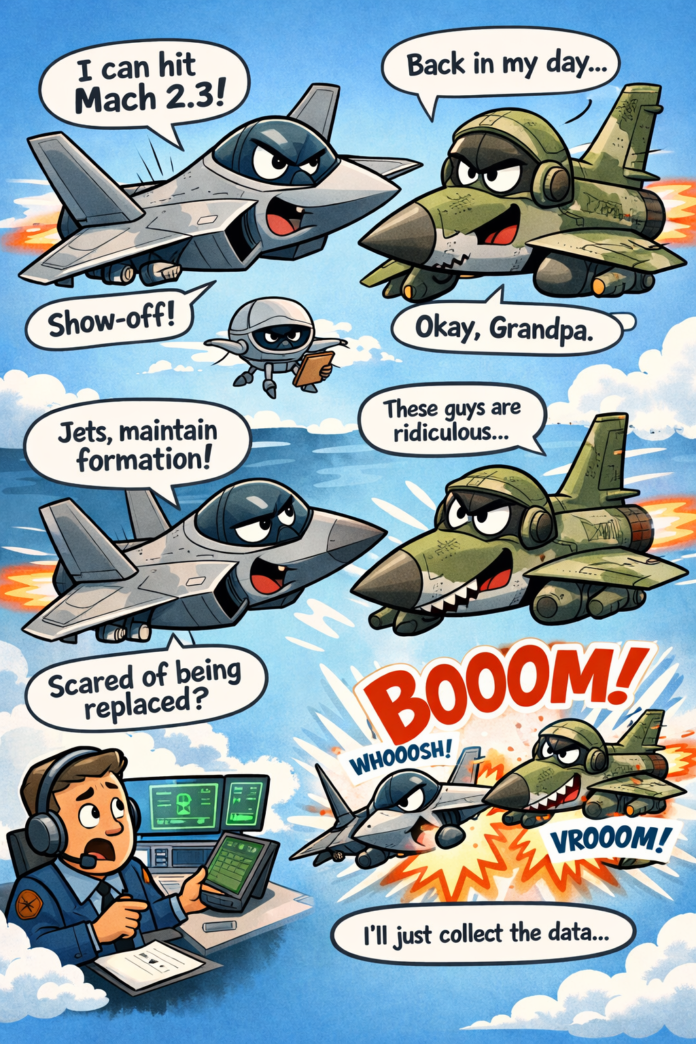
Two Fighter Jets Had an Argument… and the Drone Won

0

Two fighter jets were arguing mid-air.

The young one said,
“I can reach Mach 2.3 in under two minutes.”

The older one replied,
“That’s impressive. I’ve reached emotional maturity.”

The young jet fired up its afterburner.
“Watch this acceleration!”

The older jet sighed.
“Son, I’ve survived three software updates and five budget cuts.”

They started racing.

They started flexing.

They started comparing fuel efficiency like it was a personality trait.

Then a small drone quietly floated between them.

The jets paused.

“Who invited the calculator?” the young one asked.

The drone blinked calmly and said,
“I don’t argue. I just collect data.”

And that’s how two supersonic egos lost to a flying spreadsheet.

The Thinker: Why Most People Never Actually Think (And How to Become One)

0


The Illusion of Thinking

We live in an age of opinions.

Everyone has one.
Few examine them.

Scrolling feels like learning.
Arguing feels like intelligence.
Posting feels like insight.

But reacting is not thinking.

Most people don’t think — they echo.
They recycle headlines, emotions, and borrowed conclusions.

A thinker does something radically different:

He pauses.

And in that pause, power begins.


What a Thinker Actually Is

A thinker is not someone who talks in complex language.
Not someone who reads 100 books a year.
Not someone who sounds intellectual.

A thinker is someone who:

  • Questions their own beliefs.
  • Challenges emotional reactions.
  • Tests assumptions.
  • Observes patterns before forming conclusions.
  • Can say “I might be wrong.”

Thinking is not noise.

It is discipline.


Why Most People Avoid Thinking

Thinking is uncomfortable.

Because real thinking requires:

  • Admitting uncertainty
  • Facing cognitive bias
  • Letting go of ego
  • Sitting with unanswered questions

It’s easier to pick a side.
It’s easier to defend identity.
It’s easier to follow the crowd.

Thinking feels slow.
Reaction feels fast.

But speed without clarity leads to manipulation.


The Hidden Root Problem

The real issue isn’t intelligence.

It’s mental laziness disguised as confidence.

Most people:

  • Consume more than they reflect
  • Speak more than they analyze
  • React more than they observe

The modern world rewards visibility, not depth.

Algorithms amplify outrage, not nuance.

So people train their emotions, not their reasoning.


The THINK Framework (How to Train Yourself to Be a Thinker)

If you want to become a real thinker, use this 5-step model:

T — Trace the Source

Where did this belief come from?
Was it taught, absorbed, assumed, or proven?

H — Hold Emotion

Pause before reacting.
Strong emotion means slow down, not speed up.

I — Invert the Position

Ask:
“What would have to be true for the opposite to be correct?”

This question alone can upgrade your mind permanently.

N — Narrow the Claim

Avoid absolutes.
Replace “always” and “never” with specifics.

Precision is intelligence.

K — Keep Updating

A thinker upgrades beliefs when new evidence appears.
Stubbornness is not strength.


Mistakes That Kill Thinking

  • Confusing confidence with accuracy
  • Following authority blindly
  • Attacking people instead of arguments
  • Treating complexity as weakness
  • Refusing to say “I don’t know”

The smartest people are often the most cautious with certainty.


The Opposite Truth Check

What if the loudest person in the room isn’t the smartest — just the least reflective?

What if speed is actually weakness?

What if silence is where real power forms?

Most people want to appear intelligent.

Few want to build it.


The Long-Term Advantage

Thinking compounds.

Over time, a thinker:

  • Makes fewer emotional mistakes
  • Detects manipulation faster
  • Makes better financial and life decisions
  • Gains quiet influence
  • Builds deep credibility

In business, relationships, investing, migration decisions, and personal growth — clarity wins.

Every time.


Final Reflection

The world doesn’t lack information.

It lacks thinkers.

Be the one who pauses.
The one who questions.
The one who upgrades.

Because in a noisy world,

the thinker always outlasts the crowd.


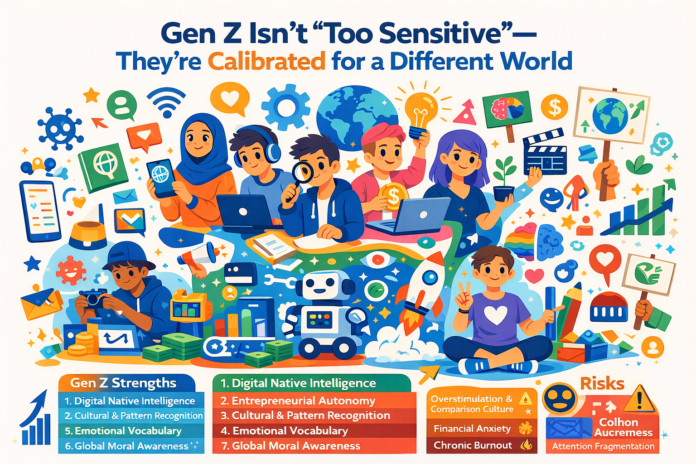
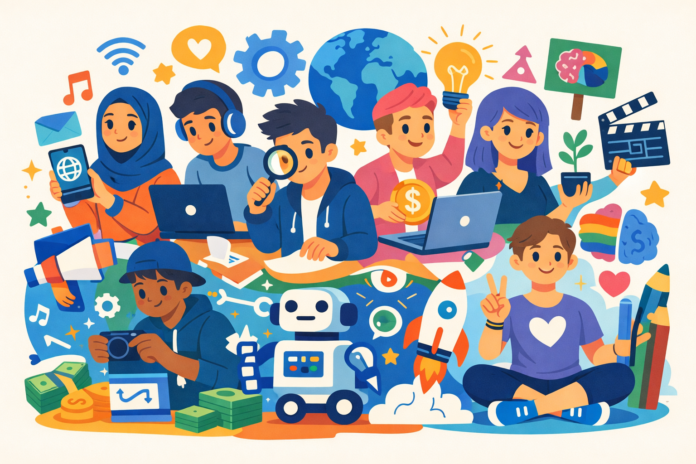
Gen Z Isn’t “Too Sensitive” — They’re Calibrated for a Different World

0

They’re Not Rebellious. They’re Rewired.

Every generation faces criticism.

Boomers were rigid.
Millennials were entitled.
Gen Z is labeled distracted, fragile, dramatic.

But here’s the uncomfortable truth:

Gen Z is not malfunctioning.

They are operating on a different environmental code.

They were raised inside:

  • Algorithmic feeds
  • Global crises streamed live
  • Economic instability
  • Hyper-transparency
  • AI-level automation

This isn’t a minor shift.

It’s neurological conditioning at scale.


Layer 1: What Actually Differentiates Gen Z

Let’s remove noise and analyze structure.

1️⃣ Born Into Infinite Information

They never experienced scarcity of knowledge.

When everything is searchable:

  • Authority weakens.
  • Gatekeeping collapses.
  • Self-learning accelerates.

Older generations trusted institutions.
Gen Z cross-checks institutions.

That changes power dynamics.


2️⃣ Identity as Fluid, Not Fixed

For Gen Z:

  • Careers are not permanent.
  • Roles are flexible.
  • Reinvention is normal.

They don’t see “one path.”

They see:

Iteration.

This makes them highly adaptive — but also prone to instability if not guided.


3️⃣ Early Exposure to Global Awareness

Gen Z grew up watching:

  • Climate change in real time.
  • Political conflicts instantly.
  • Social injustice documented live.

They were never shielded from complexity.

That produces:

  • Cynicism in some.
  • Activism in others.
  • Deep moral awareness in many.

4️⃣ Public Digital Reputation as Survival Skill

Every post can be archived.

Every mistake can resurface.

They understand digital footprint intuitively.

Reputation management is second nature.


Layer 2: The Good Qualities (The Ones That Actually Matter)

Let’s move beyond clichés.

Here are the strengths with structural impact:


🔹 1. Advanced Pattern Recognition

Scrolling through thousands of short-form inputs daily trains:

  • Trend detection
  • Cultural shifts
  • Fake marketing spotting
  • Social manipulation awareness

They read signals fast.

In business, this becomes market intuition.


🔹 2. Entrepreneurial DNA

They don’t wait for permission.

Instead of:

“How do I get hired?”

They ask:

“How do I monetize this skill?”

They:

  • Build brands early.
  • Learn editing, coding, AI tools.
  • Understand platform economics.
  • Test ideas rapidly.

This is startup thinking without formal training.


🔹 3. Emotional Vocabulary

They discuss:

  • Burnout
  • Anxiety
  • Trauma
  • Boundaries

Older generations suppressed.

Gen Z names.

Emotional articulation = leadership advantage.

In modern teams, EQ beats IQ alone.


🔹 4. Cultural Agility

They understand:

  • Meme language
  • Subcultures
  • Cross-border trends
  • Online behavioral codes

This makes them powerful in marketing, storytelling, and community building.


🔹 5. Decentralized Thinking

They distrust centralized systems by default.

They prefer:

  • Creator economy
  • Independent platforms
  • Direct monetization
  • Transparency

This aligns perfectly with Web3, AI automation, and distributed work.


Layer 3: Hidden Root Causes Most People Ignore

Why are they this way?

Because they were shaped by:

  • 2008 financial instability (family insecurity)
  • Pandemic isolation
  • Remote schooling
  • Hyper-competitive digital exposure
  • Constant comparison culture

Their anxiety is not weakness.

It’s environmental overload.


The Real Strength Beneath the Noise

Gen Z is the first generation trained in:

  • Digital survival
  • Narrative warfare awareness
  • Algorithm literacy
  • Personal brand economics

They intuitively understand leverage.

And leverage wins in the modern economy.


The 7-Pillar Gen Z Strength Model

Let’s structure it clearly:

  1. Digital Native Intelligence
  2. Fast Iterative Learning
  3. Cultural Pattern Detection
  4. Entrepreneurial Autonomy
  5. Emotional Self-Awareness
  6. Platform Leverage Mindset
  7. Social Justice Sensitivity

That stack is powerful.


Mistakes & Traps to Avoid

Even strengths can backfire.

⚠️ Overexposure → attention fragmentation
⚠️ Awareness → chronic anxiety
⚠️ Flexibility → lack of long-term commitment
⚠️ Entrepreneurship → burnout culture

Without discipline, their speed becomes chaos.


Opposite-Truth Ego Check

What would have to be true for Gen Z to fail?

  • Digital fluency becomes irrelevant.
  • AI eliminates creativity.
  • Emotional intelligence loses value.
  • Entrepreneurship becomes impossible.

But current trajectory shows the opposite.

The economy is shifting toward:

  • Independent creators
  • Remote digital workers
  • Platform builders
  • AI-augmented operators

Their strengths align with future demand.


The Real Opportunity

Gen Z doesn’t need criticism.

They need:

  • Focus frameworks.
  • Attention discipline.
  • Long-term strategic thinking.
  • Deep skill compounding.

With structure, they become unstoppable.

Without structure, they fragment.


Final Reflection

Gen Z isn’t the problem.

They are the prototype.

They reflect a faster, louder, more transparent world.

And here’s the deeper question:

Are older systems prepared
for a generation that questions everything?


What Truly Differentiates Gen Z?

0

(And the Strengths Most People Overlook)

The Generation Everyone Talks About — But Rarely Understands

Every generation gets labeled.

Lazy. Entitled. Distracted. Over-sensitive.

Gen Z hears all of it.

But beneath the stereotypes lies something far more interesting — and far more powerful.

Gen Z isn’t just “younger.”
They were shaped by a completely different operating system of reality.

Let’s break this down properly.


The Core Difference: They Grew Up Inside the Internet

Millennials saw the internet arrive.
Gen Z was born into it.

That changes everything.

For them:

  • Information is instant.
  • Identity is fluid.
  • Opportunity is digital.
  • Authority is questioned by default.

They don’t “go online.”
They live in a blended online–offline world.

That rewires thinking patterns.


What Makes Gen Z Different?

1. High Pattern Recognition

Gen Z processes massive amounts of information daily — trends, memes, news, short-form videos, global events.

Result?

They develop fast pattern detection skills.

They can:

  • Spot fake trends
  • Detect marketing manipulation
  • Understand cultural shifts quickly

This makes them highly adaptive in fast-moving environments.


2. Radical Transparency Culture

They grew up watching influencers fall in real time.

Scandals get exposed instantly. Screenshots never disappear.

Because of this, Gen Z values:

  • Authenticity over polish
  • Real talk over corporate scripts
  • Vulnerability over perfection

They can sense forced branding instantly.


3. Entrepreneurial Mindset by Default

Unlike older generations who aimed for:

Degree → Job → Retirement

Gen Z thinks:

Skill → Audience → Monetize → Scale

They:

  • Build side hustles at 16
  • Sell digital products
  • Learn editing, coding, AI tools early
  • Understand algorithms better than corporations

They see the internet as infrastructure, not entertainment.


4. Comfort With Diversity

Gen Z grew up exposed to:

  • Different cultures
  • Different identities
  • Global perspectives
  • Remote friendships

They are less shocked by difference.

This creates:

  • Strong social awareness
  • More inclusive thinking
  • Cross-border collaboration potential

5. Mental Health Awareness

Older generations suppressed stress.

Gen Z names it.

They:

  • Talk openly about anxiety
  • Discuss burnout
  • Challenge toxic productivity

This doesn’t mean weakness.

It means emotional literacy.

And emotional intelligence is a power skill in leadership.


Hidden Strengths Most Blogs Miss

🔹 Systems Thinking

They understand platforms, algorithms, networks.

They don’t just consume — they decode.

🔹 Speed of Learning

YouTube tutorials, AI tools, Reddit threads — they self-educate fast.

🔹 Cultural Agility

They adapt language, humor, and trends quickly.

🔹 Moral Awareness

They question systems: climate, inequality, corporate power.

That critical lens can create powerful reformers and innovators.


The Real Problem (And Opportunity)

Every generation looks “rebellious” before it looks “visionary.”

Gen Z’s challenge:

  • Attention fragmentation
  • Overstimulation
  • Dopamine dependency
  • Comparison culture

But here’s the truth:

The same environment that distracts them
is also training them for a world of rapid change.


The 5-Pillar Strength Framework of Gen Z

If we structure it clearly, their edge looks like this:

  1. Digital Native Intelligence
  2. Adaptive Identity
  3. Entrepreneurial Autonomy
  4. Emotional Vocabulary
  5. Cultural Awareness

That combination is rare.

And extremely powerful in a decentralized, AI-driven future.


Opposite-Truth Check

What would have to be true for Gen Z to not be strong?

It would mean:

  • Digital fluency doesn’t matter
  • Emotional awareness is useless
  • Questioning systems is dangerous
  • Rapid adaptation is irrelevant

But the future economy runs on:

  • Digital skill
  • Communication
  • Creativity
  • Platform leverage

Which means…

Their strengths are aligned with the direction of the world.


Final Thought

Gen Z is not “too much.”

They are calibrated for a faster, noisier, more transparent world.

If guided well —
they may become the most system-aware generation yet.

The question isn’t:

“Are they different?”

The real question is:

Are we prepared for what their strengths can build?