Exclusive Content:

Why Do People Stay in Jobs They Hate for Years?

Every morning, millions of people wake up with the...

Power Talks Loud. The Cost Stays Silent.

The Truth No One Wants to Say Out Loud People...

Why Do We Overthink Things That Don’t Really Matter?

You replay a conversation in your head. You wonder if...
Home Blog Page 16

The Language Kitchen: Why Precision Matters More Than Quantity

0

Most people treat communication like a buffet.
Pile it on. Add more. Fill every silence.

But strong communication doesn’t work like that.

It works like a professional kitchen.


Why Too Many Words Ruin the Dish

Imagine a chef preparing a simple soup.

The ingredients are basic.
The technique is clean.

Then suddenly—
extra salt,
extra spice,
extra garnish,
extra everything.

The original flavor disappears.

The same thing happens in conversation.

When you:

  • Over-explain
  • Defend too early
  • Add emotional seasoning
  • Repeat the same idea three different ways

You don’t strengthen your message.
You dilute it.

Clarity isn’t about adding.
It’s about balancing.


The Hidden Psychology of Verbal Overload

When people speak excessively, it’s rarely about clarity.
It’s about:

  • Fear of being misunderstood
  • Fear of losing authority
  • Fear of silence
  • Fear of not being enough

So they compensate with words.

But confidence sounds different.
Confidence is measured.
Intentional.
Economical.

Silence is not weakness.
It’s structure.


The Flavor Ratio Framework

If communication were culinary art, it would follow three simple principles:

1. Base Flavor (Core Idea)

What is the one message you want remembered?

If someone walks away remembering only one sentence, what should it be?

Everything else should support this.


2. Heat (Emotion)

Emotion adds depth — but too much burns credibility.

Use emotion:

  • To emphasize
  • To humanize
  • To connect

Never to overpower.


3. Finish (Delivery & Timing)

Even perfect words fail with poor timing.

Pause.
Let the message land.
Resist the urge to fill the space.

A clean finish leaves impact.


Where Most People Go Wrong

They believe more detail equals more intelligence.

In reality:

Over-seasoned language often signals insecurity.
Balanced language signals authority.

Leaders speak in controlled portions.
Experts explain without noise.
Persuasive people remove what isn’t necessary.


Opposite-Truth Check

What would have to be true for the opposite to work?

That overwhelming someone with detail builds trust.

In reality, overwhelm creates cognitive fatigue.
Fatigue reduces trust.
Reduced trust weakens influence.

Less — when intentional — carries more weight.


Final Thought

The goal is not to speak less.
The goal is to speak precisely.

Before you respond in your next conversation, ask:

  • Is this essential?
  • Does this strengthen the core message?
  • Am I adding clarity — or anxiety?

Because language, like cooking, rewards balance.

And the most memorable impressions rarely come from excess —
they come from control.


If You’re Dead Inside… Why Not Go Outside?

0

— A Leadership Seminar by Supreme Leader Camel Habibi 🐪

There was silence in the desert parliament.

A long, dramatic silence.

The wind moved slowly. A tumbleweed rolled across the golden sand like it had somewhere better to be.

Then, standing tall with royal posture and perfectly moisturized humps, Supreme Leader Camel Habibi adjusted his golden scarf and said:

“If you guys are dead from inside…
then why don’t you go outside?”

The crowd blinked.

One goat dropped its notepad.

A falcon stopped mid-hover.

A bureaucratic llama whispered, “Is this… policy reform?”


The Build-Up

Camel Habibi continued:

“Every day I hear complaints.

‘I’m tired.’
‘I’m burned out.’
‘I feel empty.’

My dear desert citizens… you live in the largest open space on Earth.

He gestured dramatically.

“Sand. Sky. Wind. Unlimited legroom!”


Escalation

A tired antelope raised a hoof:

“But Supreme Leader… we have responsibilities.”

Camel Habibi leaned in.

“So does the sun.
Yet it still rises.”

Gasps.

Someone clapped.

The camel continued:

“You say you feel dead inside. But when was the last time you:

  • Walked without checking your notifications?
  • Stared at the horizon?
  • Let the wind argue with your thoughts?”

Silence again.

This time… reflective silence.


Pattern Lock

Every citizen waited for a complex strategy.

A 10-step productivity blueprint.

A 47-page desert optimization framework.

Instead, Camel Habibi simply said:

“Go outside.”

He turned.

Walked three elegant steps.

Stood in sunlight.

Closed his eyes.

Did absolutely nothing.


Punchline

Five minutes later, half the parliament followed him.

One by one.

Goats. Falcons. Llamas. Bureaucrats.

Not because of a policy.

Not because of a revolution.

But because sometimes…

The most radical solution
is
oxygen.


Aftershock

Later that evening, someone asked him:

“Supreme Leader, is this your official mental health strategy?”

He nodded wisely.

“Yes.”

Pause.

“And drink water.”


Quiet Closing Insight

Sometimes we wait for deep wisdom.

Complicated philosophy.

Secret formulas.

But occasionally…

The solution to feeling dead inside
is simply stepping outside
and remembering
you are still alive.

Even if you are a camel.

🐪

SaaS, PaaS, and IaaS — A Simple Human Guide to Understanding Cloud Technology

0

Technology often sounds more complicated than it really is.

SaaS.
PaaS.
IaaS.

Three short acronyms that make many people feel like they’ve walked into a server room by accident.

But here’s the truth: these models are not about machines.
They’re about who does the work.

And once you understand that, everything becomes calm and clear.


Why These Terms Even Exist

Before cloud computing, companies had to:

  • Buy physical servers
  • Install software manually
  • Maintain hardware
  • Fix crashes
  • Upgrade systems
  • Protect data themselves

It was expensive. It was technical. It was stressful.

Cloud computing changed that.

Instead of owning everything, you now rent what you need — and someone else handles the heavy lifting.

The difference between SaaS, PaaS, and IaaS is simply this:

How much do you manage yourself, and how much does someone else manage for you?


1. SaaS — Software as a Service

What It Really Means

You use the software.
That’s it.

You don’t install servers.
You don’t update systems.
You don’t worry about infrastructure.

You just log in and use it.

Everyday Examples

  • Email platforms
  • Online storage tools
  • Project management apps
  • Streaming services
  • Accounting tools

If you open your browser and start working — that’s usually SaaS.

Real-Life Analogy

SaaS is like going to a restaurant.

You don’t cook.
You don’t clean.
You don’t buy ingredients.

You just eat.

Who It’s For

  • Small business owners
  • Entrepreneurs
  • Teams
  • Non-technical users

SaaS is convenience.

And convenience creates freedom.


2. PaaS — Platform as a Service

What It Really Means

You build your application.
The provider gives you the environment to run it.

You don’t manage servers.
You don’t configure operating systems.

You focus on your code.

Real-Life Analogy

PaaS is like walking into a fully equipped kitchen.

The oven works.
The fridge is stocked.
The electricity runs.

You bring your recipe.

Who It’s For

  • Developers
  • Startups
  • Technical founders

If you want to build software but don’t want to manage infrastructure, PaaS is the middle ground.

It removes complexity without removing creativity.


3. IaaS — Infrastructure as a Service

What It Really Means

You rent virtual machines.

You control:

  • The operating system
  • The environment
  • The configuration
  • The deployment

But you don’t own the physical hardware.

Real-Life Analogy

IaaS is like renting an empty apartment.

The structure is there.

But you choose:

  • Furniture
  • Layout
  • Decoration
  • Setup

More control.
More responsibility.

Who It’s For

  • Advanced developers
  • Large companies
  • DevOps teams
  • Businesses needing flexibility

IaaS gives power — but it also requires knowledge.


The Core Difference (In One Calm Line)

  • SaaS → You use the product
  • PaaS → You build the product
  • IaaS → You manage the environment

And then there’s the old way:

  • On-premise → You own everything and manage everything

Why This Matters for You

If you’re:

A Business Owner

You probably need SaaS.

A Developer Building an App

You might use PaaS.

A Technical Founder Who Wants Full Control

You may choose IaaS.

The important thing isn’t choosing the most advanced model.

It’s choosing the model that reduces friction for your stage.


A Gentle Truth Most People Miss

Many beginners think:

“The more control I have, the better.”

But control also means responsibility.

And responsibility consumes energy.

Sometimes the smartest move isn’t building everything yourself.

It’s choosing simplicity.


When to Choose What

Choose SaaS if:

  • You want speed
  • You don’t want technical stress
  • You value simplicity

Choose PaaS if:

  • You’re building something
  • You want faster development
  • You don’t want server headaches

Choose IaaS if:

  • You need customization
  • You understand infrastructure
  • You’re scaling seriously

Final Perspective

Cloud models are not about complexity.

They’re about trade-offs:

Control vs. Convenience
Power vs. Simplicity
Flexibility vs. Responsibility

There is no “best” model.

There is only what fits your current level.

And the smartest builders don’t start with maximum complexity.

They start with clarity.


If you ever feel overwhelmed by tech jargon, remember this:

Behind every acronym is just a question:

Who is doing the work — you, or someone else?

And that answer will always guide you.

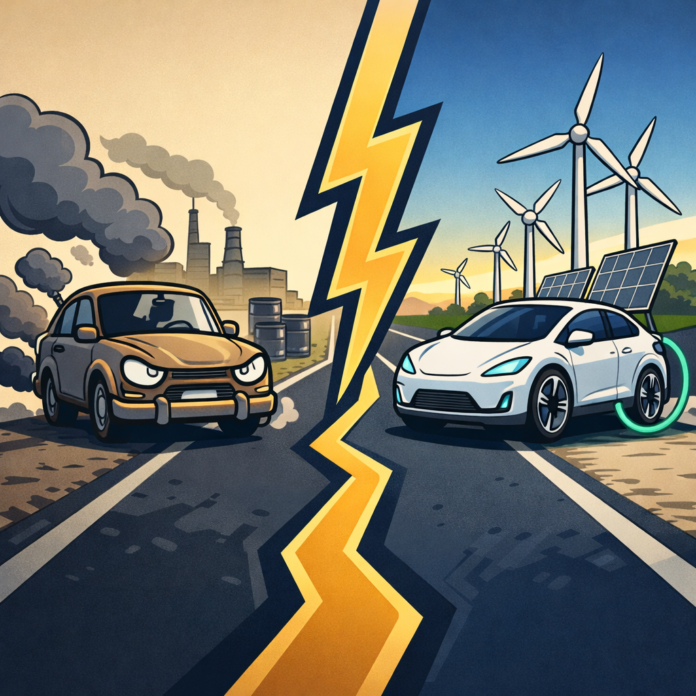
Electric Vehicles: Revolution, Risk, and the Real Future of Mobility

0

The Silent Shift Happening on Every Road

A century ago, the world chose gasoline.

Today, without dramatic announcements, that decision is quietly being reversed.

Electric Vehicles (EVs) are no longer futuristic experiments. They are moving into driveways, reshaping industries, and forcing governments to rethink energy systems. But behind the excitement lies a deeper question:

Are EVs truly a solution — or simply the next phase of a much larger global transformation?

Let’s break it down properly.


What Are EVs — And Why Are They Expanding So Fast?

Electric Vehicles (EVs) are cars powered by electricity instead of internal combustion engines. The most common types include:

  • Battery Electric Vehicles (BEVs) – Fully electric (e.g., vehicles from and )
  • Plug-in Hybrids (PHEVs) – Combine electric motor + gasoline backup
  • Hybrid Vehicles (HEVs) – Limited electric support, still fuel-dependent

Governments worldwide are accelerating EV adoption through incentives, emission regulations, and long-term fossil fuel phase-out targets.

Why?

Because transportation contributes significantly to global carbon emissions. Reducing tailpipe emissions appears to be a logical starting point.

But this is only the surface layer.


The Environmental Impact: Cleaner — But Not Simple

The Benefits

  • Zero tailpipe emissions
  • Reduced urban air pollution
  • Lower long-term operating emissions
  • Decreased dependence on oil imports

Cities become quieter. Air becomes cleaner. Maintenance becomes simpler.

That’s real.

The Hidden Complexity

However:

  • Lithium, cobalt, and nickel mining have environmental consequences.
  • Battery production is energy-intensive.
  • Many countries still generate electricity using coal.

So while EVs reduce visible pollution, part of the environmental cost shifts upstream — into mining regions and power grids.

EVs are not emission-free.
They are emission-redistributed.

And that distinction matters.


The Economic and Geopolitical Shift

This is where EVs become more than vehicles.

For over 100 years, oil defined geopolitical power.

Now, battery materials and supply chains are taking that role.

China dominates large parts of global battery production. Companies like and are restructuring entire production systems around electrification.

The shift is massive:

  • Oil-rich nations may lose leverage.
  • Lithium-producing regions gain strategic importance.
  • Energy independence becomes electricity independence.

EVs are not just technological evolution.

They are economic realignment.


Infrastructure: The Real Bottleneck

EV adoption depends on more than cars.

It depends on:

  • Charging networks (e.g., )
  • National grid stability
  • Renewable energy scaling
  • Battery recycling systems

If millions of vehicles plug in simultaneously, grids must handle the load.

Without infrastructure upgrades, EV growth slows.

The real race is not car manufacturing.

It is grid modernization.


The EV Transition Framework: 5 Forces Shaping the Future

To understand where EVs are going, watch these five forces:

1. Battery Technology Advancement

Solid-state batteries could dramatically increase range and reduce charging time.

2. Policy Stability

Government incentives and emissions laws determine adoption speed.

3. Raw Material Security

Shortages or ethical concerns around lithium and cobalt could slow production.

4. Consumer Psychology

Range anxiety and charging time perceptions still influence buyers.

5. Energy Grid Evolution

Renewables + smart grids will determine whether EVs truly reduce carbon impact.

If these five forces align, EV dominance accelerates.

If even two weaken, growth slows significantly.


The Risks Most People Ignore

What would have to be true for EVs to fail?

  • Breakthrough in hydrogen technology outperforms batteries
  • Severe lithium shortages increase costs dramatically
  • Political shifts remove EV incentives
  • Grid failures reduce public trust

Transitions are never linear.

The path to electrification will include resistance, setbacks, and recalibration.


The Long-Term Future: 2040 and Beyond

The future likely includes:

  • EV + autonomous integration
  • Vehicles acting as mobile power storage units
  • Smart charging powered by AI
  • Vehicle-to-grid systems stabilizing electricity supply
  • Battery swapping models pioneered by companies like

Cars may no longer just consume energy.

They may store and redistribute it.

That changes everything.


The Opposite-Truth Check

What if EVs are not the final answer?

What if they are simply a bridge — a transitional technology — toward something we haven’t fully imagined yet?

History shows us that “final solutions” rarely stay final.

The horse gave way to gasoline.
Gasoline is now giving way to electricity.

The pattern suggests evolution never stops.


Final Verdict: Revolution or Transition?

Electric Vehicles are neither a miracle nor a myth.

They are a necessary, imperfect step in a larger global energy transformation.

They reduce visible pollution.
They restructure industries.
They shift geopolitical leverage.

But they also introduce new dependencies and risks.

The future of EVs will not be decided by marketing or hype.

It will be decided by systems — energy systems, political systems, economic systems.

And the road ahead is still being built.


Your Job Is Not to Say Everything.

0

Your Job Is to Say the Most Important Thing — Clearly.

We live in a world that rewards volume.

Long captions.
Long meetings.
Long explanations.
Long threads.

Somewhere along the way, we started confusing more words with more intelligence.

But clarity doesn’t come from saying everything.
Clarity comes from knowing what to leave out.


The Real Problem: We Talk to Impress, Not to Transfer

Most people communicate to prove something:

  • Prove they are smart
  • Prove they know details
  • Prove they’ve done research
  • Prove they belong

So they over-explain.

They stack points.
They add side notes.
They add disclaimers.
They circle around the message.

And the core idea gets buried under noise.

The goal of communication is not display.
It is transfer.

If the listener walks away confused, it doesn’t matter how brilliant you were.


Why Saying Less Is Hard

Simplicity is uncomfortable.

When you strip away extra words, you expose your thinking.
If your idea isn’t clear, you can’t hide behind complexity.

That’s why:

  • Beginners talk long.
  • Experts talk sharp.

It takes deeper understanding to compress a message than to expand it.

Anyone can add paragraphs.
Few can reduce them without losing meaning.


The Discipline of Precision

Before you speak, write, or present — ask:

If they remember only one sentence, what should it be?

That sentence is your job.

Everything else should support it.

Not compete with it.
Not distract from it.
Not decorate it.

Support it.


In Business

The best pitch isn’t the longest one.

It answers:

  • What problem?
  • For whom?
  • Why now?
  • Why you?

Clear. Focused. Direct.

Investors don’t fund essays.
They fund clarity.


In Conflict

When emotions rise, people dump everything:

“You always…”
“You never…”
“Remember last year…”

But resolution usually requires one thing: A clear description of the behavior and its impact.

Not ten complaints.
One clear message.


In Writing

Readers are busy.

If your message can be said in 8 words, don’t use 80.

Power doesn’t come from complexity.
It comes from compression.


The Test of Mastery

Take any paragraph you wrote.

Cut it in half.

Then cut it again.

If the meaning survives — you weren’t precise yet.

Clarity is compression without distortion.


The Hidden Advantage

When you speak clearly and briefly:

  • People listen longer.
  • People remember more.
  • People trust you faster.
  • People assume you think clearly.

Because you probably do.


The Real Upgrade

Your job is not to fill space.

Your job is to deliver signal.

Say the most important thing.
Say it cleanly.
Say it without fear of silence.

Because in a noisy world,
clarity is authority.

And authority rarely needs many words.


Listening, Reading, Writing, Speaking

0

The Four Pillars of Intellectual Power

Most people treat these as basic skills.

They’re not.

They are a system.

And when developed intentionally, they compound into influence, clarity, and authority.

If one is weak, the whole structure tilts.


1. Listening — Input From Reality

Listening is how you receive unfiltered information from the present moment.

It trains:

  • Emotional regulation
  • Pattern detection
  • Social intelligence
  • Power awareness

When you listen well, you see what others miss.

You hear tone shifts.
You detect hesitation.
You sense intention behind words.

Listening is external intelligence gathering.

Without it, you operate blind.


2. Reading — Borrowed Experience

Reading expands your mental territory beyond your lifespan.

It gives you:

  • Access to other frameworks
  • Historical perspective
  • Mistake compression
  • Strategic pattern recognition

Listening teaches you about the room.

Reading teaches you about the world.

One is immediate.
One is expansive.

Both feed your thinking.


3. Writing — Structured Thinking

Writing forces order.

You cannot hide confusion on paper.

It demands:

  • Logical sequencing
  • Precision
  • Clear argumentation
  • Internal coherence

If reading expands you, writing refines you.

It is the forge where raw information becomes structured insight.

Writing is thinking made visible.


4. Speaking — Directed Influence

Speaking is applied clarity.

It transforms internal structure into external impact.

It requires:

  • Timing
  • Emotional control
  • Message prioritization
  • Audience awareness

If listening is intake,
reading is expansion,
writing is refinement,
speaking is projection.

It is where influence becomes real.


The System Behind the Skills

These four are not separate.

They operate in a loop:

  1. You listen — gather raw data.
  2. You read — expand perspective.
  3. You write — organize thought.
  4. You speak — deploy clarity.

Then the cycle restarts at a higher level.

This is intellectual compounding.


Where Most People Fail

They:

  • Speak without writing.
  • Write without reading.
  • Read without listening.
  • Listen without thinking.

They treat skills as isolated habits.

But power comes from integration.


The Upgrade Path

If you want real growth:

  • Improve listening to sharpen perception.
  • Improve reading to widen frameworks.
  • Improve writing to sharpen logic.
  • Improve speaking to sharpen influence.

Strengthen all four, and your thinking becomes structured.

Structured thinking becomes authority.

Authority becomes leverage.


The Quiet Truth

Master these four, and you control:

  • What you absorb
  • How you interpret
  • How you structure
  • How you project

That is not basic literacy.

That is intellectual sovereignty.


Reading Is Borrowed Intelligence

0

Most people read for information.

Few read for transformation.

There is a difference.

Information fills memory.
Reading properly reshapes perception.

And perception determines decisions.


The Hidden Purpose of Reading

Reading is not about finishing books.

It is about upgrading frameworks.

When you read something powerful, one of three things happens:

  1. You confirm what you already suspected.
  2. You refine what you partially understood.
  3. You confront something that challenges your thinking.

Only the third truly changes you.


Why Many People Read But Don’t Grow

Because they read passively.

They move their eyes.
They absorb words.
They highlight sentences.

But they don’t question.

Active reading asks:

  • Why does the author believe this?
  • What assumptions support this?
  • Where could this fail?
  • What would have to be true for the opposite to be correct?

Reading without interrogation builds memory.
Reading with interrogation builds intelligence.


Reading vs Consuming

Scrolling is not reading.

Consuming is fast.
Reading is deliberate.

Consuming seeks stimulation.
Reading seeks structure.

If a paragraph does not slow you down, it likely won’t change you.


The Discipline of Deep Reading

Try this:

  1. Read one chapter.
  2. Close the book.
  3. Summarize the core idea from memory.
  4. Apply it to one real scenario in your life.

Application is the bridge between knowledge and transformation.

Without it, reading becomes entertainment.


In Business

Strong readers recognize patterns faster.

They connect ideas across industries.
They anticipate shifts earlier.
They avoid repeated mistakes others keep making.

Because they borrow experience instead of waiting to suffer it.

Reading compresses time.


In Personal Growth

A single sentence can reframe a decade.

But only if you pause long enough to let it challenge you.

Reading is not about agreeing.

It is about expanding.

The goal is not to collect quotes.

The goal is to refine judgment.


The Upgrade

Read less.

Think more.

Choose books that stretch you.
Take notes that matter.
Question what feels obvious.

And occasionally ask:

If this author is wrong, where are they wrong?

Critical reading sharpens discernment.


The Quiet Truth

You become what you repeatedly expose your mind to.

If you feed it noise, it thinks in fragments.

If you feed it depth, it thinks in systems.

Reading is not passive.

It is construction.

You are building the architecture of your thinking — page by page.


Writing Is Thinking Made Visible

0

Most people think writing is about words.

It’s not.

Writing is thinking — slowed down enough to be examined.

When you write, your mind can no longer hide behind speed.
It must organize.
It must choose.
It must clarify.

That is why writing feels difficult.

It exposes the gaps in your thinking.


The Hidden Function of Writing

Writing is not primarily for others.

It is for you.

When you cannot explain something clearly on paper, it usually means you do not understand it fully.

Writing forces:

  • Structure
  • Logic
  • Prioritization
  • Precision

It removes vagueness.

And vagueness is where weak ideas survive.


Why Writing Feels Hard

Writing feels hard because:

  • It demands clarity.
  • It reveals confusion.
  • It requires decision-making.
  • It removes shortcuts.

Talking allows improvisation.
Writing demands architecture.

And architecture takes effort.


Writing vs Performing

Some people write to impress.

Big words.
Complex sentences.
Layered metaphors.

But strong writing does something else.

It transfers understanding.

If the reader must struggle to decode your meaning, you are performing — not communicating.


The Discipline of Good Writing

Before publishing or sending anything, ask:

  1. What is the main idea?
  2. Can it be said in one clear sentence?
  3. Does every paragraph support that idea?
  4. What can be removed without losing meaning?

Clarity is subtraction.

Not decoration.


In Business

Clear writing wins deals.

Emails that are direct save time.

Proposals that are structured build confidence.

When someone writes clearly, people assume:

  • They think clearly.
  • They plan clearly.
  • They execute clearly.

And that assumption creates authority.


In Personal Growth

Writing privately is powerful.

Journaling reveals patterns.
Planning clarifies priorities.
Reflection exposes blind spots.

Thoughts floating in your mind feel complex.

Written down, they often become manageable.


The Upgrade

Write not to fill space.

Write to distill.

Short sentences.
Strong verbs.
Clear structure.

If you cannot simplify it, understand it better.


The Quiet Truth

Writing is not about being expressive.

It is about being precise.

And precision creates impact.

Because in a noisy world,
clear writing cuts through.

Not by being louder.

But by being sharper.


Speaking Is a Responsibility, Not a Reflex

0

Most people speak because they can.

Few speak because they should.

There is a difference.

In a world where everyone has a platform, a microphone, a comment section — speaking has become automatic. Immediate. Unfiltered.

But speaking is not just expression.

It is influence.


The Hidden Power of Words

Every time you speak, you:

  • Shape perception
  • Shift emotion
  • Reinforce beliefs
  • Trigger reactions

Words are not neutral.

They create momentum.

That’s why careless speech damages trust faster than silence ever could.


Why We Speak Too Fast

We speak quickly because:

  • Silence feels uncomfortable
  • We want validation
  • We want to appear knowledgeable
  • We fear losing control of the conversation

So we fill space.

But strong communicators do something different.

They pause.

And that pause changes everything.


Speaking vs Reacting

Reaction is instant.

Speaking with intention requires:

  1. Filtering emotion
  2. Clarifying purpose
  3. Selecting precision
  4. Delivering calmly

If you remove step one and two, you’re not speaking — you’re venting.

And venting feels powerful in the moment but weak in hindsight.


The Authority of Controlled Speech

Notice leaders who command respect.

They do not:

  • Over-explain
  • Over-promise
  • Over-react

They say what is necessary.

Not everything that is possible.

Control over speech signals control over self.


In Business

A strong pitch is not loud.

It is clear.

A strong negotiation is not aggressive.

It is measured.

The person who speaks less but speaks strategically often directs the outcome.

Because every word carries weight.


In Conflict

You can escalate a situation with one sentence.

You can de-escalate it with one sentence.

The difference is intention.

Instead of: “You’re always wrong.”

Try: “This approach may create problems.”

Same disagreement. Different energy.


The Discipline Before Speaking

Before you speak, ask:

  • What is my goal?
  • What outcome do I want?
  • Is this necessary?
  • Can it be said more clearly?

If the answer to the third question is no, silence is strength.


The Quiet Truth

Not everything you think deserves to be spoken.

Not every truth needs to be delivered immediately.

Timing matters.
Tone matters.
Context matters.

Speaking well is not about vocabulary.

It is about judgment.


The Upgrade

Mastery is not when you can talk about anything.

Mastery is when you can choose not to.

And when you do speak, people lean in — because they know it will matter.

Speak less.
Mean more.

Because influence does not belong to the loudest voice.

It belongs to the most intentional one.


Listening Is Not Waiting to Talk

0

Most people think they’re good listeners.

They nod.
They maintain eye contact.
They stay quiet.

But inside?

They’re preparing a reply.

That’s not listening.
That’s rehearsing.

And people can feel the difference.


The Hidden Problem: We Listen to Respond, Not to Understand

When someone speaks, your brain does three things automatically:

  1. Judges the statement
  2. Searches for agreement or disagreement
  3. Prepares a counterpoint

You’re not receiving.

You’re filtering.

Real listening requires suspending that internal reaction — even briefly.

Not to surrender your opinion.
But to fully understand theirs.


Why Listening Feels Uncomfortable

Listening deeply is hard because it requires:

  • Ego restraint
  • Emotional regulation
  • Patience
  • Curiosity

When someone criticizes you, your instinct is defense.
When someone disagrees, your instinct is correction.

But mastery isn’t in reacting fast.

It’s in holding space long enough to see clearly.


The Difference Between Hearing and Listening

Hearing is passive.
Sound enters your ears.

Listening is active.
You choose to:

  • Focus
  • Interpret
  • Clarify
  • Reflect

Listening is work.

That’s why so few do it well.


The Power Shift

When you truly listen:

  • People reveal more.
  • Conflicts soften.
  • Misunderstandings shrink.
  • Trust increases.

Not because you agreed.

But because they felt understood.

And feeling understood lowers defenses faster than winning arguments.


The Discipline of Good Listening

Before replying, try this:

  1. Summarize what they said.
  2. Ask if you understood correctly.
  3. Then respond.

Example:

Instead of:

“No, that’s not what happened.”

Try:

“So you felt ignored when I didn’t reply. Is that right?”

You move from combat to clarity.


In Business

Great negotiators don’t talk the most.

They extract information.

They listen for:

  • Motivations
  • Constraints
  • Emotional triggers
  • Hidden fears

The one who speaks less often learns more.

And knowledge is leverage.


In Relationships

Most arguments aren’t about the issue.

They’re about not feeling heard.

You can solve half of relational tension by proving you understood the other person — even if you disagree.

Listening is validation without surrender.


The Ultimate Upgrade

Silence is not weakness.

It is control.

It signals:

  • Confidence
  • Emotional maturity
  • Strategic awareness

When you stop trying to win the moment,
you start understanding the system.


The Test

Next time someone talks, notice:

Are you listening to learn?
Or listening to load your next line?

The answer determines the depth of your influence.

Because people don’t remember who spoke the most.

They remember who understood them best.