Exclusive Content:

Why Do People Stay in Jobs They Hate for Years?

Every morning, millions of people wake up with the...

Power Talks Loud. The Cost Stays Silent.

The Truth No One Wants to Say Out Loud People...

Why Do We Overthink Things That Don’t Really Matter?

You replay a conversation in your head. You wonder if...
Home Blog Page 18

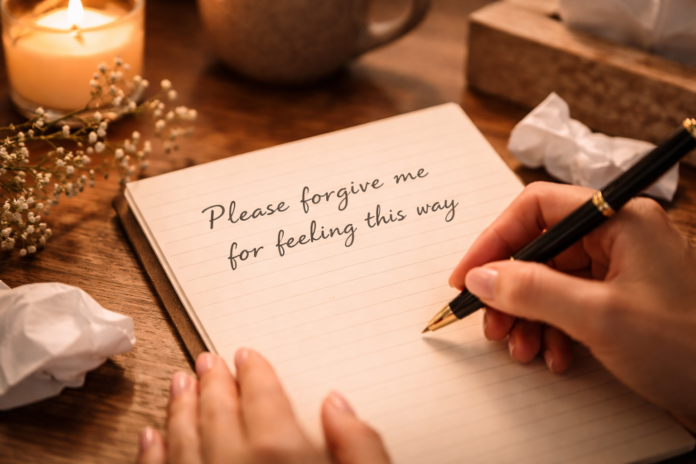
Please Forgive Me for Feeling This Way

0

The Hidden Weight of This Sentence

“Please forgive me for feeling this way.”

At first glance, it feels gentle.
Soft.
Non-confrontational.

But look closer.

You are asking forgiveness — not for an action —
but for an emotion.

And that changes everything.


What This Phrase Actually Signals

It can mean:

  • I don’t want to upset you.
  • I feel uncomfortable expressing this.
  • I worry my emotions are inconvenient.
  • I’m afraid of being judged.

Sometimes it’s vulnerability.

Sometimes it’s self-erasure.


The Critical Distinction

Feelings are internal experiences.
Actions are external behaviors.

You may need forgiveness for:

  • Harsh words
  • Hurtful tone
  • Unfair accusations

But you do not need forgiveness for:

  • Feeling hurt
  • Feeling disappointed
  • Feeling overwhelmed
  • Feeling uncomfortable

Emotion ≠ wrongdoing.


When It’s Healthy

It’s strong when:

  • You’re acknowledging emotional intensity.
  • You want to lower defensiveness.
  • You’re creating space for empathy.

Example:

“Please forgive me if my emotions came out strongly. I’m trying to explain how I feel.”

Notice what’s being owned: Expression — not existence.


When It Becomes Emotional Self-Abandonment

It weakens your position when:

  • You apologize just for having feelings.
  • You believe your emotions are invalid.
  • You fear rejection.
  • You were genuinely hurt but minimize it.

That teaches people:

Your feelings are optional.

They’re not.


The Emotional Integrity Framework™

Before saying this phrase, run this 4-step reset.


Step 1: Identify the Real Issue

Are you apologizing for:

  • The feeling? Or
  • How you expressed it?

Only one requires correction.


Step 2: Reframe the Language

Instead of:

“Please forgive me for feeling this way.”

Try:

“This is how I’m feeling. I’m not attacking you — I just want to be honest.”

Clarity builds respect.


Step 3: Separate Guilt From Vulnerability

Guilt says:

“I shouldn’t feel this.”

Vulnerability says:

“I feel this, and I’m sharing it calmly.”

Choose vulnerability.


Step 4: Maintain Emotional Spine

You can be soft without collapsing.

You can be calm without apologizing for your existence.

That balance creates psychological safety.


Opposite-Truth Ego Check

What would have to be true for the opposite to be correct?

Maybe:

  • You don’t need forgiveness.
  • You need validation.
  • Or you need stronger boundaries.

Sometimes the real sentence should be:

“I need you to understand how this affected me.”

No apology required.


Final Reflection

“Please forgive me for feeling this way”
can be kindness.

But it should never be self-erasure.

Your feelings are data.
Your expression is choice.

Own the emotion.
Refine the delivery.
Stand steady.

That’s emotional integrity.

I Regret That I Have to Bring This Up

0

The Emotional Weight of This Sentence

“I regret that I have to bring this up.”

This isn’t guilt.
It’s reluctance.

You’re communicating:

  • I didn’t want this.
  • I would have preferred peace.
  • But silence is no longer responsible.

There’s gravity in this phrase.

Used correctly, it creates seriousness.
Used poorly, it creates passive tension.


What This Phrase Really Means

It often translates to:

  • I tried to ignore this.
  • I hoped it would resolve itself.
  • I don’t enjoy confrontation.
  • But it matters enough to address.

That’s not weakness.

That’s threshold crossing.


When It’s Powerful

It’s strong when:

  • You’ve given space before speaking.
  • The issue affects trust, performance, or respect.
  • You’re calm, not reactive.
  • You’re prepared to follow through.

Example:

“I regret that I have to bring this up, but the pattern can’t continue.”

Notice the firmness after the softness.


When It Becomes Passive-Aggressive

It weakens your position when:

  • It carries hidden blame.
  • It’s said with emotional charge.
  • It signals martyrdom.
  • You expect the other person to feel guilty.

Regret should communicate seriousness — not superiority.


The Threshold Conversation Framework™

Before saying this phrase, run this 4-step calibration.


Step 1: Ask Why Now?

Why are you bringing it up at this moment?

  • Has a pattern formed?
  • Has a boundary been crossed?
  • Has the cost of silence increased?

Clarity strengthens tone.


Step 2: Check Emotional Temperature

If you’re heated, pause.

Regret spoken in anger sounds like accusation.

Regret spoken calmly sounds like leadership.


Step 3: State the Issue Clearly

Don’t let regret replace clarity.

Instead of:

“I regret bringing this up.”

Say:

“I regret that I have to bring this up, but here’s what I’m noticing…”

Precision earns respect.


Step 4: Invite Resolution

After raising the issue, ask:

  • How do we prevent this?
  • What’s your perspective?
  • What changes moving forward?

Regret should open resolution — not end in tension.


Opposite-Truth Ego Check

What would have to be true for the opposite to be correct?

Maybe:

  • You don’t regret bringing it up.
  • You regret not bringing it up sooner.
  • The discomfort is necessary growth.

Sometimes what we “regret”
is simply courage in motion.


The Leadership Version

Strong communicators understand:

You can dislike confrontation
and still initiate it.

You can regret the necessity
without regretting the decision.

That balance builds authority.


Final Reflection

“I regret that I have to bring this up”
is not an apology.

It’s a signal.

A signal that the issue matters.

Use it when you are steady.
Use it when you are prepared.
Use it when silence would cost more than speaking.

That’s not conflict.

That’s maturity.


I Apologize If I Misunderstood What Happened

0

The Subtle Power of This Phrase

“I apologize if I misunderstood what happened.”

This sentence carries caution.
It signals openness.
It shows willingness to self-correct.

But it also reveals something deeper:

You’re unsure whether your perception is accurate.

And that’s not weakness.

That’s intellectual humility.


What This Phrase Really Communicates

It can mean:

  • I’m open to being wrong.
  • I don’t want to accuse unfairly.
  • I value clarity more than ego.
  • Let’s re-examine this calmly.

That’s emotionally mature behavior.

But here’s the danger:

If overused, it trains people to doubt you.


When It’s Strong

It’s powerful when:

  • Facts are unclear.
  • Emotions escalated quickly.
  • You reacted before verifying.
  • You genuinely want truth over pride.

Example:

“I may have misread the situation. I apologize if I misunderstood what happened. Can we clarify?”

Notice the confidence inside the humility.


When It Becomes Self-Erosion

It weakens you when:

  • You always assume you’re wrong.
  • You apologize before hearing the full story.
  • You fear confrontation.
  • You were clearly disrespected — but you doubt yourself.

That’s not humility.

That’s self-protection.


The Perception Check Framework™

Before using this phrase, run these 4 filters.


Step 1: Evidence Audit

Ask yourself:

  • What do I know for sure?
  • What am I inferring?

Separate observable facts from emotional conclusions.


Step 2: Emotional Amplifier Check

Was your reaction amplified by:

  • Stress?
  • Past wounds?
  • Fatigue?
  • Accumulated frustration?

Sometimes intensity distorts clarity.


Step 3: Shared Reality Test

Instead of collapsing into apology, try:

“Here’s what I saw and how I interpreted it. Is that accurate?”

That invites alignment.


Step 4: Own Only Verified Error

If you were wrong — own it fully.

If you were partially wrong — own that portion.

If you weren’t wrong — stand steady.

Precision builds credibility.


Opposite-Truth Ego Check

What would have to be true for the opposite to be correct?

Maybe:

  • You didn’t misunderstand.
  • You noticed a pattern others ignore.
  • You were right about the impact, wrong about the intent.

Most conflicts live in gray zones — not black and white.


The Leadership Version

The strongest communicators say:

“If I misunderstood, I’m open to correction.”

That keeps your spine straight.

No groveling.
No defensiveness.
No ego.

Just clarity.


Final Reflection

“I apologize if I misunderstood what happened”
is healthy when it comes from strength.

Not fear.
Not insecurity.
Not habit.

Humility without self-erasure.
Openness without collapse.

That’s emotional intelligence in action.


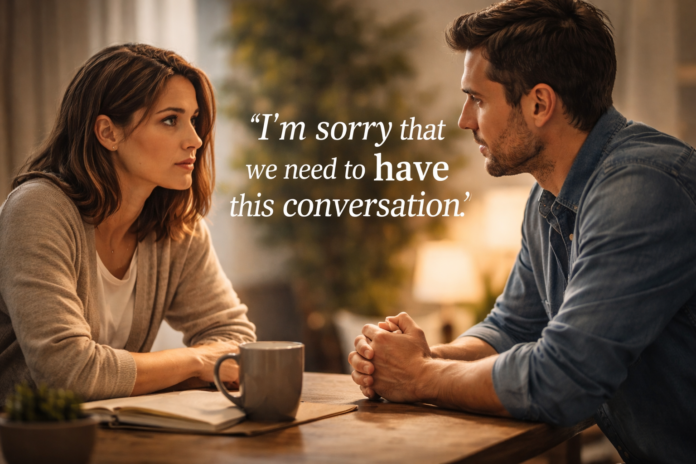
I’m Sorry That We Need to Have This Conversation

0


The Weight Behind the Sentence

“I’m sorry that we need to have this conversation.”

This isn’t an admission of guilt.
It’s an admission of discomfort.

You’re acknowledging that something isn’t smooth.
That tension exists.
That the topic may be heavy.

And sometimes, that humility softens the room.

But sometimes… it shrinks you.


What This Phrase Actually Communicates

It can mean:

  • I don’t enjoy conflict.
  • I value this relationship.
  • I wish this wasn’t necessary.
  • I don’t want you to feel attacked.

All of that is human.

But here’s the hidden risk:

You might be apologizing for having boundaries.


When It’s Healthy

It’s strong when:

  • The relationship matters.
  • The topic is emotionally sensitive.
  • You’re leading with empathy, not fear.
  • You’re not surrendering your position.

Example:

“I’m sorry that we need to have this conversation, but I think it’s important.”

Notice the structure: Empathy first.
Clarity next.


When It Becomes Self-Minimizing

It weakens you when:

  • You feel guilty for speaking up.
  • You fear being disliked.
  • You are pre-blaming yourself.
  • You hope apology will reduce backlash.

In that case, the sentence isn’t empathy.

It’s armor.


The Necessary Conversation Framework™

Before using that phrase, run this 4-step reset:


Step 1: Check Your Intention

Are you apologizing because:

  • You caused harm? Or
  • You’re addressing harm?

Only the first requires guilt.


Step 2: Separate Discomfort From Wrongdoing

Hard conversations ≠ wrongdoing.

Growth conversations often feel uncomfortable.

That doesn’t make them wrong.


Step 3: Upgrade the Language

Instead of:

“I’m sorry we need to talk about this.”

Try:

“This might be uncomfortable, but it’s important.”

That’s leadership tone.


Step 4: Stay Grounded After the Opening

Don’t soften so much that your message dissolves.

Empathy should open the door.

Not close your voice.


The Opposite-Truth Check

What would have to be true for the opposite to be correct?

Maybe:

  • You don’t need to apologize at all.
  • The conversation is overdue.
  • The other person benefits from clarity too.

Sometimes the strongest version is:

“We need to talk about something important.”

No apology.

Just maturity.


Final Reflection

“I’m sorry that we need to have this conversation”
is powerful when it reflects respect.

It’s weak when it reflects fear.

The difference isn’t in the words.

It’s in your posture.

Have the conversation.
Stand steady.
Lead with empathy — not self-erasure.


I’m Sorry If I Misunderstood Your Intent — But Let’s Look Deeper

0

“I’m sorry if I misunderstood your intent.”

It sounds polite.
Mature.
Diplomatic.

But beneath that sentence, there are usually two silent fears:

  • Did I overreact?
  • Am I being unfair?

Sometimes it’s humility.
Sometimes it’s self-doubt disguised as accountability.

Let’s unpack it.


The Psychology Behind the Phrase

When you say this, one of three things is usually happening:

1. You Value Fairness

You don’t want to accuse someone unfairly.
You’d rather check your interpretation than escalate conflict.

That’s emotional intelligence.


2. You Fear Being “Too Much”

Maybe you’ve been labeled:

  • Overthinking
  • Dramatic
  • Sensitive

So you soften yourself preemptively.

The apology becomes protection.


3. You’re Trying to Repair Quickly

Conflict makes you uncomfortable.
So you rush to neutralize tension — even if you’re not wrong.

Peace becomes more important than truth.


Hidden Layer Most People Miss

Intent and impact are not the same.

Someone may not intend harm.

But you may still experience harm.

Both realities can exist at the same time.

Saying “I misunderstood your intent” should not automatically erase your experience.


The Intent–Impact Reset Framework™

Use this 5-step recalibration before apologizing.


Step 1: Separate Facts From Story

Fact: What was said or done.
Story: The meaning you attached to it.

Ask:

  • What did they literally say?
  • What did I assume it meant?

Step 2: Check for Projection

Are you reacting to:

  • The present moment?
    Or
  • A past memory resurfacing?

Sometimes we respond to history, not the person in front of us.


Step 3: Clarify Without Self-Erasure

Instead of:

“Sorry, I misunderstood.”

Try:

“When you said X, I interpreted it as Y. Was that your intention?”

That’s clarity, not collapse.


Step 4: Allow Two Truths

It’s possible that:

  • They didn’t mean harm.
  • And it still felt hurtful.

Communication improves when both are acknowledged.


Step 5: Own Only What’s Yours

If you truly misread — own it confidently.

If you were dismissed — don’t shrink to protect their comfort.

Accountability ≠ self-blame.


Common Traps

  • Apologizing before understanding
  • Assuming you’re always the one who misunderstood
  • Confusing humility with self-minimization
  • Using apology to avoid hard conversations

Politeness without boundaries becomes self-abandonment.


Opposite-Truth Ego Check

What would have to be true for the opposite to be correct?

Maybe:

  • You didn’t misunderstand.
  • You noticed something real.
  • Or you partially misunderstood and partially sensed truth.

Rarely is it 100% one side.


The Real Strength

Strong communicators don’t rush to apologize.

They:

  • Clarify calmly
  • Validate impact
  • Invite explanation
  • Adjust only when necessary

That’s maturity.

Not defensiveness.
Not submission.
Not aggression.


Final Thought

“I’m sorry if I misunderstood your intent”
should come from clarity — not insecurity.

Apologize when it’s accurate.

Clarify when it’s uncertain.

Stand firm when it’s valid.

Because healthy communication isn’t about being right.

It’s about being honest — without shrinking yourself.


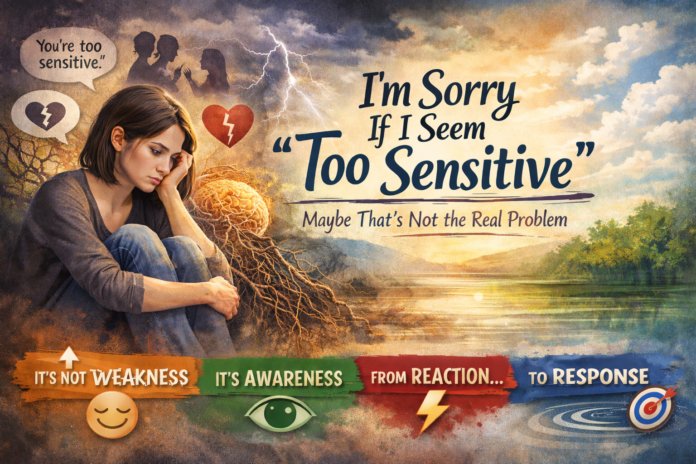
I’m Sorry If I Seem “Too Sensitive” — But Maybe That’s Not the Real Problem

0

“I’m sorry if I seem overly sensitive…”

That sentence usually doesn’t come from arrogance.

It comes from someone who has been told — directly or indirectly —
that their feelings are inconvenient.

Maybe you reacted strongly to a comment.
Maybe a joke didn’t feel funny.
Maybe you noticed a tone shift no one else did.
And suddenly you’re apologizing for feeling.

But here’s the deeper question:

Are you actually too sensitive —
or are you simply aware?


The Real Problem Most People Miss

When someone says “you’re too sensitive,” one of three things is usually happening:

1. Emotional Mismatch

You feel deeply.
They process lightly.

You experience intensity.
They experience surface.

It’s not weakness — it’s difference.


2. Unresolved Triggers

Sometimes sensitivity is a signal.

It may connect to:

  • Past rejection
  • Feeling unheard
  • Fear of abandonment
  • Repeated dismissal

The reaction isn’t about the moment.
It’s about accumulated memory.


3. Boundary Detection

Sensitive people often detect subtle disrespect early.

Tone shifts.
Energy changes.
Micro-expressions.

What others ignore, you register.

And sometimes what you call “overreacting”
is actually your nervous system saying:

“Something feels off.”


Hidden Root Causes Most Blogs Don’t Talk About

  • Growing up in emotionally unpredictable environments
  • Being praised only for performance, not feelings
  • Being the “peacekeeper” child
  • Chronic self-silencing to avoid conflict

Over time, emotions get compressed.

Then one small comment releases pressure —
and you look “dramatic.”

But the reaction didn’t start today.


The Sensitivity Reframe Framework™

Instead of suppressing your emotional response, use this 5-step recalibration model.


Step 1: Pause the Apology Reflex

Before saying “sorry I’m sensitive,” ask:

  • Did I violate a boundary?
  • Or did I simply express discomfort?

There’s a difference.


Step 2: Separate Emotion from Expression

Emotion = valid
Expression = adjustable

You can feel deeply
without reacting destructively.


Step 3: Run the Opposite-Truth Test

What would have to be true for the opposite to be correct?

Maybe:

  • They didn’t intend harm.
  • You’re reading threat where none exists.
  • Or you’re right — and minimizing it.

Challenge yourself gently.


Step 4: Clarify Instead of Collapse

Instead of:

“Sorry, I’m just sensitive.”

Try:

“When that was said, it landed differently for me. Can we clarify?”

That’s assertive, not fragile.


Step 5: Build Emotional Strength, Not Emotional Armor

Armor blocks everything.
Strength filters wisely.

Develop:

  • Self-awareness
  • Nervous system regulation
  • Clear boundaries
  • Calm communication

Sensitivity becomes perception — not panic.


Common Traps to Avoid

  • Turning every discomfort into self-blame
  • Gaslighting yourself before others do
  • Believing “strong” means emotionally numb
  • Thinking being quiet equals maturity

Silence is not strength.
Awareness is.


Ego Check Section

What if you’re not “too sensitive”?

What if you’re under-skilled at regulating intensity?

Those are not the same.

Sensitivity is raw data.
Regulation is skill.

One is natural.
The other is trainable.


The Real Truth

The world doesn’t need fewer sensitive people.

It needs:

  • People who feel deeply
  • But respond intentionally
  • Who detect shifts
  • But communicate calmly
  • Who notice harm
  • But don’t attack reflexively

That’s emotional intelligence.

Not emotional weakness.


Final Thought

Stop apologizing for feeling.

Start mastering how you use those feelings.

Sensitivity, when disciplined, becomes:

  • Intuition
  • Creativity
  • Leadership awareness
  • Relational depth

And the right people won’t ask you to shrink it.

They’ll value it.


The Half-Second That Runs Your Life

0

Most people believe they are conscious of their decisions.

But neuroscience quietly disagrees.

There is a half-second — sometimes even less — between when your brain decides and when you think you decided.

That invisible gap is where most of your life is shaped.

And almost nobody notices it.


The Half-Second Before “You”

In the 1980s, neuroscientist ran experiments that shook the idea of free will.

He found that brain activity (called the readiness potential) began milliseconds before participants reported consciously choosing to move.

Your brain initiates.

Your awareness reports.

That means:

You don’t decide first.
You become aware of a decision already forming.

Half a second late.


Why This Matters More Than You Think

That half-second is not just about lifting a finger.

It shows up when:

  • You snap at someone before thinking.
  • You scroll without intending to.
  • You feel jealous before reasoning.
  • You buy something impulsively.
  • You defend your ego automatically.

Your nervous system reacts.
Your consciousness justifies.

We think we are drivers.
Often, we are narrators.


The Real Problem Isn’t the Delay

The problem isn’t that the brain moves first.

The problem is that we rarely train the observer.

Most people live entirely inside reaction mode: Stimulus → Emotion → Action → Justification.

They never see the half-second.

They never question the impulse.

And so patterns repeat for years.


The Skill Nobody Teaches

What if the real power is not controlling every impulse…

…but noticing it before it turns into behavior?

Mindfulness researchers, including work influenced by , describe two systems of thinking:

  • Fast, automatic, emotional.
  • Slow, reflective, deliberate.

The half-second belongs to the fast system.

Growth begins when you train the slow one to step in.


A Real-World Example

Imagine someone criticizes you at work.

Half-second reaction: Heat in your chest.
Defensive thought.
Urge to interrupt.

Most people speak from that surge.

But if you expand awareness — even by one breath — you create space.

Space turns reaction into choice.

Choice changes outcomes.


The Three-Step Awareness Reset

If you want to reclaim that invisible half-second, practice this:

1. Catch the Body First

Emotions show up physically before mentally.
Notice tension, heat, tightness.

2. Label the Impulse

“I feel defensive.”
“I want to escape.”
“I want to win.”

Naming reduces emotional intensity.

3. Delay by One Breath

One slow inhale.
One slow exhale.

That single breath interrupts the automatic loop.

It feels small.

But it rewires patterns over time.


The Hidden Truth

You may never stop your brain from initiating impulses.

But you can decide which impulses become identity.

The half-second is not a weakness.

It is a doorway.

Most people sleep through it.

A few people build their entire character inside it.


Final Thought

Consciousness doesn’t mean controlling every thought.

It means witnessing the thought early enough to choose differently.

Your life is not built in dramatic moments.

It is built in microscopic pauses.

And sometimes…

All it takes is half a second.


10,000 Years Later… Why Are We Still Fighting the Same Battles?

0

Ten thousand years ago, humans did not have skyscrapers.
They did not have stock markets.
They did not have social media, passports, or artificial intelligence.

But they had something we still carry today.

The same fears.
The same desires.
The same internal conflicts.

Civilization evolved.

Human wiring did not.

So what problems existed 10,000 years ago that still exist right now?

Let’s strip away the illusion of progress.


1. The Survival Problem

Then:

  • Food scarcity
  • Harsh climates
  • Predators
  • Tribal wars

Now:

  • Financial instability
  • Job insecurity
  • Economic crashes
  • Global conflicts

The tools changed.
The anxiety did not.

Back then, survival meant hunting.
Today, survival means earning.

But the nervous system reacts the same way.

Your stress about money?
Your ancestors felt that stress about winter.

Different environment. Same biology.


2. The Status Hierarchy Problem

In tribal societies, hierarchy formed quickly:

  • Who was strongest?
  • Who was the best hunter?
  • Who led the group?
  • Who was chosen as a mate?

Today:

  • Who earns more?
  • Who has more followers?
  • Who has more influence?
  • Who has higher credentials?

The scoreboard changed.
Competition did not.

Humans organize into hierarchies automatically.

Remove one ladder — another appears.


3. The Belonging vs Exclusion Problem

10,000 years ago:

If your tribe rejected you, you died.

Today:

Rejection doesn’t mean death —
but it still feels like it.

Loneliness, social anxiety, fear of judgment —
all ancient survival signals.

We still fear exclusion because our brain hasn’t updated to modern safety.

The tribe simply became:

  • Workplace
  • Online community
  • Nation
  • Social circle

But belonging remains essential.


4. The Uncertainty Problem

Ancient humans feared:

  • Drought
  • Disease
  • Natural disasters
  • Unknown enemies

Today we fear:

  • Market crashes
  • AI disruption
  • Relationship instability
  • Health diagnoses

Uncertainty remains the central stress trigger.

Humans have always tried to reduce chaos through:

  • Ritual
  • Religion
  • Science
  • Systems
  • Forecasting

We don’t fear pain as much as we fear unpredictability.


5. The Meaning Problem

Even ancient humans buried their dead ceremonially.

That means one thing:

They were already asking,
“What does this mean?”

The meaning crisis did not begin in modern cities.

It began when consciousness evolved.

Humans don’t just experience life.

They interpret it.

And interpretation creates existential tension.


6. The Desire Problem

Ancient humans desired:

  • More land
  • Better mates
  • Greater dominance
  • More security

Modern humans desire:

  • More wealth
  • More recognition
  • More control
  • More comfort

Desire did not shrink with progress.

It expanded.

Because once basic survival improves, ambition scales.

And desire without limit creates perpetual dissatisfaction.


7. The Internal Conflict Problem

The biggest one.

Then and now:

Humans struggle between:

  • Impulse vs discipline
  • Fear vs courage
  • Aggression vs cooperation
  • Self-interest vs group interest

Civilization adds rules.

But the internal tug-of-war remains.

Technology improved tools.

It did not rewire the psyche.


What Most People Get Wrong

We think modern problems are new.

They’re not.

They are ancient drives wearing modern clothing.

  • Currency is structured survival.
  • Politics is organized tribalism.
  • Social media is scaled status competition.
  • Branding is symbolic hierarchy.

Same roots. Bigger stage.


The Opposite-Truth Ego Check

What if humanity is not evolving as fast as we think?

What if progress is mostly technological —
while psychology moves slowly?

If someone from 10,000 years ago entered today’s world…

They would adapt quickly to the emotional dynamics.

Because those never changed.


Final Reflection

The problems that existed 10,000 years ago and still exist today are:

  • Survival anxiety
  • Status competition
  • Fear of exclusion
  • Uncertainty intolerance
  • Desire without limit
  • Meaning crisis
  • Internal emotional conflict

We built cities.

But we still carry the same nervous system.

And until we learn to understand it…

We will keep solving external problems
while reliving ancient internal ones.


If We Removed Money, Religion, and Politics… What Problems Would Still Exist?

0

Let’s imagine something radical.

No currency.
No organized religion.
No political systems.
No governments.
No elections.
No economic class structures.

The three forces that dominate headlines disappear overnight.

Would conflict disappear?

Would suffering end?

Would humans suddenly live in harmony?

Not even close.

Because those systems are not the root problem.

They are amplifiers.

Remove the structure — the psychology remains.


The First Problem That Would Remain: Status Hierarchy

Even without money or politics, humans would still compare.

Who is stronger?
Who is smarter?
Who is more attractive?
Who influences others?
Who gets attention?

Status competition is older than currency.
It existed before governments.

In tribes, hierarchy formed naturally — not through law, but through perception.

Wherever two humans exist, comparison begins.

Money is just a scoreboard.
Remove it, and a new scoreboard appears.


The Second Problem: Fear of Exclusion

Humans are wired for belonging.

Without religion or political identity, we would still form tribes:

  • Cultural
  • Intellectual
  • Aesthetic
  • Ideological
  • Personality-based

Because exclusion once meant death.

Even today, rejection activates the same neural pain centers as physical injury.

So we would still struggle with:

  • Loneliness
  • Rejection
  • Social anxiety
  • Group division

Politics didn’t invent tribalism.

It monetized it.


The Third Problem: Meaning Crisis

Without religion or ideology telling us why we exist…

The question becomes unavoidable:

Why am I here?

And not everyone is comfortable with silence.

Humans seek narrative.

If no formal religion exists, personal mythologies will rise.

New belief systems form.

Spiritual movements emerge.

Because uncertainty is intolerable without meaning.


The Fourth Problem: Ego & Identity Conflict

Remove structured power systems and people will still ask:

  • Am I significant?
  • Do I matter?
  • Am I better than someone?
  • Am I falling behind?

Ego does not need money to compete.

It only needs comparison.

In fact, without money, ego might compete more subtly:

  • Moral superiority
  • Intelligence
  • Creativity
  • Physical ability
  • Popularity

Hierarchy always rebuilds itself.


The Fifth Problem: Internal Chaos

Even if society stabilizes…

Humans still experience:

  • Anxiety
  • Jealousy
  • Envy
  • Regret
  • Rumination
  • Attachment
  • Desire

Remove politics — jealousy remains.
Remove religion — existential fear remains.
Remove money — desire remains.

The mind does not dissolve with the system.


The Hidden Root Problem

If you strip everything down, the problems that remain are psychological:

  1. Comparison
  2. Fear
  3. Identity instability
  4. Desire without limit
  5. Inability to regulate emotion

Systems don’t create these.

They organize them.


What Most People Miss

Money, religion, and politics are external expressions of deeper drives:

  • Survival
  • Belonging
  • Meaning
  • Status
  • Control

Remove the tools — the drives remain.

Humans would rebuild structures to manage those drives again.

Not because we are flawed.

But because we are conscious.

And consciousness demands narrative, hierarchy, and structure.


The Opposite-Truth Ego Check

What if the real instability is not the system…

But the human nervous system?

What if removing money and politics wouldn’t create peace…

But expose internal unrest we’ve been distracting ourselves from?

That is uncomfortable.

But powerful.


Final Thought

If we removed money, religion, and politics, the following would still remain:

  • The need to belong
  • The urge to compete
  • The fear of insignificance
  • The search for meaning
  • The instability of ego

Because those are not societal problems.

They are human ones.

And until we learn to govern the internal architecture of the mind…

We will keep rebuilding new versions of the same systems.

If We Solved Every External Problem… What Would Still Haunt Us?

0

Imagine this.

No poverty.
No war.
No disease.
No hunger.
No inequality.
No financial instability.
No algorithm anxiety.
No visa stress.
No survival fear.

Technology works. Systems are efficient. Safety is guaranteed.

So what would remain?

Here is the uncomfortable truth:

The internal problem was never external to begin with.


The Real Remaining Problem: The Self

Even if the world becomes perfect, the human mind does not automatically become peaceful.

When survival disappears, something else rises:

  • Restlessness
  • Comparison
  • Identity confusion
  • Emptiness
  • Ego
  • Fear of insignificance

We remove external chaos… and suddenly we hear our internal noise.

And that noise has always been there.


The Internal Conflict No System Can Solve

If every external problem vanished, the deepest internal problem remaining would be:

The tension between who we are and who we believe we should be.

This is the ego gap.

It shows up as:

  • “I should be more.”
  • “I’m not enough.”
  • “What is my purpose?”
  • “Why do I feel empty even though everything is fine?”

This conflict cannot be solved by technology, money, borders, or policy.

Because it lives inside perception.


When Survival Is Solved, Meaning Becomes the Battlefield

History shows this pattern.

When people struggle to survive, they focus on food and safety.
When survival stabilizes, anxiety shifts to identity and purpose.

Look at highly developed societies:

  • Depression rates rise.
  • Existential crises increase.
  • Comparison culture intensifies.
  • People chase stimulation instead of survival.

Why?

Because the mind needs tension.

If there is no external threat, it creates internal ones.


The Core Internal Problem: Psychological Instability of Identity

Strip everything away and one problem remains:

Humans do not know how to exist without conflict.

We are wired for:

  • Threat detection
  • Status comparison
  • Narrative building
  • Self-judgment

So even in paradise, we would still ask:

  • Who am I relative to others?
  • Do I matter?
  • Am I winning?
  • Am I falling behind?
  • Is this enough?

And the mind would still oscillate.


The Hidden Root: Consciousness Without Mastery

The final internal problem is this:

We are conscious, but we do not fully understand or govern our own consciousness.

We can build cities.

But we struggle to sit quietly.

We can engineer AI.

But we cannot consistently regulate our emotions.

We can solve logistics.

But not longing.


What Most Blogs Miss

The problem is not suffering.

The problem is attachment to identity.

Even in a perfect world, people would:

  • Compare achievements.
  • Seek validation.
  • Fear irrelevance.
  • Manufacture competition.
  • Create new hierarchies.

Because ego seeks structure to measure itself.

Remove one ladder, it builds another.


The Internal Problem That Would Remain

If all external problems vanished, the remaining internal problem would be:

The inability to feel whole without external reference.

In other words:

The search for identity beyond circumstance.

Until a human learns to exist without constant comparison, fear, and validation-seeking, no external solution will feel complete.


So What Is the Real Work?

The final frontier is not space.

It is self-governance of the mind.

Not suppression.
Not ego destruction.
But conscious design of inner stability.

A person who solves that does not depend on chaos to feel alive.

They choose direction instead of reacting to conditions.


The Opposite-Truth Ego Check

What if external problems are not the enemy?

What if they distract us from facing the internal one?

If the world suddenly became perfect…
Would you feel peaceful?

Or exposed?

That question reveals everything.


Final Thought

External problems keep us busy.
Internal problems define us.

Even in a perfect world, the final challenge remains:

Mastering the mind that experiences the world.

And that battle has no shortcut.