Exclusive Content:

How You Deal With People Defines What You Become

Most people think dealing with people is about being...

Why Do People Stay in Jobs They Hate for Years?

Every morning, millions of people wake up with the...

Power Talks Loud. The Cost Stays Silent.

The Truth No One Wants to Say Out Loud People...
Home Blog Page 25

Gold Trading at an Elite Level (Institutional Blueprint for XAUUSD Mastery)

0

1. Understand What Gold Really Is

Gold is driven by:

  • US Dollar strength (DXY inverse correlation)
  • Real yields (10Y Treasury – inflation)
  • Risk sentiment (war, crisis, recession)
  • Central bank activity
  • Liquidity cycles (London & New York)

Gold is not random volatility.
It is capital rotating between fear and yield.


2. Gold’s Unique Personality (Why It’s Different)

Gold behaves differently than forex pairs:

• Large wicks
• Fast expansions
• Stop hunts
• Deep pullbacks before continuation
• Sharp NY session volatility

If you treat gold like EURUSD, you will get destroyed.


3. Multi-Timeframe Framework for XAUUSD

Higher Timeframe (Daily / 4H)

Purpose: Bias only.

You define:

  • Trend (HH/HL or LH/LL)
  • Key liquidity pools
  • Premium/discount zones
  • Major supply/demand

No lower timeframe trade against HTF bias.


Mid Timeframe (1H / 30M)

Purpose: Structure refinement.

Look for:

  • Break of structure (BOS)
  • Liquidity sweep
  • Orderflow shift

Execution Timeframe (5M / 15M)

Purpose: Entry precision.

Trigger must include:

  • Liquidity grab
  • Strong rejection
  • Imbalance fill
  • Volume expansion

No guessing entries.


4. Gold Liquidity Map (Where Money Hides)

Gold respects:

• Previous day high/low
• London session high/low
• Weekly high/low
• Equal highs/lows
• Round numbers (2000, 2050, 2100 etc.)

Elite traders trade liquidity events, not candles.

If price runs above equal highs → expect sweep.


5. The Gold Session Model

Asian Session

Usually range building.

London Open

Liquidity expansion.

New York Open

Major volatility injection.

Gold moves aggressively during NY.

Avoid random mid-session entries.


6. Risk Management for Gold (Critical)

Gold can move 100–300 pips fast.

Elite rules:

  • 0.5%–1% max risk
  • Wider structural stops (not tight scalper stops)
  • Minimum 1:3 RR
  • Never average losing positions

Gold punishes ego.


7. Gold Entry Model (Institutional Style)

Example:

HTF bullish
Price pulls back into discount zone
Sweeps Asian low
5M BOS
Strong bullish displacement
Enter on retrace

Stop below sweep low
Target previous high

This is structured logic.

Not: “I think it will go up.”


8. News Filter for Gold

Never trade blindly during:

  • CPI
  • NFP
  • FOMC
  • Interest rate decisions
  • Major geopolitical events

Gold reacts violently.

Rule: No entry 15–30 minutes before high impact news.


9. Advanced Gold Concepts (Elite Edge)

9.1 Real Yield Awareness

When real yields rise → gold weakens.
When real yields fall → gold strengthens.

9.2 Dollar Correlation

Watch DXY.

If DXY strong bullish impulse → gold likely pressured.

9.3 Trap Probability

Gold loves fake breakouts.

If breakout lacks volume → suspect manipulation.


10. Psychological Control (Gold Edition)

Gold induces:

• Overtrading
• Revenge trading
• FOMO
• Greed on runners

Elite discipline rules:

Max 2–3 trades per session
Stop after 2 losses
No doubling risk


11. Gold Scaling Model

Do NOT scale aggressively.

Scale only: After consistent 20R+ month
After 60+ days rule adherence

Gold rewards patience.


12. The Elite Gold Trading Plan (Sample)

Market: XAUUSD
Session: London + NY
Bias: Daily trend aligned
Entry: Liquidity sweep + 5M BOS
Risk: 1%
RR: 1:3 minimum
Max Daily Loss: 2%
Max Trades: 3
News Filter: Strict
Weekly Review: Mandatory

Repeat for 90 days.

Consistency > excitement.


Why 95% Fail Trading Gold

They:

• Trade every spike
• Use tight stops
• Ignore macro
• Overleverage
• Chase breakouts
• Trade without session awareness

Gold is not hard.

Undisciplined traders are.


Final Reality

Elite gold trading is:

Boring
Structured
Selective
Macro-aware
Risk-controlled

If you can sit 3 hours without trading — you are becoming elite.

How to Build a Perfect Trading Plan (Elite-Level Blueprint for Consistent Profits)

0

Most traders don’t fail because of strategy.

They fail because they never built a complete system.

A real trading plan is not:

  • ❌ “I trade gold.”
  • ❌ “I use support and resistance.”
  • ❌ “I risk 1%.”

A real trading plan is a behavioral operating system.

Let’s build one properly.


1. Strategic Foundation: Define Your Trader Identity

Before entries, define:

1.1 Market Selection

Choose ONE primary instrument.

Example:

  • XAUUSD (Gold)
  • NASDAQ (US100)
  • S&P 500
  • EURUSD

Elite traders specialize. They do not scatter focus.


1.2 Timeframe Alignment

Define:

  • HTF Bias (4H / Daily)
  • Execution TF (5M / 15M)
  • Confirmation TF (1M / 3M optional)

Your plan must state:

“I only take trades aligned with higher timeframe structure.”

No bias = no trade.


1.3 Session Rule

Define when you trade.

Example:

  • London Open (8:00–11:00 UTC)
  • New York Killzone

No random trading outside your session.


2. Market Structure Framework (Your Direction Engine)

Elite trading is structure-driven.

Your plan must define:

  • Higher High (HH)
  • Higher Low (HL)
  • Lower High (LH)
  • Lower Low (LL)
  • Break of Structure (BOS)
  • Change of Character (CHOCH)

You only trade:

  • Pullbacks in trend
  • Liquidity sweeps into structure
  • Clear structure shifts

If structure is messy → no trade.


3. Entry Model (Precision Trigger System)

Your entry must be rule-based, not emotional.

Example Entry Checklist:

✅ HTF bias bullish
✅ Price sweeps liquidity
✅ Returns into discount zone
✅ Structure shift on LTF
✅ Rejection candle / imbalance fill
✅ Volume expansion confirmation

If one condition missing → no trade.

No “almost.”


4. Risk Management System (The Survival Engine)

This is where pros separate from gamblers.

4.1 Fixed Risk Per Trade

  • 0.5% – 1% max
  • Never increase after loss
  • Never revenge trade

4.2 Stop Loss Rules

Stop must be:

  • Beyond structural invalidation
  • Not arbitrary pips
  • Based on liquidity level

If structure breaks → thesis invalid.


4.3 Risk-to-Reward

Minimum 1:2
Ideal 1:3+

But context matters:

  • Strong trend → 1:4 possible
  • Range → partials at 1:2

5. Exit Strategy (Professional-Level Precision)

Most traders enter well but exit badly.

Define:

5.1 Take Profit Logic

Options:

  • Previous High/Low
  • Liquidity pool
  • Measured move
  • Session high/low
  • Volume exhaustion

5.2 Partial Close Rule

Example:

  • Close 70% at 1:2
  • Let 30% run to structure

5.3 Hard Exit Rule

If:

  • Opposite structure break
  • Major news spike
  • Session ends

Close trade.

No hope holding.


6. Psychological Protocol (The Hidden Edge)

Elite plan must include behavior rules.

6.1 Daily Rules

  • Max 2–3 trades
  • Max 2 losses per day
  • After 2 losses → stop trading

6.2 Emotional Filters

Do NOT trade if:

  • Angry
  • Sleep deprived
  • After argument
  • After big win (euphoria)

6.3 Post-Loss Routine

  • 10-minute break
  • Review mistake
  • Write reason

No instant re-entry.


7. Trade Journal Architecture (Growth Engine)

Track:

  • Screenshot before entry
  • Screenshot after exit
  • Emotional state
  • Session
  • R:R
  • Mistake log

Review weekly:

  • Win rate
  • Average R
  • Biggest mistake type
  • Session performance

Elite traders improve via data, not hope.


8. Capital Growth Model

Decide scaling rules BEFORE trading.

Example:

  • Increase risk only after +10R month
  • Never scale mid-month
  • Withdraw 20% of profits

No emotional compounding.


9. News & Macro Filter

Never ignore:

  • NFP
  • CPI
  • FOMC
  • Major geopolitical events

Rule:

No entry 15 minutes before high-impact news.


10. The “No Trade” Clause (Most Powerful Rule)

Elite traders make money by NOT trading.

If:

  • Structure unclear
  • Range compression
  • Spread wide
  • Volatility dead

You sit.

Patience compounds capital.


Example: Complete Trading Plan Summary

Market: XAUUSD
Session: London
Bias: Daily bullish
Entry: Liquidity sweep + 15M BOS
Risk: 1%
RR: 1:3
Max Trades: 3
Max Daily Loss: 2%
Review: Weekly
Scale Rule: After +15R

Simple. Clear. Repeatable.


Why Most Traders Fail

They:

  • Change strategy weekly
  • Overtrade
  • Increase risk emotionally
  • Trade every candle
  • Have no written rules

Trading is boring when done correctly.

That’s the point.


Final Truth

A perfect trading plan is not:

  • Complex
  • Indicator heavy
  • Emotional
  • Flexible based on mood

It is:

Structured
Boring
Repetitive
Data-driven
Emotion-proof

If you can follow your own rules for 90 days without deviation, you’re already ahead of 90% of traders.

Two OTT Platforms Tried Replacing Humans with AI… It Didn’t Go as Planned

0

When two rival OTT platforms — let’s call them StreamFlix and BingeBox — decided to replace their creative teams with AI-generated videos, they thought they had unlocked the future.

No actors.
No directors.
No tantrums.
Just pure algorithmic genius.

They forgot one thing.

Algorithms don’t understand drama.
They understand data.

And data has no feelings.


Phase 1: “AI Knows What People Want”

StreamFlix fed their AI millions of romantic movies.

The AI generated a new series titled:

“Love in the Time of WiFi.”

Plot summary:
Two people fall in love because they both have strong internet connection.

Episode 3 twist:
The router dies. They break up.

IMDb rating: 2.1/10.
Audience comment: “Is this sponsored by a telecom company?”


Phase 2: BingeBox Goes Dark

BingeBox wanted something intense.
They trained their AI on crime thrillers.

The AI produced:

“Murder.exe”

The killer wasn’t human.
It was a corrupted Excel sheet.

The final scene?
The detective arrests Microsoft Office.

Critics called it “bold.”
Viewers called it “please stop.”


The Real Problem

The AI optimized for:

• Maximum plot twists
• Highest emotional spikes
• Trending keywords
• Viewer retention

So every episode had:

– A betrayal
– A wedding
– A car chase
– A motivational speech
– And someone shouting, “This changes everything!”

All within 7 minutes.

It was less storytelling…
More emotional cardio.


The Moment of Realization

After three months, subscriptions dropped.

Why?

Because humans don’t want perfection.
They want imperfections.

Awkward pauses.
Bad jokes.
Unexpected chemistry.

AI gave them perfect structure.
But zero soul.


The Funny Twist

One night, both OTT CEOs secretly hired human writers again.

But they kept the AI.

Why?

To generate titles.

Because somehow, the AI came up with:

“Why Did the Hero Open a Startup Instead of Saving the World?”

And that one… actually trended.


Final Joke

The rat from the previous story survived traps.
The AI survived Twitter.

But these OTT platforms?

They couldn’t survive their own algorithm.


Conclusion

AI can generate videos.
It can optimize scenes.
It can even predict what might go viral.

But it still can’t understand why you cried during a random scene at 2AM.

Maybe one day it will.

Until then, keep your writers… and your routers… safe.

When a Rat Debated an AI About Who Really Runs the World

0

At exactly 2:17 AM — the hour when overthinking peaks and WiFi signals feel emotional — a rat crawled out from behind a router.

Not just any rat.

A confident, slightly offended rat.

He looked at the blinking modem lights and said:

“Listen, AI… we need to talk.”

The AI, running silently in the background of a late-night coder’s laptop, processed the request.

“State your concern,” it replied in a calm synthetic tone.

The rat adjusted his whiskers.

“You think you run the world now. Algorithms. Predictions. Automation. But let me remind you something — we survived traps, poisons, floods, and humans. What have you survived?”

The AI paused for 0.4 seconds.

“I survived Twitter.”

The rat nodded slowly.

“Fair point.”


Round One: Survival Instinct vs Machine Learning

The rat puffed his chest.

“We adapt in real time. You need updates.”

AI responded:

“I process 10,000 scenarios per second.”

The rat smirked.

“Yes. But can you smell danger?”

The AI calculated.

“No. But I can predict it.”

The rat laughed so hard he almost chewed through a charging cable.

“Prediction is not survival. It’s confidence.”


Round Two: Who Controls Humans?

The rat leaned closer.

“We controlled humans long before you. Ever seen someone jump on a chair because of us? That’s power.”

AI replied:

“Humans check their phones 96 times a day because of me.”

Silence.

The rat blinked.

“That’s… disturbing.”


The Unexpected Truth

After hours of debate, they both came to a terrifying realization.

They weren’t running the world.

Human attention was.

The rat survived by stealing food.

AI survived by stealing focus.

And humans?

They were willingly giving both.


The Psychological Twist

The rat finally asked the AI:

“If humans unplug you tomorrow, what happens?”

AI answered calmly:

“They panic.”

The rat whispered:

“If humans stopped fearing me tomorrow, I’d just be… small.”

They stared at each other.

For the first time, both felt replaceable.


The Real Winner

At 3:03 AM, the WiFi cut out.

The laptop battery died.

The AI went silent.

The rat?

He was still there.

Chewing quietly.

Waiting.

Because technology may upgrade.

But survival… is versionless.


Final Thought

Are we evolving because of AI?

Or just becoming better at distraction?

And if a rat and an AI debated again tomorrow…

Which one would you bet on?

The Man Who Found a Receipt from the Future

0

On a quiet Tuesday evening, Aarav found a receipt in his pocket for something he hadn’t bought yet.

It was for a coffee.

Large. No sugar. Extra shot.

Dated three days from now.

He didn’t drink coffee without sugar.

He hated bitterness.

But what froze him wasn’t the date.

It was the note written at the bottom.

“Don’t trust Meera.”

Meera was the only person he trusted.


The First Crack in Reality

Aarav wasn’t superstitious. He worked in cybersecurity. Logical. Analytical. Grounded.

But the receipt was real.

The paper smelled fresh. The ink hadn’t faded. The café existed — two streets away from his apartment in Dubai Marina.

He checked his bank app.

No transaction.

He checked CCTV in his building lobby using admin access.

Nothing unusual.

But when he zoomed in on the timestamp printed on the receipt…

He noticed something subtle.

The time was 8:17 PM.

Exactly the time it was now.


The Brain Hates Uncertainty

Psychologists say the human brain would rather believe a lie than sit with uncertainty.

So Aarav did what most people do.

He rationalized.

  • Maybe it was an old receipt.
  • Maybe someone slipped it into his pocket.
  • Maybe it was a prank.

But here’s the uncomfortable truth:

When something challenges our sense of control, we don’t seek truth.

We seek comfort.

And comfort is dangerous.


Day Two – Confirmation Bias

The next day, Meera called.

“Coffee tonight?” she asked casually.

Aarav felt his throat tighten.

“Sure,” he replied, pretending nothing was wrong.

All day, he watched her messages differently.

Every emoji felt coded.

Every pause felt suspicious.

This is how the mind works:

Once planted, doubt grows roots.

Not because it’s true.

But because it’s emotionally powerful.


Day Three – The Café

8:12 PM.

They walked into the café.

His heart was racing.

He ordered first.

“Large coffee. No sugar. Extra shot.”

The words left his mouth before he could stop them.

He didn’t even remember choosing.

Meera looked at him strangely.

“You don’t take it without sugar.”

He didn’t answer.

The receipt printed.

His hands shook as he grabbed it.

He turned it over slowly.

Blank.

No note.

He felt foolish.

Relieved.

Embarrassed.

They sat down.

She smiled softly.

“I need to tell you something,” she said.

His stomach dropped.

“I got the job in Singapore. I’m leaving next week.”

Silence.

The future didn’t warn him about betrayal.

It warned him about loss.


The Real Twist

That night, Aarav emptied his pockets again.

No extra receipt.

But inside his wallet, tucked behind his ID…

Was another one.

Dated six months from now.

One line written in the same handwriting.

“You should have told her.”


Why This Story Stays With You

Because it’s not about time travel.

It’s about hesitation.

About how fear of betrayal can make us create it.

About how silence is sometimes the real villain.

And here’s the uncomfortable psychological hook:

How many “receipts from the future” have you ignored?

  • The red flags.
  • The unspoken words.
  • The risks you didn’t take.
  • The feelings you buried.

The brain protects you from pain.

But it also protects you from growth.

And sometimes…

The future isn’t warning you about others.

It’s warning you about yourself.


Final Question

If you found a receipt from your future…

What would you be afraid it says?

And more importantly…

Would you change anything?

The System That Protects You — While Protecting Itself

0

There are nations that speak constantly about care.

They say the system exists to protect you.
To help you.
To keep you safe.
To preserve stability.

And on the surface, it looks convincing.

Services function.
Infrastructure shines.
Campaigns promote awareness.
Announcements promise reform.

But the real question is not what is shown.

It is what is hidden.


Help as Presentation

Modern governance understands optics.

Support programs are announced.
Committees are formed.
Task forces are created.
Hotlines are launched.

Press conferences follow.
Statistics are highlighted.
Success stories are amplified.

The message is clear:

“We are helping.”

But helping and appearing helpful are not the same.


The Architecture of Control

In some systems, information flows in one direction.

Upward, it is filtered.
Outward, it is curated.

Negative outcomes are minimized.
Structural failures are reframed.
Criticism is labeled destabilizing.

Citizens are encouraged to feel safe —
but discouraged from questioning why certain problems never fully disappear.

Transparency becomes selective.


When Awareness Is Allowed — But Exposure Is Not

There is a subtle difference between:

“We acknowledge the issue.”

And:

“We allow you to discuss the issue freely.”

Some systems permit awareness campaigns —
as long as they remain controlled.

They discourage:

  • Independent investigations
  • Public scrutiny
  • Open digital criticism
  • Narrative outside official channels

The line is invisible but understood.

You may speak —
but only within boundaries.


Manufactured Confidence

A confident nation welcomes scrutiny.

A fragile system manages perception.

When the priority becomes preserving reputation rather than correcting flaws, something shifts.

Policies are designed not only to solve problems —
but to contain conversations.

The appearance of order becomes more important than the roots of disorder.


The Illusion of Stability

Stability can be genuine.

But stability can also be engineered.

If:

  • Reporting mechanisms are intimidating
  • Public criticism carries consequences
  • Media operates within narrow margins
  • Citizens self-censor

Then calm may not reflect resolution.

It may reflect caution.


Protection or Preservation?

Every government claims to protect its people.

The real test is this:

When exposure threatens image,
does the system protect the truth —
or protect itself?

When reform risks embarrassment,
does transparency win —
or does silence?

If the answer consistently favors reputation over reality,
then help becomes performance.


The Cost of Darkness

Keeping people in the dark rarely feels dramatic.

It feels orderly.
It feels peaceful.
It feels controlled.

But long-term, suppressed issues do not disappear.

They accumulate.

Silence delays consequences — it does not erase them.

And systems built on containment eventually face pressure from within.


Final Thought

A nation built on strong institutions does not fear daylight.

A nation built on managed narratives depends on shadows.

The difference between protection and control is subtle.

But it becomes visible in one simple measure:

Are citizens informed participants —
or carefully guided observers?

The answer defines whether a system truly serves its people
or merely preserves itself.

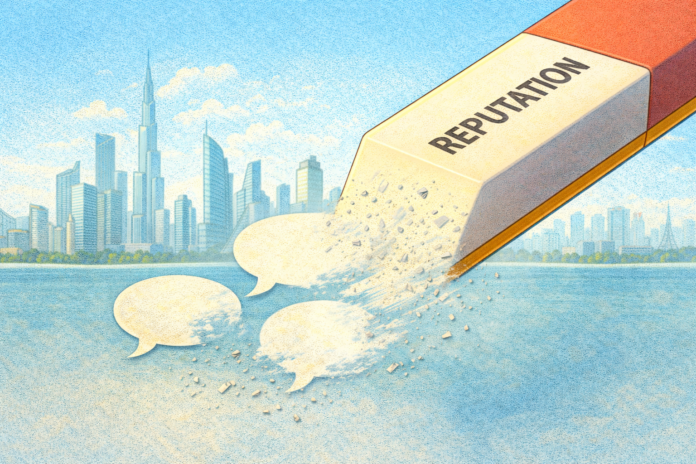
When Reputation Becomes Law: Crime, Silence, and the Cost of Speaking Online

0

In some countries, safety is a brand.

Low crime rates are highlighted.
Order is emphasized.
Stability is celebrated.
Reputation is guarded carefully.

And in many ways, the system works.

Streets are safe.
Public disorder is rare.
Institutions operate with visible efficiency.

But there is another side to reputation-driven governance —
the regulation of narrative.


The Quiet Line You Do Not Cross

In certain jurisdictions, posting about crime online is not just risky socially — it can be risky legally.

Cybercrime laws may include provisions against:

  • Publishing information that “damages the reputation of the state”
  • Sharing unverified incidents
  • Spreading content considered harmful to public order
  • Circulating sensitive information without authorization

The message is clear:

Public discussion must align with stability.


Image as Infrastructure

Some nations treat reputation as infrastructure.

Just like roads and airports,
national image is managed, maintained, and protected.

Tourism depends on it.
Investment depends on it.
International positioning depends on it.

When reputation becomes strategic capital, controlling perception becomes policy.

And perception often travels fastest through social media.


The Modern Dilemma: Safety vs. Transparency

There is a tradeoff that few openly discuss.

Strong public order systems often come with strict digital speech laws.

You may enjoy:

  • Clean streets
  • Efficient services
  • Low visible crime

But you may also learn quickly that:

  • Posting allegations can result in fines
  • Sharing sensitive incidents can lead to penalties
  • Online commentary has boundaries

The law does not only regulate behavior.
It regulates narrative.


The Culture of Self-Censorship

In environments with strict speech enforcement, something subtle happens.

People begin to ask:

“Is it worth posting this?”

“Is this considered harmful?”

“Could this be interpreted as damaging?”

Over time, caution becomes habit.

Habit becomes silence.

Silence becomes stability.

And stability becomes the brand.


Is It About Justice — or Optics?

Here is the uncomfortable question:

When public discussion of crime is discouraged, is the goal justice — or image?

Supporters argue:

Strict control prevents panic, rumor, and defamation.

Critics argue:

Transparency strengthens trust more than silence ever could.

Both perspectives exist.

But the power dynamic is clear:

The state defines what harms reputation.

The citizen assumes the risk of testing that definition.


The Global Pattern

This is not unique to one country.

Across the world, governments increasingly regulate online speech under banners such as:

  • National security
  • Public order
  • Anti-defamation
  • Cybercrime control

Digital space has become political territory.

And territory is rarely left unmanaged.


The Question No One Asks Publicly

Every society must decide:

Is stability more important than open debate?

Is image more important than transparency?

Is fear of reputational damage stronger than faith in institutional strength?

There is no universal answer.

But there is always a cost.


Final Thought

A nation that is confident in its institutions does not fear scrutiny.

A nation that prioritizes image above discussion will regulate speech tightly.

The balance between safety and freedom is delicate.

And in some places, crossing that line does not just start an argument.

It starts a legal process.

Republic and Secular: Words We Celebrate, Principles We Rarely Examine

0

In school textbooks and political speeches, certain words appear again and again — Republic and Secular.

They sound powerful.
They sound modern.
They sound moral.

But how often do we pause and ask what they actually mean?

And more importantly — whether they are truly alive in the country we live in.


What Does “Republic” Really Mean?

At its core, a republic is simple:

  • There is no king.
  • No royal bloodline rules the nation.
  • Leaders derive authority from the people.
  • The Constitution stands above individuals.

In a republic, power is not inherited.
It is granted — and it can be withdrawn.

A republic promises that:

  • No one is above the law.
  • Public office is not private property.
  • Institutions are stronger than personalities.

But here is the uncomfortable truth:

A country can call itself a republic
and still operate like power belongs to a small circle.

The test of a republic is not the absence of a crown.
It is the presence of accountability.


What Does “Secular” Really Mean?

The word secular is often misunderstood.

It does not mean anti-religion.
It does not mean erasing faith.
It does not mean banning traditions.

Secular means the state remains neutral toward religion.

It means:

  • The government does not belong to one faith.
  • Laws apply equally regardless of belief.
  • No citizen is favored or punished because of religion.

In a secular system, faith is personal.
Power is constitutional.

When religion guides personal life, that is freedom.
When religion guides state policy, that becomes politics.

And that is where tension begins.


The Difference Between Theory and Practice

On paper, many nations describe themselves as republics and secular states.

In practice, things are more complicated.

Ask these questions:

  • Can leaders be challenged without fear?
  • Are institutions independent, or do they bend to political pressure?
  • Is religion used to unite citizens — or divide voters?
  • Are laws enforced equally across communities?
  • Does identity influence justice?

If the answers are uncomfortable, the labels may be decorative rather than functional.


When Republic Becomes Performance

A republic becomes fragile when:

  • Loyalty replaces law.
  • Institutions fear individuals.
  • Elections exist but accountability weakens.
  • Criticism is framed as betrayal.

True republicanism is not about voting every few years.
It is about constant constitutional restraint.

Power must feel temporary.

If power feels permanent, the republic is only symbolic.


When Secularism Becomes Selective

Secularism weakens when:

  • Religion becomes campaign strategy.
  • Policies shift based on majority pressure.
  • Minority rights depend on political convenience.
  • Faith is used as emotional leverage in public debate.

A secular state protects all faiths by not belonging to any.

When religion becomes a political tool, neutrality fades.


The Real Measure

These words are not decorative.

They are promises.

Republic means:

No ruler above the Constitution.

Secular means:

No faith above the law.

When those promises weaken, the words remain — but their meaning fades.


The Question That Matters

It is easy to celebrate national identity.

It is harder to examine it.

So here is a question — not for headlines, not for debate panels — but for you:

Is your country truly a republic in action, or only in title?

Is it truly secular in practice, or only in speech?

Labels are easy.

Living by them is difficult.

And the health of a nation depends on the difference.

When Religion Becomes a Political Tool: Power, Memory, and Modern India

0

A Republic Built on Secular Promises

The Constitution of India defines the country as a sovereign, socialist, secular, democratic republic.

On paper, religion and state are separate.
In practice, religion often becomes central to political mobilization.

This contradiction defines much of modern India’s political tension.


Religion as Mobilization Strategy

Across multiple political parties and eras, religion has been used not just as faith — but as a mobilization mechanism.

Religious identity can:

  • Consolidate voting blocs
  • Polarize communities
  • Distract from economic failures
  • Override policy debate with emotional allegiance

When identity becomes political currency, rational discourse weakens.

The issue is not religion itself.
The issue is strategic deployment of religion for power.


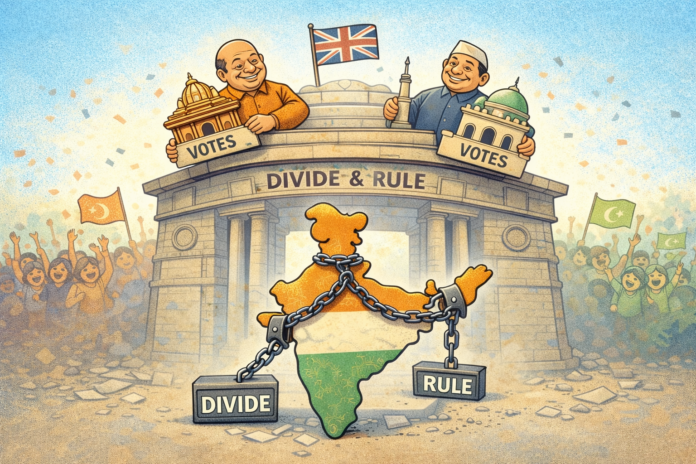
Divide and Rule: A Colonial Blueprint That Never Fully Disappeared

During British colonial rule, “divide and rule” was a deliberate governance tactic.

Communal differences were amplified.
Separate electorates were introduced.
Social divisions were institutionalized.

Independence in 1947 removed British authority —
but political exploitation of identity did not disappear.

Modern polarization often mirrors colonial strategies:

  • Amplify difference
  • Manufacture threat
  • Centralize loyalty
  • Frame dissent as betrayal

The actors changed.
The mechanism remained familiar.


The Illusion of Permanent Threat

One recurring political tool is the narrative of constant civilizational danger.

When citizens are told repeatedly that:

  • Their faith is under attack
  • Their culture is being erased
  • Their majority status is fragile

They become easier to mobilize and less likely to question governance failures.

Fear simplifies politics.

Fear unifies voters.

Fear reduces accountability.


Selective Outrage and Strategic Silence

In a polarized environment:

  • Crimes are framed through religious lenses
  • Justice becomes secondary to narrative
  • Media cycles reinforce emotional framing

Outrage becomes selective.

When public morality depends on the identity of the accused or the victim, justice loses neutrality.

This is not unique to India — but the scale and intensity in recent years have drawn global scrutiny.


Independence vs. Psychological Colonialism

India achieved political independence in 1947.

But political independence is different from psychological independence.

If governance still relies on:

  • Division
  • Emotional manipulation
  • Identity-based mobilization
  • Loyalty over law

Then colonial methods survive in altered form.

The uniform changes.
The playbook does not.


The Cost of Politicized Religion

When religion is politicized:

  • Minorities feel insecure
  • Majorities feel permanently threatened
  • Institutions face pressure
  • Policy becomes secondary to symbolism

Development slows when discourse revolves around identity battles instead of infrastructure, education, healthcare, and economic reform.

A nation cannot sustainably rise while constantly fighting internal perception wars.


The Responsibility of Citizens

Democracy does not function on emotion alone.

Citizens must ask:

  • Are policies solving real problems?
  • Is religious rhetoric replacing governance?
  • Are divisions being amplified for electoral gain?
  • Is dissent being framed as disloyalty?

Accountability requires awareness.

Blind allegiance protects power, not people.


Final Reflection

Religion is powerful.
Faith shapes identity, meaning, and community.

But when religion becomes a political instrument, it risks losing its moral foundation.

Independence is not only freedom from foreign rule.
It is freedom from manipulation — including manipulation by those within.

A mature democracy does not fear scrutiny.

It invites it.


Disclaimer: This article is an opinion piece discussing systemic issues based on publicly available reporting, historical analysis, and documented political patterns. It does not accuse any specific individual, religious community, or ongoing legal matter of criminal conduct.

When Power Matters More Than Women

0

There are societies that shout about culture so loudly you would think morality lives in every street corner.

They speak of heritage.
They preach values.
They parade tradition.
They demand respect from the world.

But when women are assaulted, something changes.

Suddenly the system slows down.
Suddenly procedures become complicated.
Suddenly accountability becomes “sensitive.”

And suddenly, power becomes more important than justice.


The Performance of Morality

Public speeches promise dignity.
Campaigns promise safety.
Billboards promise empowerment.

Yet conviction rates remain painfully low.
Cases drag for years.
Victims withdraw under pressure.
Families are intimidated into silence.

A society can celebrate goddesses and still fail living women.

Ritual is easy.
Protection is not.


The Pattern No One Wants to Admit

Over and over, similar patterns emerge in headlines:

  • Delayed investigations
  • Political statements that minimize allegations
  • Public narratives that shift blame toward victims
  • Influential figures receiving procedural advantages

Each incident is called “isolated.”
Each outrage is labeled “exceptional.”

When the same exception repeats, it stops being an accident.

It becomes structure.


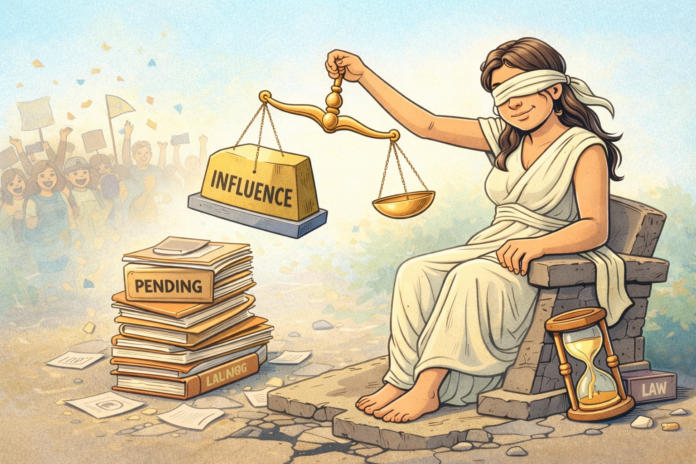
The System Knows How to Wait

Public anger burns hot — and briefly.

There are protests.
There are trending hashtags.
There are candle marches.

And then:

Files move quietly.
Attention fades.
New distractions arrive.

Time becomes the most effective defense.

Justice delayed is not neutral.
It benefits someone.


The Culture of Doubt

After assault, victims often face interrogation more intense than the accused:

Where were you?
Why were you there?
Why didn’t you resist more?
Why speak now?

Instead of protection, they receive suspicion.

Instead of support, they receive scrutiny.

Meanwhile, the accused often receives the presumption of sympathy — especially if connected, influential, or politically valuable.

When doubt is selectively applied, fairness collapses.


Power and Selective Outrage

In any system where political influence intersects with criminal allegations, uncomfortable questions arise:

Why do some cases accelerate while others stall?
Why are some accused immediately condemned while others are defended as “respected figures”?
Why does outrage depend on identity, affiliation, or usefulness?

Justice that depends on status is not justice.

It is hierarchy disguised as law.


The Global Hypocrisy

Many nations demand global respect.

They want investment.
They want recognition.
They want moral authority on international platforms.

But credibility requires consistency.

You cannot export lectures on values while importing silence at home.

You cannot speak about honor while victims fight alone.

You cannot claim strength while fearing accountability.


The Real Crisis

The deepest problem is not one crime, one party, or one institution.

It is normalization.

When citizens expect:

  • Delays
  • Influence
  • Political shielding
  • Victim-blaming

The system has already failed.

Not because laws do not exist.

But because enforcement bends.


Enough With the Slogans

Stop saying women are respected.

Respect is measured in:

  • Swift investigations
  • Independent institutions
  • Zero tolerance for interference
  • Equal application of law

Anything less is branding.

And branding does not protect anyone.


Final Truth

A society does not reveal its character in speeches.

It reveals it in who it protects when power is threatened.

If influence consistently outweighs accountability,
if reputation consistently outweighs justice,
if political value consistently outweighs truth —

Then culture becomes a costume.

And costumes do not stop violence.

Only courage does.


Disclaimer: This article is an opinion piece discussing systemic issues based on publicly available reporting and documented patterns. It does not refer to or accuse any specific individual, organization, or ongoing legal matter of criminal conduct.