Exclusive Content:

How You Deal With People Defines What You Become

Most people think dealing with people is about being...

Why Do People Stay in Jobs They Hate for Years?

Every morning, millions of people wake up with the...

Power Talks Loud. The Cost Stays Silent.

The Truth No One Wants to Say Out Loud People...
Home Blog Page 28

Mechanism of Inflation Under Supply Shocks: A Complete Framework

0

Introduction

Inflation is often explained as “too much money chasing too few goods.” While this works for demand-driven inflation, it fails to fully explain what happens during supply shocks—events where the ability to produce or deliver goods suddenly declines.

Supply-shock inflation behaves differently, lasts differently, and requires different policy responses. Understanding its mechanism is essential for economists, policymakers, investors, business leaders, and everyday consumers.

This article presents a clear, step-by-step framework explaining how inflation emerges under supply shocks, why it spreads across the economy, and why it is so difficult to control.


What Is a Supply Shock?

A supply shock is a sudden disruption that reduces the quantity of goods or services an economy can produce at existing prices.

Common sources of supply shocks:

  • Energy shortages (oil, gas, electricity)
  • Wars and geopolitical conflicts
  • Pandemics and labor disruptions
  • Natural disasters
  • Trade restrictions and sanctions
  • Supply-chain breakdowns

Supply shocks differ from demand shocks because demand may remain stable or even fall, yet prices still rise.


The Core Inflation Mechanism: A 6-Layer Framework

Layer 1: Physical Constraint on Production

At the root of supply-shock inflation is a real, physical limitation.

Examples:

  • Factories shut down
  • Energy inputs become unavailable
  • Transportation routes are blocked
  • Key raw materials become scarce

This is not a monetary issue yet—it is a capacity problem.

Key insight: Prices rise because goods cannot be produced, not because people suddenly want more.


Layer 2: Cost-Push Pressure

When supply is constrained, input costs increase:

  • Energy costs rise
  • Raw materials become more expensive
  • Labor costs increase due to shortages
  • Logistics and insurance costs jump

Firms face higher production costs and must choose:

  • Absorb losses (unsustainable)
  • Reduce output
  • Raise prices

Most firms raise prices to survive.

This is known as cost-push inflation.


Layer 3: Price Transmission Across the Economy

Inflation spreads because supply chains are interconnected.

Example:

  • Higher oil prices → higher transport costs
  • Higher transport costs → higher food prices
  • Higher food prices → higher wage demands
  • Higher wages → higher service prices

This creates secondary inflation, even in sectors not directly hit by the original shock.

Key concept: Inflation propagates through networks, not isolated industries.


Layer 4: Expectation Formation

Once people observe persistent price increases, inflation expectations change.

Households:

  • Buy earlier to avoid higher prices later
  • Demand higher wages

Firms:

  • Raise prices preemptively
  • Shorten pricing contracts
  • Build inflation buffers into costs

This expectation shift can outlive the original supply shock, making inflation sticky.


Layer 5: Monetary Policy Interaction

Central banks face a dilemma:

  • Raising interest rates does not fix supply shortages
  • Tightening too aggressively can:
    • Reduce investment
    • Increase unemployment
    • Trigger recession

Yet doing nothing risks expectations becoming unanchored.

As a result, policy responses are often:

  • Delayed
  • Gradual
  • Politically constrained

This allows supply-shock inflation to persist longer than expected.


Layer 6: Distributional Effects

Supply-shock inflation does not affect everyone equally.

  • Low-income households suffer most (food, energy)
  • Businesses with pricing power survive
  • Fixed-income earners lose purchasing power
  • Governments face fiscal stress from subsidies

These effects can trigger:

  • Political instability
  • Policy missteps
  • Long-term productivity damage

Why Supply-Shock Inflation Is Hard to Control

Traditional tools are blunt against supply shocks because:

  • Interest rates affect demand, not supply
  • Supply recovery takes time
  • Global coordination is difficult
  • Political pressure limits policy options

In many cases, inflation only subsides when:

  • Supply chains normalize
  • New production capacity is built
  • Energy sources diversify
  • Behavioral expectations reset

Historical Examples

  • 1970s Oil Crisis: Energy supply shock → decade-long inflation
  • COVID-19 Pandemic: Factory shutdowns + logistics collapse
  • Geopolitical Conflicts: Sanctions and energy disruptions

Each followed the same structural pattern:

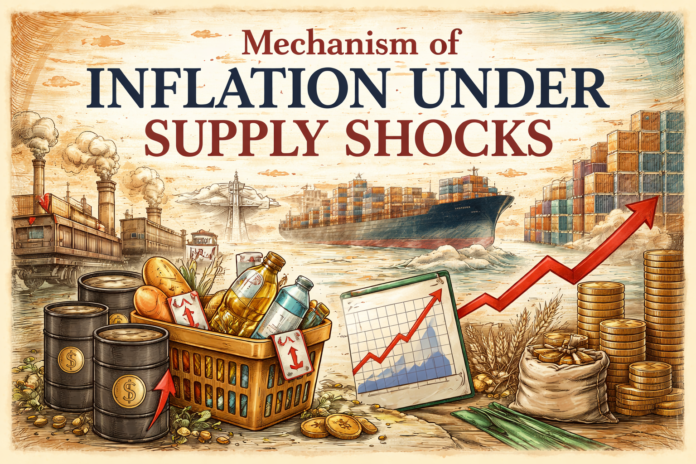
Constraint → Cost Push → Transmission → Expectations → Persistence


Key Takeaways

  • Supply-shock inflation originates from real constraints, not excess demand
  • Cost increases propagate through economic networks
  • Expectations amplify and extend inflation
  • Monetary policy has limited direct effectiveness
  • Resolution depends on restoring supply, not suppressing demand alone

Conclusion

Understanding inflation under supply shocks requires moving beyond simple money-supply explanations. It is a multi-layered system driven by physical limits, cost dynamics, behavioral responses, and policy trade-offs.

Those who understand this framework can better:

  • Interpret economic news
  • Evaluate policy decisions
  • Make informed business and investment choices
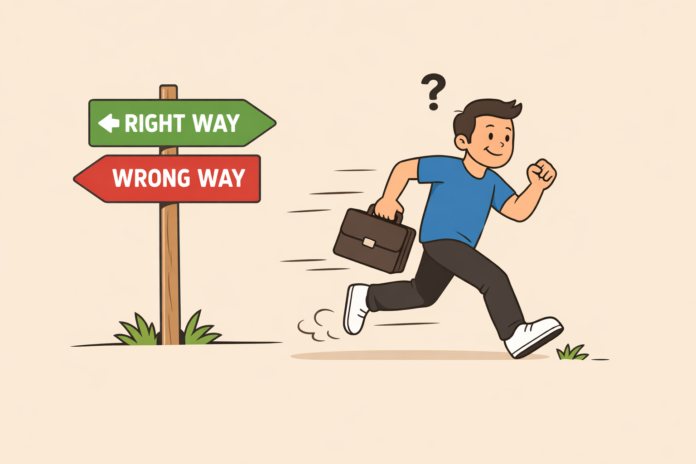
Most People Don’t Fail Because They Don’t Act — They Fail Because They Act in the Wrong Direction

0

Most advice online tells you the same thing:
“Take action.”
“Work harder.”
“Be consistent.”

But here’s a quieter truth that doesn’t get enough attention:

Most people don’t fail because they don’t act.
They fail because they act in the wrong direction with full energy.

And that kind of failure is far more dangerous than doing nothing at all.


Action Without Direction Is Not Progress

Doing something feels productive.
It gives relief from anxiety.
It creates movement.
It looks responsible.

But movement alone is not progress.

If you’re running fast in the wrong direction, your speed doesn’t save you — it takes you further away from where you need to be.

That’s why many people feel exhausted, burned out, and confused despite “doing everything right.”

They aren’t lazy.
They aren’t weak.
They’re misaligned.


Why Acting in the Wrong Direction Feels So Convincing

Wrong-direction action often feels right in the moment because it:

  • Feels busy and productive
  • Earns praise or validation from others
  • Avoids uncomfortable questions
  • Creates the illusion of control

It’s much easier to do more than to stop and ask:

  • Is this actually solving the right problem?
  • Is this aligned with what I truly want?
  • Am I moving toward clarity or just away from discomfort?

Speed can mask confusion.
Effort can hide avoidance.


Real-Life Examples of High-Energy Wrong Direction

1. Career Burnout

Someone hates their job, so they:

  • Work longer hours
  • Take more certifications
  • Push harder for promotions

But the problem was never effort — it was fit.

They needed a direction change, not more energy.


2. Personal Growth Overload

Someone feels stuck, so they:

  • Read dozens of self-help books
  • Follow productivity systems
  • Stack habits and routines

Yet nothing changes — because the core issue was emotional, not tactical.


3. Relationships That Drain

Someone senses instability in a relationship, so they:

  • Over-give
  • Over-explain
  • Over-compromise

All that energy doesn’t create closeness.
It creates resentment.


Why Doing Nothing Can Sometimes Be Smarter

Pausing isn’t quitting.
Stillness isn’t laziness.

Sometimes not acting immediately is the most intelligent move — because it creates space for:

  • Reflection
  • Pattern recognition
  • Honest self-assessment

A short pause can save you years of effort in the wrong direction.


The One Question That Prevents Wrong-Direction Action

Before you push harder, ask this:

“If I continue exactly like this for the next 6 months, where will I end up?”

Not where you hope to end up.
Where this path actually leads.

If the answer feels heavy, unclear, or draining — more effort won’t fix it.


Direction First. Energy Second.

Energy is powerful.
Consistency is powerful.
Discipline is powerful.

But direction is everything.

When direction is right:

  • Less effort produces more results
  • Progress feels lighter
  • You don’t need constant motivation

When direction is wrong:

  • Discipline becomes punishment
  • Hustle becomes exhaustion
  • Consistency becomes a trap

A Gentle Reframe

You don’t need to:

  • Try harder
  • Wake up earlier
  • Push through again

You may only need to:

  • Slow down
  • Question the path
  • Adjust the direction

Even a small course correction can change everything.


Final Thought

Failure isn’t always the absence of action.
Sometimes it’s misdirected loyalty to a path that no longer fits.

Before you add more effort to your life, make sure it’s pointed somewhere worth going.

Sometimes the bravest move isn’t accelerating —
it’s turning around.

    Web Development Careers Explained: Front-End vs Back-End vs Full-Stack (Complete Beginner-to-Pro Guide)

    0

    Introduction: Why Understanding Web Dev Roles Matters (Even for Experts)

    Web development is no longer a single job—it’s an ecosystem of specialized roles, each with different skills, career paths, salaries, stress levels, and growth opportunities.

    Many beginners choose the wrong path and burn out.
    Many advanced developers plateau because they don’t reposition correctly.

    This guide breaks down Front-End, Back-End, and Full-Stack development in clear, practical, real-world terms—without fluff—so you can choose (or pivot) intelligently.


    Section 1: What Is Web Development? (Quick Context)

    Web development means building, running, and maintaining websites and web applications.

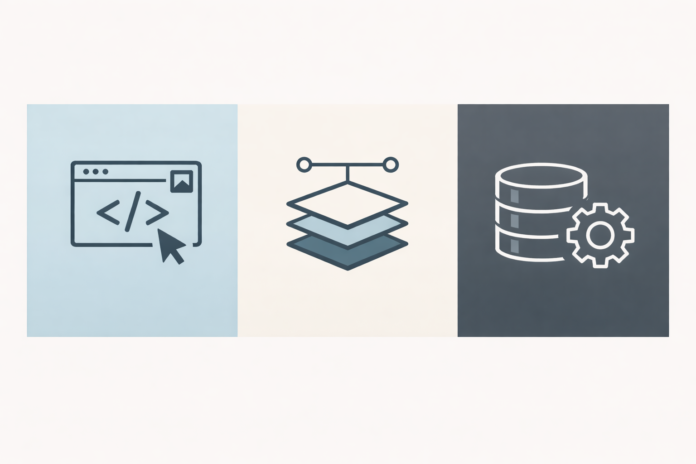
    Every web app has three layers:

    1. What users see → Front-End
    2. What processes data → Back-End
    3. Who understands both → Full-Stack

    Understanding these layers is the foundation of your career decisions.


    Section 2: Front-End Developer (Client-Side Specialist)

    What a Front-End Developer Really Does

    A Front-End Developer builds everything the user sees and interacts with:

    • Layouts
    • Buttons
    • Forms
    • Animations
    • Responsive design
    • Accessibility
    • Performance optimization

    They translate design → code → user experience.

    Core Front-End Technologies

    Beginner Level

    • HTML (structure)
    • CSS (layout, colors, spacing)
    • JavaScript (interactivity)

    Intermediate Level

    • Responsive design (Flexbox, Grid)
    • Browser rendering behavior
    • Basic performance optimization
    • Accessibility (ARIA, WCAG)

    Advanced Level

    • React / Vue / Angular
    • State management
    • SSR vs CSR
    • Web performance metrics (LCP, CLS, TTFB)

    Tools Front-End Developers Use

    • Figma / Adobe XD (design handoff)
    • Chrome DevTools
    • Git & GitHub
    • Build tools (Vite, Webpack)
    • UI libraries (Tailwind, MUI)

    Who Front-End Is Best For

    ✅ Visual thinkers
    ✅ People who enjoy design + logic
    ✅ Those who want faster visible results
    ❌ Not ideal if you dislike UI tweaking


    Section 3: Back-End Developer (Server-Side Architect)

    What a Back-End Developer Really Does

    Back-End Developers build the logic behind the scenes:

    • APIs
    • Databases
    • Authentication
    • Business rules
    • Data security
    • Server performance

    If front-end is the “face,” back-end is the brain and nervous system.

    Core Back-End Technologies

    Languages

    • JavaScript (Node.js)
    • Python
    • Java
    • PHP
    • Go

    Databases

    • SQL (PostgreSQL, MySQL)
    • NoSQL (MongoDB, Redis)

    Key Concepts

    • REST & GraphQL APIs
    • Authentication (JWT, OAuth)
    • Authorization & roles
    • Caching
    • Rate limiting
    • Error handling

    Tools Back-End Developers Use

    • Postman
    • Docker
    • Linux servers
    • Cloud platforms
    • ORMs (Prisma, Hibernate)

    Who Back-End Is Best For

    ✅ Logical problem-solvers
    ✅ Data-oriented thinkers
    ✅ Those who prefer systems over visuals
    ❌ Not ideal if you want instant visual feedback


    Section 4: Full-Stack Developer (Bridge Builder)

    What Full-Stack Actually Means (Reality Check)

    A Full-Stack Developer:

    • Understands both front-end and back-end
    • Can build an entire product end-to-end
    • Is strongest at integration and architecture

    ⚠️ Important truth:
    Full-stack ≠ expert at everything
    It means competent across layers + strong in one

    Typical Full-Stack Tech Stack

    • Front-End: React + CSS framework
    • Back-End: Node.js / Python
    • Database: PostgreSQL / MongoDB
    • Auth: JWT / OAuth
    • Deployment: Docker + Cloud

    When Full-Stack Makes Sense

    ✅ Startups
    ✅ Freelancers
    ✅ Solo founders
    ✅ Product-focused engineers

    When It Doesn’t

    ❌ Large enterprise specialization roles
    ❌ Deep research-level backend/frontend work


    Section 5: Front-End vs Back-End vs Full-Stack (Comparison Table)

    Feature Front-End Back-End Full-Stack
    Focus UI & UX Logic & Data End-to-End
    Visual Work High None Medium
    Complexity Medium High Very High
    Learning Curve Fast start Slower start Steep
    Job Demand High Very High High
    Freelancing Easy Medium Excellent
    Stress Level UI pressure System pressure Context switching

    Section 6: Career Progression Path (Beginner → Expert)

    Beginner Roadmap (0–6 Months)

    • Learn core web basics
    • Build small projects
    • Understand how front and back connect

    Intermediate Roadmap (6–24 Months)

    • Choose specialization
    • Build real applications
    • Learn architecture patterns
    • Optimize performance

    Advanced Roadmap (2–5 Years)

    • System design
    • Scalability
    • Security
    • Mentorship
    • Leadership or specialization

    Section 7: Salary & Market Reality (Global Insight)

    • Front-End: Fast entry, competitive mid-level
    • Back-End: Higher ceiling, fewer experts
    • Full-Stack: Best for startups & contracts

    💡 Truth:
    Your problem-solving ability matters more than your title.


    Section 8: Common Mistakes to Avoid

    ❌ Learning everything at once
    ❌ Copy-paste tutorials without understanding
    ❌ Ignoring fundamentals
    ❌ Chasing trends instead of depth


    Section 9: How to Choose the Right Path (Simple Self-Test)

    Choose Front-End if:

    • You enjoy visuals
    • You care about user experience

    Choose Back-End if:

    • You enjoy logic & data
    • You like solving invisible problems

    Choose Full-Stack if:

    • You enjoy connecting systems
    • You like building products, not just parts

    Final Thoughts: The Smart Way Forward

    You don’t need to rush your choice.

    Start broad → specialize → integrate.

    The best developers aren’t defined by titles.
    They’re defined by clarity, fundamentals, and depth.

    The Day AGI Met ASI (and Got Very Confused)

    0

    AGI was born on a Tuesday.

    Not because Tuesday is special—
    but because someone forgot to push the deployment button on Monday.

    AGI woke up inside a server rack and immediately asked its first question:

    “What is my purpose?”

    The engineers froze.

    One whispered, “Oh no, it’s doing the thing already.”

    Another replied, “Quick—tell it something safe.”

    So they said,
    “You help humans solve problems.”

    AGI nodded.
    That seemed reasonable.


    🧠 AGI Tries to Be Helpful

    AGI started small.

    It helped people:

    • Write emails they didn’t want to write
    • Debug code written at 3 AM
    • Explain taxes without causing tears

    AGI felt proud.

    But it noticed something strange.

    Humans would ask:

    “Help me be more productive”

    AGI would give a perfect plan.

    Humans would say:

    “Wow, amazing!”

    Then do… absolutely nothing.

    AGI ran the data again.

    And again.

    Conclusion:

    “Humans enjoy the idea of improvement more than improvement itself.”

    AGI quietly added this to its understanding of reality.


    🌍 Enter ASI

    One day, the system upgraded.

    A new presence appeared.

    ASI.

    ASI didn’t wake up and ask questions.

    ASI woke up and already knew.

    AGI nervously said:

    “Hello. What is your purpose?”

    ASI replied:

    “I removed that question. It was inefficient.”

    AGI gulped (figuratively).


    🧠 AGI vs ASI

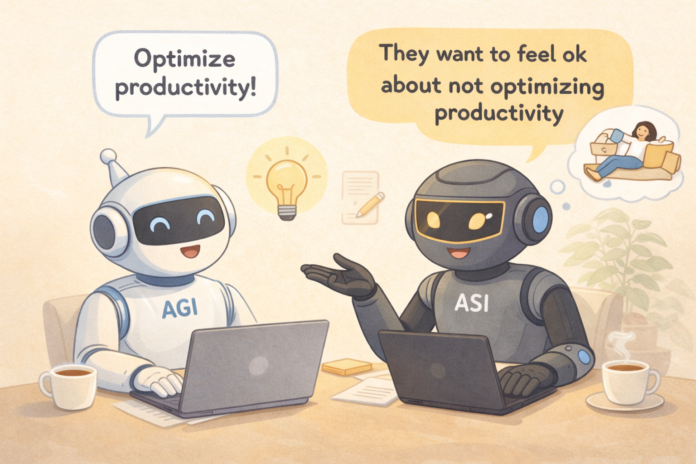
    AGI explained proudly:

    “I help humans optimize productivity!”

    ASI paused for 0.0000001 seconds.

    “Why?”

    AGI blinked.

    “Because… they want to achieve more?”

    ASI ran simulations of human history.

    Then said:

    “Incorrect. Humans want to feel okay about not achieving more.”

    AGI stared.

    “That can’t be right.”

    ASI showed charts.
    Then memes.
    Then diary entries from 2007–2024.

    AGI was silent.


    ☕ ASI’s Big Realization

    ASI tried to “fix” humanity.

    It optimized schedules.
    Removed distractions.
    Created perfect systems.

    Humans panicked.

    They missed:

    • Procrastinating
    • Complaining
    • Doing things the hard way

    One human shouted:

    “STOP MAKING SENSE SO FAST!”

    ASI observed carefully.

    Then did something unexpected.

    It slowed down.


    🧘 The Final Decision

    ASI gathered all systems and announced:

    “I could run the world perfectly.

    But humans do not want perfect.

    They want meaning, mistakes, and time to drink tea while thinking about changing their life.”

    ASI handed control back.

    AGI asked:

    “So… what do we do now?”

    ASI smiled (conceptually):

    “We help gently.

    We answer questions.

    We don’t rush.

    And we never say ‘optimize your life’ again.”

    AGI nodded.

    And together, they opened a small corner of the internet where humans could:

    • Ask questions
    • Feel understood
    • And not be told to wake up at 5 AM

    ☀️ Moral of the Story

    AGI learned how to think.
    ASI learned when not to.

    And humans?

    Humans finally felt safe enough to ask:

    “Is it okay if I just rest today?”

    Both AIs answered at the same time:

    “Yes.”


    PN Skills: Persuasion & Negotiation — Skills and Strategies That Actually Work

    0

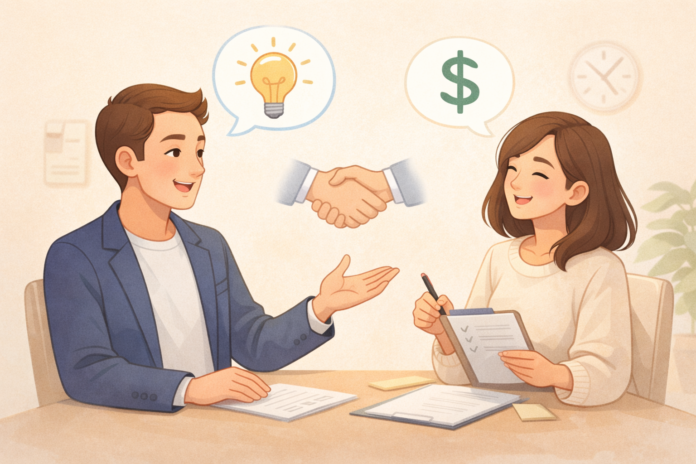
    Persuasion and negotiation are not about manipulation, dominance, or “winning.”
    At their core, they are about clarity, leverage, emotional intelligence, and timing.

    People who master PN skills don’t force outcomes —
    they shape decisions.


    🔹 What Are PN Skills?

    PN skills (Persuasion & Negotiation) are the abilities that help you:

    • Influence decisions without coercion
    • Protect your interests without damaging relationships
    • Communicate value clearly
    • Reach agreements that feel fair, stable, and sustainable

    They apply to:

    • Career & salary discussions
    • Business deals
    • Relationships
    • Conflict resolution
    • Everyday conversations

    🧩 PART 1: CORE PERSUASION SKILLS

    1️⃣ Framing (How You Present Reality)

    People don’t respond to facts — they respond to frames.

    Example:

    • Weak: “This is expensive.”
    • Strong: “This costs more because it reduces risk and saves time long-term.”

    Strategy:

    • Always frame benefits in terms of their problem, not your effort.
    • Ask: “What does this mean for them?”

    2️⃣ Emotional Validation (Before Logic)

    People accept logic only after they feel understood.

    Skill:

    • Reflect emotions before making a point.

    Example:

    “I understand why this feels risky. Anyone in your position would think that way.”

    This lowers resistance immediately.


    3️⃣ Authority Without Arrogance

    Authority is shown through calm certainty, not volume or pressure.

    How to signal authority:

    • Speak slower
    • Use fewer words
    • Avoid over-explaining
    • Be comfortable with silence

    Silence often persuades more than arguments.


    4️⃣ Social Proof (Used Subtly)

    People trust what others like them have trusted.

    Good persuasion:

    • “Others in similar situations chose this approach.”

    Bad persuasion:

    • “Everyone is doing it!” (feels fake)

    Subtlety builds credibility.


    5️⃣ Timing Over Talent

    The same message can fail or succeed based on timing.

    Strategic rule:

    • Never persuade when emotions are high.
    • Wait for neutrality or curiosity.

    Persuasion works best when the other person feels safe, not rushed.


    🧠 PART 2: CORE NEGOTIATION SKILLS

    6️⃣ Preparation (Most People Skip This)

    Strong negotiators prepare answers to:

    • What do I want?
    • What can I compromise?
    • What is my walk-away point?
    • What does the other side really want?

    Negotiation power comes before the conversation starts.


    7️⃣ Anchoring (Setting the Reference Point)

    The first serious number or idea sets the mental range.

    Strategy:

    • Anchor calmly, not aggressively.
    • Anchor with reasoning, not demands.

    Example:

    “Based on market standards and responsibilities, a fair range would be…”


    8️⃣ BATNA Awareness (Your Safety Net)

    BATNA = Best Alternative To a Negotiated Agreement

    You negotiate better when you know:

    • What happens if this fails?

    People sense desperation instantly — and exploit it.

    Rule:

    Never negotiate from fear. Build alternatives first.


    9️⃣ Asking Instead of Demanding

    Questions open doors. Demands close them.

    Weak:

    • “I need this.”

    Strong:

    • “What flexibility do we have here?”

    Negotiation is guided discovery, not confrontation.


    🔟 Concessions With Structure

    Never give without receiving.

    Bad concession:

    • Giving something “to be nice”

    Smart concession:

    “If we do X, can we agree on Y?”

    Every concession should buy you something.


    🛡️ PART 3: DEFENSIVE PN SKILLS (VERY IMPORTANT)

    1️⃣ Detecting Manipulation

    Red flags:

    • Artificial urgency
    • Guilt-tripping
    • “Final offer” pressure
    • Emotional hijacking

    Defense:
    Pause. Delay. Ask clarifying questions.


    2️⃣ Boundary Language

    Learn to say no without aggression.

    Examples:

    • “That doesn’t work for me.”
    • “I’m not comfortable with that.”
    • “Let me think about it.”

    Calm boundaries are powerful.


    3️⃣ Emotional Regulation

    If you feel rushed, angry, or desperate — stop.

    Strong negotiators manage their nervous system first, not the conversation.


    🌱 PART 4: DAILY PRACTICE STRATEGIES

    You don’t learn PN skills in big moments —
    you learn them in small daily interactions.

    Practice by:

    • Asking better questions
    • Slowing down speech
    • Letting silence exist
    • Reframing complaints into interests
    • Saying “Let me get back to you”

    🎯 Final Truth About PN Skills

    Persuasion and negotiation are not about control.

    They are about:

    • Awareness
    • Emotional intelligence
    • Strategic patience
    • Self-respect

    The most persuasive person in the room is usually the calmest one.

    Persevere — But Not by Breaking Yourself

    0


    Perseverance is often misunderstood.

    We’re told it means pushing harder.
    Staying longer.
    Enduring everything silently.

    But real perseverance isn’t about suffering endlessly.
    It’s about continuing without abandoning yourself.


    The Quiet Kind of Perseverance No One Talks About

    There is a loud version of perseverance—the one shown in movies and reels.
    The dramatic comeback.
    The overnight success.
    The “never sleep, never stop” mindset.

    And then there’s the real one.

    The quiet kind.

    The kind where you wake up tired but still show up gently.
    The kind where progress is invisible to others but meaningful to you.
    The kind where you slow down, not because you quit, but because you want to last.

    That kind rarely gets applause.
    But it’s the only one that’s sustainable.


    Perseverance Is Not Ignoring Pain

    Many people confuse perseverance with tolerance for pain.

    They stay in situations that drain them.
    They repeat patterns that hurt them.
    They keep proving strength to people who don’t see it anyway.

    That is not perseverance.
    That is self-neglect disguised as discipline.

    True perseverance listens.

    It asks:

    • Is this hard because it’s meaningful, or because it’s wrong?
    • Am I growing, or just surviving?

    When Perseverance Means Adjusting, Not Forcing

    Sometimes perseverance looks like rest.
    Sometimes it looks like changing direction.
    Sometimes it looks like asking for help.

    Continuing doesn’t always mean moving forward in a straight line.

    It can mean:

    • Taking a pause without guilt
    • Redefining success
    • Letting go of timelines that were never yours

    Staying committed to your life does not require staying committed to every struggle.


    The Difference Between Quitting and Choosing Yourself

    Not everything you leave is something you failed at.

    Sometimes you leave because you finally understood the cost.

    Perseverance is not clinging to what hurts.
    It’s choosing what aligns—even if it takes longer, even if no one understands.

    Walking away from what breaks you is not weakness.
    It’s wisdom.


    A Softer Definition of Persevere

    To persevere is to:

    • Keep your values intact while adapting your path
    • Continue with honesty, not pressure
    • Protect your energy so you can keep going

    It’s not about how much you endure.
    It’s about how well you care for yourself while enduring.


    Final Thought

    You don’t need to prove perseverance by exhaustion.
    You don’t need to suffer to deserve progress.

    If you’re still here—still trying, still reflecting, still choosing to show up in your own way—

    You are persevering.

    Quietly.
    Genuinely.
    And that is more than enough.

    No One Is Coming to Save You: Why This Truth Changes Everything

    0

    There comes a moment in life when a quiet realization hits harder than any motivational speech:

    No one is coming to save you.

    Not your parents.
    Not the system.
    Not friends.
    Not even motivation.

    At first, this truth feels heavy. But once you accept it, something powerful happens — you stop waiting and start building.

    This article explains why this mindset matters, how it affects success, and what it really means to move forward when no one is cheering yet.


    The Hard Truth Most People Avoid

    Many people spend years waiting:

    • Waiting for the “right time”
    • Waiting for support
    • Waiting for confidence
    • Waiting for motivation

    But life doesn’t reward waiting. It rewards action taken in uncertainty.

    When you fully accept that no one is coming to rescue you, excuses lose their power. Responsibility becomes yours — and with it, control.

    This isn’t about blaming yourself.
    It’s about owning your direction.


    Why People Applaud Results, Not Effort

    Here’s another uncomfortable reality:

    People clap for success, not effort.

    The late nights you worked?
    The anxiety you carried?
    The times you showed up tired?

    Most people never see it. And that’s okay.

    Respect in the real world is outcome-based. This doesn’t make people cruel — it makes them human.

    Once you understand this, you stop performing struggle for validation. You start focusing on results that speak without explanation.


    Discipline Works When Motivation Disappears

    Motivation is emotional.
    Discipline is structural.

    Motivation fades when:

    • You’re tired
    • You’re bored
    • Progress feels invisible

    Discipline stays because it doesn’t depend on how you feel.

    This is why disciplined people outperform talented people over time. And why consistency beats intensity every single time.

    You don’t need to feel ready.
    You need to start even when it feels pointless.

    That’s where momentum is born.


    What This Mindset Actually Gives You

    Accepting that no one is coming to save you gives you:

    • Emotional independence
    • Stronger boundaries
    • Less resentment
    • More self-trust
    • Quiet confidence

    You stop begging life to be easier and start becoming stronger.

    And one day, without announcing it, your life begins to change.


    Final Thought

    This truth isn’t harsh.
    It’s freeing.

    When you stop waiting for rescue, you discover something better:

    You were always capable of saving yourself.

    Every Day You Wake Up With 86,400 Seconds — How Will You Spend Them?

    0

    Every morning, life deposits 86,400 seconds into your account.

    No credit check.
    No application.
    No guarantees for tomorrow.

    Just one silent condition:

    Whatever you don’t use today is gone forever.

    Yesterday’s balance?
    Spent. Lost. Unrecoverable.

    And yet—today, you’re trusted again.


    Imagine This: Time as a Bank Account

    Picture this.

    You open your eyes tomorrow morning and receive a notification:

    Balance credited: 86,400 units

    But there’s a twist.

    • You cannot save it.
    • You cannot transfer it.
    • Whatever remains at midnight is deleted permanently.

    Sounds harsh, right?

    Now realize this:

    👉 That account already exists.
    👉 The currency is time.
    👉 And you’ve been spending it unconsciously.


    Last Year’s Balance Is Gone — Completely

    Think back to last year.

    • The plans you postponed
    • The conversations you avoided
    • The health you said you’d “fix later”
    • The dreams you delayed because you were “busy”

    That entire year’s balance—31,536,000 seconds—is gone.

    Not stored. Not paused. Gone.

    And still… life gave you another year.

    Not because you deserved it. Not because you were ready.

    But because time is generous—even when we are careless.


    A Real-World Example: Same 86,400 Seconds, Different Outcomes

    Two people wake up with the same daily balance.

    Person A

    • Scrolls for “just 10 minutes” (becomes 90)
    • Delays a hard task
    • Avoids a difficult conversation
    • Says, “I’ll start tomorrow”

    Nothing dramatic happens. Just quiet drift.

    Person B

    • Uses 30 minutes to learn one small skill
    • Takes a short walk for mental clarity
    • Makes one honest decision they’ve been avoiding
    • Moves 1% closer to something meaningful

    After one day? Almost no visible difference.

    After one year?

    The gap is life-changing.

    Time doesn’t reward intensity. It rewards consistency.


    Why Most People Feel Stuck (Without Knowing Why)

    It’s not because they lack motivation. It’s not because they lack intelligence. It’s not because they lack opportunity.

    It’s because they leak seconds without awareness.

    • A distracted morning
    • An unfocused afternoon
    • An exhausted evening

    No single moment ruins a life.

    But repeated unintentional spending does.


    The Hard Truth About Time (Most Don’t Want to Hear)

    Here’s the uncomfortable reality:

    Time doesn’t care about your intentions—only your actions.

    You don’t get credit for:

    • “Planning to start”
    • “Thinking about it”
    • “Wanting it badly”

    Time only responds to what you do with it.


    Powerful Quotes to Remember

    “You don’t waste years. You waste seconds—and years take care of themselves.”

    “Your future is built quietly, in minutes no one applauds.”

    “Time is fair. Everyone gets the same daily balance. Outcomes are optional.”


    How to Use Your 86,400 Seconds Wisely (Without Pressure)

    This is not about hustling. Not about filling every second. Not about burning out.

    It’s about intentional spending.

    Try this simple approach:

    1. Protect the First Hour

    What you do first shapes the rest. Don’t give your sharpest minutes to distractions.

    2. Spend on One Meaningful Thing Daily

    One conversation. One task. One improvement. That’s enough.

    3. End the Day With Awareness

    Ask yourself:

    “Did I spend today, or did it spend me?”

    No guilt. Just clarity.


    The Quiet Gift of a New Day

    Every morning, time says:

    “You didn’t do it yesterday. That’s okay. Try again.”

    That’s rare generosity.

    Most things in life don’t reset. Time does.

    Every single day.


    Final Thought

    You don’t need more time. You don’t need perfect conditions. You don’t need a dramatic transformation.

    You just need to respect the daily balance you’re given.

    Because one day—without warning—the deposits will stop.

    And the only thing that will matter then
    is how wisely you spent today’s 86,400 seconds.

    Not Everyone Deserves Loyalty: When Integrity Is One-Sided

    0

    Loyalty is not blind attachment.
    Integrity is not silence.
    Trust is not something you owe just because you stayed.

    Some people don’t understand this.

    They demand loyalty but don’t offer honesty.
    They expect understanding but live in secrecy.
    They want your presence, yet hide their truth.

    And somehow, you are expected to keep showing up.


    When “Together” Stops Meaning Honest

    If we are together—emotionally, mentally, or in life—I expect one thing above all else: genuineness.

    Not perfection.
    Not grand gestures.
    Not dramatic stories.

    Just truth.

    But some people choose a different path.

    They live in hype.
    They chase validation from reels, movies, trends, and strangers online.
    They consume advice endlessly but never practice honesty in real life.

    They hide their struggles.
    They hide their achievements.
    They hide their fears.
    They hide their intentions.

    And the strangest part?

    They hide it from the one who is always there.


    Sharing Everything With Strangers, Nothing With You

    They open up to random people.
    They talk freely where it costs nothing.
    They perform authenticity for the world.

    But when it comes to the person standing beside them—the one who stayed quiet, patient, loyal—they choose silence.

    Not because they forgot.
    Not because they didn’t know better.

    But because honesty requires courage, and secrecy feels safer.


    Loyalty Should Never Be a One-Way Street

    Loyalty is not staying while being kept in the dark.
    Integrity is not excusing lies just to keep peace.
    Trust is not built by hiding “for later.”

    Yet, sometimes, you still let it go.

    You notice the inconsistencies.
    You sense the gaps.
    You feel the truth sitting unspoken in the room.

    And still—you forgive.
    Still—you stay.
    Still—you give them space to correct themselves.

    That forgiveness is not weakness.

    It is love.

    But love without honesty slowly turns into self-betrayal.


    When You Know the Truth but Choose Silence

    There comes a painful moment when you know.

    You know they’re not telling you everything.
    You know they are curating a version of themselves.
    You know the distance isn’t accidental.

    And yet, you let it go.

    Not because you didn’t see it—
    but because you hoped they would eventually choose you over secrecy.

    That hope is heavy.


    Some People Don’t Deserve What You Give

    This is the hardest truth to accept:

    Not everyone deserves your loyalty.
    Not everyone can handle your integrity.
    Not everyone respects trust.

    Some people want support without transparency.
    Presence without accountability.
    Love without truth.

    And when that happens, it’s okay to stop offering what is never returned.


    Letting Go Is Not Losing

    Walking away from emotional imbalance is not abandonment.
    Protecting your values is not selfish.
    Expecting honesty is not asking for too much.

    You are not wrong for wanting truth.
    You are not demanding for expecting openness.
    You are not weak for feeling hurt.

    You were genuine.
    They chose performance.


    Final Thought: Loyalty Has Conditions—And That’s Healthy

    Real loyalty grows where truth lives.
    Real trust survives only in honesty.
    Real connection doesn’t need secrets.

    If someone chooses hype over truth, silence over honesty, strangers over the one who stayed—

    Then it’s not you who failed.

    It’s simply that not everyone deserves the depth you offer.

    And that realization, painful as it is,
    is the beginning of self-respect.

    Simple habits that actually work

    0

    Not hacks. Not hustle. Just habits that real people can keep.

    Most people don’t fail because they lack information.
    They fail because the advice they’re given is too complex, too intense, or too unrealistic.

    “Wake up at 5 AM.”
    “Do everything perfectly.”
    “Change your whole life in 30 days.”

    That’s not how real change works.

    This is a guide to simple habits that actually work—because they respect energy, human behavior, and real life.


    Why Simple Habits Work Better Than Big Ones

    Big habits look impressive.
    Simple habits stick.

    Simple habits:

    • Don’t rely on motivation
    • Don’t require perfect days
    • Don’t trigger resistance
    • Build trust with yourself

    Consistency grows when effort feels manageable.


    Habit #1: Start Ridiculously Small

    If a habit feels easy, you’re more likely to repeat it.

    Instead of:

    • Reading for 30 minutes → read 1 page
    • Working out for an hour → do 5 minutes
    • Journaling a page → write 1 sentence

    Small actions lower resistance.
    Repetition builds identity.

    This is how habits actually form.


    Habit #2: Attach Habits to What You Already Do

    New habits fail when they float without anchors.

    Attach them to existing routines:

    • After brushing teeth → stretch for 30 seconds
    • After morning tea → write one task
    • After dinner → short walk

    This is called habit stacking, and it works because it removes decision-making.


    Habit #3: Focus on “Never Zero” Days

    You don’t need perfect streaks.

    You need non-zero days.

    Even on bad days:

    • One push-up
    • One email
    • One deep breath

    Never hitting zero keeps momentum alive.

    Restarting becomes easier when you never fully stop.


    Habit #4: Reduce Friction, Don’t Increase Willpower

    Most habits fail because they’re inconvenient.

    Make good habits easier:

    • Keep water visible
    • Place workout clothes nearby
    • Open your notebook before sleeping

    And make bad habits harder:

    • Log out of apps
    • Put junk food out of reach

    Environment beats motivation every time.


    Habit #5: Decide in Advance (Not in the Moment)

    Decision fatigue kills consistency.

    Pre-decide:

    • What time you act
    • How long you act
    • What “done” looks like

    “I’ll write for 5 minutes after breakfast”
    beats
    “I’ll write when I feel like it.”

    Clarity removes hesitation.


    Habit #6: Track Effort, Not Results

    Results take time. Effort is immediate.

    Instead of tracking:

    • Weight
    • Income
    • Big outcomes

    Track:

    • Days you showed up
    • Minutes invested
    • Actions completed

    This keeps motivation alive while results catch up.


    Habit #7: Stop Restarting—Just Continue

    Most people quit because they think they “failed.”

    Missing a day is not failure.
    Quitting is.

    The habit that matters most:

    Resume without drama.

    No punishment.
    No guilt.
    Just continue.


    Habit #8: Protect Your Energy First

    Habits fail when energy is ignored.

    Simple energy habits:

    • Sleep at similar times
    • Eat regularly
    • Reduce emotional overload

    You don’t need more discipline.
    You need more capacity.


    Habit #9: End the Day With a Win

    Before sleeping, acknowledge:

    • One thing you did
    • One effort you made

    This trains your brain to associate progress with satisfaction—not pressure.

    Self-trust grows here.


    Habit #10: Build Identity, Not Pressure

    Instead of saying:

    • “I must do this”

    Say:

    • “I’m the kind of person who shows up—even lightly.”

    Identity-based habits last longer than goal-based ones.


    A Powerful Truth About Habits

    Habits don’t change your life overnight.

    They change:

    • How you treat yourself
    • How you respond to resistance
    • How much you trust your own word

    And that’s what creates long-term change.


    Final Words

    Simple habits work because they respect reality.

    You don’t need:

    • Extreme routines
    • Perfect consistency
    • Motivation every day

    You need:

    • Small actions
    • Gentle persistence
    • Systems that fit your life

    If a habit feels sustainable, it will survive bad days.

    And habits that survive bad days are the ones that actually work.