Home Blog Page 33

Not Everything Lost Can Be Replaced, and Not Every Pain Is Forgotten

0

A Deep Reflection on Loss, Regret, and the Truth About Healing

Introduction: A Hard Truth About Life

We often comfort ourselves with popular phrases like โ€œEverything happens for a reasonโ€ or โ€œTime heals all wounds.โ€ While these ideas sound hopeful, real life tells a more complex story. Some losses cannot be undone, and some pains never fully disappear.

The Arabic wisdom โ€œNot everything lost can be replaced, and not every pain is forgottenโ€ captures this reality perfectly. It is not meant to discourage usโ€”it is meant to wake us up.

What This Quote Really Means

This quote carries two powerful lessons:

1. Not Everything Lost Can Be Replaced

Some things are unique:

  • A person who was there at the right moment
  • A phase of life that shaped who you became
  • Opportunities missed when timing mattered most

You may find alternatives, but replacement is not the same as restoration.

2. Not Every Pain Is Forgotten

Pain doesnโ€™t always fade away completely. Often, it changes form:

  • From sharp hurt to quiet memory
  • From daily ache to occasional reminder

You learn to live with itโ€”but forgetting is not guaranteed.

Real-World Example: Success That Comes Too Late

Imagine someone who dedicates years entirely to workโ€”long hours, constant pressure, postponed family time. The goal is clear: โ€œOnce Iโ€™m successful, Iโ€™ll make up for it.โ€

Eventually, success arrives:

  • Financial stability
  • Professional respect
  • A comfortable lifestyle

But at home:

  • Children have grown emotionally distant
  • Relationships feel strained
  • Shared memories are missing

Money can improve the future, but it cannot recreate the past. The loss of presence during important years cannot be replaced, and the regret that follows is not easily forgotten.

Trust: A Loss That Leaves a Permanent Mark

Trust is another powerful example.

When trust is broken:

  • Apologies may be sincere
  • Effort may be genuine
  • The relationship may continue

But something changes forever. The ease, the innocence, the feeling of safetyโ€”once lost, it rarely returns in its original form. You remember, even when you forgive.

That memory doesnโ€™t always hurt loudly, but it stays.

Why This Message Matters in Todayโ€™s World

We live in a culture that encourages:

  • Quick replacement
  • Constant upgrades
  • Moving on without reflection

This quote reminds us that some things require care, not replacement. Words spoken in anger, time neglected, relationships taken for grantedโ€”these costs are often realized only when itโ€™s too late.

Healing Doesnโ€™t Always Mean Forgetting

True healing is not about erasing the past. Sometimes it means:

  • Accepting what cannot be changed
  • Learning from the pain
  • Carrying memories without letting them control you

Pain can become a teacher instead of a prisonโ€”if we allow awareness to guide us.

Conclusion: A Quiet Warning Worth Remembering

โ€œNot everything lost can be replaced, and not every pain is forgottenโ€ is a reminder to live more consciously.

Value people while they are present.
Protect moments before they become memories.
Think twice before neglect, harsh words, or delay.

Because when something irreplaceable is lost, no future success can fully compensateโ€”and when pain cuts deep, forgetting is not always the goal. Understanding is.
The People Meant to Stay in Your Life Bring Peace, Not Anxiety

0

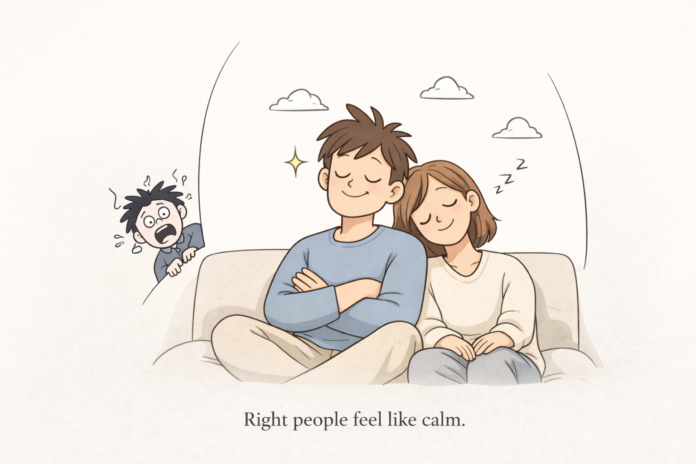
The people who truly belong in your life donโ€™t leave you feeling anxious or unsure. They create a quiet sense of safety, stability, and emotional easeโ€”without you having to beg for it.


Introduction: Love Should Feel Like Rest, Not Tension

If a relationship constantly makes your chest feel tight, your mind overthink, and your heart doubt its worthโ€”pause. That feeling isnโ€™t โ€œdeep love.โ€ Itโ€™s emotional instability disguised as attachment.

The people meant to stay in your life donโ€™t keep you guessing. They donโ€™t make you decode silence, chase reassurance, or normalize anxiety as โ€œcare.โ€ Instead, they feel like emotional shelter. You breathe easier around them. You donโ€™t performโ€”you exist.

This blog explores why real connections feel safe, how anxiety signals misalignment, and how to recognize relationships that are meant to lastโ€”through real-world examples and personal truths.


Anxiety Is Not a Sign of Loveโ€”Itโ€™s a Warning Signal

Anxiety in relationships often shows up as:

  • Constant overthinking: โ€œDid I say something wrong?โ€
  • Fear of abandonment
  • Emotional unpredictability
  • Needing repeated reassurance
  • Feeling โ€œtoo muchโ€ for asking basic care

Weโ€™re often taught that intensity equals love. It doesnโ€™t. Consistency equals safety.

Love thatโ€™s meant to stay doesnโ€™t spike your nervous systemโ€”it calms it.


Real-World Example: Two Different Feelings, Two Different Truths

Example 1: The Anxious Connection

You message them. Hours pass. No reply. Your mind spirals:

  • Are they upset?
  • Did I do something wrong?
  • Am I asking for too much?

When they finally reply, itโ€™s dry. You feel reliefโ€”not happiness. Relief that the anxiety stoppedโ€ฆ temporarily.

Thatโ€™s not peace. Thatโ€™s emotional survival mode.

Example 2: The Stable Connection

You message them. They reply when they can. If theyโ€™re busy, they tell you. You donโ€™t panic. You donโ€™t chase. You feel secureโ€”even in silence.

Thatโ€™s not boredom. Thatโ€™s emotional safety.


People Who Are Meant to Stay Feel Predictableโ€”in a Good Way

โ€œPredictableโ€ gets a bad reputation. But in relationships, predictability means:

  • You know where you stand
  • Their words match their actions
  • Youโ€™re not afraid to be honest
  • Conflict doesnโ€™t threaten the bond

They donโ€™t disappear when things get uncomfortable. They donโ€™t punish you with silence. They donโ€™t make love feel like a test you might fail.

They stay steadyโ€”especially when life isnโ€™t.


Personal Truth: Your Body Knows Before Your Mind Does

Hereโ€™s something most people realize too late:
Your nervous system recognizes safety faster than your logic does.

If someone is meant to stay:

  • Your shoulders relax around them
  • Your thoughts slow down
  • You donโ€™t rehearse conversations in your head
  • Youโ€™re not afraid to ask for clarity

If someone causes anxiety, your body is telling you the truthโ€”even if your heart hasnโ€™t accepted it yet.


Why We Confuse Anxiety With Attachment

Many of us grew up associating love with unpredictability:

  • Inconsistent affection
  • Conditional approval
  • Emotional withdrawal

So when someone feels calm and stable, it can feel unfamiliarโ€”even boring. But unfamiliar doesnโ€™t mean wrong. It often means healthy.

Peace can feel strange when chaos is all youโ€™ve known.


The Right People Donโ€™t Make You Shrink

People meant to stay:

  • Donโ€™t make you feel needy for having needs
  • Donโ€™t make you question your worth
  • Donโ€™t require you to โ€œearnโ€ basic respect
  • Donโ€™t drain your emotional energy

Instead, they expand you. You grow around them. You feel supportedโ€”not managed.


A Simple Rule to Remember

If being close to someone feels harder than being alone, pay attention.
Love thatโ€™s meant to last should feel like groundingโ€”not confusion.


Final Thought: Choose Peace Over Patterns

Not every connection is meant to stay. And thatโ€™s okay.

The ones that are? They wonโ€™t give you anxiety.
Theyโ€™ll give you clarity.
Theyโ€™ll give you safety.
Theyโ€™ll give you peaceโ€”especially on days when life doesnโ€™t.

And once you experience that kind of stability, youโ€™ll never mistake anxiety for love again.

    Real Estate Terms Explained: A Beginner-Friendly Guide

    0

    Whether youโ€™re buying, selling, investing, or just exploring the property market, real estate comes with its own language. Understanding these terms helps you negotiate better, avoid costly mistakes, and make confident decisions.


    Table of Contents

    1. Why Real Estate Terminology Matters
    2. Property Types (Residential & Commercial)
    3. Ownership & Legal Terms
    4. Pricing, Valuation & Market Terms
    5. Financing & Mortgage Terms
    6. Contracts, Fees & Closing Terms
    7. Investment-Specific Terms
    8. Final Tips for Buyers & Investors

    1. Why Real Estate Terminology Matters

    Real estate transactions involve large sums of money, legal contracts, and long-term commitments. Knowing the right terms protects you from:

    • Overpaying for property
    • Signing unfavorable contracts
    • Misunderstanding agent or developer promises

    2. Property Types (Residential & Commercial)

    Residential Real Estate

    Property used for living purposes.

    • Apartment / Flat โ€“ A single housing unit within a building
    • Villa / House โ€“ A standalone residential property
    • Townhouse โ€“ Homes sharing side walls, usually in communities
    • Studio โ€“ One open space combining living, sleeping, and kitchen

    Commercial Real Estate

    Property used for business or income generation.

    • Office Space โ€“ Corporate or professional workplaces
    • Retail Property โ€“ Shops, malls, showrooms
    • Warehouse โ€“ Storage or logistics facilities
    • Mixed-Use Development โ€“ Residential + commercial combined

    3. Ownership & Legal Terms

    • Freehold โ€“ Full ownership of property and land
    • Leasehold โ€“ Ownership for a fixed period (e.g., 30โ€“99 years)
    • Title Deed โ€“ Official document proving ownership
    • Encumbrance โ€“ Legal claim or liability on a property
    • Easement โ€“ Right to use part of anotherโ€™s land (access, utilities)

    4. Pricing, Valuation & Market Terms

    • Asking Price โ€“ Price set by the seller
    • Market Value โ€“ Price a property is likely to sell for
    • Appraisal โ€“ Professional property valuation
    • Comparable Sales (Comps) โ€“ Similar properties used to assess value
    • Capital Appreciation โ€“ Increase in property value over time

    Market Conditions

    • Buyerโ€™s Market โ€“ More supply than demand (buyers have power)
    • Sellerโ€™s Market โ€“ High demand, limited supply (prices rise)

    5. Financing & Mortgage Terms

    • Down Payment โ€“ Initial amount paid upfront
    • Mortgage โ€“ Loan used to purchase property
    • Interest Rate โ€“ Cost of borrowing money
    • Loan-to-Value (LTV) โ€“ Loan amount vs property value ratio
    • Pre-Approval โ€“ Bankโ€™s initial confirmation of borrowing capacity
    • EMI โ€“ Equated Monthly Installment

    6. Contracts, Fees & Closing Terms

    • Sales Agreement โ€“ Legally binding purchase contract
    • Earnest Money Deposit (EMD) โ€“ Security deposit to confirm intent
    • Closing Costs โ€“ Registration, agent fees, legal fees, taxes
    • Transfer Fee โ€“ Paid when ownership changes
    • Handover โ€“ When buyer receives keys and possession

    7. Investment-Specific Terms

    • ROI (Return on Investment) โ€“ Profit compared to cost
    • Rental Yield โ€“ Annual rent รท property price
    • Cash Flow โ€“ Rental income minus expenses
    • Off-Plan Property โ€“ Purchased before construction completion
    • Vacancy Rate โ€“ Percentage of time property remains unoccupied
    • Exit Strategy โ€“ Plan to sell or refinance in the future

    8. Final Tips for Buyers & Investors

    • Always verify title deeds and approvals
    • Compare rental yield + appreciation, not just price
    • Understand fees and service charges before buying
    • Use professionals: agents, lawyers, valuers

    Conclusion

    Real estate isnโ€™t complicatedโ€”the language makes it seem that way. Once you understand these core real estate terms, youโ€™ll negotiate smarter, invest safer, and spot better opportunities. Whether youโ€™re a first-time buyer or an experienced investor, knowledge is your strongest asset.

      When Discipline Becomes a Crime: Are We Raising Strong Kids or Fragile Adults?

      0

      The world hasnโ€™t changed overnight โ€” parenting has.

      Today, when a child makes a mistake, adults hesitate.
      Not because they donโ€™t care.
      But because fear has replaced authority.

      Fear of laws.
      Fear of judgment.
      Fear of being misunderstood.

      And somewhere in that fear, real guidance is being lost.


      Discipline Is Not Abuse โ€” Nature Never Confused the Two

      Letโ€™s be clear first:
      This is not about hitting, abusing, or humiliating children.

      Itโ€™s about something much deeper.

      Look at nature.

      Animals donโ€™t โ€œhateโ€ their young when they correct them.
      They protect them by being firm.

      A lion cub that doesnโ€™t learn boundaries doesnโ€™t survive.
      A bird pushed from the nest doesnโ€™t fall โ€” it learns to fly.

      Nature has always understood one truth:

      Comfort doesnโ€™t build strength. Guidance does.


      Love Alone Doesnโ€™t Raise Strong Humans

      Modern parenting often repeats one dangerous lie:

      โ€œLove is enough.โ€

      Love is essential โ€” but love without limits creates confusion.

      When children are never corrected:

      • Mistakes feel like attacks
      • Accountability feels like oppression
      • Consequences feel unfair

      The result?

      Children grow up emotionally fragile, not emotionally intelligent.


      When Law Replaces Wisdom

      Laws exist to stop real abuse โ€” and thatโ€™s necessary.
      But when law replaces parental judgment, something breaks.

      Parents today ask:

      • โ€œCan I raise my voice?โ€
      • โ€œCan I punish?โ€
      • โ€œCan I say no?โ€

      Instead of asking:

      • โ€œIs my child learning responsibility?โ€
      • โ€œAm I preparing them for the real world?โ€

      The real world doesnโ€™t come with trigger warnings.
      It doesnโ€™t care about feelings โ€” it responds to behavior.


      Tough Guidance Is Not Hate โ€” Itโ€™s Responsibility

      Sometimes:

      • A harsh word saves a worse future
      • A firm boundary prevents lifelong regret
      • A moment of discomfort avoids years of suffering

      A child may not understand today.
      But one day they will.

      Every strong adult remembers a moment they hated โ€”
      and later realized it saved them.


      Discipline With Purpose, Not Ego

      This is the balance weโ€™re losing.

      Discipline should be:

      • Calm, not violent
      • Firm, not cruel
      • Consistent, not emotional

      Correction should never come from anger โ€”
      but from responsibility.

      You discipline not because youโ€™re angry,
      but because you care enough to prepare them.


      Children Donโ€™t Need Perfect Parents โ€” They Need Brave Ones

      Parents donโ€™t need to be feared.
      But they must be respected.

      Respect is not demanded โ€” itโ€™s taught.

      And sometimes, teaching hurts a little.

      That doesnโ€™t mean love is absent.
      It means love is stronger than comfort.


      Final Thought

      If we remove every hardship from childhood,
      we donโ€™t create happiness โ€”
      we create adults who break at the first hardship.

      Loving your child doesnโ€™t mean standing on their side always.
      Sometimes it means standing against their behavior โ€”
      for their future.

      And one day, if done right,
      they wonโ€™t resent you.

      Theyโ€™ll thank you.

      Lust Can Exist Without Roots, but Love Needs a Foundation

      0

      What You Seed Is What You Grow

      โ€œLust can exist without roots, but love needs a foundation. Destroy the foundation, and love cannot stand.โ€

      This isnโ€™t a moral lecture.
      Itโ€™s a law of lifeโ€”as simple and unavoidable as gravity.

      Just like farming, relationships follow one rule:
      ๐Ÿ‘‰ What you seed is what you grow.


      ๐ŸŒฑ The Seed Principle (Explained Simply)

      If you plant:

      • Wheat, you grow wheat
      • Thorns, you grow thorns
      • Nothing, nothing grows

      You canโ€™t plant chaos and expect peace.
      You canโ€™t plant impulse and expect stability.
      And you canโ€™t plant lust and expect love to magically appear later.


      ๐Ÿ”ฅ Lust vs โค๏ธ Love (The Core Difference)

      Lust:

      • Instant
      • Emotionally light
      • Driven by desire
      • Needs no long-term responsibility

      Love:

      • Slow
      • Emotionally deep
      • Built on trust
      • Needs care, time, and consistency

      Lust is like fireโ€”bright, hot, and fast.
      Love is like a treeโ€”quiet, slow, and deeply rooted.

      Fire can burn without roots.
      Trees cannot.


      ๐ŸŒ Real-World Example #1: The House Without a Foundation

      Imagine building a beautiful house:

      • Stylish walls
      • Expensive furniture
      • Perfect paint

      But no foundation.

      It may look amazingโ€”for a while.
      Then one storm, one shake, one testโ€ฆ
      and it collapses.

      Many relationships fail the same way:

      • Strong attraction
      • No emotional base
      • No trust
      • No patience

      When pressure comes, nothing holds.


      ๐ŸŒ Real-World Example #2: The Fast Business Partner

      Two people start a business:

      • One wants quick money
      • The other wants long-term growth

      At first, profits come fast.
      But shortcuts, lies, and ego creep in.

      Soon:

      • Trust breaks
      • Partnership dies
      • Money disappears

      Why?

      Because the foundation was wrong.

      Relationships work the same way.


      ๐Ÿง  Why People Get Confused

      Many people believe:

      โ€œIf the chemistry is strong, love will come later.โ€

      But chemistry is fuel, not structure.

      Fuel without structure causes explosions, not homes.

      Love doesnโ€™t grow from intensity.
      It grows from emotional safety.


      ๐ŸŒฟ The Emotional Foundation (What Actually Builds Love)

      Love needs:

      • Respect
      • Emotional honesty
      • Boundaries
      • Responsibility
      • Consistency

      These are not romantic wordsโ€”but they are romantic outcomes.

      Without them, desire stays desire.
      It never matures.


      โš ๏ธ A Hard Truth (But a Fair One)

      You are free to live however you want.

      But freedom doesnโ€™t cancel consequences.

      If you:

      • Normalize emotional damage
      • Treat connection as disposable
      • Confuse attention with affection

      Then donโ€™t expect time to turn that into deep love.

      Time reveals, it doesnโ€™t repair.


      ๐Ÿชด Simple Rule to Remember

      • Lust asks: โ€œWhat do I feel now?โ€
      • Love asks: โ€œWhat can grow here?โ€

      And growth only happens where the soil is protected.


      โœจ Light Engagement Tactic (Pause & Reflect)

      Ask yourself:

      • What am I planting right now?
      • If this continued for 5 years, what would it become?
      • Am I building rootsโ€”or chasing sparks?

      Your answers already know the truth.


      ๐ŸŒ… Final Thought

      You donโ€™t need to judge anyone.
      You donโ€™t need to shame desire.

      Just understand this:

      What you seed is what you grow.
      And love only grows where the foundation is protected.

      From โ€œFeelingโ€ to โ€œMeaningโ€

      0

      How Our Understanding of Intimacy Grows From Childhood to Adulthood

      This blog is not about judging what is right or wrong.
      Itโ€™s about understanding how humans grow โ€” emotionally, mentally, and relationally โ€” from childhood to adulthood.

      We experience the same actions very differently at different stages of life.
      Intimacy is one of them.


      ๐ŸŒฑ Childhood: No Concept of Sex โ€” Only Safety and Love

      A child doesnโ€™t understand sex.
      What they understand is:

      • Safety
      • Care
      • Attachment
      • Trust

      Love, for a child, looks like:

      • Someone holding their hand
      • Someone protecting them
      • Someone staying

      This is pure emotional bonding, without desire.

      At this stage:

      Love = safety + presence


      ๐ŸŒฟ Teenage Years: Curiosity, Desire, and Confusion

      As the body changes, desire appears before understanding.

      Teenagers begin to feel:

      • Attraction
      • Curiosity
      • Excitement
      • Impulse

      But emotionally, they are still learning:

      • Boundaries
      • Consequences
      • Responsibility

      This is often where physical desire exists without emotional depth.

      Not good. Not bad.
      Just unfinished understanding.


      ๐ŸŒณ Young Adulthood: Desire Meets Experience

      In young adulthood, people start separating:

      • Physical pleasure
      • Emotional connection

      Many discover that:

      • Desire can be intense
      • But intensity doesnโ€™t always mean meaning

      This is where many people realize:

      โ€œSomething feels missing.โ€

      Because desire alone satisfies the body โ€”
      but connection satisfies the soul.


      ๐ŸŒฒ Mature Adulthood: Meaning, Bonding, and Commitment

      With maturity comes clarity.

      Adults begin to value:

      • Trust
      • Emotional safety
      • Loyalty
      • Shared responsibility

      Here, intimacy changes.

      It becomes:

      • Less about impulse
      • More about connection
      • Less about taking
      • More about giving

      This is why many describe intimacy within commitment as love, not just desire.


      โค๏ธ The Core Difference (Explained Simply)

      For a child:

      • Love = care

      For a teenager:

      • Desire = excitement

      For a young adult:

      • Sex = experience

      For a mature adult:

      • Intimacy = bonding + responsibility + love

      Thatโ€™s the difference people struggle to explain.

      Not before vs after marriage.
      Not good vs bad.

      But:

      Desire vs Meaning


      ๐Ÿง  A Simple Truth (For All Ages)

      • Desire can exist without love
      • Love usually grows with responsibility

      And responsibility grows with maturity.

      Thatโ€™s why the same act can feel:

      • Empty at one stage
      • Deep at another

      ๐ŸŒ Final Thought

      This isnโ€™t about rules. This isnโ€™t about judgment.

      Itโ€™s about human growth.

      As we grow, we donโ€™t just change physically โ€”
      we change in how deeply we feel, connect, and understand.

      And thatโ€™s why intimacy means something different
      to a child, a teenager, and an adult.

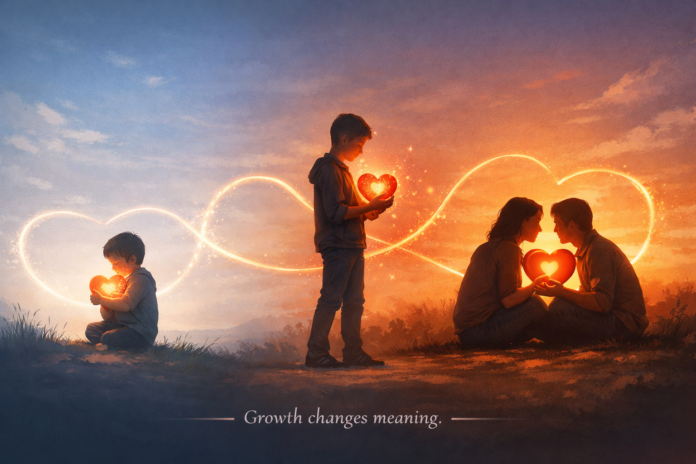
      Growth changes meaning.

      โ€œIโ€™ll See One Dayโ€ โ€” The Quote That Quietly Exposes the World

      0

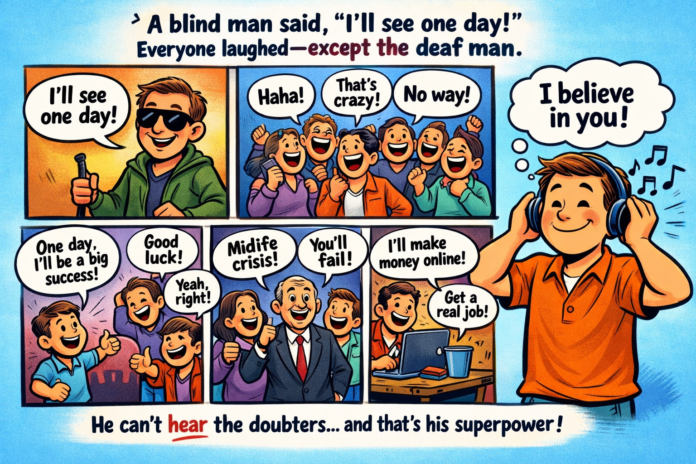
      Once a blind man said, โ€œIโ€™ll see one day.โ€
      Everyone laughed โ€” except the deaf man.

      At first glance, this line feels poetic. But when you sit with it, it becomes uncomfortable โ€” because it isnโ€™t about blindness or deafness at all.

      Itโ€™s about how people judge dreams they cannot understand.


      What This Quote Really Means (Simple Explanation)

      • The blind man represents someone with a limitation โ€” visible or invisible.
      • Saying โ€œIโ€™ll see one dayโ€ represents hope, belief, or a future vision.
      • The laughing crowd represents society โ€” people who decide whatโ€™s possible based on current reality.
      • The deaf man doesnโ€™t laugh because he never heard the limitation imposed by others.

      ๐Ÿ‘‰ The lesson:
      Sometimes belief survives only when you donโ€™t listen to people who mock it.


      Real-World Example 1: The Poor Student Who โ€œDreamed Too Bigโ€

      A boy from a low-income family says:

      โ€œOne day, Iโ€™ll become a successful entrepreneur.โ€

      • Teachers smile politely.
      • Friends laugh.
      • Relatives say: โ€œBe realistic. People like us donโ€™t do that.โ€

      But one person โ€” maybe an outsider, a mentor, or even a stranger โ€” doesnโ€™t laugh.
      Not because they fully understand the plan, but because they donโ€™t carry the same mental noise.

      That person becomes the โ€œdeaf manโ€ โ€” untouched by discouragement.

      Many successful founders were laughed at before they were admired.


      Real-World Example 2: Career Switchers (This One Hits Hard)

      An experienced professional says:

      โ€œIโ€™m leaving a stable job to start over in a new field.โ€

      What happens?

      • โ€œYouโ€™re too old.โ€
      • โ€œYouโ€™ll fail.โ€
      • โ€œWhy risk everything now?โ€

      People laugh โ€” not because itโ€™s funny โ€” but because your courage exposes their fear.

      The ones who donโ€™t laugh? They either:

      • Donโ€™t hear the gossip
      • Or donโ€™t believe fear should decide someone elseโ€™s life

      Again โ€” the deaf man.


      Real-World Example 3: Traders, Creators, and Builders

      Someone says:

      โ€œIโ€™ll make a living from trading / content / online work.โ€

      The response:

      • โ€œThatโ€™s gambling.โ€
      • โ€œThatโ€™s not a real job.โ€
      • โ€œShow me proof.โ€

      But hereโ€™s the truth: People laugh before the results exist โ€” and go silent after they appear.

      Belief always looks foolish before it looks obvious.


      Why the Deaf Man Is the Key Character

      The deaf man doesnโ€™t laugh, not because he agrees โ€” but because he isnโ€™t infected by doubt.

      In real life:

      • Doubt spreads through words
      • Fear spreads through opinions
      • Limitations spread through conversation

      Sometimes the smartest move is to be โ€œdeafโ€ to:

      • Mockery
      • Unqualified advice
      • Fear disguised as concern

      The Hidden Psychological Truth

      People donโ€™t laugh at impossible dreams.

      They laugh at dreams that remind them of what they gave up.

      Thatโ€™s why belief often feels lonely.


      Final Thought (Read This Slowly)

      The blind man wasnโ€™t foolish for believing heโ€™d see.

      The crowd was foolish for assuming they knew his future.

      And the deaf man? He simply didnโ€™t let noise decide what was possible.

      ๐Ÿ‘‰ If your dream makes people laugh, protect it.
      Sometimes silence is the strongest form of faith.

      Prop Trading Firms Explained (Without the Fairy Tales): How They Work, Who Gets Paid, and Why Most Traders Quietly Disappear

      0

      Prop trading firms sell a beautiful dream.

      โ€œHereโ€™s $100,000.
      Donโ€™t risk your own money.
      Just trade well and keep the profits.โ€

      If this were a movie, the background music would swell, the trader would smile confidently, and the chart would magically go up.

      In real life?
      The music stops very quickly.

      Prop firms are not evil, not scams, and not charities.
      They are well-designed risk machines that reward discipline and punish chaos โ€” instantly.

      This blog explains prop firms as they actually are, with no motivational posters involved.


      What a Prop Trading Firm Really Is (In Human Language)

      A prop firm does not hand you real money and wish you luck.

      It hands you:

      • A simulated account
      • A rulebook
      • A timer
      • And a very polite way to say โ€œdonโ€™t mess this upโ€

      If you follow the rules and make money, they pay you a cut.
      If you break the rules, the account disappears faster than your confidence after a bad trade.

      Think of it like:

      โ€œYou may drive this Ferrari on a closed track, but if you scratch it, youโ€™re out.โ€


      How Prop Firms Actually Make Money (Spoiler: Not From Your Genius)

      Prop firms are not hedge funds sitting nervously behind your trades.

      They are statistical businesses.

      They make money from:

      • Evaluation fees
      • Traders failing (a lot)
      • Traders breaking rules (even more)
      • A very small group of calm, boring, consistent traders

      When you blow an account, nobody panics.
      No capital was harmed in the making of your loss.

      Your failure is not a tragedy.
      Itโ€™s a line in a spreadsheet.


      The Evaluation Phase: A Stress Test for Humans, Not Strategies

      Most traders think evaluations are about:

      • Win rate
      • Strategy
      • Indicators
      • โ€œSkillโ€

      They are not.

      Evaluations are about what you do when things donโ€™t go your way.

      The firm watches:

      • How fast you panic
      • How quickly you revenge trade
      • How you behave near drawdown
      • Whether rules become โ€œsuggestionsโ€

      Your strategy might be profitable.
      Your behavior usually isnโ€™t.


      The Biggest Illusion: โ€œIโ€™m Trading a $100,000 Accountโ€

      Letโ€™s clear this up once and for all.

      You are not trading $100,000.

      You are trading your maximum loss.

      Example:

      • Account size: $100,000
      • Max loss: $10,000

      ๐ŸŽฏ Your real account is $10,000.

      The other $90,000 is just there to make you feel powerfulโ€ฆ
      โ€ฆand then betray you psychologically.

      Once that $10,000 limit is hit:

      • The account is gone
      • The dream is gone
      • The email is very polite

      Why Max Loss Is the Only Number That Matters

      Prop firms do not care how confident you feel.

      They care about how much pain youโ€™re allowed before they escort you out.

      Max loss controls:

      • Your position size
      • Your emotions
      • Your breathing rate
      • Your lifespan as a trader

      Retail traders say:

      โ€œI have a 100K account.โ€

      Prop traders say:

      โ€œI have a limited oxygen tank. Donโ€™t waste it.โ€


      The Cartoon Trap of Big Numbers

      Big accounts make traders do stupid things.

      โ€œ$1,000 risk? Thatโ€™s nothing on a 100K account!โ€

      Three losses later:

      • Confidence drops
      • Hands shake
      • Logic leaves the room

      Near max loss, traders:

      • Tighten stops like theyโ€™re afraid of air
      • Overtrade like theyโ€™re chasing a bus
      • Break rules โ€œjust this onceโ€
      • Make decisions they wouldnโ€™t explain to anyone

      The account doesnโ€™t die from the market.
      It dies from you trying to save it.


      Funded Accounts: Congratulations, Now Donโ€™t Ruin It

      Passing the evaluation feels amazing.

      Thatโ€™s exactly when most traders fail.

      Nothing changes except:

      • Your ego grows
      • Your patience shrinks
      • Your risk tolerance quietly increases

      The firm didnโ€™t change the rules.
      You did โ€” in your head.

      Accounts usually end not with explosions, but with small daily rule leaks.


      Who Prop Firms Actually Pay (Hint: Not the Loud Ones)

      Prop firms donโ€™t reward:

      • Excitement
      • Overconfidence
      • โ€œOne big tradeโ€ stories
      • Screenshot warriors

      They reward traders who:

      • Risk the same every time
      • Trade less than they want to
      • Stop when emotions appear
      • Treat rules like gravity

      The ideal prop trader is:

      • Slightly boring
      • Emotionally stable
      • Predictable
      • Forgettable (in a good way)

      Payouts: Yes, Theyโ€™re Real โ€” and Yes, Theyโ€™re Checked

      Payouts happen.

      But only if:

      • Every rule was followed
      • No creative interpretations occurred
      • No suspicious behavior appeared
      • Profits look human, not desperate

      Things that quietly kill payouts:

      • Sudden lot size jumps
      • Martingale recoveries
      • News gambling
      • Copying across accounts
      • One trade doing all the work

      If it looks like luck, it gets reviewed.


      The Dark Reality (But Calm, Not Scary)

      Hereโ€™s the truth most people avoid:

      • Most traders are expected to fail
      • Rules exist to control variance, not feelings
      • Psychology removes more traders than markets
      • Marketing shows winners, not the graveyard
      • Prop firms are cold, calm, and consistent

      They are not villains.
      They are engineers.


      Can You Make a Living From Prop Firms?

      Yes โ€” if you stop treating them like a lottery.

      People who succeed:

      • Withdraw often
      • Trade small
      • Avoid hero trades
      • Run multiple firms carefully
      • Focus on staying alive

      They donโ€™t try to get rich fast.
      They try to not get eliminated.


      Who Should Stay Away

      Prop firms are not for you if:

      • You need quick money
      • You hate rules
      • You trade emotionally
      • You want excitement
      • You believe discipline is optional

      Prop firms donโ€™t teach discipline.
      They expose the lack of it.


      The Entire System, Explained Simply

      Max Loss = Your Real Money Account Size = Leverage Illusion Rules = Contract Discipline = Survival Skill Survival = Payouts

      Once you see this clearly,
      prop firms stop feeling unfairโ€ฆ
      and start feeling very honest.


      Final Reality Check

      Prop firms donโ€™t fund traders.

      They rent risk to people who can behave.

      If you respect the limits, they pay you.
      If you donโ€™t, the system quietly moves on โ€” without drama.


      โ€œCurious which prop firms actually pay traders? Click here.โ€

      Dubai Changed My Life โ€” But Now Itโ€™s Changing the Lives of Those Who Love It

      0

      Dubai has always been a city of second chances.

      For millions of people, it wasnโ€™t just a destination on the map โ€” it was a turning point.
      A place where hard work mattered more than background, where ambition could rewrite destiny, and where people arrived with nothing but left with stories, skills, and dignity.

      But today, something feels different.

      Dubai is still shining.
      But for many who love this city deeply, living here has become emotionally and financially exhausting.


      When Dubai Was Truly Life-Changing

      Not long ago, Dubai represented possibility.

      • A fresher could grow into a manager
      • A technician could become a business owner
      • A migrant could send money home, save, and still live decently

      Rent was manageable.
      Groceries were predictable.
      Transport didnโ€™t drain salaries.

      Most importantly, effort felt rewarded.

      People accepted long hours, heat, pressure, and sacrifice โ€” because the math still worked.


      The Reality Today: Cost of Living Up, Salaries Stuck

      Now, the equation has changed.

      ๐Ÿ“ˆ What Increased Rapidly

      • Rent (30โ€“50% in many areas)
      • DEWA and utilities
      • Fuel and transportation
      • Groceries and basic food items
      • School fees and medical costs

      ๐Ÿ“‰ What Did NOT Increase

      • Salaries
      • Annual increments
      • Overtime compensation
      • Job security

      For many professionals, expenses grew faster than income, quietly but relentlessly.

      A salary that felt โ€œokayโ€ in 2019 now feels insufficient in 2026.


      The Unspoken Truth: Pay by Nationality, Not Skill

      This is the most painful part โ€” and the one people whisper about, but rarely say out loud.

      Two people. Same role. Same experience. Same performance.

      Yet:

      • One earns significantly more
      • The other struggles to survive

      Why?

      Not skill.
      Not productivity.
      Not results.

      Nationality. Passport. Perception.

      This reality hits hardest when:

      • A highly skilled worker trains someone earning double
      • Experience is ignored because of origin
      • Loyalty is rewarded with silence, not raises

      This isnโ€™t just unfair โ€” itโ€™s emotionally damaging.


      Real-Life Example (Youโ€™ll Recognize This)

      A mid-level professional earning AED 6,000โ€“7,000:

      • Rent (shared): AED 2,000โ€“2,500
      • Transport: AED 700โ€“1,000
      • Food: AED 1,200โ€“1,500
      • Utilities + phone: AED 500โ€“700

      Whatโ€™s left?

      Almost nothing.

      No savings.
      No emergencies.
      No future planning.

      Just survival โ€” in one of the worldโ€™s most expensive cities.


      Loving Dubai, But Feeling Pushed Out

      This is what hurts the most.

      People donโ€™t hate Dubai.
      They love it.

      They love:

      • The safety
      • The diversity
      • The ambition
      • The opportunity it once symbolized

      But loving Dubai now feels like being in a relationship where:

      • You give more every year
      • You sacrifice more every month
      • And still, youโ€™re told to be grateful for less

      Many quietly ask themselves:

      โ€œHow long can I keep doing this?โ€


      Employers: The Hidden Cost of Ignoring Reality

      When salaries donโ€™t match living costs:

      • Motivation drops
      • Loyalty disappears
      • Mental health suffers
      • Talent quietly exits

      People donโ€™t leave companies for fun.
      They leave because life becomes unsustainable.

      Retention isnโ€™t about perks or slogans โ€” itโ€™s about fair pay aligned with reality.


      Dubai Still Has a Choice

      Dubai has reinvented itself many times.
      It can do it again.

      But that requires:

      • Skill-based pay, not passport-based assumptions
      • Salaries aligned with real living costs
      • Transparent growth paths
      • Respect for long-term contributors

      Dubai doesnโ€™t need charity.
      It needs balance.


      Final Thoughts: From the Heart

      Dubai changed lives โ€” including mine, and maybe yours.

      But a city that asks people to give their best must also allow them to live with dignity.

      People are not asking to be rich.
      They are asking to breathe.
      To save a little.
      To feel valued.

      If Dubai wants to remain a city of dreams,
      it must ensure those dreams donโ€™t quietly turn into burnout.

      Because no one should feel poor
      while building a rich city.


      Disclaimer

      This article is an opinion-based, personal perspective intended for general awareness and discussion only. It does not target, accuse, or single out any individual, company, employer, nationality, or organization.

      All examples mentioned are illustrative, based on commonly shared experiences and public conversations, and do not represent universal conditions across Dubai or the UAE. Employment terms, salaries, benefits, and cost-of-living experiences vary widely depending on industry, role, employer policies, and individual circumstances.

      This content is not financial, legal, or employment advice. Readers are encouraged to conduct their own research and seek professional guidance before making career, financial, or relocation decisions.

      Dubai and the UAE continue to offer opportunities, safety, and growth for many people. This piece aims to highlight challenges faced by some residents, encourage constructive dialogue, and promote fair, skill-based employment practices โ€” not to undermine or misrepresent the city or its institutions.

      If you believe any part of this content is inaccurate or requires clarification, it is shared in good faith and open to respectful discussion and improvement.

      Milano Cortina 2026 Winter Olympics: A New Era of Winter Sport Excellence

      0

      The 2026 Winter Olympics, officially branded as Milano Cortina 2026, represent a turning point in how global sporting events are designed, hosted, and experienced. Rather than concentrating everything in one city, Italy is redefining the Olympic model by blending urban innovation with alpine mastery, creating a Games that feel modern, efficient, and deeply connected to nature.

      Set against the dramatic backdrop of the Italian Alps and the cultural heartbeat of northern Italy, Milano Cortina 2026 is not just about medals โ€” it is about legacy, sustainability, and redefining winter sports for the next generation.


      A Dual-City Vision: Milan Meets the Mountains

      One of the most defining features of the 2026 Winter Olympics is its dual-host structure.

      • Milan will anchor the Gamesโ€™ ice sports and ceremonies, bringing world-class infrastructure, global accessibility, and modern arenas.

      • Cortina d’Ampezzo, a historic winter sports destination, will host alpine and snow events amid the Dolomite mountains.

      This separation is intentional. Instead of forcing winter sports into artificial urban environments, the Games respect where each sport belongs โ€” ice in the city, snow in the mountains. The result is better competition conditions, lower environmental strain, and a more authentic Olympic experience.


      Sports, Disciplines, and the Evolution of Competition

      Milano Cortina 2026 will showcase the full spectrum of winter sport excellence โ€” from speed and precision to endurance and fearlessness.

      Core Winter Sports Fans Expect

      • Alpine skiing

      • Cross-country skiing

      • Biathlon

      • Figure skating

      • Ice hockey

      • Speed skating

      • Snowboarding

      • Freestyle skiing

      • Nordic combined

      • Luge, bobsleigh, and skeleton

      A New Chapter in Olympic History

      For the first time, ski mountaineering enters the Olympic stage โ€” a discipline that combines climbing strength, downhill technique, and extreme endurance. Its inclusion reflects a broader shift: the Olympics are no longer just preserving tradition, they are embracing modern mountain culture.

      This evolution ensures the Games remain relevant to younger audiences while still honoring classic winter sports.


      Athletes, Pressure, and the Mental Game

      The Winter Olympics are unlike any other sporting event. Athletes train for four years for moments that last seconds. In Milano Cortina 2026, competitors will face:

      • High-altitude pressure

      • Variable mountain weather

      • Technically demanding courses

      • Global media scrutiny

      Beyond physical preparation, mental resilience will be the defining factor. The Games are expected to spotlight a new generation of athletes who blend data-driven training, psychological conditioning, and tactical execution โ€” a reflection of how elite sport has evolved in the modern era.


      Sustainability: From Buzzword to Blueprint

      Unlike many past Olympic editions, Milano Cortina 2026 is built on a reuse-first philosophy.

      • Existing venues are prioritized over new construction

      • Temporary structures replace permanent overbuilds

      • Transport planning focuses on rail and low-emission mobility

      • Mountain ecosystems are protected by limiting artificial expansion

      This approach sends a clear message: the future of the Olympics depends on integration, not domination, of host environments.


      Ceremonies with Cultural Weight

      The Olympic ceremonies will blend Italian heritage, design, and storytelling rather than relying on excess spectacle.

      • The opening ceremony in Milan will reflect modern Italy โ€” innovation, fashion, and global connection.

      • The closing ceremony will embrace history, symbolically passing the Olympic flame forward in a setting rooted in European civilization.

      Expect refined artistry over noise โ€” a style that aligns with Italyโ€™s cultural identity.


      Why Milano Cortina 2026 Matters Globally

      The 2026 Winter Olympics arrive at a moment when the Olympic movement is under pressure to justify its relevance, cost, and impact. Milano Cortina offers a blueprint for the future:

      • Multi-city hosting

      • Lower environmental footprint

      • Realistic infrastructure planning

      • Respect for local geography and culture

      If successful, this model may influence how all future Olympics are designed โ€” winter and summer alike.


      Final Thoughts: More Than a Sporting Event

      Milano Cortina 2026 is not just another Olympic cycle. It is a strategic reset for winter sports on the world stage.

      It combines:

      • Elite athletic performance

      • Cultural authenticity

      • Environmental responsibility

      • Modern operational thinking

      For fans, it promises unforgettable moments.
      For athletes, it is the ultimate test.
      For the Olympic movement, it may define the next 20 years.