Exclusive Content:

How You Deal With People Defines What You Become

Most people think dealing with people is about being...

Why Do People Stay in Jobs They Hate for Years?

Every morning, millions of people wake up with the...

Power Talks Loud. The Cost Stays Silent.

The Truth No One Wants to Say Out Loud People...
Home Blog Page 36

From Horses to Supercars: What Truly Fuels Emirati Passion for Play

0

“In every gallop and every engine roar lies the same heartbeat — freedom, pride, and play.”


Play as Power and Freedom

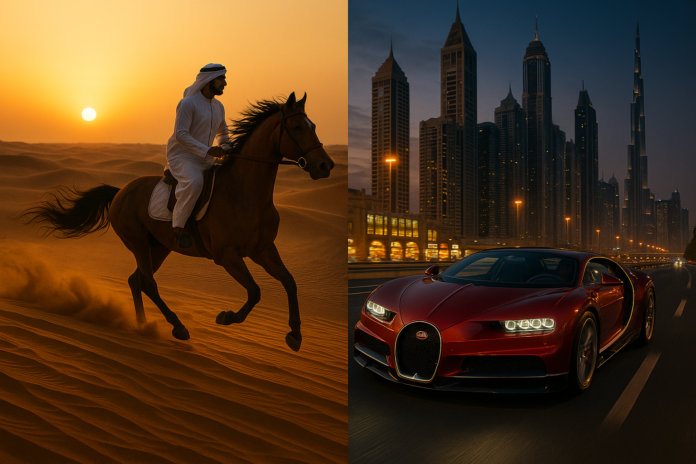
For Emiratis, play has never been frivolous. It is a way of expressing freedom, pride, and mastery over challenge. From the desert horse races of the past to the supercar parades of today, play reflects not only leisure but also status, identity, and spirit.


Horses: Pride of the Desert

The Arabian horse is more than an animal; it is a symbol of grace, endurance, and loyalty. For centuries, horses were companions in war and survival in the desert. Their beauty and strength became woven into poetry, art, and even family honor.

  • Horses represent freedom across endless dunes.

  • Their bloodlines are guarded like treasure.

  • Their speed is not just admired — it is celebrated as divine gift.

Even today, horse racing and equestrian festivals in the UAE are not sport alone, but a reminder of ancestral pride.


Falcons of the Road: The Supercar Obsession

Step into Dubai or Abu Dhabi streets, and you’ll see a new kind of falcon — the supercar. Ferraris, Lamborghinis, and Bugattis roar through highways like metallic predators. For Emiratis, these cars are not only machines but symbols of ambition and control.

Just as their ancestors trained falcons for precision and power, today’s Emiratis tame horsepower in engines. It is not about excess, but about the thrill of mastery.


Between Tradition and Modern Thrill

It might seem contradictory: desert horses on one hand, supercars on the other. But for Emiratis, both speak the same language:

  • Elegance with power.

  • Speed with dignity.

  • Play that reflects heritage.

What looks like luxury to outsiders is, for Emiratis, a continuation of their culture — the need to ride, to race, to feel the wind against the face.


Why It Matters

Horses and supercars show how Emiratis transform play into legacy. They remind us that even as times change, the passion for freedom, mastery, and pride remains eternal. The horse galloping across sand and the Bugatti gliding across asphalt are not opposites — they are mirrors of the same soul.
Why Gold Isn’t Just Ornament in the UAE — It’s Identity Cast in Metal

0

“In the UAE, gold is not worn for wealth — it is carried as memory, trust, and identity.”


Gold as More Than Luxury

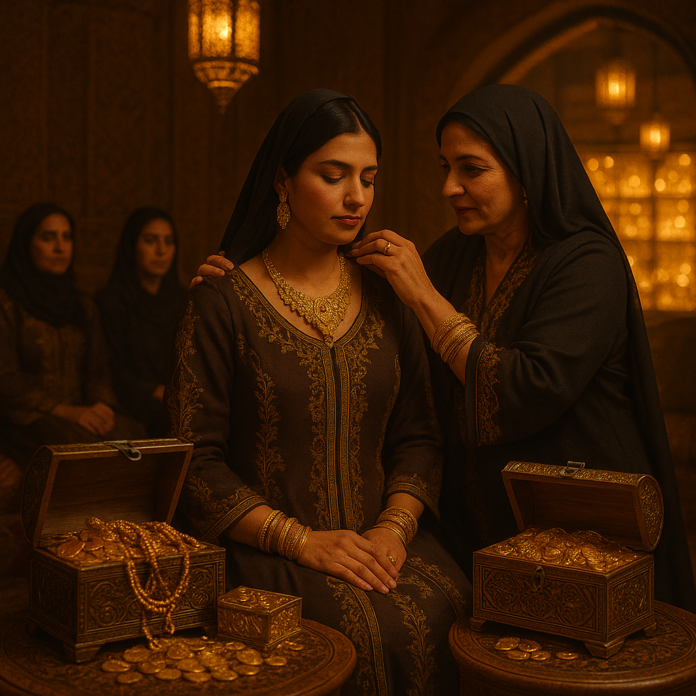
For many, gold is a commodity — traded, weighed, or displayed as luxury. But for Emiratis, gold is a living symbol of continuity, security, and belonging. It is passed from mother to daughter, stored as protection in uncertain times, and gifted as a seal of loyalty.

Gold here is not excess — it is expression.


The Desert’s Currency of Trust

Before oil, in a land where wealth could vanish with a storm, gold became the most secure form of survival. Families stored it not in banks but in homes, hidden in chests or woven into jewelry.

Gold was portable, durable, and eternal — a promise against loss. Even today, this memory shapes Emirati attitudes: gold remains the safest investment, but also the most sentimental.


Jewelry as Heritage

Every Emirati family has gold that tells a story. A bangle from a grandmother, a necklace gifted at a wedding, earrings worn at a child’s birth. These are not ornaments but family archives — records of love, sacrifice, and continuity.

Weddings, especially, shine with gold not for vanity but for symbolism:

  • Prosperity shared.

  • Loyalty sealed.

  • Future blessed.

To give gold is to give permanence.


Modern Power, Ancient Glow

Even amidst futuristic skyscrapers, gold shops in Dubai’s souqs remain full. Emiratis see no contradiction in this: technology may define tomorrow, but gold anchors identity in the eternal.

It is a rare object that is both modern asset and ancient relic — and in the UAE, it is both investment and intimacy.


Why It Matters

Gold in the UAE is not about showing off. It is about showing roots. It is identity in solid form, telling the world: “We carry our past into our future, and it shines with us.”

Oud, Bukhoor, and Poetry: The Invisible Language of Emirati Beauty

0

“Some cultures speak with words, others with gestures — Emiratis often speak with scent and verse.”


Beauty Beyond the Visible

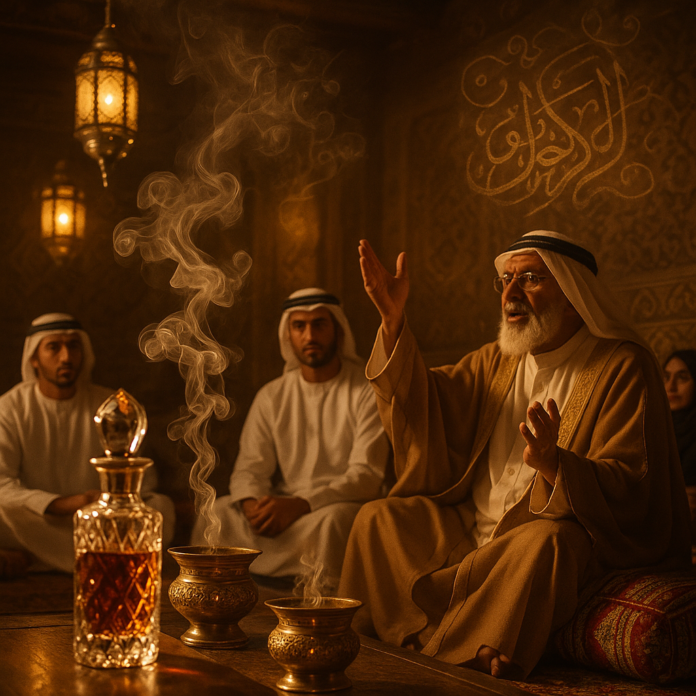
For Emiratis, beauty is not just something seen — it is something felt, breathed, and remembered. Unlike cultures that emphasize outward show, Emiratis weave their aesthetics through invisible languages: the lingering scent of oud, the curling smoke of bukhoor, and the rhythm of poetry that resonates in silence.


Oud: The Scent of Legacy

Oud is not simply perfume — it is liquid memory. Distilled from rare agarwood, each drop carries centuries of trade, ritual, and identity. When an Emirati wears oud, it is not for fashion but for presence.

  • Depth: a reminder of roots buried deep in the soil.

  • Mystery: a fragrance that lingers even after one leaves the room.

  • Respect: to greet others not with extravagance, but with subtle elegance.

Oud tells a story before words are spoken.


Bukhoor: The Smoke That Welcomes

When guests enter an Emirati home, bukhoor rises like a soft veil, winding through the air. This burning woodchip, soaked in oils, transforms any space into a sanctuary.

Bukhoor is not about the house smelling pleasant — it is about the house declaring: “You are welcome, you are honored.” Its smoke clings to clothes and hair, carrying the memory of hospitality long after the visit ends.


Poetry: Beauty Made Audible

If oud and bukhoor are invisible languages, poetry is the audible one. In Emirati culture, poetry is not decoration but communication at its highest level. Nabati poetry captures feelings too complex for prose, expressing loyalty, love, grief, and pride.

A verse recited in majlis can heal disputes, inspire action, or simply remind listeners of who they are. For Emiratis, a poem is perfume for the soul.


Why It Matters

In an age of loud fashion and fleeting trends, Emiratis remind the world that beauty can be intangible yet unforgettable. Scent, smoke, and verse — these are not material possessions but living experiences, binding people through memory and meaning.

The Psychology of a White Kandura: Why Simplicity Commands Respect

0

“In a world of noise and color, the Emirati kandura whispers authority through silence.”


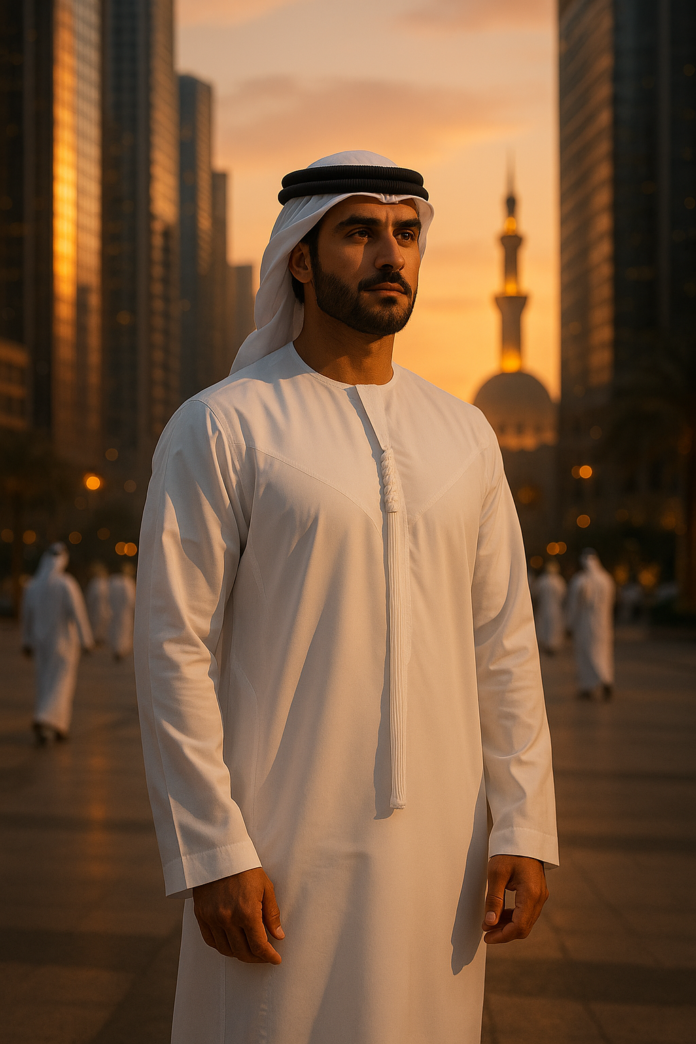
More Than Fabric, A Statement of Identity

To outsiders, the white kandura may look like simple clothing. But for Emiratis, it is a uniform of identity, dignity, and equality. Its elegance lies not in extravagance, but in restraint. Where others display status through fashion labels and excess, Emiratis reveal strength through simplicity.


The Symbolism of White

White is not chosen by accident. In desert heat, it reflects sunlight, offering comfort. But symbolically, it reflects something greater:

  • Purity: a reminder of moral clarity and spiritual grounding.

  • Unity: when worn by many, it erases divisions of wealth or status.

  • Respect: the absence of excess signals humility, not arrogance.

A man in a kandura enters a majlis not as a rival, but as an equal — stripped of distractions, measured only by his words and character.


Uniform Yet Personal

Though the kandura looks uniform, small details make it personal. The cut of the collar, the choice of fabric, the shine of the agal (black cord) — each detail whispers personality without shouting. It is fashion without vanity, elegance without flamboyance.

This balance of sameness and subtle individuality reflects the Emirati way of life: collective harmony with room for personal pride.


The Psychology of Respect

Western suits often signal power through sharp lines and dark tones. The kandura flips this logic: power through calmness. Its flowing shape suggests patience, its simplicity suggests clarity, its color suggests trust.

This is why, in an Emirati setting, the man in a crisp kandura often commands respect before speaking a single word. The garment itself projects confidence without aggression.


Why It Matters

The kandura shows that respect is not always won by complexity. In a society balancing tradition and modernity, it proves that minimalism can be mightier than excess. For Emiratis, the kandura is not just clothing — it is a philosophy: strength through simplicity, dignity through humility.

The Desert Whispers, the Sea Remembers: Why Emiratis Never Lose Their Compass

0

“In the shifting sands and endless waves lies a lesson: roots do not move, even when the world does.”


The Desert: Teacher of Patience and Direction

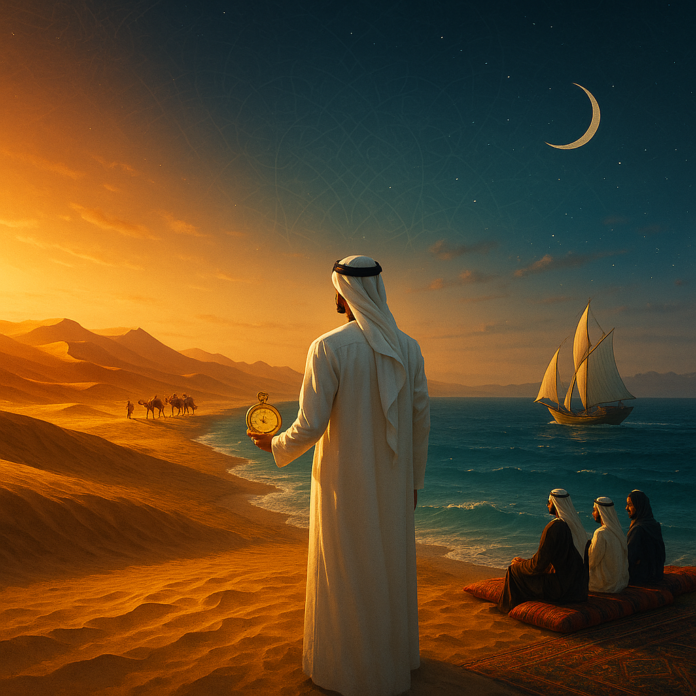
For centuries, Emiratis lived in a land where the desert could both protect and destroy. Its vast emptiness taught patience, resilience, and humility. Travelers navigated by stars and instinct, their survival depending on the ability to read the whispers of wind and sand.

The desert became more than geography — it became a spiritual teacher:

  • Endurance: to withstand trials without breaking.

  • Silence: to listen when the world has nothing to say.

  • Direction: to find the way even when paths are unseen.

These qualities still shape Emirati identity today, from boardrooms to family life.


The Sea: Keeper of Memory and Risk

If the desert whispered patience, the sea demanded courage. Emirati ancestors dove into its depths, lungs burning, hearts racing, in search of pearls. Others sailed in wooden dhows, braving storms to trade across the Gulf and beyond.

The sea became a mirror of destiny — beautiful, dangerous, and rewarding only to those with faith. Its lessons were clear:

  • Memory matters: every pearl carried the story of sacrifice.

  • Risk builds reward: no wave is conquered without daring.

  • Community saves: one diver’s breath was guarded by the entire crew.

Even today, when Emiratis walk along Corniche shores or look at yachts in marinas, they carry with them the memory of the sea’s tests.


The Compass Within

The desert and the sea together forged a compass — not of metal, but of spirit. For Emiratis, knowing who you are and where you belong is more important than maps. Faith, family, and loyalty form the true north that no storm or shifting dune can erase.

This is why Emiratis can embrace modern skyscrapers, global trade, and space exploration without losing themselves. Their compass is ancient, rooted in land and sea, guiding them into tomorrow.


Why It Matters

The UAE’s rapid progress confuses outsiders. How can a people move so fast without losing their soul? The answer lies in this compass. Emiratis know that skyscrapers may rise and fall, but the desert and the sea — their eternal teachers — remain.

To lose them would be to lose direction. To honor them is to stay unshakable, no matter how fast the world spins.

Falcons, Pearls, and Poems: The Ancient Codes Emiratis Still Live By

0

“In every falcon’s flight, every pearl’s shine, and every poem’s verse lies a reminder: the past is not gone — it breathes in the present.”


Symbols of Survival and Spirit

To understand Emiratis, you must look beyond skyscrapers and highways. Their soul is carved from three timeless symbols — falcons, pearls, and poetry. Each carries not just heritage but an unspoken code of life that continues to guide modern society.


Falcons: The Eyes of Honor

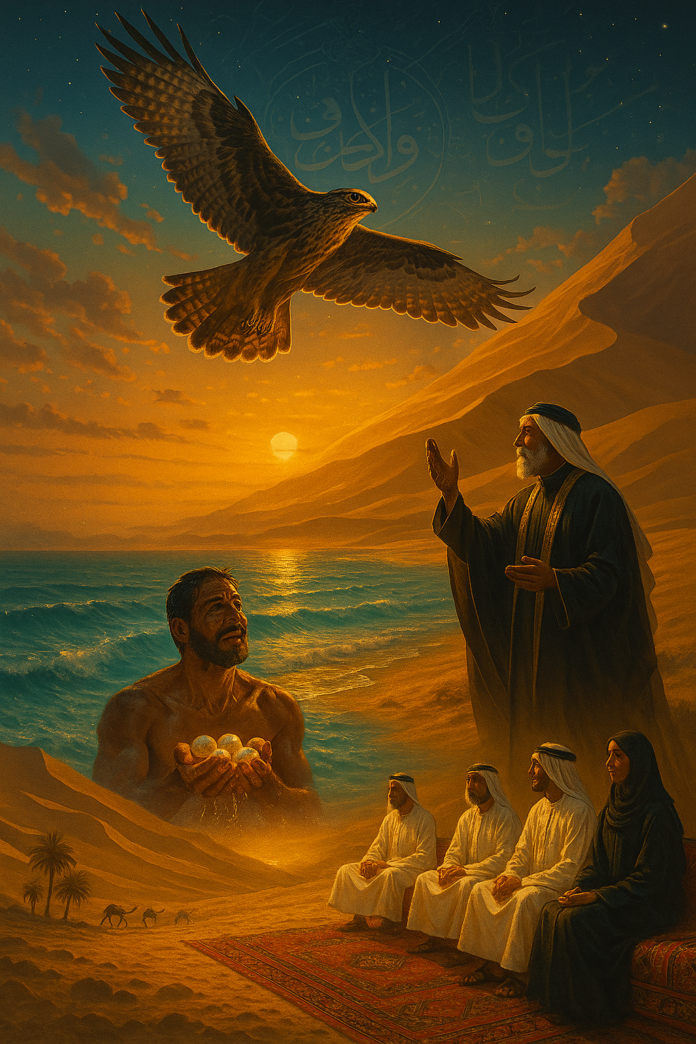
Falconry is more than sport in the UAE — it is a ritual of loyalty, patience, and discipline. For centuries, falcons were vital for hunting in the desert, ensuring survival when food was scarce. But beyond survival, falcons became a symbol of:

  • Vision: the ability to see further than others.

  • Honor: the bond of trust between falcon and falconer.

  • Strength: soaring above challenges with grace.

Even today, falcons are celebrated, cared for in hospitals, and honored in festivals. To own and train one is to inherit a living emblem of dignity.


Pearls: The Light of the Sea

Before oil, pearls were the UAE’s lifeblood. Generations of divers risked their lives, plunging into deep waters with nothing but a nose clip, a basket, and faith. What they brought back were not just gems, but symbols of sacrifice and endurance.

Pearls taught Emiratis:

  • Risk and reward go hand in hand.

  • Hardship creates beauty.

  • Wealth is meant to be shared, for one diver’s life depended on the entire crew’s loyalty.

Though oil replaced pearls as the economic engine, the pearl remains a spiritual anchor — shining quietly in Emirati memory as proof that wealth comes with hardship first.


Poetry: The Language of the Soul

If falcons taught discipline and pearls taught sacrifice, poetry taught meaning. Nabati poetry, often recited in majlis gatherings, became the way to pass wisdom, honor ancestors, and preserve identity.

To this day, poetry competitions fill stadiums, verses appear in government speeches, and Emiratis quote lines from memory. For them, words are not decoration — they are weapons of honor, shields of pride, and bridges of unity.


Why It Matters

Falcons, pearls, and poems are not relics of the past. They are living codes that explain why Emiratis value patience, honor, sacrifice, and meaning even in a hypermodern world.

A falcon’s flight is echoed in ambition.
A pearl’s shine glows in resilience.
A poem’s verse carries the nation’s soul forward.

Arabic Coffee and Silent Truths: Inside the Majlis Where Futures Are Decided

0

“In the majlis, words are few, but their weight can move mountains.”


The Heartbeat of Emirati Society

For centuries, the majlis has been the soul of Emirati life. It is more than a gathering place — it is a school of wisdom, a council of decisions, and a sanctuary of trust. In a world where skyscrapers and digital screens dominate, the majlis remains a space untouched by noise, where coffee speaks louder than contracts.


The Ritual of Coffee and Hospitality

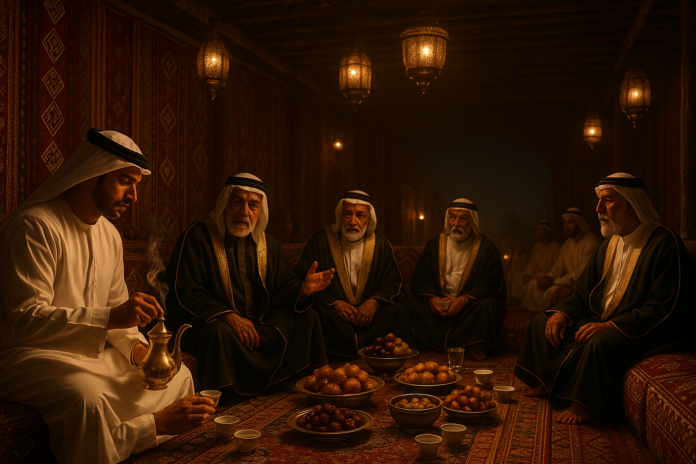
Every majlis begins with a familiar rhythm: the soft clink of finjan cups, the rich aroma of gahwa (Arabic coffee) infused with cardamom, and the offering of dates. Serving coffee is not just a gesture — it is a ritual of respect.

  • The host pours coffee for the guest with his right hand.

  • The guest accepts with humility.

  • The cup is returned with a gentle shake, signaling gratitude.

In these simple motions lies a code of trust that outsiders rarely grasp. Coffee is not about caffeine; it is about continuity, tradition, and the silent message: “You are welcome here. You are safe.”


The Power of Silence

Unlike Western boardrooms, where noise and speed dominate, the majlis thrives on patience and silence. Long pauses are not awkward — they are respected. Elders weigh every word before it leaves their lips. Stories are told in metaphors, advice is wrapped in poetry, and sometimes, decisions are made with a single nod.

For Emiratis, the majlis is not about talking the most, but about listening the deepest.


Decisions That Shape Futures

In history, tribal leaders gathered in the majlis to resolve disputes, plan journeys, and negotiate alliances. Today, ministers, businessmen, and families still sit on plush cushions in majlis halls — discussing ventures, solving conflicts, and preserving unity.

Deals worth millions may begin not in offices, but in these intimate spaces, sealed not with signatures but with shared trust.


Why It Matters

The majlis explains a paradox of Emirati culture: how a society can be both deeply traditional and boldly modern. It shows that progress does not erase roots; rather, it draws strength from them.

The skyscrapers may symbolize ambition, but the majlis remains the engine of loyalty, respect, and continuity.

Why Emiratis Call Their Leaders “Fathers” — The Secret of National Loyalty

0

“For Emiratis, leadership is not a contract. It is kinship — written in respect, sealed in loyalty.”


More Than Politics, A Family Bond

To many outsiders, loyalty to rulers is seen as political duty. But in the UAE, it is something far more intimate. Leaders are not only decision-makers — they are seen as “fathers of the nation.”

This language is not symbolic flattery. It reflects a deep cultural truth: in Emirati tradition, leadership and fatherhood are intertwined. A father protects, provides, and guides. A leader is expected to do the same — only for an entire people.


The Tribal Roots of Leadership

Long before the Union, tribal structures defined the desert way of life. A sheikh was chosen not only for strength but for wisdom, generosity, and courage. His tent was always open. His wealth was measured not by what he kept, but by what he gave away.

These tribal codes still shape modern leadership. When Emiratis refer to their rulers as “fathers,” it is because they see them continuing the same protective role — not distant authority, but close kin.


Loyalty Forged in Vision

Since 1971, Emiratis have witnessed leaders transform their country from scattered desert settlements into a global hub of ambition. Skyscrapers, universities, airports, and space programs are not just infrastructure — they are acts of guardianship, investments in the future of every Emirati child.

This visible, lived improvement creates loyalty not out of fear, but out of gratitude and trust. To disobey or disrespect such leadership would feel, in Emirati culture, like dishonoring one’s own father.


Modern Fatherhood in Governance

Today, UAE leaders balance global modernity with traditional paternal roles. They are seen:

  • Providing security — ensuring stability in a turbulent region.

  • Investing in children’s futures — from scholarships to cutting-edge research.

  • Protecting heritage — funding museums, poetry festivals, and falconry centers to keep memory alive.

This is why loyalty here is not transactional. It is familial, rooted in identity and continuity.


Why It Matters

Understanding this bond explains the extraordinary unity of the UAE. Where other nations debate politics with division, Emiratis approach leadership as they would approach family — with respect, patience, and belonging.

The skyscrapers may define the skyline, but the nation’s stability rests on something less visible: the belief that leaders are fathers, and citizens are children of the same household.

Beyond Ritual: How Faith Shapes Every Breath in Emirati Life

0

“Faith is not something Emiratis do — it is who they are.”


Faith as the Unseen Architecture

To a visitor, the UAE dazzles with skylines, highways, and speed. But if you pause long enough to listen, you’ll notice something deeper: the call to prayer echoing across towers, the quiet pause of a shopkeeper closing his store for salah, or the rhythm of Ramadan shaping entire cities.

For Emiratis, faith is not a weekend practice or a holiday tradition. It is the invisible architecture of life, shaping everything from family gatherings to national ambition.


The Compass in the Desert

Long before oil, when tribes crossed the desert, survival was not only about water and shade — it was about direction. Faith became the compass:

  • Justice in trade: ensuring fairness when wealth was scarce.

  • Patience in hardship: carrying endurance when storms or famine came.

  • Generosity as duty: sharing bread with a stranger could mean saving a life.

Even today, the same compass points the way. The skyscraper and the souq both operate under the same principle: trust is sacred.


Ramadan: A Month of Renewal

Every year, Ramadan transforms the UAE. Streets glow with lanterns, mosques fill with worshippers, and homes overflow with food and generosity.

But beyond the fasting, what makes Ramadan profound is its psychology:

  • It teaches restraint in a world of abundance.

  • It creates empathy for those in need.

  • It resets the heart, reminding Emiratis that success without humility is hollow.

At sunset, when cannon fire signals iftar, families and strangers alike break their fast together. In that moment, society breathes as one body.


The Balance of Modernity and Piety

Walk through Dubai or Abu Dhabi, and you’ll see futuristic skylines. Yet nestled between glass towers are mosques where worshippers kneel five times a day. Government offices pause meetings for prayer breaks. Emirati astronauts in space speak of carrying faith with them beyond Earth.

This is not contradiction — it is coexistence. Faith does not slow progress here; it anchors it, ensuring ambition does not drift into arrogance.


Why It Matters

For Emiratis, faith is not only about personal salvation — it is about social cohesion. It explains why generosity is widespread, why leaders are seen as protectors, and why community remains strong even in a hypermodern world.

Faith is the unseen energy that fuels both humility and ambition — the breath that makes skyscrapers stand and families endure.

The Hidden Power of the Emirati Family: Why Roots Still Define Destiny

0

“A nation’s strength is built not on towers of glass, but on the bonds of blood and trust.”


A Desert Truth That Still Shapes Today

In a land once defined by shifting dunes and endless horizons, survival was never about the strongest individual — it was about the strongest family. For Emiratis, this truth remains unchanged. Even as skyscrapers rise and Mars missions launch, it is still the family that anchors identity, security, and destiny.

Visitors often ask: “How did the UAE grow so fast in only 50 years?” The answer is hidden in the unshakable roots of family and tribe, where loyalty, honor, and trust flow deeper than oil.


Family as Fortress and Foundation

For centuries, the desert offered little mercy. Families became fortresses of survival:

  • Every resource shared — water, food, shelter.

  • Every decision collective — no man stood alone.

  • Every failure protected — one’s weakness covered by another’s strength.

Today, the same pattern remains — but with modern layers.

  • Family is a safety net, offering financial and emotional support in times of need.

  • Family is also a launchpad, fueling businesses, politics, and social influence.

To an Emirati, a family name isn’t just a name — it is social currency.


The Elders: Living Libraries of the Nation

In Emirati homes, elders aren’t sidelined — they are the heartbeat of continuity. A grandfather’s stories of pearl diving or a grandmother’s recipes for regag bread are not casual nostalgia. They are identity codes, passed like heirlooms from one generation to the next.

Their authority is woven not through force but through wisdom. In a rapidly changing society, elders remind the young: “The faster you run toward tomorrow, the tighter you must hold yesterday.”


The Women Who Weave Continuity

While men often carried family names into public life, women carried family values into every breath of daily living. Mothers shape morality, raise children, and ensure traditions survive amidst modern ambitions. Today, Emirati women extend their influence from the majlis to ministries, showing how private strength becomes public leadership.


Rituals of Belonging

In a typical Emirati week, one rhythm never breaks: family gatherings. Friday lunches, weddings, and Ramadan iftars are not social events — they are renewal ceremonies. Each plate of machboos or luqaimat is more than food; it is a silent contract of loyalty.

To skip such gatherings is not simply rude. It risks severing a thread in the family fabric — a thread that holds identity itself.


Why This Still Defines Destiny

Family explains much of what makes Emiratis unique:

  • Loyalty to leaders, seen as fathers of the nation.

  • Strength in community, where no one stands abandoned.

  • Resilience in progress, blending tradition with ambition.

Skyscrapers impress visitors, but Emiratis know: glass towers can crack. What lasts is the bloodline, the bond, and the unspoken promise of family.