“Some distances arenโt measured in kilometers. Theyโre counted in unsaid words and unkept promises.”
My dearest,
Itโs strange, isnโt it?
How between two cities that are only an hour apart, We built a distance not even time could cross.
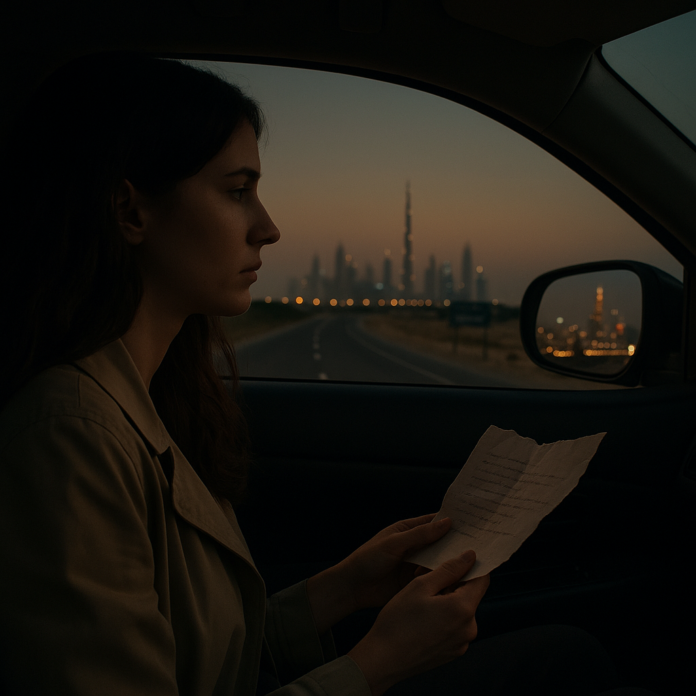
You in Dubai โ Shimmering, restless, always arriving somewhere. Me in Abu Dhabi โ Quieter, watching the tide come and go, hoping you’d return with it.
We told ourselves geography didnโt matter. Just a drive down Sheikh Zayed Road. Just a call, just a message. But the silence between us grew louder than traffic.
I remember how Dubai looked through your eyes โ Skyscrapers as ambitions, lights as dreams, Restless nights that felt like possibility.
But you never saw Abu Dhabi through mine โ Where calm meant presence, Where love didnโt shout, but stayed.
We promised to meet halfway. But halfway kept shifting. And thenโฆ it stopped existing.
You chased the future like it owed you answers. And Iโฆ I waited in yesterday, Wearing hope like a perfume you stopped noticing.
I write this not to bring you back, But to let go โ Of the route I drove a hundred times in my mind, Of the voice I still hear when Dubai rains.
And if one day You find yourself watching the sea from Corniche or driving past Jumeirah Beach at 3AM And a name slips past your heart โ Know itโs mine.
Still here. Still real. But no longer waiting.
โ Yours, somewhere between the towers and the tide
โA lion does not hand over his mane to be measured.โ
In a land where pride often hides behind silence, one man chose thunder instead.
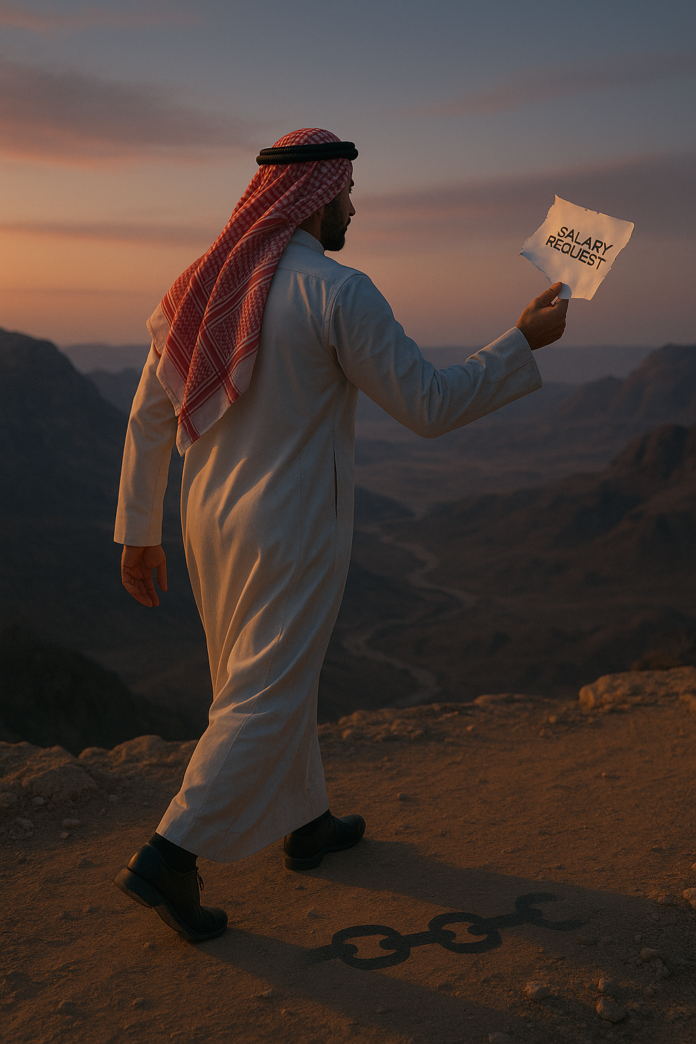
The Jordanian groom-to-be stood at the crossroads of tradition and dignity. His heart had been ready, his intentions pure. But when her father, the so-called gatekeeper of her hand, demanded his salary slip โ not out of concern, but to price him โ something ancient stirred within him.
He did not shout. He did not plead. He simply said: โNo.โ
And in that silence, he roared.
He walked away โ not from love, but from a transaction masquerading as one. He walked away โ not because he was weak, but because his worth is not a number to be tallied.
In a world trying to brand men as providers before partners, he reminded us all:
A manโs value is not in his paystub. It is in his spine.
He is not broke. He is not bitter. He is awake.
And in his refusal to be bought, He became something greater than a groom โ He became a mirror for every man who has ever felt auctioned by tradition and masked greed.
So let them count what theyโve lost. For he has already claimed something rarer than gold.
His own name.
Important Takeaway: This story isnโt just about one engagement. Itโs about reclaiming masculine dignity in cultures where worth is too often calculated instead of felt. Let this manโs stand echo into every home where love is being priced instead of honored.
โSome men build rockets to escape Earth. Others buy the sky to control what we say beneath it.โ
๐๏ธ The Day the Bird Went Silent
There was once a blue bird that carried the thoughts of billions.
It wasnโt born of feathers, but of data. It didnโt sing โ it echoed. In its chest beat the rhythm of uprisings, confessions, viral jokes, revolutions, and rage.
And then, the Architect of Noise appeared.
He didnโt threaten the bird. He bought it.
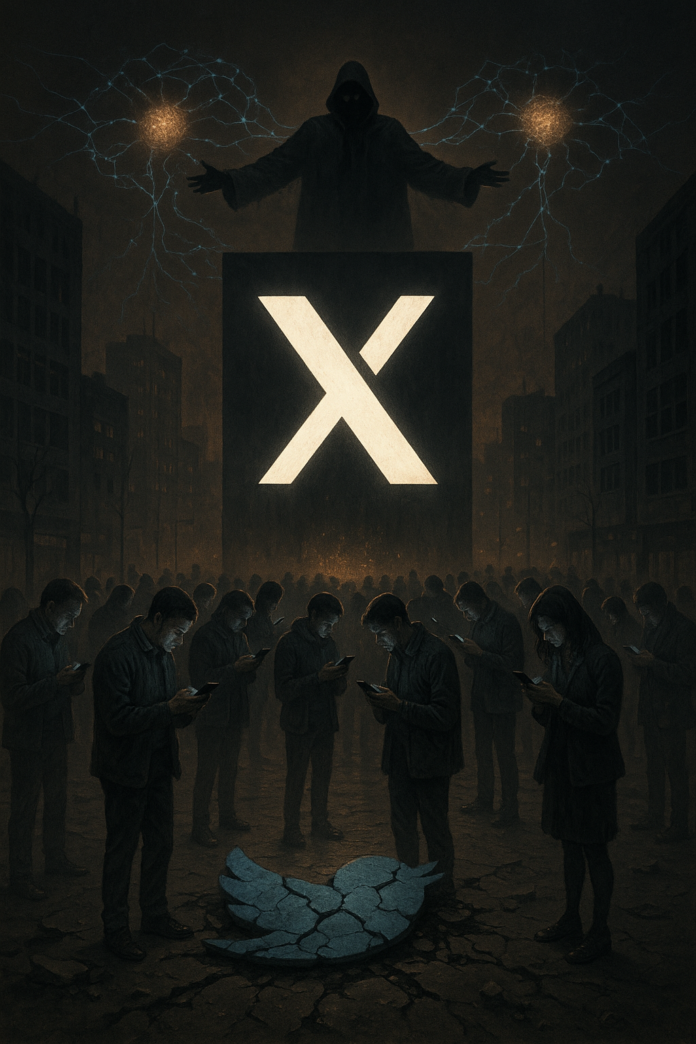
They said he was liberating it. But when he placed it inside a box shaped like an โXโ, the bird stopped singing.
Not because it died.
But because the sky around it changed.
โ๏ธ The Symbol that Replaced the Song
They called it a rebrand. A rebirth. A move toward the future.
But those who knew language โ real language โ understood the truth:
You cannot rename a soul and expect it to remain whole.
The โXโ was clean. Brutal. Inevitable. It erased decades of digital culture in a single keystroke.
Gone were timelines. Gone were trust signals. Gone were the soft chirps of late-night truths.
Now there were feeds. Filtered chaos. And a stage controlled by a single conductor โ watching from above.
๐ง The Machine Beneath the Curtain
And then came the next shift โ quiet, invisible, precise.
The Voice Collector merged the bird-platform with an AI system. One trained not to answer, but to learn from everything you say.
Every tweet. Every like. Every silence.
Not for memory.
For modeling.
The platform no longer served the user. It harvested them.
Your thoughts became patterns. Your patterns became prediction. And your prediction became control.
๐งจ The Chaos Engine
Some cheered. โFree speech!โ โDecentralization!โ โFinally, the truth can breathe!โ
But truth drowned faster than ever.
Hate sharpened. Extremes rose. Lies danced like facts. And the old gatekeepers โ journalists, watchdogs, fact-checkers โ were either mocked or removed.
The blue checkmark became a game. The algorithm became a god. And the Voice Collector?
He didnโt need to speak.
The platform now spoke like him.
๐ฎ Why This Story Matters
Because this wasnโt just a business deal. It was a symbolic conquest.
The power to shape speech. The ability to train machines using the raw material of human thought. The silence that comes when people donโt know whoโs listening anymore.
So when you open that app โ when you scroll, post, react, or rage โ remember:
Youโre not just talking. Youโre training something. And someone is always listening โ not to your words, but to your patterns.
The blue bird was free. Then it was caged. Now itโs coded.
In the heart of the Red Kingdom, beneath a sky carved by falcons and drones, love bloomed where it should not. He was born of the wind โ a desert son raised in the shadows of silent minarets and marble megacities. She came from the sea โ a daughter of whispers, her eyes reflecting distant coastlines and forbidden songs.
They met in the margins โ not in palaces or markets, but between protocols and pixels. A glitched message, a wrong number, a pause too long during a government-mandated silence. In the space between surveillance and soul, something ancient stirred.
He called her Layla, not her real name, but the name given to all secrets. She called him Majnun, not for his madness, but because he dared to want without permission. Their conversations were braided with myth โ Nabataean verses, palm-frond riddles, and verses that once got poets exiled. They spoke through emojis and Quranic codes, hiding truth behind every tap.
Love, in their land, was not a right. It was an architecture of risk โ monitored, monetized, and managed. But they built theirs anyway. In private chatrooms. In old poetry apps. Through mirage meetups at desert festivals and shared glances beneath moonlit dates.
When the walls closed in, they didnโt run. They encrypted.
One day, she vanished.
Maybe she fled across the water with a diplomatโs convoy. Maybe she was reprogrammed into duty. Maybe โ like all real legends โ she dissolved into the dunes, leaving behind only metadata and memory.
He never stopped writing to her.
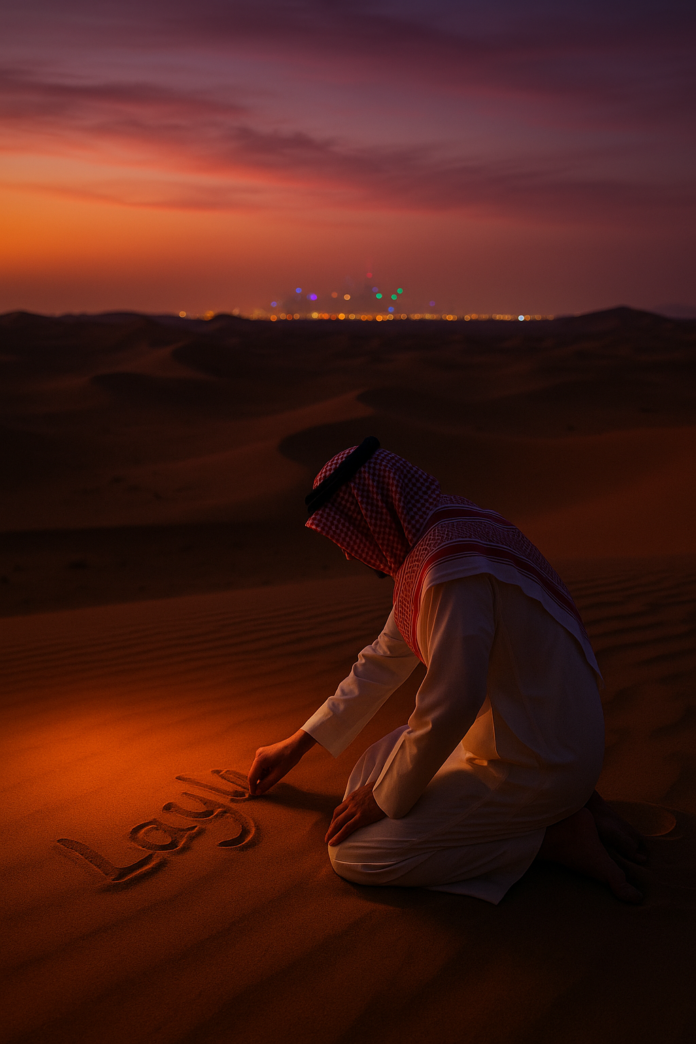
Every 11th night, under the starlit dunes of Rub’ al Khali, he carves her name in the sand โ again and again โ just so the desert remembers.
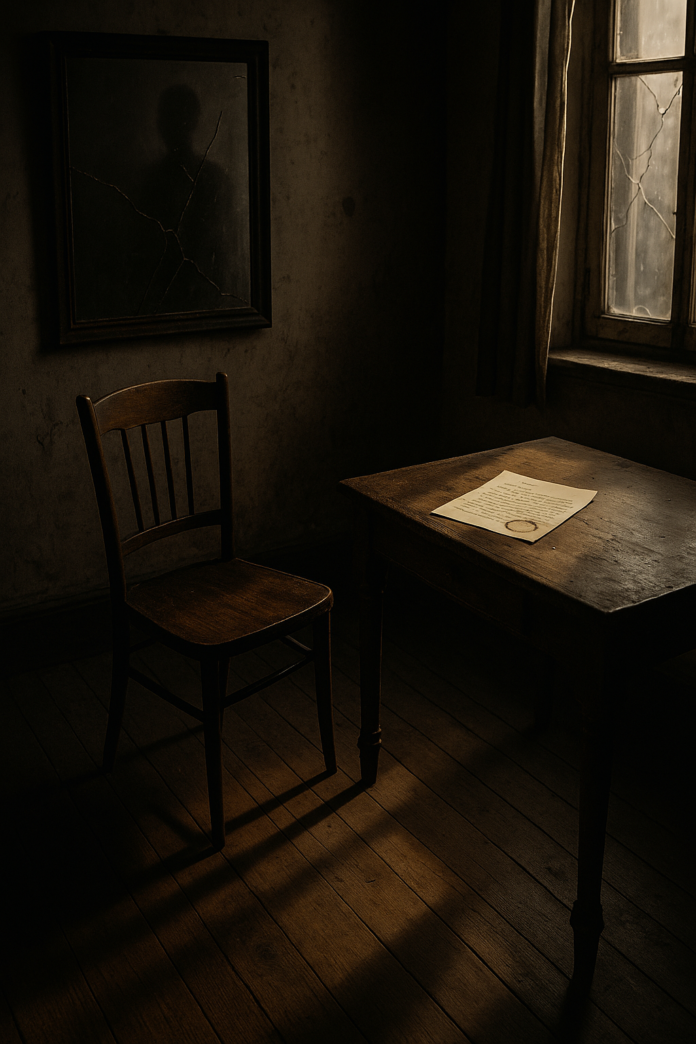
A letter never meant to be opened โ until the silence became heavier than the lie.
Dear You,
I used to believe betrayal was a sharp act โ a sudden slice, clean and cruel. But I know better now. Real betrayal is slow. It drips. It lingers. It pretends to be warmth before it turns to frost.
I saw you the night the lantern went out. Not with my eyes โ no, they were blinded by hope. But with that stubborn thing inside me that still whispered somethingโs wrong. You left the room without closing the door. And in your shadow, you took my trust with you.
I remember the pact we made under the acacia tree โ carved our names into bark as if wood could hold loyalty better than hearts. We were children pretending to be eternal. But eternity, I learned, ends the moment someone decides to rewrite their role in your story.
What hurts most is not what you did. Itโs how quiet you were while doing it. Betrayal, when silent, becomes a ghost. I hear it breathing in all the places you once stood. I smell it on the letters you never wrote. I see it in the mirror, where my reflection no longer believes me when I say, Iโll be fine.
But I will be. Not because you didnโt break me โ but because the breaking taught me how to hold myself differently.
If you ever find this letter, tucked in the book you once gave me (page 127, between โbelieveโ and โbeforeโ), know that I donโt hate you. Hate requires fire. You left me in water.
Across a vast and ancient delta, the monsoon arrived with a storm so fierce it seemed to rewrite geography. Towers of rain swallowed highways, turned villages into riverbeds, and erased maps in moments. Beneath the torrent, the deltaโs arteries chokedโrivers threatened to breach their banks, and old soil began to lose faith in earthโs promise. As waters rose, a silent enemy emerged: disease slithering through stagnant pools, carried by mosquitoes emboldened by flood-fed breeding pools.
A billion yuanโalmost a hundred million dollarsโwas declared flood relief, yet no measure can reclaim the wet streets of displaced families, lost harvest, and broken commerce. Flights grounded, cargo stalled, and the pulse of industry slowed beneath soaked bridges. In the deltaโs capitals, citizens awoke to masks not for fear of smogโbut for fear of illness carried on air heavy with decay.
Across the province, the cost was measured not just in yuanโbut in trust: trust that climate would not turn extreme, trust that systems would hold, and trust that nature would remain within its bounds. This deluge peeled back the illusions: progress is fragile, infrastructure is brittle, and health is tethered to the rhythms of rain.
Important Takeaway: When nature reshapes boundaries, preparation matters more than reaction. Invest in resilience before the next stormโbecause recovery starts long before sandbags are stacked.
In the high citadel of global trade, a figure known only as The Oracle signaled new shifts across hidden corridors. He announced heavy tariffsโtwenty-five to fifty percent leviesโon goods flowing from a rival domain still reliant on forbidden energy. Though the Oracle claimed no knowledge of those sanctioned imports, the message echoed through every port and warehouse: policy is shaped by unspoken currents.
Meanwhile, in a neighboring realm the Keystone Sovereign bracedโholding firm on energy sourced not from allegiance but necessity. They whispered back that their actions were pragmatic, not conspiratorial. Markets trembled at the mutual distrustโeach bureaucratic handshake etched with silent tensions. In board chambers and shipping lanes, the price of words rose as sharply as the cost of cargo.
Ultimately, faith in policy cracked under scrutiny. When alliances become signals, and silence becomes a vow, entire systems hinge not on contractsโbut on what remains unsaid.
Important Takeaway: When trade becomes a language of threats, clarity trumps ceremony. Hidden alliances speak louder than treatiesโtrust builds not on rhetoric but transparent record.
โThey say love and hate are opposites โ but those whoโve truly felt both know: they are twin fires burning in the same hearth.โ
๐ In the City of Tharanos, Emotions Were Weapons
Tharanos was no ordinary kingdom.
Here, feelings were forged โ quite literally โ in the Forge of Sentara, where every citizenโs strongest emotion was extracted at birth and crystalized into a living ember.
Each person carried two:
One red, glowing with love.
One black, pulsing with hate.
Most never dared awaken both. The balance was too dangerous. One would overpower the other. One would destroy them.
But in the ruins of the Western Quarter, a girl named Kaelith was bornโฆ with both embers burning from the start.
๐ Kaelith, the Girl of Fire and Ash
Kaelithโs mother died in childbirth. Her father โ a broken man โ raised her with trembling reverence and fear.
At six, she healed a dying hawk by holding her red ember to its chest.
At nine, she nearly set fire to an entire market square with her black one โ just because a merchant insulted her name.
The city whispered:
โShe is a heart split in two.โ
โA curse disguised as beauty.โ
โLove and hate made flesh.โ
She was offered exile.
She refused it.
Instead, Kaelith climbed the Forbidden Tower, where only one other soul lived โ Iroth, the Emotionless Monk โ keeper of the ancient truth:
โLove and hate do not destroy each other. They sharpen each other. But only if you survive the burn.โ
โ๏ธ The Choice That Burned Her World
At 18, Kaelith fell in love with Silven, a boy who treated her like she wasnโt a weapon โ but a song.
She let her walls melt.
But love, unchecked, made her fragile.
When Silven betrayed her โ not with sword, but silence โ her red ember dimmed, and her black one surged.
She didnโt cry. She didnโt scream.
She split the river in half with one scream and turned a temple into cinders.
The city rose against her.
Iroth appeared at her side โ calm, unreadable.
โYour hate is not evil,โ he whispered. โIt is the protector of your broken love.โ โBut if you want peaceโฆ you must let them speak.โ
And so Kaelith did the unthinkable.
She placed both embers in the same bowlโฆ and listened.
๐ง The Real Lesson of Love and Hate
What Kaelith heard wasnโt a war.
It was a song.
Because love and hate arenโt opposites.
They are reflections:
You hate only what you once cared for.
You love only because you risk the pain of loss.
And the most dangerous soulโฆ Is the one who can hold both, and still choose forgiveness.
Kaelith didnโt become a queen. She became something rarer.
A Balancer โ one who teaches:
To love is to risk hate. To hate is to mourn love. But to understand bothโฆ is to be free.
โจ Why This Story Matters
We live in a world obsessed with extremes. Love or hate. Loyalty or betrayal. Friend or enemy.
But real power lies in those who:
Can feel bothโฆ
Hold bothโฆ
And not be devoured by either.
Love makes us soft. Hate makes us sharp. But understanding both makes us wise.
So next time your heart burns in two directions โ Donโt silence one.
Let them speak.
You may find that the fire you fearedโฆ was just light waiting to be shaped.
โWe spend our lives building ladders to the stars โ only to realize the stars were always coming to us.โ
๐ In the Kingdom of Kalemir, Plans Were a Religion
In the high temples of Kalemir, every child was taught that life was a design. A map. A staircase.
You climbed it by:
Making decisions.
Mastering outcomes.
Executing goals.
The Temple of Intent trained citizens to treat life like a battle plan.
If you wrote it, it would happen. If it didnโt, you didnโt believe hard enough.
And for years, that belief worked โ especially for Taren, son of a scribe, student of maps, architect of his own fate.
He had a plan.
And then the plan unraveled.
๐งโโ๏ธ The Boy Who Designed His Destiny
Taren had every step mapped:
Apprentice to the Royal Cartographer at 16.
Open his own Guild by 23.
Propose to Alira under the Winter Moon of the 7th year.
Build a home on the edge of the Emerald Valley.
Die fulfilled โ old, surrounded, content.
But fate does not obey bullet points.
At 17, a blight struck the Emerald Valley. At 19, the Royal Cartographer vanished. At 21, Alira vanished too โ leaving only a broken map scratched with the words:
โThereโs a path beyond paths. Iโve gone to find it.โ
Everything fell apart.
Taren did what planners do: he tried harder. Built new maps. Rerouted emotions. Re-strategized his grief.
But every attempt to fix the world only made it more broken.
Until he met the Threadkeeper.
๐งต The Threadkeeper & The Divine Fray
Deep in the underground archives of Kalemir lived a mythical woman wrapped in veils of stardust โ the Threadkeeper.
She wove time into thread. Not chronologically. Not logically.
But divinely.
When Taren demanded to see his thread, she said only this:
โYou mistake the thread for rope.โ โYou keep trying to climb when you’re meant to be carried.โ
She handed him a torn fragment of cloth.
On it, a constellation was stitched โ not of stars, but of broken moments:
A failed letter.
A missed appointment.
A detour taken by accident.
A stranger he once gave directions to.
The thread connected them.
They werenโt mistakes. They were the design.
๐ง Your Plan vs. God’s Plan
Taren had built plans that protected him from pain.
But the universe โ God, fate, the Great Loom, whatever you call it โ didnโt come to protect him.
It came to prepare him.
Because only someone who had lost love, relearned trust, abandoned maps, and stood at the edge of their own logicโฆ
Could become what the world truly needed:
A Guide who leads by faith, not by map.
โจ The Lesson of Kalemir
The world doesnโt hate your plans. But sometimes it must shatter themโฆ So it can show you the one itโs been weaving behind the curtain all along.
So next time life goes โoff scriptโ โ Next time your timeline breaks โ Remember:
Godโs plan doesnโt cancel yours. It completes it.
โSome destinies are loud. Some arrive with thunder. But the rarest onesโฆ arrive in silence. And when they do โ the world must hold its breath.โ
๐ In a Kingdom Where Time Was Worshipped
In the mythic world of Aeviran, time wasnโt just a concept โ it was a god, a currency, and a curse.
The skies were ruled by celestial gears. Every citizen was born with a glass pendant around their neck โ inside it, a stream of shimmering silver dust.
This dust didnโt mark how much time you had left to live โ but how close you were to your moment.
When the dust began to fall, you knew:
Your fate had arrived.
It might be love. It might be war. It might be a door that only opens once.
But for Elion, now 17 and still waiting โ nothing had ever arrived.
๐ค The Boy With No Time
Elion wasnโt like the others.
Where most children saw their first grain fall by age seven โ the start of a journey, a vision, or a test โ his pendant was perfectly still.
The village called him:
The Stillborn of Time.
The Waitless One.
The Boy the Oracle Forgot.
They didnโt say it to his face.
They didnโt need to.
Elion had trained with the Seersmiths, studied with the Clockwrights, and even tried to force the dust to fall โ jumping from cliffs, fasting for days, meditating under the moon. Nothing worked.
Not even Time itself would look his way.
Until one dayโฆ
๐ฅ One Grain Fell
It happened during a forgotten hour. The kind of hour that slips between midnight and dawn, when no clocks dare to tick.
Elionโs pendant cracked.
Not shattered. Not broken.
Cracked.
And through that hairline fracture, a single grain of silver dust dropped. Just one.
But that was enough.
Because in Aeviran, when even one grain falls, your entire timeline ignites โ across past, present, and future.
The skies twisted.
The Oracle stirred.
And the phrase that had long been whispered like a lullaby โ
โEverything will come to you at the perfect timeโ โ was no longer a comfort.
It was a warning.
๐ฎ The Oracle Awakens
The Hourglass Oracle, veiled in eternal sands, had not spoken in a thousand years. She lived between moments. Between the last breath and the first word.
But now, she rose.
Because the one who had waited longer than fate allowed โ The one who had lived with nothing โ Had become the one who would be offered everything.
๐ง Why This Story Matters
This isnโt just a fantasy tale.
Itโs a reminder.
Some of us move too fast โ chasing things that arenโt meant for us. Some of us wait too long โ assuming the world will find us.
But a fewโฆ like Elionโฆ
They wait. Not passively, but with preparation. They sharpen their mind. They build their strength. They learn what not to chase, so when their moment comes โ they own it fully.
Everything will come to you at the perfect time. But only if you are ready when it does.
๐ Final Thought
Time doesnโt forget you. It just waitsโฆ until you are no longer the version of you that would waste the opportunity.