Home Blog Page 57

We Were All Just Eggs Once – What Happened?

0

Introduction: Cracks in the Shell

As children, we were like eggs — soft, fragile, filled with unknown potential.
No labels. No fear. Just a shell waiting to crack open into something wild, beautiful, or strange.

But then, life happened.

And now, here we are…
Some of us hatched into eagles.
Some became snakes.
Some never cracked open at all.


The Same Start, Different Outcomes

Think back to your childhood friends.

You all:

  • Played in the same parks.
  • Went to the same school.
  • Shared the same lunch boxes.
  • Got the same lectures from teachers and parents.

But now?

  • One’s flying private jets.
  • One’s in debt.
  • One’s changing the world.
  • One can’t get out of bed.
  • One’s bitter.
  • One’s soft.
  • One’s dangerous.
  • One’s a healer.

How did we all start the same and end up so different?


🥚 The Shell Isn’t the Story

An egg holds mystery, not answers.

What shapes the outcome?

  • Environment 🌦️ – Some eggs were placed in nurturing nests. Others in storms.
  • Heat 🔥 – Challenges, pressure, struggle. Some grew stronger. Some cracked wrong.
  • Choices 🧭 – Every peck from the inside shaped what came out.
  • People 🧍‍♂️ – Some eggs had warmth. Some had cold hands.

So no, we were never “equal” — only equally unwritten.


What Did You Hatch Into?

Some people grew feathers — light, wise, distant.
Others scales — protective, calculating.
Some bloomed into swans.
Some are still stuck, pecking from inside, wondering, “What am I meant to be?”

And that’s okay.

Because some eggs take longer to hatch.


Lessons from the Hatchery

🥚 Don’t judge your journey by someone else’s wings.
🐣 Some people look slow, but they’re growing something fierce inside.
🦅 Some fly high but forget where the nest was.
🦉 Some grow silent but wise.
🪿 Some just want to belong in a flock.


Final Thought: What’s Inside Still Matters

We were all eggs once.
And deep down, we still are — evolving, breaking old shells, finding new feathers.

So if today feels confusing, or you’re not sure what you’ve become…
Don’t worry.

The world didn’t give you a shell for protection —
It gave you a shell so you could break it when you were ready.

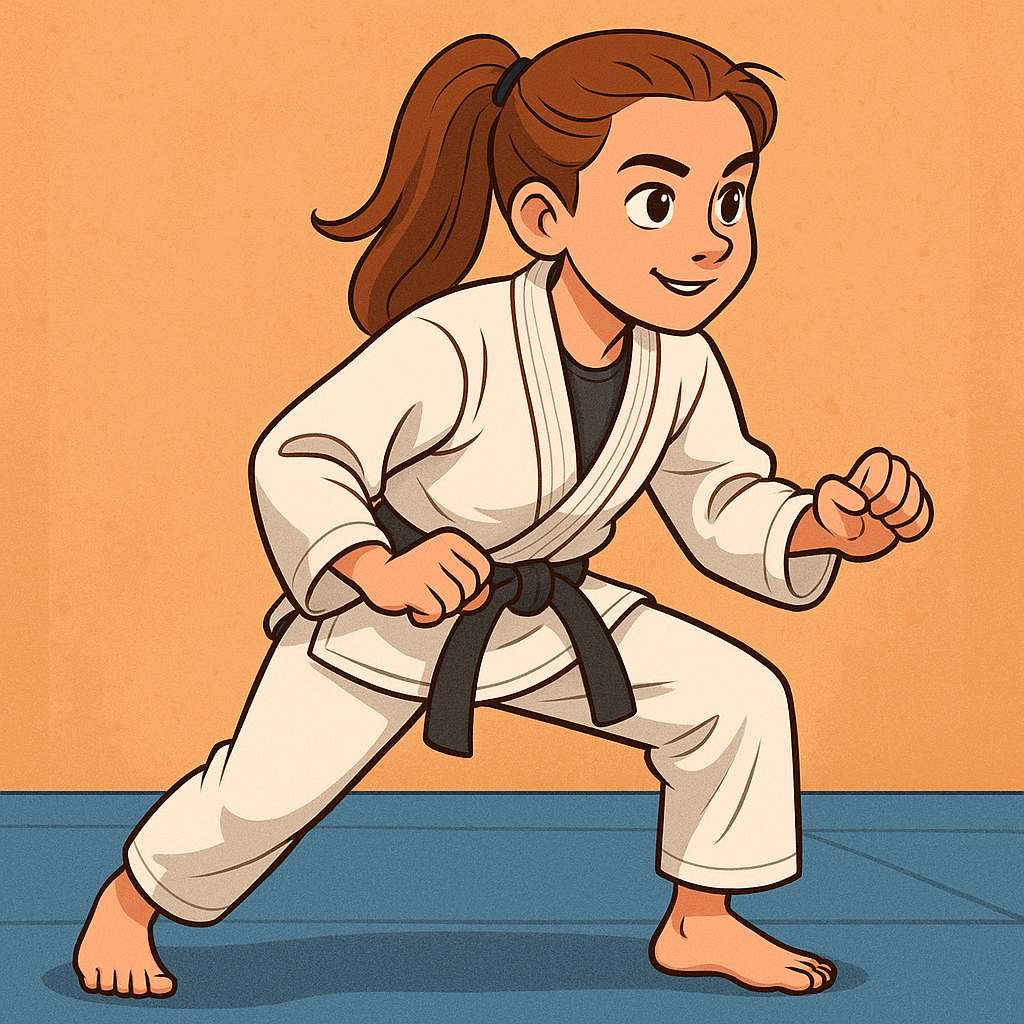
Empowered, Not Just Protected: Why Jiu-Jitsu Is Essential for Girls and Women Today

0

📝 Introduction: A Different Kind of Strength

In a world where safety, self-worth, and confidence are daily concerns for many women, one martial art is quietly transforming lives — Brazilian Jiu-Jitsu (BJJ).
It’s not just about fighting. It’s about freedom.
It’s not just about defending. It’s about becoming.

Whether you’re a teenage girl facing peer pressure or a working woman navigating late-night walks home, Jiu-Jitsu offers more than just physical technique — it delivers inner peace, strength, and resilience.


💪🏼 Why Jiu-Jitsu? Why Now?

1. Real-World Self-Defense

Unlike flashy movie-style kicks, BJJ focuses on grappling, control, and leverage — perfect for real-world scenarios, especially for smaller bodies against larger opponents.

🗨️ “Jiu-Jitsu doesn’t rely on strength — it uses technique. That’s why it’s ideal for women.”

You don’t need to punch.
You learn to escape, control, and survive — which, in threatening situations, can be life-saving.


2. Builds Unshakable Confidence

Many girls grow up taught to shrink.
Jiu-Jitsu teaches you to take space, hold your ground, and say: “I can handle myself.”

Each roll on the mat is a lesson in self-trust.
You stop asking, “What if I can’t?” and start thinking, “What’s next?”


3. Mental Toughness & Emotional Control

Jiu-Jitsu is like chess for the body.
You don’t win by brute force — you win by thinking under pressure.

For women juggling emotional labor, stress, and societal expectations, BJJ becomes therapy.

🧠 You learn to stay calm in chaos.
🧠 You learn when to fight — and when to flow.


4. Community Over Competition

Unlike many sports, BJJ gyms (especially women-led ones) foster sisterhood over rivalry.

  • You learn from each other.
  • You grow together.
  • You celebrate each other’s taps and wins.

In a world that pits women against each other, Jiu-Jitsu connects them.


5. Shatters Limiting Beliefs

Society teaches girls they’re “too weak”, “too emotional”, or “too delicate.”

Step on the mat, and that vanishes.
You’ll find:

  • A petite 18-year-old woman outsmarting a 90kg guy.
  • A mother of two choking out her stress — and her partner (on the mat, of course 😄).
  • Survivors reclaiming their bodies and their power.

🌍 A Global Movement

From Rio to Riyadh, Delhi to Dubai — women’s BJJ is exploding.

Celebrities, police officers, teachers, and students — they’re all tying their belts and saying,

“I don’t want to rely on someone else to protect me. I choose to protect myself.”


🔚 Final Thoughts: Not Just a Sport — A Mindset

Jiu-Jitsu for women isn’t just a trend. It’s a shift in mindset.

It teaches:

  • Boundaries
  • Balance
  • Bravery

And in a world that often tells women to stay quiet, small, or safe —
Jiu-Jitsu replies:

“Take control. Be dangerous. Be kind. Be free.”


🙏🏼 Note:
This post celebrates all women and girls, regardless of age, culture, or background. If you feel unsafe or unsure in any environment, seek safe and certified BJJ academies with strong female presence or instructors.

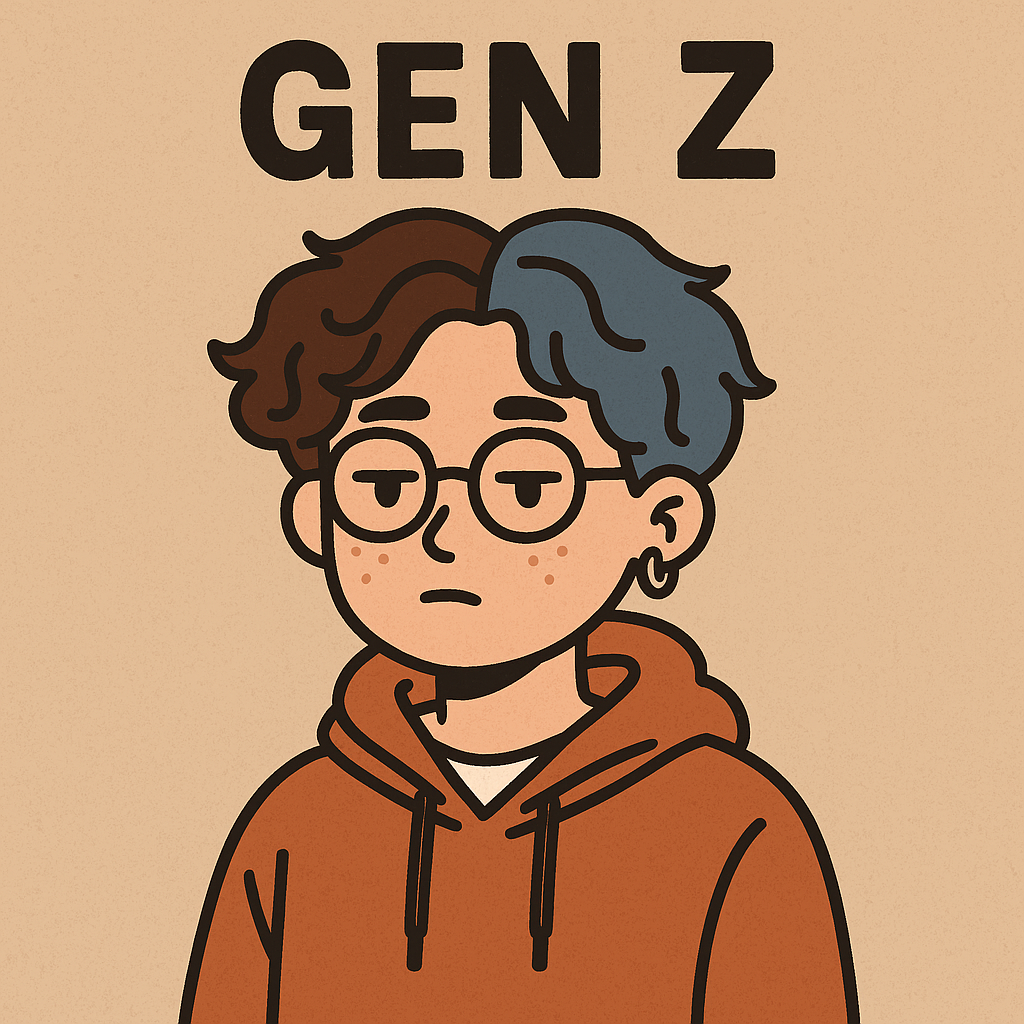
Gen Z: The Generation That’s Changing Everything (Whether You Like It or Not)

0

They’ve been called lazy, woke, soft, addicted to phones — but let’s set the record straight.

📱 Gen Z (born roughly 1997–2012) is not like any generation before. They’re bold. They’re anxious. They’re informed. They’re exhausted. But above all — they’re awake.


🧠 What Makes Gen Z Different?

  1. They don’t dream of 9-to-5s — they dream of freedom.

    “Why work to live, when you can build to thrive?”

  2. Mental health isn’t taboo, it’s a priority.

    They talk about therapy like previous generations talked about promotions.

  3. They value authenticity over reputation.

    They can sniff out fake smiles, fake brands, and fake people in seconds.

  4. They’ve grown up in chaos — and still dare to hope.

    Climate crisis, pandemic, economic crashes, and they’re still creating art, memes, movements, and businesses.


💥 The Gen Z Dilemma

They’re more connected than ever — yet feel more alone than ever.
They’ve got access to infinite knowledge — yet suffer from decision fatigue.
They seek meaning over money — but are drowning in student loans.


🎤 What Gen Z Is Teaching the World

  • You don’t have to accept what’s broken.
  • You can build a career from your bedroom.
  • You can fight for justice and laugh at memes in the same scroll.
  • You can challenge the system — even if the system calls you crazy.

🧷 Final Thought

Love them or hate them — Gen Z is here to reshape the world.
Not perfectly. Not quietly. But powerfully.

So instead of mocking them for “being on their phone,”
Ask: What’s on that phone that matters more than this conversation?

The answer may surprise you.

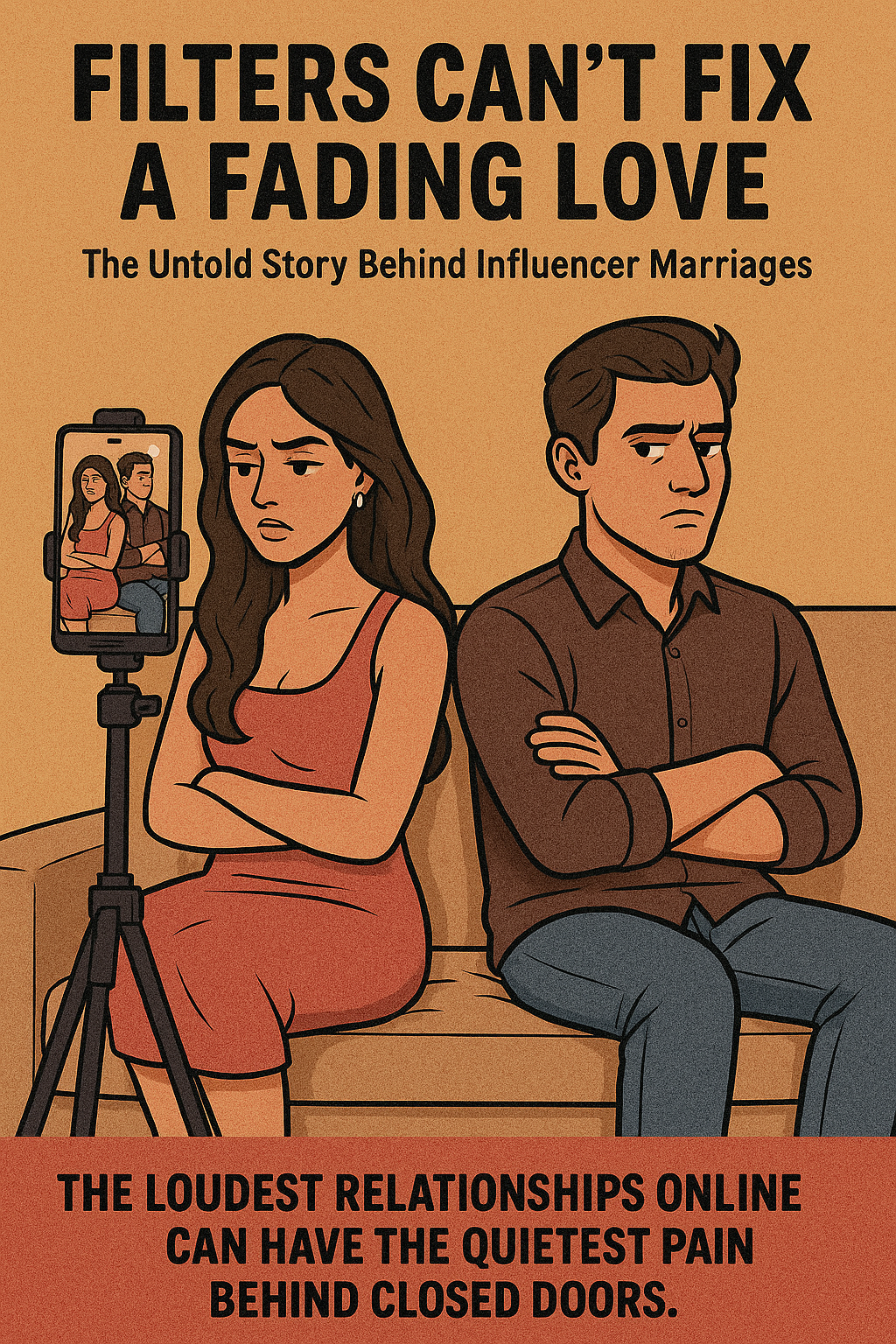
Filters Can’t Fix a Fading Love: The Untold Story Behind Influencer Marriages

0

Introduction

In a world where love is livestreamed and affection is filtered for followers, a dangerous pattern is emerging: the marriage of influencers. At first, it’s magical — stunning proposals, choreographed dances, exotic honeymoons. But behind every “couple goals” post, there’s often a truth no one likes to admit.

Let me tell you a story — inspired by real events happening all around us — of how a fairytale built on followers can end in silence, screenshots, and broken hearts.


The Rise: Love, Likes, and Lights

Ayaan was a modest travel vlogger. Sara was a rising fashion influencer. They met during a brand event in Istanbul and instantly connected. Their followers adored it:

“Omg you two are PERFECT together 😍😍”
“This is what true love looks like!”

From there, the internet became their world.

  • The proposal was a drone-shot sunset beach moment.
  • The wedding had custom hashtags, brand sponsorships, and a live audience of 10,000 watching online.
  • Their honeymoon was not just a getaway, but a content campaign.

Everything was beautiful… online.


The Pressure to Perform

Marriage, in reality, isn’t just champagne and reels. It’s dishes, silence, mood swings, finances, vulnerability — but none of that made it to the feed.

Sara’s followers started skyrocketing. Brands flooded in.
She became a global beauty ambassador, while Ayaan’s channel plateaued.

Subtle cracks formed:

  • He joked about being “just the cameraman” now.
  • She said, “You should try being more creative like me.”
  • They argued about how much to post, how real to be, and whether anything was just “for them” anymore.

But every night, the content continued.


The Turning Point: Ego and Exposure

A viral podcast appearance changed everything.

Sara said,

“I’m the brand now. People come for me, not him. I love Ayaan, but let’s be honest — I carry the platform.”

The comment wasn’t malicious… but it was humiliating.

Ayaan didn’t respond online — but offline, he started pulling away.
Quietly. Emotionally. Intimately.

He unfollowed her for a week. People noticed. Rumours flew.
A fight erupted when Ayaan refused to attend a red-carpet event.

He said,

“I married Sara, not ‘Sara the brand.’ I don’t recognise you anymore.”

She said,

“And I married a man, not a jealous boy hiding behind my success.”


The Breakup: Public Pain in Private Rooms

One final post: a staged “healing journey” message with two people sitting far apart on a white couch.

“We’ve decided to part ways, with love and respect. Please don’t speculate.”

But followers did speculate. Brands pulled out. Both lost deals.

And more importantly? They lost each other.

The love was real. But it drowned in expectations, algorithms, and applause.


The Message for Us All

Let’s be honest: relationships aren’t content.
When every hug is a highlight, and every date night is a campaign, the heart stops beating freely.

Ego enters when one gets more fame, more applause, more validation.
And resentment follows when one feels unseen.

Here’s the bitter truth:

No relationship can survive when the audience becomes more important than the person beside you.


Final Words

If you’re in love — keep something sacred.
Not every kiss needs a camera.
Not every fight needs a quote post.
Not every milestone needs an edit.

Because the loudest relationships online often have the quietest pain behind closed doors.

💔


🙏🏼 Disclaimer:
This story is a fictional reflection of modern social media culture, not aimed to hurt or mock real couples. If any part of this offends cultural or personal values, we respectfully welcome your feedback for removal.

The Unfunny Truth: When Sense of Humour Becomes a Wall, Not a Bridge

0


Introduction

Every family has that one character—loud, proud, and convinced that their sense of humour is unmatched. They crack jokes no one laughs at, take offence when corrected, and live in a bubble where they’re always right. But what happens when this humour becomes a barrier instead of a bond?

Let’s explore this through a reflective family story, drawn from many real homes, where laughter doesn’t always bring joy.


The Tale of Uncle Sami

In a warm Emirati home nestled near the outskirts of Al Ain, the Al Mazrouei family gathered every Friday. Tea was poured, sambousek passed around, and conversations floated like incense in the majlis.

Then came Uncle Sami — the self-declared king of comedy.

What do you call a man who never listens? My nephew!” he’d yell, pointing at poor Omar who had just scored top marks in school.

Laughter? Awkward silence. The joke had no soul. But Uncle Sami, as always, laughed alone.


The Laugh That Never Landed

Week after week, the same cycle repeated.

Sami would:

  • Interrupt serious conversations with tone-deaf jokes.
  • Imitate others’ accents or mock family members, all under the veil of “light humour.”
  • Get visibly upset if someone said, “Uncle, maybe that wasn’t funny…”

You kids don’t understand real humour. In my time, people had thick skin.

But what no one dared say was this: Sami’s humour wasn’t funny—it was outdated, inconsiderate, and borderline insulting.


The Attempt to Change

One day, Layla, his niece, sat beside him and said gently,

“Uncle, can I share something? Sometimes the jokes feel more like jabs. It hurts. Maybe if we just… reworded it or saved them for a lighter moment?”

Sami’s smile froze.
So now you all want to cancel your own uncle? Next, you’ll say I can’t speak at all!

The room went silent.

That’s the problem with people who mistake ego for humour — they take correction as rejection. And they weaponise victimhood.


Why Mindsets Like Sami’s Don’t Change Easily

The truth is: people like Sami often:

  • Tie their identity to being “the funny one.”
  • Fear irrelevance, especially in changing family dynamics.
  • Resist correction because it feels like an attack on their core.

They believe:

“If I admit I was wrong once, I’ll lose every argument ever.”

So they defend, deflect, and deny—because changing the joke means changing themselves.


The Silent Strain

Over time, family members start avoiding real talk.
Laughter becomes forced. Visits shorten. WhatsApp groups dry up.

And Uncle Sami? He still cracks jokes, but now, mostly to himself.
He wonders why no one laughs anymore—unaware that it wasn’t the world that became too sensitive.

It was he who refused to evolve.


So What Do We Do?

Let’s be real—you can’t change someone who’s not ready to be changed.
But you can:

  1. Set boundaries: “Uncle, let’s not joke about people today.”
  2. Redirect with humour: “Haha, let’s save that one for open mic night!”
  3. Protect your peace: Excuse yourself calmly when it gets too much.
  4. Lead by example: Share thoughtful humour. It might catch on.

Final Words

Humour should connect, not cut.
It should uplift, not isolate.
And the greatest comedians? They know when to listen.

So if you have a “Sami” in your life, remember—not every wall can be broken with words, but every boundary you draw builds a safer home.


🧕🏽 Note from the Writer:
If this story unintentionally reflects any person’s reality or offends cultural values, I offer sincere apologies. The goal is empathy, not insult.

Riyadh: The Beating Heart of Saudi Arabia

0


“Riyadh is not just a capital; it is the compass of Saudi ambition — rooted in the past, racing toward the future.”

Nestled on the Najd plateau, kissed by desert winds and sun-soaked horizons, Riyadh — the capital of the Kingdom of Saudi Arabia — is a city of contrasts, strength, and spirit. What began as a walled oasis town has today evolved into a global metropolis. Its name, “Riyadh,” means “gardens” in Arabic — a poetic promise fulfilled with every palm-lined boulevard and visionary skyline.


🏜️ From Desert Outpost to Royal Capital

Historically, Riyadh was a modest settlement known as Hajr, later flourishing under the Al Saud family. In 1902, it became the birthplace of modern Saudi Arabia when King Abdulaziz Al Saud reclaimed it from the Rashidis in a daring raid on Masmak Fort — a turning point that began the unification of the Kingdom.

“He who revives the roots of a city, breathes life into a nation.”

The fort still stands today in the heart of old Riyadh — a symbol of courage, unity, and the humble beginnings of a kingdom destined for greatness.


🕌 A City of Faith and Foundations

Riyadh holds a sacred place in the heart of every Saudi citizen. With over 4,000 mosques, Islamic traditions are deeply woven into the city’s rhythm. The Imam Turki bin Abdullah Mosque, located near Masmak, echoes the call to prayer as the city pulses with the essence of Islamic heritage and discipline.

Its architecture tells stories — of minarets and domes, palm leaves and clay — bridging the simplicity of Bedouin roots with the strength of modern stone.


🏗️ Skyline of Vision: A City Reimagined

Today’s Riyadh is a marvel of urban ambition. Towering over the skyline is the Kingdom Centre, a 99-floor icon with a skybridge that offers a view into both the city and the future. Alongside it, the Al Faisaliah Tower, the Riyadh Metro, and King Abdullah Financial District (KAFD) form the architectural signature of a modern Arab metropolis.

“A city that grows only in height loses its soul. Riyadh grows upward and inward — towards its people.”

The new Riyadh Art Project aims to transform the capital into the world’s largest public art city, while the Green Riyadh initiative will plant over 7.5 million trees, cooling the city and breathing life into the name “gardens.”


🎭 Culture and Soul: The Modern Renaissance

Riyadh is no longer just a political capital — it is becoming a cultural and entertainment hub. Through Riyadh Season, the city welcomes the world with festivals, concerts, exhibitions, food from every corner of the globe, and sporting events like WWE, Formula E, and football classics.

The newly opened Boulevard Riyadh City, Diriyah Arena, and Riyadh Front bring vibrant experiences, while King Abdulaziz Historical Center and National Museum of Saudi Arabia preserve the soul of the past.

“Let the world come to Riyadh, and let Riyadh speak the language of every heart.”


🏛️ Diriyah: Where It All Began

Just a few kilometres northwest lies Diriyah, the birthplace of the Saudi state. Its mudbrick walls, palm groves, and restored At-Turaif District (a UNESCO World Heritage Site) are being transformed into a cultural capital, blending heritage with hospitality. Luxury resorts, museums, and souqs will soon welcome millions — to walk where kings once walked.


🚀 Vision 2030 and Riyadh’s Future

Under Crown Prince Mohammed bin Salman’s Vision 2030, Riyadh is set to become one of the world’s top 10 economic cities. Plans include:

  • Riyadh Metro: A $22 billion project, six lines, connecting the city end to end.
  • King Salman Park: 4x larger than Central Park, a green haven of life and culture.
  • Qiddiya: The future entertainment capital of the world.
  • Riyadh Expo 2030: A global stage for innovation, sustainability, and human connection.

“We are building a city not just for today, but for the generations that will dream here tomorrow.”


🌍 A Global City With a Saudi Heart

Riyadh is growing younger, bolder, and more connected. Tech startups, creative industries, women entrepreneurs, and youth movements are rising. Yet amidst all this modernity, Riyadh remains deeply Saudi — faithful to its identity, proud of its values, and rooted in its Islamic and Arab heritage.

“The city hums with the past and sings to the future — that’s Riyadh.”


💚 Conclusion: The Crown of the Desert

Riyadh is not just the capital of Saudi Arabia — it is a reflection of its soul. In its forts and towers, its gardens and markets, its silence and song — lives the heartbeat of a people who turned the impossible into reality.

It’s a city that remembers the tent, even as it builds the tower. A city where calligraphy meets code. A city where the desert wind still speaks, if you know how to listen.

“Riyadh will never be finished. It is a poem that keeps being written, one dream at a time.”


🕊️ Note of Respect

This blog is written with admiration for the Kingdom of Saudi Arabia and its people. If any content unintentionally misrepresents cultural or religious values, we welcome respectful corrections and requests for revision or removal.

The Legacy of Al Saud: The Heartbeat of Saudi Arabia

0


“We draw from our past to build our future.”King Abdulaziz Al Saud

In the heart of the Arabian Peninsula lies a kingdom born not just of sand and sky, but of vision, unity, and unwavering faith. That kingdom is Saudi Arabia, and at its very soul stands the legacy of the Al Saud family — a dynasty that has shaped the destiny of the region and the world.

This is not just a tale of rulers. It is the story of unification, renaissance, and resilience — from the time of swords and caravans to the era of satellites and sustainable cities.


🏜️ The Founding: A Desert Dream Realised

In 1932, King Abdulaziz Ibn Saud unified the tribal lands of Najd and Hejaz into one kingdom: Al-Mamlakah Al-ʿArabiyyah As-Suʿūdiyyah — The Kingdom of Saudi Arabia.

Born in Riyadh in 1875, King Abdulaziz was a visionary leader and a skilled diplomat. With strategy and sincerity, he brought together warring tribes, secured peace, and founded a nation rooted in Islamic values, cultural pride, and hospitality.

“A country without a past has no future.”King Abdulaziz

His leadership was humble but firm, devoted to building a society where unity and religion guided the path.


🛢️ The Oil Era: A Blessing and a Responsibility

In 1938, oil was discovered in Dammam — and the land that once lived on trade and pilgrimage became one of the world’s most influential energy suppliers.

Yet, the Al Saud family did not see oil merely as wealth. They saw it as a tool to build infrastructure, education, and healthcare for the people. Roads were paved, cities lit, universities established, and mosques constructed — all with deep reverence for tradition.

“Oil may be our treasure, but our true wealth lies in the hearts of our people.”


🕌 Faith and Leadership: Guardians of the Two Holy Mosques

One of the most sacred responsibilities of the Al Saud family is the custodianship of Makkah and Madinah, Islam’s holiest cities. Millions from around the globe visit these sites annually, and the Kingdom spares no effort in ensuring their peace, safety, and spiritual sanctity.

Projects like the Grand Mosque expansion, Haramain high-speed rail, and smart Hajj systems are testaments to Saudi Arabia’s commitment to religious service in the modern era.

“Serving the guests of Allah is not just a duty; it is an honour.”


🏙️ A Modern Kingdom: Vision 2030 and Beyond

Under the leadership of King Salman bin Abdulaziz Al Saud and Crown Prince Mohammed bin Salman (MBS), the Kingdom is witnessing a bold transformation. Vision 2030 is the roadmap for a vibrant, diversified, and innovative Saudi Arabia.

What was once unimaginable is now underway:

  • NEOM – A futuristic $500 billion megacity powered by AI and clean energy.
  • The Line – A 170-km linear city without cars or carbon.
  • Diriyah Gate – A cultural heart reviving the birthplace of the Saudi state.
  • Riyadh Season, Red Sea Film Festival, Formula 1 – A flourishing cultural scene.
  • Empowerment of women, youth, and entrepreneurs across every sector.

“We aim to live in a flourishing country where all citizens can fulfil their dreams, hopes and ambitions.”Crown Prince Mohammed bin Salman


📚 Culture, Tradition, and the Soul of Arabia

The Al Saud legacy preserves a deeply rooted culture: the poetry of the desert, the rhythm of the Ardah dance, the generosity of Majlis hospitality, and the echo of the adhan from timeless minarets.

From the Nabatean tombs of AlUla to the digital art installations of Riyadh, Saudi Arabia is blending ancient history with modern elegance.

“Our past is our strength. It reminds us who we are and where we are going.”


🤝 Global Influence, Local Heart

Today, Saudi Arabia is a G20 nation, a global economic powerhouse, a peacemaker in regional affairs, and a bridge between East and West. Through humanitarian aid, interfaith dialogue, and strategic diplomacy, the Kingdom stands tall on the world stage.

Yet, it remains grounded in its values — loyalty, faith, and service to its people.

“The strength of a nation lies in its identity and unity.”


💚 Conclusion: The Royal Family and the Nation’s Soul

The story of Al Saud is deeply entwined with the story of every Saudi citizen. From the palm groves of Qassim to the coral houses of Jeddah, every heartbeat of this land whispers the legacy of a royal family that chose responsibility over privilege, and vision over comfort.

As Saudi Arabia marches toward the future — smart, green, and inclusive — the spirit of Al Saud continues to guide it like a star in the desert sky.

“A nation is not built by bricks, but by the dreams of its people.”


🕊️ Note of Respect

This blog is written with deep admiration and respect for the Kingdom of Saudi Arabia and its royal family. If any part unintentionally misrepresents cultural, religious, or historical values, we welcome correction and will honour any request for revision or removal.

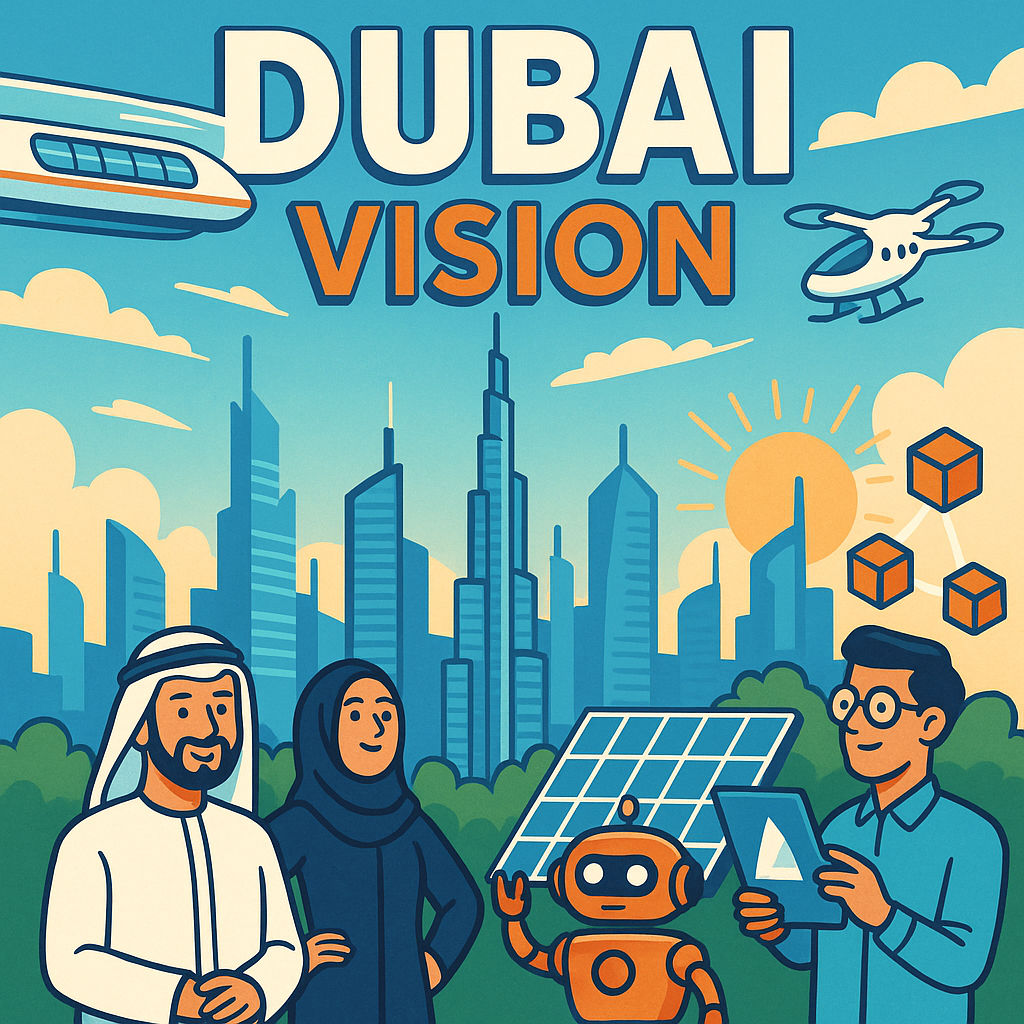
From Desert Sands to Global Skies: The Story of Sheikh Mohammed bin Rashid Al Maktoum and the Rise of Dubai

0


“The race for excellence has no finish line.”Sheikh Mohammed bin Rashid Al Maktoum

Dubai is not just a city. It’s a vision carved out of desert dunes, sculpted by resilience, and crowned with a future that never sleeps. At the heart of this transformation is His Highness Sheikh Mohammed bin Rashid Al Maktoum, the Vice President and Prime Minister of the United Arab Emirates, and the Ruler of Dubai.

This is the story of a leader, a poet, a warrior of hope — and how his dreams turned a barren land into a global phenomenon.


🏜️ The Humble Beginnings: Born of Desert and Destiny

Born on July 15, 1949, in Shindagha, Dubai — Sheikh Mohammed grew up in a time when Dubai had little infrastructure and fewer resources. He was raised under the watchful eyes of his father, the late Sheikh Rashid bin Saeed Al Maktoum, a leader of wisdom and foresight.

From a young age, Mohammed was drawn to leadership, poetry, and the deep soul of his homeland. Educated in Dubai and later in the United Kingdom at Mons Officer Cadet School (now part of Sandhurst), his training combined military discipline with strategic thinking.

“My mother taught me how to love my people, and my father taught me how to serve them.”Sheikh Mohammed


🌍 Laying the Foundations: The Rise of a Visionary

In 1971, as the UAE was formed, Sheikh Mohammed became the Minister of Defence at just 22 — the youngest in the world at that time. It was not just a title; it was a mission. He played a critical role in establishing national security and infrastructure.

His vision wasn’t limited to defence — he dreamt of something far greater: to put Dubai on the map of the world.


🏗️ Transforming Dubai: One Dream at a Time

The 1980s and 1990s marked Dubai’s early transformation. Ports, airports, free zones, and businesses began sprouting from the sand. Sheikh Mohammed spearheaded major projects like Dubai Ports World, Jebel Ali Free Zone, and Dubai International Airport — setting the foundation for the city’s economic independence.

“We do not wait for the future, we build it.”

One of the turning points came in 1995 when Sheikh Mohammed launched Dubai Internet City and later Dubai Media City, long before the digital boom. He foresaw the knowledge economy, creating hubs where global tech and media giants would eventually flourish.


🌆 The Millennium Leap: From Ambition to Global Prestige

When Sheikh Mohammed became the Ruler of Dubai in 2006, the city was already on the rise, but what followed was nothing short of miraculous:

  • Burj Khalifa — the world’s tallest tower, rising like a needle into the heavens.
  • Palm Jumeirah — an artificial island visible from space.
  • Emirates Airline — a global symbol of luxury and connectivity.
  • Dubai Metro — the largest driverless metro system in the world.
  • Museum of the Future — a gateway into tomorrow’s innovations.

Each project wasn’t just about concrete and steel; it was about ambition, national pride, and service to the people.

“Impossible is a word used by some people who fear to dream big.”


📖 The Poet, The Leader, The Father of Dubai

Beyond politics and skyscrapers, Sheikh Mohammed is a poet. His verses in Nabati poetry reflect his soul — his love for the UAE, the values of loyalty, courage, and the beauty of the desert.

“I write poetry not to be a poet. I write to speak to my people, to my land.”

As a leader, his policies have always aimed at people-centric development — focusing on happiness, education, innovation, and sustainability.

In 2016, he launched the UAE Vision 2021 and later UAE Centennial 2071, setting a clear roadmap for the nation’s long-term prosperity.


🌿 Sustainability and Tolerance: A Leader for Humanity

Sheikh Mohammed’s leadership is not just about growth but about balance. Initiatives like Green Dubai, Expo 2020, and the Mohammed bin Rashid Al Maktoum Global Initiatives have promoted sustainability, education, healthcare, and innovation across the world.

His Ministry of Happiness and Ministry of Tolerance are unique global models — because in his words:

“The real asset of any advanced nation is its people, especially the educated ones.”


💡 Expo 2020 and Beyond: Welcoming the World

Despite the global challenges, Expo 2020 Dubai became a symbol of unity, innovation, and hope. It showcased how the UAE sees the future: bold, inclusive, and fearless.

From space missions like the Hope Probe to AI-powered cities, Dubai under Sheikh Mohammed’s leadership keeps breaking boundaries.

“We in the UAE have no such word as ‘impossible’. It does not exist in our lexicon.”


❤️ Legacy of Love, Strength, and Vision

Today, Sheikh Mohammed is more than a ruler. He is a symbol of possibility, a storyteller of modern Arabia, and a mentor to millions.

His journey from a quiet boy riding horses in the desert to building one of the most admired cities on Earth is a testament to what visionary leadership looks like.

“Leadership is not about power; it is about responsibility.”


🕊️ A Personal Note to the Reader

This blog is a humble tribute to His Highness Sheikh Mohammed bin Rashid Al Maktoum and the UAE. If any portion of this story unintentionally misrepresents or offends the cultural or traditional values of the Emirates, we respectfully request it to be brought to our attention for correction or removal. With utmost love and respect, this is written to honour a great leader who continues to inspire generations.

Beyond the Charts: Trading Types and the Wisdom Between the Lines

0


💹

“المال خادمٌ جيدٌ، لكنه سيدٌ سيءٌ”
Money is a good servant, but a terrible master.

In the world of trading, numbers scream, charts pulse, and the clock is always ticking. But beneath all the noise lies something deeper—a set of paths, each with its own rhythm, risk, and reward.

Let’s explore the major types of trading—not just with definitions, but with perspective, reflection, and stories that stick.


📉 1. Day Trading — The Art of Presence

“In day trading, you don’t trade the market. You trade your emotions first.”

Day traders live in the now. They wake up with the market and sleep with regrets or rewards. Every candle on the chart tells a short story.

🧠 Example:
Khalid, a young Emirati trader, wakes up at 5 AM daily. He doesn’t gamble—he journals. He treats each trade like a soldier entering battle. Sometimes he wins. Sometimes he learns. Never both at once.

“تَأَنَّ فإنَّ في العَجَلَةِ النَّدَامَةُ”
Be deliberate—for in haste lies regret.


🔁 2. Swing Trading — Catching the Wind

Swing traders move like desert falcons—fast when needed, still when the air is heavy. They hold trades for days or weeks, aiming to catch the momentum just right.

🧠 Example:
Fatima, a schoolteacher in Sharjah, doesn’t watch charts all day. But once or twice a week, she enters the market with confidence, backed by logic and patience. Her style? Calm. Her secret? Knowing when not to trade.

“ليس الشديدُ بالصرعة، إنما الشديد الذي يملك نفسه عند الغضب”
The strong is not the one who overpowers others, but the one who controls himself in anger.


🏞️ 3. Position Trading — Faith in the Future

Position trading is like planting a date palm. You won’t see fruit for a while, but when it comes—it lasts generations. These traders hold for months or years, riding the big waves.

🧠 Example:
In the 2008 crisis, Ahmed bought shares in a struggling logistics company. People mocked him. A decade later, it became the backbone of UAE’s export sector. He didn’t just make wealth—he built legacy.

“والعاقبة للمتقين”
And the end belongs to those who are mindful.


🤖 4. Algorithmic Trading — Where Math Meets Money

This is not trading. This is building a mind that trades for you. Algorithms don’t panic, don’t get greedy, don’t overtrade. But they need a wise architect.

🧠 Example:
A data engineer in Dubai automated a system that only trades gold when specific volatility conditions are met. It earns less per day, but more in peace.

“عِلمٌ بلا حكمة كَسيفٍ بلا نَصل”
Knowledge without wisdom is like a sword without a blade.


🪙 5. Crypto Trading — The New Frontier

24/7 markets. No borders. No banks. Just you, a screen, and a million possibilities. Crypto trading is as wild as the dunes before roads.

🧠 Example:
Noura, a university student, trades Ethereum with small capital. She knows the market is volatile, but so is life. She sets stop losses. She studies. She survives.

“فَاصْبِرْ صَبْرًا جَمِيلًا”
So be patient with beautiful patience.


⚖️ Choose Your Battle — But Know Your Soul

Every trading style reflects your lifestyle. Your values. Your fears. And your dreams.

Trading Type Timeframe Emotional Demand Income Potential Requires…
Day Trading Minutes–Hours Very High High Time, Skill, Focus
Swing Trading Days–Weeks Moderate Medium–High Strategy, Patience
Position Trading Months–Years Low Long-Term Wealth Research, Vision
Algo Trading Varies Low (bot-based) High Coding, Logic
Crypto Trading 24/7 High High-Risk/Reward Risk Tolerance, Speed

🧘‍♂️ Final Words from the Market Whisperer

Trading isn’t just about making money. It’s about knowing yourself in a world that doesn’t stay still.

“The market is a mirror, not a map.”

If you’re humble, patient, and wise—you will find your way. If not, the market will humble you on its own.


🙏 Disclaimer

This blog is written with respect to cultural values and educational purposes. If anything here unintentionally offends your beliefs or traditions, kindly notify us for correction or removal.


Mastering the Markets: A Beginner’s Guide to Different Types of Trading

0

Trading is more than just buying and selling—it’s a skill, a mindset, and sometimes, an art form. Whether you’re looking to make quick profits or invest long-term, understanding the different types of trading can help you find the path that suits your financial goals, time commitment, and risk tolerance.

Let’s explore the most common and powerful types of trading in today’s financial markets:


📈 1. Day Trading

🕒 Timeframe: Intraday (within the same day)
⚡ Key Feature: High-frequency trades, quick decision-making
🧠 Ideal For: People who can dedicate several hours daily to trading
🔍 Example: Buying a stock at $50 in the morning and selling it at $53 before the market closes.

Day traders capitalize on small price movements using charts, patterns, and news. It requires strong discipline, risk control, and nerves of steel.


🧪 2. Swing Trading

🕒 Timeframe: Several days to a few weeks
🎯 Key Feature: Focuses on medium-term trends
🧠 Ideal For: Those who have a day job but can analyze the market a few times a week
🔍 Example: Holding a tech stock through an earnings report to ride a price swing

Swing traders rely on technical analysis and some fundamental insights. It’s slower than day trading but still active and profit-focused.


🏦 3. Position Trading

🕒 Timeframe: Weeks to months—or even years
🔍 Key Feature: Long-term trend following
🧠 Ideal For: Investors who want to let winners run and ignore short-term noise
📊 Example: Buying Apple shares and holding them for a year based on strong fundamentals

Position trading blends the lines between trading and investing. Traders aim to catch major moves by riding economic or industry trends.


🤖 4. Algorithmic Trading

🤖 Key Feature: Uses bots and software to trade
🔍 Ideal For: Coders, quants, or those using AI and automation
💻 Tools: Python, MATLAB, TradingView scripts

Algo trading can process thousands of trades at lightning speed. It’s common among hedge funds, but retail traders can use it too with proper setup.


📉 5. Scalping

🕒 Timeframe: Seconds to minutes
⚡ Key Feature: Ultra-fast trades for micro profits
🧠 Ideal For: Highly focused traders with fast reflexes
📊 Tools Needed: Level 2 data, direct market access, tight spreads

Scalping involves hundreds of trades a day and thrives on small price changes. It demands speed and precision, not for the faint-hearted!


🌍 6. Forex Trading

💱 Focus: Currency pairs (like USD/EUR, GBP/JPY)
🌐 Market Hours: 24/5
⚠️ Risks: High volatility due to economic and political factors

Forex is the largest financial market in the world. Traders speculate on global currency movements using leverage—but risk can be high.


🪙 7. Crypto Trading

💰 Focus: Cryptocurrencies like Bitcoin, Ethereum, Solana
🕒 Market Hours: 24/7
🔥 Volatility: Extremely high
🧠 Ideal For: Risk-tolerant, tech-savvy traders

Crypto trading offers huge profit potential but equally large risk. Technical analysis, news updates, and hype play a big role.


📊 8. Options Trading

🧩 Instruments: Contracts that give the right, not obligation, to buy/sell assets
💥 Strategies: Calls, puts, straddles, spreads
🧠 Ideal For: Strategic thinkers and experienced traders

Options trading allows hedging and leveraging positions with limited capital—but it’s complex and requires deep understanding.


🛢️ 9. Commodity Trading

⛽ Assets: Gold, oil, wheat, silver, etc.
🌍 Driven By: Global supply-demand, wars, climate, geopolitics
🧠 Ideal For: Traders who follow macroeconomic trends

Commodities can protect against inflation and offer diversification. Futures contracts are commonly used here.


🏠 10. Real Estate or REIT Trading

🏙️ Focus: Real estate investment trusts on stock exchanges
💼 Ideal For: Investors who want property exposure without owning physical real estate

You can trade REITs like stocks to get exposure to commercial or residential properties with dividend income.


💡 Conclusion

Whether you’re a thrill-seeker looking for fast-paced action or a long-term strategist seeking slow, steady growth, there’s a type of trading out there for you. Start by identifying your risk appetite, time commitment, and goals.

👣 Pro Tip: Start small. Use demo accounts. Learn the tools. Grow with experience.


🙏 Final Note

This blog is for educational purposes only. Trading involves risk, and past performance is no guarantee of future results. Consult with a financial advisor before investing.