
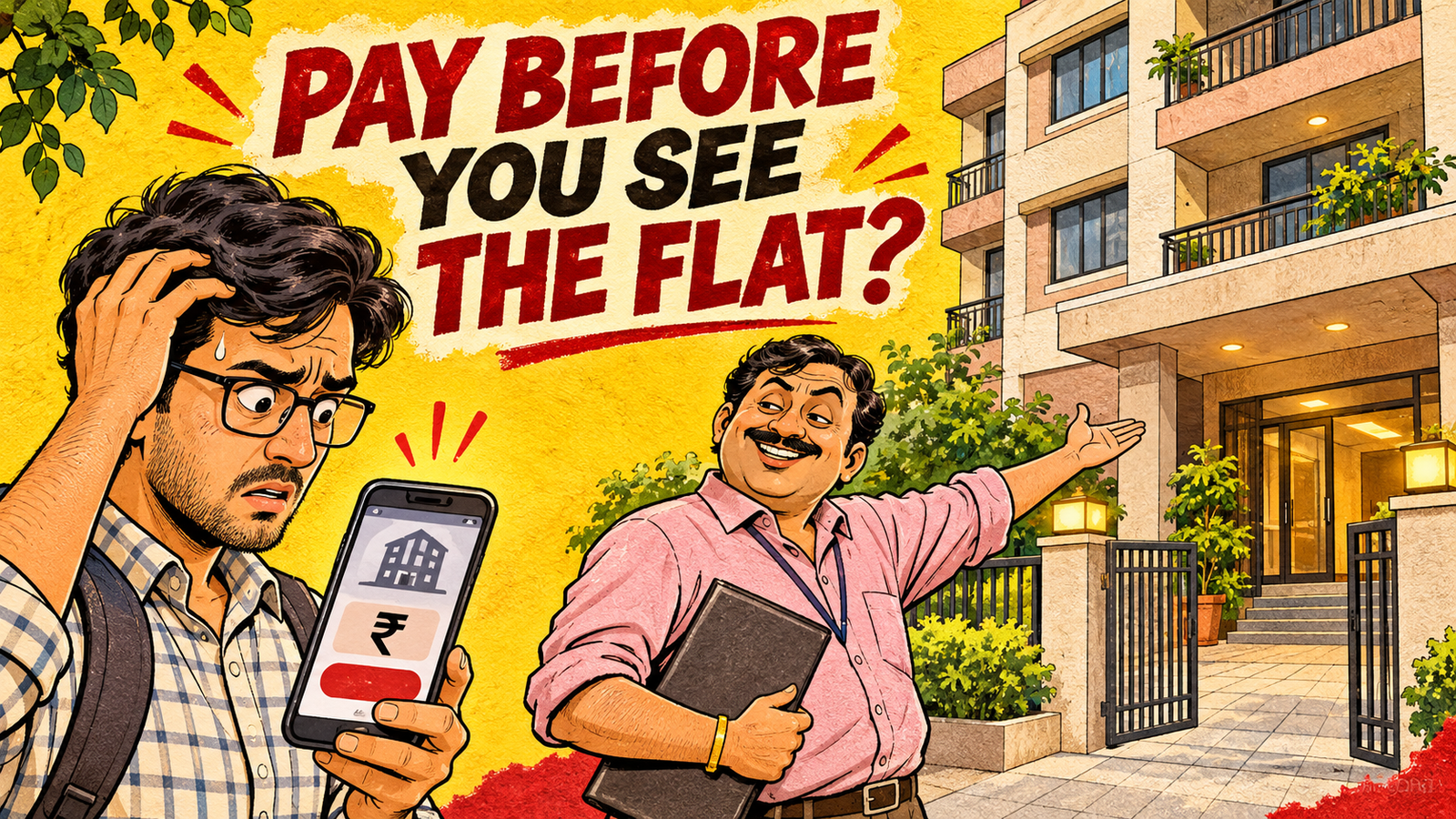
The flat looks good in the listing, and the rent is within your budget. The broker says there are several interested tenants and asks for a small token before sharing the exact address or allowing a visit. They say you can get it back later. Before sending money, check three things independently: whether the flat exists and is available, whether this person has authority to show or offer it, and what the payment would actually secure.
Start here: Ask for a viewing and the full address, including the building and unit details needed to match the listing. Ask who owns or manages the flat and who appointed the broker. Keep the payment on hold until you can verify the property and the person taking the money, and get the amount, purpose and refund conditions in writing.
Verify the flat before agreeing to reserve it
Get the address from the advertiser and compare it with the listing description and photos. Ask what can be seen during the viewing and who will meet you. Where the building has a reception or management office, use a number you find separately to check its visitor process. If someone claims the society requires a fee to schedule a viewing, ask the society whether it has that policy and how it collects any genuine charge. A broker’s forwarded message can help you identify the claim, while an independent contact can confirm the rule.
During the visit, check that the unit matches the listing and that someone with authority can give access. A video tour can help if you live in another city, but ask to see identifying details in a live call and have someone you trust inspect the flat if possible. A matching building exterior or photo still leaves open whether the specific flat is available and whether the person advertising it can rent it out.
Verify who is offering the tenancy
Ask the broker for the business name, official contact and how the owner or property manager authorised them. If you are told the owner is overseas, ask how you can confirm the authority of whoever will sign and receive payment. Check the names against the draft agreement and the proposed receipt. Ask the owner or verified manager to confirm the arrangement directly through a contact you can corroborate independently.
Ask for appropriate evidence of ownership or authority. Depending on the property, this may involve checking property records, seeing the landlord’s relevant documents, or confirming the manager’s written authorisation. One record may identify an address without establishing authority to rent. Ask a local property professional or lawyer if the names, ownership shares or signing authority are unclear. You can verify the details needed for the transaction without circulating someone else’s full identity documents in a group chat.
Ask what the token would do
People use “token” for several different payments. It could refer to a holding deposit that will be credited towards rent, a brokerage charge or a refundable amount tied to a condition. Ask what happens the moment you pay. Does the listing come down? How long is the flat reserved? Who has agreed to hold it? Does the amount count towards rent, deposit or brokerage? What happens if the landlord backs out, the parties disagree on the lease, the unit differs from the offer or you decide against it?
Get the answers before the transfer. Ask for a written record naming the beneficiary, exact property, amount and currency, purpose, reservation period, adjustment terms and refund conditions. Ask when a refund would be due and how it would be sent. If the beneficiary has a different name from the confirmed owner, broker or management company, ask the parties to explain the link through a verified contact. A promise that the payment will be returned after a visit is difficult to enforce if the recipient and exact terms are unclear.
Use this message to ask for verification
Before paying a token for [flat or listing reference], I would like to inspect the property and confirm that you are authorised to offer it. Please share the viewing details, the name and role of the person who will sign the lease, and how I can confirm your authority with them. If a token is still required after verification, please send the written amount, beneficiary, reservation period, adjustment and refund terms, and confirm that I will receive a receipt.
Pay particular attention to changes just before payment
- If the recipient changes, check the revised name with the verified party and ask for an updated written record.
- If the broker adds an unexpected visitor fee, check it with the property manager through a number you sourced independently.
- If someone asks you to scan a QR code to receive a refund, check your payment app and confirm the action through its official support. Read whether the screen shows money going out before approving anything.
- If the viewing time changes repeatedly, ask for a confirmed appointment and let any unverified payment deadline pass.
- Keep the original listing, messages and receipts intact. If you discuss the case publicly, mask phone numbers, IDs, addresses of private households and other details that are unnecessary.
If you already sent money
Save the transaction ID, date, beneficiary, original terms and all refund messages. Ask the verified recipient to confirm in writing what the payment was for and whether it will be returned. If you believe the payment was obtained through online fraud, contact your bank or payment provider promptly and use India’s National Cyber Crime Reporting Portal or the financial cyber fraud helpline published there. Give an accurate account of the transfer, including whether you approved it, and keep the complaint numbers. If the dispute concerns a genuine booking arrangement, seek advice on the agreement and the correct complaint route.
Common questions
Does a broker having keys prove they can take a token? Keys can establish access. Confirm who authorised the broker to receive money and what that payment would reserve.
What if the market moves fast? Ask for an early viewing and the written terms in parallel. Keep funds on hold while you verify both the flat and the payee.
What if they say the payment is refundable but will not give terms? Ask when it will be returned, which events allow deductions and who is responsible for refunding you. If you cannot establish those details, you cannot reliably judge the offer.


