
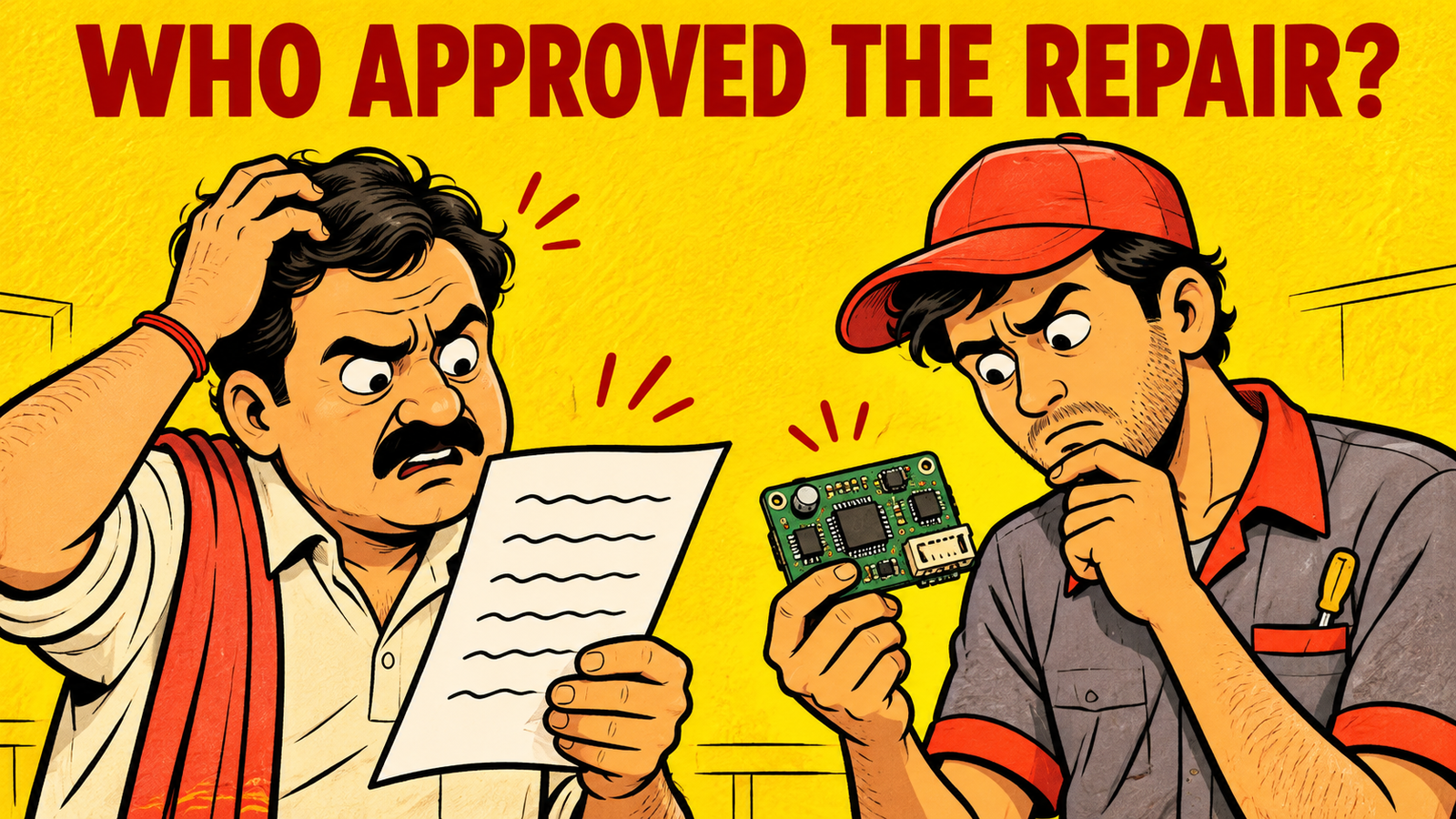
You left your phone at a repair counter for an inspection. The shop quoted a diagnostic charge and said it would call after opening the device. When you return, the bill includes a replacement part you do not remember approving. Before you argue about the amount, ask the shop to show what you agreed to and when. The answer may depend on the wording of the job card, the messages you exchanged and any standing authority you gave the technician.
First move: Ask for an itemised bill, the original job card or estimate, and the record showing your approval for the extra work. Ask the shop to identify any diagnostic fee or repair you did agree to separately. Put the disputed amount and the outcome you want in writing, and keep a copy before leaving the counter.
Check exactly what you authorised
Start with the paperwork you received when you handed over the item. Some job cards say the shop will inspect and call first. Others allow work up to an agreed amount, or authorise a specific repair at a quoted price. Compare the written wording with the invoice. Check the serial number, item description, parts listed and any labour or diagnostic charges. Separate work within the agreed scope from additional work that changed the scope or total price.
Messages can also matter. If the shop says you approved by phone, ask for the time, the amount it says it quoted and the person who took the approval. Look at your own call log and any follow-up message. A call log can establish the time of a conversation, while the content of the conversation may still be disputed. If you said “go ahead” to one part and another appears on the bill, ask the shop which conversation it relies on for the second part.
If you authorised repairs up to a ceiling, check whether the shop stayed within that ceiling and whether you specified limits. A ceiling of ₹3,000 for a charging issue could be understood differently if the final bill includes unrelated work or says tax is extra. Ask for a breakdown and the agreement that explains each disputed line rather than refusing or accepting the entire bill as one amount.
Ask three questions at the counter
- What problem did the technician find and which part was replaced? Ask for the part name, quantity, price and any separate labour charge.
- When was the work approved, for what total, and by whom? Ask for a copy of the job card, message or other record the shop relies on.
- What options are available now? Ask whether it can revise the invoice, explain a warranty exchange, or return the item with a written record of its condition and parts.
If the old part is available, ask whether it can be returned or inspected and note what the shop says. Warranty, exchange and disposal arrangements can affect what happens to that part. Ask for the applicable terms rather than assuming that a missing part proves either that it was replaced or that it was never touched. If the business is connected to a brand, check whether it is listed as an authorised service centre before contacting the brand for help.
Preserve the evidence and agree how to collect the item
Keep your intake receipt, estimate, invoice, call times, relevant messages and payment confirmation. If you receive the item, check its serial number and basic function where practical before signing a satisfaction statement. If you are asked to sign only for collection, read the wording and ask for a copy. For safety-critical equipment such as a vehicle, ask for the repair details and obtain a qualified assessment if you are uncertain about using it.
If the shop says it will retain the item until you pay, ask for its position in writing and any term it is relying on. Where practical, ask whether it will accept the undisputed amount while reviewing the remainder. If you decide to pay to retrieve an item you need, keep the receipt and communicate in writing which lines you dispute and why. The effect of payment can depend on the facts, so save any document you sign and avoid signing a settlement you do not understand.
Send a short written dispute
I left [item and job number] with you on [date] for [inspection or agreed work]. The invoice includes [parts or charges], which I do not recall authorising. Please send the itemised invoice, the original job card and the record of my approval for these items, including any revised estimate. I am asking for [revised bill, refund of the disputed amount or another specific outcome]. Please confirm your position in writing and tell me how I can collect the item if it remains with you.
Address the message to the manager or official support address and keep the date it was sent. If the shop offers to waive labour but keep the parts charge, ask for the revised breakdown and any conditions. If it offers to undo the work, ask what this would involve, whether the device would be safe to use afterwards and whether any warranty or data would be affected. Decide on the remedy after you understand the practical consequences.
Where to go if you cannot resolve it
The Consumer Protection Act, 2019 provides a framework for complaints about services, including alleged deficiency. Whether a particular charge can be challenged depends on the agreement and what the evidence shows. The National Consumer Helpline can be a starting point for a consumer grievance. Prepare one timeline, copies of the job card and bill, and a clear explanation of the remedy sought.
Common questions
Does a diagnostic fee always disappear if I reject the repair? Check what the shop disclosed and what you accepted at intake. A separately agreed inspection fee is a distinct issue from a charge for replacement parts.
What if I approved by phone and never got an estimate in writing? Ask both sides to identify the work and price discussed. Look for messages or documents sent before and after the call that may clarify what was agreed.
How can I avoid this next time? Ask the shop to record the inspection fee, the authorised work and any price ceiling on the job card. Include a simple instruction to contact you before replacing additional parts or exceeding the agreed amount.


