
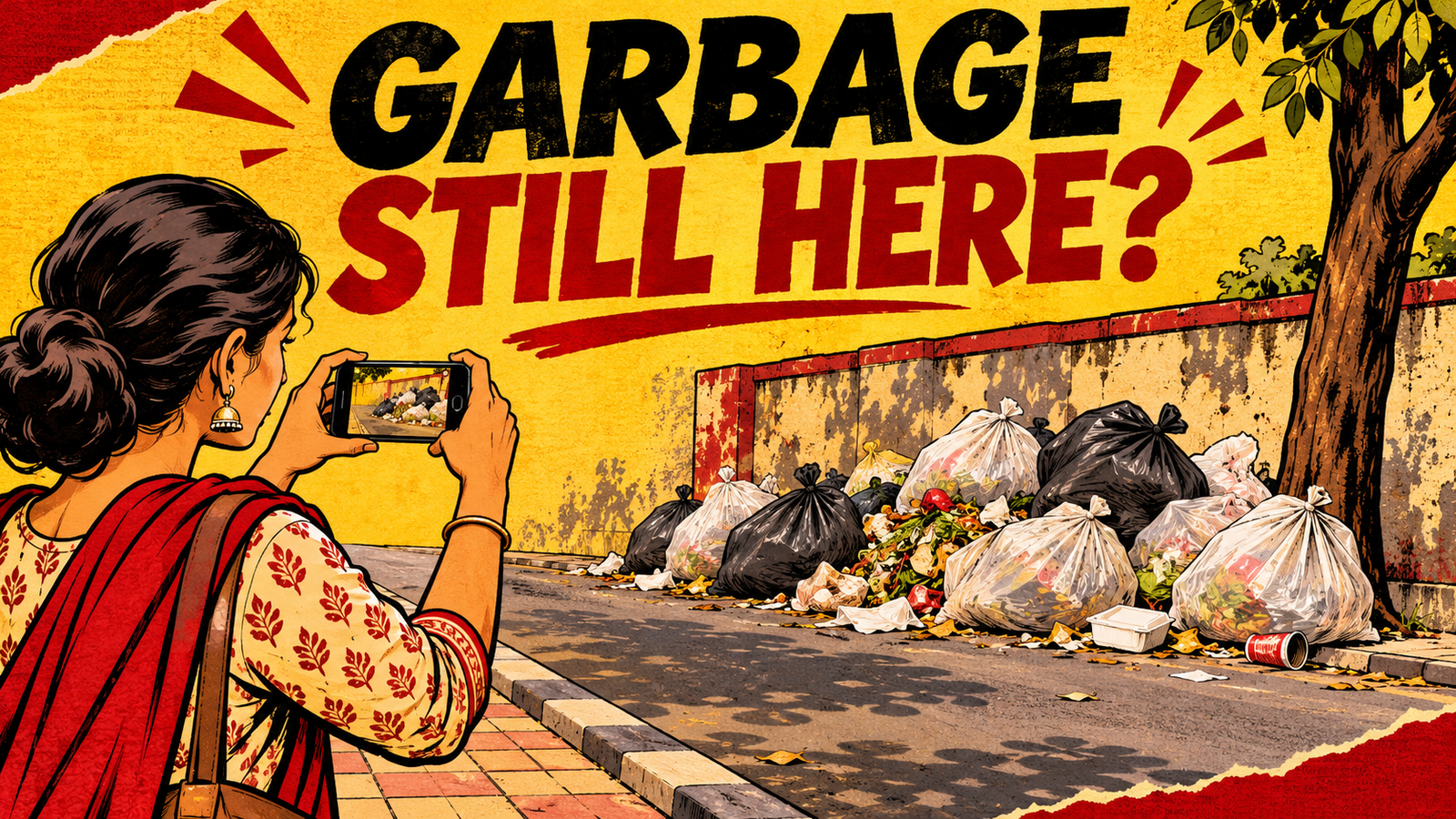
The bags started with a missed collection. A few days later, there are loose scraps around them and the pile has spread across part of the footpath. You logged a complaint, but the status tells you little about who visited or what they were supposed to clear. If the same corner keeps filling up, the next report should make it easy to find the spot and answer a second question: what keeps putting the waste there?
Start with the original complaint number. Add a dated photo from a safe place, the exact location and whether the pile is still present. Ask the municipal sanitation team to confirm who handles the spot, what was done on the first report and how to reopen or escalate it. If you have only mentioned the problem to a neighbour or collector, use the official municipal channel so you have an acknowledgement to follow.
Identify the type of collection problem
Missed door-to-door collection, a full municipal bin and repeated dumping on a vacant corner can all look like the same problem by the end of the week. They give the sanitation team different things to check. If bags are left outside several homes at the usual collection time, describe which part of the route was missed. If a public bin is spilling across the footpath, give its location and include a photo showing where the overflow reaches. If waste keeps appearing between collections at an unmanaged spot, note when the site was clear and when new material appeared.
It also helps to describe what is visible without opening bags. Loose household waste, broken furniture and a heap of construction rubble may need different handling. Tell the authority if you can see sharp material, a container with a hazard label or waste blocking a drain or walkway. Keep a safe distance and leave sorting and removal to the responsible service. If the mess is inside a private compound rather than on the public road, ask the property manager who arranges collection and where the authorised pickup point is.
Find the right municipal route
Look on the official site of your municipal corporation, municipality or local body for a solid waste, garbage collection or sanitation complaint. Start with the ward responsible for the location where the waste is lying. If the spot is next to a railway boundary, market complex or another managed property, give the exact boundary or entrance and ask which agency is responsible. A corner near two wards can be easier to route if you include the side of the street and a verified map pin.
In Mumbai, the Brihanmumbai Municipal Corporation’s Environment Status Report lists 1916 for registering BMC civic complaints. Ask for the sanitation or solid waste team responsible for your ward and note the reference number. If your city offers an app or online form, use the official link published by the local body. Check whether the service allows you to attach a photo, reopen a report or rate the outcome.
Give the ward enough information to act
- Identify one location at a time. Give the street, nearest junction or landmark and the side of the road. Include a bin number if it is legible from a safe place.
- Give the date and time of your most recent observation. If collection is normally on a known schedule, mention when you expected it and when you checked.
- Take a wide photo from dry, safe ground. Include a fixed landmark that helps the crew identify the spot.
- Describe the practical impact. Say whether the pile obstructs the footpath, blocks access to a pickup point or spills into the roadway.
- Keep the original acknowledgement. Save later observations in date order so you can show when the pile remained or returned.
A shared photo can expose more than the complaint requires. Keep faces, vehicle plates and labels on discarded packages out of public posts where possible. Send any identifying evidence needed for the case through the official channel. Avoid guessing who left the waste. If you personally saw an incident, give the authority the time and what you observed rather than circulating accusations about neighbours or sanitation workers.
Copy this follow-up message
I am following up on complaint [reference number], filed on [date] about accumulated waste at [exact location and landmark]. As of [date and time], [describe what remains or when it returned]. I have attached a recent photo taken from a safe position. Please confirm which team is responsible, whether a visit took place, and how to reopen or escalate this complaint if it has already been closed. If collection was restored and the pile returned, please check what is causing repeated accumulation at this spot.
When the complaint says resolved but the pile remains
Compare your fresh photo with the location in the acknowledgement. The crew may have cleared a nearby bin, or a new pile may have formed after the visit. Ask what work was recorded and when. If the exact site was missed, provide one clear landmark and a new photo. If it was cleared and then filled up again, report the time between those events and ask the ward to review the collection schedule, pickup point or management of that corner. Clean-up and preventing recurrence may require different actions.
Where the portal has no reopening option, ask the ward how to link a fresh complaint to the old one. A residents’ association can keep a short log with columns for the date, location, status and observed outcome. One contact can follow up without asking every household to repeat the same message. If the waste appears at several nearby corners, keep those locations separate so a marked closure at one spot does not hide the others.
Common questions
Do I need to wait for another missed collection? If rubbish is already obstructing the public space, report what is there now. Add collection dates later if they help explain why the issue recurs.
Should I move the bags to show the crew where they are? Leave the waste in place and describe the location. Give the authority a clear approach landmark so it can arrange the appropriate collection.
What if I only get a verbal reply? Write down the date, department and gist of the reply. Ask where you can submit a written follow-up and keep the confirmation with your reference number.


