
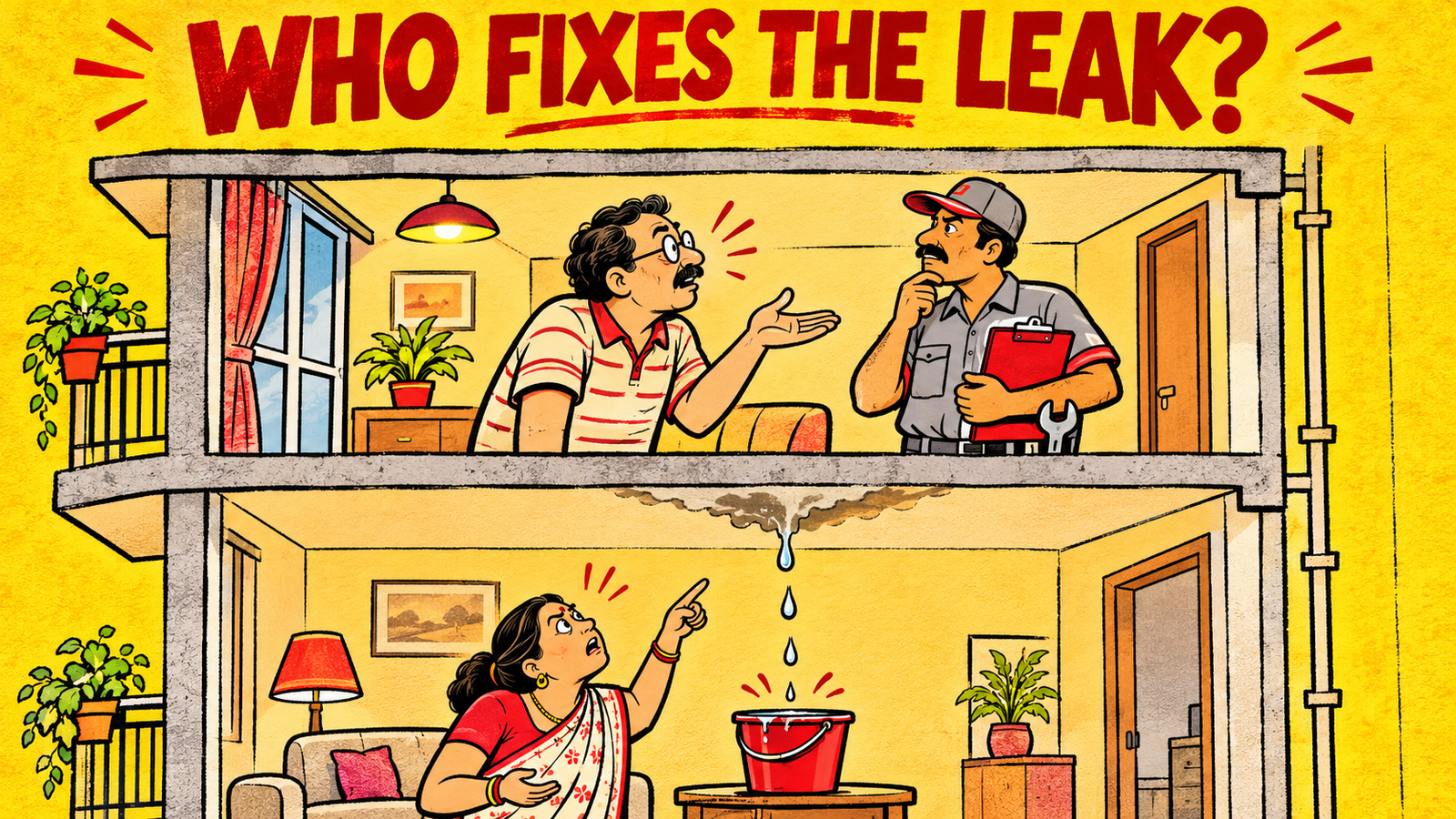
A damp patch appears on the ceiling below the upstairs bathroom. A few days later it grows, and now there is a drip when the neighbour uses water. It is reasonable to suspect the flat above, but water can travel along a slab or pipe before appearing in your home. Ask building management to arrange an inspection that follows the moisture back to its source.
Start here: Notify the upstairs occupant and building manager with the location, time and a photo if it is safe to take one. Ask for an inspection of both flats and any shared pipe or building area that could be involved. If water is close to an electrical fitting, or the ceiling appears swollen or unstable, keep people away and contact building management and qualified help promptly. Do not touch wet fittings or disturb a damaged ceiling.
Why the mark on the ceiling does not settle responsibility
A leak from a hose or fitting in an upstairs flat may leave a patch below it. Water from a common pipe, roof, external wall or shared shaft can appear in a similar place. A drain connection can leak only when a fixture is used. A supply pipe may leak even when nobody is at home. A patch that grows after rain may need a different investigation from one that grows after a shower. Record those patterns as clues and let the inspection establish the cause.
For example, if the damp spot forms below a bathroom but there is also a shared drain stack behind the wall, ask the plumber to check both. If a neighbour recently renovated and you noticed dampness soon afterwards, include both dates. Timing can narrow the inspection without proving the renovation caused the leak. Avoid changing fittings or asking anyone to break tiles until qualified help has identified the tests it needs.
Who should arrange the inspection?
Start with building management or the society if the source is uncertain or access to common areas is needed. It can help coordinate the upstairs occupant, the owners or landlords, and a qualified plumber or relevant specialist. If you rent, notify your landlord as well as management and keep copies of the messages. If the upstairs occupant also rents, ask the manager to involve that flat’s owner where permission is needed. Keep the immediate investigation moving while the parties identify who will approve and pay for the repair.
Ask the technician to say which part failed and whether it serves one flat or more than one. Ask for the suspected source, the checks performed, the recommended work, and any temporary step that can limit damage. A note saying “leak from upstairs” is less useful than a note specifying a fixture, waterproofing layer, branch connection or shared line. If the source remains unconfirmed, ask what access or further assessment is needed rather than treating the first guess as a conclusion.
How to work out who handles the repair
Once there is an inspection finding, check the applicable lease, registered society or association rules, and any relevant state or local requirements. The repair may fall to the person responsible for a private fixture or to the managing body responsible for a common element. The dividing point between a flat’s plumbing and a common line can matter. Ask the manager to identify that boundary in the rules or building records and give a written decision about the work.
For example, Maharashtra’s published model housing society bye-laws list certain common pipeline and rainwater leaks under society repairs. Check the rules actually registered for your building and any applicable updates before assigning the cost.
Separate stopping the leak from restoring the damage it caused. Fixing the source, drying the affected area, restoring plaster and repainting may involve different teams or decisions. Ask who will arrange each step and when it is safe to begin finishing work. If you have insurance that may apply, ask the insurer what evidence it needs before damaged material is removed. Prioritise urgent safety work and document what was done and why.
Keep a simple evidence log
- Save the date the patch first appeared and note when it expands or starts dripping.
- Photograph the same area from a safe position, with a fixed feature in view for comparison.
- Record whether changes coincide with rain, plumbing use or an agreed test, if you can observe this without entering another home.
- Keep messages to the neighbour, landlord and manager, including requests to arrange access.
- Save the inspection report, estimates, repair invoices and any agreed plan for drying and restoration.
Use plain descriptions such as “dripping from the ceiling near the bathroom doorway at 8 p.m.” Avoid sharing private photographs of another home without permission. Label photos with the date and the room. If property was damaged, list each item and keep original photos or purchase records where available. Separate what you saw from conclusions an inspector made.
Copy this inspection request
Water is appearing in [room and exact spot] in flat [number]. I first noticed it on [date], and it [describe changes and timing]. Please arrange a qualified inspection of the affected ceiling, relevant upstairs fixtures and nearby shared lines or building areas. Please confirm the appointment, who will coordinate access, and who will share the findings and proposed next steps. [If relevant: Water is near an electrical fitting or the ceiling looks damaged. Please treat this as urgent.]
What if no one replies or access is refused?
Send a written follow-up to management and the owners with the latest change and your earlier message. Ask management to explain its access or repair procedure and identify a responsible contact. Keep a record of any inspection that could only cover one side. If a serious dispute remains after inspection, a local property adviser can help identify the procedure under your building rules and applicable law. Where water is actively spreading or there is a possible electrical or ceiling hazard, seek urgent professional help instead of waiting for a decision about the bill.
Common questions
Should I repaint as soon as the drip stops? Ask the repairer whether the source is fixed and whether the surface needs time to dry or further checking before it is covered.
What if the upstairs neighbour says their floor is dry? Ask management to check hidden plumbing, shared lines and other possible sources. A dry floor does not resolve where moisture entered the ceiling.
What can both households agree on now? Agree on access, who will arrange the inspection and who will circulate its written findings. You can decide the repair scope and responsibility with better evidence once the source is identified.


