
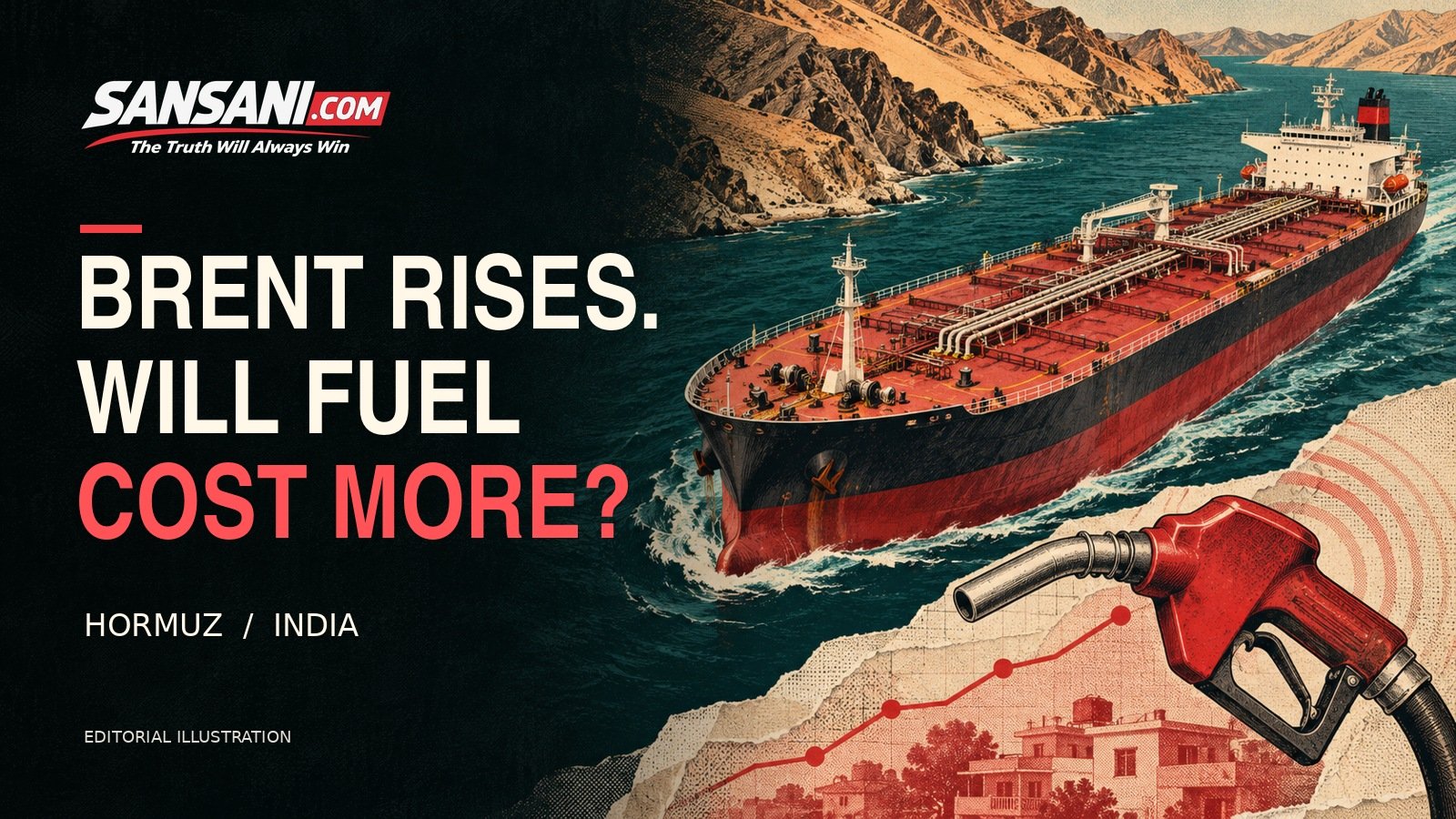
Two tanker incident reports near the Strait of Hormuz put a familiar question back on the table on 26 November. If traders pay more for crude today, how long before drivers, delivery businesses and households in India feel it? The answer depends on whether the rise reflects a brief jump in risk or a lasting interruption to the oil that refiners can actually buy and receive.
What happened near Hormuz?
The Associated Press, citing the United Kingdom Maritime Trade Operations monitor, reported two tanker incidents in the region on Wednesday and Thursday involving unknown projectiles. The monitor said the crews of both ships were safe and accounted for. Iran’s Revolutionary Guard offered a different account, claiming tankers struck naval mines. AP said it could not independently verify that claim. Associated Press reporting.
Reuters reported that Brent crude futures settled at $96.57 a barrel on Thursday as traders weighed the tanker reports and a separate Houthi claim of an attack on Saudi Arabia’s Ras Tanura refinery. Those were two distinct developments. One raised questions about ships moving through Gulf waters. The other concerned a refinery that processes crude and is part of a complex that also serves as a major export terminal. The price tells us how the market responded to the information available that day. The volume of oil delayed or lost is a separate question. Reuters market report.
Why can a handful of tanker reports move a global benchmark?
In 2025, crude oil and petroleum products moving through the Strait of Hormuz averaged about 20 million barrels a day, according to the International Energy Agency. That was roughly a quarter of the oil traded by sea. About four-fifths of the oil crossing the strait went to Asia. India and China together received 44% of the crude that passed through it that year. These figures put the size of the trade route in perspective and explain why the news matters even before anyone has counted delayed shipments. IEA Strait of Hormuz factsheet.
A refiner needs the right grade of crude to arrive on time. If a usual cargo looks less certain, the buyer may start looking for a substitute before the original shipment is cancelled. If several buyers make the same calculation, they can bid up replacement cargoes. Shipping costs can also change as vessel operators and insurers reassess the voyage. The early impact can show up in a buyer’s delivered cost while the headline still focuses on the futures price.
Some Gulf crude can move by pipeline to ports beyond the strait. The IEA estimates that Saudi and Emirati routes could redirect about 3.5 to 5.5 million barrels of crude a day. Those pipelines offer real flexibility, with capacity well below the historical volume of crude and refined products moving through Hormuz. Buyers seeking replacement cargoes also have to consider the grade, the voyage and the date the refinery needs it. IEA analysis of alternative export routes.
What would reach a petrol pump in India?
Start with the cargo. Brent is a benchmark quoted in US dollars. A particular Indian refinery can pay a different price for the crude it buys, depending on the grade, supplier and terms of the contract. Freight and other delivery costs add to the bill. The rupee cost also depends on the exchange rate when the buyer pays. A change in Brent therefore gives readers a direction to watch, while the actual import bill depends on what arrived and what it cost to land.
The second step is the wholesale fuel market. Refining turns crude into products including diesel and petrol. The prices of those products can move differently from crude if a region is short of a particular fuel or if refinery capacity is disrupted. A sustained increase in replacement costs matters more to a marketer than a single closing price. The timing can differ for a cargo already booked, a refinery buying fresh supply and a distributor selling fuel from stock.
The third step is the retail price, where taxes and the pricing decisions of fuel marketers also matter. A driver can see a stable price at the pump on the same day as Brent rises because those prices describe different stages of the supply chain. For a delivery business, a lasting rise in diesel would be easier to trace through a series of fuel invoices and freight quotes than through any single oil-market headline.
What evidence should we look for next?
- Are fewer cargoes arriving? Watch whether vessel transits and deliveries slow over several days, or whether the ships keep moving despite the incident reports.
- Are freight and replacement cargoes becoming more expensive? Persistent increases would show that the disruption is changing what importers pay, even where supplies are still available.
- Do retail or commercial fuel prices move? Compare local prices and transport quotes across dates. That is the evidence that a change upstream has reached a driver or a business.
Each of those signals answers a different question. If transits continue and replacement costs ease, a sharp day in Brent may soon be forgotten. If deliveries slip and costs remain elevated, the question for Indian refiners becomes how long inventories and alternative purchases can cover the gap. Asking for that evidence puts the public conversation on firmer ground than guessing tomorrow’s pump price.


