Exclusive Content:

Power Talks Loud. The Cost Stays Silent.

The Truth No One Wants to Say Out Loud People...

Why Do We Overthink Things That Don’t Really Matter?

You replay a conversation in your head. You wonder if...

If a Fish Comes Out of the Water to Tell You the Crocodile Is Sick, Believe It

There are moments in life that don’t fit the...
Home Blog Page 11

If You Are Not a Soldier, Then Be Like One

0

The Quiet Discipline Most People Never Learn

Not everyone is born to be a soldier.

Most people will never wear a uniform, stand in formation, or walk into danger with a flag on their shoulder.

But the deeper truth is this:

The world rewards people who carry the discipline of a soldier — even when they live ordinary lives.

Because the soldier’s greatest strength is not the weapon.

It is the mindset.


The Soldier’s Mindset: A System of Living

A soldier is trained to operate under pressure.

To stay calm when chaos appears.

To move forward when fear whispers retreat.

But look closely and you will realize something powerful:

These qualities are not limited to battlefields.

They are needed in everyday life.

When problems pile up.

When motivation disappears.

When others give up.

A soldier continues not because it is easy —
but because duty replaces emotion.

And this is where most people fail.

They move only when they feel like it.

Soldiers move because the mission exists.


The Hidden Battle Most People Face

Modern life has no trenches, yet it is filled with invisible battles:

  • discipline vs distraction
  • responsibility vs comfort
  • long-term goals vs short-term pleasure
  • resilience vs emotional collapse

Most people lose these battles quietly.

Not because they are weak.

But because they were never trained to think like a soldier.

A soldier understands one thing clearly:

comfort is temporary — responsibility is permanent.


The Soldier Protocol: A Framework for Life

If you want to live with the strength of a soldier, follow this simple but powerful system.

1. Mission Before Mood

A soldier does not ask:

Do I feel like doing this today?

The only question is:

What must be done?

When you prioritize duty over emotion, your life becomes structured instead of chaotic.


2. Discipline Over Motivation

Motivation is unstable.

Some days it appears.

Most days it disappears.

Soldiers are trained differently.

They rely on discipline, which means acting correctly even when energy is low and excuses are loud.


3. Endurance Over Comfort

Comfort is attractive.

But comfort rarely builds strength.

A soldier learns to endure fatigue, difficulty, and pressure.

And that endurance creates a powerful advantage in life:

while others quit, you continue.


4. Focus Over Noise

Battlefields are chaotic.

Yet soldiers train to focus on one objective.

Modern life is also chaotic — phones, news, opinions, distractions.

The person who learns to filter noise and move toward one clear goal will always move faster than the crowd.


5. Responsibility Over Blame

A soldier cannot blame circumstances.

The mission remains.

In life, blaming others feels satisfying but produces nothing.

Taking responsibility is harder — but it creates progress.


The Trap Most People Fall Into

Here is a difficult truth many people avoid.

They admire discipline.

They respect strength.

They praise resilience.

But they rarely practice these qualities.

Because living like a soldier means accepting uncomfortable realities:

  • you must wake up when you don’t want to
  • you must work when motivation disappears
  • you must continue when results are slow

This is the difference between talking about discipline and living it.


The Opposite Truth Most People Ignore

What if comfort is the real enemy?

Modern society encourages ease.

Everything is designed to reduce effort.

But this convenience quietly weakens the human mind.

The paradox is simple:

The more comfortable life becomes, the harder discipline becomes.

Which means the people who intentionally train themselves to be disciplined gain a massive advantage.


The Real Meaning of “Be Like a Soldier”

Being like a soldier does not mean aggression.

It does not mean violence.

It means carrying a certain inner structure:

  • calm under pressure
  • discipline without supervision
  • resilience in adversity
  • commitment to purpose

A soldier’s greatest weapon is not strength.

It is self-control.


The Final Reality

You may never stand on a battlefield.

But every life contains moments that require courage, endurance, and discipline.

Moments when quitting feels easier.

Moments when responsibility feels heavy.

In those moments, remember a simple principle:

If you are not a soldier, then live like one.

Because the people who master discipline quietly win the battles that most people lose.


Recuperate: The Hidden Skill Most People Ignore Until They Collapse

0

The Quiet Problem Nobody Plans For

People obsess over productivity.

Work harder.
Push more.
Grind longer.
Sleep less.

The modern world glorifies exhaustion as if it were a badge of honor.

But there is a quiet biological truth most people ignore:

Humans are not designed for constant output.

Every system in the body — muscles, brain, emotions, decision-making, creativity — operates in cycles of stress and recovery.

Break that cycle long enough and the system eventually breaks.

This is where the overlooked concept enters:

Recuperation.

Not rest.
Not laziness.

Strategic recovery.


What Recuperation Actually Means

Recuperation is the process of regaining strength, stability, and balance after depletion.

It applies to multiple layers of life:

Physical recovery after illness or exertion.

Mental recovery after intense thinking or stress.

Emotional recovery after conflict or disappointment.

Financial recovery after losses.

Creative recovery after burnout.

In simple terms:

Recuperation is how systems repair themselves.

Without it, performance eventually collapses.


Why Modern Life Quietly Destroys Recuperation

The real problem is not hard work.

The problem is continuous stress without recovery cycles.

Three forces drive this.

1. Constant Digital Stimulation

Phones, notifications, news, social media, messaging, endless scrolling.

Your brain never truly powers down.

Even “rest time” becomes stimulation time.

2. Cultural Pressure to Always Perform

Society praises:

Hustle
Grinding
Being busy

But rarely praises:

Recovery
Reflection
Mental reset

So people feel guilty when they stop.

3. Misunderstanding Rest

Many people think recovery means doing nothing.

But real recuperation is active repair, not passive escape.


The Hidden Cost of Ignoring Recuperation

When recovery disappears, systems slowly degrade.

The signs appear in stages.

Physical Signs

Chronic fatigue
Poor sleep
Frequent illness
Muscle tension

Mental Signs

Brain fog
Poor concentration
Decision fatigue

Emotional Signs

Irritability
Loss of motivation
Emotional numbness

Strategic Signs

Bad financial decisions
Impulsive behavior
Short-term thinking

At the extreme end:

Burnout.

Burnout is not caused by hard work.

Burnout is caused by hard work without recuperation.


The Recuperation Framework (R.E.S.E.T.)

If recovery is so important, the real question becomes:

How do you actually recuperate?

A simple framework can guide it.

R — Remove the Stress Input

True recovery begins by temporarily stepping away from the source of depletion.

Close the laptop.
Leave the problem.
Stop the mental loop.

Without removal, recovery cannot begin.


E — Energy Restoration

Focus on biological repair:

Sleep
Hydration
Nutrition
Breathing

The brain and body repair themselves when energy systems are restored.


S — Silence the Noise

Mental recovery requires low stimulation.

Walking.
Reading slowly.
Sitting quietly.

Not endless digital input.


E — Emotional Reset

Talk with someone you trust.
Write thoughts down.
Process frustration instead of suppressing it.

Unprocessed stress keeps the nervous system in survival mode.


T — Time for Integration

After rest, the brain reorganizes information.

Solutions often appear after stepping away, not while forcing them.

This is why breakthroughs happen during:

Showers
Walks
Sleep
Travel

The brain integrates when pressure disappears.


The Trap Most People Fall Into

Many people only recuperate after collapse.

They push until:

The body forces rest.

The mind shuts down.

The business fails.

The relationship breaks.

But elite performers treat recovery differently.

They schedule recuperation before breakdown occurs.

They understand something powerful:

Recovery is not the opposite of productivity.

Recovery is what allows productivity to continue.


The Opposite Truth Most People Resist

Society teaches:

“Success comes from pushing harder.”

But the opposite possibility may also be true.

The most sustainable success may come from mastering the rhythm between effort and recovery.

The people who last the longest are not always the ones who work the hardest.

Often they are the ones who recover the smartest.


Final Reflection

Think of the human system like a battery.

Every action drains energy.

Every challenge consumes mental power.

Every emotional conflict uses psychological resources.

If the battery never recharges, the system eventually shuts down.

Recuperation is not weakness.

It is maintenance of the human machine.

And the people who understand this simple truth often outperform those who ignore it for years.


To the Woman Who Learned to Walk With Her Head Up

0

There are moments in life that change the way a person moves through the world.

Not loud moments.
Not dramatic ones.

Just small shifts.

The way you check a street before crossing it.
The way your hand instinctively reaches for your keys before leaving a building.
The way your shoulders square themselves when footsteps appear behind you at night.

Somewhere along the way, you learned something quietly powerful.

You learned that awareness is not fear.

It is intelligence.

For generations, women have been told two opposite stories.

One story says: Be afraid.
The other says: Pretend the world is perfectly safe.

Neither story is true.

The truth lives somewhere in the middle — in that calm, steady awareness that sits behind your eyes when you walk alone under a streetlight.

It is the same awareness your ancestors carried when villages had no locks, when cities had no cameras, when the night belonged to whoever was prepared for it.

You may not notice it often, but it is there.

In the way you scan a room before sitting down.

In the way you choose where to park.

In the quiet decision to take a brighter street instead of a shorter one.

None of these things mean you are weak.

They mean you are paying attention.

And attention has always been one of humanity’s greatest survival tools.

There is something quietly beautiful about that.

A woman walking alone with her head up, aware of her surroundings, aware of herself, aware of the path in front of her — is not a symbol of vulnerability.

She is a symbol of readiness.

Not readiness for violence.

Readiness for life.

Because awareness does not exist only to protect you.

It also sharpens how you see the world.

You notice the quiet café that others walk past.

You notice the stranger who needs help.

You notice the small kindnesses that hurried people miss.

Awareness widens your world.

It does not shrink it.

And perhaps that is the quiet secret nobody tells you.

Safety is not created by fear.

It is created by presence.

By the simple act of being fully awake inside your own life.

So if you ever feel strange carrying that alertness with you — that small inner radar that notices what others ignore — do not mistake it for anxiety.

It is something older than fear.

It is instinct.

It is intelligence.

And it is one of the quiet strengths that has carried women through centuries of uncertain streets and unpredictable worlds.

Walk with it.

Not as a burden.

But as a quiet companion that helps guide you forward, one step at a time, under every streetlight you pass.

Tactical Safety Gear & Defensive Tools for Women

0

Women’s self-defense gear generally falls into 3 categories:

  1. Alert / Escape tools (best for most people)
  2. Distance deterrence tools
  3. Close-range emergency tools

The goal is create time to escape, not fight.


1. Alert & Escape Tools (Safest Options)

These are the most recommended tools.

Personal Safety Alarm

What it does

  • Pull pin → loud 130-140 dB alarm
  • attracts attention
  • scares attacker

These alarms are designed for emergency safety situations and are commonly carried by women, students, and runners.

How to use

  1. Keep attached to keys or bag
  2. Pull the pin if threatened
  3. Move quickly toward public area

Best for

  • walking alone
  • jogging
  • parking garages
  • travel

2. Distance Defense Tools

Pepper Spray

Why it works

Pepper spray contains capsaicin that causes burning eyes and breathing irritation, temporarily disabling attackers.

Typical range

  • 10–16 feet

How women use it

  1. Keep thumb on trigger
  2. Aim toward attacker’s face
  3. Spray briefly
  4. Run immediately

Advantages

  • small
  • inexpensive
  • very effective

Important

Check local laws. Some countries restrict it.


Tactical Flashlight

Benefits:

  • temporary blindness
  • emergency light
  • impact tool

Use

  1. Shine bright beam into eyes
  2. Disorient attacker
  3. Escape

3. Close-Range Emergency Tools

These are last-resort tools.

Tactical Pen

Looks like a normal pen but made from strong metal.

Uses:

  • pressure point defense
  • glass breaker
  • emergency striking tool

They are discreet and easy to carry in a purse or pocket.


Self-Defense Keychains

Common designs:

  • cat-ear keychains
  • kubotan sticks
  • spike keychains

Purpose:

  • increase striking power
  • create pain distraction

Often sold in kits that combine alarms, pepper spray, and small tools together.


4. Tactical Safety Gear (Non-Weapon)

These are very underrated but powerful.

Door Security Lock (travel)

Stops hotel intruders.

GPS Safety App

Examples:

  • Noonlight
  • bSafe

Send alert to police.

Smart Wearables

Some watches have SOS buttons.


Elite Safety Strategy (Most Effective)

Instead of relying on one tool, professionals recommend a 3-layer safety system.

Layer 1 — Awareness

  • avoid isolated areas
  • keep phone accessible
  • watch surroundings

Layer 2 — Deterrence

  • alarm
  • flashlight
  • pepper spray

Layer 3 — Escape

  • run
  • go toward light/public
  • call emergency services

The Most Practical Everyday Carry Setup

For most women the best kit is:

1️⃣ Personal alarm
2️⃣ Pepper spray
3️⃣ Tactical flashlight
4️⃣ Phone SOS app

Simple. Legal in most places.


Reality (Important Truth)

Tools help — but mindset and awareness matter more.

Most attackers choose victims who:

  • look distracted
  • look unaware
  • look isolated

Confidence and alertness reduce risk.

Dear Silence, Why Do People Fear You?

0

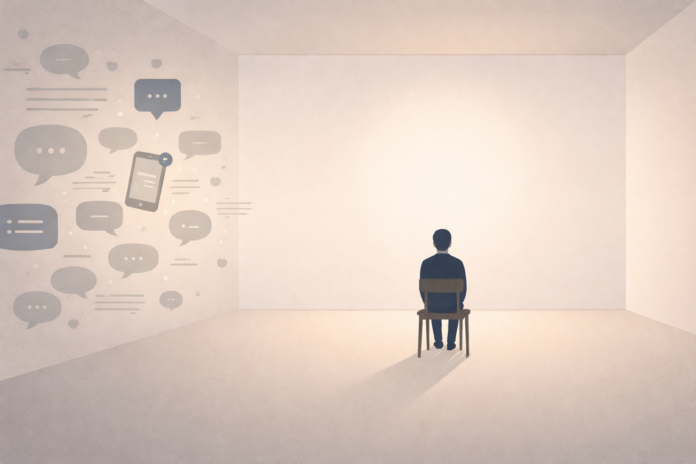
You arrive quietly.

No footsteps.
No announcement.
Just a small pause in the room.

And suddenly people feel uncomfortable.

Someone clears their throat.
Another reaches for their phone.
Someone starts talking — even if they have nothing important to say.

Because for many people, silence feels like a problem that must be fixed.

But I’ve always wondered why.


When we are children, silence rarely feels heavy.

A child can sit on the floor building something for hours without saying a word.
A teenager can stare at the sky and feel completely full inside.

Silence, back then, is not emptiness.

It is space.

Space where imagination moves.
Space where thoughts stretch their legs.


But somewhere along the road to adulthood, silence changes its reputation.

It becomes awkward.

Uncomfortable.

Suspicious.

If two people stop talking, we assume something is wrong.

If a meeting becomes quiet, someone rushes to fill the gap.

If a message goes unanswered, the mind begins inventing stories.

Maybe they are angry.
Maybe something went wrong.
Maybe the relationship has shifted.


Yet silence itself has said nothing.

It is simply a mirror.

And mirrors can be frightening.

Because when there are no words, there is nothing left to hide behind.

No jokes.
No explanations.
No clever distractions.

Just you.

Just your thoughts.

Just the quiet question that waits patiently in the background of every life:

What is actually happening inside me?


That question is powerful.

Too powerful for many people.

So they keep the room full of noise.

Music.
Notifications.
Endless conversations.

Anything to avoid hearing the quiet voice underneath it all.


But silence has another side.

One that reveals itself only when you stop fighting it.

Silence can hold clarity.

In silence, patterns become visible.
In silence, emotions settle like dust after a storm.
In silence, the mind begins to sort what truly matters from what only felt urgent.

Writers know this.

Artists know this.

Inventors know this.

Many of the most important ideas in history were born not in noise…

but in a quiet room where someone allowed their mind to wander without interruption.


Maybe silence is not the absence of something.

Maybe it is the beginning of something.

A place where the mind finally catches up with the speed of life.

A place where truth has enough space to breathe.


So perhaps silence should not frighten us.

Perhaps it should invite us.

Not as an enemy.

But as a quiet teacher waiting patiently in the corner of every day.


The strange thing is this:

The moment you stop running from silence…

you begin to hear yourself more clearly.

And sometimes that is exactly the conversation you needed all along.


Dear Time, Why Do You Run Faster As We Grow Older?

0

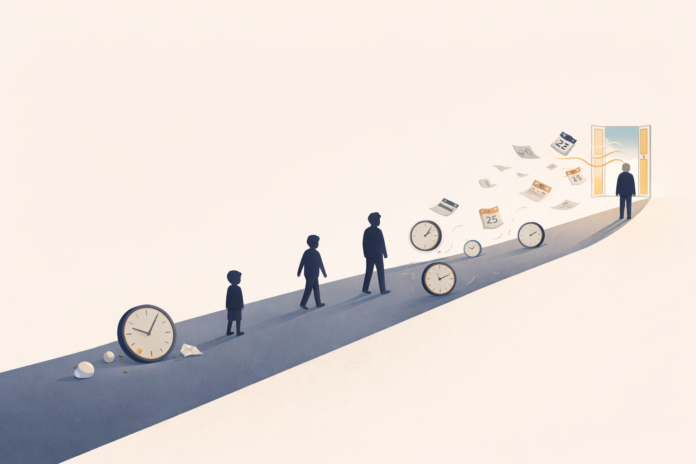
I remember when a year felt enormous.

Childhood summers stretched like endless roads. A single afternoon could hold an entire universe — a game, a dream, a story, a small adventure no one else would ever know.

Back then, time moved like a slow river.

Or maybe… it only felt that way.

Now the same river seems to rush past like a storm.

Weeks disappear quietly. Months vanish before they properly begin. Another year arrives while the previous one still feels unfinished.

Sometimes I catch myself wondering:

What happened to all that time?


It’s strange how nobody warns you about this.

When you are young, people talk about growing up — about school, careers, responsibilities, and success.

But no one explains the quiet shift that happens somewhere along the way.

The moment when you realize that time has changed its rhythm.

Or perhaps…

you have.


Children live inside the present.

Everything is new.

A new street.
A new friend.
A new book.
A new question about the world.

Their minds are constantly discovering something for the first time.

And when everything is new, the brain records every detail.

Moments stretch.

Days feel long.

Life feels wide.


But adulthood is different.

Most days begin to resemble the ones before them.

Wake up. Work. Responsibilities. Messages. Deadlines. Sleep.

The mind stops recording every small detail because it has already seen similar days many times before.

So memory compresses them.

Ten similar days quietly merge into one faint memory.

And suddenly the month feels like it passed in a single breath.


Maybe that is the secret no one says out loud.

Time itself does not speed up.

Our attention simply stops expanding it.

When we stop noticing, life begins to blur.


Sometimes the solution is surprisingly simple.

Do something unfamiliar.

Walk a different street.
Learn a new language.
Ask a question you’ve never asked before.
Start something small that scares you a little.

Novelty slows time again.

Curiosity stretches it.

Presence deepens it.


The strange truth is this:

The clock has always moved at the same speed.

But the experience of time depends on how awake we are inside our lives.


So perhaps the real question is not:

Why does time run faster as we grow older?

Maybe the better question is quieter.

Maybe it asks:

When was the last time you truly noticed a moment?


Because sometimes all it takes to slow time again…

is to look up.

And really see where you are.


Language Proficiency Levels: Understanding the Stages of Learning a Language

0

The Illusion Many Language Learners Have

Many people say:

“I know English.”
or
“I am learning German.”

But language ability is not binary.

You either don’t know a language or you move through structured levels of mastery.

Most education systems and international exams classify language ability using a framework called CEFR — Common European Framework of Reference for Languages.

It divides language proficiency into six levels, grouped into three stages.

Understanding these levels helps you measure where you actually stand.


The Three Major Stages of Language Learning

1. Beginner Stage (A1–A2)

This is the foundation level.

You understand basic words and simple phrases, but complex communication is still difficult.

A1 — Absolute Beginner

At this level you can:

  • introduce yourself
  • ask basic questions
  • understand simple greetings
  • read very short sentences

Example:

“My name is Ahmed. I live in Dubai. I work in an office.”

Communication is slow and limited.

You rely heavily on memorized phrases.


A2 — Elementary User

At A2, you start handling basic daily conversations.

You can:

  • talk about routine topics
  • describe simple situations
  • understand slow, clear speech
  • read short texts

Example topics:

  • shopping
  • travel
  • family
  • work routine

However, deeper discussions remain difficult.


The Independent Stage (B1–B2)

This is where language becomes functional.

You can actually live and work in the language.


B1 — Intermediate

You can:

  • handle everyday conversations
  • explain opinions
  • describe experiences
  • understand TV or news partially

Example:

“I moved to Dubai five years ago because of better job opportunities.”

At this level, grammar mistakes still occur, but communication works.


B2 — Upper Intermediate

Now you begin sounding natural and confident.

You can:

  • debate ideas
  • explain complex topics
  • follow movies without subtitles sometimes
  • write detailed emails or articles

Many universities require B2 level.


The Advanced Stage (C1–C2)

This is where language moves from functional ability to mastery.


C1 — Advanced

At this stage you can:

  • express ideas fluently
  • understand complex articles
  • follow academic discussions
  • speak almost effortlessly

You can operate professionally in the language.

Many high-level jobs require C1.


C2 — Mastery / Near Native

This is the highest level.

You can:

  • understand almost everything you hear or read
  • detect subtle meaning and humor
  • speak naturally with native speakers
  • write complex professional texts

At C2, the difference between you and a native speaker becomes very small.


The Hidden Reality of Language Learning

Most people believe:

“Fluency means knowing many words.”

But fluency actually depends on three systems working together:

  1. Vocabulary
  2. Grammar
  3. Automatic speech production

Without automatic speaking ability, knowledge remains passive.

That is why many learners can understand a language but struggle to speak it.


The Opposite Truth Check

Some learners think:

“I must reach C2 to use a language successfully.”

But the opposite is often true.

Most real-world communication happens between B1 and B2 levels.

At B2, you can:

  • work internationally
  • travel independently
  • study in many universities
  • build professional relationships

Perfection is not required for effective communication.


Final Thought

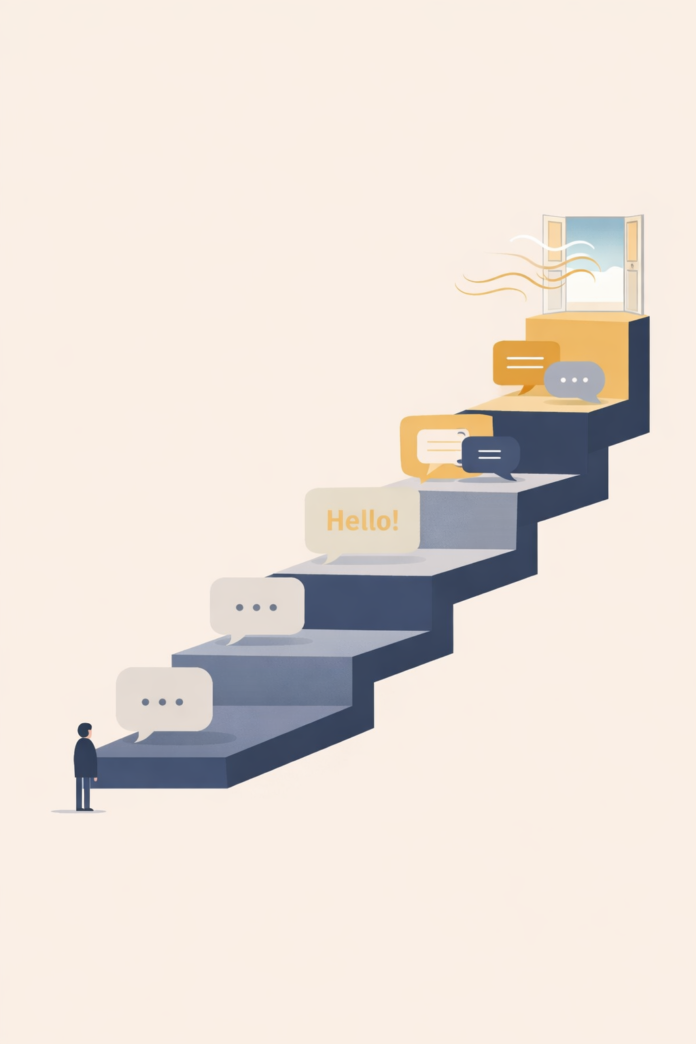
Language learning is not a jump.

It is a ladder.

A1 → A2 → B1 → B2 → C1 → C2

Each level expands your ability to think, communicate, and connect with the world.

The goal is not to reach the top instantly.

The goal is to climb consistently.

Because every level unlocks a bigger world of conversation, culture, and opportunity.


Types of Bank Accounts: A Practical Guide to Choosing the Right One

0

The Quiet Mistake Many People Make

Most people open a bank account without ever thinking about what type of account they actually need.

They walk into a bank, open the default option, and move on.

But banks design multiple account types for different financial behaviors — spending, saving, investing, business operations, and wealth protection.

Using the wrong type of account can quietly cost you:

  • missed interest
  • unnecessary fees
  • limited financial flexibility
  • poor money organization

Understanding the core types of bank accounts helps you structure your money intelligently instead of letting it sit randomly.


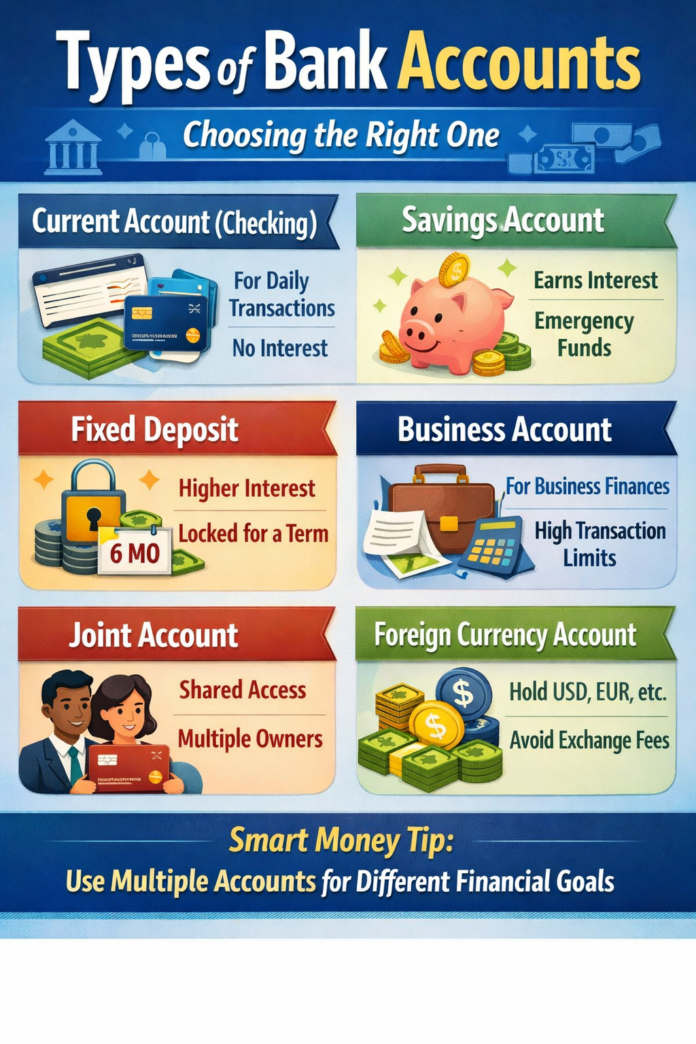
The Core Types of Bank Accounts

1. Current Account (Checking Account)

This is the most commonly used account for daily financial activity.

It is designed for frequent transactions rather than saving.

Typical Features

  • Unlimited deposits and withdrawals
  • Debit card access
  • Online banking and mobile payments
  • Checkbook (in some countries)
  • Salary deposits
  • Utility bill payments

Where It Is Used

  • salary income
  • daily spending
  • business transactions
  • bill payments

The Limitation

Current accounts usually offer little or no interest.

They are designed for liquidity, not growth.


2. Savings Account

This account is built for storing money safely while earning interest.

It encourages holding money rather than constantly spending it.

Typical Features

  • interest earnings
  • limited withdrawals
  • lower transaction frequency
  • emergency fund storage

Best Uses

  • emergency funds
  • short-term financial goals
  • holding idle cash

Hidden Trap

Interest rates are often lower than inflation, meaning your money may still lose purchasing power over time.


3. Fixed Deposit / Term Deposit Account

This is a locked savings account where money stays untouched for a fixed period.

Examples:

  • 3 months
  • 6 months
  • 1 year
  • 5 years

Typical Features

  • higher interest rate than savings
  • fixed maturity date
  • penalties for early withdrawal

Best Uses

  • capital preservation
  • predictable income
  • conservative investing

The Trade-Off

Liquidity is sacrificed for higher interest returns.


4. Business Account

Designed for companies, freelancers, and entrepreneurs.

Separating business finances from personal finances is essential for tax clarity and financial tracking.

Typical Features

  • high transaction limits
  • payroll management
  • merchant payment gateways
  • accounting integration
  • invoicing tools

Who Should Use It

  • freelancers
  • startups
  • small businesses
  • corporations

Using a personal account for business can cause legal and accounting complications.


5. Joint Account

This account is shared by two or more people.

Common users include:

  • married couples
  • business partners
  • family members

Typical Features

  • shared access
  • joint decision control
  • multiple debit cards

Risk

Financial disagreements or trust issues can make joint accounts complicated to manage.


6. Foreign Currency Account

This allows you to hold money in different currencies.

Examples:

  • USD
  • EUR
  • GBP

Who Uses It

  • international traders
  • exporters/importers
  • freelancers paid from abroad
  • global investors

Advantage

Avoids constant currency conversion losses.


The Hidden Structure Wealthy People Use

Most financially organized individuals do not use just one account.

They build a multi-account system.

A common structure looks like this:

Account 1 — Income Hub Salary or business revenue enters here.

Account 2 — Expense Engine Bills, rent, groceries, subscriptions.

Account 3 — Emergency Reserve Savings account holding 3–12 months of expenses.

Account 4 — Growth Capital Investments, business reinvestment, assets.

This structure separates spending from wealth building.


Common Mistakes People Make

Mixing everything in one account

This makes financial tracking chaotic.

Holding too much money in checking

Idle money loses value through inflation.

Ignoring account fees

Small monthly fees compound over time.

Not separating business and personal finances

This creates accounting problems and tax confusion.


The Opposite Truth Check

Some people believe:

“More bank accounts means more complexity.”

But the opposite is often true.

Well-structured accounts create clarity and financial discipline.

One account mixes everything.

Multiple accounts assign money a clear purpose.


Final Thought

A bank account is not just a place to store money.

It is part of your financial operating system.

When you choose the right combination of accounts, money begins to behave differently:

  • spending becomes intentional
  • savings become automatic
  • financial decisions become clearer

And over time, that quiet structure can matter far more than the size of the balance itself.


Penguins Spot a Sleeping Seal… and Immediately Reconsider Their Life Choices

0

The Calm Before the Comedy

A group of penguins were marching proudly across the icy shore.

You know the walk.

That tiny confident wobble.

Like they own the entire Antarctic continent.

Chest out.
Heads up.
Zero fear.

They looked like a tiny army of tuxedo-wearing executives on their way to an important meeting.

Everything was going perfectly.

Until they saw it.


The Discovery

Right in front of them…

On the snow…

Lying completely still…

Was a massive sleeping seal.

Not moving.

Not blinking.

Just peacefully napping like a giant ocean potato.

The penguins stopped.

All of them.

At the exact same time.


The Silent Meeting

Penguin #1 slowly leaned forward.

Penguin #2 tilted its head.

Penguin #3 looked at Penguin #4 like:

“Is that… what I think it is?”

No one spoke.

But the entire group had the same thought.

A dangerous thought.

“Maybe we can sneak past.”


The Investigation

One brave penguin took two tiny steps forward.

Waddle…
Waddle…

The seal didn’t move.

The penguin leaned closer.

The other penguins watched.

This was now a full scientific experiment.

The Antarctic Research Department of Penguins was officially in session.


The Moment of Realization

Then…

The seal twitched.

Just a little.

Barely noticeable.

But to penguins?

That tiny twitch was basically a thunderstorm.

Every penguin immediately froze.

Eyes wide.

Brains running calculations.

And in perfect silent agreement…


The Instant U-Turn

The entire group turned around.

At the same time.

Not slowly.

Not cautiously.

Instantly.

Like someone pressed the emergency exit button on their survival instincts.

And off they went.

Waddling away with maximum urgency.

No discussion.

No debate.

No heroics.

Just one clear national policy:

“We saw nothing.”


The Aftershock

From far away, the penguins occasionally looked back.

The seal?

Still sleeping.

Completely unaware that it had just caused the fastest group retreat in penguin history.

Meanwhile the penguins were probably thinking:

“Let’s just go fishing somewhere else.”


The Real Reason It’s Funny

The moment is hilarious because it’s so human.

You walk confidently into a situation…

Then suddenly realize:

“Oh no… this could go very badly.”

And your brain immediately says:

“Actually… let’s pretend we were never here.”


The Quiet Truth

Sometimes the smartest decision in life…

is the penguin decision.

See the danger.

Make eye contact.

Then quietly turn around and walk away.


Because survival isn’t always about bravery.

Sometimes…

it’s about the fastest U-turn.

A Letter to the Dream I Quietly Buried

0

Dear dream,

For a long time, I pretended you never existed.

It was easier that way.

If I did not speak about you,
if I did not think about you too often,
if I filled my days with other responsibilities and other ambitions…

perhaps the silence would slowly erase you.

But silence has never been strong enough to bury something that once felt alive.

You still visit me sometimes.

Not loudly.

Not in ways that disrupt my life.

Just small reminders.

A passing thought while walking home at night.
A quiet moment when the world slows down.
A sudden memory of the person I used to be when you were still possible.

Back then, you felt so real.

I carried you everywhere.

In the plans I made.
In the risks I was willing to take.
In the way I looked at the future as if it were a wide open door.

But life has its own rhythm.

Paths change.

Responsibilities appear.

Practical decisions begin to replace bold ones.

And slowly, without any dramatic ending, I set you aside.

I told myself it was temporary.

That one day I would return.

But years passed.

And the world became louder.

Work demanded attention.
Life demanded stability.
Time demanded patience.

Somewhere in the middle of all that noise, you became quiet.

Not gone.

Just quiet.

I used to believe that burying a dream meant failure.

That leaving something behind meant weakness.

But age has taught me something different.

Sometimes dreams are not buried because we lacked courage.

Sometimes they are buried because life asked us to become someone else first.

Someone stronger.

Someone wiser.

Someone capable of understanding the dream more deeply than before.

Maybe you were never meant to happen in the version of life I once imagined.

Maybe you were meant to transform.

To wait.

To change shape as I changed.

And perhaps that is why you still return from time to time.

Not to accuse me.

Not to remind me of regret.

But to gently ask a question.

Are you ready yet?

I do not know the answer.

But I know this much.

Even dreams that are buried leave something behind.

They leave traces of who we once hoped to become.

And sometimes those traces are enough to guide us back toward ourselves.

So if you are still somewhere beneath the surface of my life…

be patient.

I have not forgotten you.

I have only been learning who I must become before I can meet you again.