Every journey begins with a simple expectation: to return home safely. Yet every day, families lose loved ones on the road because of decisions that often take only a few secondsโspeeding, using a mobile phone while driving, ignoring a helmet or seat belt, driving on the wrong side, jumping a signal, or making a dangerous […]
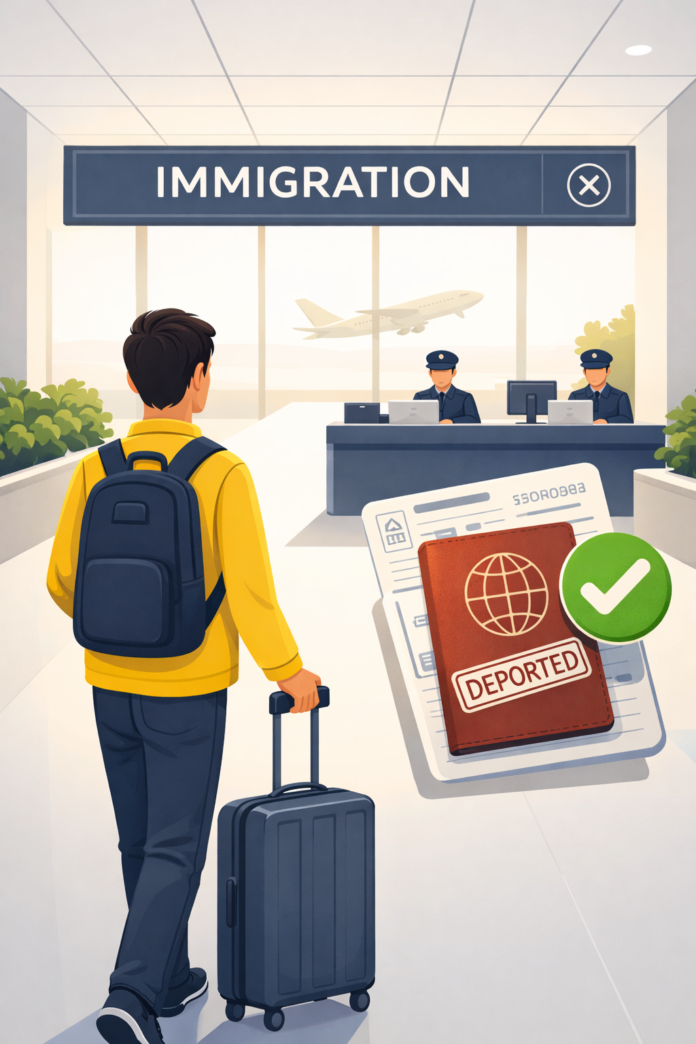
Yes, in many countries immigration authorities can track visa overstays through digital immigration systems that record entry and exit information. When a traveler enters or leaves a country, their passport and visa details are stored in government databases. If someone stays beyond the allowed period, immigration systems can detect the overstay, which may lead to fines, penalties, or future visa restrictions.
What the Law Says
Most countries maintain immigration control systems that monitor the movement of travelers across borders. When a person enters a country, immigration officers record the entry date, visa type, and permitted duration of stay.
When the traveler leaves the country, the exit record is matched with the entry record. If the exit date is later than the permitted stay, the system automatically flags the case as a visa overstay.
Many modern immigration systems rely on:
passport scanning
electronic travel records
visa databases
airline passenger information systems
These tools allow authorities to identify individuals who remain in a country beyond their authorized stay.
Even if a person avoids contact with immigration authorities during the overstay, the violation may still appear in official records when the individual attempts to leave the country or apply for another visa later.
Real-Life Scenario
Imagine a traveler enters a country with a 90-day tourist visa.
The person stays for six months without renewing or extending the visa. During that time, immigration authorities may not actively search for the individual unless other issues arise.
However, when the traveler attempts to leave the country through an airport, the immigration system checks the entry date and immediately detects that the person remained beyond the permitted period.
At that point, the traveler may be required to pay fines, face questioning by immigration officers, or receive a record of overstay that may affect future travel.
Possible Consequences
Immigration Fines
Many countries impose daily fines for each day a person overstays their visa.
Travel Restrictions
Immigration authorities may impose temporary bans on returning to the country.
Visa Application Problems
Future visa applications may be denied or subject to additional scrutiny.
Deportation
In serious cases, authorities may issue a removal order requiring the person to leave the country immediately.
What You Should Do If You Overstay
Leave the Country Voluntarily
Leaving the country as soon as possible may reduce the severity of penalties.
Contact Immigration Authorities
Some immigration departments provide options to resolve overstays by paying fines or applying for status corrections.
Seek Immigration Advice
An immigration professional may help explain the available legal options depending on the situation.
Avoid Repeated Violations
Multiple immigration violations can significantly affect future travel or residency opportunities.
Variations by Country
United States: Entry and exit records are stored in immigration databases and can reveal overstays when travelers leave or apply for future visas.
United Arab Emirates: Immigration systems track visa status electronically and impose fines for overstays.
European Schengen Area: Border control systems record travel across member countries and overstays may affect access to the entire Schengen region.
United Kingdom: Immigration records and border systems monitor visa compliance and can affect future visa applications.
Because immigration laws and monitoring systems vary between countries, it is important to review the rules that apply in the specific jurisdiction.
Legal Disclaimer
This article provides general legal information for educational purposes only and should not be considered legal advice. Immigration laws differ across countries and individual circumstances. For advice related to a specific case, consult a qualified immigration lawyer or legal professional.
Overstaying your visa means remaining in a country after your authorized stay has expired. In most countries, this is considered an immigration violation and can lead to fines, deportation, travel bans, or difficulty obtaining future visas. The severity of the consequences usually depends on how long the overstay lasts and the immigration laws of the country involved.
What the Law Says
A visa allows a foreign national to enter and remain in a country for a specific period. The visa or entry stamp usually shows the date by which the person must leave the country.
If someone stays beyond that date without obtaining an extension or legal status change, they are considered to be overstaying their visa, which is a violation of immigration regulations.
Many countries treat short overstays as administrative violations that result in fines or warnings. However, longer overstays may lead to stricter immigration penalties such as deportation or restrictions on future entry.
Immigration authorities typically review several factors when dealing with visa overstays, including:
length of the overstay
previous immigration history
reason for remaining in the country
whether the individual voluntarily leaves
Real-Life Scenario
Imagine a traveler enters a country on a 30-day tourist visa.
The person plans to leave before the visa expires but ends up staying an extra two weeks due to personal circumstances.
When the traveler attempts to leave the country, immigration officials check their records and discover that the visa expired earlier. Depending on the country’s laws, the traveler may be required to pay a fine at the airport or immigration office before departing.
In some cases, the overstay may also be recorded in the immigration system and could affect future visa applications.
Possible Consequences and Penalties
Immigration Fines
Many countries charge daily fines for each day a person stays beyond the permitted period.
Deportation or Removal
If authorities discover a visa overstay, they may require the person to leave the country immediately.
Entry Bans
Longer overstays may lead to temporary bans from reentering the country for several years.
Visa Difficulties in the Future
Immigration systems usually record overstays. When applying for a visa later, the overstay history may affect the decision.
Immigration Detention in Serious Cases
In rare situations involving long-term illegal stay or additional immigration violations, authorities may detain individuals until deportation arrangements are completed.
What You Should Do If You Overstay a Visa
Contact Immigration Authorities
If you realize that your visa has expired, contacting immigration authorities or an immigration office may help clarify your options.
Leave the Country as Soon as Possible
Voluntarily leaving the country often reduces the risk of harsher penalties.
Seek Immigration Advice
If the overstay is significant or involves complex legal issues, consulting an immigration professional can help determine possible solutions.
Avoid Repeated Violations
Multiple immigration violations can significantly increase the likelihood of travel bans or visa refusals.
Variations by Country
Immigration laws vary significantly around the world.
United States: Overstays longer than 180 days can trigger entry bans of three years, while overstays longer than one year may result in a ten-year ban.
United Arab Emirates: Daily fines may apply for staying beyond the allowed visa period.
Schengen Area (Europe): Overstays may lead to fines, deportation, and restrictions across multiple European countries.
United Kingdom: Overstaying can negatively affect future visa applications and immigration status.
Because immigration policies change frequently, it is important to check the official rules of the country involved.
Legal Disclaimer
This article provides general information for educational purposes only and should not be considered legal advice. Immigration laws vary by country and individual circumstances. For advice related to your specific situation, consult a qualified immigration lawyer or legal professional.
Recording someone without their permission may or may not be legal depending on the country, the situation, and whether the conversation is considered private. In many places, recording is allowed if at least one participant in the conversation consents, while other jurisdictions require all participants to give permission. Recording private conversations without the required consent can lead to legal penalties.
What the Law Says
Laws regarding recording conversations usually fall into two main categories:
One-Party Consent Laws In these jurisdictions, recording a conversation is legal if at least one person involved in the conversation consents to the recording. If you are part of the conversation, you may legally record it.
All-Party Consent Laws Some countries and regions require all participants in the conversation to agree before recording takes place. Secretly recording someone in these places may violate privacy laws.
Another important factor is expectation of privacy. Recording someone in a private setting, such as inside a home or confidential meeting, may be restricted even if recording in public spaces is generally allowed.
Public places usually have lower expectations of privacy, but laws still differ widely across jurisdictions.
Real-Life Scenario
Imagine two colleagues discussing a sensitive business matter during a private meeting. One person secretly records the conversation using their phone without informing the other.
If this occurs in a place where all-party consent is required, the recording could be considered illegal. The recorded individual may be able to file a complaint or legal claim related to privacy violations.
However, if the same recording occurred in a jurisdiction where one-party consent is sufficient, and the person recording is part of the conversation, it may be legally permitted.
Possible Consequences and Penalties
1. Privacy Law Violations
Secret recordings that violate privacy laws may lead to civil legal claims.
2. Criminal Charges
In certain jurisdictions, illegal recording can be treated as a criminal offense.
3. Evidence Being Rejected in Court
Illegally obtained recordings may not be accepted as evidence in legal proceedings.
4. Lawsuits for Damages
The recorded person may pursue compensation if their privacy rights were violated.
What You Should Do Before Recording Someone
1. Check Local Laws
Recording laws vary widely between countries and regions.
2. Ask for Consent
The safest approach is always to inform the other party and obtain permission.
3. Avoid Recording Private Conversations Without Permission
Private settings often carry stronger legal protections.
4. Use Recordings Responsibly
Even if recording is legal, distributing or publishing recordings may raise additional legal issues.
Variations by Country
Recording laws differ significantly around the world.
United States: Some states follow one-party consent rules, while others require all participants to consent.
United Kingdom: Recording a conversation for personal use may be allowed, but sharing it publicly may raise legal issues.
European Union: Privacy regulations and data protection laws can restrict unauthorized recordings.
United Arab Emirates: Recording someone without permission can violate privacy laws and may carry serious legal consequences.
Because legal frameworks differ widely, always verify the rules in the specific jurisdiction where the recording takes place.
Legal Disclaimer
This article provides general information for educational purposes only and should not be considered legal advice. Laws related to recording conversations vary significantly across jurisdictions and individual circumstances. For advice specific to your situation, consult a qualified legal professional in your area.
Overstaying a visa means remaining in a country after your legal permission to stay has expired. In most countries, visa overstays can lead to fines, deportation, travel bans, or difficulties obtaining future visas. The exact consequences depend on how long the overstay lasts and the laws of the country involved.
What the Law Says
A visa is a legal authorization that allows a person to enter and remain in a country for a specific period. Once that period expires, the person is required to leave the country or obtain an extension or new legal status.
If someone remains in the country after the visa expiration date without authorization, they are considered to be in violation of immigration law.
Many countries classify visa overstays as administrative immigration violations, but repeated or long overstays may lead to stricter penalties.
Common legal consequences include:
Immigration fines
Cancellation of current visa status
Deportation or removal orders
Temporary or long-term travel bans
Increased difficulty obtaining future visas
Authorities often consider the length of overstay and the individualโs circumstances when deciding the penalty.
Real-Life Scenario
Imagine a traveler who enters a country on a 30-day tourist visa.
If the traveler forgets to leave before the visa expires and stays an additional 20 days, immigration authorities may classify the situation as a visa overstay.
When the person attempts to leave the country or apply for another visa later, immigration records will show that the previous stay exceeded the permitted period. This may result in a fine at the airport, additional questioning, or restrictions on future travel to that country.
Possible Consequences and Penalties
1. Immigration Fines
Some countries impose daily fines for each day a person remains after their visa expires.
2. Deportation or Removal
Authorities may issue an order requiring the individual to leave the country immediately.
3. Entry Bans
Certain countries impose bans ranging from a few months to several years depending on the overstay duration.
4. Visa Refusal in the Future
Immigration systems record overstays, and this information can affect future visa applications.
5. Detention in Serious Cases
In rare cases involving very long overstays or other immigration violations, individuals may face immigration detention until departure arrangements are made.
What You Should Do If You Overstay a Visa
1. Contact Immigration Authorities
Many countries allow individuals to resolve minor overstays through immigration offices.
2. Leave the Country as Soon as Possible
Departing voluntarily often reduces penalties.
3. Seek Legal or Immigration Advice
If the overstay is significant or involves complex circumstances, an immigration professional may help determine available options.
4. Avoid Repeated Violations
Multiple overstays significantly increase the risk of long-term travel bans.
Variations by Country
Visa overstay rules differ significantly between countries.
United States: Overstays may trigger 3-year or 10-year entry bans depending on duration.
United Arab Emirates: Daily fines may apply for overstaying a tourist visa.
European Schengen Area: Overstays can lead to fines, deportation, and restrictions across all Schengen countries.
United Kingdom: Overstays can negatively affect future visa applications and immigration status.
Because immigration laws change frequently, checking the specific rules of the country involved is essential.
Legal Disclaimer
This article is for general informational purposes only and does not constitute legal advice. Immigration laws vary by country and individual circumstances. For advice specific to your situation, consult a qualified immigration lawyer or authorized legal professional.
There is a particular kind of silence that changes a person.
Not the peaceful kind.
Not the silence of a quiet morning.
But the silence you choose
when you have something important to say.
The silence that sits in your throat
when the moment to speak passes by.
I know why you stayed silent.
Sometimes it was easier.
Sometimes the room was too loud with other peopleโs opinions.
Sometimes you feared that your words would be misunderstood.
Sometimes you simply believed that your voice did not matter enough.
So you swallowed the sentence.
Again.
And again.
And again.
At first it felt like patience.
Then it started to feel like restraint.
Eventually, it became something heavier.
A quiet weight inside your chest.
Because words that are never spoken
do not disappear.
They stay.
They echo inside the mind.
They replay during long nights.
You imagine how the conversation could have gone.
You imagine what you could have said.
You imagine the moment turning in a completely different direction.
But life rarely offers that moment again.
Silence can be noble.
There are times when silence is wisdom.
When anger would only create damage.
When restraint protects relationships.
But there is another kind of silence.
The kind that slowly erases you.
The kind where you begin to step back from your own life.
Where decisions are made around you instead of with you.
Where people assume you agree simply because you said nothing.
And slowly, almost invisibly,
you begin to disappear from the room.
The strange thing is this:
Your voice never truly leaves you.
It waits.
Quietly.
Patiently.
Like a door that remains unlocked.
One day you realize something important.
Speaking does not always mean raising your voice.
Sometimes it means choosing one clear sentence.
Sometimes it means saying โNo.โ
Sometimes it means saying โThis matters to me.โ
Sometimes it means asking a question that changes the direction of the entire conversation.
Courage does not always look loud.
Often it looks like honesty.
So this letter is not written with blame.
It is written with understanding.
You stayed silent because you were learning.
Learning when to observe.
Learning when to listen.
Learning when the moment was not yet right.
But now you know something the older version of you did not.
Your voice is not a weapon.
It is a compass.
It tells the world where you stand.
And it reminds you where you stand as well.
If you have stayed silent for too long,
there is good news.
The story is not finished.
The next sentence still belongs to you.
And sometimes one honest sentence
is enough to change the entire direction of a life.
Throughout history, humanity has built astonishing tools. Some cured diseases. Some connected continents. Some lifted billions out of poverty.
But history also revealed a darker truth.
Some technologies are so destructive that the world collectively decided they should never exist โ or at least never be used.
These decisions were not made lightly. They came after wars, tragedies, and painful lessons about what happens when human creativity is used without restraint.
Across decades, countries, scientists, and international organizations slowly formed agreements to draw certain lines.
Not every nation always follows these agreements perfectly. But the existence of these treaties shows something powerful:
Humanity sometimes recognizes that just because something can be built, it does not mean it should be.
Letโs explore the most important technologies the world has agreed to limit or ban.
Biological Weapons: When Disease Becomes a Weapon
Biological weapons involve using living organisms โ such as bacteria or viruses โ to spread illness and death.
These weapons are terrifying because they behave differently from traditional weapons. Once released, they do not respect borders or armies. They spread through civilians, mutate over time, and can spiral beyond control.
The potential consequences are devastating. Entire populations could be exposed to engineered diseases capable of causing pandemics.
Recognizing this danger, nations signed a global agreement known as the Biological Weapons Convention in 1972.
Under this treaty, countries committed to never develop, produce, or stockpile biological weapons.
The idea was simple but powerful: Turning disease into a weapon risks consequences too unpredictable for any civilization to control.
Chemical Weapons: The Horror That Changed Warfare
During the First World War, chemical weapons were used on battlefields for the first time at a large scale.
Soldiers faced clouds of poisonous gas that burned their lungs, blinded their eyes, and suffocated them slowly.
These weapons caused immense suffering, often killing soldiers in agonizing ways and sometimes drifting into civilian areas.
After witnessing the horror, the international community eventually agreed that such weapons should never be used again.
This led to the Chemical Weapons Convention in 1993, which prohibits the development, production, stockpiling, and use of chemical weapons.
Today, an international watchdog monitors compliance and oversees the destruction of chemical weapon stockpiles.
The world essentially declared that weapons designed primarily to poison humans violate basic principles of humanity.
Environmental Warfare: Weaponizing the Planet
Another fear emerged during the Cold War era.
Scientists realized that human technology might eventually manipulate natural systems โ weather, earthquakes, or ecosystems โ in ways that could be weaponized.
Imagine floods triggered intentionally, artificial droughts, or environmental manipulation used to destabilize entire regions.
To prevent such scenarios, countries created the Environmental Modification Convention in 1977.
This treaty bans the use of environmental manipulation techniques for military or hostile purposes.
It reflects a simple understanding:
The planet itself should never become a battlefield.
Landmines: Weapons That Keep Killing Long After Wars End
Some weapons continue harming people long after the fighting stops.
Anti-personnel landmines are one example. These hidden explosives remain buried in the ground for years or even decades.
Long after wars end, farmers, children, and civilians unknowingly step on them.
Entire communities can remain trapped in dangerous landscapes simply because explosives are still hidden beneath the soil.
Because of this lasting harm, many countries signed the Ottawa Treaty in 1997, agreeing to ban the use, production, and stockpiling of anti-personnel landmines.
Millions of these weapons have since been destroyed.
The treaty recognizes that weapons that continue killing civilians years after a conflict ends cannot be justified.
Blinding Laser Weapons: A Rare Preemptive Ban
Most weapons bans occur only after tragedy reveals their consequences.
But one type of weapon was banned before it ever became widespread.
Blinding laser weapons were designed to permanently blind soldiers by damaging their eyes.
Recognizing the severe and irreversible suffering such weapons would cause, nations adopted the Protocol on Blinding Laser Weapons in 1995, banning them entirely.
It was one of the rare moments when humanity acted before the damage occurred.
Cluster Bombs: A Hidden Danger After War
Cluster bombs scatter dozens or even hundreds of small explosives over large areas.
While they may appear effective in battle, many of these small explosives fail to detonate immediately.
They remain scattered across fields, roads, and villages โ effectively turning into hidden landmines.
Years later, civilians can still encounter them.
To address this problem, many nations signed the Convention on Cluster Munitions in 2008, agreeing to stop producing, stockpiling, or using these weapons.
Again, the concern was not just war itself, but the lingering danger left behind for ordinary people.
Nuclear Weapons: The Most Dangerous Power Ever Created
Few technologies have reshaped global politics as dramatically as nuclear weapons.
Their destructive power is almost unimaginable. A single nuclear explosion can destroy entire cities and cause long-term environmental and health damage.
Because of this risk, many nations agreed to limit the spread of nuclear weapons through treaties such as the Non-Proliferation Treaty (1968).
The goal was to prevent more countries from acquiring nuclear arsenals and to encourage eventual disarmament.
More recently, another treaty โ the Treaty on the Prohibition of Nuclear Weapons (2017) โ sought to ban them entirely.
However, nuclear weapons remain one of the most complex and controversial issues in international security.
Human Cloning: Ethical Boundaries in Science
Not all global restrictions focus on weapons.
Advances in biotechnology raised another concern: human cloning.
Reproductive human cloning raises deep ethical questions about identity, human dignity, and the potential misuse of genetic technology.
Because of these concerns, many countries support the United Nations Declaration on Human Cloning, which calls for prohibiting cloning practices that violate human dignity.
Scientific research continues in related fields such as medical genetics, but cloning humans remains widely restricted.
Why Humanity Draws These Lines
Looking across all these examples reveals an important pattern.
The technologies that the world tends to restrict or ban share three common characteristics:
They are difficult to control once released. Biological weapons and environmental manipulation could spiral beyond anyoneโs control.
They cause massive civilian suffering. Chemical weapons, landmines, and cluster bombs disproportionately harm non-combatants.
They create damage that lasts long after conflict ends. Some weapons remain dangerous for decades.
When a technology crosses these lines, the global community often recognizes that its risks outweigh any military advantage.
The Imperfect Reality
Of course, treaties do not guarantee perfect compliance.
Some countries refuse to join certain agreements. Others face accusations of violating them.
Enforcement can be difficult, and verifying secret programs is often challenging.
Yet these treaties still matter.
They create global norms โ shared expectations about what civilized societies should not do.
And sometimes, those norms are strong enough to shape behavior even in times of conflict.
A Quiet Lesson From History
The story of banned technologies teaches a subtle but powerful lesson.
Human intelligence has no limit to what it can invent.
But wisdom lies in recognizing when invention must be restrained.
Some tools improve civilization.
Others threaten its very survival.
The fact that humanity has agreed to ban certain technologies shows something hopeful:
Even in a competitive world, there are moments when people collectively decide that some lines should never be crossed.