Exclusive Content:

The Four Things Quietly Controlling Every Human Life

The body asks for sleep. The mind asks for wealth. The...

Why You Only Talk When Others Start First (And How to Break the Habit Without Changing Who You Are)

“Sorry… I don’t usually talk unless someone talks to...

Why Your AI Prompts Don’t Work (And How to Fix Them Instantly)

Most people think AI is the problem. “It gave a...
Home Blog Page 11

Can You Return to a Country After Being Deported? Legal Rules Explained

0

Quick Answer

Yes, it may be possible to return to a country after being deported, but it usually depends on the immigration laws of that country and the reason for the deportation. In many cases, deportation results in a temporary or long-term entry ban. After the ban period ends, a person may be able to apply for a visa again, although approval is not guaranteed.


What the Law Says

Deportation occurs when immigration authorities require a foreign national to leave a country due to a violation of immigration laws or other legal issues. Once deportation occurs, the person is typically recorded in the country’s immigration database.

Many countries impose reentry bans following deportation. The length of the ban often depends on factors such as:

  • the reason for deportation
  • how long the person stayed illegally
  • whether other laws were violated
  • whether the person left voluntarily or was forcibly removed

These bans may last for several years and, in some cases, may permanently restrict reentry.

Some immigration systems also allow individuals to request special permission or waivers to return earlier than the ban period.


Real-Life Scenario

Imagine someone enters a country on a temporary visa but remains after the visa expires for an extended period. Immigration authorities discover the violation and issue a deportation order.

After returning to their home country, the individual later wishes to travel back for work or study. When applying for a new visa, immigration officials review the previous deportation record.

Depending on the laws and the circumstances of the earlier violation, the visa may either be refused or considered after the required waiting period.


Possible Consequences

Entry Bans

Many countries impose bans that may last several years following deportation.

Visa Refusals

Even after the ban period ends, immigration authorities may review the previous deportation history when evaluating new visa applications.

Additional Documentation Requirements

Future visa applications may require more documentation or stronger proof of the purpose of travel.

Immigration Interviews

Applicants with previous deportation records may face additional questioning during the visa process.


What You Should Do If You Want to Return After Deportation

Understand the Ban Period

The first step is to determine how long the entry ban lasts.

Follow Immigration Procedures

If a waiver or special permission process exists, it may allow earlier reentry under certain conditions.

Provide Honest Information

When applying for visas after deportation, providing accurate information about past immigration history is essential.

Seek Professional Advice

Immigration laws are complex, and professional guidance may help clarify possible legal options.


Variations by Country

  • United States: Deportation may lead to reentry bans ranging from five to ten years or more depending on the violation.
  • United Kingdom: Deportation often leads to reentry restrictions that can last several years.
  • European Schengen Area: Deportation from one Schengen country can affect travel to other Schengen states.
  • United Arab Emirates: Deportation may lead to travel bans that can restrict future entry unless special permission is granted.

Because immigration rules differ between countries and may change over time, checking the official regulations of the relevant country is important.


Legal Disclaimer

This article provides general legal information for educational purposes only and should not be considered legal advice. Immigration laws vary between countries and individual circumstances. For advice regarding a specific situation, consult a qualified immigration lawyer or legal professional.

Can Immigration Track You If You Overstay Your Visa? What the Law Allows

0

Quick Answer

Yes, in many countries immigration authorities can track visa overstays through digital immigration systems that record entry and exit information. When a traveler enters or leaves a country, their passport and visa details are stored in government databases. If someone stays beyond the allowed period, immigration systems can detect the overstay, which may lead to fines, penalties, or future visa restrictions.


What the Law Says

Most countries maintain immigration control systems that monitor the movement of travelers across borders. When a person enters a country, immigration officers record the entry date, visa type, and permitted duration of stay.

When the traveler leaves the country, the exit record is matched with the entry record. If the exit date is later than the permitted stay, the system automatically flags the case as a visa overstay.

Many modern immigration systems rely on:

  • passport scanning
  • electronic travel records
  • visa databases
  • airline passenger information systems

These tools allow authorities to identify individuals who remain in a country beyond their authorized stay.

Even if a person avoids contact with immigration authorities during the overstay, the violation may still appear in official records when the individual attempts to leave the country or apply for another visa later.


Real-Life Scenario

Imagine a traveler enters a country with a 90-day tourist visa.

The person stays for six months without renewing or extending the visa. During that time, immigration authorities may not actively search for the individual unless other issues arise.

However, when the traveler attempts to leave the country through an airport, the immigration system checks the entry date and immediately detects that the person remained beyond the permitted period.

At that point, the traveler may be required to pay fines, face questioning by immigration officers, or receive a record of overstay that may affect future travel.


Possible Consequences

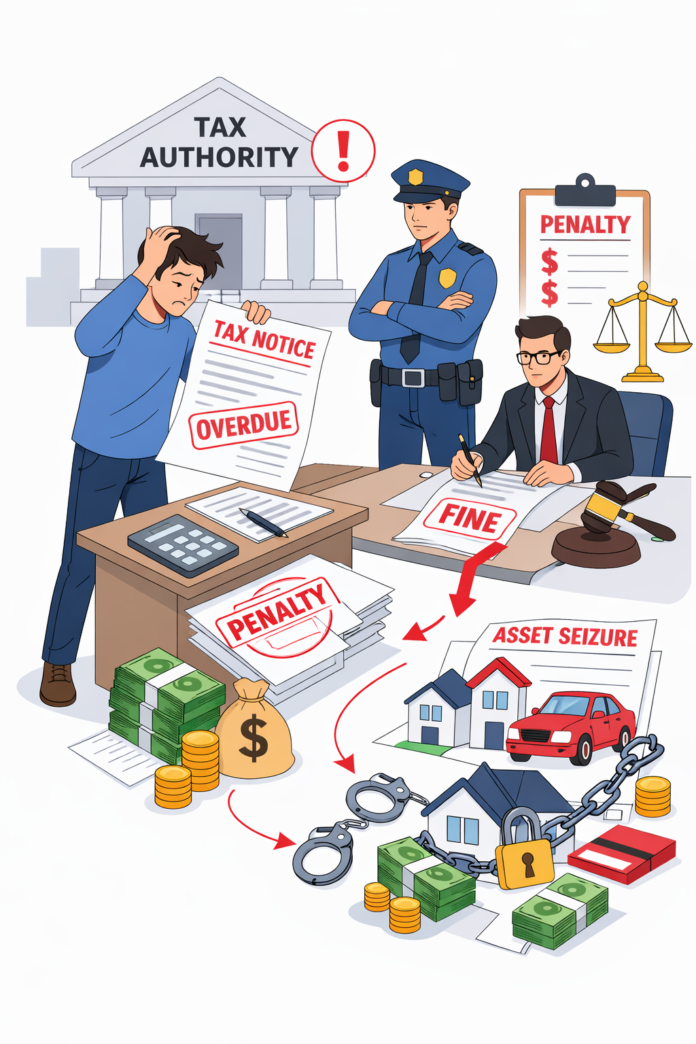
Immigration Fines

Many countries impose daily fines for each day a person overstays their visa.

Travel Restrictions

Immigration authorities may impose temporary bans on returning to the country.

Visa Application Problems

Future visa applications may be denied or subject to additional scrutiny.

Deportation

In serious cases, authorities may issue a removal order requiring the person to leave the country immediately.


What You Should Do If You Overstay

Leave the Country Voluntarily

Leaving the country as soon as possible may reduce the severity of penalties.

Contact Immigration Authorities

Some immigration departments provide options to resolve overstays by paying fines or applying for status corrections.

Seek Immigration Advice

An immigration professional may help explain the available legal options depending on the situation.

Avoid Repeated Violations

Multiple immigration violations can significantly affect future travel or residency opportunities.


Variations by Country

  • United States: Entry and exit records are stored in immigration databases and can reveal overstays when travelers leave or apply for future visas.
  • United Arab Emirates: Immigration systems track visa status electronically and impose fines for overstays.
  • European Schengen Area: Border control systems record travel across member countries and overstays may affect access to the entire Schengen region.
  • United Kingdom: Immigration records and border systems monitor visa compliance and can affect future visa applications.

Because immigration laws and monitoring systems vary between countries, it is important to review the rules that apply in the specific jurisdiction.


Legal Disclaimer

This article provides general legal information for educational purposes only and should not be considered legal advice. Immigration laws differ across countries and individual circumstances. For advice related to a specific case, consult a qualified immigration lawyer or legal professional.

What Happens If You Overstay Your Visa? Laws, Penalties, and What to Do

0

Quick Answer

Overstaying your visa means remaining in a country after your authorized stay has expired. In most countries, this is considered an immigration violation and can lead to fines, deportation, travel bans, or difficulty obtaining future visas. The severity of the consequences usually depends on how long the overstay lasts and the immigration laws of the country involved.


What the Law Says

A visa allows a foreign national to enter and remain in a country for a specific period. The visa or entry stamp usually shows the date by which the person must leave the country.

If someone stays beyond that date without obtaining an extension or legal status change, they are considered to be overstaying their visa, which is a violation of immigration regulations.

Many countries treat short overstays as administrative violations that result in fines or warnings. However, longer overstays may lead to stricter immigration penalties such as deportation or restrictions on future entry.

Immigration authorities typically review several factors when dealing with visa overstays, including:

  • length of the overstay
  • previous immigration history
  • reason for remaining in the country
  • whether the individual voluntarily leaves

Real-Life Scenario

Imagine a traveler enters a country on a 30-day tourist visa.

The person plans to leave before the visa expires but ends up staying an extra two weeks due to personal circumstances.

When the traveler attempts to leave the country, immigration officials check their records and discover that the visa expired earlier. Depending on the country’s laws, the traveler may be required to pay a fine at the airport or immigration office before departing.

In some cases, the overstay may also be recorded in the immigration system and could affect future visa applications.


Possible Consequences and Penalties

Immigration Fines

Many countries charge daily fines for each day a person stays beyond the permitted period.

Deportation or Removal

If authorities discover a visa overstay, they may require the person to leave the country immediately.

Entry Bans

Longer overstays may lead to temporary bans from reentering the country for several years.

Visa Difficulties in the Future

Immigration systems usually record overstays. When applying for a visa later, the overstay history may affect the decision.

Immigration Detention in Serious Cases

In rare situations involving long-term illegal stay or additional immigration violations, authorities may detain individuals until deportation arrangements are completed.


What You Should Do If You Overstay a Visa

Contact Immigration Authorities

If you realize that your visa has expired, contacting immigration authorities or an immigration office may help clarify your options.

Leave the Country as Soon as Possible

Voluntarily leaving the country often reduces the risk of harsher penalties.

Seek Immigration Advice

If the overstay is significant or involves complex legal issues, consulting an immigration professional can help determine possible solutions.

Avoid Repeated Violations

Multiple immigration violations can significantly increase the likelihood of travel bans or visa refusals.


Variations by Country

Immigration laws vary significantly around the world.

  • United States: Overstays longer than 180 days can trigger entry bans of three years, while overstays longer than one year may result in a ten-year ban.
  • United Arab Emirates: Daily fines may apply for staying beyond the allowed visa period.
  • Schengen Area (Europe): Overstays may lead to fines, deportation, and restrictions across multiple European countries.
  • United Kingdom: Overstaying can negatively affect future visa applications and immigration status.

Because immigration policies change frequently, it is important to check the official rules of the country involved.


Legal Disclaimer

This article provides general information for educational purposes only and should not be considered legal advice. Immigration laws vary by country and individual circumstances. For advice related to your specific situation, consult a qualified immigration lawyer or legal professional.


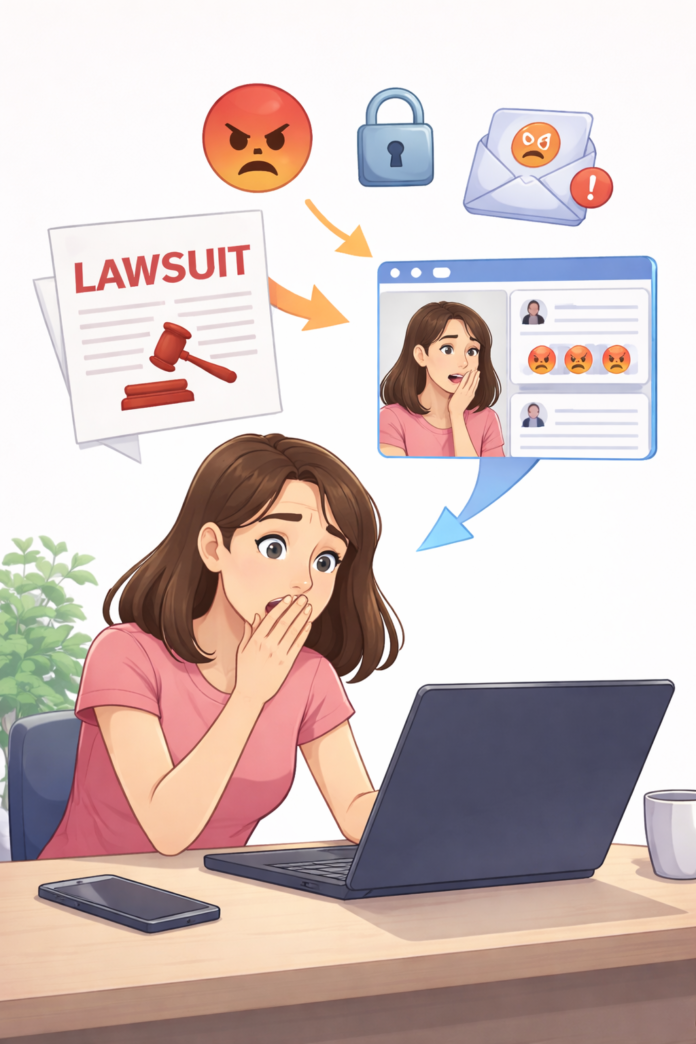
Is Recording Someone Without Permission Illegal? Laws and Consequences Explained

0

Quick Answer

Recording someone without their permission may or may not be legal depending on the country, the situation, and whether the conversation is considered private. In many places, recording is allowed if at least one participant in the conversation consents, while other jurisdictions require all participants to give permission. Recording private conversations without the required consent can lead to legal penalties.


What the Law Says

Laws regarding recording conversations usually fall into two main categories:

One-Party Consent Laws
In these jurisdictions, recording a conversation is legal if at least one person involved in the conversation consents to the recording. If you are part of the conversation, you may legally record it.

All-Party Consent Laws
Some countries and regions require all participants in the conversation to agree before recording takes place. Secretly recording someone in these places may violate privacy laws.

Another important factor is expectation of privacy. Recording someone in a private setting, such as inside a home or confidential meeting, may be restricted even if recording in public spaces is generally allowed.

Public places usually have lower expectations of privacy, but laws still differ widely across jurisdictions.


Real-Life Scenario

Imagine two colleagues discussing a sensitive business matter during a private meeting. One person secretly records the conversation using their phone without informing the other.

If this occurs in a place where all-party consent is required, the recording could be considered illegal. The recorded individual may be able to file a complaint or legal claim related to privacy violations.

However, if the same recording occurred in a jurisdiction where one-party consent is sufficient, and the person recording is part of the conversation, it may be legally permitted.


Possible Consequences and Penalties

1. Privacy Law Violations

Secret recordings that violate privacy laws may lead to civil legal claims.

2. Criminal Charges

In certain jurisdictions, illegal recording can be treated as a criminal offense.

3. Evidence Being Rejected in Court

Illegally obtained recordings may not be accepted as evidence in legal proceedings.

4. Lawsuits for Damages

The recorded person may pursue compensation if their privacy rights were violated.


What You Should Do Before Recording Someone

1. Check Local Laws

Recording laws vary widely between countries and regions.

2. Ask for Consent

The safest approach is always to inform the other party and obtain permission.

3. Avoid Recording Private Conversations Without Permission

Private settings often carry stronger legal protections.

4. Use Recordings Responsibly

Even if recording is legal, distributing or publishing recordings may raise additional legal issues.


Variations by Country

Recording laws differ significantly around the world.

  • United States: Some states follow one-party consent rules, while others require all participants to consent.
  • United Kingdom: Recording a conversation for personal use may be allowed, but sharing it publicly may raise legal issues.
  • European Union: Privacy regulations and data protection laws can restrict unauthorized recordings.
  • United Arab Emirates: Recording someone without permission can violate privacy laws and may carry serious legal consequences.

Because legal frameworks differ widely, always verify the rules in the specific jurisdiction where the recording takes place.


Legal Disclaimer

This article provides general information for educational purposes only and should not be considered legal advice. Laws related to recording conversations vary significantly across jurisdictions and individual circumstances. For advice specific to your situation, consult a qualified legal professional in your area.


What Happens If You Overstay Your Visa? Legal Consequences Explained

0

Quick Answer

Overstaying a visa means remaining in a country after your legal permission to stay has expired. In most countries, visa overstays can lead to fines, deportation, travel bans, or difficulties obtaining future visas. The exact consequences depend on how long the overstay lasts and the laws of the country involved.


What the Law Says

A visa is a legal authorization that allows a person to enter and remain in a country for a specific period. Once that period expires, the person is required to leave the country or obtain an extension or new legal status.

If someone remains in the country after the visa expiration date without authorization, they are considered to be in violation of immigration law.

Many countries classify visa overstays as administrative immigration violations, but repeated or long overstays may lead to stricter penalties.

Common legal consequences include:

  • Immigration fines
  • Cancellation of current visa status
  • Deportation or removal orders
  • Temporary or long-term travel bans
  • Increased difficulty obtaining future visas

Authorities often consider the length of overstay and the individual’s circumstances when deciding the penalty.


Real-Life Scenario

Imagine a traveler who enters a country on a 30-day tourist visa.

If the traveler forgets to leave before the visa expires and stays an additional 20 days, immigration authorities may classify the situation as a visa overstay.

When the person attempts to leave the country or apply for another visa later, immigration records will show that the previous stay exceeded the permitted period. This may result in a fine at the airport, additional questioning, or restrictions on future travel to that country.


Possible Consequences and Penalties

1. Immigration Fines

Some countries impose daily fines for each day a person remains after their visa expires.

2. Deportation or Removal

Authorities may issue an order requiring the individual to leave the country immediately.

3. Entry Bans

Certain countries impose bans ranging from a few months to several years depending on the overstay duration.

4. Visa Refusal in the Future

Immigration systems record overstays, and this information can affect future visa applications.

5. Detention in Serious Cases

In rare cases involving very long overstays or other immigration violations, individuals may face immigration detention until departure arrangements are made.


What You Should Do If You Overstay a Visa

1. Contact Immigration Authorities

Many countries allow individuals to resolve minor overstays through immigration offices.

2. Leave the Country as Soon as Possible

Departing voluntarily often reduces penalties.

3. Seek Legal or Immigration Advice

If the overstay is significant or involves complex circumstances, an immigration professional may help determine available options.

4. Avoid Repeated Violations

Multiple overstays significantly increase the risk of long-term travel bans.


Variations by Country

Visa overstay rules differ significantly between countries.

  • United States: Overstays may trigger 3-year or 10-year entry bans depending on duration.
  • United Arab Emirates: Daily fines may apply for overstaying a tourist visa.
  • European Schengen Area: Overstays can lead to fines, deportation, and restrictions across all Schengen countries.
  • United Kingdom: Overstays can negatively affect future visa applications and immigration status.

Because immigration laws change frequently, checking the specific rules of the country involved is essential.


Legal Disclaimer

This article is for general informational purposes only and does not constitute legal advice. Immigration laws vary by country and individual circumstances. For advice specific to your situation, consult a qualified immigration lawyer or authorized legal professional.


A Letter to the Person I Was Before the World Became Loud

0

There was a time when the world was quieter.

Not because the world itself was silent.

But because you had not yet learned how loud it could be.


You remember that version of yourself.

The one who walked through life without constantly comparing, calculating, or defending.

The one who believed that effort would naturally lead to fairness.

The one who thought people usually meant what they said.

Back then, the world felt simple.

Not perfect.

But understandable.


Then slowly, the noise arrived.

Opinions everywhere.

Expectations from every direction.

Advice from people who barely knew your story.

Success measured by numbers, followers, titles, and timelines.

Suddenly the quiet space inside your mind became crowded.

Everyone seemed to have a definition of who you should become.

And the noise did not stop.


At first you tried to listen to all of it.

You adjusted yourself to match expectations.

You tried to move faster.

Work harder.

Prove more.

Explain more.

But the louder the world became, the more something inside you started to fade.

The calm clarity you once carried.


It took time to realize something important.

The loudest voices are not always the wisest ones.

And the world rarely slows down to ask whether its noise is helping or harming you.

That responsibility quietly belongs to you.


The person you were before the world became loud
still exists somewhere inside you.

The version of you who could think clearly without constant interference.

The version who trusted curiosity more than approval.

The version who moved through life guided by interest instead of pressure.

That person was never naive.

That person was simply unburdened.


Growing older does not have to mean losing that quiet clarity.

It simply means learning to protect it.

Learning when to listen to the world.

And when to turn the volume down.

Not out of ignorance.

But out of wisdom.


Because the truth is simple.

The world will always be loud.

But the direction of your life
should still be decided in a quiet place.

Inside you.

A Letter to the Night I Finally Understood My Father

0

There comes a night in many lives when something quietly shifts.

Not because someone explains it to you.

But because time finally shows you what you were too young to see before.

For me, that night was the night I finally understood my father.


When we are children, our parents seem enormous.

They appear unbreakable.

They look like people who know exactly what they are doing.

They move through the world with authority, with certainty, with answers.

At least that is how it looks from a child’s eyes.

We rarely see the questions they carry.


Growing up, I thought my father was strict.

Sometimes distant.

Sometimes quiet in ways I could not understand.

He did not always explain his decisions.

He did not always show emotion the way I expected.

And when you are young, silence can easily be mistaken for coldness.

So I believed he simply did not understand me.


Years passed.

Life became heavier.

Responsibilities arrived quietly but steadily.

Bills, choices, consequences, expectations.

The invisible architecture of adulthood slowly revealed itself.

And with it came a strange realization.

Many of the things my father carried
were things I had never even noticed.


I began to see the invisible parts of his life.

The pressure to provide.

The fear of making the wrong decision.

The silent calculations that happen inside a parent’s mind.

The responsibility of protecting a family while pretending everything is stable.

Even when it may not be.


Parents rarely explain these things to their children.

Not because they want to hide the truth.

But because protecting a child’s sense of safety
is sometimes more important than sharing the burden.

So they carry certain worries alone.

Quietly.

Without applause.

Without recognition.


And then one night it happens.

You face a decision that feels too heavy.

You feel the pressure of people depending on you.

You realize that there is no perfect answer.

Only choices that must be made.

That is when something inside your mind connects the past to the present.

You suddenly understand what your father must have felt many times.


The strange thing is that nothing about him actually changed.

The same man existed all along.

What changed was your ability to see him clearly.

You stopped looking at him as a child looks at a parent.

And started seeing him as one human being looking at another.


That night I realized something important.

My father was never a perfect man.

But he was a man who carried more than I ever knew.

And he carried it long before I was old enough to understand it.


There are many things children eventually outgrow.

But one realization stays with you forever.

Your parents were not just your parents.

They were people.

People who were learning life
at the same time you were.

Just a few chapters ahead.

A Letter to the Stranger Who Once Knew Everything About Me

0

It is strange how two people can slowly become strangers.

Not suddenly.
Not because of one dramatic moment.

But because time quietly rearranges the distance between them.


There was a time when you knew everything about me.

The small things.

How I take my coffee.
Which song I play when I cannot sleep.
The stories I repeat when I am nervous.

You knew the version of me that existed before the world became complicated.

Before responsibilities arrived.
Before certain disappointments shaped the way I think.

Back then, conversation felt effortless.

Words did not need to be chosen carefully.
Silence did not feel uncomfortable.

We simply understood each other.


But life has a peculiar way of moving people in different directions.

Not always because someone made a mistake.

Sometimes the distance grows quietly.

Schedules change.

Cities change.

Priorities change.

And slowly the conversations become shorter.

The pauses between messages grow longer.

The familiar rhythm disappears.


One day you realize something difficult to explain.

You still remember everything about the person.

But you no longer know who they are today.

The details that once felt permanent
have become memories instead of realities.

And suddenly you are standing across from someone
who used to know your entire world.

Now they only know your past.


There is something bittersweet about this kind of distance.

Because nothing truly terrible happened.

There was no dramatic ending.

No final argument.

No clear moment when the relationship closed.

Life simply kept moving.

And we moved with it.

In different directions.


But here is what I have learned.

Just because someone becomes a stranger
does not erase the chapter they once shared with you.

There are people who exist in our lives
for a specific season.

They witness a particular version of us.

They walk beside us during a certain stretch of the journey.

And when that part of the road ends,
they remain part of the story
even if they no longer walk beside us.


You were once someone who knew everything about me.

And even if we are strangers now,
I cannot pretend those memories disappeared.

They still exist.

Quietly.

Somewhere in the long timeline of a life.

And perhaps that is enough.

Because not every connection is meant to last forever.

Some are simply meant to happen deeply while they exist.


A Letter to the Version of You Who Stayed Silent Too Long

0

There is a particular kind of silence that changes a person.

Not the peaceful kind.
Not the silence of a quiet morning.

But the silence you choose
when you have something important to say.

The silence that sits in your throat
when the moment to speak passes by.


I know why you stayed silent.

Sometimes it was easier.

Sometimes the room was too loud with other people’s opinions.
Sometimes you feared that your words would be misunderstood.
Sometimes you simply believed that your voice did not matter enough.

So you swallowed the sentence.

Again.

And again.

And again.


At first it felt like patience.

Then it started to feel like restraint.

Eventually, it became something heavier.

A quiet weight inside your chest.

Because words that are never spoken
do not disappear.

They stay.

They echo inside the mind.

They replay during long nights.

You imagine how the conversation could have gone.
You imagine what you could have said.
You imagine the moment turning in a completely different direction.

But life rarely offers that moment again.


Silence can be noble.

There are times when silence is wisdom.

When anger would only create damage.
When restraint protects relationships.

But there is another kind of silence.

The kind that slowly erases you.

The kind where you begin to step back from your own life.

Where decisions are made around you instead of with you.

Where people assume you agree simply because you said nothing.

And slowly, almost invisibly,
you begin to disappear from the room.


The strange thing is this:

Your voice never truly leaves you.

It waits.

Quietly.

Patiently.

Like a door that remains unlocked.


One day you realize something important.

Speaking does not always mean raising your voice.

Sometimes it means choosing one clear sentence.

Sometimes it means saying “No.”

Sometimes it means saying “This matters to me.”

Sometimes it means asking a question that changes the direction of the entire conversation.

Courage does not always look loud.

Often it looks like honesty.


So this letter is not written with blame.

It is written with understanding.

You stayed silent because you were learning.

Learning when to observe.

Learning when to listen.

Learning when the moment was not yet right.

But now you know something the older version of you did not.

Your voice is not a weapon.

It is a compass.

It tells the world where you stand.

And it reminds you where you stand as well.


If you have stayed silent for too long,
there is good news.

The story is not finished.

The next sentence still belongs to you.

And sometimes one honest sentence
is enough to change the entire direction of a life.


A Letter to the Moment You Realized Your Childhood Is Gone

0

There is a moment in every life that no one warns you about.

It does not arrive with a ceremony.
No bell rings.
No calendar marks the day.

But suddenly, quietly, you understand something has ended.

Not loudly.
Not dramatically.

Just a small realization that settles into your chest like evening light.

Your childhood is gone.


I wonder if you remember the exact moment.

Maybe it was the day you walked past the street where you once played, and the place looked smaller than it used to.

The road that once felt endless now looked like just another road.

The house that once felt like the entire universe suddenly seemed… ordinary.

And for a second you felt something strange —
a mixture of nostalgia and distance.

Like visiting a place that once belonged to you, but no longer does.


Childhood leaves quietly.

It disappears in pieces.

The last time you played without thinking about time.

The last time your parents looked invincible.

The last summer that felt like it would last forever.

The last night you fell asleep without worrying about tomorrow.

You never know those moments are the last ones.

Life simply moves forward, and one day you look back and realize the door has already closed.


I think about the child you once were.

The one who believed that the world was simple.

That problems could be solved quickly.

That adults had answers to everything.

That dreams would naturally become reality if you simply believed hard enough.

That child trusted life.

Not perfectly.

But completely.


And then life slowly started teaching different lessons.

You discovered that adults are also confused.

That the world does not always reward kindness.

That time moves faster than anyone prepares you for.

That some dreams change shape.

And that some things cannot be fixed the way we imagined they could.

Growing up is not a single moment.

It is a thousand small realizations stacked on top of each other.


But here is the quiet truth most people miss.

Childhood does not completely disappear.

It changes where it lives.

It moves from the outside world into the inside one.

It hides in small places.

In the smell of rain.

In an old song.

In the way you still look at the sky when the clouds move slowly.

In the small excitement of discovering something new.

The child does not vanish.

It simply becomes quieter.


Sometimes life convinces us that growing older means becoming harder.

More guarded.

More practical.

More distant from wonder.

But I am not sure that is the real meaning of growing up.

Maybe the real challenge is something else.

Maybe growing up means learning to carry responsibility without losing curiosity.

To face reality without losing imagination.

To understand the world —
without letting the world make you small.


So if this is the moment you realized your childhood is gone…

I hope you also realize something else.

You are not losing who you were.

You are becoming someone who carries that child forward.

Not as a memory.

But as a quiet guide.

The one who still reminds you that life is more than survival.

It is also wonder.

And that part of you, if you protect it carefully,
never truly leaves.