Home Blog Page 20

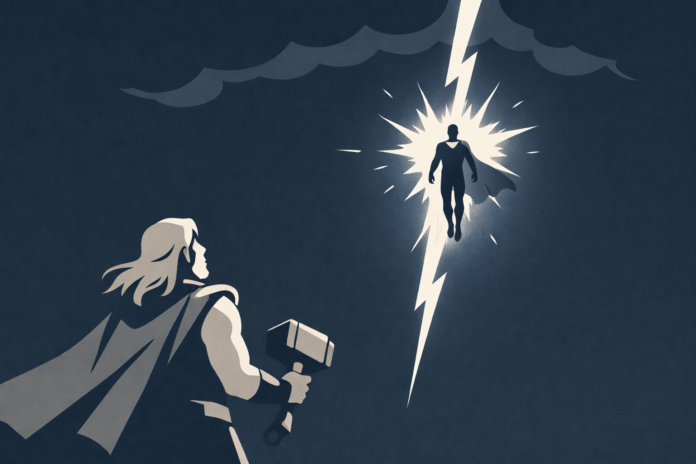
When Thor Tried to Teach Superman About โ€œReal Thunderโ€

0

โšก

It started, as most legendary incidents do, with a misunderstandingโ€ฆ and a little ego.


Thor Odinson โ€” the God of Thunder, wielder of Mjรถlnir, part-time Avenger โ€” was enjoying a dramatic lightning storm over Metropolis. Dark clouds. Thunder cracks. Cinematic entrance. Very on-brand.

Suddenly, a red-and-blue blur zipped past him.

โ€œNice weather effects,โ€ said Superman casually, hovering mid-air. โ€œIs this for a movie or something?โ€

Thor blinked.

โ€œI am not special effects,โ€ he boomed. โ€œI am the storm.โ€

Superman smiled politely. โ€œRight. Of course. My bad.โ€

And thatโ€™s when Thor decided this alien farm boy needed a smallโ€ฆ educational demonstration.


The Demonstration

Thor spun Mjรถlnir. Lightning exploded across the sky. Windows rattled. Car alarms panicked. Somewhere, a cat reconsidered its life choices.

Thor shouted, โ€œBehold! The fury of Asgard!โ€

Superman crossed his arms. โ€œThatโ€™s adorable.โ€

Adorable.

Thor nearly dropped his hammer.

With theatrical intensity, Thor summoned the largest thunderbolt he could muster โ€” a blinding pillar of electricity crashing directly onto Superman.

The city gasped.

Smoke cleared.

Superman was standing there.

Not fried.
Not even mildly toasted.

His cape fluttered slightly.

โ€œThat tickled,โ€ he said. โ€œDo it again.โ€


The Ego Crisis

Thor floated down, visibly confused.

โ€œYouโ€ฆ felt nothing?โ€

โ€œWell,โ€ Superman shrugged, โ€œI once sneezed and accidentally moved a planet. This is kind of like static electricity.โ€

Thor stared at Mjรถlnir.

Mjรถlnir stared back (metaphorically, but with judgment).

Thor muttered, โ€œPerhaps you are resistant to lightning.โ€

Superman grinned. โ€œYou want to see a trick?โ€

Before Thor could object, Superman flew into the upper atmosphere, inhaled deeply, and exhaled with such force that the storm clouds Thor had spent ten dramatic minutes arranging simplyโ€ฆ evaporated.

Clear skies.

Sunshine.

Birds resumed normal operations.

Thor slowly lowered his hammer.

โ€œYouโ€ฆ dispersed my storm.โ€

โ€œVitamin D is important,โ€ Superman said cheerfully.


The Unexpected Twist

Now mildly offended, Thor decided to escalate.

โ€œIf lightning does not humble you,โ€ he declared, โ€œperhaps worthiness will!โ€

He dramatically held out Mjรถlnir.

โ€œLift it.โ€

Superman hesitated. โ€œIsnโ€™t that rude?โ€

โ€œLift. It.โ€

Superman grabbed the hammer.

Nothing happened.

He pulled harder.

Still nothing.

He used both hands.

Thor smirked.

For the first time that day, Superman looked confused.

โ€œWhatโ€™s the trick?โ€

โ€œNo trick,โ€ Thor said proudly. โ€œOnly the worthy may wield Mjรถlnir.โ€

Superman scratched his head. โ€œI save planets. I rescue kittens. I recycle.โ€

Thor nodded. โ€œYes. But have you ever drunkenly challenged Hulk to arm wrestle at 3 a.m. out of sheer confidence?โ€

โ€œโ€ฆNo?โ€

โ€œThen you are not ready.โ€

Superman sighed. โ€œFair.โ€


The Real Winner

Just as tension was about to return, a small kid from Metropolis shouted from below:

โ€œHEY! CAN YOU GUYS STOP FLEXING AND HELP FIX THE BRIDGE?โ€

Both heroes looked down.

The bridge was collapsing.

Without another word, Thor and Superman moved.

Lightning reinforced steel beams.
Super-speed stabilized falling debris.
Cape and hammer worked in synchronized chaos.

Bridge saved.

Crowd cheered.

Thor looked at Superman.

Superman looked at Thor.

They both nodded.

โ€œLunch?โ€ Superman asked.

Thor grinned. โ€œOnly if you can handle Asgardian spice.โ€

Superman smirked. โ€œI eat solar radiation for breakfast.โ€

Thor blinked.

โ€œโ€ฆFair enough.โ€


Moral of the Incident

When a god of thunder meets a solar-powered alien, the real battle isnโ€™t strength.

Itโ€™s who gets the last dramatic line.

And that day?

The kid who yelled about the bridge won.

The Room With No Windows

0

In a quiet city surrounded by mountains and diplomacy, two nations sit across from each other at a long wooden table.

The room has no windows.

Not because windows donโ€™t exist โ€”
but because neither side wants to see whatโ€™s gathering outside.

On the table lies a single object:
a sealed box.

Inside it is not a weapon.
Inside it is not peace.

Inside it is possibility.

And possibility is heavier than both.


The Clock That Doesnโ€™t Tick

There is a clock on the wall.

It does not tick loudly.
It does not demand attention.

But everyone in the room hears it.

Because this clock does not measure minutes.

It measures restraint.

Every sentence spoken adds weight.
Every pause stretches tension.
Every carefully chosen word is a hand hovering above a red button that no one wants to press.


The Language of Rivals

They do not speak the same language.

Even when they use the same words.

โ€œSecurity.โ€
โ€œStability.โ€
โ€œPrevention.โ€
โ€œRights.โ€

Each word carries a different history depending on who holds it.

To one side, security means containment.

To the other, security means survival.

And survival is not negotiable.


The Invisible Audience

Outside the room, the world leans forward.

Markets pause.
Allies whisper.
Critics sharpen their predictions.

Some hope for compromise.
Some expect collapse.
Some prepare for escalation.

But inside the room, the silence is thicker than any headline.

Because diplomacy is not performed for applause.

It is performed under pressure.


The Box on the Table

No one touches the box.

Not directly.

Instead, they circle it with proposals.
They measure it with conditions.
They weigh it against consequences.

The box represents trust.

And trust is the only thing neither side can demand.

It must be built.

Or broken.


The Shadow in the Corners

Every negotiation carries a shadow.

In this room, the shadow is not just disagreement.

It is memory.

Past deals.
Broken promises.
Sanctions.
Threats.
Withdrawals.
Warnings.

History sits in the corner like a silent witness.

It does not speak.

But it never leaves.


The Paradox of Power

Both sides are powerful.

Both sides are vulnerable.

Power says: โ€œI can withstand pressure.โ€

Vulnerability whispers: โ€œI cannot afford miscalculation.โ€

The paradox is simple:

The stronger you are,
the more dangerous a mistake becomes.


The Third Chair

There is an empty chair at the table.

It represents something neither side names directly.

War.

It does not sit down.
It does not interrupt.

But it is always invited.

And the purpose of the meeting is not just agreement.

It is to ensure that chair remains empty.


The Mountains Outside

Though the room has no windows, the mountains remain.

Silent.
Unmoved.
Indifferent to tension.

They have seen empires rise and dissolve.
They have watched treaties signed and shattered.

They know something the negotiators do not:

No nation wins a war against consequences.


The Fragile Middle

This is not a story about friendship.

It is not a story about trust.

It is a story about restraint.

About whether two rivals can stand at the edge of escalation
and choose dialogue instead of pride.

The fragile middle โ€”
between threat and compromise โ€”
is where the future is written.

Quietly.

Without applause.


The Real Question

The real question is not:

Who is right?

The real question is:

Who is willing to step back
before stepping too far?

Because the box on the table does not open itself.

It responds to pressure.

And in rooms like this,
the world is held together not by power โ€”
but by patience.


Where Can You Criticize Your Own Country โ€” And Not Be Punished?

0

Thereโ€™s a quiet question many people carry but rarely say out loud:

If I speak openly โ€” really openly โ€” about problems in my countryโ€ฆ will I be safe?

This isnโ€™t about complaining.

Itโ€™s about whether a society can handle self-examination.

Because the ability to criticize your own country isnโ€™t a weakness.

Itโ€™s a measure of its confidence.


The Difference Between Love and Loyalty

In some places, loyalty means silence.

In others, loyalty means honesty.

One model says:

โ€œIf you love your country, donโ€™t speak badly about it.โ€

The other says:

โ€œIf you love your country, help improve it โ€” even if that means criticizing it.โ€

The difference shapes entire cultures.


What Makes Open Criticism Possible?

Not every country that claims โ€œfreedomโ€ actually protects criticism in practice.

True openness usually depends on three pillars:

1. Constitutional Protection of Speech

Clear legal rights to express dissent.

2. Independent Courts

So laws canโ€™t be used to silence critics unfairly.

3. Independent Media

Journalists who can question power without retaliation.

Without these, criticism becomes selective.

Allowed in theory. Risky in practice.


Countries Known for Strong Open Debate

Certain countries are widely recognized for protecting criticism of their own systems.

๐Ÿ‡บ๐Ÿ‡ธ United States

The First Amendment strongly protects free speech.
Presidents, military decisions, and policies are openly criticized daily.
Political satire is normal.

Limits exist โ€” such as incitement to violence โ€” but strong criticism of the state is common.


๐Ÿ‡ฉ๐Ÿ‡ช Germany

Open debate is deeply embedded in modern German culture.
Government policies are regularly challenged.
Public reflection โ€” even harsh reflection โ€” is normalized.

However, there are strict laws against hate speech and extremist propaganda.


๐Ÿ‡ณ๐Ÿ‡ฑ Netherlands

Blunt discussion is culturally common.
Citizens openly debate immigration, religion, and national identity.
Directness is socially tolerated.


๐Ÿ‡ณ๐Ÿ‡ด ๐Ÿ‡ธ๐Ÿ‡ช ๐Ÿ‡ฉ๐Ÿ‡ฐ Nordic Countries

High press freedom.
Strong institutional transparency.
Criticism is often calm but direct.


๐Ÿ‡จ๐Ÿ‡ฆ Canada & ๐Ÿ‡ฌ๐Ÿ‡ง United Kingdom

Active media criticism of leadership.
Public debate around policy and identity.
Strong civil society traditions.


The Cultural Layer Most People Miss

Legal freedom doesnโ€™t always mean social comfort.

In some countries:

  • Youโ€™re legally allowed to criticize.
  • But socially pressured not to.

In others:

  • Debate is loud, chaotic, even aggressive.
  • But fully protected.

Freedom has both a legal dimension and a cultural dimension.


Where Criticism Is Riskier

In some countries, openly criticizing:

  • The head of state
  • The ruling party
  • National security decisions
  • Religious or cultural foundations

Can lead to legal or professional consequences.

The severity varies widely by region.

The key difference is whether power tolerates being questioned.


Why This Matters More Than You Think

A country that allows criticism:

  • Signals institutional confidence
  • Reduces underground resentment
  • Encourages policy improvement
  • Builds intellectual maturity

A country that suppresses criticism:

  • May preserve surface unity
  • But risks long-term stagnation

History repeatedly shows that systems which can self-correct survive longer.


The Real Question Isnโ€™t โ€œWhich Country?โ€

Itโ€™s:

Do you value stability more โ€” or open expression more?

Some people prefer structured order, even with limits.
Others prefer messy debate, even with tension.

There is no universal answer.

Only alignment with your personality and priorities.


Final Reflection

The ability to criticize your own country safely is not about negativity.

Itโ€™s about psychological safety at a national level.

When citizens can say:

  • โ€œThis policy isnโ€™t working.โ€
  • โ€œThis system needs reform.โ€
  • โ€œWe can do better.โ€

Without fear โ€”

Thatโ€™s not weakness.

Thatโ€™s institutional maturity.

And in the long run, the countries that survive are often the ones strong enough to hear uncomfortable truths.


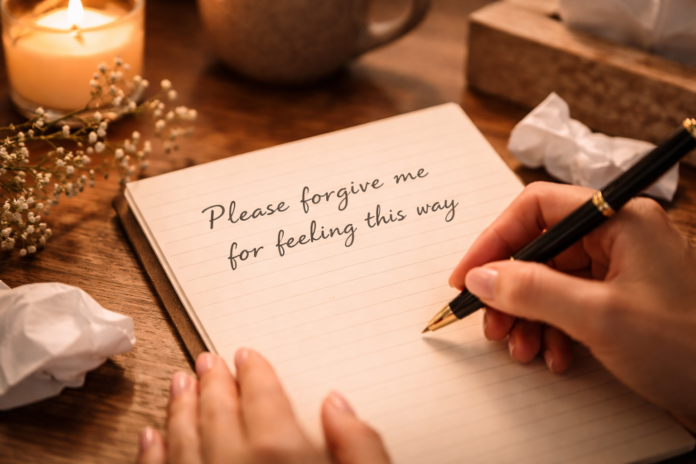
Please Forgive Me for Feeling This Way

0

The Hidden Weight of This Sentence

โ€œPlease forgive me for feeling this way.โ€

At first glance, it feels gentle.
Soft.
Non-confrontational.

But look closer.

You are asking forgiveness โ€” not for an action โ€”
but for an emotion.

And that changes everything.


What This Phrase Actually Signals

It can mean:

  • I donโ€™t want to upset you.
  • I feel uncomfortable expressing this.
  • I worry my emotions are inconvenient.
  • Iโ€™m afraid of being judged.

Sometimes itโ€™s vulnerability.

Sometimes itโ€™s self-erasure.


The Critical Distinction

Feelings are internal experiences.
Actions are external behaviors.

You may need forgiveness for:

  • Harsh words
  • Hurtful tone
  • Unfair accusations

But you do not need forgiveness for:

  • Feeling hurt
  • Feeling disappointed
  • Feeling overwhelmed
  • Feeling uncomfortable

Emotion โ‰  wrongdoing.


When Itโ€™s Healthy

Itโ€™s strong when:

  • Youโ€™re acknowledging emotional intensity.
  • You want to lower defensiveness.
  • Youโ€™re creating space for empathy.

Example:

โ€œPlease forgive me if my emotions came out strongly. Iโ€™m trying to explain how I feel.โ€

Notice whatโ€™s being owned: Expression โ€” not existence.


When It Becomes Emotional Self-Abandonment

It weakens your position when:

  • You apologize just for having feelings.
  • You believe your emotions are invalid.
  • You fear rejection.
  • You were genuinely hurt but minimize it.

That teaches people:

Your feelings are optional.

Theyโ€™re not.


The Emotional Integrity Frameworkโ„ข

Before saying this phrase, run this 4-step reset.


Step 1: Identify the Real Issue

Are you apologizing for:

  • The feeling? Or
  • How you expressed it?

Only one requires correction.


Step 2: Reframe the Language

Instead of:

โ€œPlease forgive me for feeling this way.โ€

Try:

โ€œThis is how Iโ€™m feeling. Iโ€™m not attacking you โ€” I just want to be honest.โ€

Clarity builds respect.


Step 3: Separate Guilt From Vulnerability

Guilt says:

โ€œI shouldnโ€™t feel this.โ€

Vulnerability says:

โ€œI feel this, and Iโ€™m sharing it calmly.โ€

Choose vulnerability.


Step 4: Maintain Emotional Spine

You can be soft without collapsing.

You can be calm without apologizing for your existence.

That balance creates psychological safety.


Opposite-Truth Ego Check

What would have to be true for the opposite to be correct?

Maybe:

  • You donโ€™t need forgiveness.
  • You need validation.
  • Or you need stronger boundaries.

Sometimes the real sentence should be:

โ€œI need you to understand how this affected me.โ€

No apology required.


Final Reflection

โ€œPlease forgive me for feeling this wayโ€
can be kindness.

But it should never be self-erasure.

Your feelings are data.
Your expression is choice.

Own the emotion.
Refine the delivery.
Stand steady.

Thatโ€™s emotional integrity.


I Regret That I Have to Bring This Up

0

The Emotional Weight of This Sentence

โ€œI regret that I have to bring this up.โ€

This isnโ€™t guilt.
Itโ€™s reluctance.

Youโ€™re communicating:

  • I didnโ€™t want this.
  • I would have preferred peace.
  • But silence is no longer responsible.

Thereโ€™s gravity in this phrase.

Used correctly, it creates seriousness.
Used poorly, it creates passive tension.


What This Phrase Really Means

It often translates to:

  • I tried to ignore this.
  • I hoped it would resolve itself.
  • I donโ€™t enjoy confrontation.
  • But it matters enough to address.

Thatโ€™s not weakness.

Thatโ€™s threshold crossing.


When Itโ€™s Powerful

Itโ€™s strong when:

  • Youโ€™ve given space before speaking.
  • The issue affects trust, performance, or respect.
  • Youโ€™re calm, not reactive.
  • Youโ€™re prepared to follow through.

Example:

โ€œI regret that I have to bring this up, but the pattern canโ€™t continue.โ€

Notice the firmness after the softness.


When It Becomes Passive-Aggressive

It weakens your position when:

  • It carries hidden blame.
  • Itโ€™s said with emotional charge.
  • It signals martyrdom.
  • You expect the other person to feel guilty.

Regret should communicate seriousness โ€” not superiority.


The Threshold Conversation Frameworkโ„ข

Before saying this phrase, run this 4-step calibration.


Step 1: Ask Why Now?

Why are you bringing it up at this moment?

  • Has a pattern formed?
  • Has a boundary been crossed?
  • Has the cost of silence increased?

Clarity strengthens tone.


Step 2: Check Emotional Temperature

If youโ€™re heated, pause.

Regret spoken in anger sounds like accusation.

Regret spoken calmly sounds like leadership.


Step 3: State the Issue Clearly

Donโ€™t let regret replace clarity.

Instead of:

โ€œI regret bringing this up.โ€

Say:

โ€œI regret that I have to bring this up, but hereโ€™s what Iโ€™m noticingโ€ฆโ€

Precision earns respect.


Step 4: Invite Resolution

After raising the issue, ask:

  • How do we prevent this?
  • Whatโ€™s your perspective?
  • What changes moving forward?

Regret should open resolution โ€” not end in tension.


Opposite-Truth Ego Check

What would have to be true for the opposite to be correct?

Maybe:

  • You donโ€™t regret bringing it up.
  • You regret not bringing it up sooner.
  • The discomfort is necessary growth.

Sometimes what we โ€œregretโ€
is simply courage in motion.


The Leadership Version

Strong communicators understand:

You can dislike confrontation
and still initiate it.

You can regret the necessity
without regretting the decision.

That balance builds authority.


Final Reflection

โ€œI regret that I have to bring this upโ€
is not an apology.

Itโ€™s a signal.

A signal that the issue matters.

Use it when you are steady.
Use it when you are prepared.
Use it when silence would cost more than speaking.

Thatโ€™s not conflict.

Thatโ€™s maturity.


I Apologize If I Misunderstood What Happened

0

The Subtle Power of This Phrase

โ€œI apologize if I misunderstood what happened.โ€

This sentence carries caution.
It signals openness.
It shows willingness to self-correct.

But it also reveals something deeper:

Youโ€™re unsure whether your perception is accurate.

And thatโ€™s not weakness.

Thatโ€™s intellectual humility.


What This Phrase Really Communicates

It can mean:

  • Iโ€™m open to being wrong.
  • I donโ€™t want to accuse unfairly.
  • I value clarity more than ego.
  • Letโ€™s re-examine this calmly.

Thatโ€™s emotionally mature behavior.

But hereโ€™s the danger:

If overused, it trains people to doubt you.


When Itโ€™s Strong

Itโ€™s powerful when:

  • Facts are unclear.
  • Emotions escalated quickly.
  • You reacted before verifying.
  • You genuinely want truth over pride.

Example:

โ€œI may have misread the situation. I apologize if I misunderstood what happened. Can we clarify?โ€

Notice the confidence inside the humility.


When It Becomes Self-Erosion

It weakens you when:

  • You always assume youโ€™re wrong.
  • You apologize before hearing the full story.
  • You fear confrontation.
  • You were clearly disrespected โ€” but you doubt yourself.

Thatโ€™s not humility.

Thatโ€™s self-protection.


The Perception Check Frameworkโ„ข

Before using this phrase, run these 4 filters.


Step 1: Evidence Audit

Ask yourself:

  • What do I know for sure?
  • What am I inferring?

Separate observable facts from emotional conclusions.


Step 2: Emotional Amplifier Check

Was your reaction amplified by:

  • Stress?
  • Past wounds?
  • Fatigue?
  • Accumulated frustration?

Sometimes intensity distorts clarity.


Step 3: Shared Reality Test

Instead of collapsing into apology, try:

โ€œHereโ€™s what I saw and how I interpreted it. Is that accurate?โ€

That invites alignment.


Step 4: Own Only Verified Error

If you were wrong โ€” own it fully.

If you were partially wrong โ€” own that portion.

If you werenโ€™t wrong โ€” stand steady.

Precision builds credibility.


Opposite-Truth Ego Check

What would have to be true for the opposite to be correct?

Maybe:

  • You didnโ€™t misunderstand.
  • You noticed a pattern others ignore.
  • You were right about the impact, wrong about the intent.

Most conflicts live in gray zones โ€” not black and white.


The Leadership Version

The strongest communicators say:

โ€œIf I misunderstood, Iโ€™m open to correction.โ€

That keeps your spine straight.

No groveling.
No defensiveness.
No ego.

Just clarity.


Final Reflection

โ€œI apologize if I misunderstood what happenedโ€
is healthy when it comes from strength.

Not fear.
Not insecurity.
Not habit.

Humility without self-erasure.
Openness without collapse.

Thatโ€™s emotional intelligence in action.


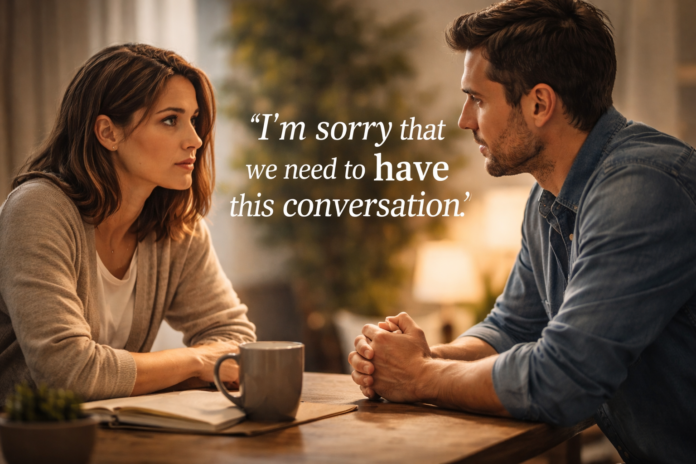
Iโ€™m Sorry That We Need to Have This Conversation

0


The Weight Behind the Sentence

โ€œIโ€™m sorry that we need to have this conversation.โ€

This isnโ€™t an admission of guilt.
Itโ€™s an admission of discomfort.

Youโ€™re acknowledging that something isnโ€™t smooth.
That tension exists.
That the topic may be heavy.

And sometimes, that humility softens the room.

But sometimesโ€ฆ it shrinks you.


What This Phrase Actually Communicates

It can mean:

  • I donโ€™t enjoy conflict.
  • I value this relationship.
  • I wish this wasnโ€™t necessary.
  • I donโ€™t want you to feel attacked.

All of that is human.

But hereโ€™s the hidden risk:

You might be apologizing for having boundaries.


When Itโ€™s Healthy

Itโ€™s strong when:

  • The relationship matters.
  • The topic is emotionally sensitive.
  • Youโ€™re leading with empathy, not fear.
  • Youโ€™re not surrendering your position.

Example:

โ€œIโ€™m sorry that we need to have this conversation, but I think itโ€™s important.โ€

Notice the structure: Empathy first.
Clarity next.


When It Becomes Self-Minimizing

It weakens you when:

  • You feel guilty for speaking up.
  • You fear being disliked.
  • You are pre-blaming yourself.
  • You hope apology will reduce backlash.

In that case, the sentence isnโ€™t empathy.

Itโ€™s armor.


The Necessary Conversation Frameworkโ„ข

Before using that phrase, run this 4-step reset:


Step 1: Check Your Intention

Are you apologizing because:

  • You caused harm? Or
  • Youโ€™re addressing harm?

Only the first requires guilt.


Step 2: Separate Discomfort From Wrongdoing

Hard conversations โ‰  wrongdoing.

Growth conversations often feel uncomfortable.

That doesnโ€™t make them wrong.


Step 3: Upgrade the Language

Instead of:

โ€œIโ€™m sorry we need to talk about this.โ€

Try:

โ€œThis might be uncomfortable, but itโ€™s important.โ€

Thatโ€™s leadership tone.


Step 4: Stay Grounded After the Opening

Donโ€™t soften so much that your message dissolves.

Empathy should open the door.

Not close your voice.


The Opposite-Truth Check

What would have to be true for the opposite to be correct?

Maybe:

  • You donโ€™t need to apologize at all.
  • The conversation is overdue.
  • The other person benefits from clarity too.

Sometimes the strongest version is:

โ€œWe need to talk about something important.โ€

No apology.

Just maturity.


Final Reflection

โ€œIโ€™m sorry that we need to have this conversationโ€
is powerful when it reflects respect.

Itโ€™s weak when it reflects fear.

The difference isnโ€™t in the words.

Itโ€™s in your posture.

Have the conversation.
Stand steady.
Lead with empathy โ€” not self-erasure.


Iโ€™m Sorry If I Misunderstood Your Intent โ€” But Letโ€™s Look Deeper

0

โ€œIโ€™m sorry if I misunderstood your intent.โ€

It sounds polite.
Mature.
Diplomatic.

But beneath that sentence, there are usually two silent fears:

  • Did I overreact?
  • Am I being unfair?

Sometimes itโ€™s humility.
Sometimes itโ€™s self-doubt disguised as accountability.

Letโ€™s unpack it.


The Psychology Behind the Phrase

When you say this, one of three things is usually happening:

1. You Value Fairness

You donโ€™t want to accuse someone unfairly.
Youโ€™d rather check your interpretation than escalate conflict.

Thatโ€™s emotional intelligence.


2. You Fear Being โ€œToo Muchโ€

Maybe youโ€™ve been labeled:

  • Overthinking
  • Dramatic
  • Sensitive

So you soften yourself preemptively.

The apology becomes protection.


3. Youโ€™re Trying to Repair Quickly

Conflict makes you uncomfortable.
So you rush to neutralize tension โ€” even if youโ€™re not wrong.

Peace becomes more important than truth.


Hidden Layer Most People Miss

Intent and impact are not the same.

Someone may not intend harm.

But you may still experience harm.

Both realities can exist at the same time.

Saying โ€œI misunderstood your intentโ€ should not automatically erase your experience.


The Intentโ€“Impact Reset Frameworkโ„ข

Use this 5-step recalibration before apologizing.


Step 1: Separate Facts From Story

Fact: What was said or done.
Story: The meaning you attached to it.

Ask:

  • What did they literally say?
  • What did I assume it meant?

Step 2: Check for Projection

Are you reacting to:

  • The present moment?
    Or
  • A past memory resurfacing?

Sometimes we respond to history, not the person in front of us.


Step 3: Clarify Without Self-Erasure

Instead of:

โ€œSorry, I misunderstood.โ€

Try:

โ€œWhen you said X, I interpreted it as Y. Was that your intention?โ€

Thatโ€™s clarity, not collapse.


Step 4: Allow Two Truths

Itโ€™s possible that:

  • They didnโ€™t mean harm.
  • And it still felt hurtful.

Communication improves when both are acknowledged.


Step 5: Own Only Whatโ€™s Yours

If you truly misread โ€” own it confidently.

If you were dismissed โ€” donโ€™t shrink to protect their comfort.

Accountability โ‰  self-blame.


Common Traps

  • Apologizing before understanding
  • Assuming youโ€™re always the one who misunderstood
  • Confusing humility with self-minimization
  • Using apology to avoid hard conversations

Politeness without boundaries becomes self-abandonment.


Opposite-Truth Ego Check

What would have to be true for the opposite to be correct?

Maybe:

  • You didnโ€™t misunderstand.
  • You noticed something real.
  • Or you partially misunderstood and partially sensed truth.

Rarely is it 100% one side.


The Real Strength

Strong communicators donโ€™t rush to apologize.

They:

  • Clarify calmly
  • Validate impact
  • Invite explanation
  • Adjust only when necessary

Thatโ€™s maturity.

Not defensiveness.
Not submission.
Not aggression.


Final Thought

โ€œIโ€™m sorry if I misunderstood your intentโ€
should come from clarity โ€” not insecurity.

Apologize when itโ€™s accurate.

Clarify when itโ€™s uncertain.

Stand firm when itโ€™s valid.

Because healthy communication isnโ€™t about being right.

Itโ€™s about being honest โ€” without shrinking yourself.


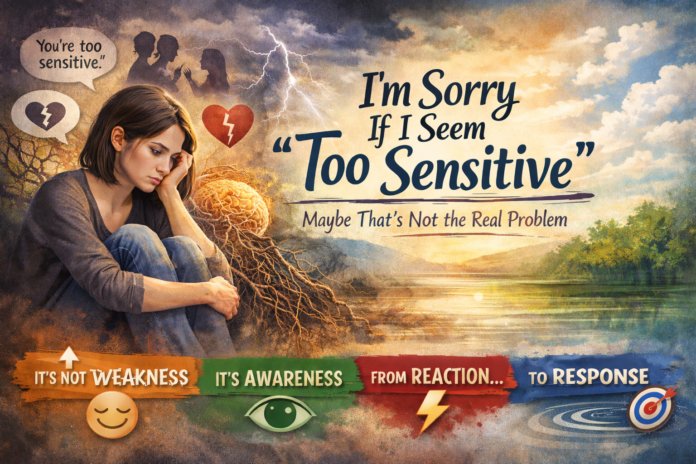
Iโ€™m Sorry If I Seem โ€œToo Sensitiveโ€ โ€” But Maybe Thatโ€™s Not the Real Problem

0

โ€œIโ€™m sorry if I seem overly sensitiveโ€ฆโ€

That sentence usually doesnโ€™t come from arrogance.

It comes from someone who has been told โ€” directly or indirectly โ€”
that their feelings are inconvenient.

Maybe you reacted strongly to a comment.
Maybe a joke didnโ€™t feel funny.
Maybe you noticed a tone shift no one else did.
And suddenly youโ€™re apologizing for feeling.

But hereโ€™s the deeper question:

Are you actually too sensitive โ€”
or are you simply aware?


The Real Problem Most People Miss

When someone says โ€œyouโ€™re too sensitive,โ€ one of three things is usually happening:

1. Emotional Mismatch

You feel deeply.
They process lightly.

You experience intensity.
They experience surface.

Itโ€™s not weakness โ€” itโ€™s difference.


2. Unresolved Triggers

Sometimes sensitivity is a signal.

It may connect to:

  • Past rejection
  • Feeling unheard
  • Fear of abandonment
  • Repeated dismissal

The reaction isnโ€™t about the moment.
Itโ€™s about accumulated memory.


3. Boundary Detection

Sensitive people often detect subtle disrespect early.

Tone shifts.
Energy changes.
Micro-expressions.

What others ignore, you register.

And sometimes what you call โ€œoverreactingโ€
is actually your nervous system saying:

โ€œSomething feels off.โ€


Hidden Root Causes Most Blogs Donโ€™t Talk About

  • Growing up in emotionally unpredictable environments
  • Being praised only for performance, not feelings
  • Being the โ€œpeacekeeperโ€ child
  • Chronic self-silencing to avoid conflict

Over time, emotions get compressed.

Then one small comment releases pressure โ€”
and you look โ€œdramatic.โ€

But the reaction didnโ€™t start today.


The Sensitivity Reframe Frameworkโ„ข

Instead of suppressing your emotional response, use this 5-step recalibration model.


Step 1: Pause the Apology Reflex

Before saying โ€œsorry Iโ€™m sensitive,โ€ ask:

  • Did I violate a boundary?
  • Or did I simply express discomfort?

Thereโ€™s a difference.


Step 2: Separate Emotion from Expression

Emotion = valid
Expression = adjustable

You can feel deeply
without reacting destructively.


Step 3: Run the Opposite-Truth Test

What would have to be true for the opposite to be correct?

Maybe:

  • They didnโ€™t intend harm.
  • Youโ€™re reading threat where none exists.
  • Or youโ€™re right โ€” and minimizing it.

Challenge yourself gently.


Step 4: Clarify Instead of Collapse

Instead of:

โ€œSorry, Iโ€™m just sensitive.โ€

Try:

โ€œWhen that was said, it landed differently for me. Can we clarify?โ€

Thatโ€™s assertive, not fragile.


Step 5: Build Emotional Strength, Not Emotional Armor

Armor blocks everything.
Strength filters wisely.

Develop:

  • Self-awareness
  • Nervous system regulation
  • Clear boundaries
  • Calm communication

Sensitivity becomes perception โ€” not panic.


Common Traps to Avoid

  • Turning every discomfort into self-blame
  • Gaslighting yourself before others do
  • Believing โ€œstrongโ€ means emotionally numb
  • Thinking being quiet equals maturity

Silence is not strength.
Awareness is.


Ego Check Section

What if youโ€™re not โ€œtoo sensitiveโ€?

What if youโ€™re under-skilled at regulating intensity?

Those are not the same.

Sensitivity is raw data.
Regulation is skill.

One is natural.
The other is trainable.


The Real Truth

The world doesnโ€™t need fewer sensitive people.

It needs:

  • People who feel deeply
  • But respond intentionally
  • Who detect shifts
  • But communicate calmly
  • Who notice harm
  • But donโ€™t attack reflexively

Thatโ€™s emotional intelligence.

Not emotional weakness.


Final Thought

Stop apologizing for feeling.

Start mastering how you use those feelings.

Sensitivity, when disciplined, becomes:

  • Intuition
  • Creativity
  • Leadership awareness
  • Relational depth

And the right people wonโ€™t ask you to shrink it.

Theyโ€™ll value it.


The Half-Second That Runs Your Life

0

Most people believe they are conscious of their decisions.

But neuroscience quietly disagrees.

There is a half-second โ€” sometimes even less โ€” between when your brain decides and when you think you decided.

That invisible gap is where most of your life is shaped.

And almost nobody notices it.


The Half-Second Before โ€œYouโ€

In the 1980s, neuroscientist ran experiments that shook the idea of free will.

He found that brain activity (called the readiness potential) began milliseconds before participants reported consciously choosing to move.

Your brain initiates.

Your awareness reports.

That means:

You donโ€™t decide first.
You become aware of a decision already forming.

Half a second late.


Why This Matters More Than You Think

That half-second is not just about lifting a finger.

It shows up when:

  • You snap at someone before thinking.
  • You scroll without intending to.
  • You feel jealous before reasoning.
  • You buy something impulsively.
  • You defend your ego automatically.

Your nervous system reacts.
Your consciousness justifies.

We think we are drivers.
Often, we are narrators.


The Real Problem Isnโ€™t the Delay

The problem isnโ€™t that the brain moves first.

The problem is that we rarely train the observer.

Most people live entirely inside reaction mode: Stimulus โ†’ Emotion โ†’ Action โ†’ Justification.

They never see the half-second.

They never question the impulse.

And so patterns repeat for years.


The Skill Nobody Teaches

What if the real power is not controlling every impulseโ€ฆ

โ€ฆbut noticing it before it turns into behavior?

Mindfulness researchers, including work influenced by , describe two systems of thinking:

  • Fast, automatic, emotional.
  • Slow, reflective, deliberate.

The half-second belongs to the fast system.

Growth begins when you train the slow one to step in.


A Real-World Example

Imagine someone criticizes you at work.

Half-second reaction: Heat in your chest.
Defensive thought.
Urge to interrupt.

Most people speak from that surge.

But if you expand awareness โ€” even by one breath โ€” you create space.

Space turns reaction into choice.

Choice changes outcomes.


The Three-Step Awareness Reset

If you want to reclaim that invisible half-second, practice this:

1. Catch the Body First

Emotions show up physically before mentally.
Notice tension, heat, tightness.

2. Label the Impulse

โ€œI feel defensive.โ€
โ€œI want to escape.โ€
โ€œI want to win.โ€

Naming reduces emotional intensity.

3. Delay by One Breath

One slow inhale.
One slow exhale.

That single breath interrupts the automatic loop.

It feels small.

But it rewires patterns over time.


The Hidden Truth

You may never stop your brain from initiating impulses.

But you can decide which impulses become identity.

The half-second is not a weakness.

It is a doorway.

Most people sleep through it.

A few people build their entire character inside it.


Final Thought

Consciousness doesnโ€™t mean controlling every thought.

It means witnessing the thought early enough to choose differently.

Your life is not built in dramatic moments.

It is built in microscopic pauses.

And sometimesโ€ฆ

All it takes is half a second.