Home Blog Page 22

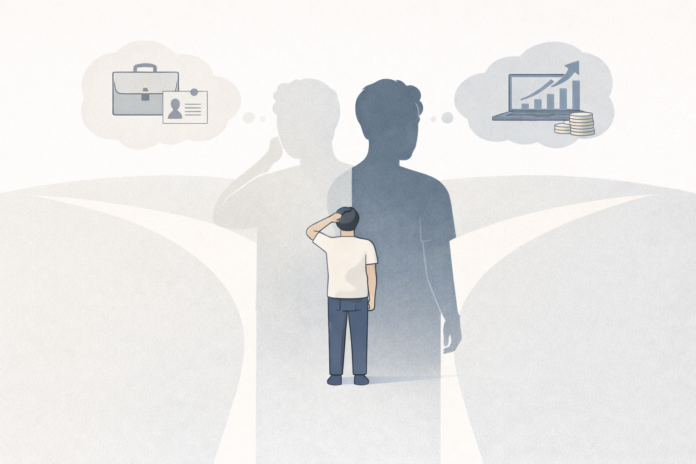
Entrepreneurial Identity Stress: The Psychological Cost No One Talks About

0

Most people prepare for business challenges.

Very few prepare for identity collapse.

Entrepreneurship does not only test your strategy.
It tests your sense of self.

And this is where many founders quietly break.

Not publicly.
Not dramatically.

Internally.


What Is Entrepreneurial Identity Stress?

Identity stress happens when:

  • Your old identity no longer fits.
  • Your new identity hasnโ€™t stabilized.
  • Your environment doesnโ€™t fully understand your shift.

You are no longer just:

  • An employee
  • A student
  • A predictable earner
  • A clearly defined role

But you are not yet:

  • Financially independent
  • Recognized
  • Stable
  • Certain

You exist in psychological transition.

And transition is uncomfortable.


The Invisible Pressure Layers

Entrepreneurial identity stress often includes:

1. Social Comparison

Watching others:

  • Get promotions
  • Earn steady income
  • Appear stable

While you experiment with uncertainty.

2. Internal Doubt

Thoughts like:

  • โ€œAm I capable?โ€
  • โ€œWhat if I fail publicly?โ€
  • โ€œWas this a mistake?โ€

3. Financial Anxiety

Even with runway, instability feels threatening.

4. Loss of Structure

No boss.
No deadlines.
No clear daily validation.

Freedom without structure can feel like chaos.


Why No One Talks About This

Because identity stress is not visible.

You can:

  • Post productivity updates.
  • Announce launches.
  • Share motivational quotes.

While internally questioning everything.

Entrepreneurship glamorizes output.

It rarely discusses psychological transition.


The Identity Gap Phase

There is a period where:

Your skills are improving.
Your income is unstable.
Your confidence fluctuates.
Your direction feels unclear.

This is not failure.

This is adaptation.

The brain resists identity change because stability equals safety.

When you choose entrepreneurship, you deliberately disrupt safety.

That disruption creates stress.


Signs Youโ€™re Experiencing Identity Stress

  • Overworking to prove yourself.
  • Avoiding progress because of fear.
  • Constant comparison.
  • Imposter feelings.
  • Mood swings tied to revenue.
  • Feeling isolated.

These are not signs of weakness.

They are signs of transition.


The Psychological Upgrade Required

Entrepreneurship requires building a new internal identity:

From:
โ€œI get paid for following instructions.โ€

To:
โ€œI create value and absorb uncertainty.โ€

From:
โ€œMy performance is evaluated.โ€

To:
โ€œI evaluate my own performance.โ€

From:
โ€œMy income is stable.โ€

To:
โ€œMy income reflects my systems.โ€

This shift takes time.

And time feels uncomfortable.


How to Reduce Identity Stress

1. Build Daily Structure

Even if self-employed:

  • Fixed work start time.
  • Defined review time.
  • Scheduled learning.

Structure stabilizes identity.

2. Track Process Metrics, Not Just Revenue

Measure:

  • Outreach sent.
  • Content created.
  • Skills improved.
  • Systems built.

Revenue is delayed feedback.
Process is immediate feedback.

3. Separate Self-Worth From Results

Your business is a system.
Not your personality.

4. Build a Small Founder Circle

Isolation magnifies doubt.
Shared experience normalizes it.

5. Accept the Transition Phase

You are rebuilding your professional identity.

Reconstruction always feels unstable before it feels solid.


The Founderโ€™s Internal Reality

The real entrepreneurial journey looks like:

Calm days.
Anxious days.
Confident weeks.
Doubtful weeks.

Progress is rarely linear.

Identity rarely upgrades smoothly.

But if you expect the stress โ€” it loses power over you.


The Hard Truth

Many quit not because the idea failed.

But because the identity shift felt too heavy.

They mistake psychological discomfort for strategic failure.

Those who survive understand:

This discomfort is part of the build.


Final Thought

Entrepreneurship is not just financial risk.

It is identity evolution.

If you prepare for the psychological cost โ€” not just the market โ€” you dramatically increase your durability.

Your systems protect your business.

Your identity stability protects you.

The 6-Month Runway Rule: Financial Survival Before Ambition

0

Most entrepreneurial advice starts with vision.

But vision without survival is delusion.

Before growth.
Before branding.
Before scaling.

There is one rule that separates strategic founders from emotional ones:

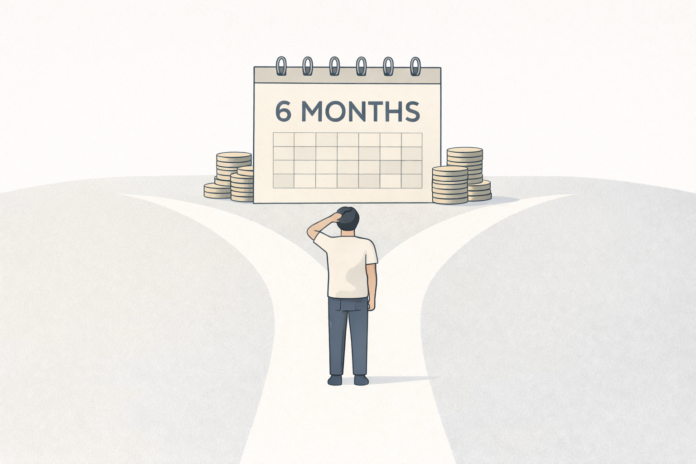
The 6-Month Runway Rule.

If you cannot survive six months without business income, you are not building โ€” you are gambling.


What Is a Runway?

Your runway is the number of months you can cover personal expenses without relying on new revenue.

It includes:

  • Rent / mortgage
  • Utilities
  • Food
  • Insurance
  • Transport
  • Minimum debt payments

Not lifestyle upgrades.
Not โ€œaspirationalโ€ costs.

Just survival.

If that number is not covered for at least six months, pressure will make your decisions for you.


Why Six Months?

Because entrepreneurship is nonlinear.

Revenue is rarely:

  • Immediate
  • Predictable
  • Smooth
  • Emotionally stable

The first months often look like:

  • Uncertainty
  • Testing
  • Low traction
  • Iteration
  • Silence

Without financial breathing room, that silence feels like failure.

And people quit.


The Psychology of Financial Pressure

When survival is threatened:

  • Your nervous system activates.
  • Your risk tolerance drops.
  • Your creativity narrows.
  • You accept bad deals.
  • You chase short-term cash.

Financial stress reduces strategic thinking.

It forces urgency.

Urgency destroys design.


Ambition Is Expensive

Ambition demands:

  • Focus
  • Emotional energy
  • Long-term planning
  • Calculated risk

But if your mind is calculating rent every night, ambition becomes anxiety.

Runway buys clarity.

Clarity buys better decisions.

Better decisions build better businesses.


The Common Mistake

Many founders say:

โ€œIโ€™ll build the runway after I start.โ€

This reverses the order.

Without runway:

  • You pivot too quickly.
  • You underprice.
  • You overwork.
  • You lose negotiation power.
  • You burn out early.

Survival must come before expansion.


How to Calculate Your Runway Properly

Step 1: Define your bare minimum monthly survival number.
Be honest. Strip ego.

Step 2: Multiply by six.

Step 3: That total becomes your runway target.

Step 4: Separate this from business capital.

Runway is not investment money.

It is psychological protection money.


What If You Donโ€™t Have Six Months Saved?

Then your first business move is not scaling.

It is stabilization.

Options include:

  • Keeping part-time income.
  • Reducing living expenses temporarily.
  • Delaying launch.
  • Testing small while employed.

This is not weakness.

It is strategic patience.


The Hidden Advantage of Runway

When you have six months secured:

  • You negotiate calmly.
  • You reject bad clients.
  • You think long-term.
  • You experiment intelligently.
  • You protect standards.

You operate from strength.

Not fear.


The Founderโ€™s Paradox

Many want freedom immediately.

But true freedom requires preparation.

Runway is not about money alone.

It is about removing desperation.

And desperation is the most expensive emotion in business.


Final Thought

Before building revenue systems, build survival systems.

Before ambition, build stability.

Before scale, build structure.

The 6-Month Runway Rule is not conservative.

It is strategic.

If you respect it, you dramatically increase your probability of lasting long enough to win.

How to Think Like a Systems Builder (Not a Hustler)

0

There are two types of entrepreneurs.

The hustler.

And the systems builder.

Both work hard.

Only one survives long-term.

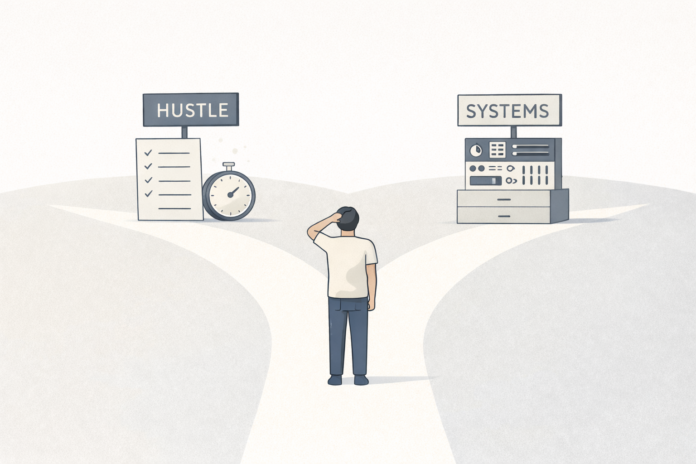
If you want stability, scalability, and psychological sustainability โ€” you must shift from hustle-thinking to system-thinking.

Because hustle creates motion.

Systems create momentum.


The Hustler Mindset

Hustlers operate on urgency.

They:

  • React quickly
  • Chase trends
  • Work long hours
  • Say yes to everything
  • Depend on intensity

Their progress feels fast.

But it is fragile.

If they stop pushing โ€” everything stops.

Hustle is effort-dependent growth.

When energy drops, revenue drops.


The Systems Builder Mindset

Systems builders think differently.

They ask:

  • What repeats?
  • What breaks?
  • What scales?
  • What drains?
  • What compounds?

Instead of asking,

โ€œHow can I do more?โ€

They ask,

โ€œHow can this run without me?โ€

They engineer processes that:

  • Reduce decision fatigue
  • Protect time
  • Automate recurring tasks
  • Filter opportunities
  • Standardize execution

Systems create stability.

Stability enables scale.


Why Hustle Feels Attractive

Hustle is visible.

It looks like:

  • Late nights
  • Big effort
  • Constant movement
  • Social media activity
  • Aggressive growth

It gives immediate psychological reward.

But it rarely builds infrastructure.

And without infrastructure, growth collapses under its own weight.


The Core Difference

Hustlers trade time for results.

Systems builders trade design for leverage.

Hustlers think in days.

Systems builders think in cycles.

Hustlers optimize effort.

Systems builders optimize structure.


The Shift From Hustle to Structure

To become a systems builder, change your default questions.

Instead of:

  • โ€œHow do I get more clients this week?โ€

Ask:

  • โ€œWhat client acquisition system can I design that runs weekly?โ€

Instead of:

  • โ€œHow do I stay motivated?โ€

Ask:

  • โ€œWhat routine removes the need for motivation?โ€

Instead of:

  • โ€œHow do I work harder?โ€

Ask:

  • โ€œWhere is my process inefficient?โ€

Small mental shifts create structural upgrades.


The 5 Core Systems Every Founder Needs

1. Financial Tracking System

Clear monthly numbers.
Clear burn rate.
Clear runway.
No guessing.

2. Lead Generation System

Consistent input.
Not random bursts.

3. Decision Filter System

Pre-written criteria for:

  • New opportunities
  • Partnerships
  • Expenses
  • Time commitments

4. Weekly Review System

Structured reflection.
Metric review.
Risk detection.

5. Energy Protection System

Defined work hours.
Recovery windows.
Burnout detection triggers.

Without these, you are hustling.

With them, you are operating.


The Psychological Upgrade

Hustlers feel heroic.

Systems builders feel calm.

Hustlers experience constant pressure.

Systems builders experience controlled growth.

Hustlers chase intensity.

Systems builders build durability.

The ego loves hustle.

The future loves systems.


How to Start Thinking Like a Systems Builder Today

Step 1: Identify one repetitive task.
Step 2: Document the process.
Step 3: Simplify it.
Step 4: Automate or template it.
Step 5: Remove yourself from it gradually.

Then repeat.

System thinking compounds.


The Long-Term Advantage

Businesses donโ€™t fail because founders didnโ€™t try hard.

They fail because founders became the bottleneck.

If everything depends on your energy, your mood, your presence โ€” you are the weak point.

A system reduces dependence.

Reduced dependence increases scalability.


Final Thought

Hustle can start a business.

Only systems can sustain one.

Stop trying to be impressive.

Start trying to be engineered.

The One Word That Escalates Every Conflict (And What to Say Instead)

0

โ€œYou Alwaysโ€ฆโ€ โ€” And Just Like That, Itโ€™s a Fight

Youโ€™ve felt it.

The moment someone says:

โ€œYou never listen.โ€
โ€œYou always do this.โ€
โ€œYouโ€™re the problem.โ€

Even before the sentence finishes, your brain stops listening.

Youโ€™re no longer trying to understand.
Youโ€™re preparing your defense.

And hereโ€™s the uncomfortable truth:

When resolving conflict, one of the worst ways to open a conversation is with the word โ€œyou.โ€


Why โ€œYouโ€ Immediately Triggers Defensiveness

When a sentence begins with โ€œyou,โ€ it often sounds like:

  • Accusation
  • Blame
  • Character judgment
  • Attack

Even if that wasnโ€™t your intention.

The human brain is wired for self-protection.
When it hears โ€œYou didโ€ฆโ€ it translates it as:

โ€œIโ€™m being blamed.โ€

And when people feel blamed, they stop collaborating.

They start protecting.


The Real Problem: It Feels Powerful โ€” But It Backfires

Starting with โ€œyouโ€ feels strong.

It feels direct.

It feels like youโ€™re finally standing up for yourself.

But most of the time, it shuts the other person down.

And once someone feels attacked, logic disappears.


The Better Framework: Shift From โ€œYouโ€ to Structure

Instead of:

โ€œYouโ€™re always late.โ€

Use:

  1. State the behavior
  2. Explain the impact
  3. Request a change

But notice the subtle shift.

Instead of leading with โ€œyou,โ€ lead with the situation or your experience.


Real-Life Comparisons

โŒ Escalating Version:

โ€œYou never respect my time.โ€

โœ… Productive Version:

โ€œWhen meetings start late, it affects my schedule. Can we agree on a firm start time?โ€

See the difference?

The second version:

  • Focuses on behavior, not identity
  • Explains impact
  • Suggests a solution

No blame. No attack. Just clarity.


Workplace Example

โŒ โ€œYou keep changing the requirements.โ€
โœ… โ€œWhen the requirements change mid-project, it delays delivery. Can we finalize scope before starting?โ€

Now itโ€™s about workflow โ€” not ego.


Relationship Example

โŒ โ€œYou donโ€™t care about how I feel.โ€
โœ… โ€œI feel unheard when Iโ€™m interrupted. Can we take turns finishing our thoughts?โ€

Now itโ€™s about experience โ€” not accusation.


The Hidden Root Cause Most People Miss

Conflict escalates because both sides feel attacked.

But hereโ€™s the deeper truth:

Most people donโ€™t wake up thinking,
โ€œToday I will be difficult.โ€

They are:

  • Unaware
  • Stressed
  • Distracted
  • Operating from habit

When you start with โ€œyou,โ€ you activate their pride.

When you start with structure, you activate their logic.


Mistakes to Avoid

  1. Disguised blame
    โ€œI feel like you donโ€™t care.โ€ (Still starts with you.)
  2. Passive aggression
    โ€œItโ€™s fine. Iโ€™ll just do it myself.โ€ (Resentment builds.)
  3. Over-softening
    You donโ€™t need to beg to be respected.

The goal is calm clarity โ€” not emotional performance.


Opposite-Truth Check (Ego Challenge)

What if the conflict isnโ€™t because theyโ€™re difficultโ€ฆ

What if itโ€™s because your delivery triggers defense?

Hard truth:

The way you start a sentence determines how it ends.


The Empowered Conclusion

If you want to resolve conflict effectively:

Donโ€™t open with โ€œyou.โ€
Open with clarity.

Shift from:

โ€œYou did this.โ€

To:

โ€œWhen this happensโ€ฆโ€

And suddenly the conversation changes.

Youโ€™re no longer attacking.

Youโ€™re solving.

And people are far more willing to cooperate when they donโ€™t feel accused.

Calm. Structured. Strategic.

Thatโ€™s how adults handle conflict.

How to Handle Difficult People Without Losing Your Power

0

Youโ€™re Not Angry. Youโ€™re Exhausted.

Itโ€™s not one big fight.

Itโ€™s the small things.

The colleague who interrupts you.
The friend who cancels last minute.
The manager who criticizes without clarity.
The family member who pushes your boundaries โ€” again.

And every time it happens, you replay the conversation later thinking:

โ€œI should have said something.โ€

But in the moment, you either stay quietโ€ฆ
Or you react emotionally.

Neither works.

So hereโ€™s the real question:

How do you deal with difficult people without becoming difficult yourself?


The Real Problem: Most People Communicate Emotion, Not Structure

When someone frustrates you, your brain moves into survival mode:

  • Defend
  • Attack
  • Withdraw

You donโ€™t respond strategically.
You react emotionally.

Thatโ€™s why conversations escalate.

The solution isnโ€™t being โ€œnicer.โ€
Itโ€™s being structured.


The 3-Step Framework That Changes Everything

When dealing with difficult people:

  1. State the behavior
  2. Explain the impact
  3. Request a change or solution

Simple.
But powerful.

Letโ€™s break it down.


Step 1: State the Behavior (Not the Personality)

Focus on what they did, not who they are.

โŒ โ€œYouโ€™re disrespectful.โ€
โœ… โ€œYou interrupted me three times during the meeting.โ€

When you attack personality, people defend.

When you describe behavior, people listen.

Why This Works

It removes emotion and reduces defensiveness. Youโ€™re speaking facts, not accusations.


Step 2: Explain the Impact

Most difficult people donโ€™t see consequences. They only see their intention.

Your job is to explain impact calmly.

Example:

โ€œWhen the report comes in late, it delays my submission and makes the team look unprepared.โ€

Youโ€™re not blaming.
Youโ€™re clarifying.

Impact builds awareness.


Step 3: Request a Change or Solution

Without this step, youโ€™re just complaining.

Be specific.

โŒ โ€œYou need to do better.โ€
โœ… โ€œGoing forward, I need the report by 3 PM so I can finalize everything.โ€

Clear request = clear expectation.

And clarity removes drama.


Real-Life Scenarios

Workplace

โ€œWhen deadlines shift last minute, it affects my planning. Can we confirm timelines at least 24 hours in advance?โ€

Professional. Calm. Strategic.

Relationship

โ€œWhen Iโ€™m interrupted, I feel unheard. Can we let each other finish speaking?โ€

Respectful. Direct. Mature.

Networking or Business

โ€œWhen meeting times change without notice, it impacts my schedule. Can we confirm 12 hours prior?โ€

Boundaries without hostility.


The Hidden Root Cause Most Blogs Ignore

Difficult people often:

  • Donโ€™t notice their behavior
  • Donโ€™t realize impact
  • Test boundaries unconsciously

When you donโ€™t communicate clearly, you train them to continue.

Silence is permission.

Emotional reaction is entertainment.

Structure is power.


Common Mistakes to Avoid

  1. Over-explaining โ€“ Keep it simple.
  2. Adding emotion โ€“ Calm tone, steady energy.
  3. Apologizing for having boundaries โ€“ Youโ€™re not wrong for wanting respect.
  4. Waiting too long โ€“ Address patterns early.

Opposite-Truth Check (Ego Challenge)

What if the person isnโ€™t difficultโ€ฆ

What if youโ€™ve been unclear?

What if they think everything is fine because you never said otherwise?

Hard truth:
Many conflicts continue because we avoid discomfort.

Clarity feels uncomfortable โ€” but confusion costs more.


The Empowered Conclusion

Dealing with difficult people is not about winning arguments.

Itโ€™s about protecting your energy.

Itโ€™s about:

  • Staying calm under pressure
  • Communicating without attacking
  • Setting boundaries without drama

When you speak with structure, people either adjustโ€ฆ

Or they expose themselves clearly.

Either way โ€” you win.

Because you remain composed.

And composure is power.


The Discipline of Walking Away: Why Smart People Decide Their Exit Before They Begin

0

Weโ€™re taught to start strong.

To commit.
To push.
To persevere.

But almost no one teaches us how to stop.

And yet, one of the most powerful habits you can build โ€” in business, relationships, investing, or personal growth โ€” is this:

Pre-decide your quitting point before you start.

Not because you plan to fail.
But because you plan to think clearly.


Why Most People Quit Too Late

Quitting rarely feels rational in the moment.

It feels emotional.
It feels like defeat.
It feels like admitting you were wrong.

So instead of making a clean decision, we stay.

We stay in failing businesses because weโ€™ve โ€œalready invested so much.โ€
We stay in draining jobs because we donโ€™t want to โ€œlook unstable.โ€
We hold losing trades because โ€œit might come back.โ€
We stay in relationships long after respect has left the room.

Not because itโ€™s smart.

But because we didnโ€™t decide the exit rules before our emotions got involved.


The Problem Isnโ€™t Persistence โ€” Itโ€™s Undefined Limits

Persistence is valuable.

But persistence without boundaries becomes self-destruction.

When you start something without defining:

  • How much time youโ€™re willing to give it
  • How much money youโ€™re willing to risk
  • How much emotional energy youโ€™re willing to spend
  • What results must happen by when

โ€ฆyou are no longer being resilient.

You are gambling with your future.

And gambling feels brave โ€” until it becomes expensive.


Why Pre-Deciding Protects You From Yourself

When you define your quitting point early, you remove ego from the equation.

You are no longer deciding under pressure.
You are executing a decision you already made while calm.

This changes everything.

Because when things go wrong (and they often do), your brain will say:

  • โ€œJust give it a little more time.โ€
  • โ€œYou canโ€™t stop now.โ€
  • โ€œWhat will people think?โ€
  • โ€œYouโ€™ve already invested so much.โ€

But if youโ€™ve pre-decided your limits, the conversation is simple:

โ€œThe condition has been met. The plan says exit.โ€

No drama.
No identity crisis.
Just disciplined execution.


The Hidden Cost of Not Quitting

Thereโ€™s something most people miss.

When you refuse to quit something that isnโ€™t working, you are automatically quitting something else.

Time is finite.
Energy is finite.
Attention is finite.

Staying in the wrong thing quietly blocks the right thing.

Every year you hold onto a failing strategy is a year you didnโ€™t pivot to a better one.

Opportunity cost doesnโ€™t scream.
It whispers โ€” and compounds.


How to Define Your Quitting Point (Before You Start)

If you want this to become practical, use this simple structure before any major commitment:

1. Define the Time Limit

How long will you give this before reassessing objectively?

Not emotionally.
Not โ€œuntil it feels right.โ€
A real date.

2. Define the Capital Limit

What is the maximum financial loss youโ€™re willing to accept?

Write the number down.
When you hit it, you exit.

3. Define the Energy Threshold

What emotional signals tell you this is damaging your well-being?

Burnout.
Resentment.
Loss of curiosity.
Chronic stress.

These are not weaknesses. They are data.

4. Define the Performance Metrics

What measurable outcome must occur for you to continue?

Revenue?
Skill improvement?
Client growth?
Health markers?

No vague โ€œprogress.โ€
Clear indicators.

If those metrics arenโ€™t reached by the agreed timeline โ€” you pivot or stop.


Quitting Isnโ€™t Failure โ€” Itโ€™s Resource Reallocation

High-level thinkers donโ€™t see quitting as weakness.

They see it as portfolio management.

Your life is a portfolio.

Each project, job, goal, or commitment is an asset.

If one asset keeps draining capital and producing no return, reallocating is intelligence.

The strongest people are not the ones who endure the longest.

Theyโ€™re the ones who reallocate the fastest when evidence changes.


The Emotional Resistance You Will Face

Even if you plan well, quitting will still hurt.

Because humans attach identity to effort.

You donโ€™t just quit a project.
You quit the version of yourself who believed in it.

Thatโ€™s uncomfortable.

But growth requires updating your decisions when reality updates your information.

Staying just to protect your pride is the most expensive decision you can make.


A Quiet Power Move

Before your next big move โ€” a business idea, relocation plan, career pivot, fitness challenge, investment strategy โ€” pause.

And ask:

  • What would make this irrational to continue?
  • At what point would I objectively stop?
  • What must be true for me to keep going?

Write it down.

Seal it.

Respect it later.

That small discipline can save you years.


Final Thought

Starting takes courage.

But structured stopping takes wisdom.

You donโ€™t lose when you quit strategically.

You lose when you refuse to think clearly because quitting feels uncomfortable.

Decide your exit while youโ€™re calm.

So when things get emotional, your clarity is already waiting for you.

The Quiet Power of Being Unimpressive

0

Thereโ€™s a strange pressure in todayโ€™s world:
Be impressive.
Be exceptional.
Be extraordinary โ€” publicly.

But what if real wisdom isnโ€™t loud?

What if the strongest lives are built quietly โ€” without applause?

Letโ€™s explore something most people overlook:

The power of being unimpressive on purpose.


The Hidden Exhaustion of Performance Living

Many people are not tired because they are working hard.

They are tired because they are performing hard.

  • Performing confidence.
  • Performing success.
  • Performing intelligence.
  • Performing happiness.

When your energy goes into managing perception, thereโ€™s very little left for actual growth.

And hereโ€™s the irony:

The people who look the most stable often have the least need to look stable.


Quiet Growth Doesnโ€™t Look Dramatic

Think about how most meaningful change actually happens.

Muscle doesnโ€™t grow during the workout.
It grows quietly after.

Trust doesnโ€™t build in one speech.
It builds through small, repeated consistency.

Wisdom doesnโ€™t arrive with fireworks.
It forms slowly through reflection.

The problem?

Quiet growth is invisible โ€” so most people abandon it too early.

They chase visible validation instead.


The Discipline of Not Explaining Yourself

Thereโ€™s a certain maturity in not over-explaining.

Not every decision needs a justification. Not every move needs an announcement. Not every boundary needs a speech.

When you constantly explain yourself, youโ€™re asking for permission.

When you move calmly and consistently, youโ€™re operating from alignment.

Silence is not weakness.
Itโ€™s often clarity.


Slow Builders Outlast Fast Starters

In business, relationships, health, and reputation โ€” the pattern is similar:

Fast starters gain attention.
Slow builders gain durability.

Fast starters rely on motivation.
Slow builders rely on systems.

Fast starters peak early.
Slow builders compound.

The wisdom is simple:

If you want a strong life, design it to last โ€” not to impress.


What Being โ€œUnimpressiveโ€ Really Means

It doesnโ€™t mean lacking ambition.

It means:

  • Not needing applause.
  • Not forcing visibility.
  • Not chasing comparison.
  • Not reacting to every external signal.

It means building your internal world so strong that external noise becomes optional.

That kind of stability is rare.

And rare things are valuable.


The Real Test of Strength

Can you:

  • Improve without announcing it?
  • Win without posting it?
  • Grow without comparing?
  • Learn without proving?

If yes โ€” you are building something durable.

If no โ€” you may still be building for an audience.

And audiences are unstable foundations.


A Quiet Challenge

For the next 30 days:

Improve one area of your life without telling anyone.

No social posts.
No public accountability announcements.
No subtle bragging.

Just consistent action.

Then observe something powerful:

The confidence you gain from private discipline feels very different from public praise.

One is fragile.
The other is foundational.


Final Reflection

Wisdom is rarely dramatic.

It is patient.
It is quiet.
It is consistent.

The loud world will continue performing.

But the steady ones?

They will keep building.

And one day, what looked โ€œunimpressiveโ€ will quietly become undeniable.


Sometimes the strongest move is the one nobody notices.

And thatโ€™s the point.

How to Become a Real Estate Agent (And Actually Succeed in It)

0

You see the commissions. You donโ€™t see the pressure.

Luxury listings.
Flexible schedule.
Big commission checks.

It looks simple from the outside.

Then you hear the other side:

No guaranteed salary.
Cold leads.
Unanswered calls.
Months without closing.

So whatโ€™s the truth?

Real estate isnโ€™t easy money.
Itโ€™s leveraged relationships.

And if you understand that from the beginning, you can build it strategically.


What Being a Real Estate Agent Really Means

A real estate agent is not just someone who shows houses.

You are:

  • A negotiator
  • A marketer
  • A relationship builder
  • A local market analyst
  • A trust manager

Your product isnโ€™t property.

Itโ€™s confidence.

If clients trust you, they transact through you.

If they donโ€™t, they disappear.


Why Most New Agents Fail

1. They Expect Quick Money

The first 3โ€“6 months are usually slow.

Many quit before momentum starts.

Real estate rewards consistency, not excitement.


2. They Focus on Listings Before Relationships

New agents chase listings.

Top agents build networks.

Your network becomes your pipeline.


3. They Donโ€™t Build a Personal Brand

In competitive markets (like Dubai, Spain, or Germany), hundreds of agents exist.

Without visibility, you become invisible.


The Hidden Root Cause

Most people treat real estate like a job.

Itโ€™s actually a client acquisition business.

If you donโ€™t learn marketing, follow-up, and positioning โ€” income stays unpredictable.

Skill alone doesnโ€™t close deals.

Visibility and trust do.


The Real Estate Entry Framework

Follow this structure if you want long-term success.


Step 1: Understand Licensing Requirements in Your Country

Requirements vary by location.

For example:

  • In the UAE (Dubai), agents must register with (RERA) and obtain certification.
  • In the United States, licensing is state-based and requires coursework + exams.
  • In Spain, regulations vary by region but formal registration and compliance are required.
  • In Germany, agents must register under local trade laws and may require permits under ยง34c GewO.

Always verify your local legal framework before starting.

This is your foundation.


Step 2: Choose the Right Brokerage

Your first brokerage matters more than your first deal.

Look for:

  • Training programs
  • Mentorship
  • Lead support
  • Marketing support
  • Reputation

A strong brokerage shortens your learning curve.


Step 3: Master Local Market Knowledge

You must know:

  • Average property prices
  • Rental yields
  • Popular neighborhoods
  • Buyer demographics
  • Market trends

Clients donโ€™t just want access.

They want clarity.

Become the clarity.


Step 4: Build a Daily Lead Generation Habit

No leads = no income.

Daily actions should include:

  • Contacting past contacts
  • Posting valuable market insights online
  • Attending networking events
  • Following up on old inquiries

Real estate is follow-up.

Most deals close after multiple touchpoints.


Step 5: Develop Negotiation and Emotional Intelligence

Buying or selling property is emotional.

Clients fear:

  • Overpaying
  • Selling too low
  • Making mistakes

Your job is to manage emotions calmly.

Confidence converts.


Mistakes That Kill Early Careers

  • Waiting for brokerage-provided leads
  • Spending commission before it arrives
  • Not saving for dry months
  • Focusing only on luxury without pipeline
  • Ignoring personal branding

Treat it like a business from day one.


The Opposite-Truth Ego Check

What if youโ€™re not ready for real estate yet?

Are you comfortable with:

  • Rejection?
  • Inconsistent income?
  • Long hours?
  • Commission-only risk?

If the answer scares you โ€” thatโ€™s good.

Awareness prevents regret.


Income Reality

Real estate income varies massively.

First-year agents often struggle.

Second-year agents with systems begin to stabilize.

Top producers focus on:

  • Repeat clients
  • Referrals
  • Niche specialization

The money follows structure.


Final Thought: Itโ€™s a Long Game

Real estate is not about closing one deal.

Itโ€™s about building reputation.

Reputation compounds.

If you commit for 2โ€“3 years with discipline,
your pipeline becomes predictable.

And predictable pipeline becomes financial freedom.

Not instantly.

Strategically.


Why Dating Apps Feel So Exhausting (And How to Use Them Without Losing Yourself)

0

You download the app with hope. You delete it with frustration.

At first, itโ€™s exciting.

New faces.
New possibilities.
The idea that maybe, finally, youโ€™ll meet someone aligned.

Then weeks pass.

Endless swiping.
Dry conversations.
Ghosting.
Matches that go nowhere.

You start questioning yourself.

โ€œIs it me?โ€
โ€œAm I not attractive enough?โ€
โ€œWhy does this feel so transactional?โ€

Dating apps arenโ€™t just tools.
They quietly shape your psychology.

And most people donโ€™t realize how.


Why Dating Apps Drain You

1. Psychological Layer: Infinite Choice Paradox

When options feel unlimited, commitment feels unnecessary.

Both sides think: โ€œThere might be someone better one swipe away.โ€

This creates:

  • Shallow engagement
  • Low effort conversations
  • Quick emotional detachment

Youโ€™re not dating one person.
Youโ€™re competing with invisible alternatives.


2. Environmental Layer: Gamified Attention

Swiping activates the same reward system as social media.

Match = dopamine spike.
Message = anticipation.
Notification = validation.

You begin chasing the feeling โ€” not the connection.

Over time, dating becomes performance.


3. Behavioral Layer: Fast Filtering, Slow Attachment

Apps encourage snap judgments:

  • 3 seconds per profile
  • One awkward message = discard
  • Minor flaw = swipe left

Real connection requires patience.

Apps reward speed.

That tension creates emotional fatigue.


The Hidden Root Cause Most People Miss

Itโ€™s not that dating apps โ€œdonโ€™t work.โ€

Itโ€™s that most people use them without boundaries.

No time limits.
No intention clarity.
No emotional filter.

When you donโ€™t define what you want, the algorithm defines it for you.

And algorithms prioritize engagement โ€” not compatibility.


The Intentional Dating Framework

Use apps strategically. Not emotionally.


Step 1: Define Your Intent Before You Download

Ask yourself:

  • Am I looking for serious commitment?
  • Casual dating?
  • Exploration?

If your intent is unclear, youโ€™ll attract confusion.

Clarity filters faster than attractiveness.


Step 2: Limit Your Exposure

Set a rule:

  • 20โ€“30 minutes per day max
  • No endless nighttime scrolling
  • No validation checking every hour

Protect your mental state.

Scarcity increases quality of interaction.


Step 3: Shift From Volume to Depth

Instead of:

  • 20 shallow conversations

Aim for:

  • 2 meaningful exchanges

Ask thoughtful questions.
Move to voice or video sooner.
Meet in real life safely when alignment appears.

Depth beats quantity.


Step 4: Watch for Effort Symmetry

Healthy connection shows:

  • Balanced texting
  • Mutual curiosity
  • Clear planning

If effort feels one-sided early, it rarely improves later.

Respect your time.


Step 5: Donโ€™t Internalize Rejection

People swipe for countless reasons:

  • Mood
  • Timing
  • Emotional availability
  • Personal issues

Rejection on apps is often logistical โ€” not personal.

Detach your worth from digital response.


Mistakes That Destroy Dating App Experience

  • Swiping when bored or lonely
  • Over-investing emotionally before meeting
  • Ignoring red flags for attraction
  • Talking for weeks without meeting
  • Comparing yourself to other profiles

Dating apps amplify insecurity if you let them.

Boundaries reduce that risk.


The Opposite-Truth Ego Check

What if dating apps arenโ€™t the problem?

What if the real issue is how youโ€™re using them?

Are you chasing validationโ€ฆ
Or seeking connection?

Are you reacting emotionallyโ€ฆ
Or choosing strategically?

Self-awareness changes everything.


The Reality: Apps Are Tools, Not Destiny

Dating apps can work.

But theyโ€™re marketplaces.

And marketplaces reward clarity, positioning, and patience.

If you treat them like entertainment, youโ€™ll feel exhausted.

If you treat them like a structured channel for meeting aligned people, they become manageable.


Final Thought: Protect Your Energy First

Connection should feel expansive, not draining.

Use apps as a gateway โ€” not your identity.

The goal isnโ€™t more matches.

Itโ€™s the right one.

And the right one wonโ€™t require you to perform.


How to Build Business Credit (Even If You’re Starting From Zero)

0

You want funding. But every door asks for history.

You register your company.
You open a bank account.
You start operating.

Then you apply for business credit โ€” and get declined.

โ€œInsufficient credit history.โ€

No one explains how to build it.
They just expect you to already have it.

Hereโ€™s the truth:
Business credit isnโ€™t about how big you are.
Itโ€™s about how structured you are.

And most founders skip structure.


What Business Credit Actually Is

Business credit is your companyโ€™s financial reputation.

It tells lenders, suppliers, and banks:

  • Do you pay on time?
  • Are you financially organized?
  • Are you stable or risky?

Unlike personal credit, business credit separates your company from your personal identity.

If built correctly, it allows you to:

  • Access higher credit limits
  • Negotiate better supplier terms
  • Secure funding without personal guarantees
  • Scale without draining personal savings

But you must build it intentionally.


Why Most Businesses Never Build Strong Credit

1. They Mix Personal and Business Finances

Using personal cards for business expenses keeps your company invisible in the credit system.

No visibility = no credit profile growth.


2. They Donโ€™t Establish Credit-Reporting Accounts

Not all vendors report to business credit bureaus.

If your payments arenโ€™t reported, they donโ€™t build your profile.

You could be paying on time for years โ€” and still have no business credit.


3. They Apply for Big Credit Too Early

Many founders apply for major bank credit immediately after registration.

Without trade history, approvals are unlikely.

Credit is built in layers.


The Hidden Root Cause

Most entrepreneurs focus on revenue.

Very few focus on financial credibility architecture.

Revenue grows the business.
Credit builds leverage.

Without leverage, growth slows.


The Business Credit Foundation Framework

Follow these steps in order. Skipping layers weakens the structure.


Step 1: Formalize Your Business Structure

  • Register your company legally (LLC, corporation, etc.)
  • Obtain your tax identification number
  • Open a dedicated business bank account
  • Use a professional business address and phone number

This establishes legitimacy.

Credit systems reward formality.


Step 2: Establish Your Business With Credit Bureaus

In many countries, major bureaus include:

  • Dun & Bradstreet
  • Experian Business
  • Equifax Business

Register your business profile and ensure information is accurate.

If they donโ€™t see you, they canโ€™t score you.


Step 3: Open Vendor (Net-30) Accounts That Report

Start small.

Apply for vendors that:

  • Offer Net-30 terms
  • Report payments to business credit bureaus

Make small purchases.
Pay early, not just on time.

Early payment strengthens your score.


Step 4: Add a Business Credit Card

Once trade lines are established:

  • Apply for a business credit card
  • Keep utilization under 30%
  • Pay balance in full monthly

Consistency builds trust.


Step 5: Build Credit Layers Gradually

Progression typically looks like:

Vendor accounts โ†’ Retail credit โ†’ Business credit cards โ†’ Lines of credit โ†’ Larger funding

Each layer strengthens your profile.

Patience compounds.


Mistakes That Damage Business Credit

  • Missing due dates (even once)
  • High credit utilization
  • Closing old accounts too early
  • Applying for too many credit lines at once
  • Ignoring your credit reports

Credit is reputation.
Reputation takes time to build โ€” seconds to damage.


The Opposite-Truth Ego Check

What if the problem isnโ€™t lack of funding?

What if the problem is lack of financial structure?

Many founders blame banks.

Few ask:
โ€œHave I made my business look fundable?โ€

Strong credit isnโ€™t luck.

Itโ€™s architecture.


Long-Term Advantage

Once established, strong business credit allows you to:

  • Separate personal and business risk
  • Access higher limits as revenue grows
  • Negotiate better supplier contracts
  • Scale strategically instead of emotionally

Credit gives optionality.

Optionality creates power.


Final Thought: Build Quietly, Scale Strategically

Business credit is not exciting.

It doesnโ€™t trend on social media.

But it creates stability behind the scenes.

While others chase funding,
you build eligibility.

And eligibility turns into leverage.