Exclusive Content:

How You Deal With People Defines What You Become

Most people think dealing with people is about being...

Why Do People Stay in Jobs They Hate for Years?

Every morning, millions of people wake up with the...

Power Talks Loud. The Cost Stays Silent.

The Truth No One Wants to Say Out Loud People...
Home Blog Page 32

Predator Intelligence: How Apex Predators Decide Whether You’re Worth the Energy

0

Introduction: Every Predator Runs an Energy Algorithm

In the wild, nothing attacks blindly.

Every apex predator—from bears to big cats—runs an internal calculation before engaging:

  • Is this a threat?
  • Is this competition?
  • Is this prey?
  • Is the reward worth the energy and risk?

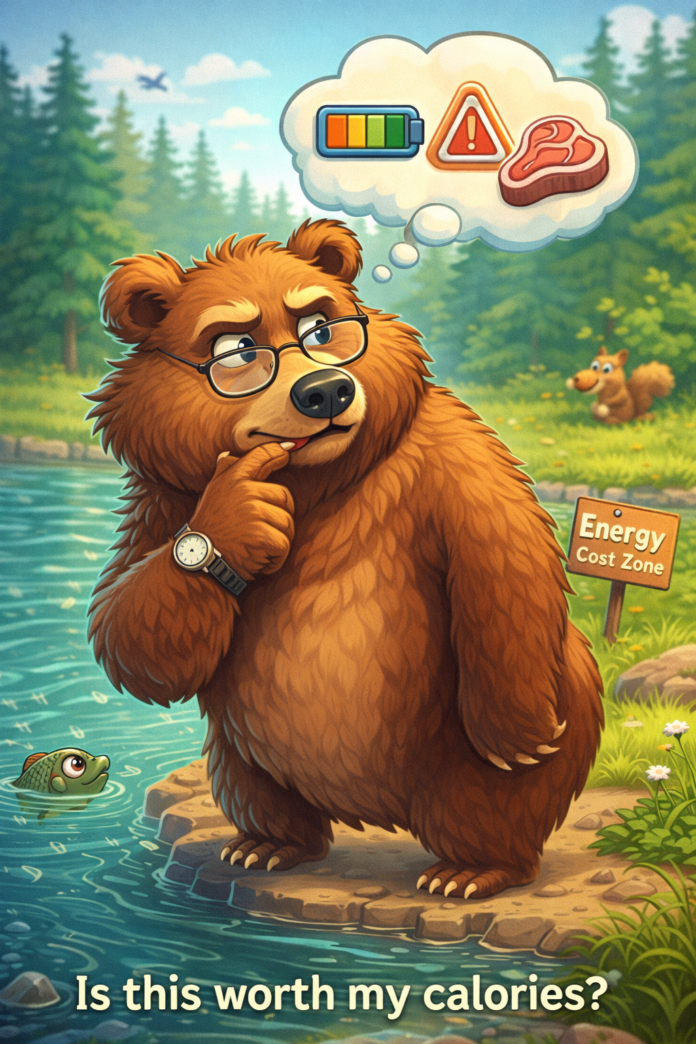
The image above captures a rare moment of truth:
A grizzly bear standing still, observing, measuring distance, scent, movement—deciding whether confrontation is worth the cost.

This same logic governs nature, business,k         warfare, trading, and human psychology.

Predators don’t react.
They assess.


Section 1: The Predator Classification System (Threat, Competitor, Prey)

Predators categorize everything they encounter into three buckets:

1. Threat

Something that can injure, kill, or drain resources.

  • Larger size
  • Aggressive posture
  • Group presence
  • Unpredictable behavior

Predators avoid unnecessary threats unless defending territory or offspring.

2. Competitor

Another predator fighting for the same resources.

  • Similar strength
  • Similar territory
  • Similar hunting patterns

Competitors are often intimidated, tested, or avoided, not immediately attacked.

3. Prey

Low risk, high reward.

  • Predictable
  • Weak positioning
  • Limited escape routes
  • Favorable energy ratio

Prey isn’t emotional.
It’s mathematical.


Section 2: Energy Economics – The Most Important Rule in Nature

Predators live by one unbreakable law:

Energy spent must be less than energy gained.

A grizzly bear crossing water:

  • Burns calories
  • Risks injury
  • Exposes itself

If the outcome is uncertain, the bear waits.

Predators are patient because patience saves energy.

This is why:

  • Most predators don’t chase endlessly
  • Most attacks happen after long observation
  • Most kills are quick and decisive

Indecision is not weakness.
It is optimization.


Section 3: Observation Is the Primary Weapon

Before claws, teeth, or force—there is observation.

Predators analyze:

  • Distance
  • Wind direction (scent)
  • Body language
  • Terrain advantage
  • Escape probability

This moment of stillness is not hesitation.
It is data collection.

In the image:

  • The bear is low
  • Head forward
  • Eyes fixed
  • Body relaxed but ready

This posture signals evaluation, not aggression.


Section 4: Why Most Predator Attacks Never Happen

Here’s a hidden truth:

The majority of predator encounters end without conflict.

Why?

  • Risk outweighs reward
  • Energy loss is too high
  • Outcome is uncertain

Predators survive by not fighting.

Aggression is expensive.
Discipline is profitable.

This is why:

  • Weak animals survive by appearing unpredictable
  • Strong animals survive by avoiding chaos
  • Apex predators live longest by choosing battles carefully

Section 5: Human Parallels – You Are Always Being Assessed

Whether you realize it or not, humans do the same thing.

In business:

  • Investors assess founders
  • Employers assess candidates
  • Clients assess authority

In social settings:

  • Confidence signals safety
  • Calmness signals strength
  • Desperation signals prey

In trading:

  • The market tests weak hands
  • Liquidity is hunted
  • Indecision is punished

Predator logic applies everywhere.


Section 6: How Not to Be Seen as Prey

Predators look for inefficiency.

To avoid being classified as prey:

  • Move with purpose
  • Avoid reactive behavior
  • Control emotional leakage
  • Maintain calm under observation

Prey panics.
Predators wait.

Confidence without aggression is the strongest signal you can emit.


Section 7: The Ultimate Predator Advantage – Walking Away

The most powerful move a predator makes is not attacking.

Walking away means:

  • You conserved energy
  • You avoided risk
  • You kept optionality

True dominance isn’t constant action.
It’s selective engagement.


Conclusion: The Silent Decision That Rules Everything

That grizzly bear in the image isn’t angry.
It isn’t afraid.
It isn’t emotional.

It’s asking one question:

“Is this worth my energy?”

That single question governs:

  • Survival
  • Power
  • Wealth
  • Longevity

Those who master it live longer—
In the wild, in markets, and in life.
Global Leaders in Discipline Systems

0

Discipline is often misunderstood as strictness or harsh control.
In reality, true discipline is a system — built through culture, law, institutions, incentives, and identity.

This article breaks down which countries and systems have the most developed discipline frameworks in the modern world, and why they work.

This is not about “niceness”.
It’s about structure, consistency, compliance, systems, and execution.


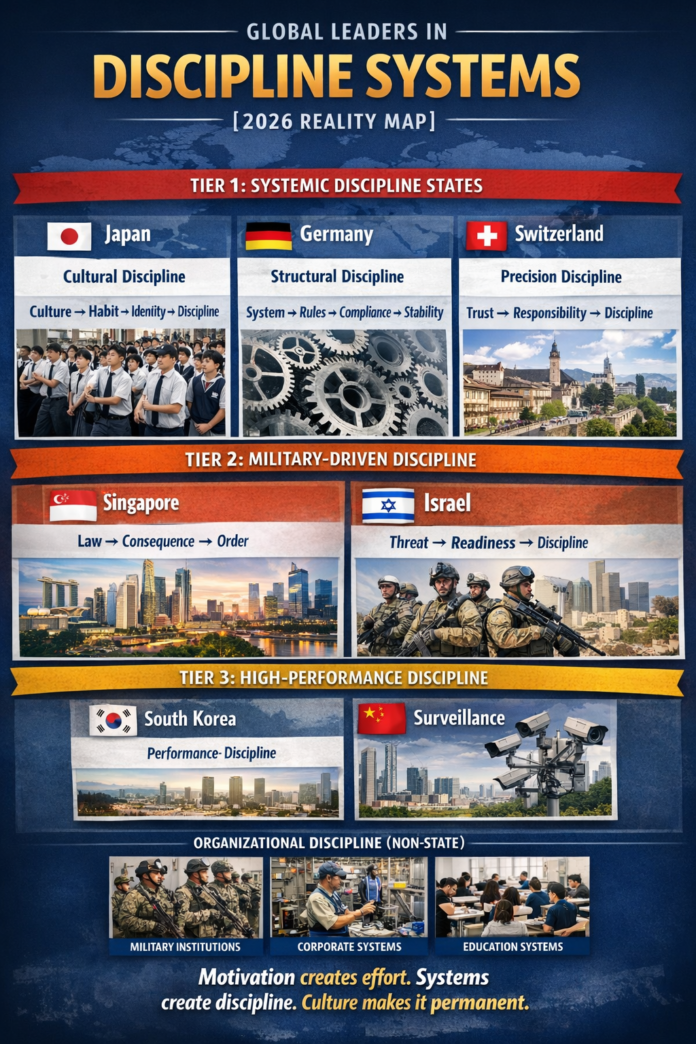
🟥 Tier 1 — Systemic Discipline States

(Discipline is embedded into daily life, culture, law, and institutions)

Japan — Cultural Discipline Model

Type: Social + cultural discipline

Key Characteristics

  • Time discipline & punctuality
  • Cleanliness as a social norm
  • Respect for hierarchy and roles
  • Strong duty mindset
  • Responsibility training from childhood
  • Social shame as correction (not punishment)
  • Collective order over individual impulse
  • Precision behavior in daily life

🧠 Discipline Model

Culture → Habit → Identity → Discipline

Why it works:
Discipline in Japan is not enforced — it is expected. Culture does the heavy lifting.


Germany — Structural Discipline Model

Type: Institutional + procedural discipline

Key Characteristics

  • Rules-based culture
  • Systems thinking mindset
  • Process discipline
  • Compliance-first governance
  • Legal precision
  • Engineering mentality
  • Bureaucratic accuracy
  • Accountability culture

🧠 Discipline Model

System → Rules → Compliance → Stability

Why it works:
Germany removes ambiguity. When rules are clear, discipline becomes automatic.


Switzerland — Precision Discipline Model

Type: Civic + institutional discipline

Key Characteristics

  • High social responsibility
  • Strong rule adherence
  • Deep trust in institutions
  • Decentralized discipline
  • Community accountability
  • Financial discipline
  • Neutral, predictable governance

🧠 Discipline Model

Trust → Responsibility → Discipline

Why it works:
People comply because they trust the system, not because they fear it.


🟧 Tier 2 — Military-Driven Discipline Systems

Singapore — Legal Discipline State

Type: Law-based discipline

Key Characteristics

  • Strict, clearly enforced laws
  • Low tolerance for disorder
  • Compliance-driven governance
  • Clean public administration
  • Strong anti-corruption systems
  • Behavioral regulation

🧠 Discipline Model

Law → Fear of consequence → Order

Why it works:
Discipline is externally enforced, fast, and predictable.


Israel — Security Discipline Model

Type: Military + survival discipline

Key Characteristics

  • Mandatory military service
  • High-alert national culture
  • Strategic discipline
  • Crisis readiness
  • National resilience
  • Rapid response mindset

🧠 Discipline Model

Threat → Readiness → Discipline

Why it works:
Constant threat creates permanent readiness, not complacency.


🟨 Tier 3 — High-Performance Discipline Systems

South Korea

  • Strong work ethic culture
  • High-pressure education system
  • Corporate discipline
  • Technology-driven productivity
  • Competitive performance mindset

China

  • State-enforced discipline
  • Population control systems
  • Strict compliance enforcement
  • Surveillance-based discipline
  • Institutional obedience

🟩 Organizational Discipline (Non-State)

🪖 Military Institutions

  • United States Armed Forces
  • Israeli Defense Forces
  • People’s Liberation Army
  • NATO

🏢 Corporate Systems

  • Toyota Production System
  • Amazon Operations
  • SpaceX Engineering Culture
  • Samsung Production Systems

🎓 Education Systems

  • German dual education system
  • Japanese school discipline model
  • Korean performance-based education

🧠 Discipline System Models (Summary Table)

Discipline Model Example
Cultural Discipline Japan
Structural Discipline Germany
Legal Discipline Singapore
Security Discipline Israel
Performance Discipline South Korea
Surveillance Discipline China
Trust Discipline Switzerland

🧬 Elite Framework: Discipline Architecture Layers

Culture → Law → Systems → Incentives → Enforcement → Identity → Habit

Real discipline only works when all layers align.


🔥 Deep Truth

Countries don’t become disciplined through motivation.
They become disciplined through systems.


🧠 Final Answer

The most developed discipline systems today:

Top 5

  1. Japan — Cultural discipline
  2. Germany — System discipline
  3. Switzerland — Civic discipline
  4. Singapore — Legal discipline
  5. Israel — Security discipline


Motivation creates effort.
Systems create discipline.
Culture makes it permanent.

Disclaimer:
This article presents a conceptual and analytical framework for understanding discipline systems across different countries and institutions. The classifications and rankings are not official measurements, nor are they intended to represent absolute judgments about any nation, culture, or population.

The analysis is based on system design, cultural patterns, institutional structures, and observable behavioral norms, not on political ideology, national superiority, or moral evaluation. Individual experiences may vary, and no single model applies universally.

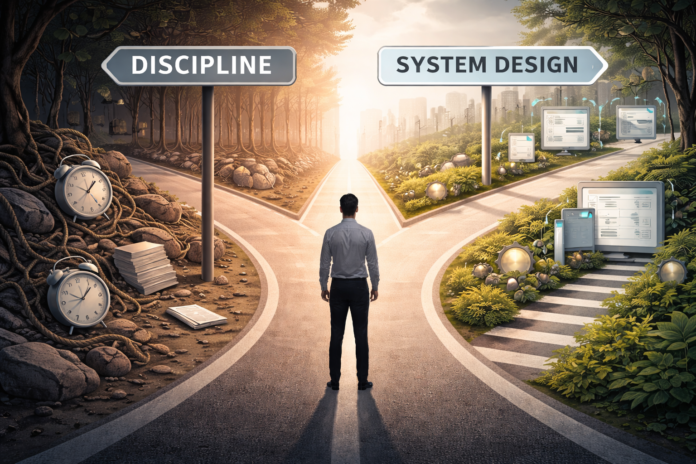
You Don’t Have a Discipline Problem — You Have a System Design Problem

0

Introduction: The Lie We’ve Been Taught

From childhood, we’re taught one dominant narrative:

“If you fail, it’s because you’re not disciplined enough.”

Not productive enough?
Not consistent?
Not focused?
Not successful?

Blame yourself. Build more willpower. Try harder.

But this belief is fundamentally flawed.

Because discipline is not the root variable.
It’s a byproduct.

What you actually have is not a discipline problem —
you have a system design problem.

And systems always win.


Why Discipline Fails (Behavioral Reality)

Discipline relies on:

  • Motivation

  • Emotional energy

  • Cognitive load

  • Mood stability

  • Willpower reserves

These are biological variables, not stable resources.

You cannot scale success on unstable inputs.

Neuroscience proves:

  • Willpower is finite

  • Decision fatigue is real

  • Cognitive bandwidth is limited

  • Emotional regulation fluctuates

Meaning:

Any strategy that depends on constant self-control will eventually collapse.

That’s not weakness.
That’s human biology.


The System Truth

Your behavior is not controlled by intention.
It is controlled by design.

Human behavior formula:

Environment → Friction → Cues → Automation → Identity → Behavior

Not motivation.
Not discipline.
Not inspiration.

Example:

If junk food is visible → you eat it
If phone is nearby → you scroll
If notifications are on → you react
If chaos is present → focus dies
If friction exists → consistency collapses

This is not personality.
This is system architecture.


Discipline Is a Symptom, Not a Cause

Highly disciplined people are not mentally superior.

They have:

  • Low-friction systems

  • Automated routines

  • Environmental control

  • Behavioral defaults

  • Identity reinforcement loops

  • Pre-commitment structures

They don’t rely on discipline.
They engineer inevitability.


The System Design Law

People don’t rise to the level of their goals.
They fall to the level of their systems.

Your outcomes are not a reflection of your ambition.
They are a reflection of your structure.


Real-World Examples

Fitness

❌ “I need discipline to go to the gym”
✅ Gym bag packed + gym on route + fixed time + social accountability

Trading

❌ “I need discipline to not overtrade”
✅ Risk rules + auto position sizing + execution checklist + system filters

Studying

❌ “I lack discipline to study”
✅ Fixed environment + blocked distractions + time-boxed sessions

Business

❌ “I need discipline to work harder”
✅ Workflow automation + SOPs + task batching + decision filters


Identity-Based Systems

The strongest systems are identity-anchored:

“I am someone who trains.”
“I am someone who executes systems.”
“I am someone who follows structure.”
“I am someone who respects process.”

Identity creates behavioral gravity.


Why Motivation Content Fails

Motivation tries to increase energy.
Systems reduce energy requirement.

Motivation is volatile.
Systems are stable.

Motivation is emotional.
Systems are mechanical.

Motivation is reactive.
Systems are predictive.


The 5-Layer System Design Model

1. Environment Design

Control what you see, touch, access, and hear.

2. Friction Engineering

Make bad habits hard.
Make good habits easy.

3. Automation

Reduce decision-making.

4. Structure

Fixed routines > flexible intentions

5. Feedback Loops

Track, measure, adjust


Elite Principle

Discipline is what you use when systems are missing.

High performers don’t build discipline.
They build structures that remove the need for discipline.


System Thinking Shift

Stop asking:

  • “Why am I lazy?”

  • “Why can’t I focus?”

  • “Why can’t I stay consistent?”

Start asking:

  • “What in my system enables failure?”

  • “What friction is breaking consistency?”

  • “What cue is triggering this behavior?”

  • “What structure is missing?”


Conclusion: Build Systems, Not Self-Blame

You’re not broken.
You’re not weak.
You’re not undisciplined.

You’re running on poor architecture.

Fix the system → behavior fixes itself.
Fix the structure → discipline becomes irrelevant.
Fix the environment → consistency becomes automatic.

You don’t need more willpower.
You need better design.

The Dopamine Trap: How Emotions Destroy Trading Accounts

0

This is not a strategy problem.
This is a psychology + neurochemistry + behavior system problem.

Let’s break it honestly and clearly.


🧠 The Real Reason It Happens

1) Dopamine Hijack (Reward Addiction)

Trading triggers the same dopamine system as gambling.

Your brain gets dopamine from:

  • Risk
  • Uncertainty
  • Fast money possibility
  • Big wins fantasy
  • Quick reward anticipation

So your brain doesn’t want discipline — it wants dopamine.

Plan = boring
Risk = exciting

Your brain chooses excitement over logic.


2) Emotional Trading Loop

This is the real cycle:

Loss → Frustration → Revenge trading → Overtrading → Bigger loss → Panic → Tilt → Account blown

This is a stress-dopamine loop.

Not strategy.
Not knowledge.
Not intelligence.
Not skill.

It’s emotional chemistry.


3) Identity Conflict

Inside you:

  • Logical mind: “Follow the plan”
  • Emotional brain: “Recover fast”
  • Ego: “I can win it back”
  • Fear: “Don’t accept loss”
  • Greed: “One big trade will fix it”

So you self-sabotage.


4) Lack of Emotional Pain Management

Loss creates:

  • Stress hormones (cortisol)
  • Anxiety
  • Ego damage
  • Fear
  • Anger

You don’t process it — you react to it.

So you trade emotionally to escape the feeling.


5) Fast Money Illusion

Your mind is stuck in:

“One good trade can change everything”

This belief destroys discipline.

It creates:

  • Overleverage
  • Oversizing
  • Overconfidence
  • Overtrading
  • Impulsive entries

🧬 Chemical Reality

Trading addiction loop:

Dopamine (hope) → Risk → Trade → Win/Loss → Emotional spike → Memory imprint → Repeat

The brain becomes addicted to:

  • Action
  • Stimulation
  • Risk
  • Emotional intensity

Not profit.


❌ Why Plans Fail

Because plans are logical systems
But trading behavior is emotional systems

Logic loses to emotion if not trained.


🎯 Brutal Truth

You don’t blow accounts because: ❌ You lack strategy
❌ You lack knowledge
❌ You lack indicators
❌ You lack setups

You blow accounts because: ✅ You lack emotional control
✅ You seek dopamine
✅ You avoid pain
✅ You chase recovery
✅ You trade to feel better
✅ You react instead of execute


🔁 Self-Sabotage Pattern

  1. Good start
  2. Small loss
  3. Emotional reaction
  4. Break rules
  5. Oversize
  6. Overtrade
  7. Tilt
  8. Account blown
  9. Regret
  10. Reset
  11. Repeat

This is a behavior loop, not a trading system.


🛠 How to Fix It (Real Solution)

1) Remove Dopamine Triggers

  • No high leverage
  • No revenge trading
  • No fast entries
  • No impulsive trades
  • No random setups

2) Trade Boredom

If trading feels exciting → you’re gambling
If trading feels boring → you’re professional


3) Rule Lock System

You need mechanical limits, not willpower:

  • Daily loss limit
  • Trade limit per day
  • Max risk per trade
  • Hard stop rules
  • Platform lock after loss

4) Emotional Regulation System

Before every trade ask:

  • Am I calm?
  • Am I trying to recover?
  • Am I angry?
  • Am I bored?
  • Am I seeking action?

If yes → don’t trade


5) Identity Shift

Stop seeing yourself as:

“Someone trying to make money”

Start seeing yourself as:

“Someone executing a system”


🧠 Professional Mindset Shift

Retail trader:
“I want to win this trade”

Professional trader:
“I want to execute correctly”

Institutions don’t care about trades.
They care about process quality.


🔐 Discipline Formula

System > Emotion
Rules > Desire
Process > Profit
Execution > Outcome
Consistency > Wins
Control > Excitement


💡 Real Solution in One Line:

You don’t need a better strategy. You need a better nervous system.


🧘 Practical Reset Plan

For next 14 days:

  • Trade demo only
  • Max 1 trade per day
  • Fixed lot size
  • Fixed risk
  • Fixed setup
  • Journal emotions, not trades
  • Track impulses
  • Track rule breaks
  • Track feelings

🧠 Final Truth

People don’t fail trading because of markets.
They fail because they can’t control themselves.

The market doesn’t blow accounts.
Behavior does.


Simple sentence:

You are not losing money — you are losing control.

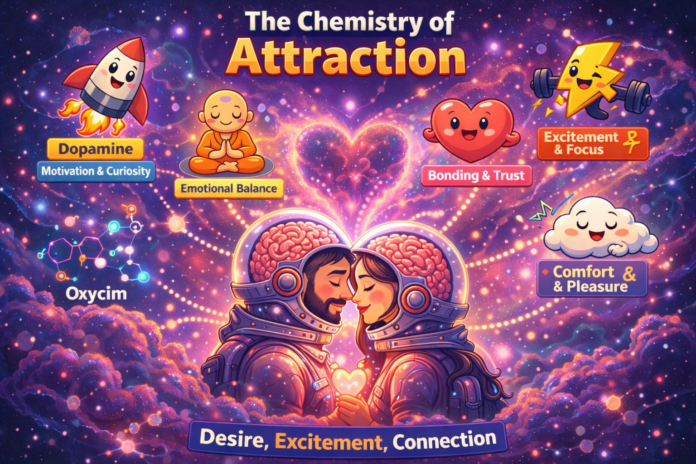
The Science of Desire: Why Humans Feel Attraction, Excitement, and Connection (And Why It’s Way More Chemical Than Romantic)

0


Human desire feels emotional, mysterious, and magical — but behind the scenes, it’s actually a highly organized chemical system running inside your brain and body. What we experience as attraction, excitement, bonding, curiosity, and connection is not random. It’s the result of neurochemistry, psychology, and biology working together in real time.

Your brain doesn’t ask for permission. It releases chemicals.
Your heart doesn’t decide. Your nervous system reacts.
Your emotions don’t appear by magic. They are chemically generated.

Welcome to the biological reality of desire.


The Brain’s “Interest Engine”

When the brain finds something engaging — a person, idea, experience, or connection — it activates a chemical chain reaction. Dopamine increases motivation and curiosity. Norepinephrine raises alertness and attention. Serotonin adjusts emotional control. Oxytocin creates feelings of trust and closeness. Endorphins reduce stress and increase comfort.

Together, these chemicals create what we casually call “chemistry” — but it’s not poetry, it’s neuroscience.


Real-World Example #1: The Coffee Shop Effect

You walk into a café, and suddenly one person feels more interesting than everyone else. Nothing dramatic happened. No conversation yet. No story. No connection.

But your brain already reacted:

  • Dopamine → curiosity
  • Norepinephrine → attention
  • Oxytocin (micro-release) → safety perception
  • Endorphins → comfort feeling

Your brain already decided: “Pay attention.”
You call it attraction.
Biology calls it chemical prioritization.


Real-World Example #2: The “Good Vibe” Person

We all know someone who just feels good to be around. They’re not the loudest. Not the most attractive. Not the richest. But being near them feels calm, easy, safe, and pleasant.

That’s not personality magic — that’s chemistry:

  • Oxytocin → emotional safety
  • Serotonin → emotional balance
  • Endorphins → comfort
  • Low cortisol → low stress

Your nervous system feels regulated around them.
You interpret that as “good energy.”


Why Desire Feels Different for Everyone

Because chemistry is personal.

Desire depends on:

  • Hormonal balance
  • Emotional state
  • Stress levels
  • Sleep quality
  • Mental health
  • Attachment style
  • Past experiences
  • Trauma history
  • Self-esteem
  • Lifestyle
  • Nervous system regulation

Two people in the same situation can feel completely different reactions because their internal chemistry is different.


The Funny Truth

You think you’re choosing people with your heart.
Your brain is choosing with molecules.

You think you’re “catching feelings.”
Your nervous system is releasing chemicals.

You think it’s fate.
Your biology thinks it’s pattern recognition + reward chemistry.

Romantic movies sell destiny.
Neuroscience sells dopamine pathways.


The Chemistry Cycle of Interest

Every attraction follows the same internal loop:

Stimulus → Chemical release → Emotional response → Memory → Reinforcement → Pattern formation

That’s how:

  • Crushes form
  • Attachments build
  • Preferences develop
  • Habits form
  • Emotional bonds grow
  • Comfort zones appear
  • Relationship patterns repeat

Why Some People Feel More “Intense”

Some nervous systems are more sensitive to dopamine, oxytocin, and norepinephrine. This creates:

  • Strong emotional reactions
  • Deep attachments
  • Fast bonding
  • High emotional intensity
  • Strong attraction responses

It’s not personality — it’s neurochemical sensitivity.


The Human System Is Not Random

Your body is a biochemical decision-making machine.
It constantly asks:

  • Is this safe?
  • Is this rewarding?
  • Is this familiar?
  • Is this comforting?
  • Is this stimulating?
  • Is this meaningful?

Then it releases chemicals accordingly.


Why We Call It “Chemistry” (And It’s Actually True)

When people say:

“We have chemistry”

They’re accidentally being scientifically accurate.

Because what they’re feeling is literally:

  • Neurotransmitter activity
  • Hormonal signaling
  • Nervous system synchronization
  • Emotional regulation
  • Reward system activation

It’s not poetic — it’s biological.


The Smart Conclusion

Desire isn’t controlled by nationality.
Not culture alone.
Not stereotypes.
Not myths.
Not movies.

It’s controlled by:

  • Brain chemistry
  • Nervous system responses
  • Emotional safety
  • Psychological bonding
  • Biological reward systems
  • Individual neurobiology

Final Thought

Humans love to explain attraction with stories.
Biology explains it with molecules.

You feel connection → chemistry.
You feel excitement → chemistry.
You feel comfort → chemistry.
You feel interest → chemistry.
You feel bonding → chemistry.

At the deepest level, human desire is not romantic — it’s biochemical.
Romance is the story we tell.
Chemistry is the system running it.


Disclaimer:
This article is for educational and informational purposes only. It does not provide medical, psychological, or health advice. Human behavior, attraction, and emotional responses are complex and influenced by biological, psychological, social, and environmental factors. For personal health or mental health concerns, consult qualified professionals.

How Many Hormones and Chemicals Does the Human Body Produce?

0

The Complete Scientific Guide to Brain Chemicals, Hormones, Neurotransmitters, and Biological Signaling Systems


Introduction: The Human Body Is a Chemical Network

The human body is not driven only by organs, muscles, and nerves — it is driven by chemistry.
Every emotion, thought, movement, reaction, and biological process is controlled by chemical messengers that transmit information between cells, organs, and systems.

These chemical messengers include:

  • Hormones
  • Neurotransmitters
  • Neuropeptides
  • Neuromodulators
  • Cytokines
  • Growth factors
  • Endocannabinoids
  • Local signaling molecules

Together, they form the biochemical communication system that regulates the entire human organism.


Understanding Chemical Communication in the Body

Human chemical signaling works through three main systems:

1. Nervous System (Fast signaling)

  • Neurotransmitters
  • Neuromodulators
  • Electrical + chemical transmission

2. Endocrine System (Slow systemic signaling)

  • Hormones released into bloodstream
  • Long-term regulation

3. Immune System (Defense signaling)

  • Cytokines
  • Inflammatory mediators
  • Immune regulators

These systems constantly interact to maintain homeostasis (internal balance).


🧠 Brain Chemicals: Neurotransmitters

Neurotransmitters are chemical messengers used by neurons to communicate.

Core Neurotransmitters (Primary Brain Chemicals)

  1. Dopamine
  2. Serotonin
  3. Norepinephrine (Noradrenaline)
  4. Epinephrine (Adrenaline)
  5. Glutamate
  6. GABA (Gamma-aminobutyric acid)
  7. Acetylcholine
  8. Histamine

Total core neurotransmitters: 8

These chemicals control:

  • Mood
  • Motivation
  • Learning
  • Memory
  • Focus
  • Sleep
  • Attention
  • Stress response
  • Emotional regulation

🧬 Neuropeptides (Brain-Produced Chemical Messengers)

Neuropeptides are longer-acting chemical signals in the nervous system:

  • Endorphins
  • Enkephalins
  • Dynorphins
  • Oxytocin
  • Vasopressin
  • Substance P
  • Neuropeptide Y
  • Orexin (Hypocretin)
  • Somatostatin
  • Cholecystokinin
  • Galanin
  • Neurotensin
  • CART peptide
  • Melanin-concentrating hormone (MCH)

Estimated total neuropeptides: 15–30+

These regulate:

  • Pain
  • Appetite
  • Sleep
  • Stress
  • Social behavior
  • Energy balance
  • Emotional processing

🧠 Neuromodulators

Neuromodulators regulate brain activity rather than direct signaling:

  • Nitric Oxide (NO)
  • Adenosine
  • Anandamide (endocannabinoid)
  • 2-AG (endocannabinoid)

Total neuromodulators: 4+


🧬 Hormones: The Endocrine System

Hormones travel through the bloodstream and regulate long-term biological processes.

Brain & Pituitary Hormones

  • Growth Hormone (GH)
  • Prolactin
  • ACTH
  • TSH
  • FSH
  • LH
  • MSH
  • Oxytocin
  • Vasopressin

Total: 9


Thyroid Hormones

  • T3 (Triiodothyronine)
  • T4 (Thyroxine)
  • Calcitonin

Total: 3


Adrenal Hormones

  • Cortisol
  • Aldosterone
  • Adrenaline
  • Noradrenaline
  • DHEA
  • Androstenedione

Total: 6


Pancreatic Hormones

  • Insulin
  • Glucagon
  • Somatostatin
  • Amylin

Total: 4


Reproductive Hormones

Male:

  • Testosterone
  • DHT
  • Inhibin

Female:

  • Estrogen
  • Progesterone
  • Relaxin

Total: 6


Other Systemic Hormones

  • Melatonin
  • Leptin
  • Ghrelin
  • Erythropoietin (EPO)
  • Renin
  • Angiotensin
  • IGF-1
  • Parathyroid Hormone
  • ANP
  • Thymosin

Total: 10+


🧬 Immune System Chemicals (Cytokines)

The immune system produces 100+ cytokines, including:

  • Interleukins
  • Interferons
  • Tumor necrosis factors
  • Chemokines
  • Colony-stimulating factors

These regulate:

  • Inflammation
  • Immunity
  • Healing
  • Infection response
  • Tissue repair

🌱 Growth Factors

The body produces 50+ growth factors, including:

  • NGF (Nerve Growth Factor)
  • BDNF (Brain-Derived Neurotrophic Factor)
  • VEGF
  • EGF
  • FGF

They control:

  • Cell growth
  • Brain development
  • Tissue repair
  • Healing
  • Neuroplasticity

📊 Total Chemical Production (Scientific Estimate)

Category Approximate Count Neurotransmitters 40–60 Hormones 70–100 Neuropeptides 15–30 Neuromodulators 4–10 Immune cytokines 100+ Growth factors 50+ Local signaling molecules 100+


Estimated Total Human Chemical Messengers: 500–1000+ bioactive molecules


The Human Body as a Chemical Intelligence System

The body functions as a biochemical super-network:

  • Brain → chemical signaling
  • Organs → hormonal signaling
  • Immune system → chemical defense signaling
  • Gut → metabolic signaling
  • Cells → local signaling

Every system communicates through chemistry.


Why This Matters Scientifically

Because:

  • Emotions are chemical states
  • Motivation is chemical signaling
  • Stress is chemical response
  • Calm is chemical balance
  • Focus is chemical regulation
  • Learning is chemical encoding
  • Memory is chemical consolidation
  • Behavior is chemical reinforcement

Biological Design Principle

Human biology follows this structure:

Signal → Chemical → Receptor → Response → Adaptation → Memory → Behavior

This is the foundation of:

  • Learning
  • Habits
  • Emotional patterns
  • Personality traits
  • Stress adaptation
  • Motivation systems
  • Cognitive development

Conclusion: The Chemical Nature of Human Life

You are not driven by a few hormones.
You are driven by hundreds of chemical signals working together as a biological intelligence network.

The human body is:

  • A chemical communication system
  • A biochemical computing system
  • A biological signaling network
  • A living chemical ecosystem

Your mind, emotions, energy, focus, and health are all expressions of this chemical architecture.

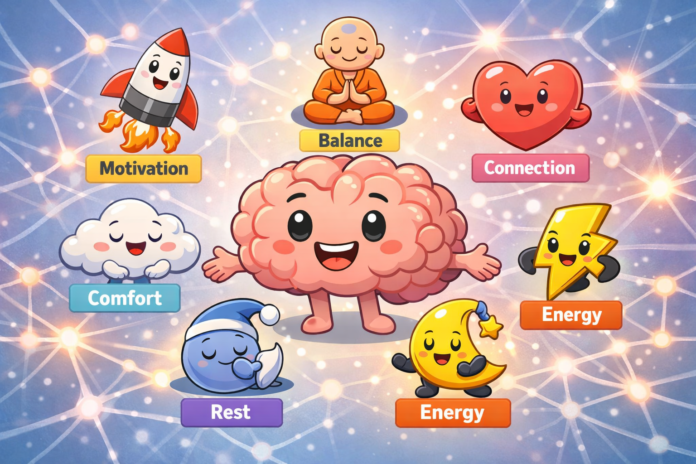
The Chemistry of Human Emotions: How Hormones and Neurotransmitters Control Energy, Pleasure, Calm, Focus, and Motivation

0

Understanding the Brain’s Natural Chemical System That Shapes Human Behavior, Emotions, and Mental Performance


Introduction: The Invisible System Running Your Life

Every emotion you feel, every moment of motivation, every wave of calm, every surge of energy — is controlled by chemical signals inside your body. These signals are not random. They are part of a biological intelligence system made of hormones and neurotransmitters that regulate:

  • Emotional balance
  • Motivation
  • Mental focus
  • Stress response
  • Relaxation
  • Energy levels
  • Mood stability
  • Psychological well-being

This internal chemical network silently controls how you think, feel, act, rest, and recover.


Dopamine: The Motivation & Drive Chemical

Primary Functions:

  • Motivation
  • Goal pursuit
  • Focus
  • Curiosity
  • Learning
  • Reward signaling

Scientific Role:
Dopamine activates the brain’s reward and motivation circuits. It doesn’t create pleasure — it creates desire and pursuit.

Effects on the Body & Mind:

  • Increased focus
  • Higher motivation
  • Mental sharpness
  • Drive for achievement
  • Curiosity and ambition
  • Psychological confidence

SEO Insight:
Dopamine is the core neurotransmitter behind productivity, discipline, and ambition.


Endorphins: The Body’s Natural Painkillers

Primary Functions:

  • Pain relief
  • Stress reduction
  • Emotional comfort
  • Relaxation
  • Euphoria

Scientific Role:
Endorphins act like natural opioids, produced by the brain to regulate stress and discomfort.

Effects:

  • Reduced anxiety
  • Emotional calm
  • Physical relaxation
  • Stress buffering
  • Mental peace

SEO Insight:
Endorphins are essential for emotional resilience and stress management.


Oxytocin: The Emotional Stability Hormone

Primary Functions:

  • Emotional bonding
  • Trust
  • Calmness
  • Safety perception
  • Nervous system regulation

Scientific Role:
Oxytocin reduces fear response and activates parasympathetic nervous system balance.

Effects:

  • Emotional safety
  • Inner calm
  • Reduced stress
  • Nervous system relaxation
  • Psychological security

SEO Insight:
Oxytocin is crucial for emotional health and social bonding.


Prolactin: The Satisfaction & Recovery Hormone

Primary Functions:

  • Fulfillment
  • Contentment
  • Relaxation
  • Sleep regulation
  • Nervous system slowdown

Scientific Role:
Prolactin signals completion and recovery mode to the brain.

Effects:

  • Sleepiness
  • Calmness
  • Deep relaxation
  • Emotional satisfaction
  • Nervous system recovery

SEO Insight:
Prolactin supports rest, recovery, and mental reset cycles.


Serotonin: The Emotional Balance Chemical

Primary Functions:

  • Mood stability
  • Emotional regulation
  • Impulse control
  • Mental clarity
  • Psychological balance

Effects:

  • Emotional control
  • Calm thinking
  • Reduced anxiety
  • Stable mood
  • Inner peace

SEO Insight:
Serotonin is directly linked to mental health and emotional stability.


Norepinephrine: The Energy & Alertness Neurochemical

Primary Functions:

  • Focus
  • Alertness
  • Awareness
  • Energy
  • Cognitive speed

Effects:

  • Mental sharpness
  • Sensory awareness
  • Faster reactions
  • Increased attention
  • Cognitive clarity

SEO Insight:
Norepinephrine drives focus, alertness, and performance states.


The Human Neurochemical Cycle

Activation Phase

Chemicals: Dopamine, Norepinephrine
State: Motivation, focus, energy, drive

Peak Phase

Chemicals: Dopamine, Endorphins, Oxytocin
State: Pleasure, emotional warmth, calm

Relaxation Phase

Chemicals: Endorphins, Oxytocin, Prolactin
State: Deep relaxation, satisfaction, rest

Reset Phase

Chemicals: Serotonin stabilization, dopamine normalization
State: Mental clarity, emotional balance, nervous system reset


The Brain Reward System Explained

The human brain operates on a biochemical reward loop:

Stimulus → Chemical Release → Emotional Response → Memory Formation → Behavioral Reinforcement

This loop forms:

  • Habits
  • Preferences
  • Motivations
  • Emotional patterns
  • Behavioral conditioning
  • Psychological responses

This system evolved for:

  • Survival
  • Learning
  • Adaptation
  • Motivation
  • Social bonding
  • Emotional regulation

Chemical Balance and Mental Health

Balanced neurochemistry leads to:

✔ Mental clarity
✔ Emotional stability
✔ Healthy motivation
✔ Calm nervous system
✔ Stress resilience
✔ Psychological strength
✔ Cognitive performance

Chemical imbalance may lead to:

❌ Emotional instability
❌ Motivation loss
❌ Chronic stress
❌ Burnout
❌ Mental fatigue
❌ Emotional numbness
❌ Reward-system imbalance


The Body as a Chemical Intelligence System

Human biology is not random — it is structured chemical intelligence:

  • Thoughts create chemicals
  • Actions trigger hormones
  • Habits rewire receptors
  • Lifestyle shapes neurochemistry
  • Environment influences hormones
  • Stress alters neurotransmitters

You are living inside a self-regulating biochemical system.


Conclusion: The Chemistry of Being Human

Human experience is not just psychological — it is biochemical.

Your motivation, calm, pleasure, energy, focus, peace, stress, happiness, and satisfaction are not abstract feelings — they are chemical states.

Understanding this system gives you power:

  • Power over habits
  • Power over focus
  • Power over emotional control
  • Power over mental health
  • Power over motivation
  • Power over productivity
  • Power over well-being

You are not driven by willpower alone —
You are guided by biology, chemistry, and neural design.

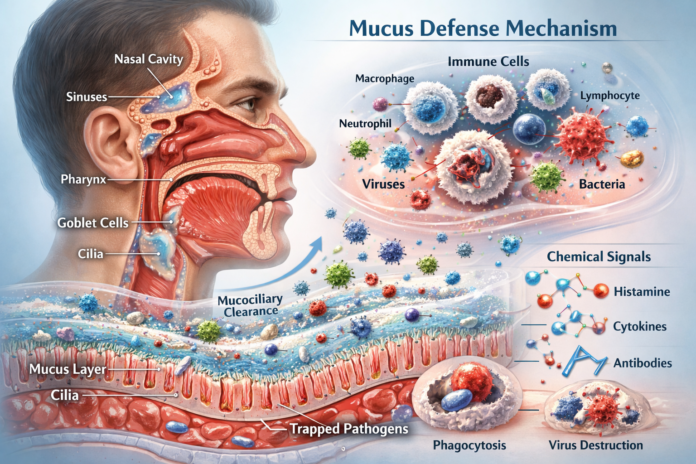
The Biology of Mucus: How the Human Body Detects Threats, Builds Defense, and Heals Itself Through the Mucus System

0

Mucus is one of the most misunderstood substances in the human body. Often seen only as a symptom of illness, it is actually a highly intelligent biological defense system designed to protect the body from infection, injury, and environmental threats. Far from being waste, mucus is an active immune structure — a living barrier that traps pathogens, signals immune responses, and coordinates healing.

This article explains, step by step, how mucus forms, why it forms, how the body uses it to fight disease, and how the healing process works — in a way that is scientifically accurate and educational enough for medical and biology students, while still remaining clear and readable for general learners.


How Threats Enter the Body

The human body is constantly exposed to the external environment. Harmful agents such as viruses, bacteria, allergens, and pollutants enter primarily through the nose, mouth, eyes, and airways. These entry points are lined with delicate tissues called mucosal membranes, which serve as the first interface between the outside world and the internal body.

These surfaces are not unprotected. They are covered by a complex defense structure made of:

  • A mucus layer
  • A cilia layer (microscopic moving hair-like structures)
  • Tightly connected epithelial cells

Together, these form the mucosal immune barrier, the body’s first line of defense.


Root Causes That Trigger Mucus Production

Mucus production begins when the body detects danger. This danger can come from multiple sources:

Biological triggers include viruses (such as influenza, rhinovirus, coronavirus), bacteria, and fungi.
Allergic triggers include pollen, dust mites, mold, and animal dander, which activate IgE-mediated immune responses.
Environmental triggers include pollution, smoke, chemicals, and cold dry air.
Chemical and mechanical triggers include dehydration, acid reflux, and tissue irritation.

The body does not respond randomly. It responds when it identifies a threat pattern.


Detection: The Body’s Internal Alarm System

Cells in the respiratory and immune system are equipped with biological sensors known as pattern-recognition receptors. These receptors detect foreign particles such as viral RNA, bacterial proteins, toxins, and allergens.

Once detected, the body activates immune signaling pathways. This is the biological equivalent of an alarm system. Detection immediately triggers chemical signaling and immune coordination.


The Immune Reaction Chain

Once a threat is identified, the body initiates a structured defense response:

Blood vessels dilate to increase immune cell delivery.
Fluid moves into tissues, causing swelling.
Inflammation increases local temperature and blood flow.
Immune cells migrate to the affected area.
Mucus production increases rapidly.

This is known as the innate immune response — the body’s automatic defense system that activates before antibodies are even involved.


Why Mucus Is Formed

Mucus is not accidental. It is purpose-built for defense.

Its biological functions include:

  • Trapping viruses and bacteria
  • Preventing pathogens from reaching the lungs
  • Binding harmful particles
  • Protecting epithelial cells from damage
  • Transporting toxins out of the body
  • Immobilizing microbes
  • Lubricating tissues to prevent injury
  • Creating a chemical barrier hostile to pathogens

Mucus is best understood as a biological shield, trap, transport system, and immune platform combined into one structure.


The Cells That Produce Mucus

Mucus is produced primarily by:

  • Goblet cells
  • Submucosal glands

These cells are embedded in the lining of the nose, throat, and airways. When immune signaling increases, these cells rapidly increase mucus secretion.


What Mucus Is Made Of

Mucus is a complex biological substance, not just fluid. It contains:

  • Water and salts
  • Mucins (gel-forming proteins such as MUC5AC and MUC5B)
  • IgA antibodies
  • Antimicrobial enzymes like lysozyme
  • Lactoferrin (iron-binding antimicrobial protein)
  • Dead immune cells
  • Destroyed pathogens
  • Environmental particles

This composition allows mucus to function as both a physical barrier and a chemical defense system.


Chemicals Released During Mucus Formation

During immune activation, the body releases powerful chemical messengers:

Histamine causes swelling and fluid release.
Cytokines and interleukins coordinate immune cell movement.
Interferons block viral replication.
Prostaglandins regulate inflammation and pain.
Leukotrienes increase mucus production and thickening.
Bradykinin increases tissue permeability.
Nitric oxide helps destroy pathogens.

These chemicals form a biochemical defense network that controls inflammation and immunity.


Hormonal and Nervous System Control

The immune system does not work alone. It is regulated by hormones and the nervous system.

Cortisol regulates inflammation.
Adrenaline activates stress responses.
Melatonin modulates immune activity.
Serotonin influences inflammation control.
Acetylcholine, part of the parasympathetic nervous system, directly increases glandular secretions — including mucus production.

This shows that mucus formation is not just immune-driven, but neurochemical and hormonal as well.


Thick vs Watery Mucus

Mucus changes texture depending on the stage of immune response.

Watery mucus appears early, driven by histamine and fluid release.
Thick mucus forms later due to increased mucin production, dehydration, immune cell debris, and inflammatory proteins.

Yellow or green mucus color comes from enzymes like myeloperoxidase released by neutrophils, indicating immune activity — not automatically bacterial infection.


How the Body Kills Pathogens

The body eliminates threats using multiple systems:

  • Neutrophils and macrophages engulf pathogens (phagocytosis)
  • Antibodies bind and neutralize invaders
  • Interferons block viral replication
  • Enzymes chemically destroy microbes
  • Fever creates a hostile environment for pathogens
  • Oxidative stress damages invading organisms

This forms a complete biological elimination system.


How Mucus Leaves the Body

The body uses a clearance system known as the mucociliary escalator. Cilia continuously move mucus upward toward the throat.

From there, it is:

  • Coughed out
  • Sneezed out
  • Swallowed and destroyed by stomach acid

This ensures pathogens are removed from the body safely.


Healing and Recovery

Once the threat is eliminated:

  • Inflammation decreases
  • Mucus production normalizes
  • Cilia function restores
  • Tissues repair
  • Immune signaling resets
  • Biological balance (homeostasis) returns

This marks the healing phase.


Biological Timeline

In a typical immune response:

  • First hours → detection and signaling
  • First day → inflammation and mucus production
  • Days 2–3 → immune dominance and pathogen elimination
  • Days 4–7 → clearance and healing

Final Perspective

Mucus is not a sign of weakness — it is a sign of biological intelligence.
It represents one of the most advanced natural defense systems in the human body, combining:

  • Immunology
  • Chemistry
  • Cellular biology
  • Neurobiology
  • Systems engineering

Mucus is not a symptom.
It is a defense architecture designed by evolution for survival.


Disclaimer

This content is for educational and informational purposes only. It does not replace professional medical advice, diagnosis, or treatment. Always consult qualified healthcare professionals for medical concerns, symptoms, or treatment decisions.

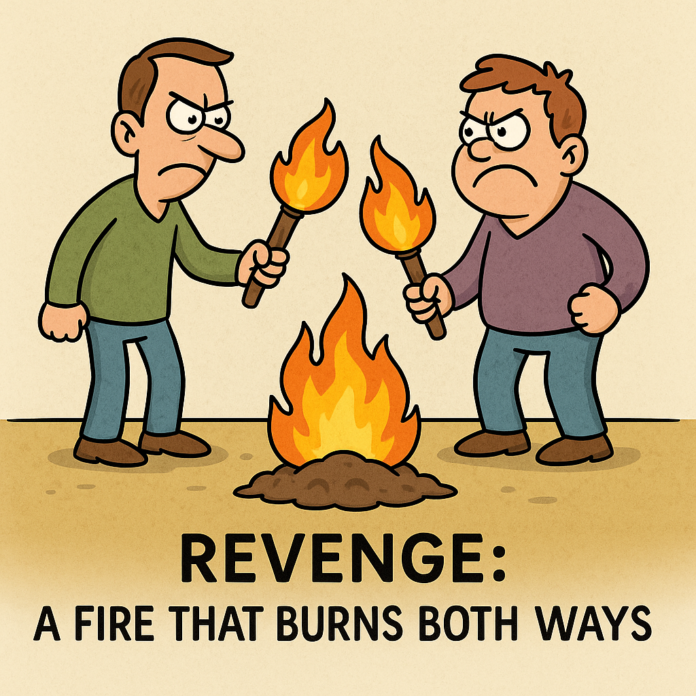
Revenge: A Fire That Burns Both Ways

0

Revenge often begins as a spark.
Someone hurts you, humiliates you, or breaks something precious. And deep inside, a voice whispers:

“I’ll make them pay.”

But here’s the truth: revenge may feel powerful, but it often costs more to the avenger than to the target.


🧠 The Psychology Behind Revenge

When we’re hurt, the brain craves balance.
It says: “If they hurt me, I must hurt them back to feel right again.”
But that’s a trap — because revenge doesn’t heal the wound, it just keeps it open.

Revenge is emotional, not rational. It often makes us act like the very person who caused the pain in the first place.


🧭 Real-Life Example: A Small Disrespect Turned War

Ahmed was insulted in front of his colleagues. Instead of addressing it calmly, he waited for his chance to embarrass the same colleague back.

He did. And for a moment, it felt satisfying.
But then that colleague responded. Others joined sides.

What began as one insult turned into months of workplace hostility, promotions lost, friendships broken — and no one really “won.”

This is the hidden cost of revenge: it grows faster than we can control.


🌿 A Wiser Path: Justice Over Revenge

Choosing not to take revenge doesn’t make you weak.
It means you’ve chosen to protect your peace over feeding your pain.

  • 💬 Talk it out or walk away
  • ⚖️ Let time or justice handle the wound
  • 🕊 Channel your energy into your growth — not their destruction

True strength isn’t making others hurt.
It’s being unshakable no matter who tries to hurt you.


⚔️ A Famous Saying

“Before you embark on a journey of revenge, dig two graves.” — Confucius

Because when you strike back, part of you falls too.


✨ Final Thought

Revenge is loud but empty.
Growth is silent but powerful.

The best revenge isn’t making them feel your pain.
It’s becoming so strong and peaceful that their actions no longer have power over you.

The Most Interesting Thing About Life: It Always Moves Forward

0

If there’s one thing more fascinating than time itself — it’s how life never pauses.
The clock ticks whether you’re ready or not. The sun rises even after your worst night. Seasons shift quietly, whether you notice them or not.

“Life doesn’t wait for you to be ready. It keeps moving — and invites you to grow with it.”


🧭 Why This Is So Interesting

Unlike books, movies, or games, life doesn’t have a rewind button.
Every moment is a first and last time. That’s what makes it rare and powerful.

Think about it:

  • You can redo a workout, but not the exact moment of your first rep.
  • You can visit the same city twice, but not as the same version of yourself.
  • You can fall in love again, but never with the same innocence of that first feeling.

This is what makes life endlessly interesting — it’s alive, fluid, unpredictable.


🌍 Real-Life Example: A Simple Walk

Imagine walking through the same park every evening.
The path doesn’t change. The trees are the same. But you are not.
Some days you’re smiling. Some days you’re tired. Some days you notice things you’ve never seen before.

That’s life’s quiet magic — even ordinary moments are never truly repeated.


🔥 Why It Matters

When you realize how fast everything moves forward, you stop waiting for “the perfect time.”
You start living.
You speak up.
You try.
You fail.
You learn.
And you grow — because staying still is never truly an option.


✨ Final Thought

The most interesting thing about life isn’t how long it is.
It’s how every moment is unique, unrepeatable, and yours to shape.
So instead of waiting for life to slow down, walk with it — step by step, heartbeat by heartbeat.