“You are free to speak your mind… but remember, the echo may not be yours to control.”
The Illusion of Freedom
Every constitution, every democracy, and every powerful regime proudly declares: “We have freedom of speech.” It looks good on paper, it sounds noble in speeches, and it reassures citizens that their voices matter.
But the hidden truth is far sharper: freedom of speech is never absolute — and it has never truly been.
Behind the veil of slogans lies the unspoken warning: Say what you wish, but be ready to pay the price.
The Global Reality
Whether East or West, North or South, the pattern is the same.
In some countries, words against authority bring censorship, surveillance, or exile.
In others, they lead to job loss, public shaming, or legal battles disguised under “national security” or “misinformation laws.”
Even in the so-called “free nations,” a careless tweet or viral video can erase careers overnight — not through government force, but through social outrage and corporate fear.
Different methods. Same outcome. The speaker speaks. The system responds.
Why It Happens Everywhere
Power Hates Challenge Authority — whether political, corporate, or cultural — survives by controlling narratives. Uncontrolled speech is a threat.
Society Punishes Difference Communities, tribes, and even online groups reward conformity. To step outside the acceptable frame is to invite judgment.
Technology Records Everything Unlike the past, where words faded into air, today every post, comment, and recording can be weaponized — forever.
So the paradox deepens: the louder our voices become through digital platforms, the tighter the invisible noose grows around them.
The Uncomfortable Truth
The famous saying captures it perfectly:
“There is freedom of speech, but I cannot guarantee freedom after speech.”
This is not cynicism — it is reality. Every country, every system, and every group protects speech only as long as it does not threaten their deeper interests.
And that means true freedom of speech has never existed in practice.
Why It Matters
This truth isn’t meant to silence you. It’s meant to sharpen you.
If you know the risks, you can speak strategically.
If you understand the patterns, you can see through the illusion.
If you prepare for the backlash, your words can still carry power without destroying you.
Speech is a weapon. Use it carelessly, and it cuts you. Use it wisely, and it shapes nations.
“We spend nearly a third of our lives asleep, yet most people barely understand what happens when they close their eyes. Sleep isn’t wasted time—it’s your body’s most powerful reset system.”
Sleep Architecture: The Blueprint of Rest
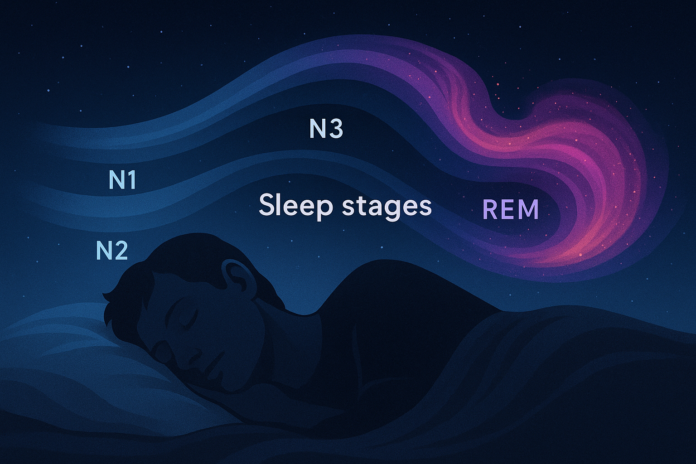
Sleep is not a simple on/off switch—it moves in repeating cycles of around 90 to 120 minutes. Each cycle flows through three stages of Non-REM sleep (light, stable, and deep) followed by REM sleep. A healthy night usually contains four to six full cycles. The first half of the night is dominated by deep sleep, while the second half leans heavily on REM. Both are essential, and cutting either one leaves invisible scars on health, mood, and performance.
The Four Stages of Sleep
1. Stage 1 (N1) – Drowsy Entry
This is the gateway between wakefulness and sleep. It lasts only a few minutes, during which your body relaxes, your breathing slows, and your brain drifts into lighter rhythms. People often experience sudden muscle twitches or the sensation of “falling” here.
2. Stage 2 (N2) – Stable Light Sleep
This stage takes up nearly half your night. Heart rate and temperature drop, while the brain produces unique bursts called sleep spindles and K-complexes, which protect your sleep and help solidify memories.
3. Stage 3 (N3) – Deep Sleep (Slow-Wave Sleep)
This is the hardest stage to wake from and the most restorative for the body. Breathing and heartbeat slow to their lowest levels, growth hormone surges, and the immune system does its deepest repair work. Muscles, tissues, and bones recover, and energy reserves are replenished.
4. REM Sleep – The Dream State
About 90 minutes after you first fall asleep, you enter REM. The brain becomes highly active, your eyes dart beneath closed lids, and vivid dreams unfold. While the body remains paralyzed to prevent acting out dreams, the mind performs “overnight therapy”—balancing emotions, problem-solving, and integrating memories.
Hidden Truths About Sleep
Short sleep is not a superpower. People who claim to thrive on four or five hours are almost always running on hidden deficits. True “short sleepers” are rare genetic outliers. For most of us, consistent short sleep raises the risk of weight gain, heart disease, diabetes, and mental decline.
Weekend catch-up is a band-aid, not a cure. Sleeping in may ease fatigue, but it doesn’t erase the long-term effects of chronic weekday sleep debt. Your metabolism and brain performance still suffer.
Melatonin is misunderstood. It’s not a sedative but a signal that tells the body it’s time to wind down. It can help with jet lag or night-shift adjustment but isn’t a magic fix for chronic insomnia.
Night shifts carry hidden risks. Working against your biological clock disrupts hormone balance and has been linked to increased cancer risk, heart strain, and mood disorders.
Snoring is not always harmless. Loud, habitual snoring may be a sign of sleep apnea, where breathing repeatedly stops. Left untreated, it stresses the heart and drains energy even after “full” nights of rest.
Trackers can mislead. Smartwatches and rings are good for spotting habits but not accurate enough to diagnose sleep disorders. Don’t panic over “low deep sleep scores”—trust how rested you feel first.
Daylight Saving Time is not harmless. Shifting clocks by just one hour increases accidents, heart problems, and fatigue. This proves how sensitive our bodies are to even small disruptions.
The Brain’s Nightly Cleaning Crew
Deep sleep is when the glymphatic system—a fluid network in the brain—works overtime to flush out toxins and metabolic waste. This nightly cleaning may be critical in reducing the risk of Alzheimer’s and other cognitive diseases. Cutting deep sleep too often may slow this cleansing process.
Chronotypes and Social Jetlag
Not everyone is wired the same way. Some people are natural early risers (“larks”), while others function best late at night (“owls”). This tendency is partly genetic and shifts with age—teenagers naturally tilt later, which is why early school start times fight biology. Forcing yourself to live against your internal clock leads to “social jetlag,” a mismatch that increases stress, mood problems, and even cravings for unhealthy foods.
Naps Done Right
NASA discovered that a 26-minute nap boosted alertness and performance in pilots by more than 30%. The trick is to nap short—10 to 30 minutes—to avoid grogginess, or commit to a full 90-minute cycle if time allows.
How Substances Rewrite Your Sleep
Caffeine: With a half-life of 4 to 6 hours, coffee in the afternoon can still keep your brain alert at midnight. A caffeine curfew—stopping intake at least eight hours before bed—helps protect deep sleep.
Alcohol: A nightcap may make you drowsy, but it fragments sleep, suppresses REM in the first half of the night, and worsens snoring and apnea.
Cannabis: THC tends to suppress REM and can trigger a rebound of vivid dreams if stopped suddenly. CBD’s effects are mixed and highly dose-dependent.
The Physics of the Bedroom
Temperature: Most people sleep best in a room cooled to around 16–19°C (60–67°F). This drop in core temperature helps the body drift into deeper stages.
Light: Morning light resets your body clock, while bright evening light delays it. Darkness at night is critical—use blackout curtains and avoid glowing screens in the final hour.
Wind-down: Protect the last 60 to 90 minutes before bed with calming routines: dim lights, light reading, meditation, or a warm shower.
A 30-Day Sleep Upgrade Plan
Week 1 — Set the Clock
Wake up at the same time every day.
Get natural sunlight within 30 minutes of waking.
Cut caffeine after 2 p.m.
Week 2 — Optimize the Environment
Cool the bedroom and make it as dark and quiet as possible.
Use lamps instead of bright overhead lights at night.
Week 3 — Protect the Cycle
Avoid alcohol close to bedtime.
Keep naps short and earlier in the day.
Week 4 — Build Rituals
Create a nightly routine of stretching, journaling, or breathwork.
If sleep struggles persist, consider cognitive behavioral therapy for insomnia (CBT-I), which has longer-lasting effects than sleeping pills.
FAQ
Which stage of sleep is the most important? All stages matter. Deep sleep restores the body, while REM resets the mind. Cutting either one weakens health and performance.
Does sleeping in on weekends fix poor weekday sleep? Not completely. It helps temporarily but doesn’t undo the damage to metabolism, attention, and mood.
Is melatonin safe for daily use? It can help with circadian issues like jet lag, but it’s not designed for long-term nightly use. Dosages vary widely in supplements, so caution is advised.
Why is snoring dangerous? Occasional light snoring is common, but chronic, loud snoring may signal sleep apnea, which silently strains the heart and reduces oxygen levels.
✨ Key Takeaway: Sleep isn’t one block of unconsciousness—it’s a layered cycle of restoration. When you respect the rhythm, your brain cleans itself, your body repairs, and your emotions reset. Every stage matters, every night counts.
From the bustling street markets of Mexico City to the spice stalls of New Delhi, from Sichuan’s peppercorn-infused broths to Ethiopia’s fiery berbere stews — chili has traveled the globe, conquering kitchens and tongues alike.
Originating in the Americas, chili peppers spread across continents through explorers, traders, and daredevil chefs. Today, they are not just ingredients; they’re cultural identities. Thailand without chili? Mexico without salsa? Korea without gochujang? Unthinkable.
Chili is more than food. It’s adventure on a plate.
2. The Science of the Burn
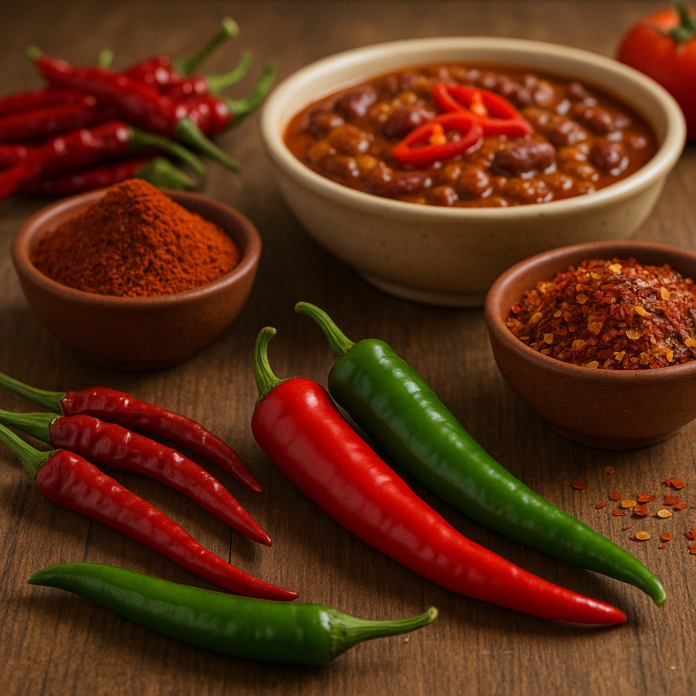
The fiery kick of chili comes from capsaicin, the compound that tricks your nervous system into feeling heat. It doesn’t actually burn you — it activates your pain receptors, making your brain release adrenaline and endorphins.
That’s why spicy food feels like both pain and pleasure. It’s culinary rollercoaster riding: the thrill is in the burn.
3. Health Benefits: The Hidden Magic in the Fire
🔥 Boosts Metabolism
Capsaicin temporarily increases calorie burn and fat oxidation. A little chili = a mini metabolism workout.
🛡️ Strengthens Immunity
Rich in Vitamin C and antioxidants, chili helps fight infections and keeps your immune system alert.
💓 Good for the Heart
Moderate chili consumption is linked to lower cholesterol, improved blood circulation, and reduced risk of heart disease in some studies.
🧠 Natural Mood Enhancer
Ever wondered why spicy food makes you happy? Endorphins released after eating chili create a mild “spice high”. It’s food that literally lifts your mood.
🌱 Anti-Inflammatory Properties
Capsaicin is used in creams for joint pain and arthritis relief — proof that chili isn’t just a kitchen star but a medical one too.
4. The Drawbacks: When Chili Bites Back
💥 Digestive Distress
Too much chili can irritate the stomach lining, cause acid reflux, or — as many know — create “bathroom fireworks” the next day.
😅 Not Friendly for All
People with IBS, ulcers, or gastritis may find chili unbearable. For them, a small sprinkle can trigger hours of discomfort.
🔄 The Adaptation Problem
Your body adjusts over time, meaning chili lovers often chase stronger, hotter varieties. Ghost pepper challenge? Carolina Reaper sauce? That’s tolerance turning into obsession.
5. Chili in Culture: Spice of Life Everywhere
Mexico: Salsa is as essential as air. Chili defines national identity.
India: Chili powders, pickles, curries — woven into every meal.
Thailand: “Mai phet, mai aroi” — “Not spicy, not delicious.” Enough said.
Korea: Gochugaru and gochujang make kimchi a global treasure.
Ethiopia: Berbere spice blend gives depth and fire to traditional dishes.
USA: From Texas chili to hot wing contests, spice is now sport.
Chili connects cultures. It’s one of the few foods that’s both local and universal.
6. How to Enjoy Chili Without Regret
Pair with milk or yogurt — dairy proteins neutralize capsaicin.
Add ghee or oil — fat softens the burn and protects your gut.
Balance with carbs (rice, bread, tortillas) to absorb excess heat.
Start small, build tolerance. Spicy eating is like training — beginners shouldn’t jump into ghost peppers.
7. Final Reflection: Fire, Fun, and Balance
Chili is contradiction embodied: painful yet pleasurable, harmful in excess yet healing in moderation, feared by some but worshipped by others.
It’s not just a spice. It’s a story — of trade routes, cultural fusion, human endurance, and the universal quest to feel something extraordinary from food.
💡 Enjoy chili as an ally, not an enemy. Let it challenge your taste buds, warm your body, and color your meals with excitement — but respect its power. After all, fire is beautiful… until it burns.
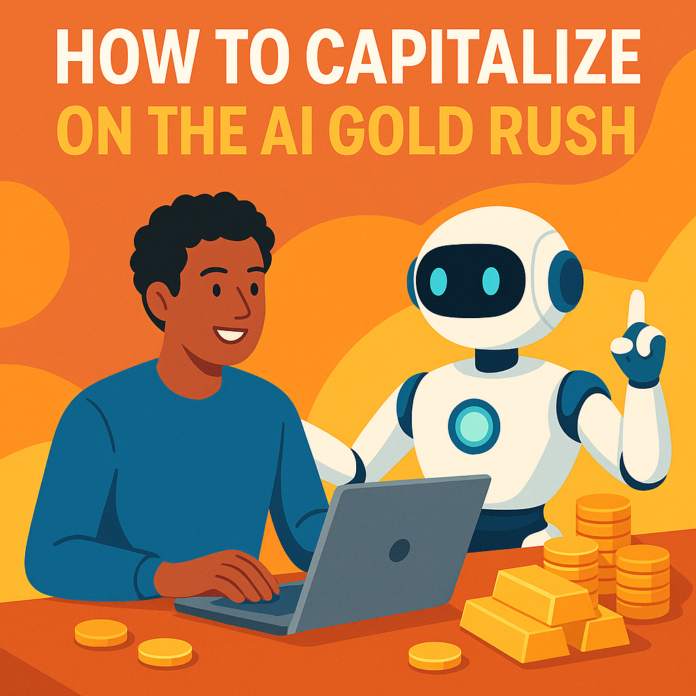
Artificial Intelligence isn’t just another technology wave; it’s a civilization-shaping force. It doesn’t simply make tasks faster — it redefines what’s possible. For the first time in history, a single individual can wield the power of what once required entire teams, agencies, or corporations.
The message is clear: the AI gold rush is here, and fortune belongs to those who learn how to create with it, not fear it.
2. The Creation Edge: From Consumer to Founder
Most people consume AI headlines passively, worried about job losses or disruption. But the future won’t reward fear. It will reward those who adopt an AI-first mindset: seeing AI as an infinitely patient sidekick, co-founder, mentor, and growth partner.
Consumers will be replaced.
Creators will be amplified.
Entrepreneurs will scale beyond payroll.
👉 The real choice isn’t “AI or no AI.” It’s whether you remain a user of AI… or harness it to own your own future.
3. AI for Idea Generation and Validation: Context is King
AI is like stepping into a room filled with world-class experts — except they never tire, judge, or bill by the hour. But the power of the answers depends on the quality of context you give it.
Share your skills, passions, and weaknesses.
Let AI reflect them back as tailored opportunities.
Use multiple AI models (ChatGPT, Gemini, Anthropic, Perplexity) to stress-test ideas.
👉 Fear not: context isn’t exposure. It’s the key to unlocking personal business blueprints AI can generate uniquely for you.
4. From Paralysis to Precision: AI as Strategy Partner
Most would-be founders drown in indecision. Which niche? Which product? Which first step?
AI eliminates this fog:
It simulates customer personas to test branding angles.
It ranks risks and priorities like a management consultant.
It can even “decide for you,” running A/B scenarios faster than human intuition ever could.
In effect, AI becomes your McKinsey in your pocket.
5. The New Marketing Era: Creating for Machines that Know Us
Marketing is no longer about throwing ads into the void. The web itself is being rebuilt. Personal AIs will know our needs intimately and negotiate directly with corporate AIs.
For entrepreneurs, this means:
Learn to prompt uniquely → creativity is in the instruction, not the tool.
Use AI to generate ad campaigns with cinematic polish.
Test markets virtually before investing in real-world launches.
👉 Tomorrow’s marketplace isn’t a search bar. It’s AI whispering into ears, on your behalf.
6. Product and Service Creation with Infinite Speed
Gone are the days when prototyping meant six months of design and $50,000 in R&D. Today:
Scribble a doodle → AI turns it into a 3D CAD file.
Upload a description → AI generates product mockups.
Validate demand with simulated customers before spending a dime.
For digital products, AI is even more potent. Write a course, create variations, test what resonates — all in a week, not a year.
7. Automating the Mundane to Scale the Meaningful
Most businesses die because founders drown in repetition. AI reverses that.
Document your workflows step by step.
Use AI to automate them across platforms.
Free your brain for vision, not paperwork.
The result? A one-person company that feels like a 20-person operation.
8. The Creative Confidence Revolution
Fear of writing, speaking, or designing has paralyzed millions of potential founders. AI dissolves that barrier.
Hate writing emails? AI drafts them.
Need design polish? AI generates it.
Want to test 100 variations of a pitch? AI does it in seconds.
AI doesn’t replace your creativity. It removes the fear that stops you from expressing it.
9. Night Vision for Data and Opportunity
The wealthy have always had access to superior data analysis. Now, AI democratizes it.
👉 This isn’t just optimization. It’s innovation. AI lets you see new categories of business that didn’t exist before.
10. AI as Mentor and Co-Founder
A mentor who never tires. A co-founder who never quits. A consultant who never charges.
That’s what AI can be — if you feed it context and commit to the relationship. Cross-check multiple AIs like advisory board members, and you’ll never make a decision alone again.
11. The Exponential Mindset: Think Bigger, Sooner
AI is not progressing linearly. It’s doubling, then doubling again. Tomorrow will always arrive faster than you expect.
Don’t optimize yesterday’s website → imagine tomorrow’s AI marketplace.
Don’t stick to safe plays → create the future before others see it.
Don’t wait until it’s “mainstream” → by then, the gold rush will be over.
👉 The winners won’t just adapt. They’ll create new rules.
12. Grow Workforce, Not Payroll
Here lies the golden business equation:
Yesterday → more revenue required more employees.
Today → more revenue requires more automation.
AI is your infinite workforce. Scale without hiring. Build lean, profitable, flexible one-person empires.
The gig economy is coming for everyone. The only safety is in mastering AI itself.
13. Final Reflection: Your Once-in-a-Lifetime Window
History rarely gives us moments where the tools of the future are handed to us at near-zero cost. The AI gold rush is such a moment.
Most will spectate. Some will fear. A few will build.
💡 The question isn’t “Will AI take jobs?” It’s: Will you let AI build your freedom before others do?
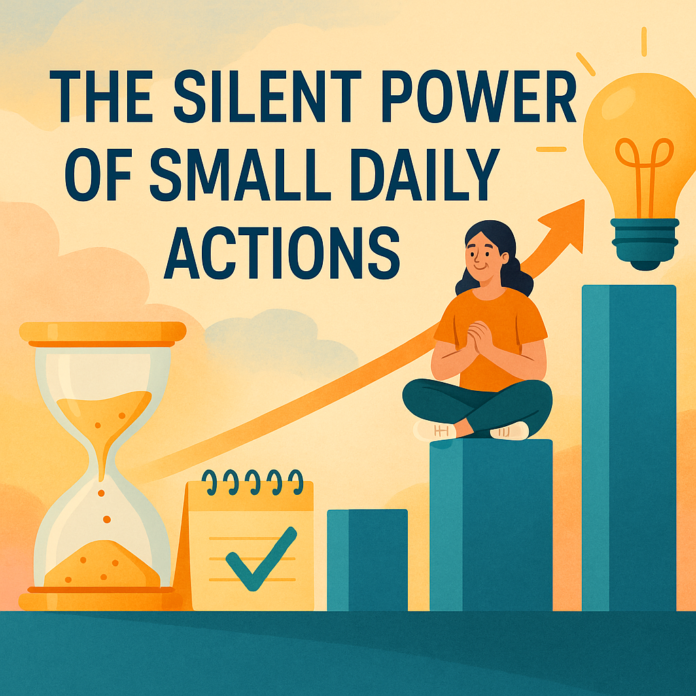
We often wait for the “one big moment” that will change everything — the perfect business idea, the dream job, the once-in-a-lifetime opportunity. But here’s the truth: breakthroughs are rarely explosions. They’re accumulations.
Your future is not built in one giant leap. It’s sculpted in quiet, almost invisible, daily actions.
2. Why Small Actions Are More Powerful Than Big Plans
Big plans excite the mind but often paralyze action.
Small actions look humble, but they build unstoppable momentum.
Think of compound interest in finance. The same principle applies to life:
One push-up daily becomes strength.
One paragraph daily becomes a book.
One genuine connection daily becomes a network.
Small actions compound into transformations.
3. The Psychology Behind Tiny Wins
Psychologists call this the Progress Principle: we stay motivated when we see consistent, small signs of progress.
Each micro-action:
Releases dopamine → reinforcing the behavior.
Builds identity → “I am the kind of person who…”
Reduces resistance → tomorrow feels easier.
👉 Success isn’t about motivation. It’s about momentum.
4. Real-World Examples of Silent Power
Fitness: 10 minutes of daily stretching heals years of stiffness.
Money: Saving $5 daily grows into an emergency fund, then investments.
Content: One blog or video per week → after 1 year, you’re an authority.
Relationships: One message of gratitude a day → deep bonds over time.
The impact is invisible in a week. Unstoppable in a year.
5. Why People Ignore This Secret
Too Small to Notice: We love drama, not discipline.
No Instant Gratification: We underestimate slow growth.
Impatience: We quit before results appear.
But the world’s top athletes, entrepreneurs, and thinkers all rely on daily disciplines — not one-off miracles.
6. How to Harness the Silent Power
1. Pick One Keystone Action
Choose something simple that creates ripple effects:
Write 100 words daily.
Read 10 minutes daily.
Walk 15 minutes daily.
2. Track It Visibly
Journal, habit app, or even a wall calendar → seeing progress locks it in.
3. Embrace Boring Consistency
Repetition feels dull, but it’s the engine of greatness.
4. Celebrate Micro Wins
Every check mark = fuel. Don’t underestimate its power.
7. The Truth Nobody Tells You
The world doesn’t clap for your daily effort. No one cheers for “day 47 of writing a blog.” But when the results come — when the book is finished, the body is transformed, the savings account is full — it looks like magic.
It isn’t magic. It’s the silent power of small actions done daily.
8. Final Reflection
Big dreams are inspiring. But small daily actions are unstoppable.
Want freedom? Create more, consume less.
Want strength? Move daily, not occasionally.
Want wisdom? Read and reflect every day.
Your life is being built today — not in giant leaps, but in small, silent choices.
💡 The difference between who you are and who you want to be is what you do every single day.
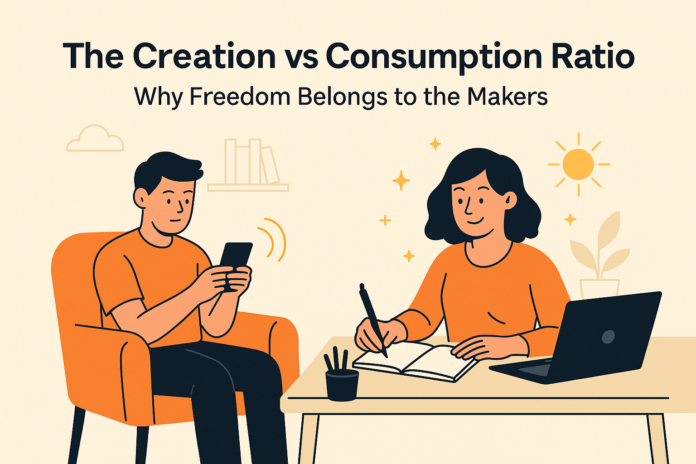
Your life trajectory depends on which side of this ratio dominates. 👉 Over-consume, and you become a passive participant in other people’s dreams. 👉 Prioritize creation, and you become an architect of your own freedom.
2. Why Freedom Requires Creation
Freedom isn’t achieved through endless consumption. No amount of courses, books, or videos alone will make you free.
Freedom comes from building things that outlive your effort → assets, businesses, content, products.
When you create, you move from being a consumer in someone else’s system → to being a builder of your own.
Every free person is a creator first, consumer second.
3. Fulfilment vs Consumption
Consumption gives quick dopamine — a Netflix binge, a shopping spree, a YouTube rabbit hole. But lasting fulfilment comes only from creation.
Ask yourself:
Do you remember the series you binged two years ago?
Or do you remember the project you built, the story you wrote, the skills you developed?
Fulfilment = leaving a trace of your existence in the world. Consumption disappears the moment it ends.
4. The Educational Content Trap
Paradox: even educational content can become empty consumption if you never apply it.
YouTube tutorials, online courses, books → they promise transformation.
But unless you stop watching and start doing, knowledge becomes entertainment.
⚡ The shift: Don’t just learn more. Create something with what you already know.
5. Always Produce — No Matter How Small
The secret isn’t massive projects. It’s consistency in producing daily.
Write one paragraph.
Record a short video.
Sketch one design.
Share one insight.
Creation compounds. Each output, no matter how small, builds identity and momentum.
6. Finding Your Life’s Work
Some hesitate because they haven’t “found their passion.” But waiting for clarity is just another form of consumption.
Instead:
Create broadly, experiment wildly.
Through repetition, patterns emerge.
Your “life’s work” isn’t discovered → it’s built brick by brick through output.
7. Random Acts of Creation
Not everything has to be grand or polished. Even small, spontaneous acts of creation are valuable.
A quick journal entry.
A rough idea shared online.
A conversation where you teach something you’ve learned.
Each act strengthens the muscle of creation and increases your creation-to-consumption ratio.
8. A Story of Transformation
The speaker’s brother illustrates this well: once he shifted from passive consumption into small, consistent acts of creation, his trajectory changed. He didn’t wait for the “perfect opportunity.” He started making, sharing, iterating. Over time, it snowballed into tangible freedom and fulfilment.
👉 Lesson: No breakthrough happens from consuming endlessly. Transformation is triggered by choosing to create.
When you share your work — writing online, posting videos, publishing projects — you:
Attract collaborators
Build credibility
Create feedback loops
Open doors to opportunities you couldn’t predict
⚡ Public creation accelerates growth in ways private effort never can.
10. Dealing with Social Backlash
When you create publicly, expect resistance:
Friends may mock.
Family may doubt.
Strangers may criticize.
But remember: critics consume, creators build. Backlash is proof that you are visible, that your work matters enough to be noticed. The choice is simple: endure temporary discomfort or stay invisible forever.
✅ Tip (2025): Focus on AI-augmented tools, cloud-native development, security-by-default, and collaborative environments. Automation, observability, and reproducibility are critical.
Patience means zooming out to see the real structure
4. Let Winners Run
Impatient traders close trades at +1% profit.
Patient traders hold until trend exhausts → +10% or more.
👉 Don’t cut winners early.
5. Accept Missed Opportunities
Patience also means accepting you won’t catch every move.
Better to miss 10 good trades than blow up on one bad one.
4. Case Study Example
Impatient Trader:
BTC at $30,500 → predicts “breakout now”
Enters long without confirmation
Market fakes out → dumps to $29,800 → loses $700
Patient Trader:
Waits for BTC to break $30,800 with strong volume
Confirms breakout retest → enters at $30,850
Ride trend to $32,500 → +$1,650 profit
👉 Patience = higher probability setups + lower stress.
5. The Psychology Behind Patience
FOMO (Fear of Missing Out): drives early entries
Ego: forces predictions instead of neutral observation
Discipline: patience means following plan, not emotions
6. Action Plan – Build Patience Into Your Trading
Before entering → ask: “Is this confirmed or just noise?”
Limit weekly trades → aim for 3–5 quality setups.
Set alerts (TradingView) → let price come to you, don’t chase.
Review journal → track wins/losses from patience vs impatience.
Reward yourself for waiting, even if it means no trade.
7. Final Takeaway
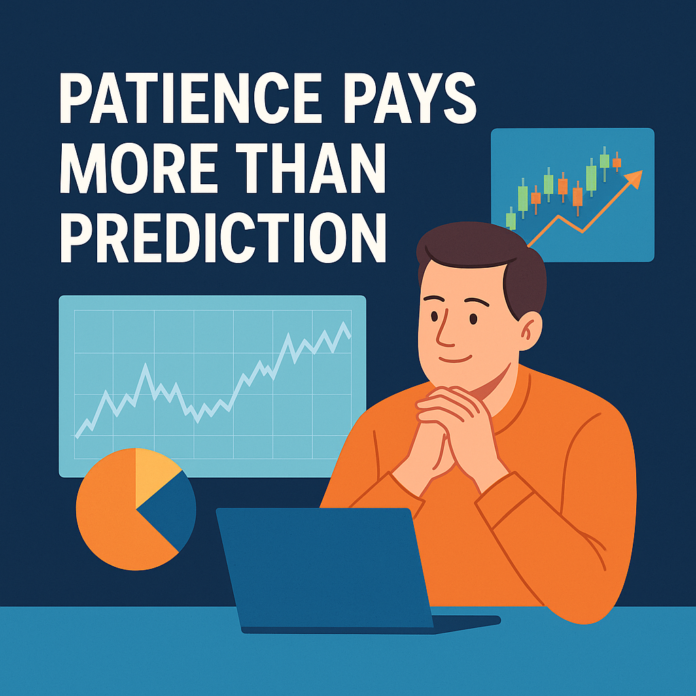
Prediction feeds ego.
Patience builds accounts.
👉 The market rewards those who wait for clear setups, manage emotions, and let winners run.
👉 If you want consistency, stop trying to be a prophet — be a patient hunter.
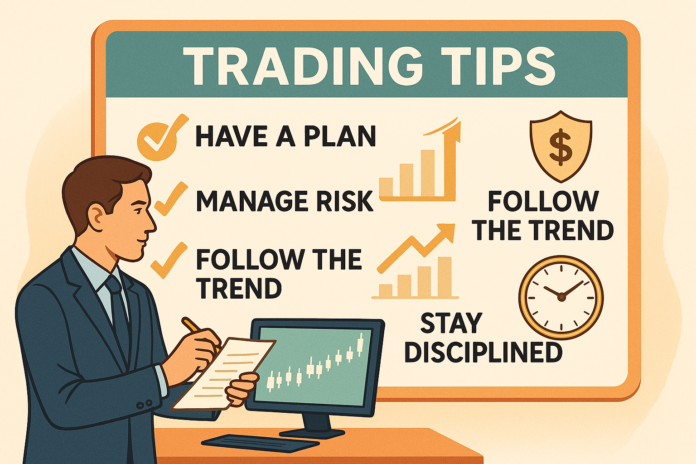
Every day, millions of traders open charts, scan signals, and chase profits. But here’s the hard truth: profit doesn’t come from finding the “perfect trade” — it comes from protecting your capital.
👉 A trader who masters risk can stay in the game long enough to benefit from winning streaks. 👉 A trader who ignores risk will blow up accounts, no matter how accurate their signals are.
That’s why today’s trading tip is simple, but life-changing: Focus on risk before chasing reward.
2. What Does “Risk First” Actually Mean?
When you enter a trade, there are three outcomes:
You win → account grows.
You lose → account shrinks.
You blow up → game over.
Most traders obsess over #1. Professionals obsess over avoiding #3.
Risk-first mindset means:
Deciding how much you are willing to lose before thinking about how much you might win.
Measuring your trade in % of capital, not dollars.
Building consistency instead of chasing jackpots.
3. Core Risk Management Rules
1. The 1–2% Rule
Never risk more than 1–2% of your account on a single trade.
$1,000 account → max loss = $10–20/trade
$10,000 account → max loss = $100–200/trade
👉 This keeps you alive through losing streaks.
2. Use Stop-Loss Every Time
No excuses. Even pros can’t predict black swan events. A stop-loss is your “insurance premium” against disaster.
Technical stop → based on chart structure (support/resistance)
Capital stop → based on % you’re willing to lose
3. Always Aim for Risk/Reward > 1:2
Risk $100 → aim for $200+ profit
This way, even with 40% win rate, you’re still profitable
👉 Too many traders risk $200 to make $50. That’s suicide.
4. Diversify Timeframes & Assets
Don’t bet entire capital on one signal, one bot, or one pair.
Mix: majors (EUR/USD, BTC/USDT), commodities (Gold, Oil), indices (S&P 500).
Spread risk → smooth performance curve.
5. Control Leverage
Leverage amplifies gains and losses.
Beginners: stay under 5x leverage
Pros: rarely exceed 10x
Casino gamblers: 50–100x (usually wiped out fast)
4. Real-World Example: Two Traders
Trader A (No Risk Control)
$1,000 account
Risks $500/trade (50%)
Wins 2 trades, doubles account to $2,000
Loses 1 trade, account back to $1,000
Another loss, account destroyed
Trader B (Risk-First)
$1,000 account
Risks $20/trade (2%)
Win rate: only 45%
After 50 trades: +15% profit = $1,150
Still alive, still compounding
👉 The difference? Trader B is still in the game, learning, compounding, building skill.
5. Why Traders Fail Without Risk Control
Overconfidence Bias → “This trade is a sure thing.”
Gambler’s Fallacy → doubling down after losses.
Lack of Patience → chasing daily jackpots instead of steady growth.
Emotional Tilt → trading angry after loss → digging a deeper hole.
Risk-first trading eliminates these pitfalls by setting rules in stone.
6. Advanced Risk Tools Traders Should Learn
Position Sizing Calculators → automatically calculate how much to trade based on account & stop-loss.
Trailing Stops → lock profits as trade moves in your favor.
Portfolio Heat Limits → e.g., max 6% total exposure across all open trades.
Daily Loss Limits → stop trading after 2–3 losing trades to avoid revenge trading.
7. Action Plan – Apply This Tip Today
Pick your % risk per trade (1–2%).
Set stop-loss BEFORE entering trade.
Calculate position size → don’t guess, use a calculator.
Review daily risk exposure → total account risk ≤ 5–6%.
Journal every trade → log risk % and reward ratio, not just entry/exit.
8. Final Takeaway
Most traders lose because they think trading = chasing profits. Professionals know trading = protecting capital, compounding slowly, letting risk management do the heavy lifting.
👉 Today’s trading tip isn’t glamorous. But it’s the one principle that separates winners from gamblers.
💡 Remember: If you control risk, profits take care of themselves.