Exclusive Content:

Can Police Enter Your House Without a Warrant? Legal Rules Explained

Quick Answer In many legal systems, police generally cannot enter...

Can Police Search Your Phone Without Permission? Legal Rules Explained

Quick Answer In many countries, police generally cannot search your...

Can You Return to a Country After Being Deported? Legal Rules Explained

Quick Answer Yes, it may be possible to return to...
Home Blog Page 52

Elevate Your Trading Game with TradingView: The Ultimate Platform for Every Trader!

0

TradingView is a leading platform that empowers traders and investors with a comprehensive suite of tools to analyze markets, execute trades, and connect with a global community. With over 100 million users worldwide, it’s a trusted resource for both beginners and seasoned professionals. Below, we explore why TradingView is a must-have for anyone looking to succeed in trading.

📈 Advanced Charting Capabilities

TradingView offers an unparalleled charting experience, allowing users to display up to 16 charts simultaneously, all synchronized for seamless analysis. You can choose from a variety of chart types, including candlesticks, Renko, Kagi, and Point & Figure, to suit your trading style. With over 400 built-in indicators and access to 100,000+ community-created indicators, you’ll have endless tools to analyze markets. The platform’s Pine Script feature lets you create custom indicators, giving advanced traders the flexibility to tailor their strategies.

💹 Powerful Analysis Tools

Beyond technical analysis, TradingView provides robust fundamental analysis tools, including over 100 metrics and financial statements for various assets. Its economic calendar keeps you updated on key market-moving events, while corporate data offers insights into company-specific news. For options traders, the platform includes a strategy builder and detailed options chains for precise trade planning. The Bar Replay tool also allows you to simulate trading on historical data, helping you refine strategies in a risk-free environment.

💻 Seamless Trading Integration

TradingView integrates with over 80 trusted brokers, enabling you to trade directly from the charts, streamlining your workflow. The paper trading feature lets you practice strategies without risking real money, making it ideal for beginners or testing new ideas. For a fun twist, The Leap competition allows you to trade with virtual funds for a chance to win real prizes, adding excitement to your trading journey. Whether you’re trading stocks, forex, cryptocurrencies, or futures, TradingView offers a unified experience.

👥 Community and Social Features

What sets TradingView apart is its vibrant community of millions of traders sharing ideas, strategies, and analyses. You can follow experts, join discussions, and learn from others’ insights, making it a hub for collaboration and education. This social aspect ensures you’re never trading alone, providing inspiration and knowledge to enhance your skills.

TradingView is a versatile platform that caters to traders and investors of all levels. Its advanced charting, powerful analysis tools, seamless trading integration, and active community make it an essential tool for success in the markets. Whether you’re a day trader, long-term investor, or algorithmic trader, TradingView has the features to elevate your game.

Ready to transform your trading? Sign up for TradingView today and experience the difference!

Why Fentanyl Feels So Good — And Why It Kills

0

“A few grains of powder that could mean the difference between bliss and death.”


🧠 Introduction: The High That Hijacks the Brain

Imagine a drug so powerful that it can deliver a wave of euphoric pleasure in seconds… and just as quickly, shut down your ability to breathe.

That’s fentanyl—a synthetic opioid that’s both a medical miracle and a public health catastrophe. Originally designed to treat severe pain, fentanyl is now the leading cause of drug overdose deaths in the United States and many other countries.

This blog explores the neurochemistry, mechanism, and societal impact behind one of the most dangerous substances on the planet.


💥 What Is Fentanyl?

Fentanyl is a man-made opioid, originally developed in the 1960s to manage pain in surgery and terminal illnesses. But in the hands of the black market, it has become a silent killer.

  • 50 to 100 times stronger than morphine
  • 20 to 50 times more potent than heroin
  • Can be lethal in doses as small as 2 milligrams

Its extreme potency, low production cost, and ease of mixing with other street drugs have made it the centerpiece of today’s opioid crisis.


🔬 Why Fentanyl Feels So Good: The Brain’s Response

To understand fentanyl’s seductive power, we need to explore how it interacts with the brain.

🔗 Step 1: Binding to μ-Opioid Receptors

Fentanyl fits like a key into specific receptors in your brain and spinal cord, especially μ-opioid receptors. These control:

  • Pain perception
  • Emotional response
  • Breathing regulation
  • Reward systems

🎆 Step 2: Flood of Dopamine

Once those receptors are activated, fentanyl triggers a massive surge of dopamine—the brain’s “feel-good” chemical. This creates:

  • Intense euphoria
  • Warmth, calm, and painlessness
  • A powerful sense of escape and comfort

“The feeling is so overwhelmingly pleasurable that users chase it again and again—often at any cost.”


🧪 Why It’s So Fast and Dangerous

Fentanyl’s molecular design gives it a deadly edge over other opioids.

🧠 1. Crosses the Blood-Brain Barrier Instantly

Thanks to its lipophilic (fat-loving) structure, fentanyl passes through the brain’s protective barrier within seconds—far faster than morphine or heroin.

⚠️ 2. Ultra-Low Lethal Dose

It only takes 2 milligrams—the size of a few grains of salt—to shut down your respiratory system.

🧯 3. Easy to Overdose

Because it’s often mixed unknowingly into other street drugs like heroin, cocaine, or pills, users don’t even realize they’re consuming fentanyl—making accidental overdose frighteningly common.


🧨 The Downward Spiral: From Euphoria to Dependency

Fentanyl doesn’t just create euphoria. It hijacks the brain’s survival system.

  • First few uses: Users chase the high.
  • Soon after: They begin using to avoid withdrawal—crippling pain, anxiety, sweating, vomiting.
  • Eventually: They need fentanyl just to feel normal.

This shift from pleasure to survival is what makes fentanyl addiction so hard to escape.


🌍 A Global Public Health Crisis

Fentanyl is not just a chemical—it’s a societal tragedy in motion.

📉 Statistics That Shock:

  • Over 70,000 opioid overdose deaths in the U.S. alone in 2023.
  • 150+ people die from fentanyl-related overdoses every day in North America.
  • Overdoses have surpassed car accidents as the leading cause of death for Americans aged 18–45.

🛡️ Fighting Back: What We Can Do

Despite its danger, there are tools and strategies to fight the fentanyl epidemic.

✅ 1. Naloxone (Narcan)

  • A fast-acting nasal spray that reverses opioid overdose
  • Saves lives when administered quickly
  • Now available in many pharmacies without prescription

✅ 2. Fentanyl Testing Strips

  • Simple tools to check for fentanyl contamination in pills or powders
  • Empower users to make safer decisions

✅ 3. Education & Awareness

  • The more people understand how fentanyl works, the more lives can be saved.
  • Stigma-free conversations reduce shame and help people seek treatment.

✨ Final Thoughts: Pleasure Is Not Always a Gift

Fentanyl is a master manipulator—delivering extreme pleasure, then demanding everything in return. It promises relief, but often delivers ruin. And the tragic irony is that it feels so good, users don’t realize they’re falling until it’s too late.

But knowledge is power.

If we understand the science, acknowledge the human cost, and support harm-reduction strategies, we can turn the tide on this crisis—one life, one choice, one breath at a time.


📌 Summary

Feature Explanation
What is Fentanyl? Synthetic opioid, 50–100x stronger than morphine
Why It Feels Good Triggers extreme dopamine release and pain suppression
Why It’s Deadly Crosses brain barrier fast; 2mg can be fatal
Addiction Risk Euphoria turns into survival mechanism
Tools to Help Naloxone, testing strips, education

🧠 Quote to Remember:

“Fentanyl doesn’t take over lives with force—it seduces, then enslaves.”

Why Exness Is the Smartest Choice for Your Trading Journey in 2025

0

🚀 Why Choose Exness for Your Trading Journey

📊 Trading Overview

Trading involves buying and selling financial assets like currencies, stocks, and commodities to profit from price changes, requiring a reliable platform like Exness to support your goals.

🌟 Exness as a Top Choice

Exness is a globally trusted broker with over 1 million active clients and 16 years of experience, offering competitive features.

💼 Key Benefits

✅ Tight spreads
⚡ Fast execution
💸 Instant withdrawals
🕌 Swap-free trading
📈 Diverse instruments
🕐 24/7 support in 14 languages

Start trading today 👉 Join Exness

💬 User Feedback

Exness has a 4.5/5 TrustScore on Trustpilot based on 17,000+ reviews, praised for its reliability and service.

📚 Learning Curve

Whether you’re a beginner or professional, Exness offers educational resources and various account types. Check out their Born to Trade podcast and get smarter with every trade.

⚠️ Risk Note

Trading carries risks. Always educate yourself and start with a demo on Exness before investing real funds.


💡 Introduction to Trading

Trading in financial markets means buying and selling assets like currencies, stocks, commodities, and crypto to take advantage of price fluctuations. It requires strategy, discipline, and a solid trading partner like Exness.


🖥️ Why a Trading Platform Matters

A trading platform like Exness acts as your gateway to the markets. It should offer:

  • ⚙️ Fast execution

  • 📉 Low spreads

  • 📊 Analytical tools

  • 🛠️ Portfolio management

  • 🧑‍💻 Excellent customer service


🌍 Why Exness Stands Out

Exness has served over 1 million clients across 150+ countries. With 16+ years in the business, it provides:

  • 🔒 Transparency

  • 🛡️ Security

  • ⚡ High-speed trading infrastructure
    Ready to experience it? 👉 Sign up here


💎 Key Reasons to Choose Exness

⭐ Feature 🔍 Details
🔐 Regulatory Compliance Regulated by FSA, Central Bank of Curaçao, PCI DSS certified, and client funds are safely segregated.
💱 Tight Spreads EURUSD: 0.6 pips, USOIL: 1.2 pips, XAUUSD: 11.2 pips.
Fast Execution Millisecond execution, <1% slippage.
💸 Instant Withdrawals 98%+ processed in under 1 minute!
🕌 Swap-Free Trading Great for long-term traders (T&Cs apply).
📈 Diverse Instruments Forex, crypto, stocks, indices, commodities.
🕐 24/7 Support Multilingual support via chat, email, and phone.
🖥️ Flexible Platforms Trade on Web, iOS, Android, MT4, MT5, or Exness Terminal.

👉 Open your account now: Exness Registration


👥 Account Types for Every Trader

  • Standard: Beginner-friendly, no commission.

  • Standard Cent: Trade with cents, ideal for low-risk learning.

  • Pro: Tight spreads, advanced tools.

  • Raw Spread: Minimal spreads + commission.

  • Zero: Spreads as low as 0.0 on major instruments.

  • Demo: Practice risk-free with virtual funds.

🚀 Explore your best fit: Start with Exness


🎓 Educational Support

From blogs to webinars to the “Born to Trade” podcast, Exness helps you level up your trading knowledge. Even if you’re new, you’ll never feel lost.


🌟 User Feedback and Trust

  • ⭐ 4.5/5 TrustScore on Trustpilot

  • 🗣️ 17,000+ reviews

  • ✅ 97% of negative reviews get a response within a week

  • 🧾 Trusted by global traders for transparency and withdrawal speed

📢 See for yourself: Try Exness now


🔧 Extra Features Worth Mentioning

  • 🚫 Negative Balance Protection

  • ⚡ Instant Deposits

  • ⚽ Partnerships with LALIGA & Real Madrid

  • 🌐 Available in 150+ countries


🏁 Getting Started with Exness

Here’s how to start trading with Exness:

  1. 📥 Go to Exness Sign-Up Page

  2. 📝 Fill in your email, phone number, and region

  3. ✅ Verify your account

  4. 💰 Deposit funds and choose your trading platform

  5. 📈 Start trading confidently!


✅ Conclusion

Exness offers everything a trader needs — tight spreads, lightning-fast withdrawals, 24/7 support, and regulated security. Whether you’re just starting or scaling your strategy, it’s a platform built to help you grow.

⚠️ Risk Disclaimer: Trading involves risk. Always educate yourself and manage your exposure wisely.

🌐 Ready to begin your trading journey?
👉 Create your Exness account today!

Al-Qarawiyyin University – The World’s Oldest University, Founded in 859 AD

0

The Story of Fatima al-Fihri: Founder of the World’s First University

Introduction

When we think about great educational institutions, names like Oxford, Harvard, and Cambridge often come to mind. But what if we told you that the world’s first-ever university was founded by a Muslim woman nearly twelve centuries ago? Her name was Fatima al-Fihri, and her establishment, Al-Qarawiyyin University, is still operating today in Fez, Morocco. Recognized by UNESCO and the Guinness World Records, it stands as the oldest existing, continuously operating degree-granting educational institution in the world.

Who Was Fatima al-Fihri?

Fatima al-Fihri was born into a wealthy and devout Muslim family in Tunisia around the early 9th century. Her family later migrated to Fez, Morocco, which was a bustling hub of culture, knowledge, and commerce during that period.

Despite her wealthy background, Fatima was known for her intelligence, piety, and generosity. After the death of her father, who was a successful businessman, Fatima inherited a considerable fortune. Instead of indulging in luxuries, she chose to use her wealth for a noble cause that would benefit society.

Founding of Al-Qarawiyyin University

In 859 AD, Fatima al-Fihri initiated the construction of Al-Qarawiyyin Mosque which also served as an educational center. Her vision was not only to establish a place of worship but also a center for learning and intellectual exchange.

Over time, the institution expanded beyond religious studies to include subjects like mathematics, astronomy, grammar, medicine, and more. It attracted scholars from various parts of the Muslim world and beyond, making it a major center of knowledge and education.

Fatima al-Fihri personally supervised the construction of the mosque and its associated educational facilities, often fasting throughout the process as a form of devotion and gratitude. Her commitment to learning and education was unmatched.

Legacy of Al-Qarawiyyin University

Al-Qarawiyyin continued to grow and became recognized as a university during the 10th century. It played a pivotal role in the Golden Age of Islam, contributing immensely to the fields of science, mathematics, philosophy, and religious studies.

The university attracted scholars such as Ibn Khaldun, Averroes (Ibn Rushd), and even influenced European scholars during the Middle Ages. Remarkably, Al-Qarawiyyin is still operational today and remains an important cultural and educational center.

Lessons From Fatima al-Fihri’s Story

  1. Generosity and Vision: Fatima al-Fihri chose to invest her wealth into education rather than personal luxury, leaving a legacy that has endured for centuries.
  2. Empowerment Through Knowledge: Her story is a testament to how women have historically contributed to education, knowledge, and societal growth.
  3. Faith and Dedication: Fatima’s spiritual devotion motivated her to create something beneficial for her community and future generations.

Conclusion

Fatima al-Fihri’s story is one of dedication, intelligence, and selflessness. Her establishment, Al-Qarawiyyin University, remains a shining example of how the pursuit of knowledge and faith can leave a lasting legacy. As we celebrate the progress of education worldwide, we must remember those whose vision made it possible—especially a remarkable woman from 9th century Morocco.

Being Your Own Boss vs. Employee Life: Why Entrepreneurship’s Initial Pain Becomes Ultimate Freedom

0

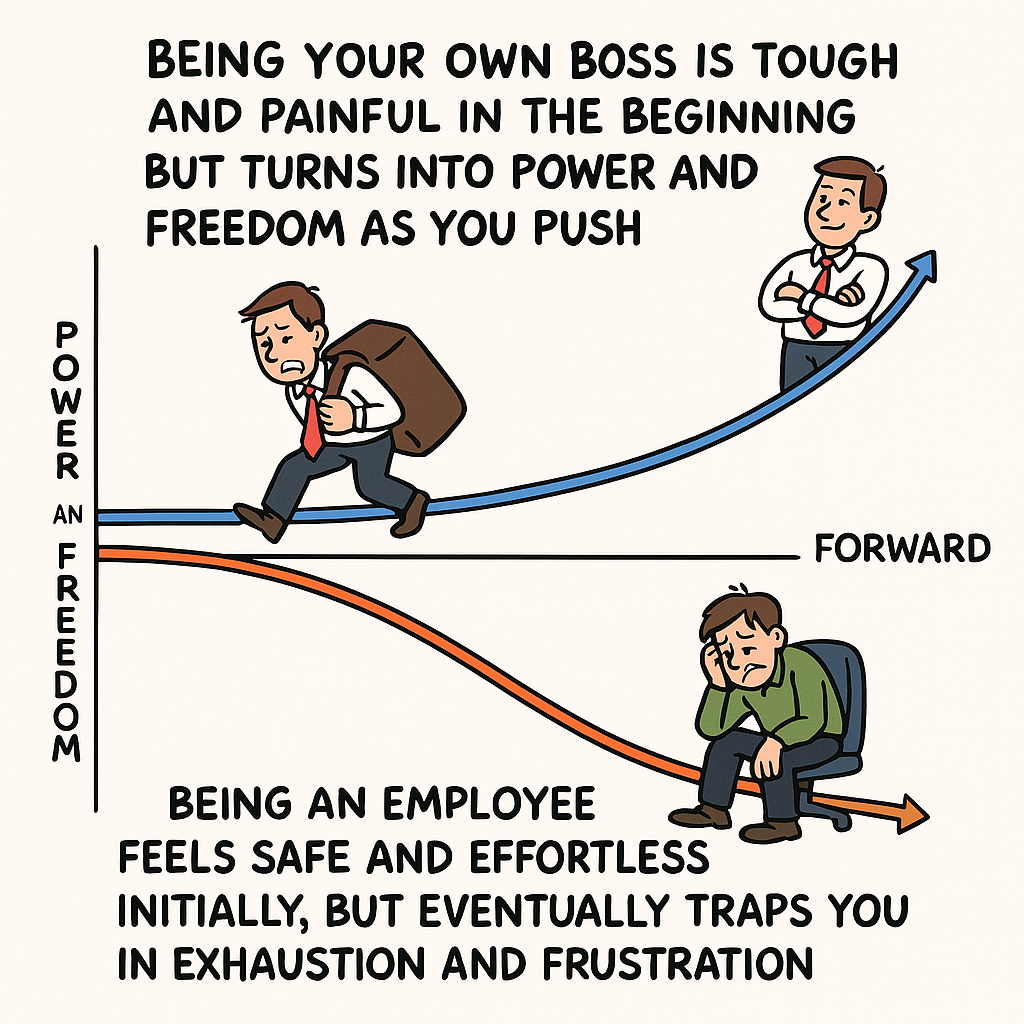
“Being your own boss is tough and painful in the beginning but turns into power and freedom as you push forward. Being an employee feels safe and effortless initially but eventually traps you in exhaustion and frustration.”


Introduction

There’s a famous saying, “Choose your hard.” Life offers two distinct career paths: working for yourself or working for someone else. Both options have their own sets of challenges and rewards, but the experiences drastically differ. Initially, being your own boss can be incredibly daunting and painful. Yet, as you persevere, this struggle blossoms into personal power, freedom, and fulfillment. On the other hand, being an employee often feels safe and straightforward at first but, over time, can trap you in a cycle of exhaustion, frustration, and dependency.

In this blog, we will explore the realities of entrepreneurship versus traditional employment, using real-life examples, detailed insights, and practical scenarios to demonstrate why initial pain leads to future empowerment when working for yourself, and why initial ease in employment often transitions into feelings of limitation and frustration.


Part 1: Why Being Your Own Boss is Painful at First

1.1 The Pain of Uncertainty

Starting your own business or freelancing career initially means stepping into a world of uncertainty. Unlike traditional employment, there is no guaranteed paycheck at the end of the month. Your income depends solely on your actions, decisions, and the marketplace’s unpredictable nature.

Example:

Take the example of an aspiring freelance web developer named John. When John left his secure software job, the initial months were full of financial stress. Clients were hard to come by, expenses piled up, and his savings drained quickly. The uncertainty of when his next project or paycheck would arrive created significant stress and self-doubt.

1.2 High Risk and Initial Losses

Every entrepreneur experiences initial losses—whether financial or emotional. You may invest significant time and resources without immediate returns, causing frustration and disappointment.

Example:

Consider Sarah, who launched an online clothing store. Initially, her investment in inventory, marketing, and website development far exceeded her revenues. The constant stress of losing money, dealing with customer complaints, and managing logistics became exhausting, and doubts about her decision emerged frequently.

1.3 Loneliness and Isolation

Being your own boss can initially be lonely. Without a team or coworkers to rely on, you may face problems and setbacks on your own. This isolation can amplify stress, increasing mental and emotional burdens.

Example:

Alex, a consultant who left corporate life, struggled with loneliness. Previously accustomed to a bustling office, he missed the camaraderie and social interactions that accompanied his former role, amplifying feelings of isolation.


Part 2: The Transition from Pain to Power

Despite the pain and hardships described, self-employment has a transformative power, turning initial struggles into incredible opportunities for growth, freedom, and empowerment.

2.1 Building Resilience

Facing hardships, failures, and uncertainties early on builds resilience. Each setback strengthens your emotional muscles, making you more adaptive, agile, and capable.

Example:

John, the freelance web developer mentioned earlier, learned essential lessons through early struggles. Over time, he became adept at securing clients, marketing his skills effectively, and managing cash flow. His resilience turned initial vulnerability into confident business acumen.

2.2 Mastery and Confidence

Self-employment demands learning new skills and mastering diverse roles—from marketing to accounting to sales. This multifaceted experience rapidly accelerates personal growth and confidence, making you stronger professionally and personally.

Example:

Sarah’s initial losses in her clothing business became her greatest teachers. She mastered e-commerce strategies, refined her marketing approach, and became confident in managing her finances. Eventually, her business began thriving, and she became a mentor to other aspiring entrepreneurs.

2.3 Personal and Financial Freedom

Perhaps the most significant transformation is the freedom to control your destiny—financially and personally. As your business stabilizes, the initial pain gives way to immense satisfaction and liberation.

Example:

Alex, the isolated consultant, gradually built a professional network and established himself as an expert. With increased confidence and financial independence, he began to choose clients who aligned with his values, significantly enhancing his sense of freedom and fulfillment.


Part 3: Why Traditional Employment Seems Easy Initially

3.1 Predictability and Security

Employment provides initial security, including a steady income, predictable routines, structured career growth, and clear expectations. This stability initially feels comforting and safe.

Example:

Emma, a fresh graduate, found her first job exciting. Receiving a predictable salary, clear job instructions, and having managers guide her felt reassuring. The comfort of predictability and security initially motivated her and made life straightforward.

3.2 Less Immediate Responsibility

As an employee, you’re part of a structured system. Your responsibilities are clearly defined and limited. Mistakes are shared across teams or absorbed by the company, reducing immediate personal stress and responsibility.

Example:

Michael enjoyed working in a large tech company. Mistakes were quickly corrected, and responsibility was shared by his team. This allowed him to enjoy his work without the anxiety of bearing sole responsibility for the outcomes.


Part 4: The Long-Term Trap of Traditional Employment

However, this initial ease and safety in employment often evolve into exhaustion, frustration, and feelings of entrapment over time.

4.1 Lack of Control and Autonomy

As an employee, you’re subject to others’ decisions, politics, and expectations. Over time, this lack of autonomy can create frustration, limiting your professional creativity and innovation.

Example:

Emma, despite her initial excitement, began to feel suffocated. Her creative ideas were often dismissed, her autonomy was limited, and bureaucratic obstacles left her frustrated and demotivated.

4.2 Career Stagnation and Dependency

Employment often leads to career stagnation, particularly if promotions or salary increments stall. Over-reliance on an employer’s goodwill makes you vulnerable to sudden layoffs or organizational restructuring.

Example:

Michael, who initially enjoyed the safety of corporate life, felt trapped after five years without significant career progress. Dependent on corporate decisions for his financial security, Michael became anxious and exhausted, feeling trapped with limited options.

4.3 Exhaustion from the “9-to-5” Grind

The repetitive nature of traditional employment can eventually lead to burnout and exhaustion, diminishing your overall happiness and well-being.

Example:

Aisha, an accountant, initially loved her corporate job. However, after years of repetitive work, mandatory overtime, and a toxic work environment, she found herself emotionally and physically exhausted, unable to pursue personal passions or family time, creating deep dissatisfaction.


Part 5: Which Path to Choose? Evaluating Your Priorities

Choosing between being your own boss or remaining an employee ultimately depends on your priorities, risk tolerance, and life goals.

  • If you deeply value stability, structured environments, and immediate financial security, traditional employment might align with your personality. However, you should remain cautious about potential stagnation or dependency.
  • Conversely, if you seek autonomy, growth, personal freedom, and are willing to endure initial discomfort for long-term rewards, being your own boss could be life-changing and deeply fulfilling.

Conclusion: Embracing the Initial Pain for Future Freedom

The journey of entrepreneurship, despite its initial hardships, offers unparalleled opportunities for personal and financial freedom. Yes, it’s painful in the beginning, but this pain is temporary. What remains is the resilience, mastery, and freedom you build along the way.

Conversely, while traditional employment appears safe initially, the hidden trap of long-term stagnation, exhaustion, and frustration cannot be ignored.

As you navigate your career path, remember that every choice involves trade-offs. Deciding to become your own boss means willingly embracing initial uncertainty and pain in exchange for future empowerment. Choosing traditional employment offers immediate comfort but may require consciously managing long-term risks of stagnation and burnout.

Ultimately, your journey, your choice, and your resilience will shape your success. Embrace your path consciously, and it will lead you exactly where you wish to be.

Understanding Dark Human Psychology: An In-Depth Guide with Real-Life Examples and Practical Tips

0

Introduction

Human psychology is a vast ocean of behaviors, thoughts, and emotions. While many of these elements are positive and help us thrive in society, there’s also a darker side—often referred to as dark human psychology. Dark psychology explores manipulative behaviors, the motivations behind unethical acts, and how certain individuals use psychological techniques to exploit or harm others.

This comprehensive guide will delve into the intricacies of dark human psychology, examining concepts such as manipulation, narcissism, gaslighting, emotional abuse, and more. Throughout this guide, you’ll gain practical knowledge about how these behaviors manifest, real-life examples to help you recognize these traits, and essential tips on how to protect yourself and foster healthier relationships.


What is Dark Human Psychology?

Definition

Dark psychology refers to the study of human nature’s manipulative and exploitative aspects. It deals with understanding how some individuals consciously or unconsciously use psychological tactics, such as manipulation, deception, intimidation, and control, to influence or exploit others.

Common Traits of Dark Psychology

  • Manipulation: Using deceptive tactics to control others.
  • Narcissism: Excessive self-focus and a lack of empathy.
  • Gaslighting: Distorting reality to make someone doubt their perception.
  • Psychological bullying: Emotional or mental abuse intended to belittle.
  • Sociopathic behaviors: A disregard for social norms and the rights of others.

Exploring Dark Psychological Traits in Detail

1. Manipulation

Manipulation involves influencing others through indirect, deceptive, or underhanded tactics.

Real-Life Example:

Imagine a co-worker who consistently flatters colleagues to gain trust, only to use that trust later to shift blame for their own mistakes.

Tips to Recognize Manipulation:

  • Notice inconsistent behaviors or overly flattering language.
  • Be wary of those who frequently twist narratives to their advantage.

How to Protect Yourself:

  • Develop assertiveness and clearly state boundaries.
  • Trust your instincts if something feels “off.”

2. Narcissism

Narcissists exhibit excessive self-admiration, entitlement, and a lack of empathy for others.

Real-Life Example:

A narcissistic boss might take full credit for the success of their team without acknowledging any contributions from others.

Tips to Recognize Narcissism:

  • Watch for exaggerated self-importance or entitlement.
  • Pay attention to someone who constantly seeks admiration and validation.

How to Protect Yourself:

  • Limit personal exposure and maintain professional boundaries.
  • Seek emotional support from trusted friends or mental health professionals.

3. Gaslighting

Gaslighting is psychological manipulation aimed at making someone doubt their perceptions or sanity.

Real-Life Example:

In a relationship, one partner might deny having said hurtful things, causing the other partner to question their own memory and reality.

Tips to Recognize Gaslighting:

  • Trust your perception and memories.
  • Look for inconsistencies or frequent contradictions in someone’s statements.

How to Protect Yourself:

  • Keep detailed notes or a journal to reaffirm your experiences.
  • Seek support from external, trusted individuals to validate your reality.

4. Emotional Abuse

Emotional abuse involves consistently undermining someone’s emotional well-being through criticism, humiliation, or control.

Real-Life Example:

A parent might constantly belittle their child’s achievements, making them feel inadequate and unworthy.

Tips to Recognize Emotional Abuse:

  • Frequent criticism, yelling, belittling, or humiliation.
  • Constant feelings of anxiety or diminished self-worth around the abuser.

How to Protect Yourself:

  • Set firm boundaries and clearly communicate unacceptable behaviors.
  • Seek professional counseling and create a support network.

5. Sociopathic and Psychopathic Behaviors

These traits involve a severe lack of empathy, disregard for others’ rights, and manipulative or harmful behaviors.

Real-Life Example:

Bernie Madoff, infamous for his Ponzi scheme, showed psychopathic tendencies through his deceit, manipulation, and lack of remorse.

Tips to Recognize Sociopathic Behaviors:

  • Persistent deceitfulness and exploitation.
  • Complete lack of empathy and guilt.

How to Protect Yourself:

  • Trust your intuition when someone’s charm feels superficial or manipulative.
  • Avoid personal or financial entanglements with individuals displaying these signs.

Psychological Techniques Used in Dark Psychology

Persuasion and Influence

Dark psychological tactics often exploit persuasion techniques to manipulate decisions or behaviors.

  • Authority: People are more likely to obey or follow suggestions from those perceived as authoritative.
  • Scarcity: Creating a sense of urgency by suggesting limited availability of something desirable.

Protection Tips:

  • Verify claims independently before making decisions.
  • Stay aware of emotional pressures intended to rush your choices.

Emotional Triggers and Fear-Mongering

Individuals using dark psychology often exploit emotions such as fear, guilt, or obligation.

  • Example: “If you loved me, you would do this for me.”

Protection Tips:

  • Identify emotional triggers and refuse to engage with manipulative emotional pleas.
  • Seek objective perspectives when emotional pressures cloud your judgment.

How to Recognize and Defend Against Dark Psychological Tactics

Key Signs to Look For:

  • Consistent dishonesty or exaggeration.
  • Frequent attempts to isolate you from others.
  • Manipulation tactics such as guilt-tripping or intimidation.
  • Persistent lack of empathy or consideration for others.

Defensive Strategies:

  • Strengthen Your Boundaries: Clearly define and assert your personal limits.
  • Develop Emotional Intelligence: Increase your awareness of emotional manipulation.
  • Build a Reliable Support Network: Seek advice and emotional support from trusted individuals.
  • Educate Yourself: Knowledge about manipulation tactics is the best defense against them.

Case Studies of Dark Psychology in Popular Culture

Case Study: Elizabeth Holmes and Theranos

Elizabeth Holmes manipulated investors and the media by promising revolutionary blood-testing technology that never existed. She used charisma, false authority, and strategic deception to exploit others, embodying dark psychological traits.

Case Study: Ted Bundy

Bundy utilized charm, attractiveness, and deception to manipulate his victims, showcasing severe psychopathic behaviors and a lack of empathy.


Why is it Important to Understand Dark Psychology?

Understanding dark psychology allows you to:

  • Recognize and avoid toxic relationships.
  • Protect your mental health by setting firm boundaries.
  • Develop healthier, authentic connections.
  • Foster resilience against manipulation.

Practical Tips for Healthy Psychological Development

  • Enhance Self-awareness: Regular self-reflection helps you recognize and improve unhealthy psychological patterns.
  • Practice Mindfulness: Strengthen emotional resilience and clarity.
  • Prioritize Mental Health: Seek professional help to overcome negative psychological influences.
  • Communicate Assertively: Clear communication reduces vulnerability to manipulation.

Conclusion

Exploring the darker aspects of human psychology is not comfortable, but it’s crucial for safeguarding your mental and emotional well-being. By understanding manipulative behaviors, recognizing signs of toxic relationships, and building strong emotional defenses, you empower yourself to navigate personal and professional life confidently and safely.

The journey towards emotional maturity and psychological resilience involves confronting uncomfortable realities. With awareness and proactive strategies, you can defend yourself effectively against the darker side of human interactions, ultimately cultivating a healthier and more balanced psychological life.

Remember, knowledge is power—especially when it comes to understanding and navigating the complexities of dark human psychology.

Understanding Human Psychology Through Traits of Wild Animals

0

Introduction

Have you ever heard someone describe another person as “clever as a fox,” “brave as a lion,” or “stubborn as a mule”? These animal-based metaphors aren’t simply poetic expressions—they actually reflect deep insights into human psychology. Humans have observed animals for thousands of years, drawing meaningful analogies that help explain complex human behaviors. In this comprehensive blog, we’ll explore how animal traits parallel human psychological traits, particularly focusing on animals known for unique characteristics like the fox’s cleverness, the lion’s courage, the owl’s wisdom, and more. We’ll discuss real-life examples and practical tips for harnessing these insights to improve self-awareness, relationships, leadership, and personal growth.


The Fox: Cleverness and Adaptability

Understanding the Trait

Foxes have long been associated with cunning, cleverness, and adaptability. Their reputation comes from their remarkable ability to find innovative solutions to challenges and adapt quickly to changing environments. When faced with danger or obstacles, a fox doesn’t rely purely on strength; instead, it uses intelligence, quick thinking, and flexibility.

Similarly, in human psychology, individuals described as “fox-like” often demonstrate:

  • Problem-solving skills: They’re quick to identify clever solutions to complex problems.
  • Strategic thinking: They anticipate moves and counter-moves, making them effective strategists.
  • Adaptability: They’re flexible in changing situations and handle ambiguity better than others.

Real-Life Example

Consider a professional entrepreneur or marketer who frequently adapts business strategies to stay ahead of competitors. Like the fox, these professionals never stick rigidly to one approach; instead, they continuously innovate and find new ways to succeed. Companies like Amazon and Netflix, known for their constant adaptability to consumer preferences, showcase fox-like thinking.

Tips to Develop Fox-like Cleverness

  • Think creatively: Challenge yourself to think differently. Approach problems from multiple angles.
  • Stay flexible: Embrace change instead of resisting it. Adapt your strategy as new information arises.
  • Practice observation: Observe successful individuals or companies and note their strategies and adaptability.

The Lion: Courage and Confidence

Understanding the Trait

The lion symbolizes bravery, courage, and natural leadership. Known as “King of the Jungle,” lions display confidence, strength, and authority. Human counterparts with lion-like traits often possess:

  • High self-esteem: Confidence in their abilities and decisions.
  • Leadership skills: Naturally attract and inspire followers.
  • Fearlessness: Face challenges head-on without hesitation.

Real-Life Example

Nelson Mandela demonstrated lion-like courage by standing fearlessly against injustice. Mandela’s ability to lead with strength and confidence—even in dire situations—embodies lion-like qualities, inspiring generations.

Tips to Develop Lion-like Courage

  • Face your fears: Regularly confront situations that intimidate you to build confidence.
  • Practice assertiveness: Clearly express your thoughts, needs, and boundaries.
  • Lead by example: Take responsibility, show strength during challenges, and inspire others with your actions.

The Owl: Wisdom and Insight

Understanding the Trait

Owls symbolize wisdom, insight, and thoughtful reflection. Known for their exceptional vision and calm demeanor, owls remind us of the importance of introspection, observation, and knowledge.

Human “owls” typically exhibit:

  • Analytical thinking: Excellent problem-solving through deep analysis.
  • Patience: They take the time to fully understand situations before acting.
  • Good judgment: Make wise, carefully considered decisions.

Real-Life Example

Albert Einstein exemplified owl-like wisdom through his meticulous thinking and profound insight into complex scientific phenomena. His patience and deep analysis led to groundbreaking theories that transformed our understanding of the universe.

Tips to Develop Owl-like Wisdom

  • Practice mindfulness: Develop calmness and observation skills.
  • Read widely: Constantly seek knowledge in diverse fields.
  • Reflect regularly: Take time to analyze your experiences and learn from them.

The Elephant: Memory and Loyalty

Understanding the Trait

Elephants are renowned for their powerful memories and deep sense of loyalty and community. In human psychology, elephant-like individuals are:

  • Dependable: Reliable friends, partners, and colleagues.
  • Emotionally intelligent: Sensitive and caring towards others.
  • Community-oriented: Prioritize relationships and group well-being.

Real-Life Example

Mother Teresa displayed elephant-like loyalty and emotional intelligence, dedicating her life to serving others with unwavering compassion and commitment.

Tips to Develop Elephant-like Loyalty

  • Value relationships: Invest emotionally in friendships and partnerships.
  • Express empathy: Practice understanding and showing genuine care towards others.
  • Be consistent: Follow through on promises and commitments.

The Wolf: Teamwork and Discipline

Understanding the Trait

Wolves symbolize teamwork, discipline, and social connection. Known for their cooperative hunting strategies and strong pack bonds, wolves teach us that collective strength outshines individual effort.

Humans who exhibit wolf-like traits usually show:

  • Strong teamwork: Effective collaboration and communication.
  • Discipline: Commitment to group rules and collective goals.
  • Social responsibility: Prioritize the well-being of the group.

Real-Life Example

Professional sports teams, successful startups, and well-managed corporations embody wolf-like characteristics. Companies like Google emphasize collaboration and teamwork, reflecting wolf-like discipline and unity.

Tips to Develop Wolf-like Discipline

  • Collaborate frequently: Engage actively in team projects and group activities.
  • Prioritize collective goals: Place team success above personal achievements.
  • Practice effective communication: Build trust and clarity within your team.

The Eagle: Vision and Ambition

Understanding the Trait

The eagle symbolizes vision, clarity, ambition, and determination. Its extraordinary eyesight allows it to see distant goals clearly, symbolizing long-term planning and ambition.

Human “eagles” exhibit:

  • Clear vision: Define goals precisely and understand how to achieve them.
  • Ambition: Continually striving for higher accomplishments.
  • Determination: Relentlessly pursuing their objectives.

Real-Life Example

Entrepreneurs like Elon Musk reflect eagle-like ambition and vision, setting long-term, groundbreaking goals such as colonizing Mars or revolutionizing transportation.

Tips to Develop Eagle-like Vision

  • Set clear goals: Clearly articulate what you want to achieve.
  • Maintain long-term perspective: Avoid short-term distractions.
  • Stay motivated: Regularly remind yourself of your goals and why they matter.

Psychological Integration of Animal Traits

Combining Strengths for Personal Growth

Each animal trait offers unique strengths and insights. By combining these, we can achieve balanced personal and professional growth. For instance:

  • Combine fox (adaptability) and lion (courage): Quickly adapt to change while remaining brave enough to take necessary risks.
  • Blend owl (wisdom) and wolf (teamwork): Provide deep insights while contributing to collective goals.
  • Unite elephant (loyalty) and eagle (vision): Develop lasting relationships and lead others toward shared ambitions.

Practical Application: Self-Assessment

Identify which traits resonate most with you and assess areas for improvement. Reflect regularly on these traits and set specific goals for developing each strength.


Conclusion

Using animals as metaphors helps us simplify and visualize complex human psychological traits. Understanding how traits such as fox-like cleverness, lion-like courage, owl-like wisdom, elephant-like loyalty, wolf-like teamwork, and eagle-like vision parallel human behaviors enables profound self-awareness and growth.

By consciously incorporating these animal-inspired traits into daily life, we enrich our understanding of ourselves and others, enhance our relationships, leadership capabilities, and personal success.

So next time you call someone “as clever as a fox,” remember that beneath the playful analogy lies deep psychological insight—insight that can transform your own approach to life.


Quick Recap of Animal Traits

Animal Key Trait Tip for Development
🦊 Fox Cleverness & Adaptability Think creatively and stay flexible.
🦁 Lion Courage & Confidence Face fears and practice assertiveness.
🦉 Owl Wisdom & Insight Practice mindfulness and reflection.
🐘 Elephant Memory & Loyalty Value relationships; express empathy.
🐺 Wolf Teamwork & Discipline Collaborate and communicate clearly.
🦅 Eagle Vision & Ambition Define clear goals; stay motivated.

By embracing these symbolic animal traits, we not only learn about nature but also gain valuable perspectives on human psychology, becoming more effective, empathetic, and balanced individuals.

No Matter How Heavy Your Heart Feels, Take a Deep Breath and Start Again

0

“No matter how heavy your heart feels, take a deep breath and start again.”

We all have those days — the ones where everything feels heavy.

Where grief, failure, regret, or loneliness make it hard to even breathe.

And in those moments, this quote offers a quiet but powerful truth:

You don’t need to fix everything all at once.

You just need to pause… breathe… and begin again.


Why This Matters

Life can break you in small, silent ways.

But the strength lies in your ability to reset — to give yourself permission to try again, even when everything hurts.

It’s not about pretending the pain doesn’t exist.

It’s about not letting it define your next step.


Examples of Starting Again

1. After a Breakup or Loss

  • Your heart feels shattered.
  • You think you’ll never smile the same way again.
  • But one deep breath… one step outside… one new routine…

    And slowly, life starts to rebuild itself.

    Healing begins with starting again.

2. After Failing a Dream

  • Maybe your startup collapsed. Or you got rejected from your dream job.
  • You feel like you’ve let everyone down.
  • But the most successful people are not those who never failed —

    They’re the ones who took a breath, stood up, and tried one more time.

3. In Daily Life

  • Sometimes, it’s not a big tragedy. Just exhaustion, anxiety, or burnout.
  • You’re tired of pretending you’re okay.
  • And in that quiet heaviness, even a deep breath can feel like rebellion.

    A small act of courage to begin again.


The Power of One Breath

One breath won’t fix everything.

But it reminds you:

You are still alive.

You still have a choice.

You still have time to rebuild — no matter how broken things feel.


Final Thought

“No matter how heavy your heart feels, take a deep breath and start again.”

Because even the strongest hearts ache.

And even the most broken hearts can beat again —

One breath at a time.

Unveiling Human Consciousness: The Greatest Mystery of All

0

Of all mysteries humanity has faced—space exploration, quantum physics, ocean depths—the greatest enigma still remains our own consciousness. It’s the most fascinating, elusive, and intriguing subject we know.


What is Consciousness?

Consciousness is our awareness of ourselves and the world around us. It’s the inner voice reading these very words, the feeling of joy from a memory, the pain of loss, the smell of coffee in the morning, and the infinite stream of thoughts that shape our experiences.

Yet, despite consciousness being so fundamental to our existence, science still can’t fully explain how this subjective experience emerges from the complex network of neurons in our brains.


The “Hard Problem” of Consciousness

Philosopher David Chalmers famously described consciousness as the “hard problem,” questioning:

“Why and how do physical processes in the brain give rise to subjective experiences?”

Neuroscientists understand the mechanics of the brain—the electrical impulses, neurotransmitters, synapses—but why these physical processes create personal experiences and emotions remains unsolved.


Theories Exploring the Mystery

Scientists and philosophers have proposed intriguing theories to understand consciousness:

1. Materialism

  • Consciousness arises purely from physical interactions in our brains. If we fully understand neuroscience, consciousness might eventually be decoded.

2. Panpsychism

  • Suggests consciousness exists, in varying degrees, in all matter—from humans to animals, plants, and even fundamental particles.

3. Simulation Hypothesis

  • Proposes the radical idea that our consciousness may exist within an advanced digital simulation, raising profound questions about reality itself.

4. Quantum Consciousness

  • Speculates consciousness emerges from quantum-level interactions within our brain cells, bridging quantum physics and biology.

Can AI Ever Be Conscious?

With advancements in artificial intelligence, another fascinating question emerges: can a machine ever become truly conscious?

  • AI can already learn, adapt, and appear “intelligent,” but does it feel, perceive, or genuinely experience?
  • If we create AI that convincingly simulates consciousness, how could we differentiate simulation from genuine conscious awareness?

The answer remains unclear, fueling ethical debates, inspiring science fiction, and pushing humanity towards deeper philosophical explorations.


Practical Implications and the Future

Understanding consciousness isn’t just philosophical—it holds practical implications:

  • Mental Health: Deeper insights could revolutionize mental health treatments, helping us better understand anxiety, depression, or schizophrenia.
  • Ethical and Legal Implications: Understanding consciousness could transform animal rights, legal rights of AI entities, and even redefine life and death.
  • Immortality & Uploading Consciousness: Advanced understanding may one day enable uploading human consciousness digitally—potentially granting a form of immortality.

Conclusion: The Endless Quest for Answers

Human consciousness is the ultimate frontier, a blend of science, philosophy, and spirituality. It invites endless questions:

  • Who am I?
  • Why am I here?
  • What does it mean to experience reality?

The more we explore consciousness, the more we realize its depth and complexity. It’s the mystery that keeps us questioning, evolving, and seeking deeper truths about ourselves and the universe we inhabit.

Perhaps the most fascinating discovery of all is realizing that we, as conscious beings, are the universe’s way of experiencing itself.

Understanding Time: The Past, Present, and Future Explained

0

Time is an ever-flowing stream that shapes every aspect of our lives, guiding how we understand our experiences, form our identities, and shape our dreams. To fully comprehend life, it helps to explore deeply how we interact with the past, experience the present, and anticipate the future.


1. The Past: Our Foundation

The past is the realm of memories, lessons, traditions, and history. It shapes who we are today, both individually and collectively. Every decision, event, triumph, or failure from yesterday influences our identity and perspective today.

Key Insights:

  • Learning and Growth:

    The past provides wisdom through experience. Mistakes teach valuable lessons; successes build confidence.

  • Identity and Culture:

    Cultural heritage, traditions, and historical events shape our personal and collective identities.

  • Influence on Behavior:

    Past experiences subconsciously influence how we perceive the world, affecting our reactions, fears, hopes, and desires.

Reflection:

While the past is unchangeable, reflecting constructively on past events allows personal growth and a deeper understanding of oneself.


2. The Present: Moment of Reality

The present is the only moment we genuinely live in—the point at which our thoughts, feelings, and actions occur. It’s the space where reality is tangible, vivid, and immediate.

Key Insights:

  • Mindfulness and Presence:

    Being truly present enhances awareness, emotional balance, and fulfillment. It allows us to experience life fully, without distractions.

  • Decision Making:

    The present moment is the only time we can actively make choices that shape our future. Every small decision today has profound implications tomorrow.

  • Reality Checkpoint:

    The present allows us to evaluate our direction. It’s where dreams meet action, and ambitions become tangible steps forward.

Reflection:

Living consciously in the present moment allows authentic experiences and clear, intentional choices. It reduces anxiety caused by fixation on an uncontrollable past or uncertain future.


3. The Future: Realm of Possibilities

The future represents our hopes, fears, and aspirations—a space of endless possibilities. It motivates us to set goals, dream bigger, and pursue progress.

Key Insights:

  • Goal Setting and Motivation:

    Imagining our desired future gives meaning and direction to life. It inspires creativity, innovation, and perseverance.

  • Uncertainty and Opportunity:

    While the future can bring anxiety through uncertainty, it also holds unlimited potential. Embracing uncertainty encourages adaptability and resilience.

  • Vision and Legacy:

    A clear vision of the future helps define what we leave behind, our legacy to future generations. It’s an opportunity to create lasting impact.

Reflection:

Anticipating the future, when balanced thoughtfully with present-focused actions, leads to strategic decision-making and fulfilling outcomes.


The Interconnectedness of Time

  • Past shapes Present:

    Who we are today is a reflection of past experiences.

  • Present shapes Future:

    Choices made today influence tomorrow’s possibilities.

  • Future guides Present:

    Goals and visions give direction to today’s decisions.

Understanding this interconnectedness can lead to wiser, more intentional living.


Balancing Past, Present, and Future

Living well involves balancing all three dimensions of time:

  • Respecting the Past: Learn, grow, and let go of regret.
  • Embracing the Present: Experience deeply, choose consciously, act purposefully.
  • Shaping the Future: Plan strategically, dream ambitiously, and move forward confidently.

Conclusion

Time’s greatest lesson is perhaps this: our life gains meaning not by dwelling on what was, worrying about what might be, but by integrating lessons from the past, living fully in the present, and thoughtfully shaping the future.

Ultimately, the past teaches, the present empowers, and the future inspires.