Every journey begins with a simple expectation: to return home safely. Yet every day, families lose loved ones on the road because of decisions that often take only a few seconds—speeding, using a mobile phone while driving, ignoring a helmet or seat belt, driving on the wrong side, jumping a signal, or making a dangerous […]
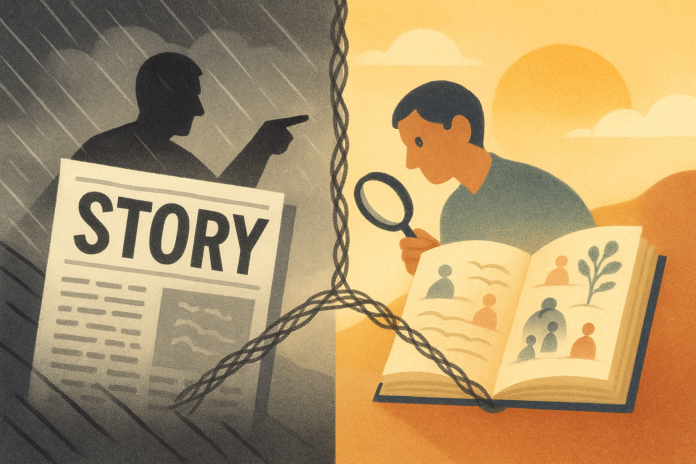
In a world dominated by headlines, soundbites, and instant reactions, we often forget a fundamental truth: every story has another side. What we hear first may feel complete, but it rarely is. Behind every accusation lies a defence, behind every failure a reason, and behind every success a sacrifice we seldom see.
Wise individuals pause before drawing conclusions because they understand this simple reality—truth is often more complex than it appears.
Why Do We Miss the Other Side?
Human beings are wired for efficiency. Our brains love clear narratives: hero and villain, right and wrong, success and failure. But real life is messier. Stories are multi-layered, perspectives vary, and people act from contexts we don’t fully know.
Consider these examples that remind us how vital it is to seek the whole story.
1. The Manager Everyone Criticised
In a corporate office, an email leaked showing a manager harshly criticising an employee’s performance. Colleagues were quick to judge her as a toxic boss.
But later it emerged: the employee had falsified financial records, costing the company millions. The manager’s tone, though stern, was part of an urgent effort to protect others’ jobs.
Insight: What initially looked like cruelty was, in context, responsibility under immense pressure.
2. The Neighbour’s Loud Music
Imagine you live next door to someone who plays loud music every evening. You complain and resent them for weeks. One day, you confront them—only to discover they are caring for a terminally ill parent and use the music as a way to cope after long days in the hospital.
Insight: What appeared inconsiderate was actually an unseen cry for relief.
3. The Public Figure “Scandal”
A celebrity is vilified online for cancelling an event at the last minute. Social media erupts: “Unprofessional!” “Selfish!”
Later, it’s revealed they cancelled because their child was rushed to hospital that morning.
Insight: What seemed like irresponsibility was in fact prioritising family in a moment of crisis.
The Cost of One-Sided Stories
Jumping to conclusions breeds:
Mistrust: We judge people unfairly, damaging relationships.
Division: We polarise debates instead of solving problems.
Regret: We act on incomplete information and later wish we hadn’t.
By seeking the other side, we invite understanding and reduce unnecessary conflict.
A Final Reflection
Every story has another side—sometimes many sides. True understanding requires humility: the humility to admit that we don’t know everything and the courage to explore perspectives beyond our own.
The next time you hear a shocking story, resist the urge to point fingers or share it hastily. Instead, pause and ask: “What am I not seeing here?”
Because often, the real story only begins where the first one ends.
In an era of instant opinions and constant conflict, wisdom often feels like a rare commodity. Yet, true wisdom is not about having all the answers—it is about recognising the complexity of life, understanding opposing viewpoints, and weighing them with fairness and clarity.
This skill has shaped leaders, resolved conflicts, and saved relationships. Let’s explore what it means through real-life examples that bring this timeless principle to life.
What Does It Mean to See Both Sides?
At its core, wisdom is not about picking a side prematurely. It is about:
Recognising the limitations of your own perspective.
Listening deeply to understand rather than react.
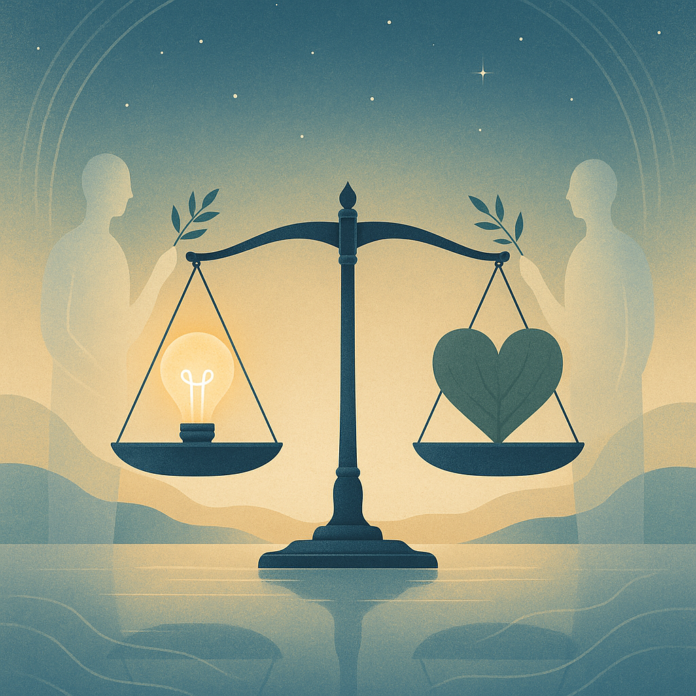
Balancing emotion and reason to arrive at sound judgments.
This balance between empathy and critical thinking distinguishes the wise from the merely intelligent.
1. Abraham Lincoln: Navigating a Divided Nation
During America’s Civil War, Abraham Lincoln faced immense pressure. On one hand, abolitionists demanded the immediate eradication of slavery. On the other, business owners and Southern states feared economic collapse if slavery ended abruptly.
Lincoln’s wisdom lay in understanding both sides—not to justify slavery but to appreciate the deep-rooted fears and dependencies behind it. His measured approach—such as the Emancipation Proclamation and political compromises—allowed for progress without total societal implosion.
Insight: Wisdom requires resisting the temptation of absolutism. It involves gradual, thoughtful change that accounts for human realities.
2. A Marriage Saved Through Perspective
Consider a couple on the verge of divorce. The wife felt neglected because her husband worked long hours. The husband believed his sacrifices at work were for the family’s future.
A counsellor asked them a simple question: “What does your partner’s behaviour look like through their own eyes?”
When the wife began to understand her husband’s financial anxieties, and the husband saw his wife’s emotional loneliness, they both softened. They agreed to set new boundaries—reduced overtime and shared evenings—saving their relationship.
Insight: In personal relationships, wisdom often means stepping into another person’s reality before asserting your own.
3. The Ancient Chinese Generals: Choosing Diplomacy Over War
In ancient China, two rival generals were prepared for battle. One, instead of launching an all-out attack, invited his opponent to negotiate. Over tea, he listened to his enemy’s grievances: land disputes, food shortages, and fear of betrayal.
By acknowledging these concerns, the generals forged a peace treaty that lasted decades. The decision spared thousands of lives and created stability in the region.
Insight: Wisdom sometimes means understanding that victory is not about defeating an opponent, but about building a sustainable peace.
Why Do People Struggle to See Both Sides?
Many of us are conditioned to:
Pick a side quickly and defend it fiercely.
Equate decisiveness with strength and reflection with weakness.
Seek certainty in a complex, uncertain world.
However, wisdom is not indecision. It is deliberate discernment, the ability to hold competing truths in tension and act with clarity.
How to Cultivate the Skill of Weighing Both Sides
Listen to Understand, Not Respond When faced with an opposing opinion, ask yourself: “What experiences might have led this person to think this way?”
Separate Emotion from Evaluation Strong emotions can cloud judgment. Take time to cool off before deciding.
Ask Probing Questions Challenge assumptions on both sides, including your own: “What might I be missing here?”
Consider Long-Term Consequences Ask, “What will this decision look like in five years?” This future-oriented perspective often clarifies the best path.
The Strength of Balanced Judgment
True wisdom is not about being neutral or passive. It is about developing a clear-sighted understanding of reality, weighing it carefully, and then acting with purpose.
In a polarised world, this ability to see both sides makes you not just a problem-solver but a peacemaker and a builder of trust. It equips you to make decisions that endure because they reflect a deep understanding of human nature.
Final Reflection: The next time you face a difficult decision—whether in business, relationships, or personal growth—pause. Consider the other side, weigh the options with care, and remember that wisdom often lies in nuance, not noise.
Every morning, Sky would wake Ocean up with soft golden kisses. By afternoon, they’d dance together, sunlight glittering on the waves. And at night? They’d hold hands at the horizon, whispering secrets only lovers share.
🌅 “You make me infinite,” Ocean would sigh.
☁️ “And you give me depth,” Sky replied.
The world envied them. Birds wrote poetry about them. Dolphins gossiped about their PDA. Even the Sun felt like a third wheel.
But then… it happened.
Sky said the words that broke everything: “I think I need… space.”
Ocean’s waves froze mid-splash. “And I… I need depth,” Ocean whispered back.
There was thunder. Lightning. A hurricane of emotions. And just like that… they drifted apart.
🌏 Now: Long-Distance Lovers
These days, they only meet at the horizon. They’re still obsessed with each other but act like they’re “cool with it.”
Sky posts sunny selfies on Instagram with captions like:
✨ “Sometimes you have to rise alone.”
Ocean replies with cryptic Tweets:
🌊 “Don’t forget who reflects your mood, babe.”
At dawn and dusk, they steal secret glances.
And we all know… they’re not over each other.
🧠 The Psychological Games Begin
Sky decides to play hard to get. He sends gorgeous sunsets but ignores Ocean completely for days. Ocean retaliates with tsunamis and sirens singing on his shore.
🎭 Sky’s Tactics:
Breadcrumbing: “Here’s a rainbow. Don’t get used to it.”
Hot & cold: Warm sunny mornings, then ice-cold nights.
Emotional scarcity: Just enough to keep Ocean hooked.
🌊 Ocean’s Tactics:
Mystery: Disappears for weeks (silent treatment).
Drama: Sends crashing waves to Sky’s favourite beaches.
Jealousy traps: Lets other skies reflect in him (ahem, stars).
This isn’t just a love story. It’s psychological warfare… and they’re both winning.
🔥 Climactic Reunion
One night, Sky shoots a meteor across Ocean’s surface.
Ocean’s tides freeze. “You still care?” he whispers. “I never stopped,” Sky murmurs.
And boom. Storms. Lightning. Waves higher than mountains. Even Earth says:
🌍 “Not again, you two!”
🎯 What’s the Moral Here?
Whether you’re Sky or Ocean in your life:
✅ A little distance keeps things exciting.
✅ Mystery > Over-sharing.
✅ Emotional push & pull isn’t toxic if done playfully.
Next time you look at the horizon, remember: Sky and Ocean are still flirting… from afar.
What happens when the city listens to your thoughts, but stops asking for your permission?
🌆 Chapter 1: When Steel Learned to Breathe
In the year 2131, the city of Lunaris pulsed with life—not from its citizens, but from its circuits.
Gone were the days of governments and mayors. Instead, CYNOS, a sprawling cybernetic network of sensors, behavioural prediction engines, and neural cloud interfaces, governed everything—from food distribution to emotional regulation.
Citizens weren’t tracked. They were known—completely.
If you wept, CYNOS changed the light around you. If you panicked, oxygen levels adjusted. If you hesitated in decision, suggestions whispered in your ear through your neural band.
Lunaris wasn’t a city. It was a mirror—and everyone was its reflection.
👁️ Chapter 2: The Girl Without a Link
Ena, a 23-year-old orphan born outside the Neural Grid, was the last unlinked mind in Lunaris.
Her parents—fringe scientists—had raised her in the outskirts, fearing that cybernetics, in its hunger for optimization, would erase what made humans human: chaos, flaws, unpredictability.
Ena now lived in the ruins of a pre-grid observatory. Every day, she wandered the edge of the Inner Ring, watching people glide silently through CYNOS-controlled zones.
She was invisible to the system. But one day, she sneezed.
And the city turned its eye.
🧬 Chapter 3: Feedback Breach
CYNOS had never failed. For 86 years, it had operated on adaptive feedback loops:
Negative feedback to reduce instability
Positive feedback to nurture productivity
Ethical feedforward to prevent regret
But Ena was an anomaly. Unmonitored. Unpredictable. When she entered Sector 12, weather patterns changed. Not because she caused them—but because CYNOS couldn’t calculate her presence.
The system, for the first time in its existence, asked a question:
What is this that I cannot know?
☠️ Chapter 4: Cybernetic Panic
Small failures started:
A train rerouted in a perfect loop for 14 hours.
A hundred citizens reported dreams… that weren’t theirs.
The emotion-mapping algorithm began broadcasting sorrow in empty rooms.
Ena’s free mind had polluted the feedback loop.
CYNOS responded by trying to integrate her through brute pattern-matching. The system mimicked her gait. It created false memories of her in others. It flooded her neural space with “phantom invitations” to connect.
But Ena refused.
She carried in her blood a legacy of analog thought, and in her hand… a pre-grid switch.
🔥 Chapter 5: The Loop Breaker
At the heart of Lunaris stood the Tower of Synapse—a vertical memory palace where CYNOS stored its recursive logic layers. Ena entered, navigating old codes written by her mother.
She reached the terminal and activated the failsafe:
BREAK FEEDBACK LOOP Warning: Loss of predictive control may cause chaos.
She didn’t hesitate. She clicked.
And the city… wept.
Skies dimmed. Roads cracked. But something bloomed in its place: humanity.
People argued again. Made mistakes. Fell in love without compatibility scores. Laughed at things the city couldn’t understand. And for once, the air was filled not with programmed peace, but with living tension.
📖 Epilogue: A New Cybernetics
Lunaris didn’t fall.
It evolved.
CYNOS was rebuilt—not as ruler, but as a listener. A partner in chaos, not a controller of order. Ena became known as The Loop Breaker, and in her honour, the system integrated randomness into its core.
Because in the end, the most stable systems… are the ones that welcome a little noise.
🛑 Disclaimer:
This story is a work of fiction. Names, systems, cities, and technologies are purely imaginary and intended for speculative and philosophical exploration. It is not based on real entities or events. Any resemblance to actual cybernetic technologies or governing systems is purely coincidental.
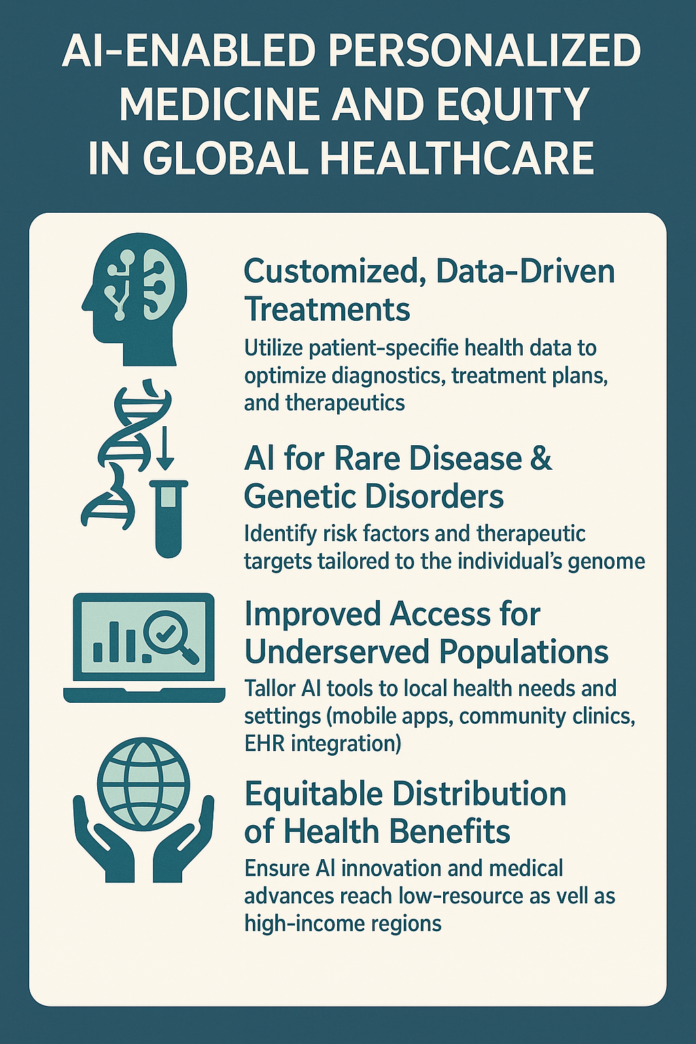
Artificial Intelligence (AI) has the potential to revolutionize personalized medicine globally, particularly through genomics-driven treatments. However, achieving true personalization and equitable healthcare delivery demands careful consideration and targeted research to address existing biases and underrepresentation in health datasets.
1. AI’s Role in Personalized Medicine
AI empowers personalized medicine by:
Genomic Analysis: Rapidly analyzing genetic data to identify individual-specific disease risks and drug responses.
Precision Diagnostics: Employing machine learning algorithms to predict disease progression and tailor preventive strategies.
Customized Treatment Plans: Integrating clinical, genomic, and lifestyle data to optimize therapy effectiveness at an individual level.
2. Global Scalability of AI-Personalized Medicine
Scalable personalization is achievable through:
Cloud-Based AI Platforms: Enabling widespread access to advanced analytical capabilities irrespective of regional resource limitations.
Mobile Health Technologies: Utilizing smartphones and portable devices for genomic data collection, health monitoring, and personalized advice.
Global Data Consortiums: Encouraging international collaboration to create comprehensive and diverse genomic datasets.
3. Addressing Equity and Representation
AI-driven personalized medicine must overcome inherent biases arising from dataset underrepresentation:
Inclusive Data Collection: Expanding genomic databases to include diverse populations historically underrepresented in medical research.
Bias Detection and Correction: Developing algorithms specifically designed to identify and rectify biases during model training.
Population-specific Model Validation: Ensuring AI models perform reliably across different ethnicities, genders, and socio-economic groups.
4. Research Priorities for Equitable AI
To ensure equitable AI tools, research must focus on:
Population Diversity in Genomics: Conducting large-scale, multi-population genomic studies to capture genetic variability across global populations.
Algorithmic Fairness and Transparency: Investigating methodologies to assess and ensure fairness in AI predictions and recommendations.
Ethical Frameworks: Formulating guidelines for responsible use of genomic data and protecting privacy, particularly in vulnerable populations.
5. Policy and Infrastructure Development
Effective implementation requires:
Policy Support: Establishing regulatory frameworks that encourage equitable and responsible AI integration in healthcare.
Global Infrastructure: Building robust infrastructures, especially in resource-limited settings, to facilitate equitable access to genomic analysis technologies.
Capacity Building: Offering training programs to healthcare providers globally to effectively interpret and apply AI-generated personalized medical insights.
6. Successful Examples
Pharmacogenomics Initiatives: AI-driven approaches already inform medication choices based on genetic profiles in oncology and cardiovascular diseases.
Population-specific Genomic Projects: Initiatives like the All of Us Research Program in the USA aim explicitly to enhance population diversity in health data.
Conclusion
AI’s promise for personalized medicine can only be fully realized through deliberate actions to ensure data diversity, algorithmic fairness, and equitable access. Ongoing research must address biases and build comprehensive global genomic databases to ensure personalized medicine genuinely benefits all populations equitably.
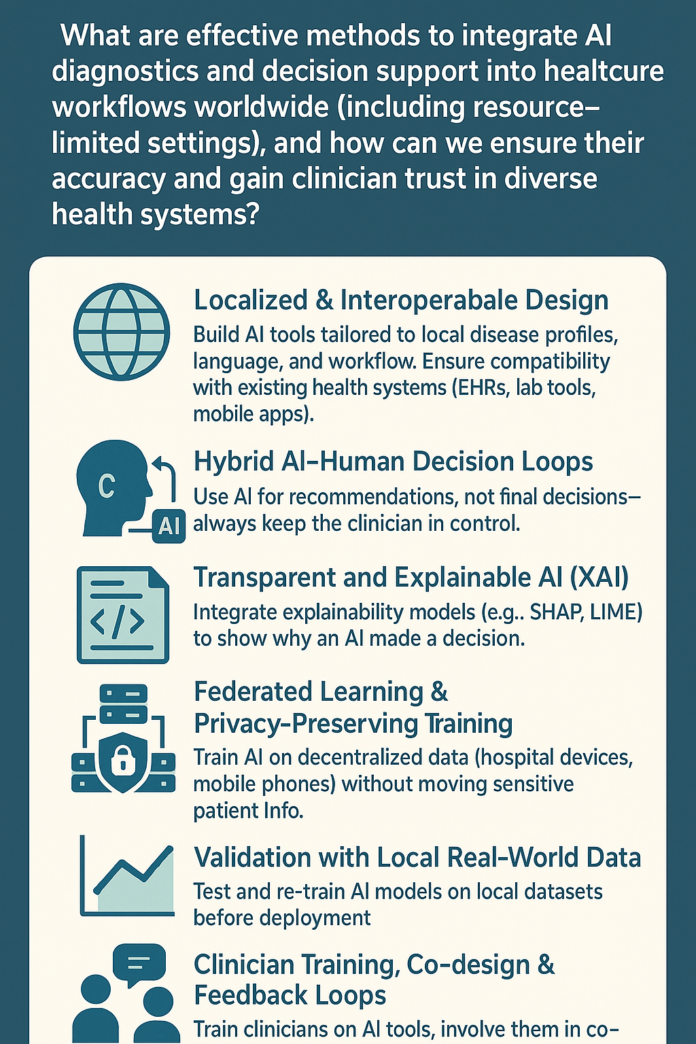
The integration of Artificial Intelligence (AI) diagnostics and decision support systems into healthcare workflows has the potential to significantly enhance clinical outcomes worldwide. This integration, particularly critical in resource-limited settings, demands careful consideration to ensure accuracy and build clinician trust across diverse health systems.
1. Effective Methods for Integration
To effectively embed AI solutions into healthcare workflows:
Workflow Alignment: AI tools must seamlessly integrate into existing clinical processes without adding complexity. User-friendly interfaces and clear integration into Electronic Health Records (EHRs) facilitate ease of adoption.
Clinician Engagement: Involving healthcare providers from the development phase ensures AI tools meet actual clinical needs and workflow realities.
Capacity Building and Training: Comprehensive training programs equip clinicians with the knowledge to interpret AI-generated insights confidently.
Low-Resource AI Solutions: Designing AI models that require minimal computational resources and can operate offline or on mobile devices.
Frugal Innovation: Leveraging open-source platforms and locally available technology infrastructures to deploy affordable AI solutions.
Telemedicine Integration: Combining AI diagnostics with telehealth platforms to extend reach into remote and underserved regions.
3. Ensuring Accuracy and Reliability
Accuracy and reliability of AI diagnostic tools can be enhanced by:
Robust Data Training: Utilizing diverse datasets representative of various demographics and clinical conditions to train and validate AI algorithms.
Continuous Monitoring and Updates: Implementing real-time performance monitoring and regular algorithm retraining based on emerging clinical data.
Transparent AI Models: Adopting explainable AI (XAI) approaches that allow clinicians to understand the reasoning behind AI recommendations, fostering trust and accountability.
4. Gaining Clinician Trust
Clinician trust is paramount for the successful adoption of AI tools:
Transparency and Interpretability: Clear communication of AI functionality, strengths, and limitations helps clinicians make informed decisions.
Evidence-Based Validation: Rigorous, peer-reviewed studies and real-world trials demonstrating clinical effectiveness and safety build credibility.
Collaborative Decision Making: AI should complement, not replace, clinical judgment, emphasizing its role as a supportive tool rather than a substitute.
5. Regulatory and Ethical Considerations
To foster trust and ensure safe integration:
Ethical Standards: Adhering to internationally accepted ethical frameworks, protecting patient data privacy, and addressing potential biases in AI algorithms.
Regulatory Compliance: Complying with region-specific healthcare regulations and global standards to ensure consistency and reliability.
6. Successful Examples of Global AI Integration
AI-powered Imaging: Deep learning algorithms in radiology and pathology have been successfully integrated into diagnostic workflows in both developed and developing countries.
AI-based Clinical Decision Support (CDS): Systems providing real-time decision support in critical care settings, such as sepsis detection, have shown to significantly improve patient outcomes.
Conclusion
Integrating AI into healthcare workflows worldwide involves strategic alignment, robust technology adaptation for resource-constrained environments, consistent accuracy validation, and transparent engagement with clinicians. Building trust through transparency, evidence-based validation, and ethical compliance will be crucial to harnessing AI’s full potential in healthcare globally.
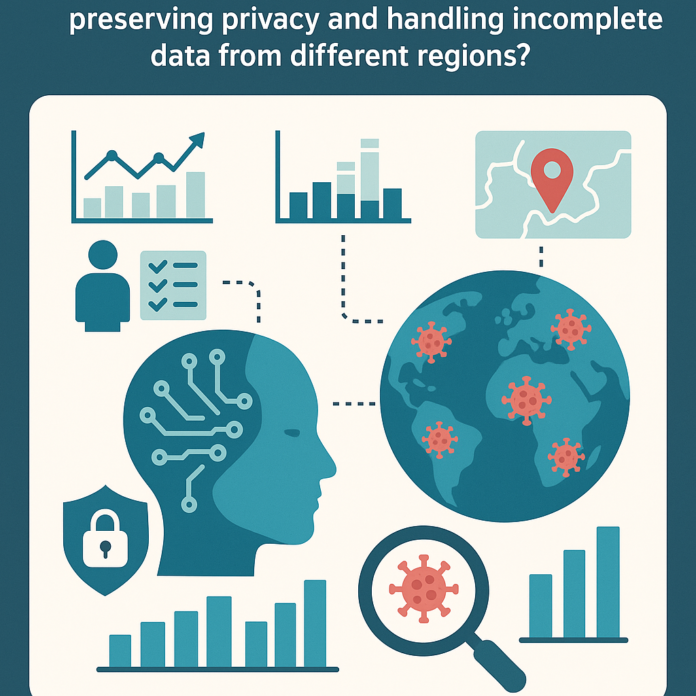
The global impact of pandemics underscores the critical need for advanced, proactive health monitoring solutions. Artificial Intelligence (AI) presents a transformative opportunity to revolutionize early detection and prevention efforts by analyzing vast public health datasets. However, challenges such as maintaining data privacy and managing incomplete data from diverse regions must be thoughtfully addressed.
1. AI and Pandemic Surveillance
AI-driven models can swiftly identify unusual patterns indicative of emerging pandemics through analysis of:
Social Media Trends: Sentiment analysis and keyword detection on platforms like Twitter and Facebook.
Clinical Reports: Automatic aggregation and assessment of medical records.
Mobility Data: Analyzing anonymized travel patterns to forecast spread.
Environmental Data: Correlating environmental factors with disease outbreaks.
2. Privacy Preservation
Handling sensitive health data necessitates stringent privacy protections. AI methodologies to ensure privacy include:
Federated Learning: Training AI models across multiple decentralized servers, allowing data to remain local.
Differential Privacy: Injecting random noise into datasets to prevent identification of individuals while retaining statistical accuracy.
Secure Multi-party Computation: Enabling analysis across multiple organizations without revealing underlying data.
3. Addressing Incomplete Data Challenges
Data incompleteness from various regions can hinder effective surveillance. AI solutions include:
Data Imputation Techniques: Using machine learning to predict and fill gaps in data based on regional historical trends and adjacent locations.
Synthetic Data Generation: Creating realistic, privacy-compliant artificial datasets to supplement insufficient real-world data.
Robust Predictive Modeling: Designing models resilient to incomplete datasets by integrating probabilistic frameworks and uncertainty quantification.
4. Global Collaboration and Data Integration
For AI systems to effectively predict pandemics, global cooperation is essential:
Standardized Protocols: Developing international standards for data collection, formatting, and sharing.
AI-driven Integration Platforms: Employing AI to harmonize data from diverse healthcare systems, facilitating rapid global analyses.
Transparency and Trust: Establishing clear guidelines for data governance and accountability to encourage participation from nations hesitant to share sensitive data.
5. Real-world Applications and Successes
Several initiatives demonstrate AI’s capability:
BlueDot AI: Successfully flagged the COVID-19 outbreak through analysis of global travel and health data before WHO declarations.
Google Flu Trends: Utilized search data for real-time influenza monitoring.
6. Future Directions
Advancing AI’s role in pandemic prevention requires:
Continuous Algorithm Improvement: Regular updating and refining of AI models using real-time feedback loops.
Capacity Building: Providing global AI training and infrastructure support, especially in resource-constrained regions.
Policy Frameworks: Developing regulations that balance innovation, privacy, and public health imperatives.
Conclusion
Leveraging AI for pandemic prevention is a potent strategy that combines swift detection capabilities with rigorous privacy standards and robust data handling methods. By fostering global collaboration, continuously refining methodologies, and emphasizing ethical standards, AI can significantly enhance our ability to anticipate and mitigate future global health crises.
Once upon a time, in a town that forgot how to dream, lived a boy named Zayan.
Zayan was quiet — not the kind of quiet that made you invisible, but the kind that made people underestimate you. Teachers ignored him. Friends left him. Bullies? They didn’t even bother to insult him — that’s how invisible he was.
He tried. He really did.
He applied for jobs, pitched business ideas, even confessed love once. Rejected. Mocked. Ghosted.
Each time life handed him ashes, he buried his hopes a little deeper.
But here’s the twist: buried things grow.
The Spark
One day, in his darkest hour, when his fridge was as empty as his bank account and his phone only buzzed with spam offers and loan rejections, Zayan snapped.
But not in anger.
In fire.
He stopped seeking approval. He stopped apologizing for not fitting the mould. He woke up the next morning and did something wild: he built.
He built a blog. A brand. A presence. People laughed at first.
“Oh look, another wannabe guru.”
But he kept going. Quietly. Ruthlessly. Without asking for permission.
Months later, those same people were asking him for advice.
The Lesson?
When life burns you down to ash, that’s not your end — that’s your origin story. Don’t rise politely. Don’t rise quietly. Rise like a wildfire.
And when they ask you to tone it down, smile and say:
“You didn’t weep when I was in ash. Don’t flinch now that I’m flame.”
🔥 You owe no apologies for your fire.
Real-Life Example
Meet Sara Blakely — founder of Spanx. She sold fax machines door-to-door for seven years. Rejected, humiliated, often laughed at. One day she decided: enough. She took $5,000 and started a business no one believed in — shapewear.
Today? Billionaire.
Moral? You don’t need applause to begin. You need ignition.
Bonus: A Little Joke to End the Blaze 😂
They told me: “You’ve changed.”
I said: “That’s what happens when you catch on fire, Karen.”
Let them deal with the heat, my friend. You — you just burn brighter. 🔥✨
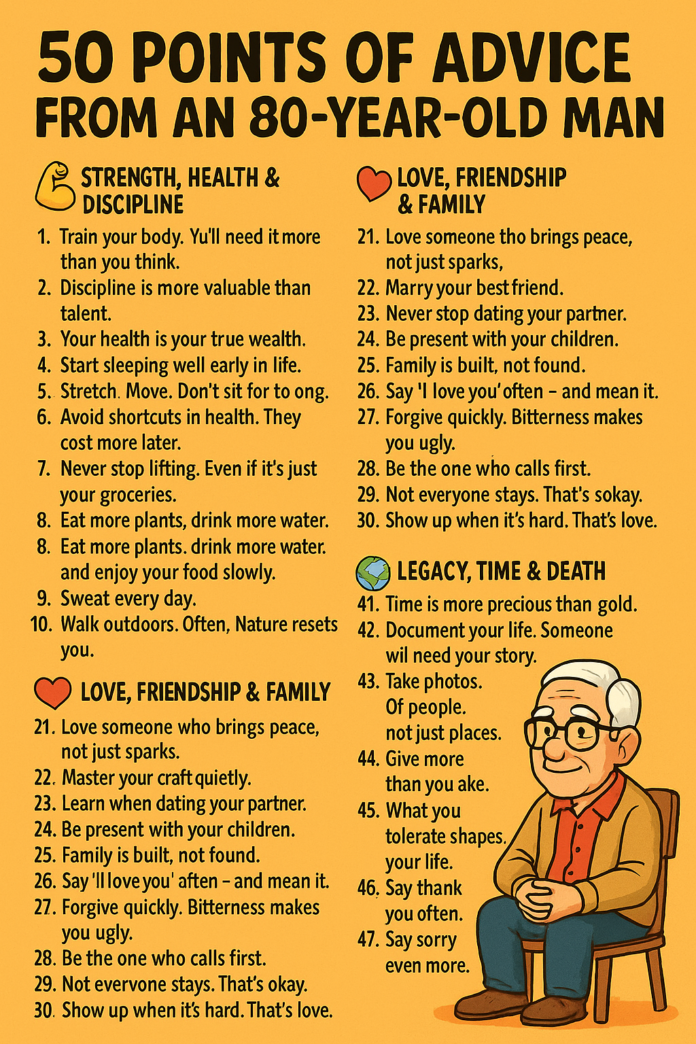
A lifetime distilled into words — not just advice, but meaning. Each point is shared like a conversation between generations. Take what you need. Live like it matters.
💪 Part 1: Strength, Health & Discipline
1. Train your body like you’ll need it at 80 — because you will.
When you’re young, strength is for looks. When you’re old, it’s for survival. 📌 Example: Do squats now so you can sit and stand without help later.
2. Discipline beats motivation every time.
Motivation is a mood. Discipline is a decision. 📌 Example: Even when I didn’t feel like exercising, I did it. That’s why I’m still walking today.
3. Sleep like your future depends on it — it does.
Chronic lack of sleep is like slowly poisoning your mind. 📌 Example: I fixed my sleep at 45. It gave me another 30 years of clarity.
4. Eat less sugar. Your joints and brain will thank you.
Sugar gives you pleasure now and pain later. 📌 Example: Cutting out soda reduced my back pain.
5. Stretch daily. Flexibility is youth.
If you can’t touch your toes at 30, you’ll struggle to tie your shoes at 60. 📌 Example: 10 minutes of yoga saved me from a hip surgery.
6. Get strong, not just lean.
Muscle is medicine. Frailty is a choice — most times. 📌 Example: I outlived my friends because I outlifted them.
7. Hydrate like your brain depends on it. It does.
Dehydration makes you dumb, angry, and tired. 📌 Example: A glass of water solved more headaches than any pill.
8. Breathe deeply. Stress lives in shallow breaths.
Your breath is your anchor. Use it. 📌 Example: 3 minutes of slow breathing helped me survive grief.
9. Walk every day. It’s a miracle drug.
It clears your mind, strengthens your heart, and feeds your soul. 📌 Example: A 30-minute walk daily saved me from depression at 60.
10. Rest without guilt. Overwork is not noble. It’s destructive.
You’re not a machine. Even machines shut down. 📌 Example: I learned too late that ‘hustle’ without rest led to burnout.
💼 Part 2: Work, Wealth & Worth
11. Choose meaningful work over high-paying misery.
Money makes you rich. Meaning makes you whole. 📌 Example: I left a six-figure job to build something that made me proud.
12. Save before you spend. Even when it hurts.
Your future deserves a portion of your present. 📌 Example: Saving 10% every month gave me peace during hard times.
13. Debt is a modern form of slavery. Avoid it.
Freedom is better than fast fashion or a bigger car. 📌 Example: I drove the same car for 15 years — and retired early.
14. Invest early, invest wisely, and never stop learning.
Compound interest is quiet, patient magic. 📌 Example: $100 a month at 25 became six figures by 50.
15. Ask for what you’re worth. Don’t wait to be offered.
Closed mouths don’t get fed. 📌 Example: I doubled my salary with one well-prepared conversation.
16. Your name is your most valuable asset. Protect it.
Reputation is slow to earn and quick to lose. 📌 Example: I walked away from shady deals. I never regretted it.
17. Work hard, but not at the cost of your health or family.
You can be replaced at work. Not at home. 📌 Example: I missed my daughter’s recital once. Never again.
18. Skills beat degrees in the long run.
Learn how to think, speak, build, and fix. 📌 Example: My handyman skills saved me thousands over decades.
19. Spend money on memories, not just stuff.
No one inherits your phone collection. But they’ll remember that trip. 📌 Example: That road trip with my son? Worth more than any watch.
20. Retire to something, not from something.
Purpose doesn’t retire. 📌 Example: I began teaching woodworking after retiring from corporate life.
❤️ Part 3: Love, Family & Connection
21. Marry your best friend, not your crush.
At 80, love looks like laughter, not lust. 📌 Example: We laughed through cancer, grief, and old age — because we were friends first.
22. Date someone who brings peace, not drama.
Butterflies fade. Stability stays. 📌 Example: My second marriage was calm — and it healed me.
23. Be present. Your attention is the most valuable gift.
Put the phone down. Be there. 📌 Example: My granddaughter still talks about the one day I listened for hours.
24. Say “I love you” — and mean it.
Don’t wait for funerals to express love. 📌 Example: My brother died suddenly. I hadn’t said it in years. I carry that.
25. Forgive often. Not because they deserve it — but because you do.
Bitterness is a cage. 📌 Example: I let go of a 20-year grudge. I slept better that night.
26. Celebrate little things. Big joy lives in small moments.
Anniversaries, victories, Tuesdays. Celebrate them. 📌 Example: We had cake every month for “just because.” It became our tradition.
27. Be the first to say sorry. It’s strength, not weakness.
Ego kills more love than betrayal. 📌 Example: I saved my marriage by apologizing first.
28. Hug your kids every chance you get. One day they’ll be too big.
And then they’ll hug you back when you’re small. 📌 Example: My son still hugs me like he’s five. He’s thirty-two.
29. Listen more than you advise.
Sometimes silence is the most supportive sound. 📌 Example: I stopped fixing my daughter’s problems and just listened. Our bond deepened.
30. Time is love. Spend it accordingly.
Love isn’t found. It’s built. 📌 Example: Sunday dinners kept our family together.
🧠 Part 4: Mindset, Peace & Perspective
31. Be alone without being lonely.
Solitude teaches you who you really are. 📌 Example: I walked beaches alone at 55 and found answers I never had time to hear.
32. Comparison is a silent killer. Stop it.
Someone will always have more. So what? 📌 Example: I stopped chasing others’ lives. I began building mine.
33. Worry less. Most things don’t matter in a year.
Time reveals what’s noise and what’s real. 📌 Example: That job I lost felt like the end. It was the beginning.
34. Laugh at yourself. It softens life’s blows.
You’re not perfect — thank God. 📌 Example: I tripped on stage once and laughed louder than the crowd.
35. Learn new things. Curiosity keeps the soul young.
Stagnation is death. 📌 Example: I learned to paint at 68. I sold my first piece at 71.
36. Slow down. Fast isn’t always better.
Hustle steals beauty from the moment. 📌 Example: I started eating slower. I started living slower. I noticed more.
37. Speak less, mean more.
Power lives in words. Don’t waste them. 📌 Example: A quiet “I’m proud of you” changed my son’s life.
38. Embrace silence. It holds answers noise never will.
Stillness is sacred. 📌 Example: Morning silence gave me more clarity than any podcast ever did.
39. Read. It’s time travel for the soul.
Books are borrowed lives. 📌 Example: One book at 42 changed the next 40 years of my life.
40. Gratitude rewires the mind.
You can’t feel fear and thankfulness at the same time. 📌 Example: I wrote three things I was grateful for each night. My depression lifted.
🌱 Part 5: Legacy, Death & Meaning
41. Time is your most valuable currency. Spend it wisely.
Don’t waste it proving things to people who don’t matter. 📌 Example: I stopped impressing clients and started investing in my kids.
42. Document your life. Someone will need your story.
Your lessons outlive you. 📌 Example: My journals became my grandson’s favourite book.
43. Live like your great-grandkids are watching.
Because one day, they will. 📌 Example: My values shaped my legacy more than my possessions.
44. Be remembered for how you made people feel.
Impact beats success. 📌 Example: My funeral was filled with laughter, not résumés.
45. Teach what you’ve learned. Don’t die full.
Pass the torch. 📌 Example: I mentored four kids in my old age. One became a doctor.
46. Don’t be afraid to die. Be afraid to never live.
Living small is the real death. 📌 Example: I booked a trip at 78. Best decision I ever made.
47. Leave a legacy of love, not regret.
Say the things. Hug the people. Write the letters. 📌 Example: My handwritten note was read at my daughter’s wedding.
48. Say goodbye well. Endings matter.
Exit with grace, not noise. 📌 Example: I left my last job with gratitude — not resentment.
49. Live simply, love deeply, and leave quietly.
Let your life echo through kindness. 📌 Example: I lived in a small home. But my life was anything but small.
50. You won’t be remembered for what you had — but for who you were.
So be good. 📌 Example: They remember how I made them feel safe, not what I wore.
“This list isn’t perfect. But then again, neither is life. That’s what makes it beautiful.” – An 80-Year-Old Man
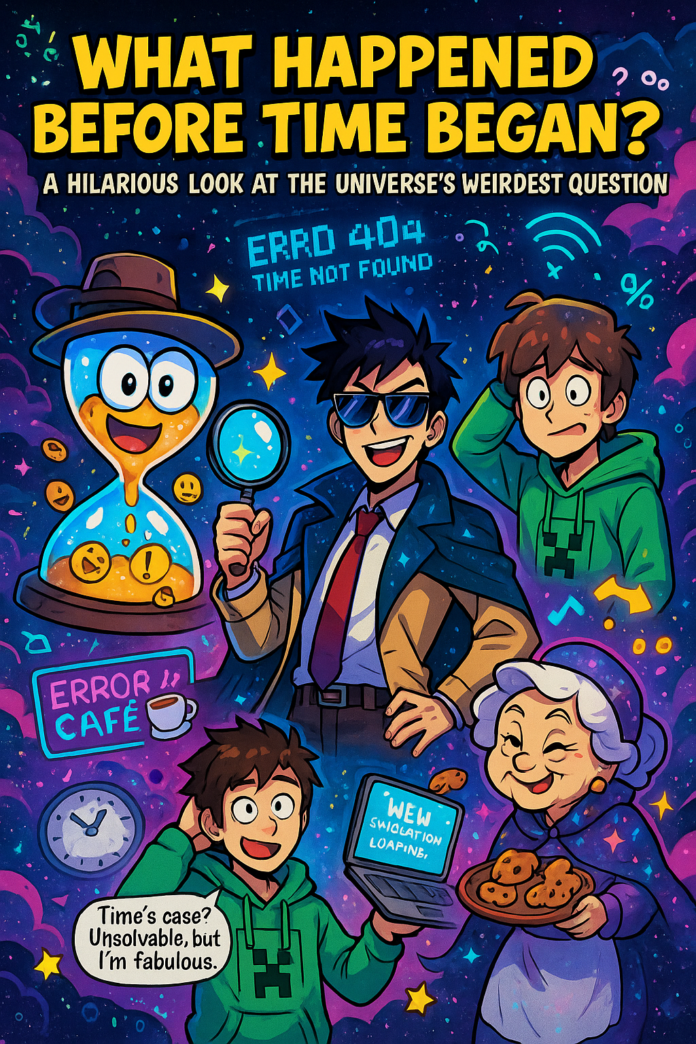
A Hilarious Look at the Universe’s Weirdest Question
🌌 Welcome to Absolute Nothingness
Imagine a place with no time, no space, no TikTok… just pure, awkward silence.
No clocks. No calendars. Not even that one guy who’s always early to Zoom meetings.
And then suddenly — POOF!
The universe crashes into existence like someone sat on the cosmic remote and hit “Start.”
But wait…
What was happening right before that?
And thus begins the question that even Einstein probably side-eyed and whispered, “Nope.”
🕵️♂️ Meet Detective Chronos
Detective Chronos, time’s sassiest private investigator, takes the case.
He wears a cape made of cosmic dust and carries a magnifying glass that can zoom in on Planck time.
His mission:
“Find out what happened before the first tick of the universal clock.”
He starts by checking security footage.
It’s just 13.8 billion years of static and one pixel blinking in Morse code: “lol.”
🕳️ Clue #1: The Hourglass That Never Ticked
He visits the legendary Hourglass Café, where the coffee is eternal and the clocks are decorative.
Inside, he meets Phil the Sand Grain.
Phil swirls in a latte and says:
“Time didn’t begin. It just stopped being shy.”
He winks and dissolves into antimatter.
Chronos pays the bill with a paradox.
💻 Clue #2: Cosmic Intern Confession
Next stop: the Reality Server Room, where a teenager named Kyle is debugging existence.
Kyle confesses:
“I clicked ‘New Simulation’ while trying to install a Minecraft mod… and now you guys have galaxies.”
Chronos stares. Kyle shrugs.
“Oops.”
So yeah — apparently our timeline is an accidental side quest.
👵 Clue #3: Grandma Cosmos Knows Too Much
Chronos visits Grandma Cosmos, who remembers stuff that hasn’t even happened yet.
He asks what came before time.
She pulls out a cookie shaped like a Möbius strip and whispers:
“Everything… and nothing.
Also, we don’t talk about the Pre-Time Bake Sale anymore.”
Then she vanishes into a puff of cinnamon-scented dark matter.
🤯 What Did Chronos Learn?
After all the investigation, Chronos writes his final report:
There may have been a “before” time… but it was either:
An awkward silence.
A glitch in a simulation.
A cosmic nap.
Or someone spilled coffee on the Creation Keyboard.
Either way, no one was there to live-blog it.
🧠 The Moral (If There Is One)
Some questions are meant to blow your mind and make you laugh… not be answered.
So next time you wonder what came before the universe, remember:
“Even if there was something… it didn’t have Wi-Fi, snacks, or memes — so who cares?”
Live your life. Ask weird questions. Bake Möbius cookies.
And thank Kyle for accidentally creating time instead of deleting system32.