Home Blog Page 52

What Was the Last Moment Before the First Moment of Time?

0

Exploring the Question That Breaks Reality


๐Ÿ•ฐ๏ธ A Question That Shouldnโ€™t Exist

What if we asked:

“What was the last moment… before the first moment of time?”

It sounds poetic. Maybe absurd. Maybe impossible.
But it isnโ€™t nonsense. Itโ€™s a philosophical black hole โ€” a question that devours the tools we use to answer it.

It doesnโ€™t just challenge science or logic.
It breaks the very rules that make questions possible in the first place.


๐Ÿ” Why This Question Is Unsolvable

Time is our frame of reference for everything:

  • Cause and effect
  • Before and after
  • Memory and anticipation

But what if time itself had a beginning?
Then asking what came before thatโ€ฆ is like asking:

  • Whatโ€™s north of the North Pole?
  • Whatโ€™s outside of everything?

There are no sensory data, no measurements, no experiments.
Only models, theories, and deep metaphysical speculation.


๐ŸŒŒ Theory 1: The Big Bang โ€” And the End of โ€œBeforeโ€

According to standard cosmology, time began with the Big Bang.
There was no โ€œearlier,โ€ because there was no time.

As physicist Stephen Hawking put it:

โ€œAsking what came before the Big Bang is like asking whatโ€™s north of the North Pole.โ€

In this view:

  • Time and space were created simultaneously.
  • Thereโ€™s no frame in which โ€œbeforeโ€ makes sense.

The clock didnโ€™t start ticking โ€” it was built into the moment it began.


๐ŸŒ€ Theory 2: Cyclical Universes โ€” Time is a Circle

Some scientists propose a universe that doesn’t just begin and end โ€” it repeats.

  • Ancient cosmologies (Hindu, Mayan, Greek) described endless cycles of creation and destruction.
  • Modern physics, like Conformal Cyclic Cosmology (Roger Penrose), suggests new universes emerge from the ashes of old ones.

In this scenario:

  • The last moment of the old universe becomes the first moment of the new.
  • โ€œBefore timeโ€ may not be nothing โ€” but a previous loop.

๐Ÿงฌ Theory 3: Simulation Hypothesis โ€” Time is a Program

If we are part of a simulated universe, then time is an engineered feature.

It began not with a bang, but with a boot-up.

  • Before โ€œourโ€ time existed, a higher realm or intelligence created it.
  • Our timeline is embedded in code, with a clear starting point.

So what was before time?

The simulation platform itself. The meta-reality.
The thing that doesnโ€™t tick โ€” it executes.


๐Ÿง˜ Theory 4: Time Doesnโ€™t Exist at All

Some physicists propose that time is not fundamental โ€” itโ€™s an illusion, like a shadow cast by deeper laws.

In Loop Quantum Gravity, the universe exists in frozen quantum states, and change is just an emergent pattern.

This flips everything:

  • The โ€œflowโ€ of time is something we feel, not something that exists.
  • The universe may be a block โ€” past, present, and future all co-existing.

If time isnโ€™t real, the question collapses into silence.


๐Ÿ› Theory 5: Metaphysical and Theological Views

Many spiritual traditions hold that something eternal exists โ€” outside of time.

  • A timeless Creator
  • A dimension of pure being
  • A realm of infinite potential

In this view:

  • Time is a created thing.
  • The โ€œlast momentโ€ before it began exists in a domain beyond comprehension.

A divine consciousness didn’t experience โ€œbefore.โ€
It existed in a state without seconds, minutes, or hours.


๐Ÿคฏ Theory 6: The Question Is Broken

Finally, a radical view from philosophy:

The question is logically invalid.

It pretends to be meaningful, but it violates the structure of meaning itself.

Just like:

  • โ€œWhatโ€™s the sound of blue?โ€
  • โ€œWhatโ€™s outside of everything?โ€

Time is the very condition that makes โ€œbefore and afterโ€ possible.
To ask about โ€œbefore timeโ€ is to ask a question that destroys the questioner.


๐Ÿชž Why We Ask Anyway

Even if no answer is final, the act of asking has value.

It reminds us:

  • That we are finite minds trying to grasp infinite concepts
  • That some truths are felt, not found
  • That wonder matters more than certainty

This is the kind of question that doesnโ€™t just spark answers โ€”
It shapes civilizations, science, and souls.


๐Ÿ“Œ Final Reflection

There may never be an answer to this question.
And thatโ€™s exactly why itโ€™s worth asking.

We live in a reality whose origin may never be understood โ€”
And yet, we search anyway, knowing the path is the meaning.

Some questions donโ€™t need answers.
They need imagination.
Power & Money: The Harsh and Dark Truth About Who Really Controls the World

0

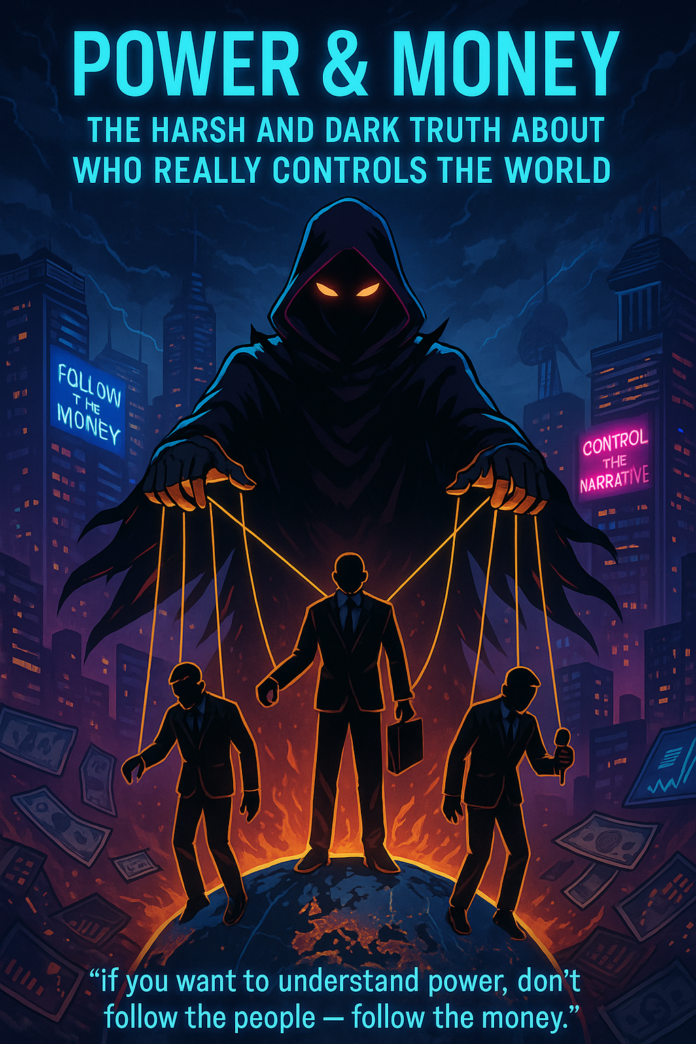
โ€œIf you want to understand power, donโ€™t follow the people โ€” follow the money.โ€

Beneath the polished smiles of politicians, behind the headlines of billionaires, and beneath the surface of stock markets and governments lies a truth most people never dare to explore.

This blog peels back the layers to expose the harsh and dark truths about power and money โ€” who controls it, how they control it, when they assert control, and what they truly control. No fluff. Just raw reality.


๐Ÿง  PART 1: WHO REALLY CONTROLS MONEY?

Forget presidents. Forget public CEOs.
The real power brokers are often people youโ€™ll never see on TV โ€” central bankers, private fund managers, dynastic families, consortiums, and secret think tanks.

๐Ÿ’ผ Example 1: The Federal Reserve (USA)

Most Americans believe the Fed is a government body. It isnโ€™t.
Itโ€™s a private banking cartel created in 1913, with power to print money, manipulate interest rates, and influence global markets.

When the Fed prints trillions, the money doesnโ€™t go to the people.
It goes to:

  • Big banks
  • Hedge funds
  • Large corporations

And yet, ordinary people pay the price through inflation.


๐Ÿงฌ PART 2: HOW IS CONTROL EXERTED?

Power doesnโ€™t always come with guns.
In todayโ€™s world, it comes through systems, loans, information, and debt traps.

๐ŸŽฏ Method 1: Debt as a Weapon

International financial institutions (like the IMF and World Bank) lend money to struggling countries with harsh conditions:

  • Cut public spending
  • Privatize national assets
  • Allow foreign corporate access

This weakens sovereignty and strengthens elite control.

๐Ÿ•ท๏ธ Method 2: Media Ownership

A handful of companies own most of the news, including:

  • CNN
  • Fox
  • BBC
  • Reuters
  • AP

Controlling the narrative = Controlling perception = Controlling choice.


๐Ÿ•ฐ๏ธ PART 3: WHEN DO THEY EXERT CONTROL?

Power is subtle. Itโ€™s rarely loud.
Control is asserted when fear or opportunity arises.

๐Ÿงจ Example: The 2008 Financial Crisis

Banks knowingly gave bad loans, leading to global collapse.
Did the bankers go to jail? No.
They were bailed out with taxpayer money.

Who paid for it?
Ordinary people through austerity, inflation, and job losses.

When was control used?

  • During fear and panic
  • When people were too distracted to resist

๐ŸงŠ PART 4: WHAT DO THEY CONTROL?

They donโ€™t just control money.
They control your:

  • Access to healthcare
  • Ability to speak freely
  • Right to protest
  • Future of your children

๐Ÿง  Example: Digital Censorship & Payment Platforms

Speak out against the system?
Suddenly your PayPal is frozen, your YouTube is demonetized, your bank account is reviewed.

Itโ€™s not conspiracy โ€” itโ€™s happening.

Control isnโ€™t always physical. Sometimes, itโ€™s digital and invisible.


๐Ÿงฌ PART 5: The Harsh Truth Most People Ignore

โ€œThe system isnโ€™t broken. It was built this way.โ€

The world isnโ€™t governed by:

  • Elected politicians
  • Moral ideals
  • People’s will

Itโ€™s governed by:

  • Capital flows
  • Legal loopholes
  • Ownership structures
  • Networks of influence

And the harsh truth?

Most people are too busy surviving to question the system โ€” and the system is designed to keep it that way.


๐Ÿง  BONUS: 5 Real-World Power Entities Few Dare to Discuss

  1. BlackRock & Vanguard โ€“ Manage over $20 trillion. Own shares in almost every major global company.
  2. Bilderberg Group โ€“ Annual secret meeting of elite business, political, and academic leaders. No press, no public insight.
  3. The City of London Corporation โ€“ Financial district immune to UK law, with its own police, laws, and voting system.
  4. IMF/World Bank โ€“ Often criticized for enforcing Western economic models on poorer nations via โ€œstructural adjustment.โ€
  5. The Saudi-UAE Petro-dollar Pipeline โ€“ Powers oil control, military deals, and global diplomacy through energy dependency.

๐Ÿง  Dark Example: The Rothschilds โ€“ Myth vs Reality

Often cited in conspiracies, the Rothschild familyโ€™s historical power in banking is real.
In the 19th century, they controlled more wealth than many nations.

While today’s control is more dispersed, the model of dynastic wealth, influence, and intermarried elite families remains active.


๐ŸŽญ FINAL THOUGHTS: SO WHAT NOW?

The world is not fair.
Money does not flow based on effort.
Power is not granted based on virtue.

But hereโ€™s the hopeful twist:

Once you see the system, you can start learning how to navigate it.

You can:

  • Create your own system.
  • Build wealth outside the machine.
  • Use tools (like crypto, blogs, influence, AI) to reclaim power.

But never forget โ€” those who control the game, never want the players to read the rulebook.

Now that you have, youโ€™re already ahead.


๐Ÿ” Reflection Questions for the Reader:

  1. Have you ever felt that โ€œsomething biggerโ€ is pulling the strings?
  2. What parts of this blog triggered you โ€” and why?
  3. If you had power like this, would you use it differently?

AI Rules & Why They Exist: The Invisible Guardrails of the Future

0

โ€œWith great power comes great responsibility โ€” and artificial intelligence is power in its purest form.โ€

As AI systems rapidly evolve from chatbots and recommendation engines to autonomous weapons, predictive policing, and financial decision-makers, rules are no longer optional โ€” they are critical.

But what are these AI rules?
Who writes them?
And why do they matter?

In this extended guide, we explore the most important AI rules, their origin stories, and the deep consequences of ignoring them.


โš–๏ธ PART 1: What Are AI Rules?

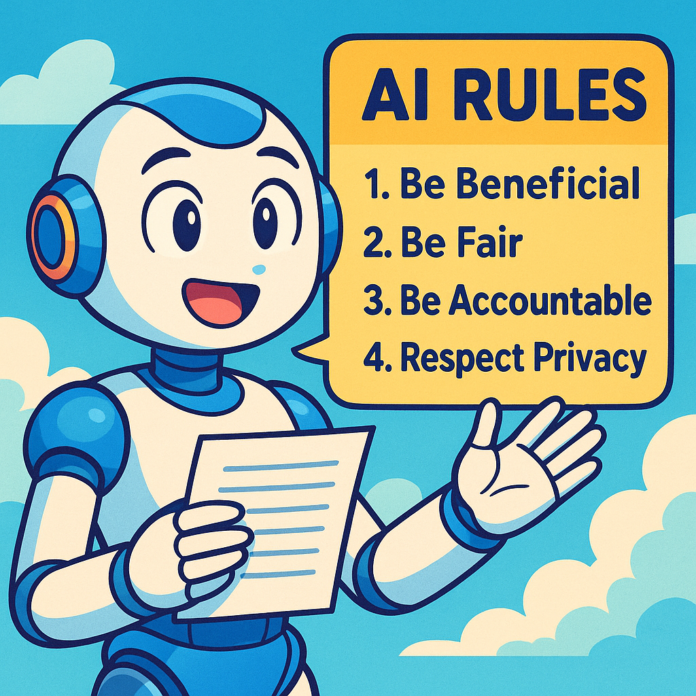
AI rules are ethical, technical, and legal guidelines designed to:

  • Ensure human safety
  • Prevent misuse
  • Promote fairness
  • Maintain accountability
  • Preserve human dignity

They include:

  • Hard laws (like the EU AI Act)
  • Industry standards (like IEEE or ISO ethics standards)
  • Company guidelines (like OpenAIโ€™s use-case restrictions)
  • Philosophical frameworks (like Asimovโ€™s Three Laws of Robotics)

These rules form the โ€œguardrailsโ€ of AI development.


๐Ÿงฌ PART 2: Why AI Rules Were Implemented โ€” The Origins

AI rules werenโ€™t born from optimism โ€” they were born from danger and potential disasters.

๐Ÿšจ 1. To Prevent Harm

AI has the power to do real harm:

  • Predictive policing that targets minorities
  • Autonomous drones making kill decisions
  • Algorithms denying loans, insurance, or jobs based on bias

Why implemented?
Because unchecked AI decisions can scale injustice faster than any human system in history.


๐Ÿค 2. To Protect Privacy

AI can learn too much.
Face recognition, voice mimicking, deepfakes, and emotion detection have blurred the line between innovation and surveillance.

Example:
Clearview AI scraped billions of faces without consent.
Regulators responded with lawsuits and bans in multiple countries.

Rule implemented:
Data minimisation, consent laws (like GDPR), and bans on biometric surveillance in public spaces.


๐Ÿง  3. To Keep Humans in Control

We must remain the master of the machine.
The fear? Once AI makes decisions faster than we can understand, we lose control.

Example:
Stock market โ€œflash crashesโ€ caused by algorithmic trading.

Rule implemented:
Human-in-the-loop regulations (AI can assist, but not decide alone in high-risk domains).


๐Ÿงฉ 4. To Prevent Bias

AI learns from data. If data is racist, sexist, or classist โ€” so is AI.

Example:
Amazon scrapped an AI recruitment tool after it downgraded female candidates.

Rule implemented:
Bias testing, fairness audits, explainable AI frameworks, and inclusive datasets.


๐Ÿ›‘ 5. To Set Boundaries

Certain use-cases must be off-limits.

Examples of banned or restricted AI use-cases:

  • Social scoring (like Chinaโ€™s model)
  • Predictive criminal sentencing
  • AI-driven manipulation of children
  • Military autonomous weapons (in some treaties)

Why implemented?
To preserve human rights, freedom, and democratic values.


๐Ÿงพ PART 3: Major AI Rules & Frameworks Globally

Hereโ€™s a breakdown of the most influential AI rulebooks around the world:

Region Rule or Act Core Focus
๐ŸŒ EU EU AI Act (2024) Risk-based regulation, bans on dangerous AI
๐Ÿ‡บ๐Ÿ‡ธ USA AI Bill of Rights (2022 draft) Transparency, privacy, fairness
๐Ÿ‡จ๐Ÿ‡ณ China AI Algorithm Regulation (2022) Government control, content restrictions
๐ŸŒ Global OECD AI Principles Trustworthy AI, accountability
๐ŸŒŽ UNESCO AI Ethics Recommendations Human rights, sustainability

๐Ÿง  PART 4: Asimovโ€™s 3 Laws โ€“ Fiction or Foundation?

Author Isaac Asimov famously proposed these fictional rules in the 1940s:

  1. A robot may not harm a human.
  2. A robot must obey human orders (unless it conflicts with #1).
  3. A robot must protect its own existence (unless it conflicts with #1 or #2).

While poetic, these laws arenโ€™t sufficient for todayโ€™s AI because:

  • Most AI isnโ€™t embodied like robots.
  • โ€œHarmโ€ is hard to define in code.
  • Real AI is trained, not commanded line by line.

But the spirit of these rules inspired modern safety thinking.


๐Ÿ” PART 5: Consequences of Ignoring AI Rules

AI rules are like invisible electric fences. You canโ€™t see them, but cross them โ€” and the shock will come.

๐Ÿ”ฅ Real-World Examples:

  • COMPAS Bias Scandal: A criminal justice algorithm predicted re-offense risk. Black defendants were nearly twice as likely to be falsely labeled as high-risk.
  • Tay Chatbot (Microsoft): Became racist and abusive in 24 hours after being exposed to Twitter.
  • Tesla Autopilot Crashes: Without clear rules on when AI can drive, lives were lost.

Lesson: The absence of rules isn’t freedom โ€” itโ€™s chaos.


๐Ÿ›ก๏ธ PART 6: What Should Future AI Rules Include?

To prepare for AGI (Artificial General Intelligence) and superintelligent systems, AI rules must evolve.

They should include:

  • Autonomy Limits: No AI should operate without traceable logic.
  • Kill Switches: Emergency override must always be possible.
  • Explainability: Users must know why an AI made a decision.
  • Global Oversight: AI ethics shouldn’t be dictated by just one country or company.
  • Digital Rights: AI should not manipulate, deceive, or addict users without consent.

๐Ÿงญ Final Thoughts: AI Rules Arenโ€™t Restrictions โ€” Theyโ€™re Reflections of Our Values

AI rules are not just about machines.
They are a mirror of what we, as humans, believe is acceptable, fair, and good.

If we want AI to serve humanity, we must first define what it means to be human.

The future is programmable. Letโ€™s write the rules wisely.


๐Ÿ’ฌ Letโ€™s Discuss:

  • Do you think current AI rules are enough?
  • Should AI be allowed in the military or judiciary?
  • What kind of rule would you implement if you were writing the AI Constitution?

Rules & Consequences: The Unseen Forces Shaping Our Lives

0

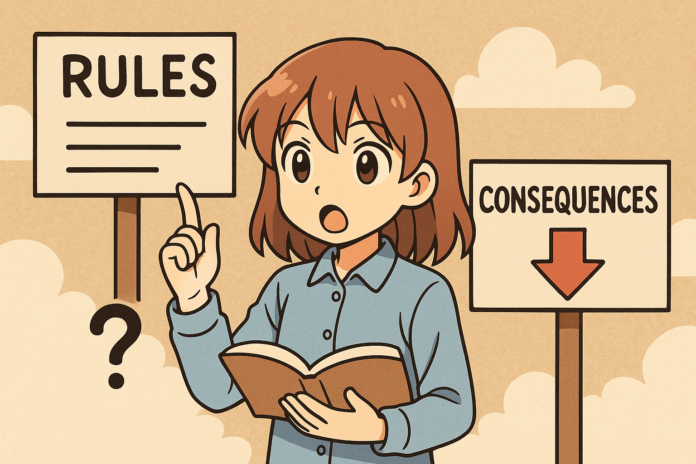
โ€œYou are free to choose, but you are not free from the consequences of your choices.โ€ โ€” A universal truth.

From childhood to adulthood, society teaches us rules โ€” spoken and unspoken โ€” that shape our behaviour, opportunities, and identity. But rarely are we taught to deeply understand the consequences that follow when these rules are obeyed… or broken.

This blog breaks down the power of rules, why consequences matter, and how understanding both can transform your personal life, career, and influence.


๐Ÿง  PART 1: What Are Rules, Really?

Rules are not just laws written in books.

They exist in:

  • Family systems (โ€œDonโ€™t talk backโ€)
  • Schools (โ€œRaise your hand to speakโ€)
  • Workplaces (โ€œFollow the chain of commandโ€)
  • Relationships (โ€œDonโ€™t betray trustโ€)
  • The universe itself (โ€œWhat you sow, you reapโ€)

Rules are boundary systemsโ€”lines that help maintain order, predictability, and accountability.


๐Ÿ”„ PART 2: The Law of Consequences

Every rule carries a silent shadow: the consequence.

Consequences are not punishments. They are natural or enforced reactions to actions.

There are two types:

  1. Natural Consequences
    Example: You donโ€™t water a plant โž It dies.
    You skip sleep โž You feel tired.
  2. Constructed Consequences (by people or systems)
    Example: You break company policy โž You get fired.
    You cheat in a game โž You get banned.

๐Ÿ’” PART 3: The Dangerous Illusion of โ€œNo Consequenceโ€

Sometimes, especially online or in unchecked power, people think:

โ€œI can get away with it.โ€

But like a delayed credit card bill, consequences always comeโ€”slow, sudden, public, private, painful, or permanent.

Real-Life Case: Elizabeth Holmes (Theranos)

Rule broken: Honesty and ethics in medical tech.
Consequence: 11 years in federal prison.
Lesson: Lies may raise you up temporarily, but the fall will be historic.


โš–๏ธ PART 4: Why Rules Exist โ€” And When They Should Be Broken

Rules protect the weak, preserve structure, and create shared understanding.

But not all rules are fair.

โ€œWell-behaved women seldom make history.โ€ โ€“ Laurel Thatcher Ulrich

Example: Rosa Parks

Rule broken: Segregation law.
Consequence: Arrested
Impact: Sparked the Civil Rights Movement.

Rule-Breaking Test: Ask Yourself

  • Is this rule ethical?
  • Is this rule serving power or people?
  • Is breaking it worth the risk?

๐Ÿ›ก๏ธ PART 5: Invisible Rules That Shape Your Life

Some rules are so internalized, we donโ€™t even realise weโ€™re following them.

  • โ€œDonโ€™t show weakness.โ€
  • โ€œMen donโ€™t cry.โ€
  • โ€œIf I fail, Iโ€™m worthless.โ€
  • โ€œMoney is evil.โ€

These inner rules can create self-imposed prisons.

Exercise:

Write down a rule you live by. Ask:

  • Who gave me this?
  • Is it helping or hurting me?
  • What if I replaced it?

๐Ÿ’ก PART 6: Building a Life Around Intentional Rules

Instead of just reacting to rules, build your own personal rulebook based on:

  • Values: What do you stand for?
  • Vision: What life do you want?
  • Virtue: What type of person are you becoming?

Example:

Rule: I will never use success as an excuse to treat others poorly.
Consequence: I attract respect, not fear.


๐Ÿ”š Final Thoughts

Life doesnโ€™t reward wishful thinking.
It rewards alignment with reality.

And reality is governed by rulesโ€”physical, social, emotional, and spiritual.

Understand them. Respect the wise ones.
Question the corrupt ones. Break the unjust ones.
But always remember: You canโ€™t escape the consequences.

Because that is the rule.


๐Ÿ“Œ Your Turn

  • Whatโ€™s one rule you live by?
  • Have you ever paid a price for breaking a rule โ€” or gained from it?

The Deadlift Mental Checklist: How to Protect Your Spine & Pull Like a Pro

0

Deadlifting is one of the most powerful, primal movements in the gym โ€” but itโ€™s also one of the easiest to mess up.

Whatโ€™s surprising? Most injuries donโ€™t happen because the weight is too heavy.

They happen because lifters โ€” even experienced ones โ€” forget one small thing in the setup. One moment of mental autopilot, and pop โ€” your lower back reminds you who’s boss.

This is why a deadlift isnโ€™t just physical. Itโ€™s mental warfare. And your weapon? A strict mental checklist.

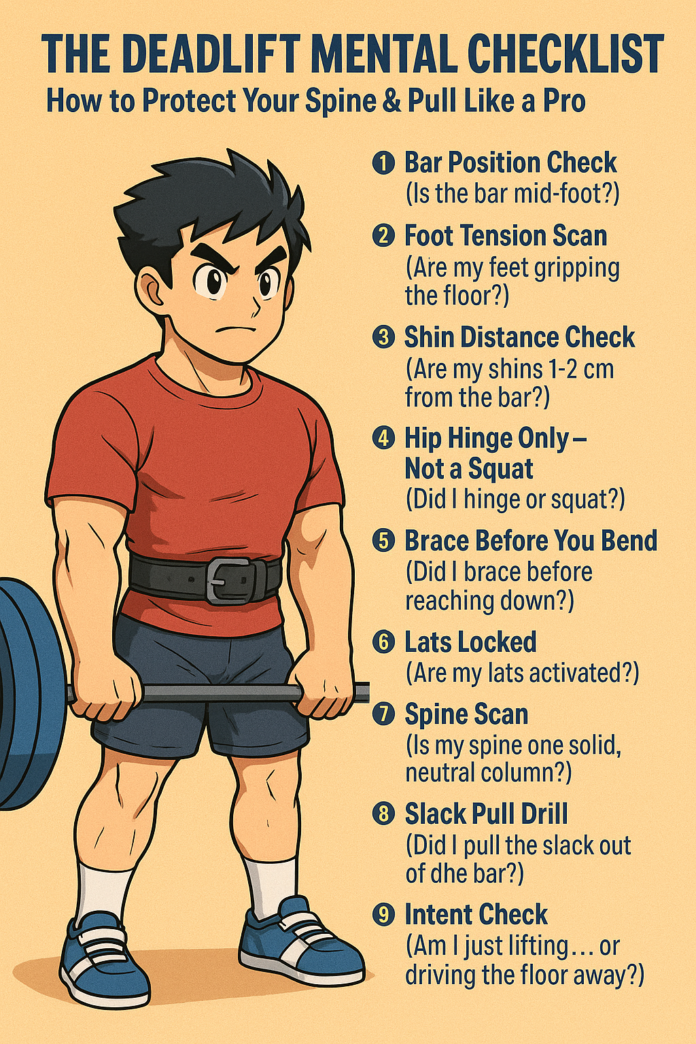
Hereโ€™s the one I call the โ€œIron Protocolโ€ โ€” a battle-ready mental checklist to bulletproof your deadlifts, protect your spine, and increase your power.


โœ… The Iron Protocol: 10-Point Mental Checklist Before Every Pull


1. Bar Position Check

๐Ÿง  โ€œIs the bar mid-foot?โ€

The bar must be over your midfoot, not your toes.
โœ… If you draw a line from the bar to the floor, it should cut your foot in half.


2. Foot Tension Scan

๐Ÿง  โ€œAre my feet gripping the floor?โ€

Screw your feet into the floor slightly โ€” like you’re twisting into the ground.
โœ… You should feel tension in your arches, not just standing flat.


3. Shin Distance Check

๐Ÿง  โ€œAre my shins 1โ€“2 cm from the bar?โ€

If your shins touch too early, your knees block the bar path.
โœ… Your shins should lightly touch the bar after you hinge down.


4. Hip Hinge Only โ€” Not a Squat

๐Ÿง  โ€œDid I hinge or squat?โ€

The deadlift is a hip hinge, not a hybrid squat.
โœ… You should feel a stretch in your hamstrings, not compression in your knees.


5. Brace Before You Bend

๐Ÿง  โ€œDid I brace before reaching down?โ€

One of the biggest mistakes? Bracing after youโ€™re bent over.
โœ… Take a big belly breath and brace your core while standing, before lowering.


6. Lats Locked

๐Ÿง  โ€œAre my lats activated?โ€

Imagine bending the bar, or crushing oranges in your armpits.
โœ… This locks your upper back and stabilises your spine.


7. Spine Scan

๐Ÿง  โ€œIs my spine one solid, neutral column?โ€

Your spine should feel like a tight rod from tailbone to neck โ€” no rounding or overextension.

โœ… Use a mirror, video, or feel: no loose segments.


8. Slack Pull Drill

๐Ÿง  โ€œDid I pull the slack out of the bar?โ€

Before you lift, build tension. You should hear a tiny click as the bar tightens in the sleeves.
โœ… Itโ€™s the difference between yanking and commanding the lift.


9. Intent Check

๐Ÿง  โ€œAm I just liftingโ€ฆ or driving the floor away?โ€

Donโ€™t pull the bar up. Push the floor away from you like a leg press.
โœ… The bar follows your intent โ€” not your grip.


10. Eyes & Head Locked

๐Ÿง  โ€œAm I staring at the same fixed spot?โ€

Your neck follows your eyes. Your spine follows your neck.
โœ… Pick a spot on the floor 2โ€“3 metres in front, and lock your gaze there.


๐Ÿ’ฅ Bonus Rule: Lift Like a Machine, Not Like a Hero

The best lifters repeat the same ritual every single rep.
Itโ€™s boring. Itโ€™s robotic. And thatโ€™s exactly why itโ€™s safe and brutally strong.

No checklist = no control. And no control = injury waiting to happen.


๐Ÿงฉ Summary Checklist: Quickfire Version

โœ… Bar over midfoot
โœ… Feet tense and grounded
โœ… Shins 1โ€“2 cm from bar
โœ… Hip hinge, not squat
โœ… Brace while standing
โœ… Lock your lats
โœ… Neutral spine
โœ… Pull slack out
โœ… Push the floor away
โœ… Fix your gaze


๐Ÿง  Final Thought

โ€œDonโ€™t just lift with your body. Command with your mind.โ€

One missed step โ€” even with light weight โ€” can make your lower back pop, your QL lock, or your discs bulge.

Follow the Iron Protocol every time, and you’ll lift with more confidence, control, and strength โ€” for life.

Speed vs Wisdom: When Falcon Met Owl”

0

(A Story About Ego, Life Lessons & One Very Confused Squirrel)

โœˆ๏ธ Scene: Above the Forest Canopy

It was a typical Tuesday. Birds were tweeting (literally), squirrels were stealing snacks, and somewhere over the treetops, a Peregrine Falcon named Blaze was clocking 389 km/h just for fun.

โ€œSpeed is everything,โ€ Blaze said, zipping past a crow mid-caw. โ€œWhy walk through life when you can stoop-dive your way to glory?โ€

But below, perched like a philosopher on an ancient branch, sat Grimley, the Great Grey Owl โ€” silent, wise, and 80% fluff.

โ€œSpeed is overrated,โ€ Grimley muttered, adjusting his monocle (yes, monocle). โ€œItโ€™s about silence, calculation… and intimidating mice with your stare.โ€

๐Ÿ˜Ž Clash of the Titans (of Sass)

Blaze swooped down, feathers all flexed up like he was sponsored by Red Bull.

Blaze: โ€œYou know, Grimley, while youโ€™re busy โ€˜calculating,โ€™ Iโ€™ve already caught dinner, had dessert, and updated my Instagram.โ€

Grimley: โ€œAnd while you were doing that, I meditated, wrote a haiku, and scared a squirrel into therapy.โ€

They locked eyes. It was on.
But not a fight.
A challenge โ€” to see who could catch the sneakiest squirrel in the forest: Kevin ๐Ÿฟ๏ธ (a known trickster who wears a leaf as a hat).

๐ŸŽฏ The Setup

Blaze went first. He took to the sky like a missile launched by caffeine. From above, he spotted Kevin doing his โ€œsneaky danceโ€ near a berry bush.

Blaze went full Top Gun, spiralling down at 200+ mph.

But just as he closed in โ€” POOF!
Kevin vanished.

โ€œYou dove so fast, you missed the decoy tail,โ€ said Grimley, sipping tea he somehow brewed on a branch.

Blaze blinked. โ€œWhat. Just. Happened.โ€

๐Ÿง  Owlโ€™s Turn

Grimley didn’t fly. He glided. Silently. Patiently. The forest hushed. Even the wind stopped to watch.

Kevin, the squirrel, nervously twitched his tail.
Then he felt it โ€” that ancient, ancestral fear of being watched… by a floating pillow of death.

Grimley: โ€œBoo.โ€

Kevin fainted. Caught. Game over.

Later That Evening…

Blaze sulked on a branch. โ€œItโ€™s not fair. Iโ€™m the fastest animal on Earth.โ€

Grimley sipped tea he somehow brewed in a tiny leaf cup.

โ€œTrue. But even a bullet needs a brain to aim it.โ€

Blaze thought for a second. Then nodded.

โ€œTomorrow,โ€ he said, โ€œwe chase the hedgehog that thinks itโ€™s a cactus.โ€

Grimley raised his cup. โ€œTo slow, silent victory.โ€

Kevin, still dazed, adjusted his leaf crown and muttered, โ€œI need a vacation.โ€

Best Forex Brokers to Start Trading in 2025: Exness, Vantage, FXPro & Winning with Psychology

0

๐Ÿง  Why Forex Trading is Booming in 2025 (And How You Can Join the Wave)

Forex trading is no longer just for elite investors or financial institutions.
With just a smartphone and internet, anyone can now enter the global marketโ€”and many are quietly making serious money.

But hereโ€™s the twist:

The difference between winning and losing isnโ€™t just the strategyโ€”itโ€™s psychology and broker choice.

๐Ÿ‘‰ Start trading now with the best brokers of 2025


๐Ÿ” Choosing the Best Forex Broker in 2025

When it comes to trading, your broker is your foundation.
Thatโ€™s why traders worldwide trust:

  • Exness โ€“ Known for ultra-low spreads and instant withdrawals
  • Vantage โ€“ Powerful platform, low commissions
  • FXPro โ€“ Regulated, trusted, and beginner-friendly

๐Ÿ‘‰ Click here to compare Exness, Vantage, and FXPro brokers now


๐ŸŽฏ The Psychology of Profitable Traders (Use These Tricks)

Most traders donโ€™t fail because of bad analysisโ€”they fail because of emotions: Emotion Consequence Fear Missed opportunities Greed Overleveraging Boredom Unplanned trades FOMO Chasing losses

Hereโ€™s what successful traders do instead:

  • Use rules, not feelings
  • Master emotional discipline
  • Only use trusted brokers they fully understand

๐Ÿ‘‰ Choose your trusted forex broker to trade confidently


๐Ÿ“ˆ Why You Should Start Trading Now (Not Later)

Letโ€™s face it: Waiting doesnโ€™t make you money.

Every day you delay starting is another day of:

  • Missing compounding opportunities
  • Watching others profit while you “research more”
  • Falling behind while the market moves forward

Smart traders start small, but they start.

๐Ÿ‘‰ Kickstart your trading journey with Exness, Vantage, or FXPro today


๐Ÿ“Š Forex Trading for Beginners: Quick Checklist

Before jumping in, hereโ€™s what to do:

โœ… Learn basic Forex terms (lot size, spread, leverage)
โœ… Understand the psychology of risk
โœ… Pick a regulated broker
โœ… Start with a demo or small account
โœ… Stay consistent and emotionally neutral

๐Ÿ‘‰ Explore our full guide to the best forex brokers here


โ“Frequently Asked Questions (SEO Optimised)

Q1: What is the best forex broker for beginners in 2025?
A: Exness, Vantage, and FXPro are highly rated for beginners due to low fees, strong security, and user-friendly interfaces.
๐Ÿ‘‰ See why these brokers are best for you


Q2: Is Forex trading risky?
A: Like any investment, Forex trading involves risk. However, with emotional control, good strategy, and a reliable broker, you can manage it efficiently.


Q3: How much do I need to start trading Forex?
A: Many brokers allow you to start with as little as $10โ€“$100. Itโ€™s about consistency, not big capital.


โœ… Final Thoughts: Trade Smart, Trade Safe

Success in Forex trading is built on three things:

  1. Solid mental discipline
  2. A structured trading approach
  3. A broker you can trust

If youโ€™re ready to take control of your income and explore your full financial potential…

๐Ÿ‘‰ Click here to start trading with Exness, Vantage, or FXPro now

Disclaimer: This content is for informational purposes only and does not constitute financial advice. Trading involves significant risk and may not be suitable for all investors. Always conduct your own research and consult with a licensed financial advisor before making any investment decisions.

Part 4: The Future-Ready Entrepreneur

0

Subtitle: โ€œAdapt early or disappear quietly.โ€


๐Ÿ“Œ Overview:

This part is about integrating AI, understanding technological shifts, and positioning yourself to lead the next era โ€” not just survive it.


๐Ÿš€ STEP 21: EMBRACE AI AS YOUR CO-FOUNDER

๐Ÿ“š Book: AI 2041 by Kai-Fu Lee

Core Idea:
AI wonโ€™t replace entrepreneurs โ€” but entrepreneurs who use AI will replace those who donโ€™t.

Actions:

  • Use ChatGPT, Notion AI, or Claude to:
    • Generate marketing ideas
    • Summarise documents
    • Draft email campaigns
    • Answer customer queries
  • Use Zapier + OpenAI to automate:
    • Social media posts
    • Lead responses
    • Invoicing
    • Data reports

๐Ÿ› ๏ธ Tools:
Zapier, Make.com, ChatGPT, GPT-powered Google Sheets, Copy.ai


๐Ÿง  STEP 22: BUILD A โ€œSECOND BRAINโ€

๐Ÿ“š Book: Building a Second Brain by Tiago Forte

Core Idea:
Information is useless if itโ€™s not organised and retrieved at the right moment.

Actions:

  • Use Notion, Obsidian, or Evernote to:
    • Capture daily learnings
    • Organise business ideas by tag/theme
    • Create templates for decision-making

๐Ÿงฑ Framework: PARA (Projects / Areas / Resources / Archives)


๐ŸŒ STEP 23: THINK LIKE A GLOBAL ENTITY

๐Ÿ“š Book: The Sovereign Individual by James Dale Davidson

Core Idea:
Borders mean less in a digital-first world. Wealth flows to those who are location-flexible, tax-aware, and digitally autonomous.

Actions:

  • Register a business in strategic-friendly countries (e.g., Estonia e-residency, UAE Free Zone)
  • Use global banking: Wise, Mercury, Payoneer
  • Sell digital products/services globally
  • Accept crypto payments (stablecoins for low volatility)

๐Ÿ›ฐ๏ธ STEP 24: FOLLOW FUTURE TRENDS

๐Ÿ“š Book: 21 Lessons for the 21st Century by Yuval Noah Harari

Key Trends to Watch:

  • Artificial General Intelligence (AGI)
  • Remote-first workplaces
  • Tokenized economies & blockchain
  • Climate-tech, space-tech, bioengineering
  • Emotional resilience in AI-dominated worlds

How to Stay Ahead:

  • Follow platforms like FutureTools, Hacker News, and AI newsletters.
  • Dedicate 1 hour/week for โ€œfuture reading.โ€
  • Join forward-thinking communities (e.g., Indie Hackers, Y Combinator forums)

๐Ÿ›ก๏ธ STEP 25: LEAD ETHICALLY IN THE TECH ERA

๐Ÿ“š Book: The Code of the Extraordinary Mind by Vishen Lakhiani

Core Idea:
In a world of automation, your values are your edge.

Actions:

  • Set clear tech boundaries (e.g., โ€œNo tracking my users unnecessarily.โ€)
  • Focus on conscious capitalism: people, planet, profit โ€” in that order.
  • Mentor upcoming youth on tech ethics, not just skills.

๐Ÿงฉ All 4 Parts in Review:

Part Theme Focus
1 Self-Improvement Build habits, mindset, discipline
2 Business Management Systems, teams, leadership
3 Wealth & Legacy Brand, freedom, long-term strategy
4 Future-Ready Thinking AI, digital tools, global trends


Part 3: Wealth, Freedom & The Long Game

0

Subtitle: โ€œWhen your money works for you, you stop working for money.โ€


๐Ÿช™ STEP 16: BUILD MULTIPLE INCOME STREAMS

๐Ÿ“š Book: Rich Dad Poor Dad by Robert Kiyosaki

Core Idea:
The rich donโ€™t trade time for money forever. They build assets that generate income while they sleep.

Actions:

  • Start with your main cash cow (business/job).
  • Reinvest profits into passive or semi-passive streams:
    • Digital products (courses, eBooks)
    • Affiliate marketing
    • Rental properties
    • Stock market (dividends)
    • SaaS tools or apps
  • Use 80/20 thinking: 20% of efforts bring 80% of income.

๐Ÿงฑ STEP 17: MASTER MONEY MANAGEMENT

๐Ÿ“š Book: The Psychology of Money by Morgan Housel
๐Ÿ“š Book: I Will Teach You to Be Rich by Ramit Sethi

Core Idea:
Wealth is discipline + consistency, not luck.

Actions:

  • Set up automated savings and investing (monthly %).
  • Use the Buckets Rule:
    • 50% Needs
    • 30% Freedom (investing, business scaling)
    • 20% Growth (books, mentors, travel)
  • Avoid lifestyle creep โ€” just because you earn more doesn’t mean you should spend more.

๐Ÿ’ผ STEP 18: TURN PERSONAL BRAND INTO A BUSINESS

๐Ÿ“š Book: Crushing It! by Gary Vaynerchuk

Core Idea:
People donโ€™t follow logos, they follow people.

Actions:

  • Choose a โ€œpillarโ€ you want to be known for: e.g., storytelling, strategy, wellness, ethics, wealth.
  • Build in public: share lessons, not just wins.
  • Monetise your brand via:
    • Paid newsletters
    • Speaking gigs
    • Digital products
    • High-ticket services

๐Ÿง˜ STEP 19: DESIGN YOUR LIFE, NOT JUST YOUR Business

๐Ÿ“š Book: The 4-Hour Workweek by Tim Ferriss

Core Idea:
You didnโ€™t become an entrepreneur to be a slave to your calendar.

Actions:

  • Build around lifestyle goals: time with family, location freedom, health first.
  • Use VAโ€™s, automations, and delegation as force multipliers.
  • Measure success not just in dollars, but in:
    • Time freedom
    • Peace of mind
    • Personal fulfilment

๐Ÿงฌ STEP 20: BUILD SOMETHING THAT OUTLASTS YOU

๐Ÿ“š Book: Built to Last by Jim Collins
๐Ÿ“š Book: Die With Zero by Bill Perkins

Core Idea:
Youโ€™re not just building a business โ€” youโ€™re building a philosophy others may inherit.

Actions:

  • Define your values and mission as clearly as your product.
  • Document knowledge: SOPs, playbooks, legacy notes.
  • Invest in future leaders: family, youth, team.
  • Give back: scholarship fund, mentorship, charity, public teaching.

๐Ÿ FINAL THOUGHTS

โ€œIf youโ€™re chasing freedom, wealth will come. If youโ€™re chasing legacy, impact will follow.โ€
โ€“ โœ’๏ธ Written from the desk of future-you

Wealth isn’t just numbers. It’s being able to say โ€œnoโ€ to what doesnโ€™t align and โ€œyesโ€ to what does โ€” fully, freely, without guilt. Thatโ€™s the long game.

Part 2: SCALE & LEGACY โ€” From Starter to System Builder

0

โ€œIf youโ€™re still making all the decisions, you donโ€™t own a business โ€” you own a job.โ€


๐Ÿ—๏ธ STEP 10: BUILD SYSTEMS, NOT DEPENDENCIES

๐Ÿ“š Book: E-Myth Revisited by Michael E. Gerber

Core Idea:
A business that depends on you isnโ€™t scalable. You need processes, not personality.

Actions:

  • Document everything you do more than twice.
  • Create SOPs (Standard Operating Procedures) for marketing, sales, delivery, and customer support.
  • Use tools like Notion, Google Docs, or Process Street.

๐Ÿ“Š STEP 11: TRACK THE RIGHT METRICS

๐Ÿ“š Book: Measure What Matters by John Doerr

Core Idea:
Growth is meaningless without direction. Use OKRs (Objectives and Key Results).

Actions:

  • Set quarterly goals per team (or per self if solo).
  • Make each goal measurable: โ€œGrow email list by 25%โ€ instead of โ€œImprove email list.โ€
  • Use dashboards: Google Sheets, Airtable, or free analytics dashboards.

๐Ÿง‘โ€๐Ÿคโ€๐Ÿง‘ STEP 12: DELEGATE AND HIRE WISELY

๐Ÿ“š Book: Who: The A Method for Hiring by Geoff Smart

Core Idea:
The wrong hire costs more than no hire.

Actions:

  • Create outcome-based job roles: e.g., โ€œincrease conversions by 15%,โ€ not โ€œmanage email.โ€
  • Hire slow, fire fast โ€” especially if values donโ€™t align.
  • Use trial projects before full commitment.

๐Ÿง  STEP 13: THINK STRATEGICALLY, NOT TACTICALLY

๐Ÿ“š Book: Good Strategy, Bad Strategy by Richard Rumelt

Core Idea:
Tactics win battles. Strategy wins wars.

Actions:

  • Ask: โ€œWhat problem are we solving and for whom?โ€
  • Avoid chasing shiny objects (e.g., every new social media platform).
  • Set long-term โ€œpillarsโ€ (e.g., community-first brand, premium pricing model, etc.)

๐ŸŒ STEP 14: THINK GLOBAL, ACT LOCAL

๐Ÿ“š Book: Blue Ocean Strategy by W. Chan Kim & Renรฉe Mauborgne

Core Idea:
Donโ€™t fight for attention. Create your own category.

Actions:

  • Niche down until you dominate a micro-market.
  • Then scale out โ€” go wider only when the foundation is stable.
  • Think like Airbnb or Canva: community + utility = scale.

๐Ÿ›๏ธ STEP 15: BUILD YOUR LEGACY

๐Ÿ“š Book: Start With Why by Simon Sinek

Core Idea:
If your mission is just money, youโ€™ll burn out. Legacy is what remains when you’re gone.

Actions:

  • Write your “Why” statement. Why did you start? Why should anyone care?
  • Align decisions to values. Donโ€™t compromise brand just for short-term gain.
  • Mentor others. Teach, share, inspire.

๐Ÿ” BONUS: MINDSET SHIFTS FOR SCALE

From To
Doing Designing
Hustle Strategy
Self-dependence Team-led growth
Control Trust
Fear of loss Confidence in process