Exclusive Content:

Technologies Humanity Agreed Should Never Be Used

Throughout history, humanity has built astonishing tools.Some cured diseases....

Why You Can’t Make a Business Work on Your Own

The Entrepreneurial Myth That Misleads Many People One of the...

The Four Silent Battles That Shape Your Life

The Invisible Wars Most People Never Notice Not every battle...
Home Blog Page 59

Comprehensive Guide to Fraud Detection in Business

0

Fraud and scams can lead to financial losses, reputational damage, and legal risks for businesses. Detecting fraud early is crucial to mitigating these risks. This guide outlines key fraud detection methods, examples, and best practices to help businesses protect themselves effectively.


Key Insights on Fraud Detection

Fraud Detection Requires Multiple Approaches – Businesses rely on anonymous tip lines, audits, AI technology, and internal controls to uncover fraud.

Employee Tips Uncover the Most Fraud – Research indicates that 40% of fraud cases are detected through whistleblower tips.

Fraud Losses Are Substantial – The median fraud loss is $117,000 per case, with some exceeding millions.

AI Helps Detect Fraud in Real-TimeMachine learning algorithms can flag suspicious transactions instantly, like unusual large transfers, preventing fraud before it escalates.


Methods of Detecting Fraud in Business

Here are five key methods businesses use to detect fraud, with real-life examples and best practices for each approach.

1. Anonymous Tip Lines

Why it Works:
Encourages reporting of suspicious activities without fear of retaliation.
42% of fraud cases are uncovered via employee or stakeholder tips.

Example:
A retail company implemented an anonymous tip line. Within months, an employee reported a manager embezzling $100,000, leading to an internal investigation and prevention of further losses.

Best Practices:

  • Ensure confidentiality to encourage honest reporting.
  • Promote awareness of the tip line through internal training.
  • Have a structured investigation process to act on reports.

🔗 Source: M&T Bank on Fraud Detection


2. Regular Auditing

Why it Works:
✔ Audits identify irregularities in financial statements.
✔ Businesses with routine audits detect fraud faster and reduce overall losses.

Example:
A manufacturing firm conducted an annual audit and found their sales figures inflated by $500,000—revealing a sales executive committing fraud.

Best Practices:

  • Conduct regular audits (internal & external).
  • Ensure auditor independence for unbiased reporting.
  • Follow up on findings and recommendations.

🔗 Source: Kaufman Rossin: 5 Fraud Detection Methods


3. Machine Learning & AI Technology

Why it Works:
✔ AI analyzes large datasets and flags suspicious activities in real time.
✔ Helps reduce false positives and detect complex fraud patterns.

Example:
A bank’s AI system detected a large international transfer from a customer who typically made small, local transactions. The transaction was flagged and stopped, preventing a potential identity theft case.

Best Practices:

  • Regularly update AI models to detect evolving fraud tactics.
  • Use real-time transaction monitoring.
  • Ensure human oversight for flagged transactions.

🔗 Source: Fraud Detection AI Solutions – Inscribe


4. Red Flag Detection

Why it Works:
✔ Identifies suspicious behavior and unusual financial activities.
✔ Enables proactive fraud detection before financial loss occurs.

Examples of Red Flags:

  • Sudden employee absence coinciding with financial discrepancies.
  • Unusual expense reports with vague justifications.
  • Customers suddenly changing payment methods (e.g., from credit card to wire transfer).

Real-Life Example:
A company noticed an employee taking sudden leave while their department’s expense reports showed irregularities. Investigation revealed fabricated claims, preventing significant losses.

Best Practices:

  • Train employees to recognize fraud red flags.
  • Implement real-time transaction monitoring.
  • Regularly review high-risk departments and employees.

🔗 Source: ComplyAdvantage: 12 Common Fraud Red Flags


5. Internal Controls & Segregation of Duties

Why it Works:
✔ Prevents fraud by limiting individual access to sensitive financial processes.
✔ Ensures accountability and oversight within the organization.

Example:
A healthcare company prevented fraud by ensuring that different employees handled ordering medical supplies, receiving shipments, and approving payments. This prevented unauthorized orders and unnecessary expenses.

Best Practices:

  • Enforce segregation of duties in financial transactions.
  • Conduct regular reconciliations to verify accounts.
  • Implement multi-step authorization for high-value transactions.

🔗 Source: The Enterprise World: Top 5 Methods for Fraud Detection


Comparison of Fraud Detection Methods


Conclusion & Recommendations

Detecting fraud requires a multi-layered approach, combining employee awareness, audits, AI technology, and internal controls.

🔹 Key Actions for Businesses:
Implement an anonymous tip line and ensure employees are aware of it.
Conduct regular audits and follow up on findings.
Adopt AI fraud detection for real-time monitoring.
Train employees to recognize fraud red flags.
Review internal controls periodically to prevent fraud opportunities.

Stay Ahead of Fraudsters!

By combining technology, human awareness, and strong controls, businesses can reduce fraud risks and protect their financial stability.


Additional Resources & References

📌 ACFE: 2022 Report to the Nations on Fraud
📌 M&T Bank: How to Detect Business Fraud
📌 Kaufman Rossin: 5 Methods of Fraud Detection
📌 Fraud.com: 5 Fraud Detection Methods
📌 ComplyAdvantage: 12 Common Fraud Red Flags
📌 The Enterprise World: Top 5 Methods for Fraud Detection

By staying informed and proactive, businesses can identify fraud early, protect their assets, and maintain trust with stakeholders. 🚀
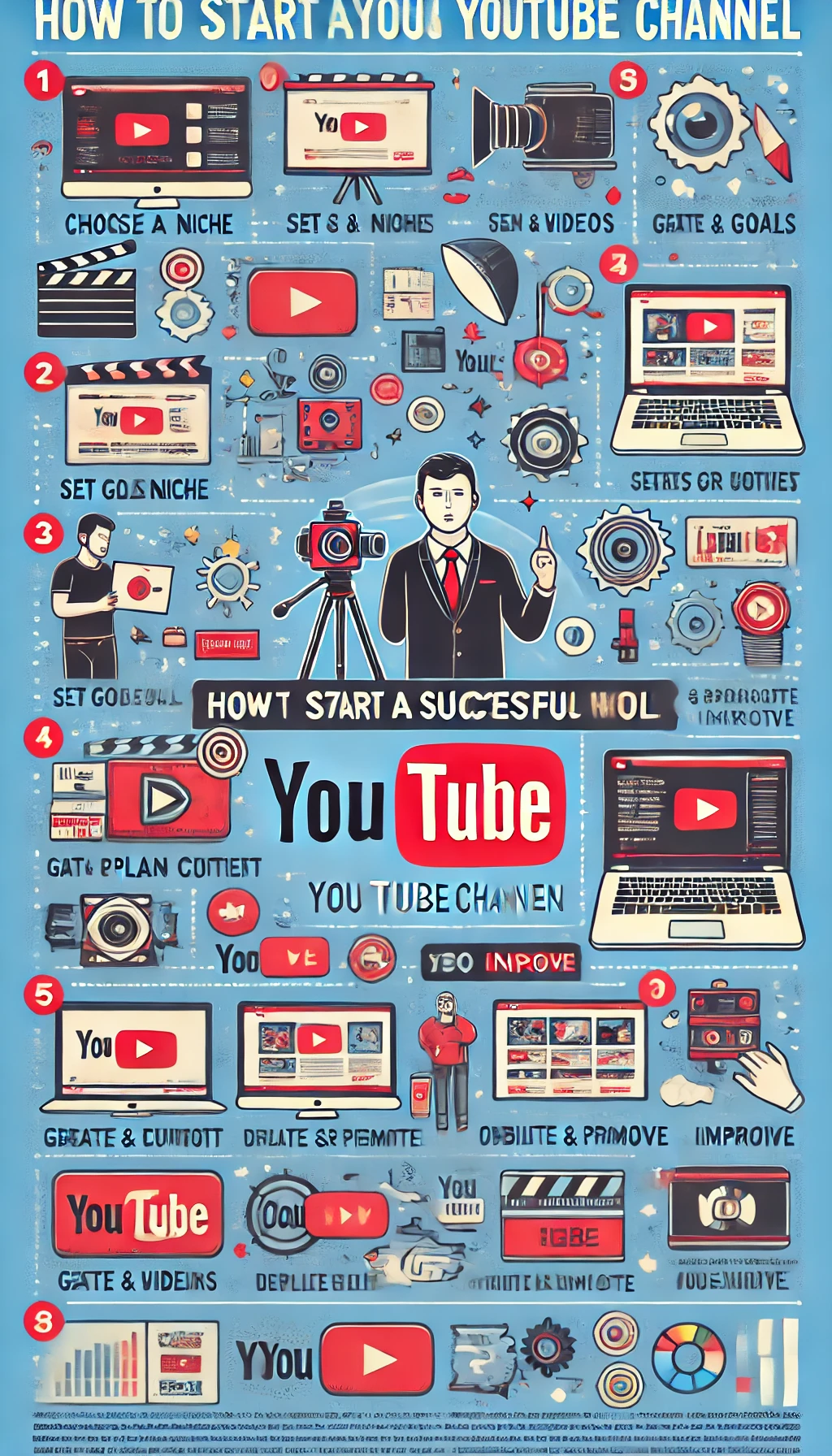

How to Start a Successful YouTube Channel: A Comprehensive Step-by-Step Guide

0

Introduction

In recent years, YouTube has become more than just a platform for watching funny cat videos—it’s also a hub for education, entertainment, and entrepreneurship. Whether you’re looking to showcase your talents, share your knowledge, or create a new income stream, starting a successful YouTube channel is a powerful way to reach millions of people worldwide. In this comprehensive guide, we’ll walk you through every step, from discovering your niche to optimizing your videos for higher visibility.

Why Start a YouTube Channel?

  • Global Reach: YouTube is the second-largest search engine in the world, right behind Google.
  • Monetization Opportunities: Through advertising revenue, sponsorships, and merchandise, creators can earn a significant income.
  • Personal Branding: Build authority and credibility in your field.
  • Creative Outlet: Share your passion, hobbies, or expertise in a visually engaging format.

Step 1: Identify Your Niche

  1. Brainstorm Your Interests and Strengths
    • List out topics you’re passionate or knowledgeable about (e.g., cooking, technology, gaming, travel, or fitness).
    • Narrow down to a primary theme you can see yourself creating consistent content around.
  2. Research Audience Demand
    • Use popular online tools and platforms (like Google Trends or looking at trending videos on YouTube itself) to see what people are searching for.
    • Check out forums and social media conversations to discover frequently asked questions in your chosen topic.
  3. Evaluate Competition
    • Browse existing YouTube channels in your niche to understand their content style and determine what gaps you can fill.
    • Identify unique angles or subtopics to differentiate yourself from well-established channels.

Pro Tip: Pick a niche that excites you—your enthusiasm will resonate with your audience and keep you motivated in the long run.


Step 2: Plan and Set Clear Goals

  1. Define Your Channel’s Purpose
    • Is it educational? Entertaining? Product-oriented?
    • Having a clear focus will guide your entire content strategy.
  2. Set SMART Goals
    • Specific, Measurable, Achievable, Relevant, and Time-bound.
    • Example Goal: “Reach 1,000 subscribers in 6 months by posting one video per week.”
  3. Determine Content Categories
    • If your niche is cooking, your categories could include “Quick Meals,” “Healthy Recipes,” and “Kitchen Hacks.”
    • This structure will make it easier for viewers to navigate your content.

Step 3: Create a Brand Identity

  1. Channel Name
    • Choose something memorable that also reflects your niche (e.g., “TechGuru,” “FitWithAnna”).
    • Keep it short, catchy, and easy to pronounce.
  2. Channel Art and Logo
    • Use tools like Canva or Photoshop to design a banner and logo that match your brand’s aesthetic.
    • Maintain consistent branding across your social media profiles.
  3. Brand Voice and Personality
    • Decide if you want to be fun, motivational, serious, or casual in your presentation style.
    • Keep your tone consistent throughout your videos and other communications.

Step 4: Equipment and Technical Setup

  1. Camera
    • A smartphone camera is fine when starting out, but if you want higher-quality footage, consider an entry-level DSLR or mirrorless camera.
    • Ensure good lighting and steady framing to keep videos clear and professional.
  2. Microphone
    • Good audio quality can set you apart. Consider a USB microphone or a lapel mic for clearer sound.
  3. Lighting
    • Natural light is your friend—film near a window if possible.
    • For more controlled setups, invest in affordable ring lights or softboxes.
  4. Video Editing Software
    • Beginners can use free tools like iMovie (Mac) or Lightworks (Windows).
    • More advanced creators might opt for Adobe Premiere Pro or Final Cut Pro.
  5. Workspace
    • Set up a clean, uncluttered background for your videos.
    • If your content requires a studio setup, ensure it’s free from distractions and has adequate soundproofing.

Step 5: Plan Your Content Strategy

  1. Content Calendar
    • Schedule your video topics and upload dates in advance.
    • This helps maintain consistency and keeps you organized.
  2. Video Formats
    • Tutorials, reviews, interviews, vlogs, or product demonstrations—vary your format to keep viewers engaged.
  3. Scripting and Storyboarding
    • Even if you’re good at improvisation, outline your main points to stay on track.
    • This improves pacing and ensures you cover all the important details.
  4. Call to Action (CTA)
    • Always include a CTA to like, share, comment, or subscribe at an appropriate point in the video.
    • Direct viewers to your website or social media for additional content.

Step 6: Record and Edit Your Videos

  1. Recording Tips
    • Film in a quiet environment with good lighting.
    • Do a quick test recording to check both video and audio before filming the entire piece.
  2. Editing Workflow
    • Cut out unnecessary pauses or errors to maintain video flow.
    • Add background music or sound effects if appropriate, but ensure they’re royalty-free.
    • Use text overlays or transitions to emphasize important information.
  3. Polishing the Final Output
    • Watch the video multiple times to ensure seamless transitions and consistent audio levels.
    • Adjust brightness and color balance to match your desired aesthetic.

Step 7: Optimize Your Video for SEO

  1. Keyword Research
    • Identify relevant keywords in your niche (e.g., “healthy meal prep,” “DIY home projects,” or “smartphone photography tips”).
    • Use these keywords in your video title, description, and tags.
  2. Video Titles
    • Make titles descriptive and compelling.
    • Keep them within 60–70 characters to avoid getting cut off in search results.
  3. Descriptions
    • Write at least 200–300 words explaining what your video covers.
    • Insert relevant keywords naturally. Include links to your social media or website.
  4. Tags
    • Use a mix of broad and specific tags related to your topic.
    • Don’t overstuff; keep tags highly relevant to avoid penalties.
  5. Custom Thumbnails
    • Design eye-catching thumbnails with clear text overlays.
    • High-contrast images with readable text on mobile devices get more clicks.

Step 8: Publish and Promote Your Videos

  1. Upload Schedule
    • Consistency is key. Whether it’s once a week or twice a month, stick to a regular schedule.
  2. Social Media Promotion
    • Share new videos on platforms like Instagram, TikTok, Twitter, and Facebook.
    • Join relevant communities or groups to connect with potential viewers.
  3. Collaborations
    • Partner with other YouTubers or influencers in your niche.
    • Guest appearances or shout-outs can help you cross-promote and gain new subscribers.
  4. Email Marketing
    • Collect email addresses via your website or landing pages.
    • Send out a newsletter whenever you upload a new video.

Step 9: Engage with Your Audience

  1. Respond to Comments
    • Show appreciation for viewer feedback. Answer questions and acknowledge suggestions.
    • Engaging comments can drive community growth and signal to YouTube’s algorithm that your video is active.
  2. Live Streams and Q&A
    • Host live sessions to interact with your audience in real time.
    • This builds trust and humanizes your brand.
  3. Polls and Community Posts
    • Use YouTube’s Community tab to conduct polls, share behind-the-scenes updates, or tease upcoming content.
  4. User-Generated Content
    • Encourage viewers to share their stories, tips, or results after following your tutorials.
    • Featuring user-generated content fosters loyalty and a sense of community.

Step 10: Track, Analyze, and Adapt

  1. YouTube Analytics
    • Monitor watch time, average view duration, and audience retention graphs.
    • Identify drop-off points in your videos and tweak future content accordingly.
  2. Engagement Metrics
    • Keep an eye on likes, comments, shares, and subscriptions gained.
    • High engagement rates often indicate your content resonates well with viewers.
  3. Refine Content Strategy
    • Identify which videos perform best and consider creating similar or related content.
    • Expand on popular topics and discontinue or revamp underperforming formats.
  4. Set New Goals
    • Once you hit a milestone, raise the bar.
    • Continuously improving quality, presentation, and content variety will help you stay ahead of the competition.

Conclusion

Starting a successful YouTube channel requires careful planning, consistent effort, and genuine passion for your topic. By following this step-by-step guide—identifying your niche, setting goals, branding, creating quality videos, and optimizing your channel for video SEO—you’ll put yourself on the path toward steady growth and a loyal audience. Remember to stay adaptable, analyze your performance metrics, and always keep your viewers’ interests in mind. Over time, you’ll build not only a substantial following but also the confidence and creativity to keep innovating and expanding your influence on the world’s largest video platform.

Whispers of Time | همسات الزمن

0

Original Arabic Poetry | القصيدة الأصلية

يمضي الزمانُ ولا يُبالي سيرَهُ
ويطيرُ من بينِ اليدينِ كَطَيفِ
كم ضحكةٍ عشنا بها أيّامَنا
لكنها تمضي كحُلمٍ زائفِ


Meaning in Arabic | المعنى بالعربية

تعكس هذه الأبيات مرور الزمن السريع وعدم اكتراثه بمشاعر البشر. يشبه الشاعر الزمن بطيفٍ يهرب من بين الأيدي، فلا يمكن الإمساك به. يسترجع لحظات السعادة التي عاشها، لكنه يدرك أنها تمضي سريعًا كما لو كانت مجرد حلم عابر.


English Version | النسخة الإنجليزية

Time marches on, heedless of its way,
Drifting like a fleeting shade.
How many laughs once filled our days,
Yet they vanish like a dream unmade.


Meaning in English | التفسير بالإنجليزية

This poem reflects on the relentless passage of time, indifferent to human emotions. The poet compares time to a fleeting shadow, impossible to grasp. He reminisces about moments of joy, only to realize that they slip away as if they were nothing more than a passing dream.

The Best Trading Strategies for Every Market Condition (Bull, Bear & Sideways Markets)

0

The financial markets are constantly changing. Sometimes they trend upward (bull market), sometimes they decline (bear market), and other times they move sideways (range-bound market).

Successful traders know that one strategy doesn’t work for all conditions. Instead, they adapt their approach based on the market environment.

In this guide, we’ll explore the best trading strategies for bull, bear, and sideways markets with real examples and step-by-step explanations.


📈 Trading in a Bull Market: How to Ride the Trend Upward

A bull market occurs when prices are consistently rising due to strong economic conditions, investor confidence, or high demand.

🔹 Best Strategies for a Bull Market

Trend-Following Strategy – Buy assets that are in an uptrend and hold them.
Breakout Trading – Enter trades when prices break above key resistance levels.
Pullback Trading – Buy when the price dips slightly before continuing higher.
Momentum Trading – Focus on assets with strong buying volume and rapid price increases.

🔹 Step-by-Step Guide: How to Trade a Bull Market

1️⃣ Identify an uptrend using the 50-day & 200-day moving averages.
2️⃣ Wait for a pullback to a support level (like a moving average or previous high).
3️⃣ Look for confirmation signals (e.g., RSI above 50, strong candlestick patterns).
4️⃣ Enter a long trade (buy) and set a stop-loss below the last low.
5️⃣ Set a profit target based on previous resistance levels.

📌 Example:

  • The 2020-2021 stock market boom saw many tech stocks soaring over 300% in a bull run. Traders who followed trend-following strategies capitalized on the rally.

📉 Trading in a Bear Market: Profiting When Prices Fall

A bear market happens when prices decline by 20% or more due to economic downturns, fear, or negative financial events.

🔹 Best Strategies for a Bear Market

Short Selling – Profit from falling prices by borrowing and selling assets at a high price, then buying them back lower.
Put Options – Use options trading to benefit from price drops without directly shorting.
Safe-Haven Trading – Move money into assets like gold, bonds, or defensive stocks.
Countertrend Trading – Look for temporary relief rallies to buy short-term dips.

🔹 Step-by-Step Guide: How to Trade a Bear Market

1️⃣ Spot a downtrend using the 50-day & 200-day moving averages (price trading below them).
2️⃣ Confirm a bearish trend with RSI below 50 and MACD crossover downward.
3️⃣ Enter a short trade (sell position) when price retests resistance.
4️⃣ Place a stop-loss above the previous high to manage risk.
5️⃣ Take profits near previous support levels.

📌 Example:

  • During the 2008 Financial Crisis, stocks lost over 50% of their value. Smart traders who shorted the market made massive profits while others panicked.

📊 Trading in a Sideways Market: Winning in a Range-Bound Market

A sideways market occurs when prices move within a range without a clear trend. This is common in consolidation phases before a big move.

🔹 Best Strategies for a Sideways Market

Range Trading – Buy at support and sell at resistance within a range.
Mean Reversion – Trade against short-term price spikes that deviate from the average.
Bollinger Bands Strategy – Use Bollinger Bands to identify overbought/oversold levels.
Scalping Strategy – Enter multiple small trades to profit from minor price movements.

🔹 Step-by-Step Guide: How to Trade a Sideways Market

1️⃣ Identify key support and resistance levels where price keeps bouncing.
2️⃣ Look for RSI below 30 (oversold) to buy at support and RSI above 70 (overbought) to sell at resistance.
3️⃣ Enter trades with tight stop-losses to minimize risk.
4️⃣ Take profits at the opposite range level.

📌 Example:

  • Between 2015-2017, gold traded in a tight range between $1,050 and $1,350 per ounce. Traders who bought near support and sold near resistance made steady profits.

📌 Summary: Which Strategy Should You Use?

📌 Pro Tip: Always adapt your strategy based on the market condition to maximize profits and minimize risks.


🚀 Final Thoughts: Be Ready for Any Market Condition

To be a successful trader, you must adapt and use the right strategy at the right time.

In a bull market, ride the trend up.
In a bear market, profit from falling prices.
In a sideways market, trade the range.

By mastering these trading strategies, you can make money regardless of market conditions.


Mastering SEO: A Step-by-Step Guide to Tools & Techniques for Maximum Visibility

0

🚀 Introduction: Why SEO Matters?

🔹 Search Engine Optimization (SEO) is the foundation of digital visibility, ensuring your content ranks higher in search engines like Google, Bing, and Yahoo.
🔹 Key Benefits of SEO:

  • 🚀 Increases organic traffic without spending on ads.
  • 🎯 Improves search ranking and authority.
  • 📊 Enhances user experience and website performance.
  • 🔎 Boosts brand credibility with search engine trust.

Best Time to Implement SEO?

  • 📍 Before launching a website to structure it correctly.
  • Before writing content to target the right audience.
  • 🔄 During content updates to improve older pages.
  • 📈 When tracking performance to refine strategies.

🔹 Step 1: Keyword Research – The Foundation of SEO

🔍 What is Keyword Research?

  • 🎯 Identifying high-value search terms users enter into Google.
  • 💡 Helps you align content with user intent and rank higher.
  • Targets untapped opportunities with long-tail keywords.

🛠 Best Keyword Research Tools:

  • 🆓 Google Keyword Planner – Free tool for basic keyword data.
  • 🔥 Ahrefs – Advanced competitor analysis & keyword difficulty scoring.
  • 🏆 SEMrush – Comprehensive keyword tracking & content gap analysis.
  • 📈 Ubersuggest – Great for discovering trending topics.

📝 Step-by-Step Keyword Research (Example):
1️⃣ Use Google Keyword Planner → Search for “Cybersecurity Practices”
2️⃣ Identify related search terms:

  • 🔹 “How to protect data online” (Low competition, high intent)
  • 🔹 “Cybersecurity for small businesses” (High search volume)
    3️⃣ Analyze competitor keywords with Ahrefs/SEMrush.
    4️⃣ Pick high-impact, low-competition keywords.
    5️⃣ Use long-tail keywords (e.g., “Best cybersecurity practices for remote teams”).

Why This Works?

  • 📌 Higher conversion rates from specific, intent-based searches.
  • 🔝 Easier to rank for long-tail keywords vs. broad terms.
  • 📊 Competitive advantage by targeting gaps competitors miss.

🔹 Step 2: On-Page SEO – Optimize Your Content for Search Engines

📌 What is On-Page SEO?

  • 📖 Focuses on optimizing content, headings, meta tags, and images.
  • 🔍 Ensures Google understands page structure & relevance.
  • 🏆 Boosts rankings by improving readability & user engagement.

🛠 Essential On-Page SEO Techniques:
Keyword Optimization:

  • 🎯 Use target keywords in H1, H2, and first 100 words.
  • ⚡ Place LSI (Latent Semantic Indexing) keywords naturally.
  • 🏆 Ensure keyword density stays between 1-2%.

Meta Tags & Descriptions:

  • 📝 Title: 60 characters max, include main keyword.
  • 📄 Meta Description: Under 160 characters, compelling & keyword-rich.
  • 🏆 Example:
    • Blog Title: 10 Best Cybersecurity Practices to Protect Your Online Data
    • Meta Description: Learn the top 10 cybersecurity practices to safeguard your data. Proven strategies for personal & business security.

Internal & External Linking:

  • 🔗 Link to related articles on your site (boosts engagement).
  • 🌍 Add relevant external links (improves credibility).

Image Optimization:

  • 🖼 Compress images for faster loading (Use WebP, JPEG).
  • 🏷 Add alt text with keywords (helps in Google Image Search).

Content Readability & UX:

  • 📄 Break up long text with short paragraphs & bullet points.
  • 📢 Use bold & italics to emphasize key points.
  • 🎥 Embed videos & infographics to boost engagement.

Mobile Optimization:

  • 📱 Ensure responsive design (use Google Mobile-Friendly Test).
  • 🚀 Optimize for voice search with conversational keywords.

📌 Why On-Page SEO is Critical?

  • Google prioritizes well-structured, fast-loading pages.
  • 🔝 Improves rankings & reduces bounce rate.
  • 🎯 Enhances user experience & engagement.

🔹 Step 3: Technical SEO – Making Your Website Search-Engine Friendly

🔎 What is Technical SEO?

  • 🏗 Focuses on site performance, security, and crawlability.
  • ⚡ Ensures Google indexes pages correctly for better rankings.

🛠 Best Technical SEO Tools:

  • 🏆 Google PageSpeed Insights – Measures load speed.
  • 🛠 GTmetrix – Analyzes performance bottlenecks.
  • 🔍 Google Search Console – Tracks indexing & errors.
  • 📄 Schema Markup Validator – Tests structured data for rich results.

📝 Key Technical SEO Fixes:
Speed Optimization:

  • 🚀 Compress images (Use TinyPNG, WebP).
  • ⚡ Minify CSS, JavaScript, and HTML for faster load times.
  • 🏆 Use a CDN (Cloudflare, AWS) for quicker global access.

Site Security & HTTPS:

  • 🔒 Enable SSL (Secure Socket Layer) for site encryption.
  • 📌 Google gives ranking preference to HTTPS sites over HTTP.

Mobile Optimization:

  • 📱 Ensure a responsive layout that adapts to all screen sizes.
  • 🗣 Optimize for voice search (use natural language keywords).

Fix Crawl Errors & Broken Links:

  • 🔗 Use Screaming Frog SEO Spider to detect broken links (404s).
  • 📍 Set up 301 redirects for outdated pages.

Use Structured Data (Schema Markup):

  • 📊 Helps Google understand page context (FAQ, How-To, Reviews).
  • 🎯 Increases chances of appearing in featured snippets & rich results.

📌 Why Technical SEO is Important?

  • 🚀 Improves site speed & user experience.
  • 🔍 Helps Google crawl & index pages efficiently.
  • 📈 Boosts rankings by reducing technical roadblocks.

🔹 Final Thoughts – Mastering SEO for Long-Term Success

SEO is an ongoing process – Regular updates are crucial.
AI-driven tools can enhance SEO efforts (SEMrush, Ahrefs).
Content + Technical Optimization = High Ranking Power.
Stay updated with Google’s latest algorithm changes.

“Ecliptune” – The Emotion of Fading Importance

0

Definition of Ecliptune

“Ecliptune” is the bittersweet feeling of slowly becoming less important in someone’s life—not due to conflict, but because of time, change, or life drifting people apart. It’s not heartbreak, not jealousy, but a quiet acceptance of fading significance.


1. The Silent Shift in a Friendship

Example: You used to talk to your best friend daily, but now the conversations are shorter, and their replies feel more like formalities than genuine connection.

  • You’re not angry, just aware that your bond is quietly slipping away.

2. Watching Someone Move On Without You

Example: A mentor who once guided you now barely acknowledges you because they’ve taken on new students, new responsibilities.

  • It’s not rejection, but the realization that you are no longer part of their current priorities.

3. A Childhood Place That No Longer Feels Like Home

Example: Returning to your childhood town, you feel like a guest instead of belonging there. The people, the places—they continue, but without you.

  • Ecliptune is the strange realization that you were once central to something that now moves on without you.

4. Seeing Someone You Love Build a New Life

Example: An ex-lover you once cherished now has a family, a career, and a different life—one where your presence is nothing but a distant memory.

  • It’s not heartbreak, but a quiet understanding that the role you once played is no longer needed.

Conclusion

Ecliptune is a rare, unspoken feeling—a mix of nostalgia, acceptance, and the realization that time gradually shifts relationships and connections. It is not painful, but it lingers like a fading melody, reminding us of what once was.

The Unseen Emotion – “Vexilance”

0

Definition of Vexilance

“Vexilance” is a hypothetical emotion that combines uncertainty, anticipation, and hidden anxiety about an unknown event that may or may not happen. Unlike fear, which is tied to something specific, vexilance is the tension of waiting for something undefined—a sense of unease that lingers without a clear cause.


1. The Feeling of Dreading an Unseen Change

Example: You wake up one day feeling uneasy, as if something bad is going to happen, but you have no logical reason for it.

  • Vexilance is the mental discomfort of sensing an invisible shift in reality.

2. A Sudden Pause in a Conversation That Feels Ominous

Example: You’re in a group chat, and suddenly everyone goes silent after an unexpected message. Even though nothing is said, you feel an inexplicable tension in the air.

  • It’s not just awkwardness—it’s vexilance, the sense that something significant is lurking beneath the silence.

3. Walking Into a Place That Feels ‘Wrong’ for No Clear Reason

Example: You enter a building you’ve never been in before, and something feels “off”—as if the air itself is charged with an unknown history.

  • Your brain detects something unspoken, and vexilance kicks in, making you feel unsettled.

4. The Strange Feeling Before a Major Global Event

Example: Right before a financial crash, a war, or a natural disaster, some people feel an odd, inexplicable heaviness, as if the world is about to shift.

  • This is vexilance—a subconscious awareness of chaos before it manifests.

Conclusion

Vexilance is an emotion we all may have felt, but never had a name for. It is the awareness of an impending change that hasn’t happened yet, a silent intuition that something is about to shift—without knowing why or how.

Understanding Hate – The Dark Side of Emotion

0

Definition of Hate

Hate is an intense feeling of dislike, hostility, or resentment toward a person, group, or concept. It often arises from anger, fear, or misunderstanding and can lead to destructive emotions and actions. Unlike momentary anger, hate is persistent and deeply rooted.


1. Hate Driven by Personal Betrayal

Example: A friend betrays your trust by spreading false rumors about you, leading to a deep resentment that turns into hate.

  • This type of hate stems from personal hurt and a sense of betrayal.

2. Hate Rooted in Prejudice

Example: A person grows up being taught to despise a certain culture without any personal experience, leading to baseless hatred.

  • Prejudiced hate is dangerous because it is based on ignorance rather than real experience.

3. Hate Resulting from Unresolved Conflict

Example: Two colleagues in a workplace rivalry escalate their competition to the point where they begin to sabotage each other’s work out of sheer hatred.

  • When conflicts are not resolved, they can breed long-term resentment.

4. Self-Hate – The Silent Struggle

Example: A person constantly blames themselves for past mistakes and refuses to forgive themselves, leading to deep self-loathing.

  • Sometimes, hate is directed inward, affecting mental health and self-esteem.

Conclusion

Hate is a powerful emotion that can consume a person if left unchecked. It often leads to negativity, conflict, and emotional suffering. However, understanding the root cause of hate can help in overcoming it, fostering understanding, and replacing hate with acceptance or forgiveness.

Romance – More Than Just Candlelight Dinners

0

Definition of Romance

Romance is an emotional and passionate connection between two people, often characterized by affection, love, and a deep emotional bond. It involves expressions of love, intimacy, and gestures that strengthen the connection between partners.


Introduction

When we hear the word “romance,” we often think of grand gestures—candlelit dinners, roses, and love letters. But true romance is not just in these grand moments; it is in the small, everyday actions that show love, care, and deep emotional connection.


1. The Romance of Everyday Gestures

Example: A husband notices his wife is tired after a long day and makes her a cup of tea without her asking.

  • Romance is not just about big surprises but also about understanding each other’s needs without words.

2. The Power of Thoughtful Surprises

Example: A woman leaves a small love note in her partner’s wallet, reminding them how much they mean to her.

  • Even small, unexpected acts of love can make someone feel cherished.

3. Emotional Connection Over Physical Attraction

Example: A couple who have been together for years still enjoy deep conversations and laugh at each other’s jokes like they did when they first met.

  • Romance is built on emotional connection, not just physical attraction.

4. Supporting Each Other in Hard Times

Example: A man stands by his partner during a difficult time, holding her hand and reassuring her that she is not alone.

  • Romance is about being there when it matters the most.

Conclusion

Romance is not just found in movies or fairy tales—it exists in real life, in the little things we do for each other. Whether it’s a simple text message, a heartfelt hug, or just sitting together in silence, romance is about making your partner feel valued, loved, and understood.

Entrepreneurship: The Journey from Idea to Impact

0

Introduction

Entrepreneurship is the process of identifying a problem, crafting an innovative solution, and transforming that solution into a viable venture. While commonly associated with starting a business, it transcends mere profit-making. Entrepreneurs often champion new ideas, challenge the status quo, and drive social and technological progress. In this post, we’ll delve into what entrepreneurship is, why it’s important, and the key elements involved in creating and growing a successful venture.


What Is Entrepreneurship?

Entrepreneurship combines creativity, opportunity, and risk-taking:

  1. Creativity and Innovation: At its core, entrepreneurship starts with an innovative concept or approach to solve a problem. That could mean inventing a brand-new product, improving an existing process, or delivering a service in a novel way.
  2. Opportunity Recognition: Successful entrepreneurs excel at spotting untapped market needs or consumer pain points. They look for areas where solutions are incomplete or nonexistent.
  3. Risk Management: Starting something new involves uncertainty. An entrepreneur must be willing to take calculated risks—investing time, capital, and effort with no guarantee of success.
  4. Value Creation: True entrepreneurship results in creating value. That value could be financial returns, societal benefits, or both.

Key Elements of Entrepreneurship

1. Vision and Purpose

  • Clarity of Direction: A strong, well-defined vision keeps entrepreneurs motivated and guides decision-making.
  • Aligning Stakeholders: A shared vision helps attract and align investors, partners, and employees who believe in the same mission.

2. Business Planning

  • Market Research: Understanding your market, audience, and competition is essential. This usually involves data gathering, customer interviews, and competitor analysis.
  • Strategic Plan: Mapping out short- and long-term goals, and deciding how to allocate resources effectively.
  • Financial Projections: Estimating revenue, costs, and profits. This is crucial for seeking investment or securing loans.

3. Execution and Adaptability

  • Team Building: Skilled teams are the backbone of a successful venture. Entrepreneurs must learn to delegate and hire complementary skill sets.
  • Agility: Markets evolve quickly. Entrepreneurs need to pivot or adjust strategies based on changing circumstances or feedback.
  • Operational Efficiency: Streamlined processes and effective systems enable consistent product delivery or service execution.

4. Funding and Finance

  • Bootstrapping: Using personal savings or reinvesting revenue. This allows entrepreneurs to retain control but can limit initial growth.
  • Debt or Loans: Traditional bank loans, government grants, or microfinance are common options, though they require repayment.
  • Equity Financing: Issuing shares to investors, such as angel investors or venture capitalists. This can bring in larger capital but dilutes ownership.

5. Marketing and Sales

  • Product-Market Fit: Ensuring your product or service resonates with the target customers. Iteration based on user feedback is key.
  • Brand Building: Consistent messaging and storytelling can differentiate you from competitors and build loyalty.
  • Sales Strategy: Defining sales channels (online, direct, retail partnerships, etc.) and tactics for engagement with potential customers.

6. Persistence and Resilience

  • Learning from Failures: Entrepreneurship often comes with setbacks. The ability to learn and bounce back is a hallmark of success.
  • Mental Fortitude: Founding a business can be stressful and demanding. Entrepreneurs need emotional resilience and self-care practices to avoid burnout.

7. Measuring Success and Impact

  • Financial Metrics: Revenue growth, profit margins, and return on investment.
  • Customer Satisfaction: Customer retention and feedback can reveal how well a product or service solves a problem.
  • Social or Environmental Contribution: Many entrepreneurs aim for positive societal impact, measuring success beyond pure profit.

Why Is Entrepreneurship Important?

  1. Economic Growth: New ventures create jobs, bring technological innovation, and stimulate economic activity.
  2. Social Impact: Mission-driven entrepreneurs tackle global challenges—such as clean energy or financial inclusion—to improve lives.
  3. Adaptation to Change: Entrepreneurs often pioneer change and help society adapt to evolving demands and disruptions (e.g., digital transformation).

Common Myths About Entrepreneurship

  • “Entrepreneurs Are Born, Not Made.”
    While passion and certain traits can help, the skills for entrepreneurship—like leadership, problem-solving, and financial literacy—can be learned and honed.
  • “It Requires Huge Capital.”
    Many businesses start with modest budgets. Creativity in resources and proper planning can launch ventures on a shoe-string.
  • “Failure Means the End.”
    Failure can be a stepping stone. Many notable entrepreneurs have several “failures” before achieving success.

Conclusion

Entrepreneurship is a dynamic journey that requires vision, risk-taking, and continuous learning. It’s not just about profit; it’s about creating value and leaving a lasting impact. By understanding the foundational elements—opportunity recognition, planning, execution, funding, marketing, and resilience—you’ll be well-prepared to navigate the entrepreneurial landscape.


Interested in learning more? Entrepreneurship is a broad field, and this overview is just a starting point. In-depth reading, mentorship, and hands-on experience can further refine your skills and guide you toward building successful ventures.


Thank you for reading! If you found this insightful, consider sharing it with friends or colleagues interested in taking the leap into entrepreneurship.