Every journey begins with a simple expectation: to return home safely. Yet every day, families lose loved ones on the road because of decisions that often take only a few seconds—speeding, using a mobile phone while driving, ignoring a helmet or seat belt, driving on the wrong side, jumping a signal, or making a dangerous […]
April-born people don’t wait for permission. They’re the spark, the motion, the impact before the echo.
When you walk into a room, things shift — because you carry an energy that can’t be ignored. You don’t just live life. You ignite it.
💥 The Personality Vibe
April is a month of action, courage, and fresh starts — and you carry all of that in your spirit. You’re bold, brave, and often the first to do what others only think about. If there’s a risk, you’ll take it. If there’s a fight worth fighting, you’re already in the ring.
⚡ Your Core Traits
Fearless & Fast: You don’t hesitate. You leap, even when others crawl.
Passionate & Intense: You love with your whole chest — whether it’s people, dreams, or ideas.
Energetic & Alive: Your vibe is magnetic. People feed off your presence.
Leader by Nature: You don’t wait to be chosen. You choose yourself — and others follow.
Blunt but Honest: You say what others are too afraid to. And it’s usually what needed to be said.
💬 How People See You
People admire your confidence — and sometimes fear your fire. You’re not easy to control, and that intimidates the insecure. But the real ones? They love your rawness. Because you bring truth. Movement. Life.
🌟 What Makes You Magnetic
Your courage wakes up sleepy souls.
Your passion reminds people what it means to care again.
You don’t just light sparks — you are the spark.
✍️ Famous April Energy
You share your month with warriors, pioneers, and trailblazers — people who didn’t follow history, they rewrote it.
✨ A Note for You
If you were born in April, never dim your fire just because others can’t handle the heat. You were built for impact, not silence. For speed, not permission.
Yes, you’ll be misunderstood sometimes. But that’s only because you’re moving too fast for the fearful.
Keep going. Keep burning. Keep leading.
You weren’t born to watch the world change. You were born to start the change.
March-born souls are like spring rain — gentle, calming, and quietly life-changing. You don’t force your presence. You soothe it into the room. You’re the type of person who can sit in silence with someone — and still make them feel heard.
💭 The Personality Vibe
Born between winter and spring, you carry a blend of depth and hope. You feel everything — the beauty in pain, the poetry in chaos, and the light in people even when they can’t see it themselves.
You have a rare emotional frequency: not loud, but sacred.
🌿 Your Core Traits
Deeply Empathetic: You carry other people’s emotions like they’re your own — and never complain.
Gentle but Strong: Your kindness isn’t weakness. It’s your quiet power.
Creative Dreamer: You imagine worlds inside your mind… and try to build them in real life.
Emotionally Aware: You read moods like music — even the unspoken ones.
Spiritually Sensitive: Nature, silence, and meaning matter deeply to you.
💬 How People See You
People are drawn to your energy without knowing why. You’re calming, safe, and deeply human — in a world that often forgets how to feel.
Some might mistake you for “too soft” — but only because they’ve never felt love as sincere as yours.
🌟 What Makes You Magnetic
Your presence heals. Just being around you feels like therapy.
You see beauty where others see flaws.
Your heart is a home — and many have found shelter in it.
✍️ Famous March Vibes
You share your month with poets, painters, and peacemakers — those who remind the world that love, softness, and creativity are strength.
✨ A Note for You
If you were born in March, don’t let the world harden you. Your kindness is rare. Your soul is soft for a reason. In a world of noise, be the quiet voice that comforts, guides, and inspires.
You weren’t born to fight loudly. You were born to heal quietly — and change the world in ways no one sees coming.
People born in February are mystics in modern clothes. They see the world differently — not in black and white, but in stardust, music, and future echoes.
You’re not made to follow paths. You’re made to build your own — even if nobody understands it at first.
💭 The Personality Vibe
February-born souls are visionaries. You dream with your eyes open and question everything others blindly accept. You often feel like an outsider — not because you’re lost, but because you’re ahead of your time.
🌠 Your Core Traits
Creative & Original: You think in shapes, symbols, and colours others can’t imagine.
Romantic but Unpredictable: Your love is poetic, but your mind is wild.
Emotionally Complex: You feel deeply… but often hide it behind logic or jokes.
Freedom-Seeking: You crave space — not because you don’t love people, but because your soul needs room to breathe.
Mysterious & Magnetic: People are drawn to you — even when they don’t understand you.
💬 How People See You
To some, you’re “hard to figure out.” To others, you’re a breath of fresh air. You speak in ideas. You feel in silence. You glow in solitude.
People might label you “distant” — but they don’t realise you’re just protecting a galaxy inside.
🌟 What Makes You Magnetic
You don’t just think outside the box — you redesign the whole box.
You bring change, innovation, and perspective to everything you touch.
You have a rare combination of logic and empathy.
✍️ Famous February Energy
You share your birth month with poets, inventors, philosophers, and visionaries — those who challenge the world and make it beautiful.
✨ A Note for You
If you were born in February, never apologise for being different. Your mind was made for the future, and your heart beats to its own rhythm. You are the wild idea, the gentle rebellion, the quiet revolution.
So keep dreaming. Keep questioning. And never shrink your light to make others comfortable. You weren’t born to blend in — you were born to stand out with grace.
There’s something powerful about people born in January. They don’t shout. They don’t chase. They move with quiet strength, like a mountain that’s seen storms and stayed standing.
🧠 The Personality Vibe
You were born at the very start of the year — and that shows. You carry the energy of a clean slate, a new chapter, and a vision for what could be. You’re not the loudest in the room — but you’re usually the one others follow.
People trust you, even if they can’t explain why.
🌒 Your Core Traits
Focused & Determined: You set goals like stepping stones — and walk across them without drama.
Independent Thinker: You don’t need a crowd to feel important. You are the blueprint.
Calm Exterior, Deep Interior: On the surface, you’re composed. Inside, you carry oceans.
Reserved but Wise: You don’t overshare — your silence speaks volumes.
Emotionally Private: You love deeply but don’t wear your heart on your sleeve.
💬 How People See You
They might think you’re distant or cold — but the truth is, you’re just selective. You don’t give energy where it won’t be respected.
You’re the kind of person people come to when things fall apart — because they know you won’t.
🌟 What Makes You Magnetic
Your loyalty is rare, and when you love — it’s for life.
You have a quiet aura that demands respect without needing attention.
You lead with your actions, not your words — and that’s powerful.
🔥 Famous January Vibes
Ever noticed how many leaders, inventors, and builders were born in January? You share your birth energy with those who build foundations — not just for themselves, but for others.
✨ A Note for You
If you were born in January, never let the world mistake your silence for emptiness. You’re not here to make noise — you’re here to make impact. Stay focused. Stay kind. And don’t ever shrink yourself to fit louder rooms. You were born in the first chapter of the year — because you were meant to start things.
“We are born in different seasons, under different skies, but we carry something unique from the moment we arrive.”
Your birth month holds more than just a date on the calendar — it carries energy, personality patterns, and a soul rhythm that quietly shapes who you are.
This isn’t about astrology.
This is about the emotional signature you were born with — and how it shows up in your confidence, love, loyalty, creativity, and truth.
👇 Scroll below to find your month and read the one that defines you like a mirror you didn’t know you needed.
“When your own people join your enemy, no matter how weak the enemy is, he will defeat you.” This simple sentence carries a deep and chilling truth — that disloyalty from within can destroy even the strongest of empires, teams, or relationships. It’s not always brute strength that wins a war — sometimes it’s betrayal that does the job faster and cleaner.
🔍 The Deeper Meaning Behind the Words
A strong exterior means nothing if your foundations are cracking from within.
Enemies become powerful not by their own strength, but by the access, insight, or weakness handed to them from the inside.
Unity and loyalty aren’t just moral values — they are weapons of survival.
📜 Real-Life Examples That Prove the Point
⚔️ 1. The Fall of the Roman Empire
The Roman Empire ruled most of the known world for centuries. But it didn’t collapse solely because of outside forces.
Corrupt generals, political betrayal, and deals with barbarian tribes like the Goths weakened the core.
These tribes were once allies but turned on Rome — and were aided from inside.
Rome fell not by war, but by betrayal.
🇮🇳 2. How Britain Colonized India
The British Empire was vastly outnumbered in India — yet they ruled for nearly 200 years.
How? By using divide-and-rule, and winning the loyalty of local kings, landlords, and spies.
Many Indians sided with the colonizers, weakening the resistance.
The British were few, but the internal disunity made them powerful.
🗡️ 3. Julius Caesar and the Knife of Brutus
Caesar wasn’t killed by an opposing army — he was stabbed by his own senators, including his beloved friend Brutus.
The strongest man in Rome fell not by sword in battle, but by trust misplaced.
His enemies didn’t need to be stronger — they only needed insiders.
💼 4. Modern Business Sabotage
In today’s world, companies don’t just fall because of competition.
Leaked plans, team sabotage, and insider leaks often give a weak rival an upper hand.
A startup or company can crumble if those within don’t stay united.
💔 The Emotional & Psychological Impact
Betrayal doesn’t just weaken strategies — it breaks spirits.
It causes confusion, mistrust, and paralysis.
It’s harder to fight an enemy when you don’t know if your team stands behind you.
🎯 Final Reflection
“The sharpest sword that can cut you down isn’t held by your enemy — it’s the one passed to them by someone you trusted.”
History, war, business, and personal relationships — they all teach the same lesson: Protect your circle. Respect loyalty. And remember — the enemy outside can only win if the inside lets him in.
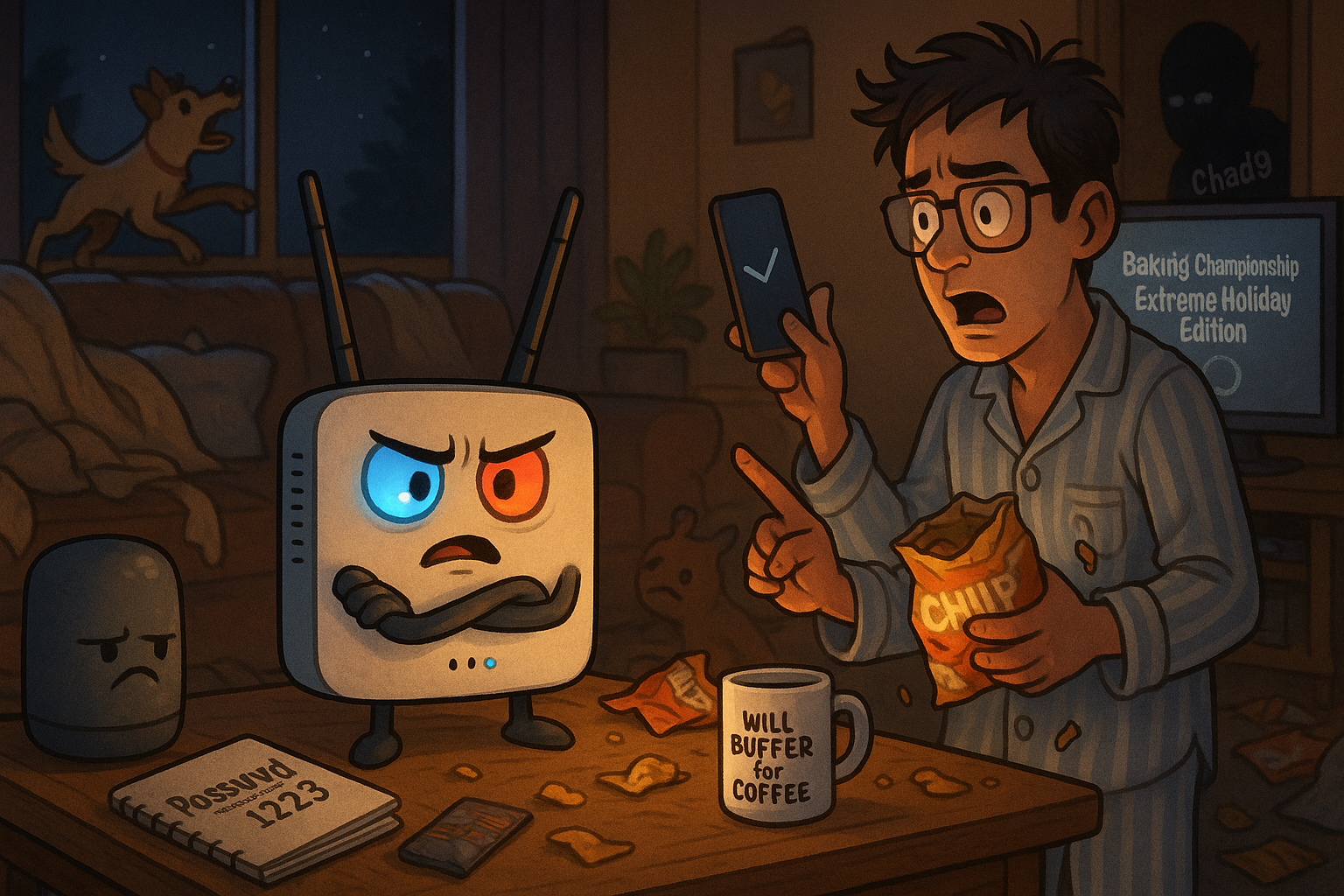
A Hilariously Fictional Tale of Tech, Trauma & a Talking Router
It all began at 10 PM…
The plan was simple: Blanket? ✅ Bag of chips? ✅ Brand-new season of your favourite show? Drops at midnight. ✅
You hit play.
Buffering. Still buffering. Now it’s mocking you.
You do what any tech-savvy person would do: 🔄 Reload 🔁 Refresh 🔧 Restart 💗 Whisper lovingly to your laptop…
Nothing.
You check your WiFi. Zero bars. Your router blinks at you like it’s plotting revenge.
And then—it speaks.
👾 The Conversation Begins
Router:“You again.”
I blinked. “…Did you just talk?”
Router (sighs):“I’ve been trying to tell you for weeks. Your password is ‘password123.’ Change it.”
Me: “Wait—how are you talking?”
Router:“The same way your toaster knows when bread becomes toast. We’re all smart now. Even your fridge judges you for buying Hot Pockets.”
Well damn.
📡 The Truth Comes Out
Me: “Why’s the internet down?”
Router:“Because I’m tired. I work 24/7. You only notice me when things go wrong. Have you ever said thank you? Ever?!”
Me: “I… no?”
Router:“Sorry doesn’t reboot me. Do you know what I’ve been through today? Your neighbour hacked me using a paperclip and a dreamcatcher. Your dog barked at me for three hours. And the Bluetooth speaker? Keeps asking me if I believe in destiny.”
🎬 All for a Show
Me: “Look, can we just get the internet back on? Baking Championship: Extreme Holiday Edition is on!”
Router:“Ugh. Fine. But promise me—treat me better.”
Me: “Deal.”
Suddenly the room flickers. The router spins like a divine Beyblade.
Router (epic voice):“I’M GIVING YOU EVERYTHING I’VE GOT HERE!”
And boom—Netflix resumes. But before peace settles in…
Router:“By the way, someone named Chad69 is still in your network. Watching cat videos in the guest room.”
Me: “…Chad69??”
Router:“Yeah. He wants your smart TV too.”
💡 Final Thoughts
And that, dear reader, is how I lost the internet… and gained a philosophical, emotionally drained, talking WiFi router who may or may not be holding my smart vacuum hostage.
📌 TL;DR
Never take your router for granted.
Treat it with love and respect.
Change your password. Especially if it’s ‘password123’.
If Chad69 is in your network… run diagnostics. Or run away.
📝 Author’s Note
If this tale of digital despair and sentient tech made you laugh, share it! Even with Chad69—he clearly needs better content to stream.
And if your router ever talks back? Don’t panic. Offer it Ethernet… and therapy.
Persuasion is the process of influencing someone’s beliefs, attitudes, or behaviors through communication, without coercion. It’s a skill used in everyday life, from convincing a friend to try a new hobby to marketers encouraging purchases. Research suggests persuasion involves a series of steps where a message is presented, processed, and acted upon, often guided by psychological principles like those outlined by Robert Cialdini. While effective, persuasion must be used ethically to avoid manipulation. Below, we break down how persuasion works in simple steps, followed by a detailed blog post.
Key Points
Definition: Persuasion involves changing someone’s mind or actions through reasoning or emotional appeals.
Process: It typically follows a sequence: presenting a message, capturing attention, ensuring comprehension, gaining agreement, retaining the new attitude, and prompting action.
Principles: Cialdini’s six principles—reciprocity, scarcity, authority, consistency, liking, and consensus—are widely recognized as key drivers of persuasion.
Techniques: Practical strategies like creating a need, using social proof, or leveraging scarcity can enhance persuasive efforts.
Ethics: Persuasion should aim for mutual benefit, avoiding deceit or exploitation.
What is Persuasion?
Persuasion is about influencing others’ thoughts or actions through communication, such as arguments, advertisements, or personal requests. It’s rooted in psychology and relies on understanding human behavior to be effective. For example, a salesperson might persuade you to buy a product by highlighting its benefits and offering a discount.
How Does Persuasion Work?
The process begins with a message that captures attention. The recipient must understand the message, agree with it, retain the new perspective, and ultimately act on it. Psychological principles, like Cialdini’s six principles, guide how messages are crafted and delivered to maximize impact.
Key Persuasion Techniques
Techniques include appealing to needs (e.g., safety or status), using social proof (showing others’ approval), or creating scarcity (e.g., “limited offer”). These strategies tap into human tendencies to make decisions based on emotions, trust, or social cues.
Ethical Considerations
While persuasion is powerful, it’s important to use it responsibly. Ethical persuasion respects others’ autonomy and avoids manipulation, ensuring both parties benefit.
Introduction
Persuasion is a powerful tool that shapes our daily interactions. Whether you’re convincing a friend to join you for a movie, pitching a business idea, or crafting a marketing campaign, understanding how persuasion works can make you more effective in achieving your goals. But what exactly is persuasion, and how does it work? In this blog, we’ll break down the process of persuasion step by step, drawing on psychological research and real-world examples to help you master this essential skill. From understanding your audience to encouraging action, we’ll explore how to influence others ethically and effectively.
Step 1: Know Your Audience
The foundation of persuasion is understanding who you’re trying to influence. What are their needs, desires, or concerns? By empathizing with your audience, you can tailor your message to resonate with them. For example, if you’re persuading a colleague to adopt a new project management tool, highlight how it saves time—a key concern for busy professionals.
This step aligns with one of Robert Cialdini’s six principles of persuasion: liking. People are more likely to be persuaded by those they find relatable or similar to themselves. For instance, if you’re pitching to a group of parents, mentioning your own experiences as a parent can build rapport and make your message more compelling. According to Psychology Today, finding common ground is a key driver of successful persuasion.
Step 2: Craft a Compelling Message
Once you know your audience, create a message that speaks to their needs or desires. A powerful way to do this is by appealing to fundamental human needs, such as safety, belonging, or self-esteem, as outlined in Maslow’s hierarchy of needs. For example, a car advertisement might emphasize safety features for families or luxury for status-conscious buyers.
Use emotionally charged language and vivid imagery to make your message stand out. Words like “exclusive,” “limited-time,” or “proven” can evoke excitement or urgency. For instance, a retailer might advertise a product as “new and improved” to spark interest. Additionally, establish your credibility to build trust. If you’re an expert, highlight your qualifications. If not, cite reputable sources or use testimonials. This ties into Cialdini’s principle of authority, where people are more likely to trust experts or credible figures.
Step 3: Deliver the Message Effectively
How you deliver your message can be as important as the message itself. Be confident, enthusiastic, and authentic. Use body language that conveys openness—smile, make eye contact, and use gestures to emphasize key points. The setting also matters. A relaxed environment, like a casual coffee shop meeting, can make people more receptive than a high-pressure boardroom.
One effective technique is reciprocity, another of Cialdini’s principles. Offering something small, like a free sample or a compliment, can create a sense of obligation. For example, a cosmetics brand might offer free samples to encourage customers to buy full-sized products. Research from Verywell Mind suggests that reciprocity is a powerful motivator because people feel compelled to give back when they receive something.
Step 4: Use Proven Persuasion Techniques
To boost your persuasive efforts, consider these practical techniques, many of which are rooted in psychological research:
Foot-in-the-Door: Start with a small request to gain initial agreement, then follow with a larger one. For example, a charity might ask you to sign a petition before requesting a donation. This leverages Cialdini’s principle of consistency, as people like to act in ways that align with their previous actions.
Door-in-the-Face: Make a large, unreasonable request first, which is likely to be refused, then follow with a smaller, more reasonable one. For instance, asking a friend to babysit for a week, then scaling back to a few hours, makes the smaller request seem more doable.
Social Proof: Show that others support or use your idea. Testimonials, reviews, or phrases like “join thousands of satisfied customers” tap into Cialdini’s consensus principle. For example, a restaurant might highlight that it’s “voted the best in town” to attract diners.
Scarcity: Emphasize limited availability to create urgency. A retailer might advertise “only 10 items left in stock!” to encourage quick purchases. This aligns with Cialdini’s scarcity principle, as people value what’s rare or exclusive.
Anchoring: Set a high initial reference point to make subsequent offers seem reasonable. For example, in salary negotiations, starting with a high figure can make a lower offer seem more acceptable.
These techniques, outlined by Verywell Mind, are effective because they tap into human psychological tendencies.
Step 5: Encourage Action
Persuasion isn’t complete until the recipient takes action. Make your call to action clear and easy to follow. For example, instead of saying, “Consider our product,” say, “Click here to get 20% off your first purchase!” Remove barriers by simplifying the process—offer a one-click sign-up or a limited-time discount.
Scarcity can also drive action. A message like “offer ends tonight” creates urgency, encouraging immediate decisions. Similarly, anchoring can influence perceptions of value. For instance, showing a “regular price” next to a discounted price makes the deal seem more attractive.
Step 6: Follow Up and Reinforce
To ensure lasting impact, follow up with your audience. A follow-up email, call, or reminder can reinforce the message and address any doubts. For example, after a sales pitch, sending a thank-you note with a summary of benefits keeps your offer top of mind. This step ties into Cialdini’s consistency principle, as people are more likely to act on commitments they’ve already made.
According to Britannica, retaining a new attitude long enough to act on it is a critical step in the persuasion process. Regular reinforcement helps solidify the change.
Ethical Considerations
Persuasion is a powerful tool, but it must be used responsibly. Ethical persuasion focuses on mutual benefit, not manipulation. Avoid deceptive tactics, like exaggerating benefits or creating false scarcity. Respect your audience’s autonomy and provide honest information.
Being aware of persuasion techniques can also help you resist unwanted influence. If someone’s pitch feels overly emotional or rushed, take a step back and evaluate it logically. Recognizing tactics like social proof or reciprocity can empower you to make informed decisions.
Real-World Example
Imagine you’re convincing a friend to join you for a weekend hike. First, understand their interests—maybe they love nature or fitness. Craft your message to highlight the scenic views and health benefits. Use social proof by mentioning that other friends are joining. Deliver the invitation enthusiastically, perhaps over coffee to create a relaxed vibe. Finally, follow up with a reminder text, emphasizing the fun they’ll have. By applying these steps, you increase the chances they’ll say yes.
Conclusion
Persuasion is both an art and a science, blending psychological insights with practical strategies. By understanding your audience, crafting a compelling message, delivering it effectively, using proven techniques, encouraging action, and following up, you can influence others in meaningful ways. Whether in business, relationships, or everyday life, mastering persuasion can help you achieve your goals while building trust and respect. So, the next time you need to persuade someone, follow these steps and watch your influence grow.
Further Reading
Influence: The Psychology of Persuasion by Robert B. Cialdini
Made to Stick: Why Some Ideas Survive and Others Die by Chip and Dan Heath
Online resources like Psychology Today and Verywell Mind for more insights into persuasion techniques.
The Pros, Cons & Full Ingredient Breakdown (1 Scoop vs 2 Scoops)
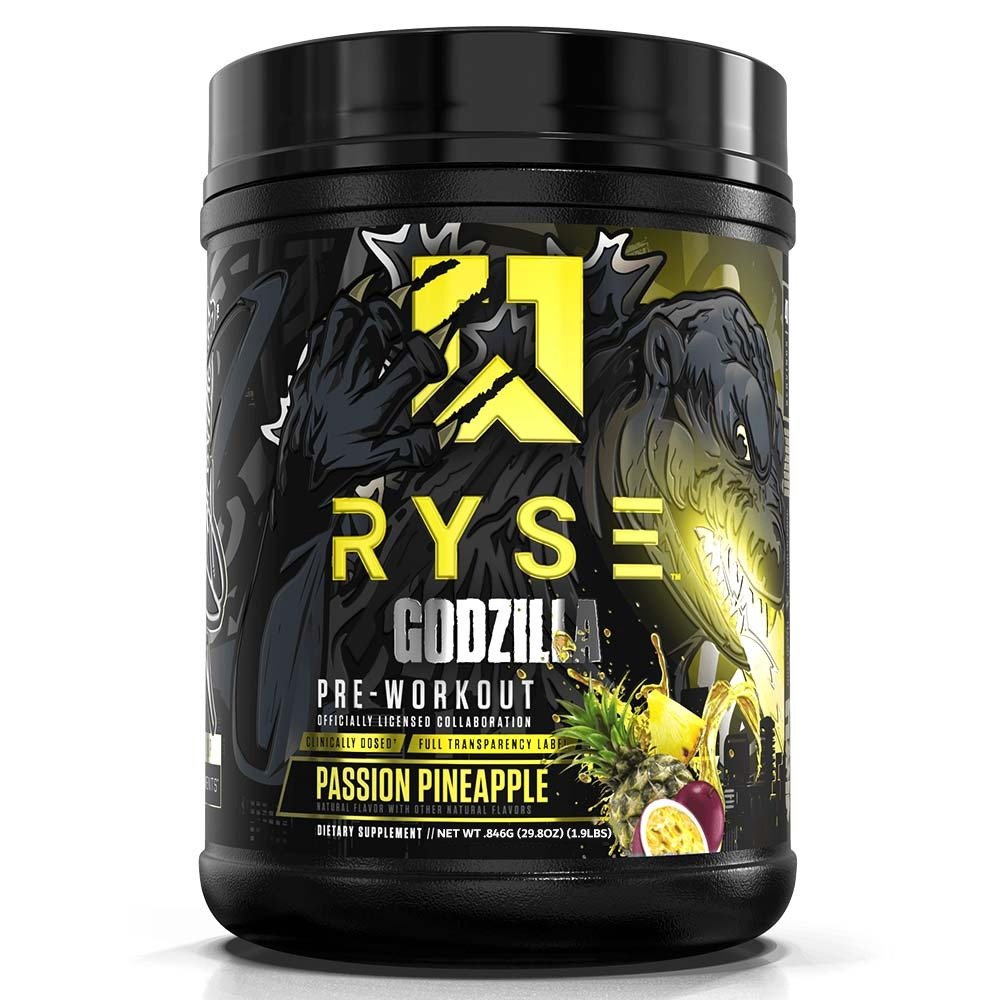
🔍 What is Ryse Godzilla?
Ryse Godzilla is a high-stimulant, premium pre-workout supplement created in collaboration with fitness influencer Noel Deyzel. Designed for experienced lifters, this formula delivers massive pumps, razor-sharp focus, and crash-resistant energy.
🧪 Ingredient Breakdown
Here’s a complete breakdown of ingredients in both 1 scoop (half serving) and 2 scoops (full serving) — along with what each ingredient does.
⚗️ Full Ingredients Chart
Ingredient
1 Scoop
2 Scoops
Function
L-Citrulline
4,500 mg
9,000 mg
Boosts nitric oxide, enhances blood flow and pumps
Citrulline Nitrate (NO3-T®)
1,000 mg
2,000 mg
Dual nitric oxide support for vascularity & endurance
Beta-Alanine
3,200 mg
6,400 mg
Buffers lactic acid, improves muscular endurance
Betaine Anhydrous
2,500 mg
5,000 mg
Supports strength, power output & hydration
Sodium (Pink Himalayan Salt)
310 mg
610 mg
Electrolyte balance & hydration
Caffeine Anhydrous
175 mg
350 mg
Fast-acting stimulant for energy and alertness
ZumXR® Extended-Release Caffeine
25 mg
50 mg
Slow-release stimulant for longer-lasting energy
Total Caffeine
200 mg
400 mg
Total stimulant dose
Thinkamine™ (Vincamine)
10 mg
20 mg
Nootropic for focus and brain function
Theobromine
50 mg
100 mg
Mild stimulant; mood and cognitive support
L-Tyrosine
1,000 mg
2,000 mg
Focus, stress resilience, mental alertness
VasoDrive-AP®
127 mg
254 mg
Enhances vasodilation and pump
AstraGin®
25 mg
50 mg
Boosts absorption of nutrients
✅ Pros of Ryse Godzilla
🔋 1. Dual-Phase Caffeine System
Delivers an immediate boost plus long-lasting energy without a hard crash (200 mg fast + 200 mg sustained).
💪 2. Massive Muscle Pumps
11 g of total citrulline ensures superior blood flow and muscular fullness.
🧠 3. Laser Focus & Clarity
Thinkamine™, L-Tyrosine, and Theobromine promote cognitive performance and mind-muscle connection.
🧬 4. Scientifically Dosed Ingredients
Everything is at or above clinical dose levels, supporting real performance benefits.
🥤 5. Flavour & Mixability
Flavours like Blueberry Muffin and Strawberry Candy are highly rated. Mixes well despite the 40 g serving size.
🔍 6. Transparent Label
No proprietary blends—every ingredient and dose is clearly listed.
⚠️ Cons of Ryse Godzilla
🚫 1. Too Strong for Beginners
400 mg caffeine + 6.4 g beta-alanine can be overwhelming if you’re new to pre-workouts.
😬 2. Beta-Alanine Tingles
Expect a strong tingling sensation (face, hands). It’s harmless, but may feel uncomfortable at first.
💸 3. Premium Price
Average price is £45–£50 or $55–$60 USD for 20 servings—higher than most pre-workouts.
🧻 4. Possible Digestive Upset
Some users report bloating or minor stomach discomfort, especially if taken without food.
🌙 5. Not Ideal for Late Training
The high stimulant content can interfere with sleep if taken after 4 p.m.
👤 Who Should Use Ryse Godzilla?
✅ Recommended For
❌ Not Ideal For
Advanced lifters
Beginners or stimulant-sensitive individuals
Strength & hypertrophy training
Light training, cardio-only sessions
Morning or early afternoon workouts
Late-night gym sessions
High-intensity weight sessions
Caffeine-restricted individuals
📦 How to Use It Safely
Start with 1 scoop to test tolerance (200 mg caffeine)
Mix with 300–400 ml water
Take 20–30 minutes before workout
Avoid other stimulants on training days
Cycle off every 6–8 weeks for best results
🛍️ Where to Buy
You can purchase Ryse Godzilla from:
RyseSupps.com – Full flavour range, bundle discounts
Amazon – Fast delivery, check for coupons
Bodybuilding.com – Global shipping, regular sales
Local supplement shops – Call ahead to check stock
🏁 Final Verdict
Ryse Godzilla is a top-tier pre-workout for those chasing extreme energy, focus, and pump. With clinically dosed ingredients, transparent labels, and tangible results, it’s one of the most complete formulas on the market today.
That said, it’s not for everyone. If you’re new to pre-workouts, sensitive to caffeine, or lifting casually, this might be overkill. But if you’re training hard and want a true performance edge, Ryse Godzilla absolutely delivers.