
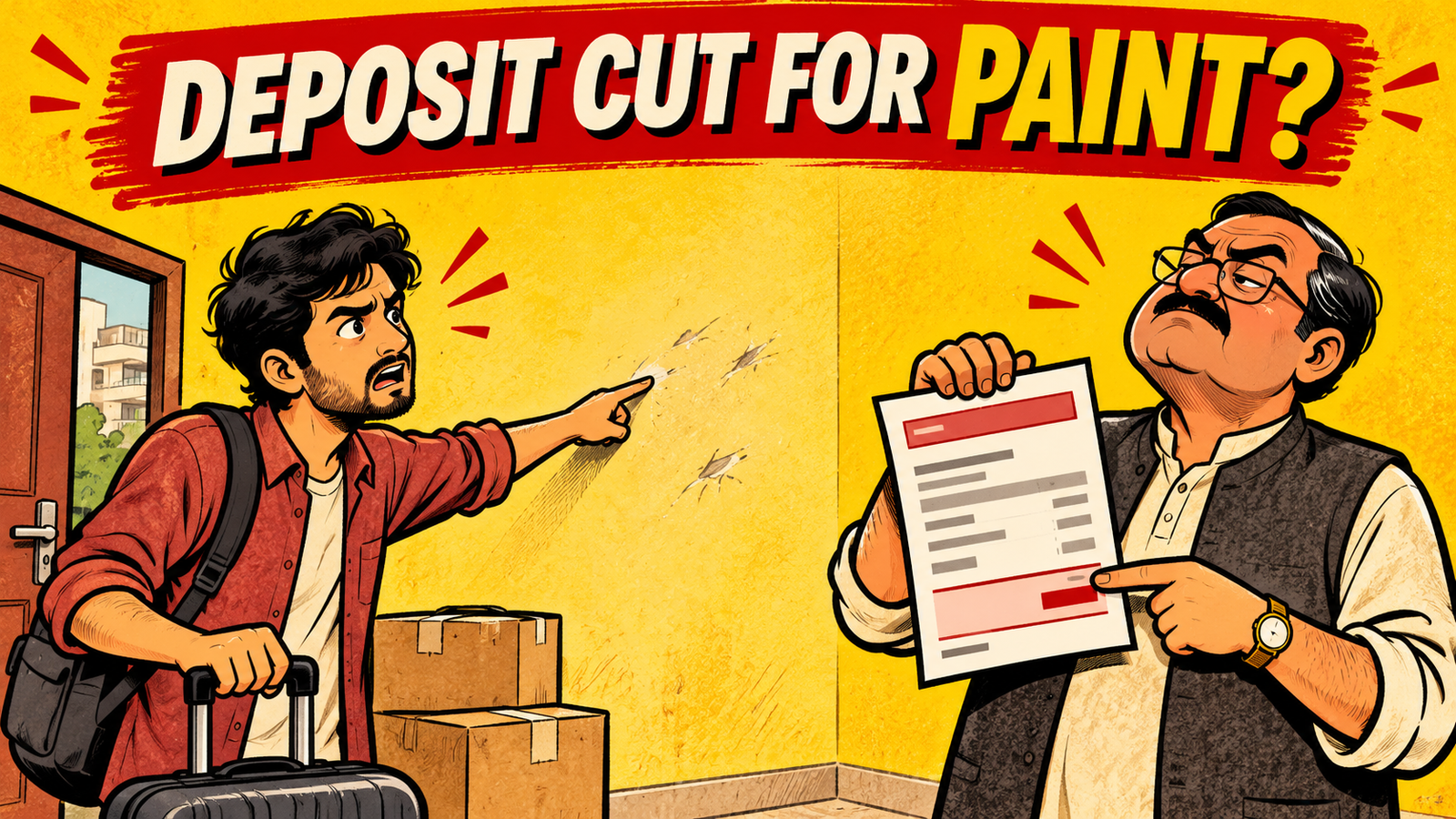
You hand back the keys and ask when your security deposit will be returned. The landlord sends a figure much lower than you expected and says the difference is for repainting. There is no breakdown and you remember that some walls were already marked when you moved in. Start by asking what the charge is based on: the rental agreement, the condition of a particular wall, or an estimate to refresh the entire flat.
What to ask for first: Request a written deposit statement, the agreement clause or other basis for the deduction, the rooms and surfaces involved, and copies of any inspection records, photos, quotes or invoices supporting the amount. Compare that record with what you signed and what the flat looked like at handover. Ask for the undisputed balance and an explanation of when it will be released.
Check the clause and the condition separately
Open the signed agreement and read the sections about maintenance, painting, surrender, deposits and deductions. A clause may specify a fixed amount, refer to documented damage, assign routine painting to one party, or say little about the issue. If someone quotes one line in a message, read the surrounding clauses and any signed addendum. Ask what the wording covers and which facts the landlord is relying on.
Next compare the condition. Small scuffs after ordinary use, a stain left before the tenancy and a hole created during the tenancy are distinct possibilities. Your agreement and applicable local rules affect how those facts are treated. A photo of an empty wall after move-out helps show its condition on that date, while an earlier photo from the same angle can help establish whether a change occurred during the tenancy. If the wall was already marked, identify the specific mark rather than saying only that the flat was old.
Ask how the cost was calculated
Ask for each room or surface, the work proposed or completed, the reason it was needed, and the rate. If the landlord has a quote but painting has not yet happened, ask whether the figure is an estimate and how a final adjustment will be handled. If an invoice exists, ask for a copy and compare the scope with the inspection evidence. A single amount listed as painting gives you little way to tell whether it covers one repair, the whole flat or a fixed contractual charge.
For example, suppose the dispute is over one bedroom wall while the statement charges for painting every room. Ask why the work extended further and whether the contractor priced the bedroom separately. If the landlord says paint could not be matched, ask what scope was recommended and how it was priced. If the landlord says the amount is fixed by agreement regardless of the work, ask which signed clause supports it and what other deductions have been added.
Put together a move-in and move-out record
- Keep the agreement and any signed addenda, inventory, condition report or messages that changed the terms.
- Save the deposit receipt or transfer proof and the landlord’s current statement of deductions.
- Find dated pictures or videos from move-in and move-out. Label the room, approximate date and angle for each one.
- Keep messages about marks, leaks, repairs or maintenance requests made during the tenancy. Identify which ones relate to the disputed surface.
- Save the key-return acknowledgement and any joint inspection notes. If someone else witnessed the handover, record who was present and what was agreed.
Keep the original evidence even if you crop a copy to show a particular mark. If there are several items, organise them room by room. Where a picture does not show the relevant surface clearly, say so. A message from move-in reporting peeling paint may still help establish the sequence even if the photo offers little detail. If you share documents for advice, remove account details, unrelated addresses and personal identifiers that are unnecessary.
Send a short written request
I paid a security deposit of [amount] for [property] and returned the keys on [date]. The proposed statement deducts [amount] for painting. Please share the agreement clause or other basis, the rooms and surfaces involved, and the inspection record, estimate or invoice supporting the amount. My move-in and move-out records show [brief detail]. Please confirm the undisputed balance, when it will be returned and whether you can review the painting deduction.
Set out the specific outcome you want, such as a corrected calculation or the full undisputed amount while you discuss the disputed part. If the landlord replies only with a total, repeat the request for the itemised basis and keep the reply. Ask for written confirmation if you agree to a revised amount. Check whether any document presented as a receipt also says you accept all deductions or waive further claims.
Check the route that applies to your tenancy
In India, tenancy rules and dispute routes can differ by state, territory and type of agreement. The Ministry of Housing and Urban Affairs’ housing resources include the Model Tenancy Act, a framework for states and territories to consider. Check the law and processes actually in force where the flat is located. If a meaningful amount remains disputed, ask a local tenancy lawyer or the relevant state authority which forum or settlement route can handle the dispute. Bring the agreement, timeline and evidence, and check any filing deadlines early.
Common questions
Can I ask for proof even if I signed a painting clause? Ask what the clause says and how the figure was worked out. A fixed fee and a charge calculated from repair work raise different questions.
What if I have no move-in photos? Look for an inventory, an inspection form, a handover message or an early maintenance request. Ask the landlord for the condition report it used and identify the details you agree or disagree with.
What should I do at my next move-out? Arrange a joint inspection if possible, photograph each room in good light and ask both parties to record the condition and key handover. Raise any disagreement about repairs before the final deposit figure is settled.


