Exclusive Content:

How You Deal With People Defines What You Become

Most people think dealing with people is about being...

Why Do People Stay in Jobs They Hate for Years?

Every morning, millions of people wake up with the...

Power Talks Loud. The Cost Stays Silent.

The Truth No One Wants to Say Out Loud People...
Home Blog Page 21

Why You Feel Behind in Life (Even When You’re Trying Your Best)

0

You wake up tired. You scroll. You compare. You feel behind. But you don’t know why.

It doesn’t start as a breakdown.

It starts quietly.

A notification.
A promotion post.
Someone your age buying a house.
Another person launching a business.
Someone getting married.
Someone traveling.

And suddenly, before your feet even touch the floor, you feel late to your own life.

The worst part?
You don’t even know what race you’re running.

If this feels familiar, you’re not lazy.
You’re not weak.
And you’re definitely not alone.

But something deeper is happening.


Why You Feel Behind (Even If You’re Not)

1. Psychological Layer: The Comparison Trap

Your brain is wired to measure status. Thousands of years ago, this helped us survive in tribes.

Today?

It compares your raw, unfiltered life to someone else’s highlight reel.

Your mind treats curated success posts as real-time competition.

That constant micro-comparison slowly erodes confidence — even if you’re progressing.


2. Environmental Layer: Infinite Visibility

You were never meant to see the achievements of 500+ people every single day.

Before social media, you compared yourself to:

  • Classmates
  • Neighbors
  • Coworkers

Now you compare yourself to:

  • Global entrepreneurs
  • Fitness influencers
  • Crypto millionaires
  • “Self-made” 22-year-olds

Your exposure multiplied.
Your self-worth didn’t adjust.


3. Behavioral Layer: Passive Consumption

Scrolling feels harmless.

But passive consumption creates invisible pressure.

You observe progress without building your own.

Over time, this builds a subtle identity shift: “I am watching life happen” instead of “I am building my life.”

That shift is dangerous.


The Hidden Root Cause Most People Miss

It’s not that you’re behind.

It’s that you don’t have a defined timeline.

When you don’t know:

  • What you actually want
  • What your pace should be
  • What success means to you

You unconsciously borrow someone else’s standards.

And borrowed standards always create anxiety.

You’re trying to win a game you never chose.


The Personal Momentum Reset Framework

Here’s how to break the cycle strategically.

Step 1: Define Your Real Metric

Write this down:

“What does progress look like for me in the next 6 months?”

Not 10 years.
Not forever.

Just 6 months.

Specific beats vague.


Step 2: Reduce Input Before Increasing Output

For 14 days:

  • Limit social scrolling to 20 minutes daily
  • Unfollow accounts that trigger silent insecurity
  • Replace morning scroll with morning planning

Protect your mental bandwidth.


Step 3: Create a 3-Task Daily Rule

Every day, complete 3 actions that move your life forward.

Small wins compound.

Examples:

  • Apply to one job
  • Study for 45 minutes
  • Build one page of your project
  • Exercise 30 minutes

Momentum reduces comparison.


Step 4: Track Movement, Not Emotion

You won’t always feel motivated.

Track actions completed — not feelings.

Progress is built in behavior, not mood.


Step 5: Build in Silence

Stop announcing plans.

Build privately.

Let results speak later.

Silence protects early growth.


Mistakes That Keep You Feeling Behind

  • Measuring life by someone else’s timeline
  • Over-consuming success content
  • Confusing visibility with achievement
  • Changing goals every month
  • Waiting to “feel ready”

You don’t need to feel ready.

You need direction and repetition.


The Opposite-Truth Ego Check

What if you’re not behind?

What if you’re just early in your process?

What if the discomfort you feel isn’t failure — but growth stretching your identity?

Sometimes the pain isn’t proof you’re losing.

It’s proof you’re expanding.


The Truth About Timing

Life is not linear.

Some people bloom at 22.
Some at 35.
Some at 50.

The only timeline that truly matters is alignment.

When your actions match your values, comparison loses power.


Final Thought: You’re Not Late. You’re Loading.

That quiet frustration you feel?

It’s energy.

Energy that needs structure.

Stop watching the race.
Start running your lane.

Your future isn’t judging you.

It’s waiting for you to move.

Become the Storm You Were Avoiding

0

There comes a moment in every life when comfort starts to feel suspicious.

When routine feels too clean. When safety feels too small. When “normal” begins to look like a quiet trap.

If you are trying to improve your life, you cannot stay harmless.

You must become dangerous — not to others, but to your own limitations.

You must become the kind of person who disrupts their own comfort zone.

Because growth does not respond to politeness. It responds to pressure.


Flirt With Destiny — Stop Waiting for Permission

Most people treat destiny like a formal meeting.

They wait. They prepare. They rehearse. They hesitate.

But destiny doesn’t respond to hesitation.

It responds to bold moves.

Flirting with destiny means:

  • Taking the call before you feel ready
  • Starting before you feel qualified
  • Speaking before you feel certain
  • Building before you feel secure

You don’t need full clarity.

You need movement.

Destiny rarely reveals itself to spectators. It reveals itself to participants.


Marry the Risk — Comfort Is Not Loyalty

Comfort is attractive.

It feels warm. It feels safe. It feels rational.

But comfort has a hidden cost: It keeps you exactly where you are.

If you are serious about upgrading your life — financially, mentally, spiritually — you must stop dating comfort and start committing to calculated risk.

Risk does not mean recklessness.

It means:

  • Choosing growth over approval
  • Choosing learning over ego
  • Choosing progress over reputation
  • Choosing uncertainty over stagnation

The people who change their lives are not fearless.

They are willing.

And willingness is stronger than fear.


Not Being Comfortable Is Your Competitive Edge

Most people avoid discomfort.

That is exactly why you should seek it.

Discomfort builds:

  • Emotional tolerance
  • Strategic thinking
  • Physical resilience
  • Identity expansion

Every time you do something hard: You increase your capacity.

And capacity compounds.

The gym is uncomfortable. Starting a business is uncomfortable. Moving countries is uncomfortable. Learning a new skill at 30, 40, or 50 is uncomfortable.

But discomfort is not your enemy.

It is your trainer.


Surprise Yourself, Then Surprise Some More

Most people have a fixed self-image.

“I’m not good at this.” “I’m not that type of person.” “That’s not for me.”

But what if that identity is outdated?

What if you are operating on a version of yourself that expired years ago?

The fastest way to evolve is to shock your own narrative.

Do something that contradicts your comfort story:

  • Speak when you usually stay quiet
  • Lead when you usually follow
  • Apply when you usually doubt
  • Build when you usually consume

When you surprise yourself once, you create a crack in your limitations.

When you surprise yourself repeatedly, you create a new identity.


The Black Sheep Advantage

Being misunderstood is not a weakness.

It is often a signal.

The black sheep is usually:

  • Thinking differently
  • Questioning systems
  • Refusing inherited limitations
  • Refusing to shrink

If people don’t understand you, ask yourself: Are you ahead of them — or disconnected from yourself?

There is a difference.

If your vision feels lonely, that does not mean it is wrong.

It may mean it is rare.

And rare things are not immediately recognized.


You Were Meant to Do Hard Things

You were not designed for mediocrity.

You were designed for challenge.

Your nervous system adapts. Your mind expands. Your body strengthens. Your confidence recalibrates.

But only when tested.

Invincibility is not about never falling.

It is about becoming harder to break.

Every hard decision increases your internal armor.

Every risk taken increases your courage threshold.

Every failure processed increases your intelligence.

You are not meant to live carefully.

You are meant to live deliberately.


Your Future Is Calling — But It Won’t Chase You

Your future version already exists in potential form.

Stronger. Sharper. More disciplined. More stable. More dangerous in the right ways.

But that version requires friction.

It requires:

  • Sacrifice
  • Discipline
  • Isolation sometimes
  • Hard conversations
  • Strategic risks

If you feel restless, that is not anxiety.

That is expansion pressure.

If you feel pulled toward something bigger, that is not ego.

That is alignment.


Final Reflection

Ask yourself:

  • What risk am I avoiding because it threatens my comfort?
  • What hard thing am I postponing because it scares me?
  • Where am I playing small to stay understood?

If you are trying to improve your life, do not aim to be safe.

Aim to be capable.

Aim to be disciplined.

Aim to be dangerous to your old self.

Because the moment you stop protecting your limitations, you start protecting your potential.

And your future is not waiting forever.

The Invisible Force That Shapes Everything You Do

0

There is something more powerful than talent.
More influential than opportunity.
More transformative than luck.

It is intention.

Not the loud kind.
Not the motivational quote version.
But the quiet decision behind your actions — the invisible direction your mind gives your life.

Most people live reactively. A comment triggers a response. A problem triggers stress. An opportunity triggers excitement. Life pulls them in different directions, and they move accordingly.

But intentional people move differently.

They don’t just act.
They choose how they act.

And that difference changes everything.


Intention Is Direction, Not Desire

Desire says, “I want this.”
Intention says, “I am moving toward this.”

One is emotional.
The other is directional.

When you wake up without intention, your day belongs to whoever demands your attention first — emails, notifications, other people’s moods, unexpected issues.

But when you wake up with intention, you are already steering.

Even small intentions reshape your day:

  • “Today, I will respond calmly.”
  • “Today, I will finish what I start.”
  • “Today, I will speak with clarity.”

Nothing dramatic.
But everything changes.

Because intention organizes energy.


Actions Without Intention Create Chaos

Many people confuse activity with progress.

They work hard.
They talk a lot.
They move constantly.

Yet they feel scattered.

Why?

Because movement without direction is just motion.

Imagine driving a powerful car with no destination programmed. You’ll burn fuel. You’ll move fast. You’ll look productive.

But you’ll end up nowhere specific.

Intention is the destination setting of your behavior.

Without it, you drift.
With it, you build.


Words Carry the Weight of Your Intention

Two people can say the same sentence.

One heals.
One harms.

Why?

Because words don’t carry power by themselves. Intention charges them.

When you speak to someone, they don’t only hear the vocabulary.
They feel the energy behind it.

You can say:

  • “I’m fine.” with resentment.
  • “I’m fine.” with peace.
  • “I’m fine.” with withdrawal.

Same words. Different impact.

Your intention determines whether your communication builds connection or builds distance.

This is why some leaders inspire without shouting.
And others shout without inspiring.

The difference is intention.


Intention Reclaims Personal Power

Most people think power means control over circumstances.

It doesn’t.

Power is control over direction.

You can’t always control what happens.
But you can control:

  • Why you respond.
  • How you respond.
  • What meaning you assign.
  • What standard you hold yourself to.

The moment you become intentional, you stop reacting and start authoring.

That shift alone changes your posture in life.

Instead of: “Why is this happening to me?”

You ask: “How do I want to move through this?”

That question restores power.


The Cost of Living Unintentionally

When you don’t choose your intention, something else will choose it for you.

Stress becomes your intention.
Ego becomes your intention.
Fear becomes your intention.
Proving yourself becomes your intention.

And suddenly your actions are driven by forces you never consciously selected.

That’s how burnout happens.
That’s how conflict escalates.
That’s how relationships deteriorate quietly.

Not because of bad words.
But because of misaligned intention.


How to Become More Intentional (Without Overcomplicating It)

You don’t need rituals or complex systems.

Start small.

1. Set a Daily Direction

Before you begin your day, define one behavioral intention:

  • “Today I will be patient.”
  • “Today I will finish what matters most.”
  • “Today I will speak less and listen more.”

One sentence is enough.

2. Pause Before Reacting

When triggered, ask: “What intention do I want behind this response?”

That question alone can prevent regret.

3. Align Actions With Long-Term Identity

Ask yourself: “If I continue acting like this, who do I become?”

Intention isn’t just about today.
It’s about shaping identity.


Intention Creates Coherence

When your thoughts, words, and actions align under a conscious intention, something shifts internally.

You feel calmer.
More decisive.
Less scattered.

Because coherence replaces conflict.

And coherence is powerful.

It makes you trustworthy — to others and to yourself.


Reclaiming Your Power Starts Here

You don’t need to change your entire life overnight.

You don’t need a dramatic reinvention.

You need direction.

Intention is quiet.
But it is foundational.

It sets actions into motion.
It gives them meaning.
It gives your words energy.
It turns habits into architecture.

If you want to reclaim your power, don’t start with control.

Start with intention.

And let everything else organize itself around it.

When Time Deepens, So Do Differences

0

There’s a quiet truth about relationships that most people only discover after the honeymoon phase fades:

The more time two people spend together, the more likely conflict becomes.

Not because something is wrong.
Not because love has weakened.
But because proximity reveals reality.

Whether it’s marriage, friendship, business partnerships, siblings, or even coworkers — closeness doesn’t remove friction. It exposes it.

And that’s not a flaw in the system.
It is the system.


The Myth of “Perfect Harmony”

In the beginning, everything feels smooth.

You adjust easily.
You overlook small annoyances.
You assume similarities are stronger than differences.

But time has a way of uncovering:

  • Different communication styles
  • Different emotional needs
  • Different stress responses
  • Different expectations about respect, space, money, time

The longer two lives overlap, the more their inner worlds collide.

And that collision?
It’s normal.


Why Conflict Is Inevitable (And Healthy)

Conflict emerges for one simple reason:

Two unique nervous systems are trying to share one space.

Every person carries:

  • Their upbringing
  • Their trauma
  • Their habits
  • Their unspoken fears
  • Their unexpressed needs

When time increases, the chances of those internal patterns surfacing also increase.

You’re not just interacting with a person.
You’re interacting with their history.

Conflict isn’t proof of incompatibility.
It’s proof of depth.


The Hidden Danger: Avoiding Conflict

Ironically, relationships don’t break because of conflict.
They break because of avoided conflict.

When people fear disagreement, they:

  • Suppress feelings
  • Build silent resentment
  • Become passive-aggressive
  • Emotionally withdraw

On the surface, everything looks peaceful.

Underneath, pressure builds.

And pressure without release becomes explosion.


The Maturity Test

The real test of any relationship isn’t “Do we fight?”

It’s:

  • How do we fight?
  • Do we listen or attack?
  • Do we seek understanding or victory?
  • Do we repair afterward?

Spending a lot of time together creates friction.
But friction, when handled correctly, sharpens connection.

Healthy conflict looks like:

  • Speaking without humiliating
  • Listening without interrupting
  • Taking breaks when emotions rise
  • Returning to resolve, not to punish

That’s growth.


Conflict as a Mirror

One of the hardest truths to accept is this:

Sometimes conflict reveals us, not them.

It exposes:

  • Our ego
  • Our need for control
  • Our insecurity
  • Our fear of abandonment
  • Our impatience

The person across from you may trigger something —
but the reaction belongs to you.

In long-term closeness, you don’t just meet another person.

You meet yourself.


When Conflict Becomes Toxic

Of course, not all conflict is healthy.

If disagreements include:

  • Repeated disrespect
  • Emotional manipulation
  • Gaslighting
  • Threats or intimidation
  • Physical harm

That’s no longer growth.
That’s harm.

There’s a difference between friction and destruction.

Time together should increase understanding — not fear.


The Real Goal Isn’t No Conflict

It’s emotional safety within conflict.

The strongest relationships are not the ones that avoid disagreements.

They’re the ones where both people feel safe enough to disagree honestly.

Conflict handled with care builds:

  • Deeper trust
  • Better communication
  • Emotional intelligence
  • Long-term resilience

Without conflict, connection stays shallow.


Final Reflection

Whenever people spend a lot of time together, conflict will arise.

That doesn’t mean you chose wrong.
It doesn’t mean the bond is broken.
It doesn’t mean love has disappeared.

It means two complex humans are sharing space long enough for reality to surface.

The question isn’t:

“Why are we fighting?”

The better question is:

“Can we grow through this?”

Because time doesn’t just test relationships.

It reveals whether both people are willing to mature inside them.


Disclaimer:
This article is for educational and reflective purposes only. It does not replace professional psychological, relational, or therapeutic advice. If you are experiencing ongoing emotional distress or unsafe behavior in a relationship, consider speaking with a qualified mental health professional.

The Quiet Power of Being Chosen

0

There’s a silent difference between being wanted and being chosen.

Being wanted feels exciting.
Being chosen feels safe.

And safety — real emotional safety — changes everything.

When you are finally someone’s priority, not their option, you don’t feel adrenaline.

You feel peace.


Option vs Priority: The Invisible Line

Being an option sounds like:

  • “Let me see if I’m free.”
  • “I’ll text you later.”
  • “We’ll figure it out.”
  • Plans that depend on someone else canceling.

Being a priority sounds like:

  • “I made time.”
  • “I cleared my schedule.”
  • “I told them I already have plans.”
  • Consistency without negotiation.

The difference isn’t loud.

It’s structural.

One keeps you in rotation.
The other builds you into the foundation.


The Psychological Shift

When you’re someone’s option:

  • You overanalyze texts.
  • You calculate timing.
  • You wonder where you stand.
  • You shrink your needs to avoid “pressure.”

Your nervous system stays alert.

You’re always adjusting.

When you’re someone’s priority:

  • You don’t chase clarity.
  • You don’t decode behavior.
  • You don’t compete silently.
  • You don’t feel disposable.

Your nervous system relaxes.

You expand instead of shrink.

And that expansion is the real gift.


Why People Accept Being an Option

Many people stay in option-mode relationships because:

  • They fear losing access more than they fear losing respect.
  • They confuse attention with value.
  • They believe consistency is “too much to ask.”
  • They think asking for clarity will push someone away.

But here’s the truth:

If clarity pushes someone away, you were never their priority.

You were their convenience.


The Identity Shift That Changes Everything

You don’t become someone’s priority by convincing them.

You become someone’s priority by becoming unavailable for option treatment.

That means:

  • You stop over-explaining your worth.
  • You stop accepting last-minute crumbs.
  • You stop rewarding inconsistency.
  • You stop chasing people who hesitate.

When you upgrade your standards, one of two things happens:

  1. They step up.
  2. They step out.

Both outcomes protect you.


What Being a Priority Actually Feels Like

It feels like:

  • Not questioning your place.
  • Not competing with strangers.
  • Not begging for reassurance.
  • Not being hidden.

It feels like calm.
Predictable effort.
Visible commitment.
Intentional inclusion.

It feels like someone saying, without drama:

“You matter here.”


The Mature Truth

Being someone’s priority isn’t about constant attention.

It’s about consistent positioning.

It’s not about daily grand gestures.

It’s about never being unsure where you stand.

And the deepest shift?

When you are truly someone’s priority, you don’t have to perform.

You just get to exist.


Disclaimer:
This article is for emotional reflection and educational purposes only. Every relationship dynamic is unique. If you are facing emotional distress or unhealthy patterns, consider speaking with a qualified counselor or relationship professional for personalized guidance.

The Silent Battle: Chronic Illness Advocacy and the Most Effective Solutions That Actually Work

0

Chronic illness is not a temporary condition.
It is not a short recovery period.
It is not something that disappears after a prescription refill.

It is a long-term relationship with uncertainty, adaptation, resilience, and often invisible struggle.

For millions of people worldwide, living with chronic illness means navigating physical pain, emotional stress, financial pressure, and complex healthcare systems — every single day.

This is where chronic illness advocacy becomes essential.

Not optional. Essential.


What Is a Chronic Illness Advocate?

A chronic illness advocate is someone who supports, represents, and empowers individuals living with long-term medical conditions.

They may be:

  • A patient speaking from lived experience
  • A caregiver fighting for better care
  • A healthcare professional pushing for reform
  • A nonprofit leader raising awareness
  • A policy activist influencing legislation
  • A digital educator creating reliable health content

Their core mission is simple:

To reduce unnecessary suffering and improve quality of life for people living with chronic disease.


Why Chronic Illness Advocacy Matters More Than Ever

Chronic illnesses are among the leading causes of disability and healthcare costs worldwide.

Conditions such as:

  • Diabetes
  • Autoimmune disorders
  • Cardiovascular disease
  • Chronic respiratory illnesses
  • Neurological conditions
  • Chronic pain syndromes

…often require lifelong management.

Yet most healthcare systems are built for acute care — short-term treatment, quick discharge, and episodic follow-ups.

Chronic illness does not fit into a 10-minute appointment.

Patients often face:

  • Delayed diagnoses
  • Dismissed symptoms
  • Inconsistent treatment plans
  • Insurance complications
  • Mental health decline
  • Social isolation

Advocacy bridges this gap between system limitations and patient reality.


The Real Challenges People With Chronic Illness Face

1. The System Is Reactive, Not Preventive

Most care begins after damage has progressed rather than preventing decline early.

2. Communication Gaps

Patients struggle to explain fluctuating symptoms in short appointments.

3. Emotional and Psychological Burnout

Long-term illness increases the risk of anxiety, depression, and emotional exhaustion.

4. Financial Strain

Ongoing medications, specialist visits, and testing create financial instability.

5. Invisible Illness Bias

When someone “looks healthy,” their pain is often questioned or minimized.

These are not minor problems. They are structural issues.


The Most Effective Solutions That Actually Work

Awareness is powerful — but solutions are transformative.

Below are the most effective approaches proven to improve long-term outcomes.


1. Integrated, Team-Based Care

Chronic illness requires coordinated care.

The most effective systems include:

  • A primary physician
  • Relevant specialists
  • Mental health support
  • Nutrition guidance
  • Physical therapy when needed
  • Social or financial support services

When care teams communicate with each other, patients experience:

  • Fewer medical conflicts
  • Reduced repeated testing
  • Clearer treatment direction
  • Better long-term stability

Healthcare must become collaborative, not fragmented.


2. Patient Education and Health Literacy

Knowledge reduces fear.

When patients understand:

  • Their lab results
  • Their medications
  • Their triggers
  • Their treatment options
  • Their rights within the system

They regain control.

Empowered patients ask better questions, detect issues earlier, and make informed decisions. Education is one of the strongest forms of advocacy.


3. Mental Health Integration

Chronic illness is both physical and psychological.

Effective advocacy ensures:

  • Access to therapy
  • Support groups
  • Trauma-informed medical care
  • Routine mental health screening

Ignoring emotional strain worsens physical outcomes. Integrated mental healthcare improves resilience and adherence to treatment.


4. Policy Reform and Insurance Accountability

Individual effort cannot fix systemic gaps.

Advocacy at a structural level pushes for:

  • Fair disability protections
  • Transparent insurance policies
  • Expanded telehealth access
  • Increased research funding
  • Workplace protections for chronic conditions

Policy change creates long-term stability beyond individual cases.


5. Digital Communities and Peer Support

Online communities have transformed chronic illness support.

They provide:

  • Emotional validation
  • Shared coping strategies
  • Real-world advice
  • Awareness campaigns
  • Access to educational resources

For many patients, digital connection reduces isolation and improves mental health significantly.


6. Prevention and Early Detection

The most effective long-term solution is early intervention.

Advocacy supports:

  • Routine screenings
  • Public health education
  • Workplace wellness programs
  • Lifestyle awareness initiatives

Prevention reduces severity, cost, and long-term disability risk.


The Bigger Picture: Advocacy Is About Dignity

Chronic illness advocacy is not only about medicine.

It is about dignity.

It is about being believed.

It is about having access to care that recognizes complexity.

It is about designing systems that adapt to human realities rather than forcing people to adapt to broken systems.

Effective solutions are never singular.

They combine:

  • Education
  • Emotional support
  • Coordinated care
  • Policy reform
  • Community strength
  • Prevention strategies

When these elements work together, quality of life improves — even when the illness remains.


Conclusion

Chronic illness may be long-term, but suffering does not have to be unmanaged.

Advocacy transforms isolation into community.

It transforms confusion into clarity.

It transforms helplessness into empowerment.

The most effective solution is not one single intervention — it is a system built around patient-centered care, mental health integration, education, and structural reform.

That is how we move from surviving chronic illness to living with strength and stability.


Disclaimer

This article is for informational and educational purposes only. It is not medical advice, diagnosis, or treatment. Always consult a qualified healthcare professional regarding any medical condition or treatment decisions. Never disregard professional medical advice or delay seeking care based on information provided in this article.

You Eat Your Plate, I’ll Eat Mine

0

We live in a world where food is no longer just food.

It is identity.
It is culture.
It is ethics.
It is health.
It is religion.
It is lifestyle.

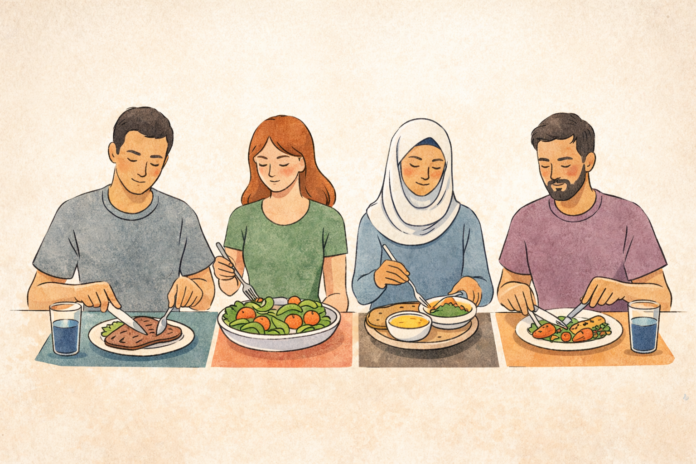
One person eats meat.
Another avoids it completely.
One follows a vegan diet.
Another follows a high-protein plan.
Someone eats according to faith.
Someone eats according to fitness goals.

Yet somehow, dinner has become debate.


When Preference Becomes Pressure

Eating used to be personal.

Now it often feels political.

People are judged for what they order.
Friends argue over values at the table.
Strangers criticize strangers online.

The conversation shifts from “What do you enjoy?”
to “Why are you wrong?”

But here is the simple truth:

Your plate is not my battlefield.


Food Is Shaped by Many Factors

No two people grow up the same.

Some are raised in meat-eating households.
Some grow up vegetarian for religious or cultural reasons.
Some choose veganism for ethical beliefs.
Some adjust their diet for health.
Some simply eat what they like.

Each choice has context.

And context matters.


Freedom Means Mutual Respect

Real freedom is not just the ability to choose for yourself.
It is the willingness to allow others to choose differently.

If someone is vegan, that is their discipline.
If someone eats meat, that is their decision.
If someone changes their diet tomorrow, that is their evolution.

Respect does not require agreement.
It requires boundaries.


The Illusion of Moral Superiority

Food often becomes a stage for moral competition.

“I am healthier than you.”
“I am more ethical than you.”
“I am more traditional than you.”
“I am more progressive than you.”

But superiority does not build understanding.

It builds division.


You Control Your Fork

At the end of the day, the only fork you truly control is your own.

You cannot digest someone else’s meal.
You cannot live inside someone else’s body.
You cannot experience someone else’s beliefs.

So why try to manage their plate?


The Bigger Principle

This conversation is not just about food.

It is about coexistence.

If we cannot tolerate differences in diet,
how will we tolerate differences in opinion, culture, or lifestyle?

Respect begins in small things.
Sometimes it begins at the dinner table.


Eat With Conviction, Not Contempt

If you are vegan — live it fully.
If you are vegetarian — honor it confidently.
If you eat meat — do so responsibly.
If you follow a specific diet — commit to it.

But do not use your plate to control someone else’s.

Confidence does not shout.
It does not shame.
It does not force.

It simply lives.


Final Reflection

We share the same world.
We do not need to share the same menu.

Diversity in food reflects diversity in humanity.

You eat your meal.
Let others eat theirs.

Respect tastes better than judgment.

The Glass Cities: When Homes Become Assets and Citizens Become Guests

0

In many European cities, the skyline shines brighter than ever.

Cranes rise.
Luxury apartments sell before completion.
Glass towers reflect perfect sunsets.

But behind those windows, many lights remain off.

Not because no one needs a home —
but because fewer people can afford one.


The Disappearing Door

A home once represented stability.
A starting point.
A foundation for family, work, and identity.

Now, for many young professionals, students, and working families, it feels like a moving target.

Rents rise faster than salaries.
Ownership drifts further out of reach.
Neighborhoods transform faster than communities can adapt.

The city still functions.
But its residents begin to feel temporary.


When Homes Become Vaults

Imagine a city slowly converting homes into vaults.

Apartments become financial instruments.
Buildings become portfolios.
Neighborhoods become performance metrics.

The language shifts quietly:

“Yield.”
“Return.”
“Premium location.”

The word “community” becomes secondary.

Investment is not wrong.
Development is not evil.

But when housing becomes primarily an asset class, belonging becomes fragile.


Competing With Capital

Local families now compete with global investors.
Long-term residents compete with short-term returns.
Salaries compete with international liquidity.

The system does not collapse.
It optimizes.

And optimization does not always prioritize people.

Cities grow wealthier on paper.
Yet many citizens feel economically smaller inside them.


The Quiet Pressure

This tension does not always explode dramatically.

It appears in slower ways:

Young adults delaying independence.
Couples postponing children.
Workers moving further from city centers.
Political frustration growing quietly.

The anger does not always shout.
It simmers.


The Debate That Misses the Core

Public discussions frame the issue in fragments:

“Supply shortage.”
“Too much regulation.”
“Not enough regulation.”
“Immigration pressure.”
“Market forces.”

Each explanation contains some truth.

Yet beneath all of them lies a structural shift:

Cities compete globally for capital.
Governments compete for growth metrics.
Developers compete for margins.

And individuals compete for shelter.


The Glass Elevator

Picture a glass elevator inside a new luxury tower.

It moves smoothly upward.
Inside stand investors, planners, and executives.

On the ground floor, residents wait.

The building becomes taller every year.
The elevator moves faster.

But access feels uneven.

The frustration is not that the tower exists.
It is that entry feels increasingly restricted.


No Single Villain

This transformation is rarely caused by one decision.

It is an ecosystem:

Low interest environments.
Global capital mobility.
Urban concentration of jobs.
Policy incentives.
Demographic shifts.

Each rational in isolation.
Transformative when combined.

No single villain.
But very real consequences.


The Human Cost

The cost is not only financial.

It is psychological.

Reduced social mobility.
Constant financial stress.
A sense of instability.
The feeling of being temporary in your own city.

A home is more than walls.
It is identity.
It is security.
It is future planning.

When that becomes uncertain, society feels unsettled.


The Larger Question

If skylines shine brighter
while living spaces shrink,
if investment grows
while belonging weakens,

then perhaps the issue is not only housing supply.

Perhaps it is about priorities.

Can cities remain globally competitive
while remaining locally livable?

Can economic growth include stability for the people who sustain it?


Closing Reflection

The crisis is not just about buildings.

It is about balance.

Between capital and community.
Between growth and stability.
Between profit and belonging.

If that balance is not addressed,

the towers will continue to rise —

and more citizens may quietly begin to feel
like guests in the very cities they call home.

The Theater of Flames: When Nations Burn by Design

0

There are moments when a country looks like it has suddenly lost its mind.

Shops burn.
Crowds chant.
Police lines break.
Headlines scream: “Public Rage Explodes.”

But rage rarely explodes without oxygen.
And oxygen is rarely accidental.

The deeper question is not simply why people are angry.
The deeper question is:

Who designed the conditions where anger would inevitably ignite?


The Spark and the Dry Forest

In the visible world, a riot begins with a spark — a law, an arrest, an election result, a speech.

In the invisible world, it begins years earlier.

Unemployment grows silently.
Trust in institutions erodes quietly.
Media narratives polarize slowly.
Economic inequality hardens like concrete.

By the time the spark appears, the forest is already dry.

And when the fire starts, the world blames the match — not the decades of drought.


The Stage No One Sees

Sometimes instability is domestic neglect.
Sometimes it is strategic design.
Sometimes it is both.

A government may ignore grievances until they ferment.
It may allow division to grow because division is politically useful.
It may permit tension to rise so stronger control can later be justified.

At other times, influence may come from beyond borders.
Narratives can be amplified.
Tensions can be magnified.
Weakness can be quietly exploited.

In both cases, civilians pay.

The irony is harsh:
Those in the streets believe they are fighting for control —
while control may already belong to forces beyond their sight.


The Incentive Behind Chaos

Chaos is rarely meaningless.

It can justify emergency powers.
It can distract from corruption.
It can weaken a rival nation.
It can reshape political outcomes.

Stability benefits citizens.
Instability often benefits strategists.

When you follow incentives, the smoke begins to clear.


The Civilian Paradox

The greatest loss in unrest is not property.
It is trust.

Neighbors stop trusting neighbors.
Communities fracture.
Institutions lose legitimacy.

The tragedy is this:

The individuals who burn and bleed often believe they are defending justice.
Yet they may unknowingly be part of a larger script.

They are the visible actors.
The authors remain unseen.


When a Nation Builds Its Own Fire

Sometimes the truth is internal.

A country that ignores inequality, silences dialogue, and protects narrow power structures is not surprised by unrest.

It is merely delayed.

In this case, the rebellion is not imported.
It is cultivated over time.

Neglect becomes fuel.
Silence becomes pressure.
Frustration becomes ignition.


When the Wind Blows from Outside

History shows another pattern.

Nations weakened from within can be influenced from outside.
Instability elsewhere can create opportunity here.

Economic advantage.
Political leverage.
Strategic positioning.

Destabilization does not always require invasion.
Sometimes it requires only influence.

Information can become an accelerant.
Division can become a tool.

And once the streets burn, responsibility becomes difficult to trace.


The Hard Reality

Riots are rarely entirely spontaneous.
They are rarely entirely engineered.

They are ecosystems.

Anger can be real.
Manipulation can also be real.

Neglect creates vulnerability.
Vulnerability invites exploitation.

The spark matters.
The drought matters more.


The Uncomfortable Question

If instability benefits someone powerful
and harms someone powerless
and the pattern repeats across history —

then perhaps chaos is not always an accident.

Perhaps it is sometimes a structural outcome.

The most dangerous part of unrest is not the fire.
It is the belief that the fire appeared from nowhere.

Until citizens ask who benefits,
who prepared the ground,
and who profits from division —

the cycle may continue.

And once again,
the civilians will carry the cost
of battles they never designed.

The Unofficial Gen Z Dictionary: A Comprehensive Guide for Adults

0

Language is never static. It evolves with technology, culture, humor, and social identity. If you’ve ever heard phrases like “mid,” “no cap,” “it’s giving,” “rizz,” or “main character energy” and felt slightly out of the loop, you’re not alone.

This guide is written specifically for adults who want to understand Gen Z slang clearly, intelligently, and without trying to imitate it awkwardly. You don’t need to speak the language fluently. You just need to understand what’s being said, what tone is being used, and what social signals are embedded inside it.

This is more than a word list. It’s a cultural translation guide.


Why Gen Z Slang Feels So Different From Previous Generations

Every generation creates its own linguistic shortcuts. Baby Boomers had theirs. Gen X had theirs. Millennials created internet-era slang like “LOL,” “OMG,” and “BRB.”

Gen Z, however, is the first generation raised entirely inside algorithm-driven digital ecosystems.

Their language is shaped by:

  • TikTok and short-form video loops
  • Meme culture with rapid remixing
  • Gaming communities and streaming platforms
  • Online irony and layered sarcasm
  • Global exposure to micro-trends
  • A culture of self-awareness and meta-humor

Unlike older slang that spread slowly through cities, music scenes, or school networks, modern slang spreads globally within hours. A single viral clip can generate a new phrase that millions adopt overnight.

Gen Z slang often:

  • Compresses complex emotions into single words
  • Blends humor with seriousness
  • Uses irony as default tone
  • Signals in-group cultural awareness
  • Moves extremely fast

Understanding tone matters more than memorizing definitions.


How to Decode Gen Z Slang Like an Adult

Before diving into vocabulary, understand these five decoding rules:

  1. Many phrases are vibe-based rather than literal.
  2. Irony is common — people often exaggerate for humor.
  3. Praise and criticism are often dramatic by design.
  4. Slang shifts quickly — flexibility matters.
  5. Context determines meaning.

Now let’s explore the terms in depth.


Core Gen Z Slang: Comprehensive Breakdown

1. Mid

Meaning: Average, unimpressive, not worth hype.

Usage Example: “That restaurant was mid.” Translation: It wasn’t terrible, but it didn’t live up to expectations.

Psychology: Gen Z tends to reject overhyped things quickly. Calling something “mid” signals cultural discernment.


2. Cap / No Cap

Cap: A lie. No cap: I’m serious.

Example: “That’s cap.” Translation: That’s not true.

Cultural Note: It’s a truth-marker. It signals authenticity.


3. It’s Giving…

Meaning: It has the vibe or energy of something.

Example: “It’s giving CEO energy.” Translation: You look confident and powerful.

Tone Insight: This phrase is about emotional atmosphere, not literal comparison.


4. Delulu

Meaning: Delusional, usually in a playful way.

Example: “I’m delulu but I believe it’ll happen.”

Psychological Layer: It’s self-aware optimism.


5. Rizz

Meaning: Charisma, especially romantic charm.

Example: “He’s got serious rizz.”

Social Signal: Effortless confidence.


6. Slay

Meaning: To perform extremely well.

Example: “You slayed that presentation.”

Context: Strong praise.


7. Ate / Ate That

Meaning: Executed something flawlessly.

Example: “She ate that speech.”

Intensity Level: Higher than “good job.”


8. Cooked

Meaning: In trouble, exhausted, or finished.

Example: “I’m cooked after that meeting.”

Context Matters: Can be humorous exaggeration.


9. Main Character Energy

Meaning: Acting confidently like the protagonist of your own life.

Example: “He walked in with main character energy.”

Cultural Insight: Encourages self-ownership.


10. NPC

Meaning: Non-Player Character (from gaming). Someone acting robotic or predictable.

Example: “Don’t be an NPC.”

Underlying Meaning: Think independently.


11. Low-Key / High-Key

Low-key: Slightly / secretly. High-key: Very / openly.

Example: “I low-key agree.”

Function: Emotional intensity dial.


12. Aura

Meaning: Overall vibe, presence, or energy.

Example: “She has strong aura.”

Modern Usage: Presence branding.


13. Vibe / Vibe Check

Vibe: Atmosphere or emotional tone. Vibe check: Assessing mood or energy.

Example: “Let’s do a vibe check.”

Translation: Let’s evaluate how this feels.


14. The Ick

Meaning: Sudden loss of attraction.

Example: “That gave me the ick.”

Psychological Layer: Subconscious rejection.


15. Gaslighting

Meaning: Manipulating someone into doubting their perception.

Note: Not exclusive to Gen Z but heavily used.


16. Touch Grass

Meaning: Go outside and reconnect with real life.

Example: “You need to touch grass.”

Tone: Slightly sarcastic.


17. Chronically Online

Meaning: Spending excessive time online.

Cultural Insight: Awareness of digital overexposure.


18. Soft Launch

Meaning: Subtle introduction (often a relationship) without full announcement.


19. Hard Launch

Meaning: Direct, clear public reveal.


20. Sending Me

Meaning: Something is extremely funny.

Example: “That video is sending me.”

Translation: I’m laughing hard.


Extended Slang List (Additional Modern Terms)

21. Period

Meaning: End of discussion. Emphasis.

22. Say Less

Meaning: I understand. No further explanation needed.

23. Living Rent Free

Meaning: Something you can’t stop thinking about.

24. Understood the Assignment

Meaning: Executed perfectly according to expectations.

25. Core Memory

Meaning: A deeply memorable emotional moment.

26. BFFR

Meaning: Be serious.

27. Sus

Meaning: Suspicious.

28. Side Eye

Meaning: Disapproval without words.

29. Big Yikes

Meaning: Strong secondhand embarrassment.

30. Ratio

Meaning: When replies outnumber likes, signaling disagreement.


Why Adults Should Understand (But Not Force) Gen Z Slang

Understanding slang helps in:

  • Leadership communication
  • Parenting conversations
  • Marketing relevance
  • Cultural awareness
  • Avoiding misinterpretation

However, forced imitation often feels unnatural.

Best practice:

  • Understand tone
  • Use selectively
  • Avoid overuse
  • Stay authentic

The Psychology Behind Gen Z Language

Gen Z grew up during:

  • Economic uncertainty
  • Rapid technological change
  • Social media comparison culture
  • Pandemic isolation

Their language reflects:

  • Humor as coping
  • Irony as defense
  • Self-awareness as armor
  • Fast emotional signaling

Slang becomes emotional shorthand.


How Slang Evolves (And Why It Disappears Quickly)

Slang cycles move through stages:

  1. Origin (small online group)
  2. Viral amplification
  3. Mainstream adoption
  4. Overuse
  5. Decline

Once older generations adopt a phrase heavily, it often loses cultural edge.

This explains why trends fade quickly.


Professional Environments and Gen Z Language

In workplaces, Gen Z employees may use:

  • Casual affirmations (bet, say less)
  • Humor in feedback
  • Irony in tone

Leaders who understand the language interpret tone more accurately.

Misinterpretation can create unnecessary friction.


Marketing and Brand Strategy Insight

Brands targeting Gen Z must:

  • Avoid trying too hard
  • Understand tone nuance
  • Stay culturally aware
  • Use slang sparingly
  • Prioritize authenticity

Gen Z quickly detects inauthenticity.


Final Thoughts: Cultural Fluency Over Trend Adoption

You don’t need to start saying “slay” in meetings.

You don’t need to adopt every trend.

But understanding the language keeps you culturally fluent.

Language reflects:

  • Identity
  • Belonging
  • Humor
  • Adaptation
  • Social evolution

Gen Z slang is not linguistic decay. It is cultural compression.

When you understand it, you’re not trying to be younger. You’re simply staying aware.

And awareness is timeless.