
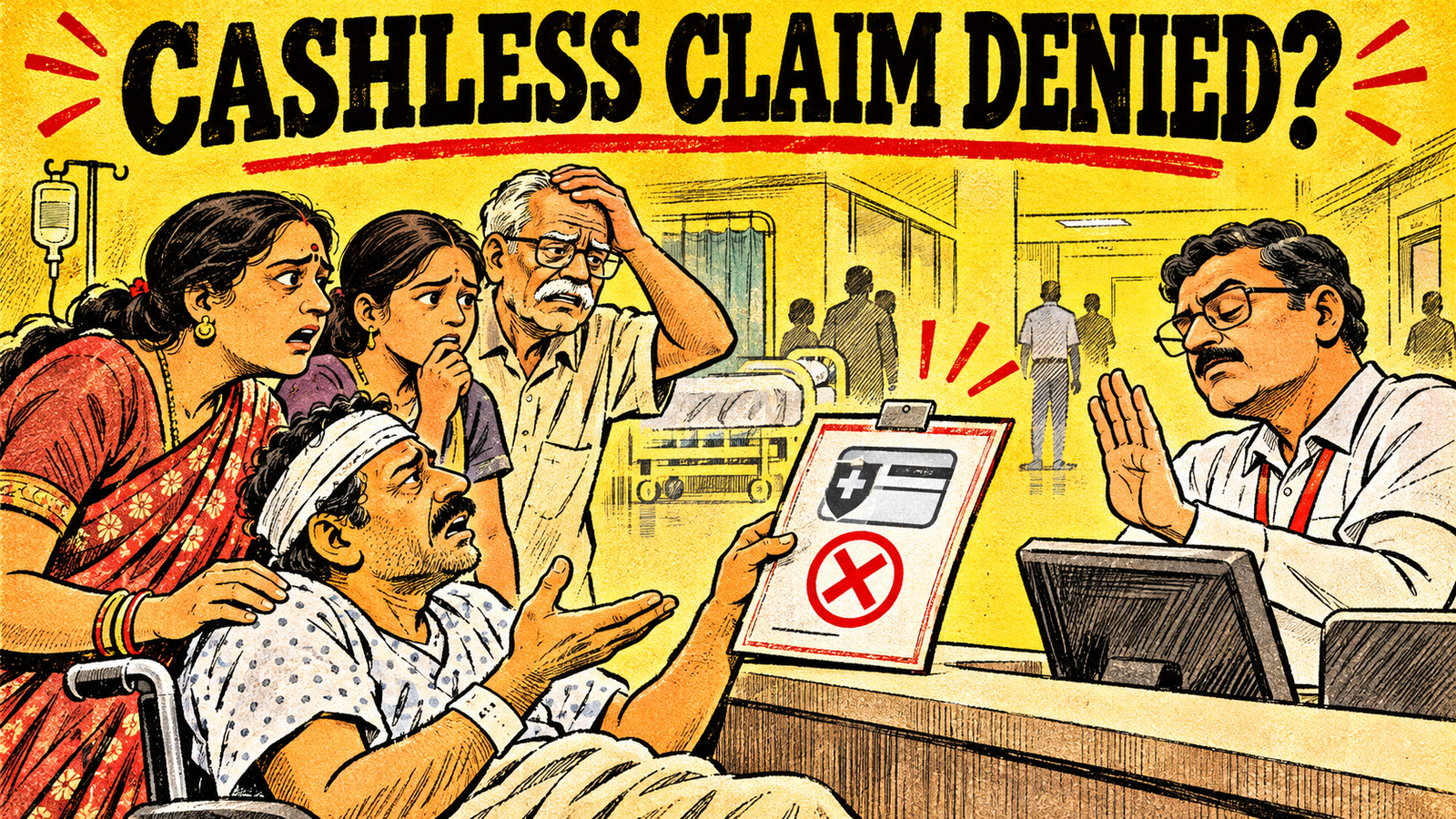
The hospital says you can go home, but the insurance desk says the final cashless request was denied. You may hear several explanations in quick succession: a document is missing, the insurer did not approve the final amount, or a policy condition applies. Ask the hospital and insurer to state the status in writing. You need to know what was decided before you can choose the next step.
Start here: Ask for the claim or authorisation reference, decision time, exact reason, relevant policy clause and whether the decision concerns cashless processing, part of the bill or coverage of the claim itself. Ask whether the hospital can resubmit anything and whether you can pursue reimbursement under your policy. Keep the medical discharge instructions and billing questions separate so the clinical team knows what you still need for safe follow-up.
Find out what the current decision covers
An initial authorisation is often based on information available at admission. The final request can reflect the actual treatment, hospital stay and charges. Ask for the initial approved amount and conditions, the final amount requested, and the outcome of that request. If the desk says “rejected,” ask whether the insurer declined the entire claim, refused cashless payment while leaving a reimbursement route open under the policy, reduced the authorised amount or asked for more records. The reply could change which documents and timelines you need.
Ask who communicated the decision. The hospital insurance desk usually coordinates submissions. A third-party administrator may be involved in processing. The insurer can explain the policy-based decision and its grievance route. If two people give different answers, ask both to refer to the same admission and claim number and identify the latest dated communication. A portal screenshot showing the earlier status can help establish the sequence without proving what the final decision was.
Ask for these details in writing
- Policy and claim or cashless authorisation number, with the correct patient and admission details.
- Date and time the hospital sent the final request and date and time the insurer or administrator responded.
- Current status, whether the decision is final, and the amount requested, approved, disallowed or still pending.
- Specific reason for the decision and the policy provision relied on, if a policy term was applied.
- Which documents or clarifications are missing, who needs to send them and whether the case can be reviewed or resubmitted.
- Whether reimbursement is available for this situation, what the filing deadline is and which records the insurer requires.
For partial approval, ask for an itemised list of deductions. For example, a co-payment, a non-covered item and a charge outside a package can each lead to an amount you must pay, but each has a different basis. Ask how the total was calculated. If the hospital provides only its own bill, contact the insurer through its official channel for the corresponding authorisation or decision statement.
Ask whether a missing record can be provided now
If a document is pending, ask for its name and the office that prepares it. The insurer might need clarification from a treating team or a corrected billing entry. Ask the hospital to identify which team owns the response and when it will submit it. Get the submission time and confirmation so you can follow up against the same case. If the insurer has already issued a refusal, ask whether new material can be reviewed and what channel accepts it.
Keep records private. Use the hospital’s official desk and insurer’s verified contact. Send only what they request through those channels. If you are helping a patient, ask whether their consent or another authorisation is required. Avoid sharing full medical records with strangers offering to speed up approval. Keep the hospital’s submission and the insurer’s response together in your own copy of the file.
Before paying the hospital, check what you will need later
Ask the billing desk for the itemised final invoice, discharge summary, advance and final payment receipts, and a statement of the amount still due. Ask the insurer which clinical and billing records it needs for reimbursement if that route applies. Keep originals where required and make copies before submission. If you pay, save the payment receipt and distinguish the hospital payment from the insurer’s decision. Ask the insurer how to file and whether the original cashless reference should be quoted.
Copy this message to the insurer or hospital insurance desk
Please confirm the latest decision for claim [reference] and admission [reference]. The hospital informed me on [date and time] that final cashless authorisation was [status]. Please provide the decision, amount approved or disallowed, specific reasons and any policy terms relied on. Identify any missing documents and whether resubmission or reimbursement is available, with the applicable deadline and process. Please share a case number and written reply.
Escalate using the insurer’s grievance process
Use the insurer’s official grievance contact if your written request does not resolve the issue. Include the chronology, decision letter or screenshot, disputed policy clause or amount and the outcome you seek. Keep the acknowledgement. India’s insurance regulator IRDAI publishes Bima Bharosa grievance guidance explaining how to approach the insurer and what to do if its reply is unsatisfactory or overdue. Check the applicable timelines and escalation options for your case directly there.
Ask who is handling your review and whether you need to file a reimbursement claim separately while a grievance is open. Check any filing deadline even if the hospital promises to follow up. If the insurer reverses or changes its position, ask for the updated decision and compare it with the hospital statement before treating the issue as resolved.
Common questions
Does a cashless denial mean I can never claim? Ask whether it concerns only payment through the cashless channel or the insurer’s decision on underlying coverage. Ask the insurer whether reimbursement is available and what conditions apply.
What if I only heard the reason at the desk? Ask for the insurer’s decision or acknowledgement in writing, including the reason and reference.
What if I cannot get all the paperwork today? Ask which records are immediately available, who will issue the rest and when. Check the insurer’s filing instructions directly so you can protect any deadline.


