
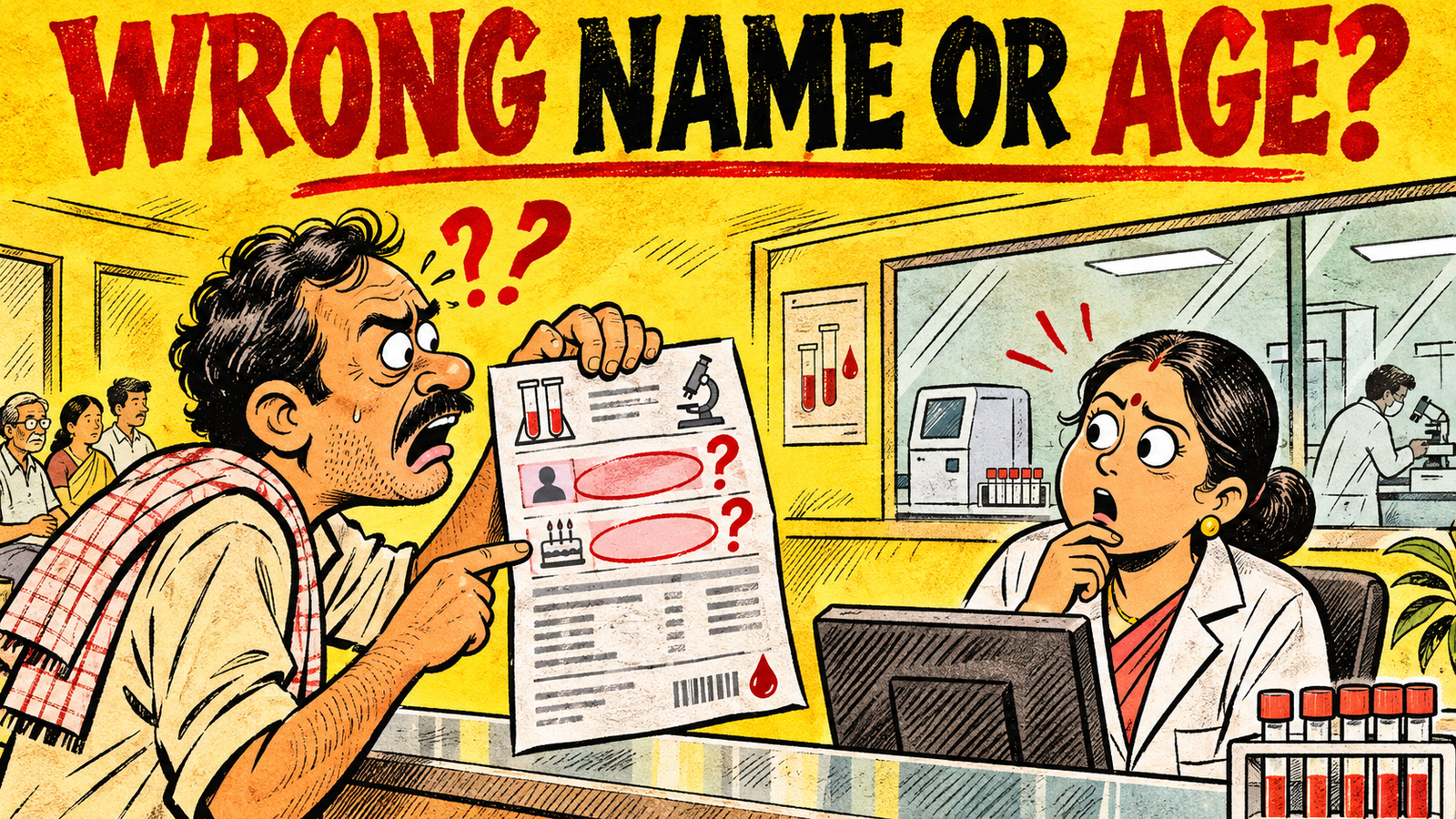
Your diagnostic report arrives before a follow-up appointment. The test name looks familiar, but the report lists the wrong age or spells your name differently. That could be a registration error. It could also mean that the report or sample was linked to the wrong person. Ask the laboratory to check who the result belongs to before anyone relies on it, and tell your clinician about the mismatch.
Start here: Contact the laboratory through its official number or portal and ask it to verify the report against the original order and sample record. Give the report or accession number, collection date and the incorrect field. Request a corrected report through the official channel if the result is confirmed as yours. If treatment or an urgent appointment depends on the result, contact the treating team promptly for guidance while the lab checks it.
Find all the details that do and do not match
Open the report beside the order confirmation or collection receipt. Compare the name, date of birth or age where shown, patient identifier, collection date and test ordered. Look for differences beyond the one you first noticed. An age displayed as a whole number may depend on the date used in registration. Ask the laboratory to check the date of birth and its calculation instead of asking it to overwrite a number without looking at the registration record.
Check the identifier on the original order and the report. A reference may identify the appointment, sample, patient or invoice. Ask the laboratory which number can trace that specific specimen or procedure. If a hospital arranged the test and a separate lab issued the report, give both organisations their relevant references and ask who will reconcile them. They may use different numbers to refer to the same work.
Ask the laboratory to check the record behind the report
Explain whether one field is wrong or several things do not match. Ask the lab to verify the patient identifiers, order and specimen or examination against its records. If the discrepancy might involve two people with similar names, tell it what makes you unsure. Request a written answer on whether the lab can confirm the result belongs to you and whether a fresh sample or another step is needed. A correction to the name is useful only after the lab is satisfied that it is the right report.
If age affects how a result is displayed or interpreted, ask the lab and treating clinician what must be reviewed after the correction. Do not calculate a replacement range yourself. Ask whether the corrected report changes any reference intervals, flags or interpretation. If the clinician has already seen the original, tell them it is under review and send the replacement through their approved channel once it arrives.
Request a replacement through an official channel
Ask how the lab handles amended reports. Request a new copy with the corrected identifiers and a way to tell it is the current version, such as an issue date, version note or documented confirmation from the lab. Keep the original and corrected versions separate and label them in your own records. If the lab sends a corrected portal link, use its trusted portal or verify the link through the lab before entering personal information.
The National Accreditation Board for Testing and Calibration Laboratories describes accreditation for medical testing laboratories under ISO 15189. Ask the facility for its own process for investigating a mismatch and issuing a corrected copy. If it claims accreditation, check the facility and scope through official records. The accreditation listing will not tell you what happened to your sample. The lab still needs to investigate the specific report.
Keep this information ready
- Original order or prescription, collection receipt and test or scan name.
- Report number, patient identifier and sample or accession number if shown.
- Collection and reporting dates, location and exact field that is wrong.
- Correct identifiers, provided only through the lab’s verified process.
- Case number, date promised for the next update and the corrected report when issued.
If you are helping another patient, ask what consent or authority the laboratory requires. Give only the identity records it needs and ask for a secure method. Avoid posting reports on social media or in public groups to seek a correction. If you believe you received another person’s report, tell the facility without circulating it. Keep the detail that let you recognise the mismatch private.
Copy this correction request
Report [reference] for [test] collected on [date] lists [incorrect field]. My order or registration record shows [correct detail, supplied through your secure channel]. Please verify the patient, order and sample or examination record before correcting the report. Please confirm in writing whether the result belongs to me, whether interpretation needs review and when an amended copy will be issued. My appointment is on [date]. Please provide a case number.
Follow up if the lab cannot confirm the result
Ask the facility to explain what it checked, whether it needs more information and who will decide the next step. If it proposes a repeat test, ask who will arrange it and what you should tell your clinician about the existing result. If a service concern remains, contact the lab manager or hospital patient relations team with the timeline and reference. Request a written response and keep a record of when you notified your clinician.
If the correction is urgent, give the actual appointment time and a verified number the lab can use to reach you. Ask for an update even if the investigation will take longer than expected.
Common questions
Can I edit the PDF myself? Ask the issuer for the amended report. Only the lab can confirm that the document accurately represents its verified results.
What if I already submitted it to a clinician or insurer? Tell the recipient that the identifiers are being checked and ask how to provide the corrected version. Ask the clinician which information should be used in the meantime.
What if the lab sends a corrected name but no explanation? Ask it to confirm that the order and result match, and whether any interpretation has changed. Keep the written confirmation with the corrected copy.


