
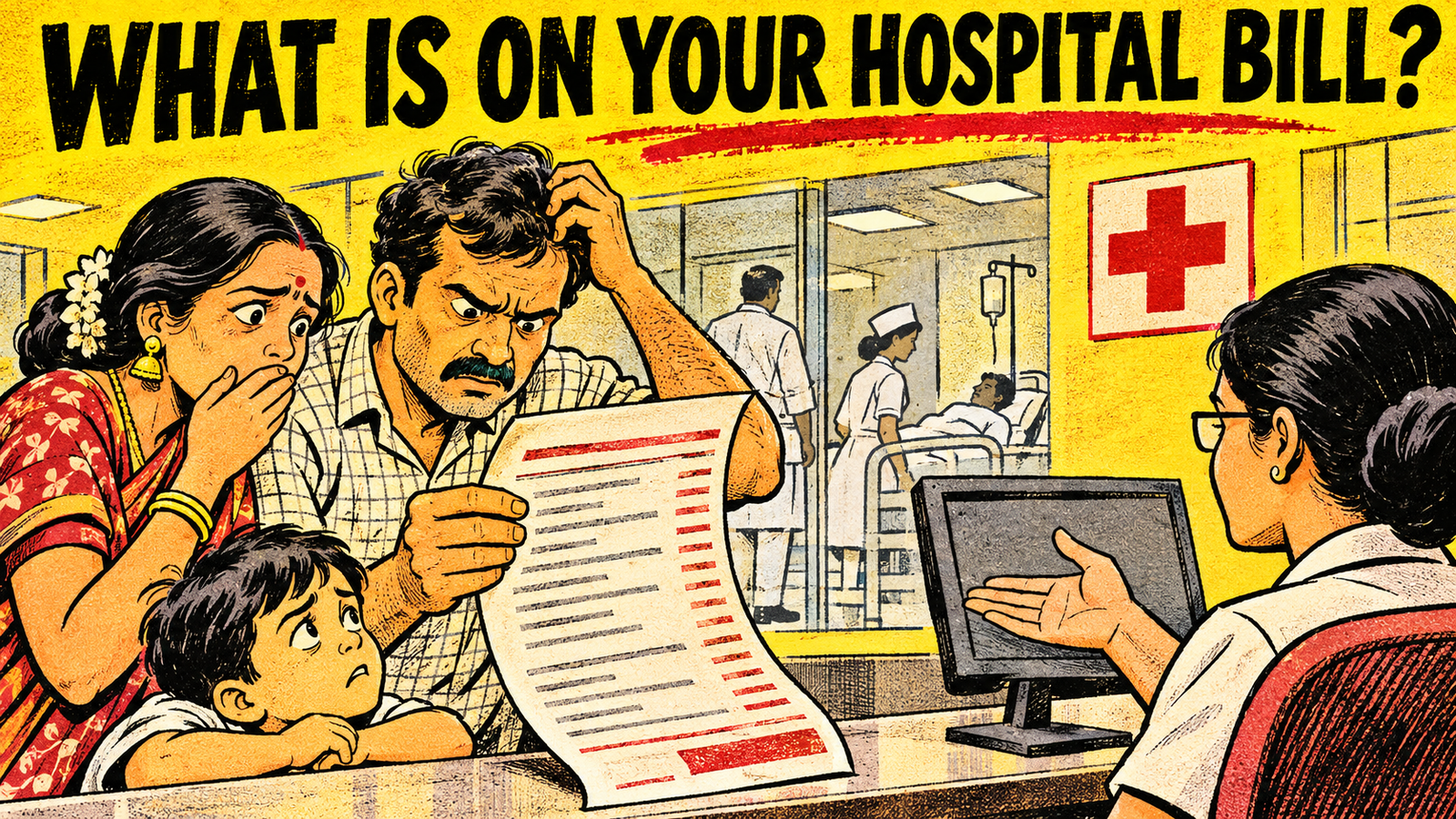
At discharge, the hospital gives you a bill with several entries you do not recognise. Some are short codes. Others look like items already included in a package. Before comparing the total with the original estimate, ask the billing team to explain each line that is unclear. A useful breakdown shows what was charged, for which dates, at what rate and how much has already been paid.
Start here: Ask for the itemised bill, original estimate or package terms, advance payment receipts and any insurer or scheme statement. Mark the specific items you want explained. Ask which charges are outside the package and why, and request a written correction or explanation before closing the query. Keep clinical questions with the treating team and billing questions with the billing office.
Get the documents that explain the total
A bill summary tells you the amount due, but a detailed bill lets you match charges to the admission. Ask for entry dates, service or item names, quantities, unit rates and totals. Request a statement showing deposits, payments, discounts, credits and any amounts already settled by an insurer or scheme. If the hospital uses a code you cannot understand, ask for its plain-language description and the department responsible for it.
Ask whether the bill is provisional or final. Medicines returned to the pharmacy, credit adjustments and insurer decisions may change the balance. If the hospital expects another adjustment, ask when it will appear and whether you will receive a revised bill and receipt. Check that the patient and admission identifiers on each document match the episode of care. Use the official billing channel when sharing those details.
Compare the final bill with the estimate and package
Find the written estimate you received when the admission or procedure was planned. Check whether it was a fixed package, a provisional estimate based on expected care, or an estimate excluding specific costs. Look for the room category, expected stay, procedure, services included, exclusions and circumstances where charges can change. Ask the billing team which version it used and how the final bill departs from it.
For example, a package might list a procedure and expected stay while leaving some items subject to actual use. If the final bill adds another day, ask what dates the room line covers and how the day was counted. If an item appears both in the package and separately, ask whether the separate entry is chargeable or simply displayed as part of the package record. Compare the actual amounts that feed into the total before assuming any line was counted twice.
Prioritise the lines that materially affect the bill
- Identify each disputed item by bill number, line label, date and amount.
- Ask which rate list or package term applies, and request the version in force for your admission.
- Ask what quantity or time period was used, and whether unused or returned items were credited.
- Compare advances and payments in the bill with your receipts. Ask the desk to trace anything missing.
- Keep the reference for each question and save the revised bill or written explanation.
If a charge relates to a procedure, test or device you did not expect, ask the billing team what it represents. Ask the treating team to explain the clinical context if needed. The existence of a billing line and the reasons a medical decision was made are separate questions. You can ask for both explanations without making a conclusion about care based on the invoice alone.
Separate the hospital’s charges from insurance decisions
If an insurer or administrator is involved, ask for the hospital bill and the claim settlement or authorisation statement separately. A hospital discount, a policy exclusion, a co-payment and a hospital charge mean different things. Ask which amounts the insurer accepted, which it did not and what the hospital says you owe after applying prior payments. Where the amounts do not match, ask the hospital and insurer desks to reconcile the same date and claim reference.
Keep the original bill, revised bill and payment receipt if there is an adjustment. Ask whether a pending claim changes what you need to pay at discharge and, if you pay, what receipts you will need for any later reimbursement. Insurance terms and claim status can affect the answer. Confirm the next step through the insurer’s official channel rather than assuming a bill adjustment automatically changes the insurance decision.
Copy this request to the hospital billing office
Please provide the itemised final bill for admission [reference and dates], including quantities, unit rates, package inclusions and exclusions, advances and credits. I would like a written explanation of [line items and amounts]. Please identify whether any of these items is included in the package, what rate or policy was used and whether a correction is due. Please send the revised statement or the billing grievance reference.
Where to follow up in India
Ask for the hospital’s patient relations or grievance contact if the billing desk cannot resolve the question. India’s Clinical Establishments programme publishes a patient-rights charter and related resources. Its framework addresses information about costs and access to a detailed bill. Check which state rules and facility requirements apply to your admission before relying on a particular complaint route. If a separate insurer decision is in dispute, use the insurer’s grievance process for that decision.
Send a clear timeline with the original estimate, final bill and receipts. Keep medical records private and share only what the official reviewer needs. If you receive a revised total, match it against your receipts and ask how any refund or credit will be issued. Keep the closure until the adjustment appears in your account or the hospital statement.
Common questions
What if I only have a total? Give the admission and invoice reference and ask for the itemised bill, including previous payments and credits.
Does a higher bill automatically mean an error? Ask what changed during the admission and which terms apply. Compare the itemised result with the estimate and approval records.
What if I already paid? You can still request a breakdown and raise specific discrepancies. Keep the receipt and ask who can review a correction or refund.


