
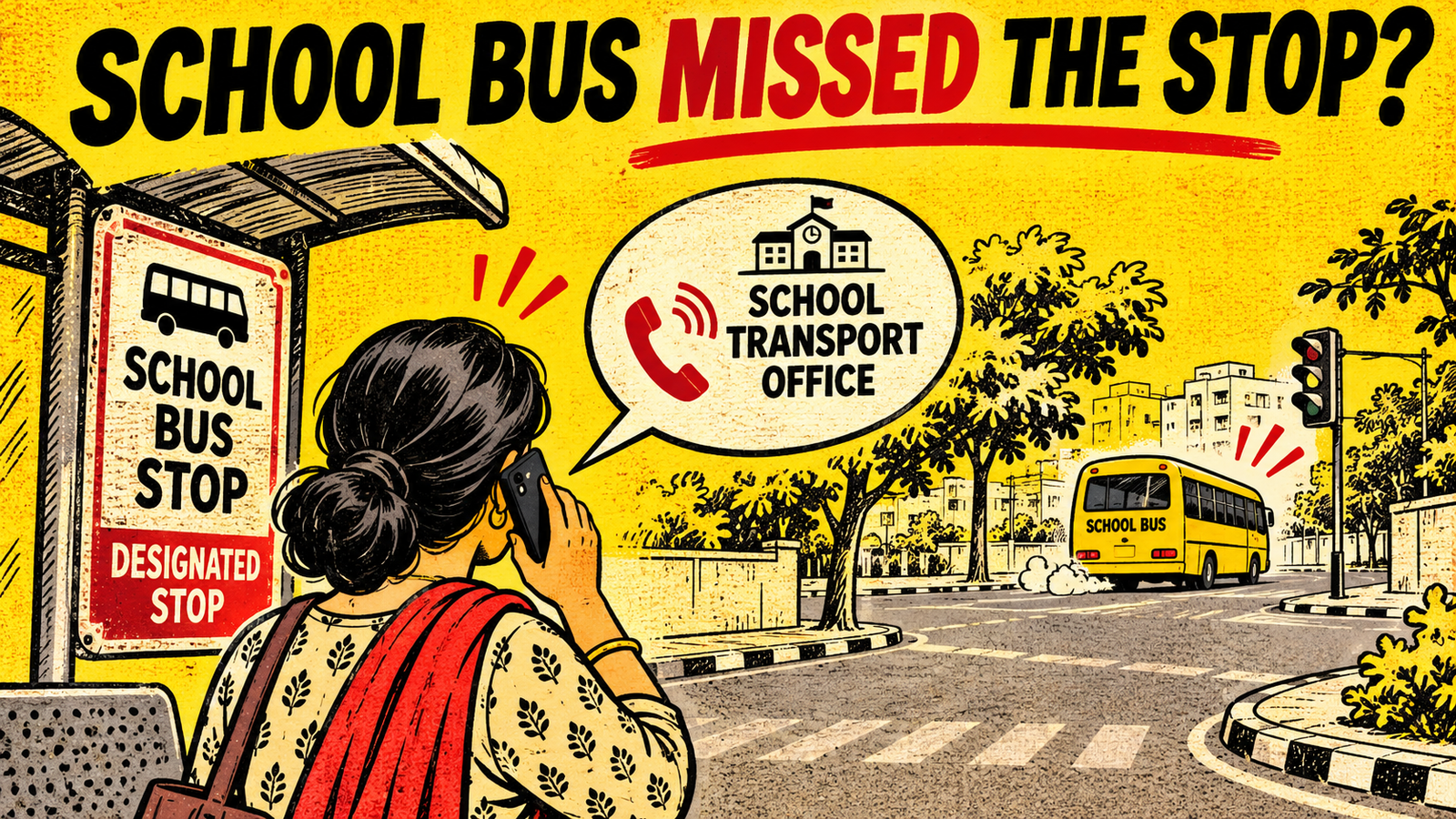
You are at your child’s usual stop, but the school bus passes the turn. The school later says the route changed. The next week it happens again, and you are unsure which adult is responsible for the handover. Start with your child’s whereabouts today, then ask the school to confirm the route and handover procedure in writing before the next trip.
If your child has not arrived: Contact the verified school transport contact or school office immediately. Give your child’s name, route and scheduled drop point. Ask staff to establish where your child is, who is with them and where a safe handover can take place. If you cannot establish their whereabouts promptly or have reason to believe they are in danger, contact local police or emergency services immediately. India’s Emergency Response Support System provides the emergency number 112.
Resolve today’s handover before discussing the route
Ask the school to reach the driver or attendant through its own contact arrangements. If the child is still on board, confirm which adult is supervising and who will meet you at a safe agreed point. Do not ask the child to get off at an unfamiliar location or cross a busy road to meet you. If the bus has already dropped your child somewhere else, ask for the actual location, time and who accepted or supervised the handover. Tell a trusted adult what you know if they can help safely.
Give the transport office the minimum details it needs to find your child. If another authorised caregiver is picking them up, confirm the change directly through the school’s approved channel. Avoid posting a child’s name, photo, home address or live movements to an open group while trying to resolve a routine route issue. If police are involved, follow their guidance about what information they need and how to share it.
Check which drop point was agreed
Find the transport registration, route confirmation and any later change notice. Some route sheets give a stop name but do not state the side of the road or exact point. Save the most recent school message and ask how the stop is identified in the driver and attendant’s instructions. If the location changed because of roadworks, traffic or another reason, ask the school to name the temporary stop, when it was authorised and how families were notified.
Separate a late bus from a missed stop and a changed stop. A delayed bus may still reach the agreed point. A route change may require advance coordination. A bus that bypasses the stop without an established handover raises an immediate question about where the child was taken and who knew. A clear timeline helps the school determine which occurred rather than treating all three as one scheduling complaint.
Ask the school who is responsible for each step
- Ask which school employee or contractor coordinates the route and which contact can confirm a child’s location during service.
- Confirm the regular stop and approximate time, including the side of the road and any safe meeting landmark.
- Ask how the school informs parents and bus staff about a temporary or permanent change.
- Confirm who can receive your child and how the attendant checks that an authorised adult is present.
- Ask what staff do if the authorised adult is absent or the regular drop point cannot be used.
If the school outsources transport, send the report to the school’s designated contact as well as the operator through the approved procedure. Ask who will coordinate the written response so you have one person to follow up with. Request the current transport policy or parent handbook. For a CBSE-affiliated school, you can also check the CBSE website for school transport and safety circulars. Verify the directions and reporting route applicable in your state or union territory.
Keep a short record of repeat incidents
Note the date, route or bus number, expected stop and time, actual stop or time, when you received notice, and who took charge of the child. Save call times and messages. Distinguish the details you saw from those you learned from the school or another parent. Where a family app shows a bus pin, note when it updated and ask staff to confirm what actually happened. A location marker can be helpful without showing whether handover occurred.
Set out the change you need before the next trip. You might want staff to confirm the original stop, or agree a specific temporary safe point while works continue. Ask for an acknowledgement and a date for the review. If the school says the problem is resolved, ask how the revised instructions will reach the bus staff and affected caregivers.
Copy this message to the school transport coordinator
My child uses route [number]. The agreed drop point is [location]. On [dates], the bus [describe what happened], and I was notified at [time or say if no notice was received]. Please confirm the recorded drop point, who supervises handover and what staff should do when the stop cannot be used. Please confirm the instructions for the next trip, the responsible contact and how any further change will be communicated.
Where to follow up if it happens again
Use the school’s official grievance route and send the transport coordinator’s replies, dates and the requested remedy to the relevant school office. If the matter remains unresolved, check which local education or transport authority handles the particular issue. Explain whether it concerns a change in service, the safety of the stop or an unconfirmed handover. If a child’s location or safety is in question at the time, use the urgent response route first.
Common questions
What if my child has a different caregiver on certain days? Ask the school how to register the authorised adults and confirm a temporary substitution before the route starts.
What if the driver and school give different instructions? Ask the official transport contact to confirm the current stop in writing and communicate the same details to the driver, attendant and caregivers.
What can we agree today? Confirm the next stop, adult handover and verified contact to use if the bus misses it. Make sure the adults involved receive the same instructions.


